Tag: Adoption & Partnerships

  • Ripple’s XRP Logo to Adorn Kansas Jayhawks Jerseys in Landmark College Sports Deal

    Ripple’s XRP Logo to Adorn Kansas Jayhawks Jerseys in Landmark College Sports Deal

    The University of Kansas’ athletic teams, the Jayhawks, will feature the XRP logo on their game jerseys starting this fall, marking a significant development described as the first cryptocurrency sponsorship of a major college athletics program. This partnership between Ripple, the company behind XRP, and the University of Kansas introduces a new element to collegiate sports marketing.

    According to Ripple, the XRP patch will be designed to match the team’s uniform color scheme, appearing in Crimson, Blue, or White as appropriate. The logo will be exclusively featured on game jerseys and will not be present on practice, travel, or sideline gear. Furthermore, officially licensed Adidas game jerseys sold at retail stores will not include the XRP patch. However, fans will have the option to add the patch to official game jerseys purchased directly from the Jayhawk Outfitters store, the University of Kansas’ official team store.

    This collaboration is framed by both parties as a “shared commitment to innovation and excellence.” Ripple CEO Brad Garlinghouse, an alumnus of the University of Kansas, commented on the partnership, describing it as a “rare moment where my professional and personal worlds collide.” Garlinghouse holds a Bachelor of Arts in Economics from the University of Kansas.

    The University of Kansas athletic teams boast a decorated history, having secured 15 national championships and 12 NCAA Division I titles across various sports. The inclusion of the XRP logo on their jerseys signifies a new frontier for cryptocurrency marketing within the collegiate sports landscape.

    While the sponsorship is positioned as a notable development, its scope is defined by specific details regarding jersey availability. The XRP patch will be a feature of game jerseys purchased at Jayhawk Outfitters, distinguishing it from mass-market retail versions. This approach aims to integrate the sponsorship directly into the fan experience at the point of official merchandise purchase.

    Why This Matters

    The materials describe a narrow update: Ripple’s XRP logo will be featured on the game jerseys of the University of Kansas’ athletic teams, the Jayhawks, starting in the fall. XRP logo to be featured on major college sports uniforms.

    Broader Context

    Source materials place the factual news in this context: Ripple’s team on X described the new partnership between the company and the Kansas Jayhawks as ‘History on a jersey patch.’.

  • AngelList Ends Ripple Rail Partnership, Phasing Out Crypto Payments

    AngelList Ends Ripple Rail Partnership, Phasing Out Crypto Payments

    AngelList will discontinue support for cryptocurrency payments via Ripple’s Rail platform by July 31, 2026, prompting users to switch to traditional payment methods like ACH and wire transfers for investments. The platform reported that existing investments and user data will remain unaffected.

    The termination means that cryptocurrencies including USDC, USDT, DAI, and ETH will no longer be available for payments after the deadline.

    Ripple acquired Rail in August 2025 for $200 million as part of a larger $2.45 billion M&A strategy. Rail’s core proposition was to enable enterprises to process stablecoin payments across various fiat currencies, aiming to simplify crypto adoption without requiring significant backend infrastructure overhauls.

    AngelList’s decision to end its partnership with Rail raises questions about the operational priorities and traction of Ripple’s enterprise payment solutions. While AngelList has not provided specific reasons for the termination, the move suggests a potential misalignment with its operational priorities. This development underscores the persistent challenges in enterprise adoption of crypto payments.

    This shift occurs as Ripple has recently achieved regulatory milestones, including securing a key European regulatory license in early July 2026. Concurrently, Clearstream, a major European post-trade services provider, expanded its custody offering to include XRP and other tokens.

    However, AngelList’s departure serves as a reminder that conventional fiat payment methods, such as ACH and wire transfers, continue to be preferred by many institutional operators due to their perceived simplicity and compliance predictability. Broader uncertainty surrounding stablecoin settlement infrastructure may also have influenced AngelList’s decision.

    Ripple’s institutional engagement presents a mixed picture, with expansion in some areas and contractions in others. The $200 million acquisition of Rail is more easily justified when key enterprise clients remain active. The loss of a partner like AngelList, prominent in the startup and venture ecosystem, prompts scrutiny regarding the depth of Rail’s enterprise traction.

    Several uncertainties persist following the announcement. The precise reasons behind AngelList’s decision beyond the official notice remain undisclosed. The long-term impact on Rail’s enterprise traction and Ripple’s ability to secure replacement partners are points of interest. It is also unclear if or when AngelList might reinstate crypto payment support.

    AngelList continues to serve approximately 50,000 funds and 800,000 accredited investors, with its core functionality for these users remaining intact. The focus for investment transactions will now shift to traditional banking channels.

    Why This Matters

    The materials describe a narrow update: AngelList will stop supporting crypto payments, including USDC, USDT, DAI, and ETH, through Ripple’s Rail platform by July 31, 2026. No explanation was given for AngelList’s decision beyond the wind-down notice.

    Broader Context

    Source materials place the factual news in this context: Ripple acquired Toronto-based Rail in August 2025 for $200 million as part of a broader $2.45 billion M&A push.

  • Vanguard Creates Head of Digital Assets Role Amid Evolving Crypto Engagement

    Vanguard Creates Head of Digital Assets Role Amid Evolving Crypto Engagement

    Vanguard, the asset management firm with approximately $11 trillion in assets under management, has established its first Head of Digital Assets position. This move signifies a strategic evolution for the company, which has historically expressed skepticism towards cryptocurrencies.

    The new role will focus on developing a multi-year strategy for digital assets, including plans for tokenization, stablecoins, custody, and blockchain settlement. The appointed executive will also be tasked with engaging with regulators concerning these emerging technologies.

    This development represents a notable shift from Vanguard’s previous approach. In early 2024, the firm declined to offer spot Bitcoin ETFs to its clients, characterizing Bitcoin as an immature asset class that did not align with its long-term investment philosophy. However, Vanguard began to adjust this stance in December by allowing brokerage clients to trade third-party crypto funds.

    Zcash Technical Progress and Price Movement

    In parallel, Zcash (ZEC) saw a price increase on Tuesday, rising over 10% and briefly trading above $500 for the first time since early June. This price movement appears connected to reported progress by Zcash developers on its upcoming “Ironwood” shielded pool, a component of the larger Project Tachyon overhaul.

    Developers have indicated they are nearing the completion of a formal proof demonstrating that the new shielded pool is free of hidden counterfeiting vulnerabilities. This is a significant step, as a similar soundness issue identified in the Orchard shielded pool in June was associated with a notable price decline for ZEC. Although that earlier bug was addressed promptly and reportedly not exploited, the privacy-focused nature of Zcash’s model made it challenging to cryptographically suggest the absence of counterfeit coin creation, leading to a ZEC price drop of over 40% within two days.

    The “Ironwood” upgrade is designed to address these concerns by introducing a new shielded pool and a migration pathway enabling users to transfer funds from Orchard while providing assurance against hidden inflation. The deployment of “Ironwood” is scheduled for this month. Beyond the counterfeiting proof, Project Tachyon aims to enhance the scalability of private transactions to thousands per second and improve quantum resistance by removing on-chain data that could potentially be harvested by future quantum computers.

    While Vanguard’s new hiring suggests increasing institutional interest in digital assets, several uncertainties persist. It remains unclear whether Vanguard’s client base will ultimately seek exposure to cryptocurrencies. Additionally, the market awaits definitive confirmation regarding the Zcash bug and its exploitation status before a clearer outlook on the implications of the Tachyon upgrade can be established.

    This report is based on information from Tyler Warner and Decrypt. The analysis and opinions presented are those of the author and do not necessarily reflect the views of Decrypt.

    Why This Matters

    Vanguard, a major asset manager, has posted its first-ever Head of Digital Assets role, indicating a shift in its approach to cryptocurrencies. However, it remains uncertain whether Vanguard’s user base will ultimately want crypto exposure.

    Broader Context

    Morning Minute is a daily newsletter written by Tyler Warner.

  • Tether Invests $20M in Mercado Bitcoin for Latin American Expansion

    Tether Invests $20M in Mercado Bitcoin for Latin American Expansion

    Tether Invests $20 Million in Brazilian Crypto Exchange Mercado Bitcoin to Bolster Latin American Expansion

    Tether, a prominent issuer of stablecoins, announced Tuesday it will invest $20 million in a strategic financing round for Mercado Bitcoin, a Brazilian cryptocurrency exchange. The move signals a joint effort by both companies to expand blockchain-based financial services throughout Latin America.

    Founded in 2013, Mercado Bitcoin has evolved from a digital asset exchange into a comprehensive financial platform. Its offerings now include trading, tokenized investment products, credit and lending services, stablecoin-powered payments, banking infrastructure, and cross-border solutions. The company reports serving 4.5 million users, having issued over 2 billion Brazilian reais (approximately $387 million) in tokenized assets, and holding more than 10 licenses in Brazil and Europe, including a payment institution license from Brazil’s central bank.

    Strategic Partnership for On-Chain Finance

    Paolo Ardoino, CEO of Tether, stated in a release, “Tether’s mission is to build open, accessible, and efficient financial infrastructure for the world. Mercado Bitcoin has built exactly that, a regulated, full-stack on-chain financial platform serving millions of users across one of the world’s most dynamic financial markets.” He further commented on the exchange’s capabilities, noting, “Its depth of regulatory licensing, tokenization infrastructure, and integrated financial services is unmatched in Latin America. We look forward to supporting Mercado Bitcoin’s next phase of growth as a strategic partner and investor.”

    Funding Fuels Expansion and Innovation

    The newly acquired capital is earmarked for several key initiatives, including the expansion of payment infrastructure, scaling tokenized investment products for both retail and institutional investors, enhancing lending capabilities, advancing on-chain capital markets, and pursuing international growth.

    Roberto Dagnoni, Chairman and CEO of Mercado Bitcoin, emphasized the ongoing shift in finance, stating, “The discussion is no longer whether finance will move on-chain. That transition is already underway. The focus now is on building the infrastructure that will support tokenization, stablecoins, payments, and capital markets at scale, reshaping how money moves, investments are accessed, and capital is deployed.” He added, “Mercado Bitcoin has spent more than a decade building the regulated foundation for this future, and this investment strengthens our ability to accelerate the next generation of on-chain financial services in Brazil and across global markets.”

  • Grok AI Forecasts Massive XRP Surge by 2026

    Grok AI Forecasts Massive XRP Surge by 2026

    XRP Price Prediction: Grok AI Forecasts Significant Gains by 2026

    Grok AI, the artificial intelligence model associated with Elon Musk, has released a price prediction for XRP that highlights an extensive array of potential partnerships, suggesting a substantial surge for the cryptocurrency by the end of 2026. The model forecasts XRP reaching between $5 and $8, representing a potential four to sevenfold return on investment from its current trading price.

    The Bull Case: Institutional Adoption and Regulatory Clarity

    The optimistic outlook is underpinned by a narrative of significant global financial institutions quietly building on the XRP Ledger while the asset’s price remains subdued. XRP is currently trading around $1.15. The core of this bullish thesis hinges on the resolution of the Securities and Exchange Commission (SEC) lawsuit, anticipated in August 2025. A favorable outcome would formally classify XRP as a non-security on exchanges, removing a major legal impediment that has historically deterred substantial institutional investment.

    The report notes that live US spot XRP Exchange-Traded Funds (ETFs) have already attracted over $1.5 billion in cumulative inflows, actively absorbing a significant portion of the available XRP supply.

    Furthermore, the circulation of the RLUSD stablecoin has surpassed $1.5 to $1.7 billion, demonstrating strong dominance within the XRP Ledger (XRPL). The list of partnerships cited is described as genuinely impressive. SBI Japan is implementing RLUSD, JPMorgan is utilizing the XRPL for tokenized settlements, Mastercard has named Ripple a partner in its AI payments network, Flutterwave is expanding its reach across Africa, and Bitso is managing operations in Latin America.

    The XRPL itself is undergoing continuous maturation, with real-world assets, automated market makers, and lending protocols all becoming operational. Collectively, these developments position XRP as transitioning from a regulatory overhang to a proven institutional utility, serving as a fast and low-cost bridge asset for cross-border payments.

    The pending CLARITY Act, if passed, would permanently codify XRP’s commodity status, potentially unlocking even broader institutional capital on top of existing initiatives. In a favorable macroeconomic environment characterized by accelerating ETF inflows, rising RLUSD and on-demand liquidity volumes, and supply tailwinds from ETF accumulation, the model identifies the $5 to $8 range as a confident bull surge target.

    The Bear Case: Delayed Adoption and Macro Volatility

    The bearish scenario presented by Grok AI is described as relatively contained. Should the passage of the CLARITY Act be delayed until 2027 or if enterprise adoption progresses slower than anticipated amidst macroeconomic volatility, XRP could consolidate between $2 and $3 without achieving a significant breakout. Even in this scenario, it would still represent a meaningful return from current levels, underscoring the model’s view of a favorable risk-reward profile at the $1.15 price point.

    Technical Analysis: Chart Patterns and Momentum

    On the daily chart, XRP is trading at $1.15532, following a considerable decline from highs exceeding $3.65 reached in early August of the previous year. This extended downtrend was briefly interrupted by a bounce toward $2.40 in November before sellers regained control.

    The most recent downward movement saw XRP dip below $1.00 multiple times in June. However, buyers eventually intervened with sufficient conviction to push the price back above this level and maintain it. This recovery from the $1.00 floor is considered the most significant chart development in months, given the number of times this level was tested and its psychological importance for an asset that struggled to sustain above $1.00 during the pre-ETF era.

    Immediate resistance is identified near $1.20, a level the price approached on the current day’s candle high of $1.16 but has not yet decisively cleared. A more significant ceiling is observed near $1.60, where multiple rejections occurred earlier this year. Support is now established at $1.00, the floor that was recently defended after several tests. The broader chart structure continues to show a series of lower highs dating back to August, indicating that a confirmed reversal has not yet materialized despite the encouraging bounce.

    Momentum on the daily candles appears more constructive than at any point in recent months, with larger green candles appearing more frequently and the $1.00 level holding firm on multiple tests rather than breaking. If XRP can close convincingly above $1.20 and sustain that level in the coming sessions, the institutional accumulation narrative described by Grok AI may begin to manifest in price action, complementing the fundamental developments.

    The Search for Asymmetric Returns in Early-Stage Infrastructure

    The article also touches upon the broader market dynamics, noting that Bitcoin, Ethereum, and XRP have been pressing against similar resistance levels for weeks. The catalyst for the next significant move is often perceived as being just one data print away, with institutional inflows perpetually projected for the following quarter. Traders awaiting a breakout are described as waiting on decisions made by others.

    Early-stage infrastructure projects, however, operate under different rules. Copilot AI predicts that capital that would be negligible at the scale of Bitcoin can significantly impact smaller, undiscovered projects. The potential for asymmetric returns is found in the discrepancy between a project’s intrinsic value and its current market valuation, a gap that exists when a project has yet to gain widespread recognition.

    LiquidChain: Addressing Cross-Chain Fragmentation

    The piece further discusses the issue of cross-chain fragmentation, which has been extracting value from DeFi participants since the advent of bridges. Bitcoin, Ethereum, and Solana were engineered as independent systems with no shared architecture or intent to interoperate. Transactions crossing these boundaries incur costs in fees, slippage, and execution failures. Bridges, intended as a solution, have instead become a mechanism for these problems to accrue fees.

    LiquidChain is presented as a solution that aims to eliminate these fees entirely by operating three networks within a single execution layer, allowing a single deployment to reach all of them without any cross-chain tax. Grok AI has flagged LiquidChain as a project worth watching. Its presale is priced at $0.01454, with over $860,000 raised. The article acknowledges that its execution is unproven and adoption is unknown, contrasting it with established assets that offer predictable trajectories toward visible ceilings. LiquidChain is positioned as an entry point that could disappear once the market discovers its value.


  • TeraWulf Leases $19B Anthropic Capacity, Becomes AI Landlord

    TeraWulf Leases $19B Anthropic Capacity, Becomes AI Landlord

    TeraWulf Secures $19 Billion AI Data Center Deal, Shifting Focus from Bitcoin Mining

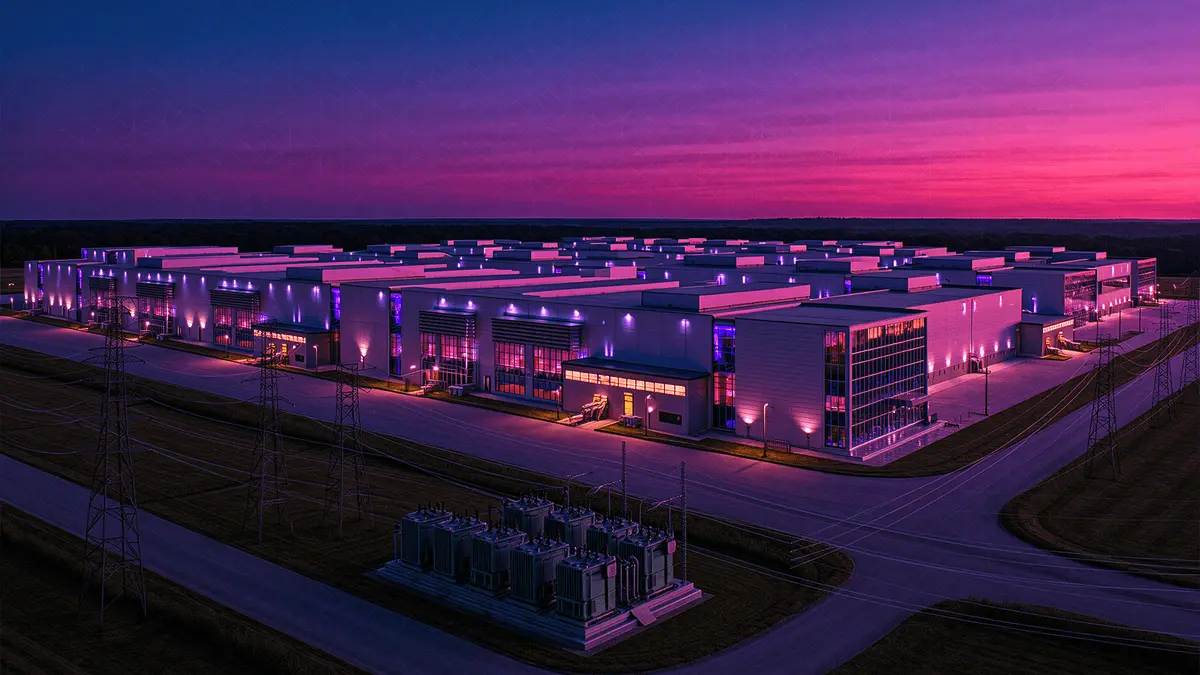
    Hawesville, Kentucky – Bitcoin miner TeraWulf has inked a significant 20-year lease agreement with AI firm Anthropic for a 401-megawatt (MW) data center campus at its Justified Data site in Hawesville, Kentucky. The deal is projected to generate approximately $19 billion in contracted revenue, a figure that notably surpasses TeraWulf’s current market capitalization of around $12 billion.

    This strategic move prompts a fundamental question for investors: at what point will TeraWulf’s stock valuation reflect its emerging role as an infrastructure real estate investment trust (REIT) rather than a proxy for Bitcoin prices?

    Shares of TeraWulf experienced a surge of up to 19% intraday on July 6, ultimately closing with a gain of approximately 4%. The compression from the intraday high to the closing price suggests that while the market acknowledges the substantial headline value of the deal, it is also factoring in the execution risks associated with the multi-year buildout required.

    Strategic Transactions Advance AI Infrastructure Ambitions

    TeraWulf announced two key transactions designed to accelerate its AI infrastructure strategy. The first is the 20-year lease with Anthropic at its Justified Data Campus. The second involves the sale of TeraWulf’s 50.1% ownership stake in the Abernathy Joint Venture to an investor group.

    TeraWulf CEO Paul Prager emphasized the significance of the Anthropic lease, stating, “The Anthropic lease validates our strategy and establishes a long-duration revenue stream with one of the world’s leading AI companies.” According to The Wall Street Journal, the agreement is supported by Anthropic’s strong investment-grade credit rating. This structural underpinning, with long-duration revenue anchored to investment-grade credit, represents a fundamentally different asset class compared to revenue derived from hashrate-dependent block rewards.

    Kentucky Campus to Power Anthropic’s Claude AI

    The Kentucky data center campus is slated to provide approximately 401 MW of critical IT load for Anthropic’s Claude AI infrastructure. The deployment will occur in phases, with initial capacity expected to be operational in the second half of 2027 and the full build-out targeted for early 2028.

    The Justified Data site, formerly a Century Aluminum facility, offers TeraWulf a substantial existing power footprint with roughly 480 MW of available capacity and potential for further expansion. This readily available power infrastructure is a critical asset that AI companies often find challenging to replicate on their own timelines.

    Industry estimates for High-Performance Computing (HPC)-grade infrastructure place capital expenditure at approximately $8 million to $10 million per MW. Consequently, the 401 MW buildout implies a capital requirement in the range of $3.2 billion to $4 billion. While this capital expenditure is not the headline figure, it will be a crucial determinant of whether the deal ultimately creates or destroys equity value over the next 24 months. TeraWulf has yet to detail the complete financing structure for the Kentucky campus.

    Broader Industry Shift Towards AI Infrastructure

    Anthropic is not alone in its aggressive pursuit of power for AI compute. Reports indicate that the company has secured approximately 3.5 GW of AI compute capacity through various agreements. Benzinga also noted that IREN has entered into an agreement with Anthropic, positioning TeraWulf as part of a growing trend of former Bitcoin miners transitioning into dedicated AI infrastructure providers. The current AI infrastructure buildout cycle shows no signs of abating.

    TeraWulf Divests Abernathy Stake to Fund Growth

    In parallel with the Anthropic announcement, TeraWulf confirmed its decision to sell its 50.1% ownership interest in the Abernathy Joint Venture. This 168 MW AI data center project in Texas was established in 2025. The buyer is an investor group led by Fluidstack.

    Reuters reported that this transaction monetizes TeraWulf’s approximately $450 million investment at a premium to its invested capital. This indicates that TeraWulf is already realizing gains from its pivot towards AI infrastructure, even before the Kentucky facility becomes operational.

    Strategic Capital Recycling and Valuation Shift

    The rationale behind exiting the Abernathy Joint Venture is clear. By divesting its minority stake in a venture it does not fully control, TeraWulf is recycling capital into wholly owned infrastructure assets, thereby capturing the full margin profile.

    CoinShares has projected that up to 70% of listed miners’ revenue could eventually originate from AI hosting services for those securing long-term agreements. This potential shift fundamentally alters the valuation framework for companies like TeraWulf.

    The 20-year lease structure itself represents a significant element beyond the dollar value of the deal. For investors who previously viewed TeraWulf as a leveraged play on Bitcoin price cycles, this long-term commitment signifies a genuine transformation of the underlying business.

    Long-duration, fixed-revenue infrastructure generates a distinct earnings profile compared to Bitcoin mining. It is characterized by greater predictability and reduced volatility, aligning more closely with the operational model of a data center operator than a commodity producer. This strategic shift allows companies like TeraWulf to move away from direct exposure to Bitcoin price fluctuations and the hashprice compression that often follows halving events.

  • Binance to Accept 10 Tokenized Stocks as Collateral

    Binance to Accept 10 Tokenized Stocks as Collateral

    Binance Enhances Margin Trading with New bStocks Collateral Options

    Binance announced today that its Cross Margin, Portfolio Margin, and Portfolio Margin Pro trading services will incorporate ten new bStocks tokens as eligible collateral assets. The update, effective July 7, 2026, at 13:30 UTC, will allow users to leverage these tokenized securities for margin trading.

    New bStocks Added as Collateral

    The ten bStocks tokens being added are: Alphabet (GOOGLB), Qualcomm (QCOMB), Coinbase (COINB), State Street SPDR S&P 500 ETF Trust (SPYB), Western Digital (WDCB), Corning (GLWB), Nebius (NBISB), Semicon Bull 3X ETF (SOXLB), Roundhill Memory ETF (DRAMB), and Cerebras (CBRSB). Alongside their inclusion as collateral, corresponding bStocks trading pairs will also become available for margin trading. This expansion aims to provide eligible users with a broader range of collateral options for their margin trading activities.

    Eligibility and Risk Management

    This new feature is exclusively available to VIP 3 and above users in permitted jurisdictions. Users in restricted regions will not have access. Binance advises all users to implement robust risk management strategies and to consistently monitor their margin levels when utilizing bStocks tokens as collateral.

    Further details on marginable assets and related information can be found in the Margin Data section. For a comprehensive understanding of the index price methodology for bStocks as collateral, users are directed to the “bStocks Tokenized Securities Collateral Index Price Methodology.”

    Binance reserves the right to amend or cancel this announcement at any time and for any reason without prior notice.

    It is important to note that no information provided in connection with Tokenized Securities is intended as an offer, solicitation, promotion, recommendation, or invitation to buy or sell securities in any jurisdiction. Tokenized Securities are not offered, sold, distributed, made available, or accessible in the United States or to, or for the account or benefit of, U.S. persons. These securities have not been registered under the U.S. Securities Act of 1933 or any U.S. state securities laws, and a public offering will not be conducted in the United States or any other jurisdiction, with the exception of the ADGM. By accessing this product, users represent and warrant that they are not a U.S. person, are not located in the United States, are not acting for the account or benefit of any U.S. person, and will not access, purchase, sell, transfer, redeem, or otherwise transact in Tokenized Securities from within the United States.

  • Solana Tokenized Assets Hit Record $5.77B in Q2 2026

    Solana Tokenized Assets Hit Record $5.77B in Q2 2026

    Solana Dominates Tokenized Asset Volume in Q2 2026 Record

    Solana concluded the second quarter of 2026 with a record-breaking $5.77 billion in tokenized asset spot volume, a milestone confirmed by data analyst Sam Schubert on July 1. This figure dwarfs the $775 million generated in the latter half of 2025 by more than sevenfold, solidifying Solana’s position as the leading settlement layer for on-chain equities and signaling a significant shift in institutional capital’s on-chain movement through tokenization.

    Raydium Leads the Charge in Tokenized Equities

    Throughout the quarter, Raydium emerged as the primary platform for tokenized equities on Solana. The exchange announced on July 1 that it is “the #1 venue for tokenized asset spot volume on Solana.” Raydium’s concentrated liquidity pools facilitate the majority of xStocks trading pairs, with the protocol adding its latest billion in cumulative tokenized equity volume within a single month, a pace that significantly contributed to the quarter’s headline figure.

    June Sees Unprecedented Trading Activity

    The latter part of the quarter, particularly June, was characterized by intense trading. During the week of June 15–21, Solana processed $1.298 billion of the $1.324 billion in global weekly tokenized stock volume, capturing a 95% market share. On June 24, daily tokenized equities trading reached a record $644 million, surpassing memecoins as a proportion of Solana’s spot volume for the first time. June alone generated over $2 billion in monthly tokenized stock volume, the highest single-month figure ever recorded across any blockchain. The final week of Q2 saw a weekly all-time high of $1.42 billion before the full quarterly data was released, underscoring the rapid acceleration in activity towards the quarter’s end.

    Solana’s Sustained Dominance in Tokenized Equities

    The Solana Foundation’s May 2026 ecosystem report indicated that Solana held a 97% share of cumulative on-chain tokenized equity spot trading volume, a lead that had been building for over a year prior to the Q2 surge. Data shows Solana has maintained its lead in tokenized equities for 54 consecutive weeks. The network’s sub-second finality and low transaction fees are cited as the structural reasons for this liquidity concentration, outperforming Ethereum and other competing Layer 1 blockchains.

    Broader Real-World Asset Ecosystem Flourishes

    The broader landscape of real-world assets (RWAs) on Solana further supports this trend. The May 2026 report also highlighted over $2.8 billion in total on-chain RWA value and $1.2 billion in RWA lending deposits. This context helps explain significant institutional involvement, such as BlackRock’s deployment of a $255 million institutional liquidity fund on Solana and Ondo’s $176 million exposure to tokenized yield on the network. These investments are characterized as regulated capital seeking the execution quality offered by Solana’s DeFi infrastructure at scale, rather than speculative plays.

    Cross-Chain Growth and Future Outlook

    Cross-chain tokenized equity trading reached $5.3 billion in May 2026, a 44% increase from April, with Solana accounting for the vast majority of this volume. While other chains are not closing the gap, Solana’s ongoing development in on-chain governance and network infrastructure, coupled with a pipeline of new tokenized equities like SPYx, QQQx, NVDAx, and other xStocks instruments, suggests a continued concentration of volume rather than dispersion.

    Building on a Foundation for Monetization

    0xINFRA, a member of Raydium’s leadership, views Q2’s success as a foundational step. The focus is shifting from resilience to conversion, aiming to broaden LaunchLab distribution, sustain liquidity depth driven by concentrated liquidity market makers (CLMMs), and translate tokenized asset share gains into repeatable monetization strategies. For Raydium, volume share is a prerequisite, with fee generation and sustainable liquidity depth being the next critical tests.

    Regulatory Tailwinds and Market Momentum

    The regulatory environment is a significant factor. Bitwise has suggested that the passage of the U.S. CLARITY Act could accelerate tokenization and position Solana as a primary beneficiary. Although this legislation is still pending, the market has already responded, with $5.77 billion in Q2 on-chain volume occurring without such a framework in place. Should the CLARITY Act pass, the addressable market for tokenized stocks would expand considerably, further amplifying Raydium’s existing infrastructure advantage. Solana price forecasts for the remainder of 2026 increasingly incorporate this RWA momentum as a key driver.

  • World Cup Sparks $5.6B Prediction Market Boom

    World Cup Sparks $5.6B Prediction Market Boom

    World Cup Fever Fuels $5.6 Billion Surge in Prediction Markets

    The FIFA World Cup’s knockout stage is set to commence on July 4, and the global passion for football, or soccer as it’s known in the United States, has become the dominant force driving activity on prediction platforms. This surge in interest has significantly diverted attention from the political and macroeconomic markets these platforms were originally designed to serve.

    This trend is highlighted by data from research firm CryptoRank, which indicates that the tournament has propelled prediction market volumes from a modest $65 million on June 1 to a monthly peak of $5.6 billion on June 22.

    According to CryptoRank’s analysis, total trading volume across major prediction venues saw a rapid ascent throughout June. It climbed from the aforementioned $65 million on June 1 to $340 million by June 8, just days before the World Cup kicked off. A week later, on June 15, the volume had surged to $2.2 billion, with 15 matches played, including the United States’ notable 4-1 victory over Paraguay in Los Angeles.

    By June 22, with 42 games completed, trading on these platforms reached even greater heights. CryptoRank reported a high of $5.6 billion in volume before a slight decrease was observed seven days later, with approximately $5.4 billion in trades recorded on June 29.

    In a July 2 post on X, CryptoRank noted that Kalshi was responsible for a substantial portion of this June activity. At the time of writing, its dashboard indicated an open interest—the total value of active positions yet to be settled—standing at $1.84 billion. Of this total, roughly $1.45 billion was attributed to Kalshi, with Polymarket holding approximately $390 million.

    During the preceding week, open interest remained relatively stable on Kalshi, hovering around $1 billion. On Polymarket, however, open interest peaked at $475 million on June 30, the same day Norway, Sweden, and the Netherlands were dramatically eliminated from the competition.

    BitMart reported similar trends on its platform. With multiple research institutions projecting that total global trading volume on prediction markets could reach $10 billion, the crypto exchange stated that most of this traffic has so far been directed towards centralized platforms like itself. This is attributed to their lower barriers to entry compared to on-chain prediction products, which require private keys, gas fees, and multi-step contract approvals.

    Consequently, BitMart reported that its monthly prediction market volumes experienced a staggering 1,500% increase from May after the World Cup commenced. The exchange also noted a 4.6-fold rise in active users and an almost nine-fold increase in completed orders.

    Furthermore, the exchange revealed that nearly 44% of newly registered users placed their first trade through its prediction markets. Football markets served as the primary draw for these newcomers, before some expanded into crypto price predictions.

    Polymarket’s comparatively subdued performance during the World Cup month, in contrast to Kalshi, has occurred amidst criticism on several fronts. For instance, a Wall Street Journal investigation published in June alleged that the platform has utilized staged winning bets in its promotional videos.

    A recent dispute also garnered significant attention, wherein a user accused Polymarket of altering the rules of a market tied to Strategy’s Bitcoin sale, raising questions about how such firms resolve contested outcomes.

  • Ripple Announces July 4 Update

    Ripple Announces July 4 Update

    Ripple Joins Initiative to Support Unemployed Veterans on US Independence Day

    As the United States, the world’s most powerful economy and a leading global democracy, approaches its 250th Independence Day, various initiatives are surfacing to mark the occasion. Among them is a new commitment from Ripple, the company behind the popular XRP altcoin.

    Ripple has announced its participation in a nonprofit organization dedicated to helping unemployed veterans secure high-quality jobs following their military service. The organization, known as the Call of Duty Endowment, has already assisted over 165,000 veterans. However, it highlights a persistent high unemployment rate among younger veterans, indicating that “there’s still more work to do.”

    The Call of Duty Endowment aims to place 200,000 veterans into employment by 2030. Ripple’s involvement is part of a special initiative for the US’s 250th birthday, dubbed #Giving4th, which seeks to establish Independence Day as a national day of charitable giving. Ripple has pledged to match donations made to the Call of Duty Endowment, up to a total of $10,000.

    Individuals wishing to contribute can do so through various means, including cash, stock, or cryptocurrencies. Notably, Ripple’s own native tokens, XRP and RLUSD, are also accepted for donations.

    The Fourth of July, celebrated annually on July 4th, commemorates the adoption of the Declaration of Independence in 1776 and is a federal holiday in the United States.