Tag: Adoption & Partnerships

  • XRPL Poised to Power UK Climate Bonds

    XRPL Poised to Power UK Climate Bonds

    UK Parliamentary Proposal Identifies XRP Ledger for Climate Finance Instruments

    A formal proposal submitted to the UK Parliament has named the XRP Ledger (XRPL) as the preferred blockchain infrastructure for a new class of climate finance instruments, despite a stagnant XRP price. The proposal introduces Climate Contingent Convertible Notes (CloCos), a structured financing model designed to attract private capital for renewable energy projects without relying on government subsidies.

    Authored by Dr. Chris Cormack and presented to the UK Parliament’s Environmental Audit Committee, the submission specifically highlights XRPL as a suitable layer for settlement and record-keeping within a regulated pilot program involving institutional investors.

    The proposed four-stage lifecycle—”issue, monitor, trigger, deploy”—would leverage the ledger to establish auditable ownership records, track project performance milestones, and verify that capital is directed towards qualifying renewable energy assets.

    XRP Price Action Remains Subdued

    The XRP price and its associated predictions have yet to show a significant reaction to this development, leaving observers to question whether a lag is at play.

    XRP is currently trading at $1.07, holding precariously above a key support zone around $1.05. Recent price action indicates a period of consolidation. The 24-hour trading volume stands at $2.24 billion, suggesting moderate market participation.

    The immediate support area is situated between $1.05 and $1.07. A failure by buyers to defend this range could see XRP retesting the psychological $1.00 level. Conversely, maintaining this support would bolster the current recovery attempt and preserve the potential for upward movement.

    Resistance is present above current price levels. The initial hurdle is observed between $1.11 and $1.13, with a more significant barrier appearing near $1.16. A decisive close above this level would enhance short-term momentum and draw attention towards the $1.20 region.

    The most probable near-term scenario involves range-bound trading between $1.05 and $1.13. However, a resurgence of bullish sentiment in the broader altcoin market could enable XRP to challenge higher resistance levels. Conversely, a sustained breach below support would diminish the recovery outlook and increase downside risk.

    XRP’s current position at $1.07, marked by 9.3% weekly losses and a contested $1.05 floor, is not the scenario many traders had anticipated. Even optimistic medium-term forecasts necessitate months of patience and favorable macroeconomic conditions.

    Emerging Infrastructure Plays Capture Attention

    For traders seeking to redeploy risk rather than endure a slow market grind, early-stage infrastructure projects with compressed entry points are attracting interest. LiquidChain ($LIQUID) is one such project warranting examination.

    LiquidChain is a Layer 3 infrastructure project aiming to serve as a unified execution environment across Bitcoin, Ethereum, and Solana, effectively providing the cross-chain liquidity layer that fragmented decentralized finance (DeFi) has sought.

    Its unique selling proposition lies in its architecture: developers can deploy applications once and access liquidity across all three ecosystems simultaneously through a Unified Liquidity Layer and Single-Step Execution. This approach eliminates the bridge-and-wrap overhead that continues to hinder user experience in multi-chain workflows.

    The LiquidChain presale has raised $860,000, with the current price at $0.01473. This represents significant traction at a stage where risk is front-loaded, but so is the potential for asymmetric returns. Investors are encouraged to research LiquidChain before the presale window concludes.

  • Kraken, Maple Launch Fully On-chain Institutional Credit

    Kraken, Maple Launch Fully On-chain Institutional Credit

    Kraken and Maple Launch On-Chain Institutional Credit Facility

    Kraken, the veteran U.S. cryptocurrency exchange, has partnered with Maple, a prominent on-chain institutional asset management platform, to introduce a lending structure familiar to traditional finance into the blockchain-based market.

    The new facility, denominated in USDC, will bolster Kraken’s over-the-counter (OTC) lending business by allowing institutional clients to borrow against their Bitcoin (BTC) and Ether (ETH) holdings, rather than liquidating them.

    According to a joint statement from the two companies, this initiative marks one of the first instances of replicating the structural safeguards of asset-backed securities (ABS) markets entirely on-chain. The facility is built around a dedicated special-purpose vehicle (SPV) designed to be bankruptcy-remote. Simultaneously, Kraken affiliates will originate, service, and retain the junior portion of the loans.

    This first-loss position means Kraken will absorb potential losses before senior lenders are impacted, a mechanism intended to align the interests of borrowers, lenders, and the platform.

    Warehouse financing, a long-standing cornerstone of traditional credit markets, has historically funded products like mortgages, auto loans, and consumer lending before their packaging into larger investment vehicles.

    Under the new structure developed by Maple and Kraken, the BTC and ETH collateral will be held by a Wyoming-chartered Special Purpose Depository Institution (SPDI), which also functions as a regulated qualified custodian. Zaria, an independent SPV administrator, will oversee the facility’s operations.

    “The infrastructure that powers a multi-trillion-dollar ABS market in traditional finance has never existed on-chain, until now,” said Sidney Powell, CEO and Co-Founder of Maple. “This Facility applies that model to digital asset collateral in a fully on-chain environment, with the structural protections institutions actually require.”

    Arjun Sethi, Kraken’s Co-CEO, highlighted that the facility addresses a growing demand from the company’s clients for access to the same capital formation tools that have long supported traditional credit markets.

    This collaboration with Maple follows other significant moves by Kraken, including a partnership with Nasdaq to develop tokenized equities, further integrating traditional capital markets with blockchain-based financial systems. The collaboration will enable Kraken’s tokenized equity product, xStockz, to power a permissionless infrastructure intended to support Nasdaq’s issuer-sponsored equity tokens.

    In related news, Deutsche Börse acquired a $200 million stake in Kraken in mid-February, valuing the exchange’s parent company at $13.3 billion.

  • Request Network Launches One-Click Cross-Chain Mass Payouts, Integrates Merkle Science Wallet Screening

    Request Network Launches One-Click Cross-Chain Mass Payouts, Integrates Merkle Science Wallet Screening

    Request Network Unveils One-Click Mass Payouts Across Chains, Enhances Compliance

    Zug, Switzerland – June 25, 2026 – The Request Network Foundation has announced a significant expansion of its stablecoin payment platform, enabling users to execute mass payouts across EVM chains and the Tron network from a single interface. This latest development, released just three weeks after major upgrades to its crypto payment collection system, also introduces built-in bridging and token swapping capabilities across EVM chains and integrates Merkle Science as an additional wallet screening provider.

    These enhancements are designed to bolster Request Network’s commitment to offering businesses a more streamlined, scalable, and resilient solution for global stablecoin payments.

    Effortless Mass Payouts from a Single Wallet

    Stablecoins are increasingly utilized for global disbursements, including salaries, commissions, affiliate rewards, bug bounties, supplier payments, and customer refunds. While stablecoin settlements offer speed and cost advantages over traditional fiat, the operational complexity of sending funds across multiple chains and currencies has historically required finance teams to manage numerous transactions and wallets.

    Request Network now addresses this fragmentation by allowing users to initiate mass payouts from a single wallet and in a single currency. The platform supports payments to recipients across the top six EVM chains—Ethereum, Base, Arbitrum, Optimism, Polygon, and BNB Chain—using USDC and USDT.

    With a single signature, a mass payout can be initiated, even if individual transactions require bridging and swapping to reach their intended recipients. The Request Network protocol automates the retrieval and batching of bridge and swap quotes, ensuring each payment within a batch is correctly routed with just one approval. Further simplifying the process, recipients can set and update their payment preferences, guaranteeing that funds are always directed to their preferred destination. This breakthrough in cross-chain and swapping abstraction aims to connect payers and recipients more effectively, irrespective of their preferred blockchain or currency.

    Mass Payouts Now Supported on Tron

    In addition to EVM chain capabilities, Request Network has launched mass payout support for the Tron network, marking it as the first protocol to combine these functionalities. This allows users to send USDT to multiple recipients on Tron in a single transaction, facilitating large-scale payouts on a network widely used in Asia, Africa, Eastern Europe, and Latin America. The integration means users can now manage all their global stablecoin payouts through the Request Network protocol.

    Expanded Wallet Screening Options

    Request Network has also partnered with Merkle Science to provide an additional wallet screening provider on its protocol. This feature is designed to protect users from interactions with high-risk wallets. When enabled, payments can only be executed if the payer or recipient meets predefined screening policies, helping businesses mitigate risks such as asset freezing or difficulties with fiat off-ramping. The integration of Merkle Science enhances Request Network’s position as a secure platform for receiving crypto on-chain, while still accommodating recipient preferences.

    Tristan Wallaert, CEO of the Request Network Foundation, commented, “Stablecoins have enabled global money movement without the usual fiat constraints, but executing payments at scale remains a bottleneck, forcing users to rely on payment service providers. Anyone should be able to pay hundreds of payments across chains in a single operation. High-risk wallet exposure has tarnished crypto’s reputation recently; if we want to provide the best protection to blockchain users, they need to be able to use the best screening providers. Sending and receiving payments must become intuitive and safe if we want stablecoins to be a real alternative to fiat.”

    Mriganka Pattnaik, CEO of Merkle Science, added, “As stablecoin payments become more global and cross-chain, compliance needs to become just as seamless as the payment experience itself. Our integration with Request Network helps businesses screen wallets with greater confidence, reduce exposure to high-risk activity, and scale on-chain payments without compromising trust or operational efficiency.”

    About Request Network

    Since 2017, Request Network has focused on developing, educating about, and promoting the use of open-source, decentralized, and permissionless protocols that provide infrastructure for on-chain payments and related financial flows. The Request Network protocol enables users to send and receive crypto at scale, across chains, without custodial intermediaries. It is developed by a community-funded foundation dedicated to making crypto payments accessible while protecting participants. To date, over $2 billion has been transacted using Request Network technology.

    About Merkle Science

    Merkle Science provides blockchain analytics and crypto compliance solutions that assist businesses in detecting, investigating, and preventing financial crime across digital assets. Its platform offers wallet screening, transaction monitoring, risk intelligence, and investigation tools, enabling crypto platforms, financial institutions, and payment providers to manage on-chain risk and meet compliance requirements at scale.

  • Japan Embraces XRP: Major Adoption Announced

    Japan Embraces XRP: Major Adoption Announced

    Ripple Secures Japanese Approval for Stablecoin Launch

    Ripple has received the green light from the Japanese Financial Services Agency (JFSA) to introduce its stablecoin to the country, following an extended collaboration with its long-standing local partner, SBI Group.

    The company’s Senior Vice President of Stablecoins lauded Japan’s regulatory environment, characterizing it as a leader in cryptocurrency adoption. The approval was facilitated by SBI Holdings, through its subsidiary SBI VC Trade Co., LTD, which holds a license as an Electronic Payment Instruments Exchange Service Provider. This partnership will enable the launch of RLUSD in the Japanese market.

    The two entities initially formalized their collaboration with a memorandum of understanding (MoU) in August of this year. This official launch signifies the stablecoin’s significant entry into what they described as one of the most “sophisticated and forward-looking digital assets markets.”

    According to the JFSA license, RLUSD is classified as a new category of electronic payment instrument under Japan’s Payment Services Act. It is designed for foreign-issued stablecoins, ensuring adherence to the safety and regulatory standards mandated by local law. Both institutional and retail users will be able to access Ripple’s stablecoin via SBI VC Trade’s VCTRADE platform.

    “Japan has long been a leader in digital asset adoption, underpinned by both regulatory clarity and financial innovation,” stated Jack McDonald, Ripple’s Senior VP of Stablecoins. “This launch marks an important step in expanding access to transparent, regulated USD-backed stablecoins like RLUSD for financial institutions, consumers, and businesses in Japan.”

    Tomohiko Kondo, CEO of SBI VC Trade, also expressed his satisfaction with the enduring partnership between his company and Ripple, highlighting the RLUSD launch in Japan as a significant recent achievement for both organizations.

    Despite facing legal challenges in the United States, Ripple successfully launched its proprietary stablecoin in late 2024. Primarily targeting institutional investors, RLUSD has experienced considerable adoption growth across various sectors over the past two years, including from major entities like Mastercard.

    Ripple has engaged with numerous exchanges to bolster the stablecoin’s usability and liquidity. Data from CoinGecko indicates that RLUSD’s market capitalization has reached $1.6 billion, a figure slightly below the $1.7 billion reported by Ripple. Nonetheless, it remains among the top 50 largest cryptocurrencies by market cap and ranks as the 10th largest within the stablecoin sector.

  • Chainlink Secures Major European & South Korean Banking Partnership; LINK Price Stagnant

    Chainlink Secures Major European & South Korean Banking Partnership; LINK Price Stagnant

    Chainlink Secures Landmark Banking Partnership, But LINK Price Remains Stagnant

    Chainlink has announced a significant banking partnership, Project Pangea, which brings together over 50 financial institutions. Despite the deal’s structural importance, the price of its native token, LINK, has shown little movement, trading within a narrow, quiet range.

    Project Pangea Details

    Project Pangea involves prominent entities such as Qivalis, a stablecoin consortium backed by 37 European banks, and UniKA, a South Korean banking alliance led by Shinhan Bank and Kbank. Collectively, these institutions manage over $10 trillion in assets and facilitate a $150 billion annual trade corridor between the Euro and Korean Won.

    The initiative aims to enable near-instantaneous settlement of currency trades using stablecoins. It targets T+0 atomic settlement for FX transactions, significantly reducing the current T+2 settlement cycle to near real-time peer-to-peer swaps. This will be achieved through regulated stablecoins on a dedicated Pangea Layer-1 chain. Industry observers view this as Chainlink embedding itself into the core infrastructure of international banking, potentially creating structural demand for its services.

    Market Reaction and Technical Analysis

    The muted reaction in LINK’s price is attributed to several factors. From a chart perspective, LINK is consolidating in a horizontal range, a pattern often indicative of broader market indecision rather than significant selling pressure.

    Volume accompanying the Project Pangea announcement was modest compared to previous catalyst-driven sessions. This suggests that large institutional investors are not aggressively positioning themselves ahead of confirmed revenue streams from the deal. The 12-month timeline to live transactions means that any fee generation for Chainlink is not expected in the immediate future.

    Technically, immediate support for LINK is observed in the mid-range of its current consolidation band at $7.50. A stronger demand zone exists below this level, which has historically provided support. Resistance overhead is concentrated at the previous swing high of $9, a level that has capped two previous recovery attempts. Momentum indicators remain neutral, neither signaling overbought conditions nor generating fresh bearish signals, thus maintaining the current range.

    A confirmed pilot transaction or the disclosure of a fee model could potentially trigger a breakout above the $9 resistance, leading to a measured move towards the upper $10 range. Conversely, a loss of near-term support below $7 on increased selling volume could expose lower demand zones and significantly delay any upward price movement.

    The Pre-Sale Advantage

    The range-bound behavior of LINK following a fundamentally significant event highlights a recurring pattern in the crypto market: by the time institutional adoption is confirmed and priced in, the potential for asymmetric upside has often diminished. This perspective suggests that infrastructure projects in their presale stages, before significant market capitalization expansion, may offer greater upside potential.

    One such project is LiquidChain ($LIQUID), a Layer 3 infrastructure initiative aiming to serve as a cross-chain liquidity layer. LiquidChain intends to unify liquidity from Bitcoin, Ethereum, and Solana into a single execution environment through its Unified Liquidity Layer architecture. This would allow developers to deploy applications once and access all three ecosystems, with verifiable settlement and single-step execution. The presale is currently priced at $0.01473, with approximately $860,000 raised to date, indicating early traction without the liquidity overhang associated with public listings.

  • Meta Explores Prediction Markets for Future Growth

    Meta Explores Prediction Markets for Future Growth

    Meta Explores Prediction Markets with New App, Arena

    Meta is reportedly developing a new application called Arena, designed to function as a prediction market where users can wager points on real-world outcomes, rather than actual currency.

    According to The New York Times, the app will operate independently of Meta’s core platforms like Facebook, Instagram, WhatsApp, and Messenger. The tech giant intends to leverage its existing social media audience to drive adoption for the new product.

    Citing sources familiar with the project, The Times reported on June 23 that Arena, while still in an experimental phase, is a high-priority initiative for Mark Zuckerberg. The initial iteration is expected to utilize a points-based system, akin to video games, and will not require users to stake real money. However, the possibility of introducing real-money betting at a later stage has not been ruled out by these sources.

    Arena is one of several standalone applications Meta is currently developing. Another in the pipeline is Meta Photos, an app that employs artificial intelligence to generate novel forms of media. This strategic shift towards standalone apps appears to stem from a broader challenge faced by the multinational technology company. As Facebook and Instagram have increasingly prioritized video content, there are fewer opportunities within these platforms to test new product concepts, prompting Meta to explore external ventures.

    This is not the first time Zuckerberg has ventured into the realm of prediction markets. In 2020, his company launched Forecast, a crowdsourced prediction market app that emerged during the early stages of the COVID-19 pandemic. Forecast employed a similar points-based structure but was ultimately shut down in 2022.

    In recent years, Meta has also attempted to capitalize on emerging social trends with varying degrees of success. This includes incorporating features from platforms like Snapchat and TikTok, with mixed results, as well as developing apps focused on podcasts, travel, and matchmaking, which largely failed to gain traction.

    The current landscape for prediction markets, however, presents a different dynamic. The sector is experiencing significant growth, with platforms like Kalshi and Polymarket collectively facilitating $51 billion in trades in 2025. This year’s volume has already surpassed that figure, reaching $130 billion.

    Further underscoring the market’s momentum, Kalshi recently concluded a funding round that valued the company at $22 billion after raising $1 billion. Polymarket was reportedly in discussions in April to secure $400 million at a $15 billion valuation. Analysts at Bernstein project that by 2030, the total annual volume of prediction markets could reach $1 trillion.

    Meta is not alone in recognizing the potential of the prediction market space. Several cryptocurrency companies have already established a presence. In March, Binance integrated a prediction market feature into its wallet, and Hyperliquid launched its own macro prediction markets the following month. Coinbase and Crypto.com also offer products in this category, and Trump Media has similarly announced plans to enter the market.

    Despite the burgeoning growth, the sector has also encountered legal challenges. Federal prosecutors have charged a U.S. Special Forces soldier with using classified information to place bets on Polymarket concerning a covert operation targeting Venezuela’s Nicolas Maduro, resulting in a $400,000 gain.

    Concerns have also been raised regarding data integrity and trading practices on certain platforms. In June, blockchain investigator ZachXBT issued a warning that Rain Protocol, a prediction market project valued at nearly $9 billion, was exhibiting signs of on-chain price manipulation.

  • BlackRock, Institutions Eye Blockchain: Aptos CBO Interview

    BlackRock, Institutions Eye Blockchain: Aptos CBO Interview

    The narrative surrounding tokenization is not just expanding; it’s undergoing a significant transformation. While initial discussions centered on the feasibility of bringing real-world assets onto the blockchain, financial institutions are now posing a fundamentally different question: can existing blockchain infrastructure truly support financial markets at scale?

    This evolving perspective is increasingly evident across various networks, including Aptos. Reports indicate that Securitize-related assets on the platform saw a remarkable surge of 632% in June, reaching $276 million. With major products like BlackRock’s BUIDL fund expanding their presence on the network, Aptos is strategically positioning itself as a robust infrastructure designed for continuous settlement, institutional-grade financial activities, enhanced liquidity, and more.

    In an interview, Solomon Tesfaye, Chief Business Officer at Aptos Labs, delves into the rapid growth of tokenized assets on the platform, the critical infrastructure that institutions prioritize, and the potential for the next wave of blockchain adoption to be driven by the convergence of both markets and machines.

    Institutional Focus Shifts to Operational Functionality

    Securitize-related assets on Aptos have reportedly grown by 632% this month, reaching $276 million. What does this level of growth reveal about the current institutional approach to on-chain markets?

    While the percentage growth is noteworthy, the more crucial aspect is where activity concentrates once assets are live on-chain. Securitize, which issues and manages tokenized real-world assets for institutional sponsors like BlackRock and Apollo, utilizes networks such as Aptos. Once these assets are deployed, the primary focus shifts from mere issuance to how these assets function within actual financial systems.

    This is where the move towards “markets” becomes apparent. Settlement, collateral movement, and integration with trading and payment workflows gain greater importance than the act of tokenization itself. On Aptos, these transactional flows are supported by infrastructure engineered for continuous, high-frequency activity, rather than static record-keeping.

    Across the industry, we’re witnessing a transition from proving that assets can be tokenized to determining whether blockchain infrastructure can genuinely support real financial activity at scale. The networks that are poised to benefit are increasingly those capable of facilitating continuous market operations, not just initial issuance.

    Operational Demands Drive Asset Concentration

    What do you believe is fueling the recent uptick in Securitize-related activity specifically on Aptos?

    As tokenized assets become actively traded, operational requirements become paramount. Tokenized funds are not static holdings; they are integral to settlement processes, collateral workflows, liquidity venues, and treasury operations. This necessitates a different infrastructure than simply recording ownership on-chain.

    Aptos has processed over 5 billion transactions, maintains approximately 30-millisecond block times, and has achieved 99.99% uptime since its mainnet launch. These are the operational characteristics that institutions scrutinize because they mitigate execution uncertainty.

    The industry trend indicates a growing concentration of activity on infrastructure that has already demonstrated its reliability under real-world conditions, rather than relying solely on theoretical performance metrics.

    Aptos Positions for Institutional RWA Market

    BlackRock’s BUIDL fund, tokenized by Securitize, has expanded to Aptos alongside several other chains, introducing one of the largest tokenized fund products into the Aptos ecosystem. What does this signify for Aptos’ standing in the institutional real-world asset (RWA) market?

    This development signals that infrastructure choices are increasingly being made at a highly technical and operational level. BlackRock’s selection of chains is not driven by visibility but by a rigorous evaluation of whether the infrastructure can support regulated financial products operating at scale with predictable settlement and performance.

    The expansion of BUIDL through Securitize onto Aptos reflects this thorough evaluation process. It underscores confidence that Aptos meets the stringent requirements for institutional-grade financial products, particularly concerning consistent performance, reliability, and the capacity to support continuous market activity.

    More broadly, this reinforces Aptos’ positioning in the RWA market as an infrastructure built for high-frequency, always-on financial systems where tokenized funds, settlement flows, and collateral movement can operate frictionlessly and at scale. The key takeaway is that institutional adoption is increasingly converging on infrastructure capable of supporting actual financial market operations on-chain, moving beyond mere tokenization experiments.

    Current Use Cases for Tokenized Real-World Assets

    Much of the discussion around tokenization still emphasizes future potential, including tokenized stocks and other multi-trillion-dollar markets. What are tokenized real-world assets actually being used for on-chain today?

    Currently, adoption is concentrated within relatively familiar financial instruments. Money market funds, Treasury products, private credit, and short-duration fixed-income assets constitute a significant portion of the activity. Notable examples include products like BlackRock’s BUIDL and Franklin Templeton’s BENJI.

    What is particularly significant is that institutions are not necessarily venturing into entirely new asset classes. Instead, they are focusing on assets where operational improvements can be realized immediately through faster settlement, reduced reconciliation efforts, enhanced collateral mobility, and greater programmability. In essence, the initial wave of tokenization is less about fundamentally altering the nature of assets and more about transforming the operational infrastructure that supports them.

    Essential Infrastructure for Institutional Scale

    For tokenized assets to transition from early adoption to institutional scale, what infrastructure elements are most critical: speed, settlement finality, compliance tooling, identity, liquidity, custody, interoperability, or something else?

    Every component is vital: compliance, custody, identity, liquidity, interoperability, and settlement. However, reliability serves as the fundamental prerequisite. Institutions can address many operational challenges, but they cannot overcome infrastructure that exhibits inconsistent behavior under load. Financial systems operate continuously, making sustained performance far more critical than peak performance.

    Once reliability is established, the remaining aspects become integration challenges across custody, compliance, trading, and liquidity. Increasingly, institutions are evaluating blockchain infrastructure with the same rigor they apply to traditional financial infrastructure: assessing resilience, predictability, and uptime.

    Technical Priorities Translate to Institutional Advantages

    Aptos has consistently emphasized performance, scalability, and reliability. How do these technical priorities translate into tangible advantages for institutions issuing or managing tokenized assets on-chain?

    The most effective infrastructure is that which operates seamlessly in the background. Institutions are not aiming to optimize for blockchain activity itself; their goal is to operate financial products efficiently and predictably. Performance is only valuable if it translates into operational certainty.

    Features such as parallel execution, fast finality, and the security offered by the Move programming language help ensure that institutions can concentrate on the asset and its associated workflows, rather than being preoccupied with the underlying infrastructure. As tokenized assets, stablecoins, and automated financial systems scale, this is where markets and machines begin to converge. In such an environment, consistent execution holds far greater significance than peak throughput, transforming technical architecture into a tangible business outcome.

    Balancing Transparency and Privacy in Financial Markets

    As more financial assets move on-chain, how should the industry approach the relationship between public blockchain transparency and the privacy or compliance requirements of traditional financial institutions?

    Transparency and privacy are not mutually exclusive goals. Institutions require auditability, regulatory oversight, and verifiable settlement, while simultaneously needing confidentiality for sensitive financial activities. The long-term solution lies not in choosing one over the other, but in developing systems where outcomes can be verified without unnecessarily exposing underlying information. This becomes increasingly crucial as markets become more automated and trust shifts from manual processes to cryptographic verification.

    Aptos’ Vision for the Next Phase of Institutional Adoption

    Looking ahead, what role does Aptos Labs envision for itself in the next phase of institutional blockchain adoption: infrastructure provider, ecosystem builder, capital markets partner, or a broader capacity?

    Markets are already migrating on-chain through tokenized assets, stablecoins, and settlement infrastructure. Concurrently, machine-driven systems are emerging that can transact, allocate capital, and interact directly with these markets. Aptos is being developed to support both of these trends, providing the infrastructure for financial markets to operate at scale while enabling increasingly autonomous systems to participate in the economy.

    Performance, reliability, and continuous operation are not optional features in either domain; they are foundational requirements. We believe that the convergence of markets and machines will be the primary driver of future infrastructure demand.

  • ICE and OKX Partner for Tokenized Securities on Wall Street

    ICE and OKX Partner for Tokenized Securities on Wall Street

    ICE and OKX Forge Joint Venture for Digital Asset Products

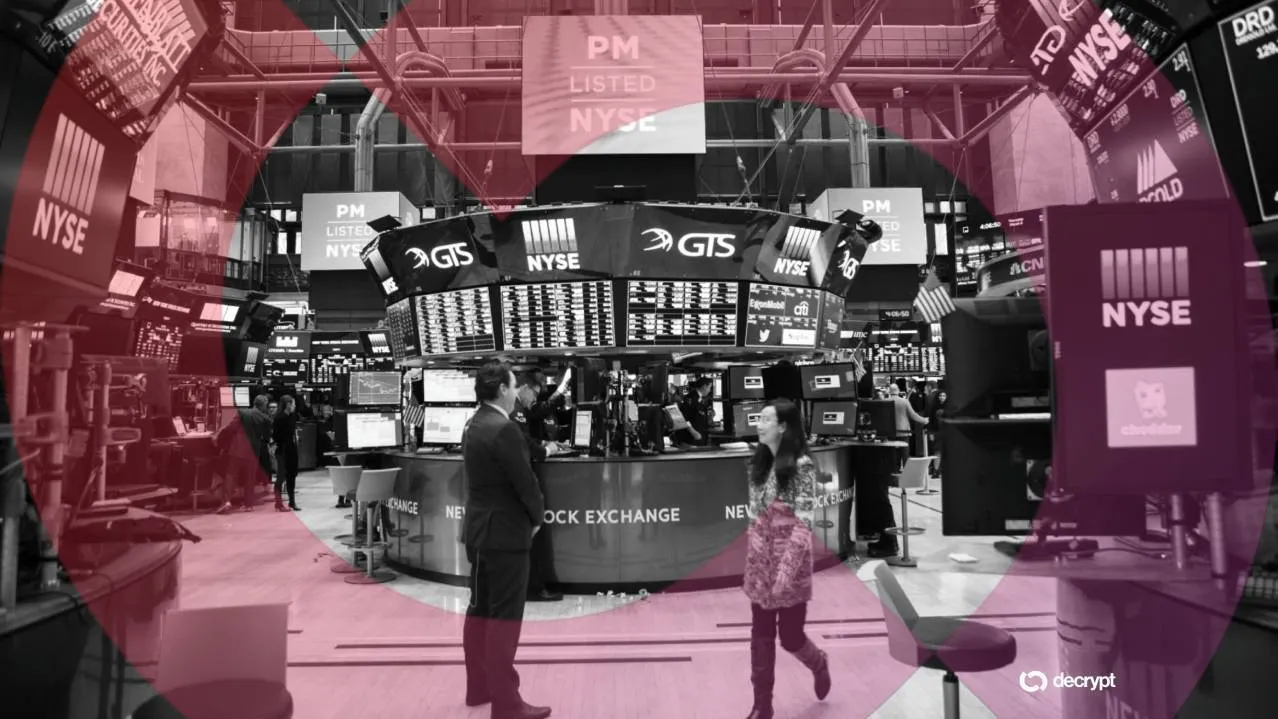
    Intercontinental Exchange (ICE), the parent company of the New York Stock Exchange, and OKX, a prominent cryptocurrency exchange, have announced a strategic joint venture to develop tokenization and digital asset products. The collaboration, revealed on Monday, is contingent upon regulatory approval.

    Upon completion, the venture aims to provide OKX’s global customer base with access to tokenized equities listed on the NYSE, as well as exposure to futures contracts offered by ICE.

    “The ICE-OKX joint venture is a step towards building the infrastructure that will define how global markets operate in the decades ahead,” stated Trabue Bland, senior vice president for futures exchanges at ICE. Bland further indicated that the initiative seeks to expand ICE’s offerings to the approximately 120 million retail traders who utilize OKX.

    The joint venture will be co-chaired by ICE and Andrew Cuomo, former New York Attorney General and Governor, who has been associated with OKX since 2023.

    “The next chapter of financial markets will be defined by how well innovation and government regulation can move forward together,” Cuomo remarked in a statement. He also expressed enthusiasm for the potential societal impact of blockchain technology, citing its capacity for “the democratization of finance, bringing basic financial services to underserved populations.”

    Specifics regarding the types of tokenization or blockchain initiatives the joint venture will undertake were not immediately available. While representatives from both firms did not respond to requests for comment from Decrypt, an OKX spokesperson informed Fortune that the venture will concentrate on tokenizing NYSE-listed equities.

    This announcement follows a prior collaboration earlier this year, where the two entities introduced crypto-native perpetual futures for oil to non-U.S. residents. The latest development also builds upon ICE’s earlier investment in OKX, where the NYSE parent acquired a minority stake in the international crypto exchange at a valuation of $25 billion.

  • Solana, Toss Bank Ink Remittance Deal

    Solana, Toss Bank Ink Remittance Deal

    Solana Foundation and Toss Bank Forge Partnership to Enhance Global Remittance

    The Solana Foundation has entered into a Memorandum of Understanding (MOU) with Toss Bank, marking a significant first for the South Korean internet-only bank and the Solana ecosystem. This collaboration is strategically positioned within the broader technology narrative of Toss Bank’s parent company, Viva Republica, as it prepares for an initial public offering (IPO).

    The announcement saw Solana’s native token, SOL, trading at $74, with a reported 8% increase in trading volume over a 24-hour period. However, concurrent developments concerning peace talks between the United States and Iran may complicate the precise attribution of this trading volume solely to the MOU.

    Toss Bank, which serves 15 million customers in South Korea and operates as the country’s third-largest digital bank, is slated to utilize Solana for a proof of concept (PoC) focused on global remittance and settlement. This initiative promises to offer Toss Bank’s extensive customer base faster and more cost-effective global digital finance solutions powered by Solana. The bank’s existing overseas remittance service already extends to 30 countries and covers seven major currencies, providing the Solana-based PoC with a substantial existing user base from its inception.

    Key Areas of Collaboration

    The MOU outlines four primary areas of cooperation:

    • Global Remittance and Settlement PoC: Development of a proof of concept for global remittance and settlement infrastructure built on the Solana blockchain.
    • Joint Research: Collaborative research into blockchain-based payment and settlement models.
    • Digital Asset Exploration: Exploration of financial services involving stablecoins and other digital assets.
    • Long-Term Cooperation: Establishment of a framework for future collaboration, including integration with overseas banking partners and adherence to Anti-Money Laundering (AML) and Know Your Customer (KYC) compliance systems.

    The immediate focus of this partnership is the PoC, with all subsequent developments contingent on its outcomes.

    Jin-hyun Park, Head of Strategy at Toss Bank, stated that the partnership will initiate “a phased pilot within the innovative services already provided by Toss Bank,” with the explicit aim of delivering “quicker and more economical global digital finance through Solana” to its 15 million customers. This framing emphasizes an upgrade to existing services rather than a speculative venture into cryptocurrency.

    Solana’s technical capabilities, including sub-second transaction finality and minimal transaction fees, present a compelling case for high-volume cross-border settlement, offering a competitive alternative to traditional correspondent banking costs. The roadmap for tokenization is expected to follow, dependent on the PoC’s results and regulatory approvals.

    Strategic Alignment with Viva Republica’s IPO

    This collaboration is part of a broader strategy by the Solana Foundation to build institutional infrastructure within South Korea. Previously, the foundation signed an MOU with local firm Wavebridge to develop a KRW-pegged stablecoin designed for institutional applications, featuring on-chain settlement and tokenized deposit functionalities. The Toss Bank partnership integrates seamlessly into this wider Korean market strategy.

    Viva Republica, the parent company of Toss Bank and the broader Toss super-app ecosystem, is reportedly targeting a US IPO in 2026 with a valuation projected to exceed $10 billion. The company has secured over $1.2 billion in funding from investors such as GIC, Sequoia China, and Kleiner Perkins, and has bolstered Toss Bank’s capital to approximately 1.4 trillion won (around $1 billion) to support its growth and readiness for listing.

    The Solana MOU serves a dual purpose in Viva Republica’s IPO narrative. Firstly, it positions the company as a cross-border payments platform targeting the vast global payments market, rather than solely a domestic neobank, which typically commands lower valuations on US exchanges. Secondly, by emphasizing a compliance-first architecture with AML/KYC integration and a regulated stablecoin framework, Toss Bank aligns itself with regulated innovators, a distinction that appeals to institutional investors. Furthermore, the adoption of blockchain settlement rails is expected to reduce the marginal cost per remittance transaction, supporting the margin expansion narrative crucial for pre-IPO companies.

    Regulatory Landscape and Future Outlook

    The regulatory environment in South Korea adds a layer of urgency to these developments. With plans to implement foreign exchange controls on crypto transfers starting December 2026, Toss Bank’s proactive approach, utilizing a licensed and compliance-integrated framework, positions it favorably ahead of these regulatory changes. The Bank of Korea’s ongoing pilots for wholesale CBDCs and tokenized deposits provide a policy backdrop that supports the political viability of bank-grade stablecoin remittance products.

    While this partnership represents a significant strategic move, the ultimate impact will depend on the successful execution and validation of the PoC by Viva Republica.

  • Ripple Eyes Southeast Asia: XRP Price Surge Expected

    Ripple Eyes Southeast Asia: XRP Price Surge Expected

    XRP Price Prediction Turns Bullish Amid Southeast Asian Expansion, But Market Lags

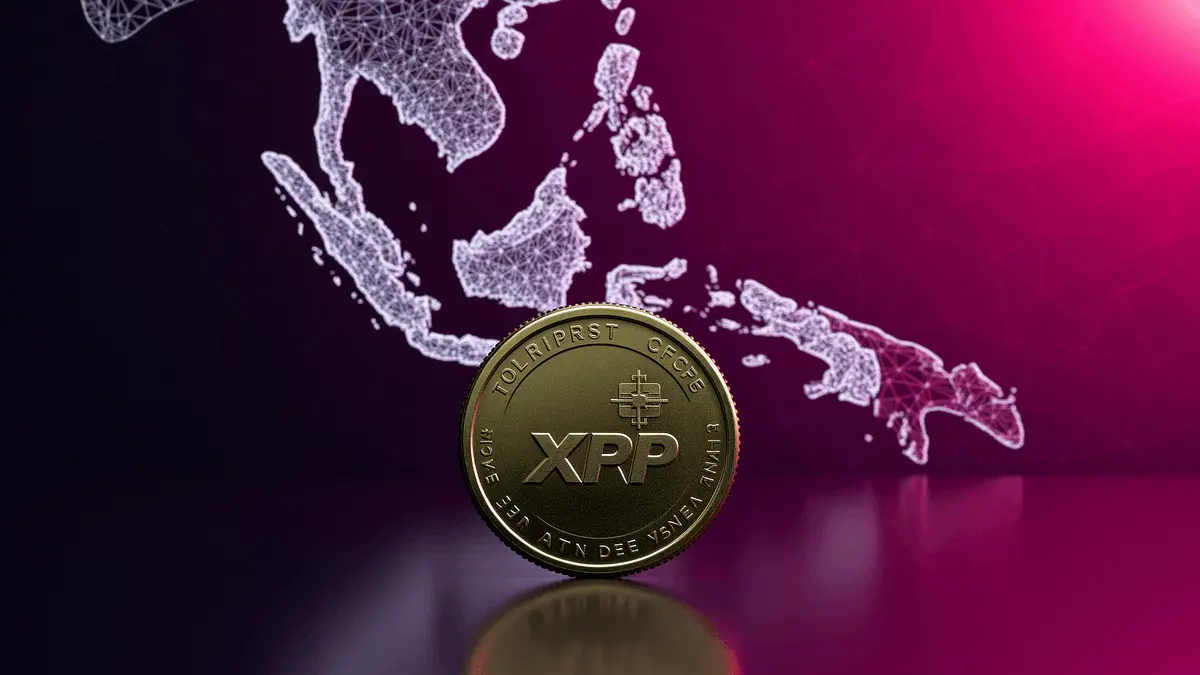
    XRP’s price outlook is growing increasingly bullish as Ripple continues its expansion into Southeast Asia, though the market has yet to fully reflect this positive development. A recently resurfaced announcement from SBI Remit confirms the live operation of XRP-powered remittance infrastructure across Indonesia, the Philippines, and Vietnam – three of the world’s largest remittance markets.

    Crypto researcher SMQKE shared documentation on X, detailing SBI Remit’s official announcement of an XRP-based international money transfer service. This service, developed through a collaboration between SBI Remit, SBI VC Trade, Ripple, and SBI Ripple Asia, now covers all three key markets.

    The timing of this expansion is particularly opportune, as Indonesia’s Financial Services Authority (OJK) is actively developing a regulatory framework for real-world asset tokenization. This positions Ripple’s existing infrastructure in a strategically advantageous spot.

    The remittance service itself is designed to facilitate rapid, low-cost, and scalable cross-border bank account transfers by leveraging XRP’s underlying architecture.

    Analysts project XRP to trend towards $1.62 by the end of 2026, representing a potential 40% increase from current levels. This forecast, however, is contingent on the narrative catalysts translating into tangible market demand.

    Current technical indicators suggest a more cautious near-term outlook. The Relative Strength Index (RSI) is attempting a reversal near 30, a historically oversold territory that often precedes price bounces, though without guarantee. Both the Volume Weighted Average Price (VWAP) and the 20-day Simple Moving Average (SMA20) are trading above the current price, indicating a prevailing bias towards selling rallies until these averages are reclaimed.

    Key resistance levels are identified at $1.30 and $1.50. Clearing these levels sequentially will be crucial for any sustained upward price movement. Previous attempts to break through these resistance points have been met with rejection, underscoring the need for caution.

    The upcoming Ripple Swell 2026 event is another potential catalyst that could significantly influence the narrative, especially with the confirmed participation of Hollywood actor Matt Damon, co-founder of Water.org. Damon is expected to discuss how Water.org is utilizing Ripple Payments and $RLUSD to accelerate money movement and drive impact.

    While the projected 40% upside for XRP by year-end, assuming the base case scenario plays out, is considered respectable, it may not present the asymmetric investment opportunity that active traders typically seek. The current disconnect between fundamental developments and price action is precisely the environment where early-stage infrastructure projects often attract significant capital rotation.

    One such project is LiquidChain, a Layer 3 infrastructure initiative focused on unifying liquidity from Bitcoin, Ethereum, and Solana into a single execution environment. This aims to address the capital fragmentation that hinders efficiency across different blockchain networks.

    LiquidChain’s Unified Liquidity Layer enables single-step cross-chain execution with verifiable settlement, allowing developers to deploy applications once and access all three major ecosystems. This represents a significant technical advantage in a market where bridging friction continues to impose costs on traders.

    The LiquidChain presale is currently underway, with $LIQUID tokens priced at $0.01471. To date, the project has raised over $853,000. Investors are encouraged to research LiquidChain and review its technical documentation before the presale concludes.