Tag: DeFi

  • Tempo Blockchain’s Stablecoin Market Cap Surges 161% Following OUSD Launch

    Tempo Blockchain’s Stablecoin Market Cap Surges 161% Following OUSD Launch

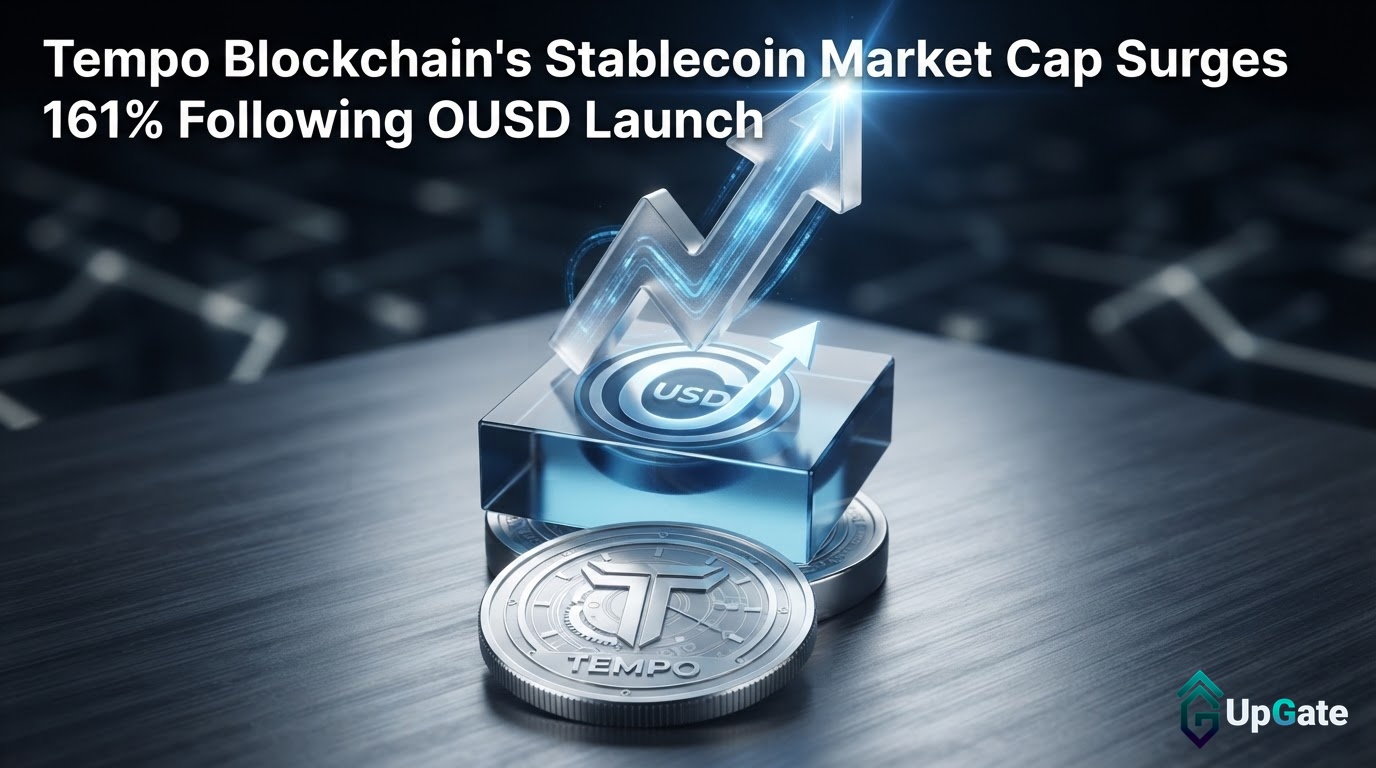
    Tempo, a Layer 1 blockchain, has seen its aggregate stablecoin market capitalization skyrocket by approximately $450 million, a 161% increase within a single week. This surge has propelled the platform’s total stablecoin supply to around $729 million, largely driven by the recent launch of the OUSD stablecoin.

    OUSD, which debuted on Tempo on September 30, 2026, has rapidly captured a significant market share, reaching an estimated market cap of $471.72 million. According to DefiLlama data, this accounts for roughly 64.7% of Tempo’s total stablecoin market. Other stablecoins on the platform include USDC ($92.76 million), USDBridge ($86.02 million), and pathUSD ($60.99 million).

    Key features of OUSD appear to be fueling its swift adoption. The stablecoin offers zero fees for minting or redemption and has no volume caps. Its reserves are held by major financial institutions such as BlackRock, Lead Bank, and BNY Mellon, indicating a design focused on institutional accessibility. OUSD also launched with substantial liquidity, exceeding $400 million.

    Accessibility is further enhanced through partnerships, with support already in place via Coinbase, Stripe, and Visa. Mastercard is also anticipated to offer support for OUSD.

    Tempo, incubated by Stripe and Paradigm, launched its mainnet on March 18, 2026. The blockchain secured $500 million in a Series A funding round in October 2025, at which point it held a valuation of $5 billion. Built on Ethereum’s architecture, Tempo is engineered for enterprise-scale stablecoin payments. Notably, the platform lacks a native token; transaction fees, averaging below $0.001, are paid using supported stablecoins.

    Tempo is reportedly developing partnerships with OpenAI and Visa, though the finalization of these agreements remains uncertain. Similarly, the full scope of Mastercard’s future support for OUSD is not yet reported.

    The rapid adoption of OUSD on Tempo suggests strong institutional interest and an effective market entry strategy for the stablecoin. This growth also highlights Tempo’s focus on low-fee, enterprise-scale stablecoin transactions, underpinned by its technical architecture.

    Why This Matters

    The materials describe a narrow update: Tempo, a Layer 1 blockchain, saw its aggregate stablecoin market cap increase by approximately $450 million (161%) in one week, reaching a total of around $729 million. The finalization status of partnerships with OpenAI and Visa.

    Broader Context

    Source materials place the factual news in this context: Tempo is a Layer 1 blockchain incubated by Stripe and Paradigm.

  • Hyperliquid Secures $15M USDC for HYPE Buybacks

    Hyperliquid Secures $15M USDC for HYPE Buybacks

    Hyperliquid to Fund Token Buybacks with Stablecoin Yield, Diversifying Revenue

    Hyperliquid is poised to begin funding buybacks of its native HYPE token using revenue streams entirely independent of trading volume. This marks a significant shift for the decentralized perpetuals exchange, introducing a new, less volatile source of capital for token support.

    First Yield Payment Nears Transfer

    The exchange’s Automated Yield Aggregation version 2 (AQAv2) framework is set to disburse its inaugural yield payment. Approximately $14.58 million in USDC is scheduled for transfer to the Hyperliquid Assistance Fund by October 3, 2026. This figure aligns closely with market expectations of around $15 million. For HYPE, whose buyback mechanism has historically relied solely on trading fees, this introduces a secondary, more stable revenue stream.

    AQAv2 Mechanism Explained

    Under the AQAv2 system, roughly 90% of the net yield generated from Hyperliquid’s USDC reserves will be directed to the Assistance Fund. This fund will then utilize the capital to purchase HYPE tokens on the open market for subsequent burning.

    Yield generation commenced on August 26, 2026, with the upcoming payment covering the initial accumulation period. The AQAv2 framework received approval from validators on June 12, 2026, securing 69.08% of the vote.

    Key Partners in Yield Generation

    The operational infrastructure for this new yield generation involves prominent entities in the stablecoin ecosystem. Coinbase is designated as the official USDC treasury deployer, while Circle manages the technical aspects of the deployment. This setup adheres to a 1:9 ratio for technical-to-treasury balance requirements.

    Current estimates place Hyperliquid’s USDC reserves between $5 billion and $6.7 billion. At an approximate 3% yield, this translates to a projected annual buyback funding of $135 million to $200 million solely from these reserves.

    Combined Buyback Capacity

    While approximately 99% of Hyperliquid’s trading fees are already channeled into the Assistance Fund, contributing an estimated $771 million in annual buyback capacity, the addition of USDC yield is expected to push the total annual buyback potential beyond $900 million.

    The Assistance Fund has historically acquired around 45 million HYPE tokens for approximately $1.1 billion at lower price points. Since HYPE’s launch in late 2024, cumulative token burns have reached hundreds of millions.

    Understanding Hyperliquid and Perpetuals

    Hyperliquid operates as a decentralized perpetuals exchange built on its own Layer 1 blockchain. Perpetual futures, or “perps,” are financial contracts that allow traders to maintain leveraged positions indefinitely without an expiration date.

    AQAv2’s Strategic Impact

    The AQAv2 framework introduces a subtle but significant change. Stablecoin deposits on exchanges often remain static, even during periods of reduced trading activity, as traders may keep collateral on the platform between active positions. The yield generated from these balances continues to accrue regardless of new trade initiations.

    The reliance on Coinbase and Circle as USDC deployment partners means that a portion of HYPE’s tokenomics is now linked to the operational stability and policies of these centralized firms.

    Validator Sentiment and Future Scrutiny

    The 69.08% validator approval indicates substantial support for the AQAv2 plan, though nearly a third of validators did not endorse it. Future adjustments to the yield distribution or buyback mechanisms are likely to face similar levels of scrutiny.

    The immediate focus will be on the actual transfer of the $14.58 million payment to the Assistance Fund. Once this transaction is completed, the market will gain its first tangible insight into the practical impact of this new revenue stream on HYPE’s buying pressure.

  • SparkLend Hits 600,000 ETH Deposited, New Record

    SparkLend Hits 600,000 ETH Deposited, New Record

    SparkLend Reaches Record 600,000 ETH in Deposits

    Mid-September 2026 – The decentralized finance lending protocol SparkLend has achieved a significant milestone, reaching an all-time high of 600,000 Ether (ETH) in deposits. This marks a steady ascent for the platform, which held 380,000 ETH in late April 2026 and saw deposits climb to 516,000 ETH by mid-May.

    Growing Balance Sheet and Total Value Locked

    The protocol’s overall financial health has mirrored this deposit growth. As of mid-September 2026, the total market size, representing all assets supplied to SparkLend, stands at $7.39 billion. The total value locked (TVL), a key metric in decentralized finance, is approaching $4.96 billion. TVL is commonly understood as the capital actively secured within the protocol, distinct from funds lent out. Currently, active loans on the platform total approximately $2.4 billion.

    Whale Activity Fuels Growth

    A notable contributor to SparkLend’s deposit surge has been the influx of large holders, often referred to as “whales.” These significant investors funneled an estimated 88,320 ETH into the protocol over the six months leading up to September 2026.

    Spark Ecosystem and Sky Connection

    SparkLend operates as the primary lending protocol within the broader Spark ecosystem. Spark itself is closely linked to Sky, a protocol previously known as MakerDAO, a foundational entity in the decentralized finance landscape.

    USDS Borrowing Hits New Peaks

    Borrowing of the stablecoin USDS on SparkLend has also reached unprecedented levels, fluctuating between $800 million and $900 million. In contrast to many lending markets where interest rates are dictated by market forces, SparkLend employs governance-controlled rates for assets like USDS.

    Focused Collateral and Deployment Strategy

    SparkLend maintains a focused approach, limiting its collateral options primarily to wstETH, a wrapped version of staked ETH, and previously rETH. The protocol also imposes restrictions on high-leverage looping activities when compared to its competitors. In a strategic move to streamline operations, SparkLend fully deprecated its Gnosis Chain deployment on September 14, 2026, concentrating its efforts exclusively on the Ethereum network.

    Investor Shift Towards Conservative DeFi

    The recent growth at SparkLend occurs against a backdrop of increased investor caution in the DeFi space. Following incidents that impacted rival platforms, there has been a discernible shift towards more conservative DeFi protocols. Institutional participants, in particular, are showing a preference for vetted, lower-risk lending solutions.

    Strategic Implications for Sky and USDS Distribution

    For Sky, the substantial USDS borrowing figures on SparkLend are particularly significant. The volume between $800 million and $900 million suggests that SparkLend is effectively serving as a distribution channel for the stablecoin, extending its utility beyond simply being a place to hold ETH.

    However, the reliance on a relatively small number of large holders for significant ETH inflows, approximately 88,320 ETH over six months, presents a potential concentration of risk. Should these whales decide to withdraw their funds, it could have a material impact on the protocol’s deposit figures. The exclusive focus on Ethereum further consolidates this exposure.

  • Circle Launches Stablecoin Services on Arc

    Circle Launches Stablecoin Services on Arc

    Circle Aims to Transform Apps into Mini Banks with New Arc Blockchain Tools

    Circle is empowering developers to integrate banking-like functionalities directly into their applications on the Arc blockchain. On September 30, 2026, the company unveiled three developer kits designed to enable seamless embedding of stablecoin purchases, lending, and borrowing within third-party products.

    These kits significantly streamline the process for developers, allowing them to add sophisticated financial features without the need to build their own complex and potentially error-prone smart contracts, a common hurdle in launching crypto-based services. The release follows closely on the heels of Arc’s public mainnet launch on September 16, 2026.

    Onramp Kit: The Digital Gateway

    The Onramp Kit serves as the primary entry point, enabling users to purchase USDC and EURC stablecoins directly within an application using familiar payment methods like Apple Pay, Google Pay, or a debit card. Currently, this feature is available to eligible users in the US, UK, and EU, who must complete Know Your Customer (KYC) verification through the designated payment provider.

    Earn Kit: Generating Yield

    With the Earn Kit, applications can offer users opportunities to earn yield on their USDC and EURC holdings. The underlying mechanism relies on the Morpho protocol, a decentralized lending platform that facilitates deposits from users and loans to borrowers, with depositors receiving a share of the generated interest.

    Borrow Kit: Accessing Liquidity

    The Borrow Kit allows users to take out USDC loans, utilizing cirBTC as collateral. This functionality is also powered by Morpho-supported markets. cirBTC, Circle’s token backed by Bitcoin, provides users with a way to access liquidity without having to sell their underlying Bitcoin holdings.

    A Comprehensive Developer Suite

    These new kits are integrated into Arc App Kits, Circle’s overarching software development kit. The entire suite is engineered to embed a range of financial services, including payments, swaps, onramps, and yield generation, directly into applications.

    Historically, Circle’s on-chain financial infrastructure, such as Circle Mint, has primarily catered to institutional clients handling substantial transaction volumes. The introduction of these new kits signals a strategic shift towards supporting consumer-facing applications.

    Arc operates as a proof-of-authority layer-1 blockchain, specifically optimized for stablecoin-centric applications. In this consensus model, a select group of authorized validators verifies transactions, differing from the open participation of many other blockchain networks. A key feature of Arc is that transaction fees are paid in USDC, eliminating the need for users to hold a separate, volatile cryptocurrency for network operations.

    In the initial days following its mainnet launch, the Arc network saw significant activity, with $649 million in USDC and $7 million in EURC being transferred onto the platform.

    Circle’s recent strategic moves include the acquisition of Singapore-based Tazapay for $400 million, bolstering its cross-border payment capabilities. The company has also launched StableFX, a product offering 24/7 stablecoin foreign exchange settlement, directly challenging the limitations of traditional FX markets that operate within standard business hours.

    For developers, integrating features like lending or onramps from scratch typically involves considerable expertise in smart contracts, rigorous security audits, and establishing relationships with payment providers. Circle’s new kits bundle these essential components, offering a streamlined solution.

    Applications that adopt these kits will inherently link their financial functionalities to Circle’s infrastructure, Morpho’s lending markets, and third-party KYC providers. This interconnectedness means that any disruptions within this chain could have downstream effects on end-users.

    Notably, Circle is not developing its own lending engine independently. Instead, it is leveraging Morpho’s existing infrastructure, positioning the partnership as a significant distribution channel rather than solely a competitive offering.

    The Borrow Kit introduces an alternative method for users to borrow against their Bitcoin holdings via cirBTC without liquidating their assets. However, it’s important to note that positions on lending markets remain susceptible to liquidation if the collateral’s value experiences a sharp decline, a risk that user-friendly interfaces do not negate.

    The current geographical restrictions for the Onramp Kit, limited to eligible users in the US, UK, and EU, highlight the ongoing fragmentation of stablecoin access across different jurisdictions.

    The success of Circle’s strategy will be measured by adoption metrics. Key indicators will include the number of applications integrating these kits, the growth of USDC and EURC circulation on the Arc network beyond the initial figures, and the volume of lending activity within Morpho-supported markets. These metrics will collectively determine the impact of Circle’s push into consumer-focused financial applications.

  • BetFury Launches 1000x Multiplier Futures, Slippage-Free Trading

    BetFury Launches 1000x Multiplier Futures, Slippage-Free Trading

    BetFury Launches Crypto Derivatives with Up to 1000x Multiplier

    WILLEMSTAD, Curaçao – September 30th, 2026 – BetFury, a prominent cryptocurrency casino, has introduced BetFury Futures, a new derivatives product integrated into its ecosystem. The offering boasts a multiplier of up to 1000x, combining high-volume Bitcoin trading with its proprietary FuryWaves game tool. This innovative approach merges traditional crypto markets with in-house gaming, catering to both traders and players within a single platform.

    A High Multiplier Without Order Book Limitations

    The substantial 1000x multiplier sets BetFury Futures apart from conventional exchanges, which typically cap multipliers between 100x and 125x, even for their most liquid contracts. The usability of BetFury’s high multiplier is attributed to its underlying execution model, which bypasses the common frictions associated with traditional order books.

    This execution model, coupled with the 1000x multiplier, is reportedly driving significant performance. A recent Bitcoin trade reportedly yielded approximately 10% ROI, while positions in FuryWaves have achieved returns in the 3.9% to 4.0% range. Traders also have the flexibility to set Take Profit and Stop Loss levels, and can simultaneously hold both long and short positions on the same asset.

    Asset Range on BetFury Futures

    BetFury Futures currently lists eight major cryptocurrencies: Bitcoin (BTC), Ethereum (ETH), Binance Coin (BNB), Ripple (XRP), Dogecoin (DOGE), Solana (SOL), Bitcoin Cash (BCH), and Cardano (ADA). In addition to these, the platform features FuryWaves, a unique proprietary tool. The price of FuryWaves is determined by a randomizer, resetting to $1,000 every 24 hours at 00:00 UTC. It typically fluctuates by an average of around 250%, with peaks nearing +290%. This mechanism operates on a provably fair logic, similar to hash-based game rounds, ensuring that all outcomes are generated in advance and cannot be manipulated by the platform.

    The platform also facilitates rapid asset listings. Cryptocurrencies already available on BetFury can be added to the Futures platform in approximately 30 seconds, while entirely new coins can be integrated within a few hours.

    Analysis of trading volumes over the past three months, featuring Bitcoin, FuryWaves, BNB, Ethereum, and Dogecoin, highlights the platform’s dual appeal. The product attracts both traditional crypto traders and users of its gaming tools in roughly equal measure, distinguishing it from a purely crypto exchange.

    “Exchanges built their futures around the order book, and traders inherited its problems: slippage, queues, fills that never land,” stated the Chief Product Officer of BetFury. “We rebuilt the product without that baggage. A fixed price, a guaranteed fill, and the option to pay a fee only when you win. That is what futures should have been from the start.”

    Unified Balance for Trading, Staking, and Gaming

    BetFury Futures is integrated within BetFury’s broader suite of crypto tools, utilizing a single account for all functionalities. Users can seamlessly transfer capital between Futures, Crypto Staking (offering up to 60% APR), and Crypto Swap without exiting the ecosystem. This allows for the reinvestment of returns directly into trading or gaming activities, creating a unified ecosystem where a single balance operates across markets, staking, and gaming.

    About BetFury

    Founded in 2019, BetFury is a cryptocurrency entertainment ecosystem. The platform offers over 13,000 casino games, 24 original games with Return to Player (RTP) rates up to 99.28%, and more than 80 sports betting options with competitive odds. In addition to gaming and standard crypto tools, BetFury provides BFG Staking for accumulating native tokens or receiving payouts in USDT. The platform emphasizes continuous evolution based on user feedback and is committed to responsible gambling practices. More information is available at betfury.com.

  • Volmex Launches Bitcoin Implied Volatility Futures on Hyperliquid

    Volmex Launches Bitcoin Implied Volatility Futures on Hyperliquid

    Volmex Launches First On-Chain Bitcoin Volatility Futures on Hyperliquid

    Volmex Finance has introduced perpetual futures contracts tied to its Bitcoin Volmex Implied Volatility Index (BVIV) on the Hyperliquid exchange. This development marks the debut of an on-chain market specifically designed for trading Bitcoin’s expected volatility as a distinct asset.

    This new offering can be seen as the cryptocurrency market’s equivalent to the VIX, Wall Street’s widely recognized “fear gauge” that monitors anticipated S&P 500 volatility. Unlike the VIX, which is typically accessed through institutional brokerage accounts, the BVIV futures are available on a decentralized exchange and offer leverage of up to 5x.

    The BVIV index measures Bitcoin’s 30-day expected implied volatility by aggregating real-time options data from Deribit and OKX, two of the leading cryptocurrency options trading platforms. Recent readings for the index have hovered in the mid-to-high 30s, providing a general indication of the market’s current sentiment regarding near-term price fluctuations for Bitcoin.

    The perpetual futures contract employs a linear payout structure. For every one-point movement in the index, a trader’s profit or loss is equivalent to $1 USDC. For instance, a trader holding a long BVIV position at 35 that surges to 50 during a period of market turmoil would realize a gain of $15 per contract, without the need to understand complex options Greeks.

    These contracts are collateralized with USDC and utilize isolated margin. This means that a losing position in a volatility trade will not impact other assets held by the trader on the platform. Funding rates are calculated on an hourly basis, a departure from the more common eight-hour intervals found on most perpetual futures markets, reflecting the potentially abrupt shifts characteristic of a volatility index.

    The initial open-interest cap has been set at $2 million, a precautionary measure to allow the market to stabilize. Trading is accessible via the Markets by Kinetiq frontend under the ticker mkts:BVIV.

    Volmex CEO Cole Kennelly highlighted the launch as a significant opportunity for crypto traders and investors to engage in hedging and speculation strategies, bypassing the typical complexities associated with options trading.

    The selection of Hyperliquid as the listing venue is noteworthy. The platform has emerged as a leading decentralized perpetual futures exchange, facilitating billions in daily trading volume and achieving a valuation exceeding $90 billion. The addition of a volatility-specific product broadens the exchange’s offerings beyond simple cryptocurrency price speculation.

    However, the product is not without its inherent risks. Volatility indices can experience “gap behavior,” where the index experiences sharp jumps between calculation periods rather than smooth progression. For traders employing leverage, such gaps can lead to significant losses, potentially resulting in liquidation. While the isolated margin system helps to mitigate this risk, it does not entirely eliminate it.

  • Amaze Holdings to Acquire BullionFX for $155 Million

    Amaze Holdings to Acquire BullionFX for $155 Million

    Amaze Holdings to Acquire Gold-Backed DeFi Ecosystem BullionFX for $155 Million

    NEWPORT BEACH, California, September 29th, 2026 – Amaze Holdings, Inc. (NYSE American: AMZE) announced today it has entered into a binding Letter of Intent (LOI) to acquire the assets of BullionFX, including its core platform Alchemy, for approximately $155 million in stock. The proposed acquisition would integrate a decentralized financial ecosystem backed by physical gold into Amaze’s portfolio, expanding its reach into retail, institutional, and blockchain markets.

    The BullionFX assets encompass the technology, infrastructure, and intellectual property behind a blockchain-based financial ecosystem centered on auditable physical gold. This move signifies a strategic pivot for Amaze, extending its operations beyond creator commerce into gold-backed digital asset infrastructure. The transaction arrives amidst a notable resurgence in cryptocurrency markets, significant growth in stablecoin transaction volumes, renewed institutional interest in digital assets, and the continued strength of gold as a traditional store of value. Visa Onchain Analytics (Allium) reported that adjusted stablecoin transaction volume reached $1.79 trillion in June 2026, a 125% increase year-on-year.

    “The renewed momentum in crypto and gold’s enduring role as a store of value have created a unique opportunity for infrastructure built on both,” stated Joel Krutz, Interim Chief Executive Officer of Amaze. “Alchemy is a comprehensive, gold-backed financial ecosystem, and we believe bringing it to the public markets can generate substantial long-term value for our shareholders.”

    The acquisition will provide Amaze with the technology, infrastructure, and intellectual property for a robust decentralized finance (DeFi) ecosystem. In this system, each unit of digital value is linked to physical gold held by independent custodians. The platform’s architecture is designed to support lending and borrowing protocols, yield-generating products, cross-chain interoperability, and an Ethereum-based Layer 2 network. This network aims to bridge traditional and decentralized finance, catering to the rapidly expanding market for gold- and USD-backed stablecoins and offering users broad functionality, including access to yield opportunities.

    Following the closing of the transaction, Amaze plans to prioritize the launch of its self-custody retail wallet and yield engines. As an initial institutional application, the company intends to pursue the establishment of a listed Stable Asset Treasury (SAT) vehicle for gold and USD, subject to regulatory approvals.

    “We’ve observed traditional financial markets increasingly adopting blockchain technology and, more recently, stablecoins, driven by retail users seeking greater control, custody, and transferability of their assets,” said Stephen Moss, Founder of BullionFX. “We believe traditional finance will increasingly converge with decentralized finance to leverage the best attributes of both. Alchemy is strategically positioned to bring a range of bridged traditional and decentralized financial products to market, introducing innovative offerings at both retail and institutional levels while aiming to mitigate risks associated with conventional stablecoin models. Becoming part of a publicly listed company will provide Alchemy with the access and institutional credibility needed to accelerate our mission: a stable, transparent financial ecosystem for retail users that bridges traditional and decentralized finance.”

    Inside the Alchemy Platform

    $GOLD, Backed by Physical Gold: Alchemy’s primary token, $GOLD, is designed to be backed one-to-one by physical gold held in secure vaults, independently custodied and audited. Reserves are intended to be subject to real-time attestation through third-party, institutional-grade audit mechanisms. $GOLD is positioned as the network’s settlement asset, combining the stability of a hard asset with the speed and transparency of blockchain settlement.

    Built for the Stablecoin Industry: Alchemy is a platform for both retail and institutional clients, developed to serve the rapidly growing stablecoin industry. Its compliance-focused architecture is engineered to support gold-linked payments, yield generation, lending, borrowing, cross-chain interoperability, and open-ecosystem DeFi applications that third-party developers can build upon.

    Institutional Gold Infrastructure on Ethereum Layer 2: For institutional clients, Alchemy offers gold-based infrastructure encompassing gold as a currency, USD products collateralized by gold, and other gold-backed financial products. Operating on an Ethereum-based Layer 2 network, it aims to bring gold’s inherent stability on-chain, serving as a foundation for future industry products.

    Proprietary Yield Engines: Alchemy’s proprietary yield engines for gold and USD are designed to power institutional products targeting competitive returns by connecting traditional and decentralized markets.

    Self-Custody for Retail: A planned self-custody retail wallet is intended to provide users with direct access to gold-linked payments, yield, and DeFi applications, while maintaining full control over their assets.

    “Stablecoins have demonstrated the demand for digital money. The next critical question is what that money is anchored to,” commented Simon Rahme, Co-Founder and CTO of BullionFX | Alchemy. “We engineered Alchemy’s Layer 2 so that gold is integrated within the settlement layer itself, rather than being layered on top. This provides developers and institutions with a robust foundation for payments, lending, and yield products, with reserves designed to be verifiable on-chain.”

    Transaction Terms

    The LOI, which includes certain binding provisions, outlines the parties’ commitment to work towards definitive agreements. The transaction, if completed, will involve a significant issuance of Amaze common stock to BullionFX. The final terms are contingent upon satisfactory due diligence, regulatory review, approval from each company’s board of directors, and other customary closing conditions.

    About Amaze Holdings, Inc. (NYSE American: AMZE)

    Amaze Holdings, Inc. operates an end-to-end, creator-powered commerce platform. It provides tools for brand development, product creation, advanced e-commerce solutions, audience growth, and scalable managed services. By enabling individuals to transform their knowledge, creations, and shared content into sustainable income, Amaze empowers creators to foster deeper audience relationships and pursue more flexible paths to personal and financial well-being. Further information is available at www.amaze.co.
  • Raydium Revenue Surges to Mid-2025 High Amid Tokenized Equity Boom on Solana

    Raydium Revenue Surges to Mid-2025 High Amid Tokenized Equity Boom on Solana

    Raydium, Solana’s largest decentralized exchange, has reported its strongest weekly revenue figures in over a year, driven not by another memecoin surge, but by the trading of tokenized stocks.

    Revenue Surge Fueled by Tokenized Equities

    The protocol’s 30-day holder revenue reached $4.43 million, with $1.19 million generated in the most recent seven-day period alone. Total protocol revenue over the past 30 days hit $6.94 million, a level not seen since the summer of 2025.

    This significant revenue increase is attributed to a single integration: on September 5, 2026, Raydium incorporated StonkFun, a platform focused on tokenized equities, via its LaunchLab infrastructure. This partnership dramatically reduced the cost of deploying a new token from 0.29 SOL to 0.03 SOL, a reduction of approximately 90% in launch fees.

    Impact on Trading and Token Value

    The more accessible on-ramp immediately spurred a surge in tokenized equity trading. Assets mirroring major companies like Boeing and Roblox began to see substantial trading volume on Raydium’s pools. On September 6, the day after the integration, Raydium recorded a single-day protocol revenue peak of nearly $440,000.

    On the same day, protocol buybacks of Raydium’s governance token, RAY, amounted to $640,788, the highest daily buyback figure since February 2025. This buyback mechanism functions similarly to a stock repurchase program, where protocol revenue is used to purchase RAY from the open market, thereby reducing circulating supply and theoretically bolstering the token’s price.

    The market responded positively. RAY experienced a rally of approximately 90% within a week, reaching an 11-month high of around $2.01. Its market capitalization neared $543 million at the peak of this surge.

    Repurposing LaunchLab for Traditional Finance

    Raydium’s early history was closely linked to the memecoin economy, serving as a primary liquidity hub for Solana’s numerous dog-themed, frog-themed, and celebrity-adjacent tokens throughout 2024 and 2025. As the memecoin trend cooled, Raydium’s performance also declined.

    The StonkFun integration marks a significant shift. Tokenized asset trading volume on Raydium saw substantial growth in Q2 2026, reaching $2.09 billion for the quarter. Raydium’s LaunchLab, initially designed for memecoin token creation and liquidity bootstrapping, has been effectively repurposed. By drastically lowering deployment costs, it has become a viable launchpad for tokenized versions of traditional financial instruments.

    The $2.09 billion in tokenized asset trading volume during Q2 2026 indicates genuine market demand. With daily revenue reaching $640,788, the protocol is generating sufficient income to meaningfully support its own token price through open-market purchases.

    Regulatory Hurdles Loom

    However, the burgeoning market for tokenized equities faces potential regulatory challenges that memecoins largely sidestepped. Synthetic stock tokens currently exist in a regulatory gray area in most jurisdictions. Should regulators classify these instruments as securities, platforms facilitating their trading could face enforcement actions. The cost reduction that made StonkFun’s integration so impactful also makes it exceptionally easy to launch tokens that might attract regulatory scrutiny.

  • Uniswap Dominates Tokenized Stock Deposits with $82M as DeFi Welcomes Equities

    Uniswap Dominates Tokenized Stock Deposits with $82M as DeFi Welcomes Equities

    Uniswap Dominates Tokenized Stock Trading, Capturing Nearly Half of Market Liquidity

    Uniswap has emerged as the leading platform for trading tokenized stocks, attracting $82.8 million in deposits over the past 30 days. This surge positions the decentralized exchange as the primary venue for individuals seeking to trade shares of companies like Apple and Tesla without engaging with traditional brokerage accounts. Currently, Uniswap accounts for 73% of all tokenized stock deposits on Robinhood Chain, a Layer 2 network specifically designed for tokenized real-world assets.

    The broader decentralized finance (DeFi) market for tokenized stocks has reached approximately $192.6 million in total value locked (TVL). Uniswap’s substantial share means it alone contributes nearly half of the sector’s overall liquidity.

    Uniswap V4 Drives Inflows

    The recent influx of capital was largely absorbed by Uniswap’s V4 deployment, which secured $54.7 million, while its predecessor, V3, attracted an additional $28.1 million. As of early September, Uniswap V4 led all protocols in TVL for tokenized stocks, boasting $59.1 million. This figure surpasses competitors such as Kamino Lend on Solana, which held $41.7 million, and Uniswap V3’s $20.9 million.

    Enhanced Functionality with V4 Hooks

    A key innovation in Uniswap V4 is the introduction of “hooks,” which are programmable plugins enabling developers to customize the behavior of liquidity pools. For tokenized securities, these hooks allow for the enforcement of Know Your Customer (KYC) requirements, the restriction of access to verified wallets, and the adjustment of fee structures. Crucially, these features are implemented without compromising the permissionless architecture that has been a cornerstone of DeFi’s appeal.

    Robinhood Chain and Trading Volume

    Robinhood Chain, launched on July 1, 2026, is an Ethereum-compatible Layer 2 solution dedicated to tokenized real-world assets. Cumulative trading volume for Robinhood’s stock tokens has exceeded $3 billion. In the last 30 days alone, decentralized exchange volume for tokenized stocks neared $20.9 billion, with Uniswap facilitating approximately 60% of this activity.

    Diverse Issuers and Regulatory Landscape

    The tokenized stocks themselves originate from various issuers. Robinhood issues its own tokens on its dedicated chain, while other providers, including xStocks (backed by Backed), Ondo, and AnchoredFi, offer tokenized equity exposure across multiple blockchains, including Solana.

    The U.S. Securities and Exchange Commission (SEC) announced an Innovation Exemption for tokenized securities venues around September 18, 2026. This development is expected to provide a clearer legal framework for platforms like Uniswap to host regulated assets. Uniswap had proactively prepared for this shift, integrating tokenized securities, including derivatives linked to companies like Apple and Tesla, into its APIs and front-end applications in June 2026.

    Future Use Cases and Competition

    Uniswap’s V4 hooks and permissioned pools are designed to facilitate a range of downstream use cases. A tokenized Tesla share held within a Uniswap pool could potentially be used as collateral in lending markets, for margin trading, or incorporated into structured products, all executed on-chain.

    However, the competitive landscape is active. Kamino Lend’s significant TVL on Solana highlights the appeal of alternative blockchains. Solana’s advantages, such as lower transaction costs and faster finality, make it an attractive option for high-frequency tokenized stock trading.

    Risks Associated with Tokenized Stocks

    Despite the growing adoption, the security of tokenized stocks is intrinsically linked to their issuers. Should a token issuer face insolvency or regulatory action, holders could be left with digital representations of shares that no longer have a corresponding asset in a custodial account.

  • Spark Funds $210M for Bitcoin-Backed Institutional Loans

    Spark Funds $210M for Bitcoin-Backed Institutional Loans

    Spark Allocates $210 Million for Institutional Bitcoin-Backed Loans

    Spark, the lending division of the Sky ecosystem (formerly known as MakerDAO), has designated $210 million for institutional loans secured by Bitcoin and held in custody by Anchorage Digital. This collaboration aims to merge the capital efficiency of decentralized finance (DeFi) with the regulated infrastructure necessary for institutional compliance.

    So far, three institutional clients have utilized this facility, borrowing $150 million in USDC against $222 million worth of Bitcoin. This represents a collateralization ratio of approximately 148%, meaning borrowers are pledging nearly $1.50 in Bitcoin for every dollar borrowed.

    The operational framework is built upon Anchorage’s Atlas platform, which acts as the collateral agent in a three-party lending agreement. The platform oversees loan-to-value ratios, manages payments, and executes margin calls and liquidations when collateral values fall significantly.

    A key innovation of this arrangement is that borrowers are not required to move their Bitcoin entirely on-chain to access Spark’s liquidity pools. Instead, the Bitcoin remains in Anchorage’s regulated custody, while Spark provides the stablecoin lending capabilities.

    To enhance risk management, Spark integrated RedStone oracles in mid-June 2026. These oracles transmit real-time loan-to-value (LTV) data for the Anchorage-held collateral directly onto the blockchain, offering the protocol and its stakeholders continuous insight into the health of these loans.

    By the end of the second quarter of 2026, Anchorage’s share of Spark’s total lending portfolio had increased by approximately 70%, reaching around $260 million. The Anchorage channel has also emerged as the most profitable segment within Spark’s offerings, generating returns of about 6.5%.

    This expansion occurs within the context of an estimated $33 billion off-chain crypto-backed lending market.

    Anchorage Digital operates as a federally chartered digital asset bank, adhering to a regulatory framework that institutional borrowers and their legal teams can readily acknowledge. By channeling Bitcoin collateral through Anchorage, rather than demanding full on-chain deposits, Spark enables institutions to maintain compliance within traditional finance while simultaneously accessing decentralized liquidity.