
Tag: Negative

  • EU Sanctions Justin Sun’s HTX, Two Months After UK

    EU Sanctions Justin Sun’s HTX, Two Months After UK

    EU Adds Crypto Exchange HTX to Latest Russia Sanctions Package

    The European Union has included HTX, a cryptocurrency exchange associated with Tron founder Justin Sun, in its latest round of sanctions targeting Russia. The exchange was named in the EU’s 21st sanctions package, adopted Thursday, which the bloc described as its largest list of individual designations in four years, comprising 218 entities.

    HTX, operating under its parent company Huobi Global SA, is listed in an annex of crypto and financial firms accused by the EU of “significantly frustrating” its measures against Russia. As of August 23, individuals within the EU will be prohibited from conducting transactions with the exchange. However, this listing does not involve asset freezes or a complete designation of the entity. HTX did not immediately respond to a request for comment.

    The sanctions package significantly expanded the EU’s crypto-related measures. The bloc extended its transaction ban to 14 crypto service platforms based in Georgia, Panama, the United Arab Emirates, the Marshall Islands, Kyrgyzstan, and Belarus. Additionally, four designations were added that are linked to the “A7” cross-border network, citing its new connections to Africa.

    For the first time, the EU also signaled the potential for a complete ban on a third country’s crypto services, aiming to deter jurisdictions that host platforms facilitating Moscow’s evasion of restrictions. “We’re hitting over a hundred banks and crypto operators,” stated EU foreign policy chief Kaja Kallas, adding that “With each round of sanctions, we squeeze Russia’s economy and its capacity to prolong its illegal war.”

    HTX, formerly known as Huobi and founded in China in 2013, is one of the world’s largest exchanges, having reported over $3 trillion in trading volume in 2025. The United Kingdom sanctioned the exchange in May, marking the first time Britain applied such a measure to an exchange of that magnitude. The UK flagged HTX as suspected of channeling more than $1.5 billion to the Kremlin and accused it of servicing A7, a network whose ruble-pegged stablecoin, A7A5, is reportedly used by Moscow for financial transfers.

    The EU’s decision comes two days after blockchain intelligence firm TRM Labs reported that HTX had “rebuilt its on-chain plumbing” since the UK’s action. The firm noted that the exchange was rapidly cycling hot wallets across TRON, Ethereum, BNB Smart Chain, and Solana, at a pace that made address screening difficult. At the time, TRM highlighted that neither Washington nor Brussels had designated the exchange, a gap the EU has now partially addressed.

    HTX has refuted these accusations. The exchange told Decrypt that the observed wallet activity was a result of “routine, security-driven platform operations.” Following the UK’s action, HTX asserted that Huobi Global S.A. was “distinct from the online HTX exchange,” and that user funds and operations remained unaffected. However, the UK’s Office of Financial Sanctions Implementation emphasized that Huobi’s ownership of HTX made the exchange subject to its sanctions regime.

    Justin Sun, whose U.S. fraud case was settled by the SEC this year for $10 million, was previously a notable supporter of the Trump family’s World Liberty Financial, a relationship that later devolved into legal disputes. Currently, the U.S. Treasury’s Office of Foreign Assets Control (OFAC) has not taken action against HTX, leading to an uneven enforcement landscape across different jurisdictions.
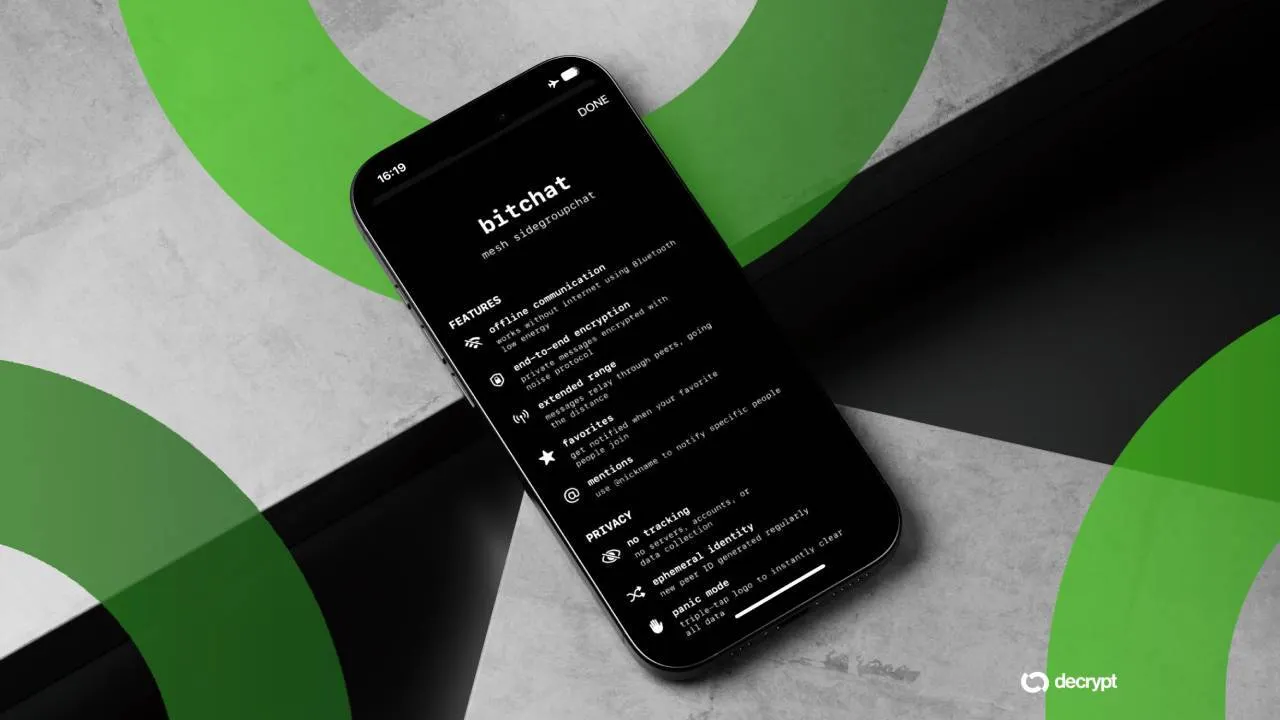

  • India Directs GitHub to Remove Bitchat Source Code Amidst Lawful Interception and Public Order Concerns

    India Directs GitHub to Remove Bitchat Source Code Amidst Lawful Interception and Public Order Concerns

    India’s cybercrime agency has directed GitHub to remove the source code for the decentralized messaging application Bitchat, citing concerns that its design impedes lawful interception and could be exploited during public disorder. The Indian Cyber Crime Coordination Centre (I4C), operating under the Ministry of Home Affairs, issued the order on Thursday, July 24, 2026, demanding the removal of three specific code repositories within a three-hour deadline.

    The Regulatory Mandate
    The targeted repositories are associated with the “permissionlesstech” account and include the main Bitchat project, its Android build, and the Android releases page. The order invoked Section 79(3)(b) of the IT Act, 2000, and Rule 3(1)(d) of the 2021 IT Rules, instructing GitHub to “remove and disable access” to the code without vitiating any evidence.

    Bitchat’s Design and Government Concerns
    Bitchat operates by routing messages directly between nearby phones using Bluetooth mesh networks, a system that does not require internet connectivity, servers, phone numbers, or user accounts. According to the I4C, this architecture “significantly impedes lawful interception, attribution, and investigation.” The agency warned that the app could be exploited during events such as “public disorder, riots, terrorism, organized crime, or internet shutdowns.”

    Broader Implications for Decentralized Technology
    This regulatory action comes as India grapples with a youth-led movement concerning exam-paper leaks. Demonstrations have occurred in Delhi, with protestors reportedly using offline tools like Bitchat when mobile internet services were restricted. Jack Dorsey, co-founder of Twitter and CEO of Block, shared the notice on X (formerly Twitter), commenting that “the government of india does not like technologies like bitchat.” The Bitchat Community account echoed this sentiment, stating, “Governments that fear people talking without permission will always go after the tools that make it possible.”

    The Internet Freedom Foundation condemned the order, arguing it was “unconstitutional and authoritarian” because it named no specific unlawful content and bypassed established blocking procedures. This action by India follows a similar move by China in April, which ordered Bitchat’s removal from the Apple App Store.

    Removing source code from a platform like GitHub aims to halt a project’s development, though open-source code can be copied and mirrored. Indeed, Bitchat repositories were reportedly mirrored to the decentralized code collaboration platform GitLawb hours after India’s order. This event also occurs shortly after Jack Dorsey’s Block launched Buzz, a decentralized platform designed to reduce reliance on services like GitHub.

    It remains uncertain whether GitHub complied with the three-hour deadline set by the I4C. The situation highlights a growing global tension between governments seeking to regulate digital communication and the rise of decentralized, censorship-resistant technologies. The implications for open-source development and user privacy are significant, as such actions by one nation can influence regulatory approaches elsewhere.

    Broader Context

    India’s cybercrime agency has ordered GitHub to take down the code for Bitchat, the decentralized messaging app built by Jack Dorsey, giving the Microsoft-owned platform three hours to comply. The order comes amidst protests in India related to exam-paper leaks, where some demonstrators reportedly turned to offline communication tools like Bitchat when mobile internet services were restricted.

  • Pi Network Price Drops Below $0.09 Amidst Recovery Reversal

    Pi Network Price Drops Below $0.09 Amidst Recovery Reversal

    Pi Network Token Faces Steep Decline Amidst Unraveling Recovery

    While much of the cryptocurrency market has experienced a slight downturn in the past 24 hours, Pi Network’s native token, PI, has suffered a more significant retracement compared to its peers.

    PI’s recent performance is particularly concerning as it appears to have stalled a notable resurgence that followed a series of all-time lows. This raises questions about whether a new price floor is imminent.

    July proved to be a challenging month for the popular, albeit controversial, token. It recorded multiple consecutive all-time lows, notably after breaching the critical $0.10 support level. The most recent record low occurred mid-month, with the token plummeting to just above $0.07.

    However, this support level eventually provided the necessary impetus for a rebound in the subsequent days. At one point, PI emerged as the market’s top performer, surging by 20% and challenging the $0.10 mark, this time from below.

    Despite several hours of attempts to break through, bearish sentiment prevailed, halting its upward momentum. In the days that followed, PI gradually lost traction but managed to hold above $0.09 for the most part. Nevertheless, another breakdown materialized within the last 24 hours, with the token slumping by over 10% and currently trading around $0.082.

    This pattern highlights PI’s consistent, albeit painful, price action: periods of stability lasting several months are followed by sharp declines to new record lows, then double-digit bounces within days, only to be rejected again and set a new lower low. This cycle has been observed for over a year, leading to new all-time lows with remarkable frequency.

    The underlying fundamentals of the Pi Network project have not significantly deteriorated. The Core Team continues to announce updates, protocol upgrades, and product redesigns, but these developments have had only a fleeting impact on the token’s price. Investor confidence appears to have waned, and the regular daily token unlocks offer little support.

    From a technical standpoint, $0.10 remains the primary hurdle for a more substantial recovery. Failure to reclaim this level soon could lead to a rapid deterioration of PI’s situation, mirroring past trends. Should the $0.07 all-time low support falter, PI would enter a new phase of price discovery with no historical support levels beneath it.

    Such a scenario could see PI fall out of the top 100 cryptocurrencies by market capitalization. The token has already seen its ranking drop from the top 50 to outside the top 70 within a matter of weeks.

  • Farage, Harborne, £5M Gift: UK Crypto Fuels Reform

    Farage, Harborne, £5M Gift: UK Crypto Fuels Reform

    Harborne Under Dual Regulatory Scrutiny Over £30M Political Donations

    Christopher Harborne, a significant stakeholder in cryptocurrency firms Tether and Bitfinex, is facing a dual regulatory investigation in the UK following substantial political donations totaling approximately £30 million. The scrutiny intensified after it emerged that Harborne made an undeclared £5 million personal gift to Nigel Farage, leader of Reform UK, shortly before the 2024 general election. This donation reportedly makes him the largest single donor in UK political history.

    Investigations Launched into Farage and Harborne

    Both the Parliamentary Commissioner for Standards and the Electoral Commission have initiated formal investigations into the matter. A separate referral also accuses Farage of leveraging his parliamentary position to lobby against the development of a digital pound, a move that would directly challenge Harborne’s cryptocurrency interests.

    £5 Million Gift and Broader Donations Under Review

    The £5 million gift to Farage, received prior to his entry into Parliament, was not declared as required by the MPs’ Code of Conduct. This sum is in addition to over £25 million that Harborne has donated to Reform UK and its predecessor parties since 2019, according to reporting by Al Jazeera. These contributions represent roughly two-thirds of Reform UK’s total funding since its inception.

    Farage has characterized the £5 million as an unconditional, personal gift intended to fund his lifelong security needs, asserting he has done nothing wrong and denies any impropriety. He resigned his parliamentary seat on July 7, 2026, framing the subsequent Clacton by-election as a contest between himself and “the establishment.”

    Allegations of Crypto Lobbying Against Digital Pound

    A more significant allegation centers on the intersection of cryptocurrency lobbying and central bank policy. Records indicate that Farage used a meeting in September 2025 with Bank of England Governor Andrew Bailey to express opposition to plans for a retail central bank digital currency (CBDC), or “Britcoin,” which would directly compete with privately issued stablecoins like Tether.

    The Bank of England has confirmed to Al Jazeera that no final decision has been made regarding the digital pound. For market participants monitoring stablecoin regulation, this decision remains a critical pending policy development in the UK.

    Labour MP Phil Brickell, chair of the All-Party Parliamentary Group on Anti-Corruption and Responsible Tax, lodged a formal referral to the standards commissioner in July 2026 concerning these grounds. Harborne’s financial stake in Tether, and its competitive position against any state-backed digital currency, is direct. His economic interest in Tether is estimated at approximately 12%, with the stablecoin issuer reportedly generating around $10 billion in annual profit on roughly $184 billion in USDT in circulation.

    Ideological Links and Expert Concerns

    Analysts suggest that the ideological alignment between Farage, Reform UK, and cryptocurrency backers like Harborne is not coincidental. Economist Frances Coppola, quoted by Al Jazeera, described the underlying ideology of cryptocurrency as “essentially anarcho-capitalism,” representing a rejection of centralized banking and democratic oversight of monetary systems.

    Sam Power, an expert in political financing and electoral regulation at the University of Bristol, told Al Jazeera that Farage and Reform UK are facing “a significant amount of trouble.” The scandal surrounding the Harborne donation reportedly impacted Reform UK in the Makerfield by-election, where their candidate lost to the new Prime Minister Andy Burnham. Power believes that while Reform’s core support base of 20% of the British vote is resilient, the additional 10% needed to win a general election “is already melting away.”

    Reputational Risks Associated with Tether

    The association with Tether further compounds the reputational risk. A 2024 report by the UN Office on Drugs and Crime identified Tether as the “preferred choice for crypto money launderers” in Southeast Asia. The stablecoin has also been linked to human trafficking operations in Cambodia and large-scale fraud, allegations that Tether disputes.

    David Gerard, author of the Pivot to AI blog, told Al Jazeera that Tether continues to be the infrastructure of choice for fraud networks, citing its use in human trafficking operations in Cambodia.

    The pattern of cryptocurrency political donations influencing policy is not unique to the UK. Ethics provisions in US crypto legislation are reportedly facing similar pressure from industry-aligned political funding, and conflicts of interest between crypto funding and policy-making have drawn scrutiny from the Department of Justice in Washington.

  • UN: Southeast Asian Scam Networks Swindle $114 Billion Annually

    UN: Southeast Asian Scam Networks Swindle $114 Billion Annually

    Southeast Asia’s Scam Industry Evolves into Vast Criminal Network, UN Reports

    Southeast Asia’s burgeoning scam industry has coalesced into a single, interconnected criminal economy, with its financial losses now rivaling the economic output of entire nations, according to a report released Tuesday by the United Nations.

    The UN Office on Drugs and Crime (UNODC) detailed a “fundamental” restructuring of the region’s criminal underworld. Syndicates, once confined by geography and specialization, have merged into a transnational network. These groups now offer a suite of services—including money laundering, fraud, human trafficking, and data harvesting—to one another, operating on shared infrastructure, the report found.

    Technology is rapidly transforming the operational models of transnational organized crime, a shift most starkly evident in Southeast Asia. The latest UNODC threat assessment report highlights the pervasive influence of cyber scams, synthetic drug production, and human trafficking.

    Delphine Schantz, UNODC Regional Representative for Southeast Asia and the Pacific, described the model as akin to “corporate franchising,” with specialized departments for money laundering, human trafficking, and data harvesting integrated into a unified, service-based network.

    The combined losses from scam offenses across East Asia, Southeast Asia, Australia, and New Zealand were estimated to be between $88.3 billion and $114.1 billion in 2025 alone. This figure, the UNODC noted, “outstrips the GDP of several countries in the region.” A significant portion of these illicit funds moves through cryptocurrency, with investment and romance scams, often termed “pig butchering,” laundering proceeds on-chain. The UNODC warned that regional police forces still lack the necessary training to trace these funds in the “new crypto context.” Schantz emphasized that seizing proceeds is now crucial, as “disruption alone does not work.”

    Instead of smuggling physical contraband, criminal groups are increasingly focused on selling cyber-enabled fraud, criminal infrastructure, and platform-based financial settlements that leave minimal traces and are difficult to attribute. This elaborate system is fueled by forced labor on a global scale, with individuals from at least 80 countries identified within scam compounds. The report also indicated that scam networks are actively broadening their recruitment efforts, placing advertisements that target individuals with European and North American language skills.

    The report specifically flags the rise of generative AI, deepfakes, and near-automated fraud. It also noted a 42% year-on-year increase in “malvertising”—the hijacking of legitimate ad networks to spread malware—in 2025. Criminal operations are increasingly “decoupled” from local telecommunications infrastructure, utilizing satellite internet services like Elon Musk’s Starlink to operate from remote locations, the report stated.

    Beyond scams, the UNODC report sheds light on other rapidly expanding criminal markets. It identifies the Sulu and Celebes Seas—the maritime region encompassing Indonesia, Malaysia, and the Philippines—as an emerging smuggling corridor. Furthermore, the report warns that criminals are increasingly employing gamification tactics in online gambling to attract younger users.

    UNODC Executive Director Monica Juma underscored the “flexible, persistent, and adaptable” nature of these networks, which can shift across borders and resume operations even after law enforcement crackdowns. This adaptability, she noted, makes international cooperation essential for their dismantling.

    Law enforcement agencies worldwide are intensifying their response to this growing threat. U.S. prosecutors recently seized over $25 million in cryptocurrency linked to investment and romance scams routed through the region, while Interpol has designated these compound networks as a global threat. The human cost is also becoming increasingly apparent, with Amnesty International documenting a humanitarian crisis as workers flee compounds in Cambodia. This same country was the site of the arrest of alleged Prince Group boss Chen Zhi, pending extradition to China, in a case that involved one of the largest Bitcoin seizures on record.

  • EU Expands Sanctions to Target Entire Crypto Jurisdictions

    EU Expands Sanctions to Target Entire Crypto Jurisdictions

    The European Union has enacted its 21st sanctions package against Russia, significantly expanding its powers to target entire cryptocurrency jurisdictions deemed complicit in facilitating Russian financial transactions. This move allows the EU to block crypto services from a nation or jurisdiction if it is viewed as a hub for laundering Russian financial transactions, a development that broadens the scope of sanctions beyond individual entities.

    Under the new package, EU persons are barred from transacting with 11 unnamed crypto operators and 94 banks and financial institutions. While the identities of the 11 crypto operators have not been disclosed, the EU has indicated that they primarily operate in Belarus and Nigeria, allegedly acting as conduits for funneling money between Russia and countries subject to sanctions. This represents a shift from previous measures, which were limited to sanctioning individual firms.

    In addition to the crypto-related measures, the sanctions package designates 32 Russian banks and the Moscow stock exchange, leading to the freezing of their assets held within the EU and a ban on transactions. The package also targets vessels within Russia’s shadow fleet for the first time. European Commission President Ursula von der Leyen reported that oil cap prices are frozen at $44.10 a barrel, aiming to prevent Russia from benefiting from market fluctuations. Brussels also plans to ban Russian combatants from entering the EU.

    These measures follow earlier actions targeting the digital ruble space. Earlier this year, the A7A5 stablecoin, which reportedly served as a bridge between sanctioned exchanges Garantex and Grinex, was designated. The RUBx token and the digital ruble were also included in previous sanctions.

    The United Kingdom has also taken parallel action, sanctioning the HTX (formerly Huobi) exchange in May due to alleged ties to A7 and Garantex. A report by Global Ledger indicated that HTX processed approximately $21 billion in high-risk crypto transactions over the past five years, with nearly $8 billion linked to Russian actors and darknet markets. The specific nature of these alleged ties and transaction volumes remains a point of scrutiny.

    The EU’s expanded authority over crypto jurisdictions is seen as a significant development in the ongoing efforts to combat sanctions evasion. However, uncertainties remain regarding the specific identities of the 11 crypto operators and the precise details of the targeted ‘shadow fleet’ vessels. The effectiveness of these broader sanctions in disrupting Russian financial flows and weakening its economic capacity will be a key area for future observation.

    Why This Matters

    The materials describe a narrow update: The EU’s 21st sanctions package bars EU persons from transacting with 11 unnamed crypto operators and 94 banks and financial institutions. The names of the 11 unnamed crypto operators have been withheld.

    Broader Context

    Source materials place the factual news in this context: The European Union agreed on Thursday to its 21st sanctions package against Russia.

  • Arbitrum Perp DEX AFX Loses $24M to Hacker, Offers 30% Bounty

    Arbitrum Perp DEX AFX Loses $24M to Hacker, Offers 30% Bounty

    DeFi Protocol Drained of $24 Million in Bridge Exploit

    AFX Trade, a decentralized perpetuals exchange operating on the Arbitrum network and settling in the stablecoin USDC, was drained of $24.15 million on Wednesday due to an exploit targeting a bridge managed by the protocol, according to security firm Blockaid.

    In a statement, AFX Trade indicated that the precise method of the attack is still under investigation. On-chain analysis reveals that the perpetrator bridged the stolen USDC to the Ethereum network and subsequently exchanged it for 12,468 ETH, which is now held in a single wallet, PeckShield reported.

    AFX Trade acknowledged an incident involving its USDC custody bridge on Arbitrum. “Upon detecting the incident, we immediately suspended bridge operations and initiated our incident response procedures. Our engineering and security teams are actively investigating the root cause,” the protocol stated on X (formerly Twitter) on July 23, 2026.

    Arbitrum moved swiftly to distance itself from the incident. Co-founder Steven Goldfeder clarified that the network’s native bridge “has not been hacked or exploited in any way,” emphasizing that the compromised transaction originated from a third-party protocol. A breach of Arbitrum’s core bridge would have wider implications across the entire layer-2 network, whereas a compromised application built on top represents a more contained failure.

    AFX Trade suspended its bridge operations, stating that the damage appeared “isolated to the AFX-operated custody bridge.” The protocol stressed that its trading infrastructure, mainnet, and the Arbitrum network itself remained unaffected.

    The firm added that it was collaborating with ecosystem partners and security firms to track the stolen assets. Hours later, AFX’s head of growth, Ken C, publicly offered the attacker a deal: return 70% of the stolen funds and keep the remaining 30% as a “white hat bounty.” Such public overtures have become a common tactic in cryptocurrency exploits, mirroring a similar attempt by Solana’s Drift Protocol following its $285 million hack in April.

    This theft marks another significant loss in a challenging year for decentralized finance (DeFi), which has seen over $840 million lost to hacks in 2026. The incident also hits close to home for the Arbitrum ecosystem, as Ostium, another perpetuals venue on the network, was drained of $18 million just a week prior due to a compromised oracle key.

  • Crypto Wrench Attacks Surge 12x, Costing Victims $124M

    Crypto Wrench Attacks Surge 12x, Costing Victims $124M

    Violent Crypto Attacks Surge, Financial Stakes Skyrocket

    Violent, real-world assaults targeting cryptocurrency holders are rapidly increasing, with the financial value at stake ballooning significantly, according to a new report from blockchain security firm CertiK.

    The firm documented 52 “wrench attacks”—incidents where criminals employ violence or threats to coerce victims into surrendering their crypto—in the first half of 2026. This represents a one-third increase from the 39 incidents recorded in the same period a year prior. The reported financial exposure associated with these attacks climbed nearly twelvefold, reaching $124.1 million from $10.5 million in the first half of 2025. Consequently, the average amount seized per incident surged from $270,000 to $2.39 million.

    CertiK cautioned that these figures encompass ransom demands and frozen or recovered assets, not solely confirmed stolen value. The firm also highlighted that under-reporting remains a significant issue, as victims often fear retaliation or reputational damage.

    Home Invasions Emerge as Dominant Threat

    A “defining shift” in these attacks, the report states, is a dramatic rise in home invasions. From a single publicly reported case in the first half of 2025, such break-ins escalated to 20 in the first half of 2026, accounting for approximately 41% of all incidents. Attackers are now targeting the entire security perimeter of a victim, including their residence, family, and psychological state under duress. Kidnapping incidents remained high, increasing from 12 to 16 cases, while one murder was recorded in each of the two periods.

    Western Europe Becomes Epicenter of Crisis

    Geographically, the threat has increasingly concentrated in Western Europe, which accounted for 75% of verified incidents. France alone was the site of 33 attacks, representing roughly 64% of the global total. CertiK attributes France’s prominence to its substantial and visible cryptocurrency ecosystem, coupled with a series of data breaches, including the France Travail and ANTS incidents, which have provided attackers with readily available target lists.

    CertiK also described a growing trend towards a professional, layered operational model. Organizers who procure data and manage logistics are positioned above disposable, often young operators recruited via messaging applications. These crews assemble “target packages” by combining information from leaked databases, exchange records, and on-chain activity, leading the firm to argue that data minimization has become a crucial measure for physical safety.

    Security Advice Adapts to New Threats

    The evolving threat landscape is also reshaping security recommendations. CertiK noted that hardware wallets or hidden seed phrases offer limited protection if the owner can be physically compelled to unlock them. Consequently, the firm is now advising multi-signature setups, withdrawal delays, and family “duress” protocols.

    The report underscores a continuous trend of escalation, with wrench attacks showing consistent year-on-year growth. CertiK previously recorded 72 such attacks across all of 2025, a 75% increase from 2024. That year’s most alarming case involved the January kidnapping of Ledger co-founder David Balland and his wife in France. Captors severed one of Balland’s fingers to extort a multi-million-euro ransom before police successfully rescued the couple.

    The targeting of relatives has become a hallmark of the French wave of attacks. In February, authorities arrested six individuals, including a minor, following the abduction of a magistrate and her mother in a crypto ransom attempt. Months later, two teenagers were charged with attempting to abduct the wife of The Sandbox co-founder Sébastien Borget outside Paris, using a fake handgun and restraints, until neighbors intervened and prompted their escape.

    The scale of these criminal activities has prompted a significant response. By April, French prosecutors had charged 88 suspects—more than 10 of them minors—across 12 separate investigations. French ministers have pledged to address the issue with measures aimed at protecting cryptocurrency holders, including increased security checks at the residences of executives.

  • Crypto Protocols Lose $35 Million in 24-Hour Hack Spree

    Crypto Protocols Lose $35 Million in 24-Hour Hack Spree

    Crypto Protocols Suffer Major Losses in 24-Hour Exploitation Spree

    The cryptocurrency space experienced a significant security breach over the past 24 hours, with three prominent protocols – AFX Trade, BSquaredNetwork, and Verus – falling victim to exploits that collectively drained over $35 million in digital assets. The events have led some observers to dub the period “Hackers Day.”

    AFX Trade Suffers Multi-Million Dollar Loss

    On July 22, the Arbitrum-based protocol AFX Trade was targeted in an attack, resulting in an estimated loss of approximately $24.15 million in USDC, according to on-chain security firm PeckShieldAlert. The exploiter subsequently moved the stolen funds from Arbitrum to the Ethereum network, where they were swapped for 12,467.5 ETH.

    BSquaredNetwork Drained of Tokens

    Less than an hour after the AFX Trade incident, PeckShieldAlert reported that attackers had drained BSquaredNetwork of $8.59 million worth of B2 tokens on the BNB Chain, leading to a loss of roughly $3.86 million. The hackers then quickly exchanged the stolen tokens for over 5,000 WBNB, converted these into 1,128 ETH, and bridged the funds out via NEAR Intents. The exploit had an immediate market impact, with the price of B2 plummeting by over 15%.

    Verus Protocol Hit by Second Major Exploit

    Blockchain security firm Lookonchain alerted the public to another incident affecting the Ethereum-based cross-chain bridge, Verus protocol, which saw exploiters abscond with $7.55 million. This latest exploit occurs approximately two months after Verus suffered a separate loss of roughly $11.58 million. Blockaid noted that the July attack appears to be linked to the previous incident, citing the use of the same bridge contract, entry path, and bug class in both events.

    Security Concerns Raised Over AFX Bridge

    Steven Goldfeder, a contributor at Arbitrum, confirmed that the compromised bridge was operated independently by AFX and was not one of Arbitrum’s native bridges.

    Meanwhile, on-chain security expert Taylor Monahan questioned the substantial amount of funds, $24 million, held on the AFX bridge. Monahan revealed that her review of a recently published audit of the bridge uncovered “terrifying” details. She stated that the protocol had minimal test coverage, acknowledged but unfixed issues flagged by auditors, and that auditors were unable to conduct a full code review due to receiving only partial access.

    “Honestly, they seem like a super chill team. Ah yeah it’s probably fine we’ll just wait it out and then manually send if we need to,” Monahan commented, highlighting a perceived lax approach to security. She further explained that the technical vulnerabilities revealed a team culture that did not prioritize security, suggesting a concerning disregard for potential risks.

  • Movement Labs Files for Chapter 11 Bankruptcy Amidst Token Scandal and Operational Weakness

    Movement Labs Files for Chapter 11 Bankruptcy Amidst Token Scandal and Operational Weakness

    Movement Labs has filed for Chapter 11 bankruptcy protection in the U.S. Bankruptcy Court of Delaware, citing significant financial difficulties exacerbated by a token scandal. The filing indicates the company has under 1,000 creditors, assets ranging from $100,000 to $500,000, and liabilities exceeding $1 million. Notably, former co-founder Ruhikesh Manche holds a substantial unsecured claim of over $1.6 million.

    The company’s financial distress is closely tied to the launch and subsequent market performance of its MOVE token. Issues began in December 2024, shortly after the token’s debut on Binance. Approximately $66 million worth of MOVE tokens were reportedly dumped onto the market as part of a market-making deal with Rentech. This action triggered a sharp decline in the token’s price, leading to billions in lost value.

    Binance subsequently banned Rentech for misconduct, alleging the firm sold its entire token stash shortly after listing while making minimal buy orders. According to the exchange, Rentech profited $38 million before being removed from the platform on March 18. In response to the crisis, Movement Labs initiated a token buyback program to restore liquidity. The company also commissioned Groom Lake to review its deal with Rentech, which uncovered ties between Rentech and the Chinese market maker Web3Port. This discovery ultimately coincided with the dismissal of Ruhikesh Manche over the scandal.

    Despite raising a considerable $141.4 million across multiple funding rounds, Movement Labs’ operational performance has been notably weak. Data indicates that its daily app revenue has remained below $800 since November 2025, with chain fees consistently in the single digits for months. Returns for the last 24 hours were reported at just $8. The MOVE token has experienced a dramatic price collapse, hitting a new all-time low on July 20. The token’s price fell from approximately $0.041 in January to $0.01043 two days before July 20, representing a plunge of over 99% from its all-time high of $1.45, according to CoinGecko data. The network’s Total Value Locked (TVL) currently stands at roughly $133 million.

    In June, Movement Labs announced a strategic pivot towards cross-border payments, remittances, and dollar-saving products, a move that may have been an attempt to address its financial challenges. The first creditor hearing is scheduled for August 20.

    Several uncertainties remain regarding the full extent of Movement Labs’ liabilities, the precise reasons for Ruhikesh Manche’s dismissal beyond the scandal, and the complete impact of Rentech’s market-making activities. The direct causal link between the token scandal and the bankruptcy filing, as well as the potential success of the company’s pivot strategy, are also subjects requiring further clarity.

    Broader Context

    Source materials place the factual news in this context: Movement Labs has filed for Chapter 11 insolvency protection in the U.S. Bankruptcy Court of Delaware.

    Why This Matters

    Movement Labs’ Chapter 11 bankruptcy filing highlights the risks inherent in the cryptocurrency industry, particularly concerning token launches, market manipulation, and operational viability. Despite raising $141.4 million, the company’s extremely low daily app revenue and the dramatic plunge in its token’s value underscore the challenges of translating significant funding into sustainable success. The scandal involving Rentech and the subsequent dismissal of a co-founder further illustrate the potential consequences of poor financial management and market practices within the sector.