Tag: Negative

  • Democrats Harden Opposition to Clarity Act as Crypto Bill Faces Deadline

    Democrats Harden Opposition to Clarity Act as Crypto Bill Faces Deadline

    Senate Democrats Launch Fierce Opposition to Sweeping Crypto Bill as it Nears Final Vote

    Key Democratic senators are mounting a vigorous campaign against the Clarity Act in its current form, as the expansive cryptocurrency legislation approaches a critical final legislative hurdle.

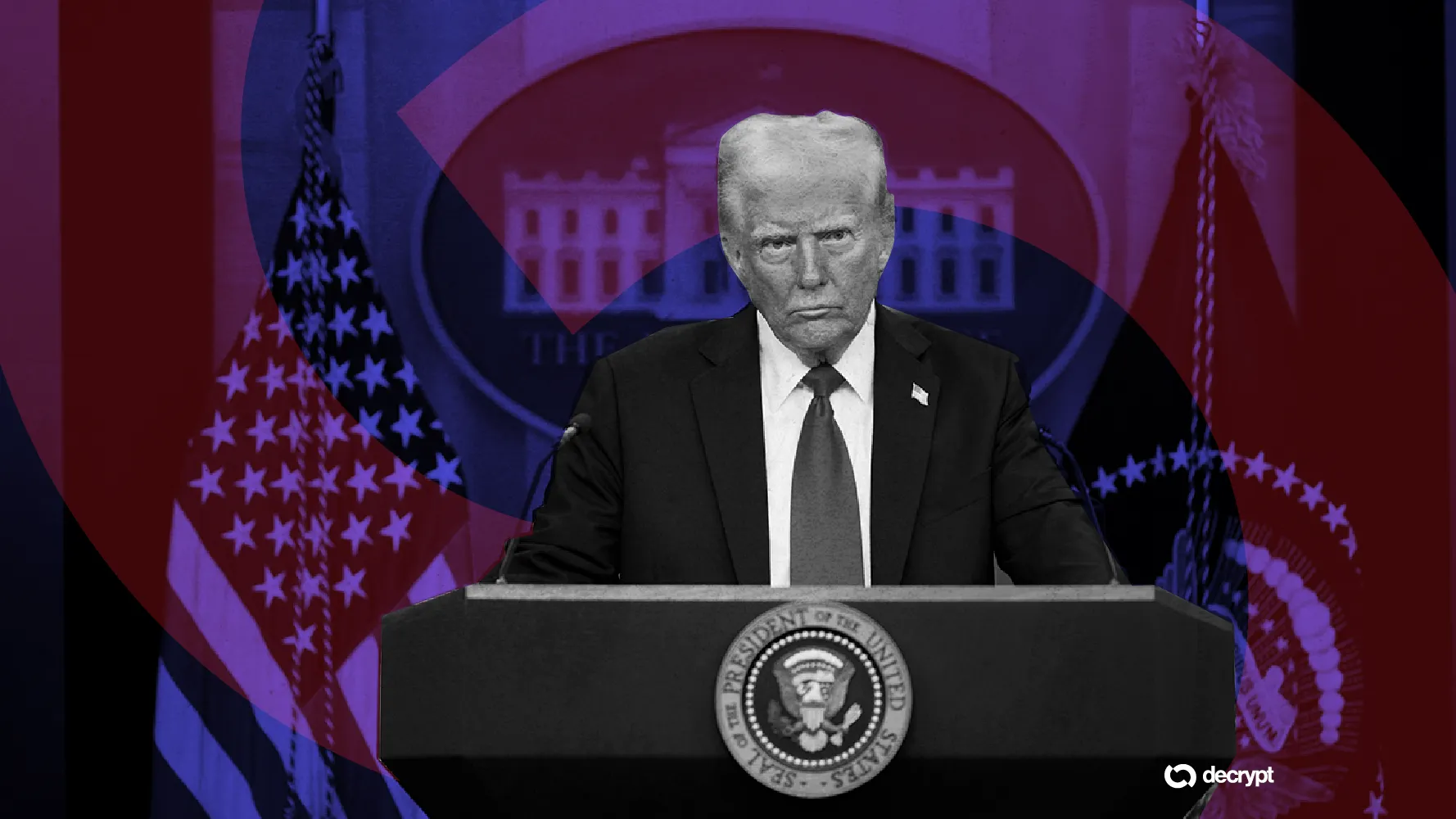
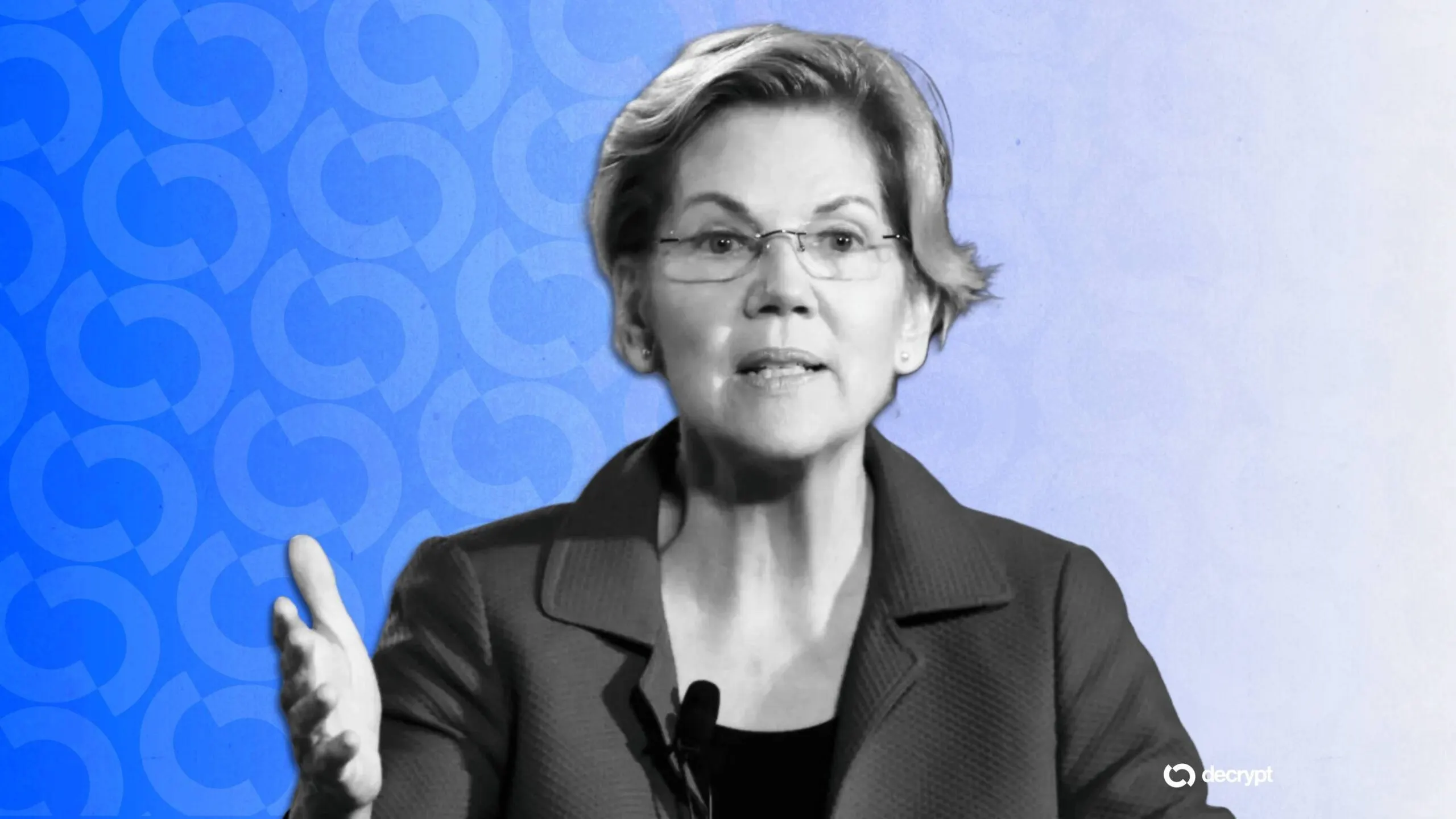
    On Monday, Senator Elizabeth Warren (D-MA) penned a letter to Senate leadership, advocating for the inclusion of provisions that would prohibit President Donald Trump and his family from profiting from the cryptocurrency sector. These restrictions have not yet been incorporated into the bill, despite recent disclosures revealing the president’s substantial earnings of over $1.2 billion from crypto ventures last year.

    “The crypto legislation heading to the Senate floor must prevent the president, vice president, senior administration officials, members of Congress, and their families from profiting off the crypto industry,” Warren stated. “Anything less would be a flagrant giveaway to the president and his family at the expense of the public.”

    On Tuesday, several other Senate Democrats, including potential 2028 presidential candidates Chris Murphy (D-CT) and Chris Van Hollen (D-MD), are scheduled to hold a press conference to voice their opposition to the Clarity Act. The event is expected to highlight not only the president’s cryptocurrency dealings but also the bill’s potential to broadly weaken financial oversight.

    While industry stakeholders contend that the Clarity Act, by legalizing most crypto activities in the United States, would enhance regulation of the nascent sector, critics argue it would significantly undermine financial regulations established in the aftermath of the Great Depression. They contend the bill would create exemptions for blockchain-based assets within these long-standing rules.

    The bill, which has been under consideration on Capitol Hill for over a year, now faces a decisive final push. Most involved parties agree that its passage is imperative before Congress’s upcoming August recess. Failure to do so risks the bill becoming entangled with the looming November midterm elections and the potential for shifts in control of the House and Senate.

    This leaves less than four weeks to secure the bill’s passage, with several key language-related issues still unresolved.

    Further complicating the legislative landscape is the dwindling number of active Republican senators. Mitch McConnell (R-KY) remains hospitalized following a health incident last month, and Lindsey Graham (R-SC) passed away unexpectedly over the weekend, though he is slated to be replaced.

    The Clarity Act requires a 60-vote majority in the Senate, necessitating the support of at least seven Democrats, and potentially more.

    On Monday, President Trump urged the Senate to pass the Clarity Act in tribute to the late Senator Graham, whom Trump described as a “big supporter” of cryptocurrency legislation. However, Graham was not directly involved in negotiations concerning the Clarity Act and rarely commented on the subject. Notably, he was the sole Senate Republican to co-sponsor the 2023 Digital Asset Anti-Money Laundering Act, a bill that cryptocurrency groups had criticized as “very anti-crypto.”

  • Trump: US to Control Hormuz, Crypto Subject to His Will

    Trump: US to Control Hormuz, Crypto Subject to His Will

    President Trump’s declaration that the United States would “probably” take control of the Strait of Hormuz, and should be compensated for doing so, has sent ripples through cryptocurrency and broader markets, akin to a geopolitical shockwave. Bitcoin, already trading near $64,000, faced an additional layer of uncertainty in an already volatile environment. The full impact on the crypto market is still unfolding.

    Trump’s remarks, made on Monday, suggest a potential shift in U.S. policy toward direct management of one of the world’s most critical oil transit points. Approximately 20% of global oil supply passes through the Strait of Hormuz daily. Unsurprisingly, risk assets were the first to react, with cryptocurrency traders pulling back alongside sellers of technology stocks.

    Trump: Countries Will Pay the US “A Lot of Money” for Guarding the Strait of Hormuz

    “We’re going to keep the Strait and we’ll probably run it,” Trump stated. “We’ll become the Guardian of the Strait. Maybe you’ll call it the Guardian Angel of the Strait. And we should be reimbursed for…”

    Concurrently, the Senate Agriculture Committee advanced a cryptocurrency market structure bill along party lines. This marked another regulatory development, though the split vote underscored ongoing disagreements in Washington. The relationship between politics and cryptocurrency has historically been complex.

    Both of these events are contributing to a prevailing “risk-off” sentiment in the market. Trump’s influence on crypto policy has demonstrably moved markets in the past, and his comments regarding the Strait of Hormuz have amplified these concerns. For the moment, traders appear more focused on capital preservation than on pursuing speculative gains.

    Bitcoin’s price outlook has turned cautious following its slip below $64,000. The weekly low stands near $61,700, making the $61,500 to $62,000 range a critical support level. A failure to hold this zone could see Bitcoin fall into the upper $50,000s, a scenario that seemed improbable just two weeks ago.

    However, the recent selling pressure is not solely confined to the cryptocurrency market. Capital has also flowed out of other risk assets, indicating a broader market trend. While this offers some solace, it also suggests that a significant macro catalyst may be required to restore market confidence if fear has taken hold so broadly.

    The bullish outlook for Bitcoin remains straightforward. Should tensions surrounding the Strait of Hormuz de-escalate and momentum in crypto legislation regain traction, Bitcoin could retest the $64,000 to $65,000 area. Such a move could catch short-sellers off guard. Markets often have a tendency to make the majority appear astute, only to reverse course and prove them wrong.

    The base case scenario is less dramatic. Bitcoin may continue to trade within a range of $62,000 to $64,000 as traders await clearer market signals. This type of price action can test patience more than conviction, and sideways markets can often feel more protracted than they actually are.

    The bearish case remains valid if Bitcoin closes below $61,500 on significant trading volume. Any fresh escalation of tensions around the Strait of Hormuz or disruptions to oil supplies could intensify risk aversion. Past oil shocks have historically placed sustained pressure on Bitcoin for longer than anticipated.

    With Bitcoin struggling below $64,000 and macro risks dominating sentiment, achieving significant upside for spot Bitcoin at its current market capitalization requires a substantial and rapid catalyst. Traders seeking exposure to the Bitcoin ecosystem at an earlier stage of the risk curve are increasingly turning their attention to infrastructure projects.

    Bitcoin Hyper ($HYPER) is positioning itself at this intersection, aiming to be the first Bitcoin Layer 2 solution with Solana Virtual Machine (SVM) integration. Hyper’s smart contract execution speed rivals that of Solana itself, while benefiting from Bitcoin’s robust security layer.

    The project’s presale has raised $33 million to date, with tokens currently priced at $0.013683 and staking incentives available. Key features include a Decentralized Canonical Bridge for Bitcoin transfers and sub-second transaction finality, directly addressing Bitcoin’s core limitations in speed, fees, and programmability.

    For traders looking to gain exposure to the Bitcoin ecosystem without the complexities of spot Bitcoin at a $1.4 trillion market cap, the risk-reward proposition is fundamentally different. Investors are encouraged to research Bitcoin Hyper before the presale concludes.

  • Prosecutors Suggest Crypto Mixer, Privacy Coin Use as Money Laundering Indicator

    Prosecutors Suggest Crypto Mixer, Privacy Coin Use as Money Laundering Indicator

    Prosecutors Propose New Framework for Crypto Money Laundering Cases

    An article published in the official newspaper of China’s top prosecutors’ office has outlined a potential framework for prosecuting cryptocurrency money laundering, suggesting that courts should presume criminal intent when suspects utilize coin mixers and privacy coins. The proposal also advocates for the state to establish a platform for liquidating seized cryptocurrency.

    The piece appeared in the “theory” section of the Procuratorate Daily, the newspaper of the Supreme People’s Procuratorate. Authored by two district prosecutors from Hunan province and a university law professor, the article carries no legal weight. However, such publications offer insight into the evolving legal thinking within China’s prosecution system, which charged over 3,000 individuals with crypto-related money laundering in 2024 alone.

    According to the authors, China’s specific money-laundering offense currently encompasses only seven categories of predicate crimes. Consequently, prosecutors often resort to a broader “concealment” charge for crypto cases, a workaround they describe as having become an overextended catch-all.

    The authors urge the adoption of a “double investigation of one case” rule. This would involve scrutinizing every underlying crime for laundering activities and requiring investigators to meticulously map the flow of any involved cryptocurrency. This proposal builds upon a 2024 judicial interpretation from China’s Supreme People’s Court, which already classifies the use of virtual asset transactions to move criminal proceeds as a form of money laundering.

    The most significant proposals relate to the burden of proof. The authors contend that courts should be empowered to presume a suspect’s intent to launder money unless they can provide “reasonable counter-evidence.” This presumption would apply when suspects employ tools designed to obscure transactions, such as mixers or privacy coins; offload large amounts of cryptocurrency at “obviously unreasonable” prices; or conduct high-frequency, large-scale transfers through anonymous wallets lacking any link to their identity.

    Furthermore, the article introduces a “blockchain data self-verification” principle. This would treat on-chain records, verifiable on public block explorers with matching hash values, as presumptively genuine, shifting the onus of proof to any party disputing them. Reports from compliant blockchain analytics firms, including fund flow maps and address clustering, would be admissible as expert evidence. Money laundering could then be established from circumstantial, fragmented evidence, provided it forms a coherent chain, even if not every coin can be traced to its origin.

    Addressing Seized Cryptocurrency

    The third key aspect of the article addresses the disposition of seized cryptocurrency in China. Beijing’s ban on cryptocurrency trading means that authorities confiscating tokens lack a clear legal avenue to convert them into fiat currency, leaving billions of dollars in assets in a legal gray area.

    The article advocates for a national platform to manage and dispose of seized crypto through “compliant channels,” such as directed auctions. It also calls for a standing expert committee to value holdings based on on-chain data and global exchange prices. Additionally, the proposal includes provisions for cross-border deals and a blockchain-based “judicial cooperation chain” to trace and recover assets moved offshore. In practice, local governments have reportedly been discreetly selling seized cryptocurrency through private firms in offshore markets, a workaround that Reuters documented last year and which a formal system would aim to replace.

    China outlawed cryptocurrency trading and mining in 2021, yet it remains a significant hub for crypto-based money laundering. Chinese police have dismantled large laundering rings, including a $1.7 billion operation in 2022. According to Chainalysis, Chinese-language laundering networks processed an estimated $16 billion in 2025 and now account for roughly one-fifth of all global crypto money laundering. The firm attributes their rise partly to China’s capital controls, as wealthy citizens moving funds offshore provide the liquidity that enables these networks to launder money for Western organized crime groups.

  • Crypto Markets Face Four Key Influences This Week

    Crypto Markets Face Four Key Influences This Week

    Markets Brace for Volatility Amid Geopolitical Tensions and Inflation Data

    Cryptocurrency markets, which had largely maintained weekend gains, showed signs of fragility Monday morning as traders absorbed fresh developments in the US-Iran conflict.

    The United States initiated a series of strikes against Iran in response to an Iranian attack on a container ship in the Strait of Hormuz. Iran has declared the strait closed, a move contradicted by President Trump.

    Adding to potential market jitters, several significant inflation reports are slated for release this week, which could further unsettle sentiment and exacerbate volatility in the ongoing bear market.

    “Q2 2026 earnings season has arrived, and Strait of Hormuz tensions are mounting again,” noted The Kobeissi Letter.

    US Central Command confirmed Monday morning that forces had commenced further strikes against Iran, aiming “to continue degrading their ability to attack civilian mariners and commercial ships freely transiting the Strait of Hormuz.”

    Crude oil prices saw a notable increase, climbing approximately 4%. West Texas Intermediate (WTI) crude reached $74.50 per barrel, while Brent crude hit $79. US stock futures opened marginally lower.

    Inflation Data Looms Large

    The market’s attention now turns to key economic indicators. June’s Consumer Price Index (CPI) inflation data is scheduled for release on Tuesday, with the Producer Price Index (PPI), which measures wholesale inflation, due on Wednesday.

    Year-on-year projections suggest headline CPI will rise by 3.8% and PPI by 6.2%, according to Yahoo Finance. Elevated inflation figures could intensify pressure on the Federal Reserve to raise interest rates, a development typically unfavorable for risk-sensitive assets like cryptocurrencies. The escalating military action in the Middle East also poses a risk to efforts to curb inflation.

    Further economic data releases this week include June Retail Sales and the July Philly Fed Manufacturing Index on Thursday, followed by July’s Michigan Inflation Expectations and Consumer Sentiment reports on Friday.

    Corporate Earnings and Crypto Performance

    This week also marks a busy period for corporate earnings, with several major Wall Street banks and financial institutions set to report their second-quarter results. JPMorgan Chase, Goldman Sachs, Bank of America, Wells Fargo, and Citibank are scheduled to release their figures on Tuesday, with Morgan Stanley and BlackRock following on Wednesday.

    The total market capitalization for cryptocurrencies remained relatively stable over the weekend, hovering around $2.26 trillion. A minor dip was observed on Monday morning following the latest airstrikes.

    Bitcoin had held its position just above $64,000 for the preceding 12 hours but saw a slight decline to $63,400 in early trading, where it remained at the time of reporting. Ether prices demonstrated more resilience, staying above $1,800 for most of the past day, building on a 15% gain in the previous two weeks. However, analysts caution that further conflict escalation and persistent inflation could lead to significant declines for both major cryptocurrencies.

  • LAB Token Plummets 97% Amid Team Wallet Sales Allegations

    LAB Token Plummets 97% Amid Team Wallet Sales Allegations

    LAB Token Plummets 97% Amid Allegations of Team-Funded Wallet Dumping

    The LAB token has experienced a dramatic collapse, shedding 97% of its value in a matter of days, following accusations from prominent blockchain investigator ZachXBT that wallets funded by the project’s creators have dumped millions of coins onto the market.

    This development has further exacerbated the already precarious state of LAB, which had previously defied the broader market downturn. The token had enjoyed a period of significant growth, briefly entering the top 20 cryptocurrencies by market capitalization due to consistent double- and triple-digit gains.

    According to CoinGecko data, LAB reached an all-time high of over $27 just over a month ago. However, it now trades below $0.55, marking a 97% decline from its peak, with the majority of these losses occurring in recent days.

    ZachXBT attributed the latest sharp decline, which saw LAB fall from $1.20 to $0.54, to substantial sales executed by the founding team. The on-chain analyst stated that a wallet initially funded by the LAB team deposited 18.4 million tokens, valued at approximately $18.3 million at the time, to the decentralized exchange Aster before liquidating the holdings on the open market.

    This revelation follows an earlier warning from ZachXBT, issued a few months prior, in which he accused the LAB team of maintaining excessive control over the token’s supply and engaging in opaque over-the-counter transactions.

    In a recent Telegram post, ZachXBT detailed that the entity responsible for the sales received over 196 million tokens directly from the team in April 2026. Further analysis indicates that 100 million coins were initially sent to Bitget deposit addresses on April 8, with an additional 97 million tokens transferred to other wallets later that month.

    In May, 100 million LAB tokens were withdrawn from Bitget and distributed across ten separate addresses. ZachXBT argued that there was no market evidence to suggest an independent buyer had acquired such a significant position, leading him to conclude that these wallets likely remained under the control of the same entity.

    After remaining inactive for nearly two months, the entity transferred and sold millions of tokens to Aster on July 10 and 11. The on-chain investigator also noted that these wallets still hold over 80 million coins, despite the recent sales.

  • Apple Sues OpenAI Over Alleged Trade Secret Theft

    Apple Sues OpenAI Over Alleged Trade Secret Theft

    Apple has filed a lawsuit against OpenAI and two former employees, alleging that the artificial intelligence company used stolen trade secrets in its consumer hardware development.

    Lawsuit Details

    The complaint, lodged on Friday in the U.S. District Court for the Northern District of California, names Chang Liu, a former senior system electrical engineer at Apple, and Tang Yew Tan, an ex-executive involved in iPhone and Apple Watch design. OpenAI Foundation, OpenAI Group PBC, and io Products are also listed as defendants.

    Apple claims that Liu, who departed the company in January after an eight-year tenure, failed to return a company laptop and subsequently gained access to Apple’s internal systems through an authentication vulnerability.

    “While employed by OpenAI, Mr. Liu also exploited a rare, previously unknown authentication bug to access Apple’s shared network folders,” Apple’s attorneys stated in the complaint. “Upon discovering that he had this unauthorized access to Apple’s systems, Mr. Liu did not report it, return his stolen Apple-issued work laptop, or delete the program that allowed the access.”

    The tech giant alleges that Liu downloaded numerous confidential hardware files, including details on unreleased products, engineering presentations, technical specifications, and proprietary project data.

    Allegations Against Former Executive

    Apple also accuses Tan, who spent 24 years at Apple before becoming OpenAI’s chief hardware officer, of leveraging confidential information from his time at Apple to benefit OpenAI.

    The lawsuit asserts that Tan used internal Apple project names during OpenAI interviews and inquired about unreleased products. Apple further alleges that candidates were instructed to bring “actual parts” for “show and tell.”

    Additionally, Apple claims that OpenAI’s recruitment process solicited “CAD/design artifacts,” prototypes, supplier information, and specifics about employees’ work on Apple hardware.

    Representatives for Apple and OpenAI did not immediately respond to a request for comment.

    Broader Context

    This legal action follows OpenAI’s recent $6.4 billion acquisition of io Products, a hardware startup founded by former Apple designer Jony Ive. Ive is not named in the current complaint.

    According to the filing, OpenAI’s hardware division has recruited over 400 former Apple employees. Apple states it approached OpenAI in February with concerns about confidential information being transferred to the company but received no response.

    The lawsuit emerges amidst a separate trade secret dispute between OpenAI and Elon Musk’s xAI. In September, xAI sued OpenAI, alleging that the ChatGPT maker recruited former employees to acquire confidential source code, training methodologies, and data center strategies. OpenAI denied these accusations, and a federal judge dismissed the lawsuit in June, ruling that xAI failed to demonstrate that OpenAI encouraged a former employee to disclose confidential information.

    The current lawsuit marks a significant shift from the earlier relationship between Apple and OpenAI. In 2024, Apple had integrated OpenAI’s technology to power Siri as part of its Apple Intelligence initiative. However, earlier this year, Apple opted to partner with Google’s Gemini to power its next generation of AI models, following delays that impacted its own rollout.

  • Democrats Demand Senate Hearings on Trump’s Crypto Windfall

    Democrats Demand Senate Hearings on Trump’s Crypto Windfall

    Senators Demand Hearings on Trump’s Crypto Holdings After $1.2 Billion Income Revealed

    Democratic senators are calling for congressional hearings into President Donald Trump’s cryptocurrency holdings, citing new financial disclosures that revealed over $1.2 billion in income for him last year.

    Five Senate Democrats—Elizabeth Warren (D-MA), Richard Blumenthal (D-CT), Gary Peters (D-MI), Dick Durbin (D-IL), and Ron Wyden (D-OR)—stated that the disclosures have raised significant concerns regarding potential conflicts of interest, foreign influence, and Trump’s role in shaping cryptocurrency policy while simultaneously profiting from the industry.

    “The disclosures heighten concerns about the president pushing Congress to pass crypto legislation in favor of the very industry he’s cashing in on, the administration’s moves to exempt cryptocurrencies and service providers from existing financial services regulations, and its steps to weaken enforcement, including by disbanding the Department of Justice’s National Cryptocurrency Enforcement Team,” the lawmakers said in a statement Friday.

    The senators who signed the letter are the leading Democrats on the Senate Banking, Investigations, Homeland Security, Judiciary, and Finance committees, respectively. They have formally requested that all of these bodies convene hearings to examine the president’s cryptocurrency dealings.

    The group specifically highlighted that Trump’s disclosures indicated that unknown “third-parties” hold a stake in his family’s crypto company, World Liberty Financial. Notably, UAE royals purchased a 49% stake in the firm last year.

    This request for hearings comes as the Trump administration is actively urging Congress to pass the Clarity Act, a significant bill aimed at formally legalizing most cryptocurrency activities in the United States. The legislation has faced considerable delays, primarily due to disagreements over ethics provisions that would govern the president’s ability to issue and endorse digital assets while in office.

    Trump’s financial disclosure report, released last month, showed he earned more than $1.2 billion from crypto-related ventures. This includes over $635 million tied to his Trump meme coin and more than $588 million from token sales connected to World Liberty Financial. The disclosures also revealed that Trump holds tens of millions of dollars worth of Bitcoin and Ethereum.

    The Clarity Act advanced out of the Senate Banking Committee in May, with two Democrats breaking ranks to support its progression. However, the lawmakers cautioned that a resolution on ethics language remains a prerequisite for their votes on the Senate floor.

    Supporters of the legislation contend that it must be passed by Congress by August to become law this year, given the approaching November midterm elections.

  • Pi Network Token Distribution: High Concentration Amidst Price Volatility and Development

    Pi Network Token Distribution: High Concentration Amidst Price Volatility and Development

    An analysis of Pi Network’s PI token distribution reveals a significant concentration of tokens among a small number of holders, while the majority hold very few. This disparity, coupled with a recent sharp decline in the token’s price, raises questions about its ecosystem utility and market value.

    Token Distribution Breakdown
    According to data reported by BSCN, a mere 21 accounts hold over 10 million PI tokens each. Further breakdown shows that 9,961 users possess between 1 million and 10 million PI, while 766 accounts hold between 100,000 and 1 million PI. A larger segment, comprising 353,340 wallets, holds between 1,000 and 10,000 PI, and 1,503,374 accounts have between 100 and 1,000 PI.

    In stark contrast, approximately 80% of all Pi Network users, estimated at over 14.5 million individuals, hold fewer than 10 PI coins. The exact method by which large token holders acquired their PI remains uncertain, with some claiming they could not have mined such an enormous amount and arguing they had bought them on exchanges, while others noted that the overwhelming majority of Pioneers hold extremely small balances, making it difficult for them to contribute to the ecosystem via staking or other utility-driven features.

    Price Performance and Recent Trends
    The PI token has recently experienced a significant price drop, reaching a new all-time low of around $0.09. This represents a 20% plunge over the past month and a 97% collapse from its all-time high of $3 witnessed at the start of 2025. This price decline has occurred despite recent updates and feature releases by the Pi Network Core Team.

    Recent developments include the launch of SoloHost, Pi Sign-in, and PiVerify on Pi2Day (June 28), aimed at expanding the ecosystem. Additionally, the Pi App Studio released two updates to assist creators in developing applications, including backend support and an AI-assisted planning phase.

    Implications and Uncertainties
    However, the token’s distribution raises concerns. The overwhelming majority of Pioneers hold extremely small balances, making it difficult for them to contribute to the ecosystem via staking or other utility-driven features. The exact method by which large token holders acquired their PI remains uncertain.

    Further adding to market uncertainty, over 127.5 million PI tokens are scheduled for release in the next 30 days. This upcoming unlock, combined with the rising number of tokens held on crypto exchanges, suggests the price could experience a further short-term pullback, according to some analyses. The metric does not suggest price direction.

    The Pi Network continues to introduce new features and updates, aiming to grow its ecosystem. However, the current token distribution, with a significant concentration in a few hands and minimal holdings for the majority, presents a notable challenge for widespread ecosystem participation and utility. The recent price performance underscores the volatility and uncertainties surrounding the PI token.

    Why This Matters

    The materials describe a narrow update: An analysis of Pi Network’s PI token distribution shows that only 21 accounts hold over 10 million PI. Whether whales acquired their large token holdings through mining or purchasing on exchanges.

    Broader Context

    Source materials place the factual news in this context: The controversial cryptocurrency project continues to draw attention across the industry after releasing key features and unveiling big upgrades.

  • Ex-SWIFT CIO Denies XRP Partnership

    Ex-SWIFT CIO Denies XRP Partnership

    Ex-SWIFT Chief Innovation Officer Debunks XRP Partnership Rumors

    Tom Zschach, who recently departed SWIFT after a six-year tenure as Chief Innovation Officer, has decisively dismissed fresh speculation surrounding a potential partnership with Ripple. His succinct two-word response on X, “Not happening,” carried significant weight, stemming from his direct oversight of SWIFT’s digital asset strategy and his intimate knowledge of the network’s development trajectory.

    The comments emerged in the wake of claims from several XRP influencer accounts suggesting that SWIFT intended to support public tokens like XRP rather than invest in its own infrastructure. These assertions rapidly circulated across social media platforms, yet notably lacked any official statements or supporting documentation, resembling unsubstantiated hearsay.

    “Not Happening”

    One widely disseminated post even asserted that SWIFT had indicated no intention to compete with XRP, but rather to collaborate. However, no official SWIFT announcement, press release, or public document has ever contained such wording. The claim appears to have gained traction without any verifiable evidence.

    Zschach’s response effectively quashed the rumor before it could gain further momentum. While SWIFT continues to explore blockchain-based settlement and tokenized asset infrastructure, there remains no indication that the network plans to integrate XRP or endorse the token for its core services.

    Zschach’s statement left no room for interpretation. The cryptocurrency rumor collapsed under the weight of a two-word rebuttal from the individual who helmed SWIFT’s digital asset function for half a decade, providing a more definitive debunking than any lengthy explanation could have achieved.

    This incident mirrors a recurring pattern observed over several years: a SWIFT executive or technical document references tokenization or interoperability, leading XRP communities to interpret this as implicit adoption. Influencer accounts then amplify these interpretations as factual, inevitably followed by a correction. While the cycle of debunking XRP-related rumors is well-established, Zschach’s direct involvement lends this particular iteration unusual authority.

    SWIFT’s Digital Asset Strategy

    The former SWIFT CIO’s rejection of XRP’s institutional narrative is not unprecedented. Zschach has previously likened Ripple’s technology to a “fax machine” in the context of the modern internet and argued that Ripple’s survival of its protracted SEC lawsuit does not equate to genuine institutional resilience.

    Following a distinguished three-decade career that included stints at Bank of America, Barclays, and Lehman Brothers, Zschach has left SWIFT to join a research initiative involving Oxford, Harvard, and Cambridge universities, focused on building new financial infrastructure. This career move signals his perspective on the future direction of institutional-grade digital finance.

    The SWIFT executive who famously described XRP as a fax machine resigned on the same day that Ripple Treasury joined SWIFT’s certified program, a detail that adds its own layer to the narrative.

    SWIFT’s digital asset strategy is becoming increasingly defined, with little apparent connection to the recent XRP rumors. Its published work centers on secure messaging, interoperability, and tokenized assets for regulated financial institutions. Recent pilot programs have also focused on tokenized deposits across permissioned networks, rather than public blockchains.

    This distinction is significant, as permissioned ledgers and public tokens address different challenges. SWIFT is developing neutral infrastructure with shared governance, while XRP operates as an independent public cryptocurrency. To expect one to seamlessly transform into the other is akin to anticipating a cargo ship winning a Formula One race.

    The rumor lost traction after analyst Jon Zschach publicly refuted claims of SWIFT preparing for XRP integration. No credible evidence has emerged to substantiate these assertions. Instead, SWIFT continues to emphasize standards-based connectivity across multiple digital asset platforms, rather than endorsing a single token.

    Meanwhile, XRP has struggled to regain momentum. The token recently traded in the range of $1.08 to $1.10, declining against Bitcoin as anticipated institutional catalysts failed to materialize. Traders who had hoped for a surprise SWIFT endorsement were left disappointed, as the market rarely rewards prolonged wishful thinking.

    This does not definitively settle XRP’s long-term outlook. However, basing its investment case on unverified partnership rumors inevitably raises expectations that reality may not meet. For the time being, SWIFT and XRP appear to be charting separate courses, despite the persistent hopes of some investors for their paths to eventually converge.

  • XRP On-Chain Data Signals Caution Amidst Seller Dominance

    XRP On-Chain Data Signals Caution Amidst Seller Dominance

    XRP Market Conditions Signal Seller Dominance Amidst Weakening Indicators

    XRP is exhibiting further signs of a weakening market, with key indicators suggesting that sellers are maintaining control, according to recent analysis from CryptoQuant.

    Open interest in XRP futures has fallen to $350.6 million, a level not seen in several months. This decline indicates that traders are closing their futures positions and reducing their leverage.

    While a decrease in open interest can sometimes alleviate selling pressure by clearing out leveraged positions, CryptoQuant noted that this is not the current scenario. The firm explained that capital is also exiting the broader market, exacerbating the trend.

    The analytics firm further stated that this trend extends beyond futures trading, reflecting a lack of significant new capital entering the asset. Traders are reportedly exiting positions without being replaced by fresh investment, leading to diminished overall market participation.

    On-chain data also does not yet signal a robust recovery. XRP’s NVT Ratio remains elevated at 162.86, suggesting that network activity has not increased sufficiently to support a higher market valuation.

    The combination of declining open interest and a persistently high NVT Ratio presents a consistent picture of deteriorating market conditions, the analysis concluded. CryptoQuant observed a significant drop in investor risk appetite, with participants appearing fatigued. This environment has tilted XRP’s price action in favor of sellers.

    On the institutional side, U.S.-based spot XRP ETFs experienced $7.3 million in outflows on July 8th. However, these funds have generally performed more resiliently compared to their Bitcoin and Ethereum counterparts.

    Despite the subdued market outlook, XRP continues to experience strong real-world adoption in parts of Asia. Earlier this week, Japan’s SBI VC Trade reported that companies are increasingly incorporating XRP into their treasury reserves and shareholder benefit programs, alongside Bitcoin. The digital asset also remains one of the most actively traded cryptocurrencies in South Korea.

    Ripple also boosted XRP’s visibility this week by securing the first cryptocurrency sponsorship of a major U.S. college athletics program. Through this partnership, the University of Kansas Jayhawks will feature the asset’s logo on their game jerseys starting this fall.