Tag: Negative

  • AI Uncovers Billion-Dollar Software Flaw

    AI Uncovers Billion-Dollar Software Flaw

    AI-Assisted Researcher Uncovers Multi-Billion Dollar Zcash Vulnerability

    A significant flaw in the Zcash cryptocurrency protocol, which could have allowed for the creation of billions of dollars out of thin air, was discovered by security researcher Taylor Hornby. The vulnerability, present for approximately four years, was identified on May 29, 2026, shortly after the release of Anthropic’s Claude Opus 4.8.

    Flaw Triggered Ecosystem-Wide Emergency Response

    The bug affected a shielded pool within Zcash’s design, crucial for private transactions. Its severity prompted an urgent response across the entire Zcash ecosystem, leading to a rapid sell-off that saw the price of ZEC plummet by roughly 60%, wiping out over $4 billion in market capitalization.

    Technical Details of the Exploit

    At its core, the vulnerability stemmed from a missing constraint in Zcash’s Orchard circuit. This oversight could have enabled a malicious actor to spend the same shielded note multiple times, generating different nullifiers each time. In essence, an attacker could have artificially inflated the ZEC supply within the Orchard pool without leaving any traceable on-chain evidence.

    A Four-Year Exposure Window

    Alarmingly, the bug had been embedded in the Zcash protocol since the Orchard circuit was first implemented. This means the potential for exploitation existed for nearly four years before Hornby’s discovery. The vulnerability was patched shortly after it was brought to light.

    The Role of AI in Discovery

    The significance of this incident extends beyond the technical flaw itself, highlighting the evolving role of artificial intelligence in cybersecurity. Hornby utilized a custom “zcash-full-stack-auditor” agent framework powered by Claude Opus 4.8. This AI tool was specifically designed to operate with maximum effort, focusing on the halo2 implementation, including the Orchard circuit, in its search for soundness and zero-knowledge security issues.

    AI Flags Vulnerability, Researcher Confirms

    On the evening of May 29, one of the AI audit agents flagged a potential vulnerability that could facilitate the double-spending of Orchard notes. Hornby then leveraged Claude to assist in writing proof-of-concept code against a similar circuit. He subsequently tested the exploit against the actual Orchard circuit.

    Proof-of-Concept Demonstrates Exploit’s Potential

    Hornby developed a comprehensive test within Zcash’s local regtest mode. This test successfully doubled the value of an Orchard note, pushing the test wallet’s balance to over 10 million ZEC. While these transactions were not broadcast to the mainnet or testnet, the test was critical as regtest employs the same validation rules as the live network, indicating the exploit could have been executed successfully on mainnet.

    AI Significantly Accelerates Development

    According to the official disclosure, the complete proof-of-concept took approximately six hours to develop with the assistance of Claude Code. Hornby noted that the AI required minimal guidance beyond a few initial prompts.

    AI as a Tool, Not an Independent Actor

    It is crucial to understand that this discovery does not imply that AI independently “hacked Zcash.” Taylor Hornby is a recognized specialist security researcher, and the audit was a targeted effort employing custom-built tools.

    Frontier AI Models Accelerate Complex Investigations

    Nevertheless, this case demonstrates how advanced AI models are beginning to substantially reduce the time and effort required to investigate highly complex and technical systems, marking a new era in cybersecurity research.
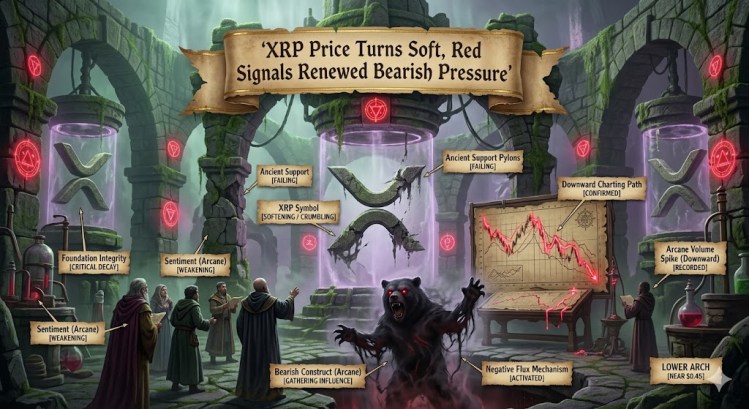

  • XRP Investors Capitulate Amidst Extreme Activity: Ripple’s Outlook

    XRP Network Activity Declines Sharply, Signaling Holder Pressure

    On-chain analytics firm Glassnode has reported a significant downturn in key metrics for the XRP network, indicating a weakening of activity and mounting pressure on token holders. Recent data reveals a substantial drop in both transaction demand and realized profitability, even as XRP trades well above its 2024 price levels.

    The decline in holder profitability is particularly stark when examining Glassnode’s latest realized profit-and-loss data. The firm’s analysis shows that the 90-day simple moving average of XRP’s Realized Profit-to-Loss Ratio has fallen to 0.38. This suggests that for every dollar lost by market participants on-chain, only 38 cents in profit are being realized.

    This profitability metric remains considerably below the breakeven level of 1.0, which serves as the dividing line between net profit-taking and net loss realization. During periods of strong bull market performance, this ratio typically surges well beyond 20 or even 50, as profitable sales dominate network activity.

    The current reading points to a vastly different market environment, where the realization of losses significantly outweighs the realization of profits. Glassnode observed that such low levels are often associated with capitulation periods, characterized by a large proportion of transacted coins belonging to holders exiting their positions at a loss.

    Broader network activity also shows signs of weakness. Glassnode reported a substantial decrease in the 90-day simple moving average of total transaction fees on the XRP Ledger. This figure has plummeted from 5,900 XRP in February 2025 to approximately 500 XRP today, representing a decline of over 91% during that timeframe.

    These recent figures echo concerns previously raised by Glassnode in late 2025 regarding the financial standing of XRP holders. In November of that year, the firm noted that only 58.5% of the circulating supply was in profit.

    These concerns were also evident in earlier market conditions. That percentage marked the lowest point recorded since November 2024, when XRP was trading around $0.53. At that time, approximately 41.5% of the supply, equivalent to about 26.5 billion XRP, was held at a loss, despite the token trading near $2.15.

    Collectively, the declining profitability metrics and reduced network activity suggest persistent stress within the XRP ecosystem. The data indicates that a significant portion of holders remain under pressure, while transaction demand continues to fall well short of previous cycle highs.

  • XRP Faces Selloff Threat

    XRP Faces Selloff Threat

    XRP Price Faces Downside Pressure, May Test Lower Levels

    The price of XRP has entered a corrective phase, trading below the $1.1840 mark and showing bearish signals that could lead to further declines below $1.10.

    The cryptocurrency’s downward correction began after it failed to sustain its position above the $1.1750 zone. XRP is currently trading below $1.150 and its 100-hour Simple Moving Average. A bearish trend line, which had provided support at $1.1620 on the hourly chart for the XRP/USD pair, has also been breached. Data from Kraken indicates that if XRP remains below $1.150, further downward movement is likely.

    XRP Price Dips Once Again

    XRP struggled to maintain its footing above the $1.1620 level, initiating a fresh decline that mirrored movements seen in Bitcoin and Ethereum. The price fell below both the $1.160 and $1.1550 thresholds. The hourly chart for the XRP/USD pair, sourced from Kraken, shows a break below a bullish trend line that had been established at $1.1620.

    Furthermore, XRP’s price dipped below the 38.2% Fibonacci retracement level of its prior upward move, which spanned from a swing low of $1.050 to a high of $1.1863. The cryptocurrency is now trading below $1.160 and its 100-hour Simple Moving Average.

    Should XRP attempt an upward recovery, it may encounter resistance around the $1.1350 level. The first significant resistance is situated near $1.1420; a sustained move above this point could propel the price to test the $1.150 level. A decisive break above the $1.150 resistance could then push XRP towards the $1.1580 resistance. Any further gains might see the price target the $1.1650 resistance. The next major obstacle for bullish sentiment is anticipated to be around the $1.1840 mark.

    More Downside Potential?

    If XRP is unable to overcome the $1.150 resistance zone, it could initiate another wave of decline. Initial support on the downside is observed near the $1.1020 level, which also corresponds to the 61.8% Fibonacci retracement level of the move from the $1.050 swing low to the $1.1863 high. The subsequent major support is located around the $1.1072 level. A breakdown below $1.1072, accompanied by a closing price below this level, could lead to further declines towards $1.1020. The next significant support is positioned near the $1.10 zone, below which XRP could continue its descent towards $1.080. Any additional losses might necessitate a retest of the $1.050 level.

    Technical Indicators

    The hourly MACD (Moving Average Convergence Divergence) for XRP/USD is currently gaining momentum within the bearish territory. The hourly RSI (Relative Strength Index) for XRP/USD has fallen below the 50 level.

    Major Support Levels: $1.1020 and $1.080
    Major Resistance Levels: $1.1500 and $1.1840

  • Sahara AI Denies Security Flaws Amid 60% Token Price Plunge

    Sahara AI Denies Security Flaws Amid 60% Token Price Plunge

    Sahara AI’s SAHARA token experienced a dramatic plunge of approximately 60% on June 9, leading to over $23 million in liquidations. The sharp decline fueled speculation across cryptocurrency markets, particularly as it coincided with a reported breach at the protocol Humanity, which resulted in a $30 million loss and saw its native H token shed nearly 90% of its value.

    Volatility and Initial Response

    Following the sudden drop of SAHARA from around $0.034 to $0.014, according to CoinGecko data, the Sahara AI team issued a statement on X (formerly Twitter). They acknowledged “unusual market volatility” and asserted that no security vulnerabilities had been identified within the platform’s token contracts or products. The team also committed to providing further updates as their internal investigation progressed and more information became available.

    Addressing On-Chain Concerns

    However, the initial explanation faced scrutiny when on-chain observers raised questions about a transfer of 600 million SAHARA tokens, suggesting it might have been the catalyst for the price anomaly. In response, the team released a follow-up post clarifying that the substantial token transfer was a pre-arranged operation to fund a Chainlink CCIP bridge contract, intended to bolster liquidity for their recently launched cross-chain bridge.

    Crucially, Sahara AI emphasized that neither team nor investor wallets had been accessed on-chain, stating unequivocally that “no team and investor tokens have been sold or moved.” To support their claims, the team provided a link to an Etherscan address, inviting interested parties to verify the accuracy of their statements. They reiterated that their investigation into the root cause of the market movement was ongoing and separate from the bridge transfer.

    Community Scrutiny and Market Impact

    The validity of this explanation remains a point of contention within the community. Data from CoinGlass indicates that over the preceding 12 hours, long positions worth $22.9 million were liquidated, contrasted with only $354,000 in short positions. This suggests that the overwhelming majority of losses were borne by traders who had bet on an upward price trajectory.

    The SAHARA token, which was listed on Binance in June 2025 and subsequently reached an all-time high of $0.1605 the following month, was trading at the time of writing nearly 90% below its peak. It had also seen declines of over 50% in the past seven days and almost 54% over the last month.

    This recent downturn follows a pattern of significant price drops for other tokens. Just a week prior, EDGE, the native token of the edgeX decentralized exchange, plummeted by 71% to a new all-time low. Similar to the Sahara AI team, the edgeX developers denied any security breaches, attributing the collapse to external manipulation. However, this claim was publicly disputed by on-chain investigator ZachXBT. In a subsequent report, edgeX acknowledged that some centralized exchanges listing EDGE cited thin liquidity conditions, rather than large-scale selling by the team, as a contributing factor to the token’s collapse.

  • Warren Demands CFTC Crypto Oversight Answers

    Warren Demands CFTC Crypto Oversight Answers

    Warren Questions CFTC Impartiality Amidst Industry Ties to Trump Family

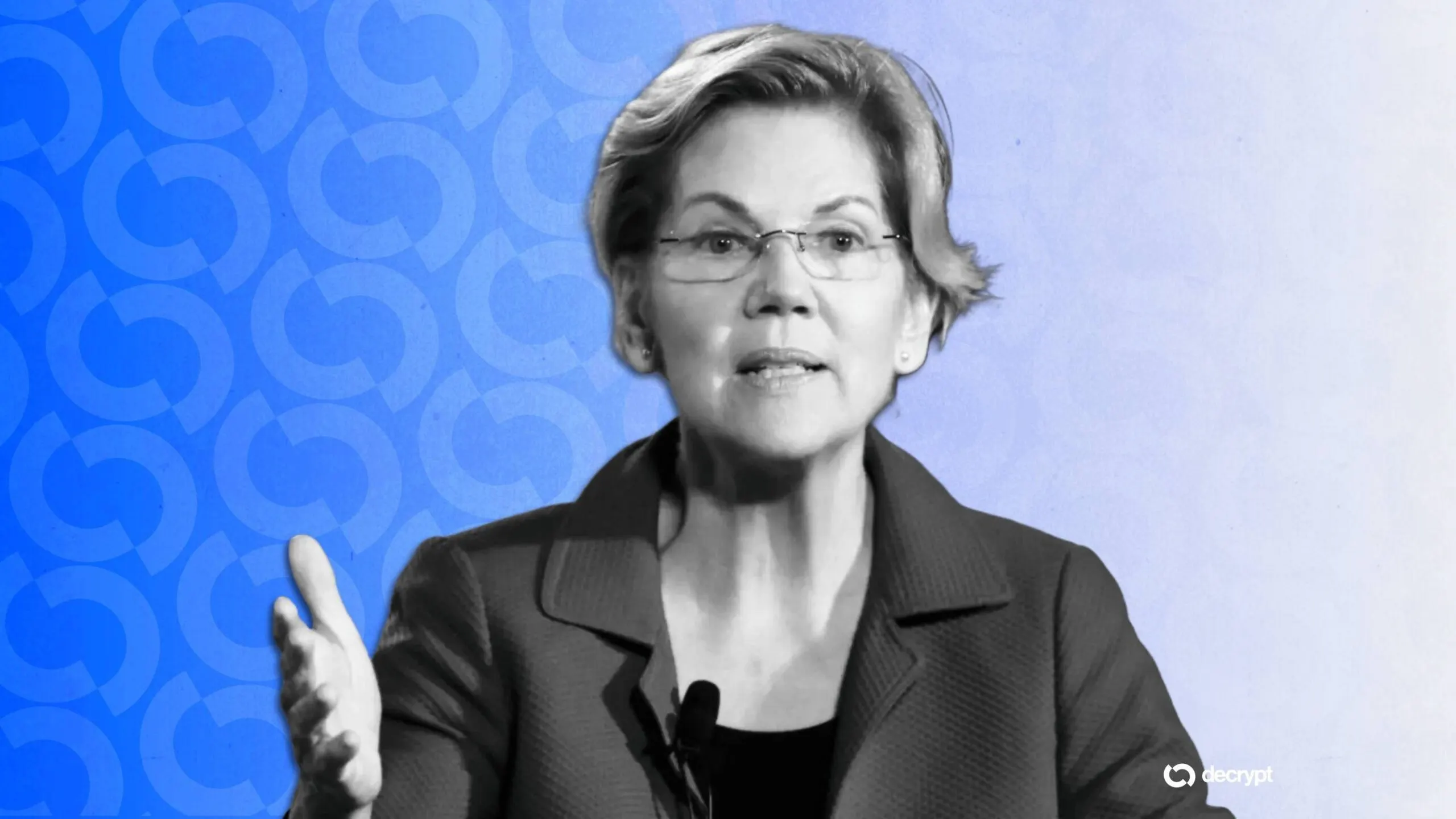
    Senator Elizabeth Warren (D-MA) has raised serious concerns about the Commodity Futures Trading Commission (CFTC), questioning its impartiality and its apparent alignment with companies connected to President Donald Trump and his family. In a letter sent Monday to CFTC Chairman Michael Selig, Warren challenged the agency’s ability to effectively regulate prediction markets and cryptocurrencies, particularly “amidst unprecedented presidential corruption.”

    Allegations of Industry Capture

    Warren’s inquiry stems from a recent New York Times report detailing how the regulatory body has allegedly been “steamrolled” by the very industries it is tasked with overseeing. “As prediction markets balloon in size, and Congress advances legislation that threatens to loosen the guardrails on cryptocurrency, the CFTC’s reported capture by industry poses severe risks to American families and our economy,” Warren stated in her letter.

    The prediction market industry is experiencing significant growth, with top platforms Kalshi and Polymarket holding approximately $60 billion in market value as of early 2026. Industry projections estimate the sector could reach $1 trillion in trading volume by 2030, according to a Bernstein estimate cited by CNBC.

    However, Warren highlighted a stark contrast in the CFTC’s enforcement actions. She noted that the agency’s workforce has been reduced by about 25%, and enforcement actions have plummeted from 58 in fiscal year 2024 to just 11 since President Trump took office. Warren directly linked these cuts to the administration’s financial entanglements.

    Specific Instances of Concern

    The senator cited reporting that detailed several instances where the CFTC’s actions appeared to favor industry players with ties to the Trump administration. These include:

    • The CFTC approving a Polymarket request following an investment by Donald Trump Jr.’s investment firm.
    • The agency fast-tracking a Gemini offshoot whose founders had backed Trump-affiliated American Bitcoin.
    • Sidelining staff who raised questions about Crypto.com, a business partner of Trump Media & Technology.

    Warren also referenced text messages released by former commissioner Brian Quintenz, whose nomination to lead the agency was revoked. The messages indicated that Tyler Winklevoss, a founder of Gemini, insisted that his company’s complaint be treated as a top priority and offered to “raise this issue with the president himself.” Quintenz reportedly refused, leading to the withdrawal of his nomination and the subsequent nomination of Selig.

    Furthermore, Warren criticized Selig for requesting a judge to vacate a $5 million penalty against Gemini, a company founded by the Winklevoss twins, who had each donated $1 million in Bitcoin to Trump’s reelection campaign.

    Broader Implications for Market Integrity

    “Taken together, these are concerning signs of a CFTC beholden to political pressures and interests of the wealthy insiders, unbound by the rule of law and failing to protect investors and market integrity,” Warren wrote.

    Nic Puckrin, macro analyst and co-founder of Coin Bureau, echoed these sentiments to Decrypt, stating, “The biggest issue here isn’t whether CFTC is pro-crypto or anti-crypto. It’s the fact that its impartiality is being called into question, and a regulatory agency that isn’t impartial can’t be trusted to make decisions for the greater good of everyone.” Puckrin pointed to the Department of Justice prosecuting a Google engineer and a U.S. soldier for insider trading on prediction markets while leaving untouched the actions of oil traders who made hundreds of millions. “It creates the impression of a two-tier justice system, and makes people lose faith in its ability to effectively create justice for all,” he added.

    Markus Levin, co-founder of XYO, told Decrypt that regulating digital asset companies with a team that operates within traditional finance frameworks will inevitably lead to poor regulations. “If the CFTC is going to take on expanded authority under the Clarity Act, it needs people who actually understand blockchain technology, not just the traditional derivatives playbook,” he argued.

    Legislative Context and CFTC’s Preparedness

    The concerns surrounding the CFTC’s capacity are amplified by Congress’s advancement of the Clarity Act. This legislation is poised to shift oversight of a significant portion of the crypto market to the CFTC, an expansion Warren contends the agency is ill-equipped to handle, especially given its diminished workforce.

    Senator Warren has requested that Chairman Selig provide a response by June 18. Her inquiry specifically asks for a complete record of staff separations since January 2025, the administrative record supporting no-action letters issued to Polymarket and Gemini, and all communications between prediction market firms and the agency related to the Clarity Act.

    This latest inquiry follows similar letters from Warren last month challenging the legality of crypto bank charter approvals and a recent push, alongside Senator Bernie Sanders (I-VT), to prevent cryptocurrencies from being included in 401(k) plans.

  • Russia Targets Pro-Western Crypto With New Fees and Limits

    Russia Targets Pro-Western Crypto With New Fees and Limits

    Russia Targets ‘Unfriendly’ Crypto Assets with New Fees and Safeguards

    St. Petersburg, Russia – Moscow is developing a suite of measures, including fees, trading limits, and technical safeguards, specifically aimed at cryptocurrencies deemed “unfriendly,” Deputy Finance Minister Ivan Chebeskov announced on June 9. Speaking on the sidelines of the St. Petersburg International Economic Forum (SPIEF 2026), Chebeskov identified USDT, USDC, and BNB as prime targets.

    Vladimir Chernov, an analyst at Freedom Global, estimates that transaction fees for broadly classified unfriendly assets could range from 0.5% to 2%, potentially escalating to as high as 3% for dollar-pegged stablecoins.

    While the official justification for these measures is investor protection, the targeted assets share a common characteristic: their issuers—Tether, Circle, and Binance—are entities with Western ties. These companies have previously frozen wallets linked to sanctioned addresses, a move that appears to be a key consideration in Russia’s evolving regulatory framework.

    Russia’s Central Bank First Deputy Governor Vladimir Chistyukhin confirmed that under the new Digital Currency and Digital Rights Law, non-qualified retail investors will be restricted to trading only BTC, ETH, and USDT from July 1, 2026. Other assets will be unavailable to ordinary investors.

    Chebeskov elaborated on the proposed measures, stating, “These could include both technical protection measures and various economic incentives, commissions or recommendations, that would encourage citizens to own other assets.” This suggests a strategic intent to steer capital away from dollar-pegged instruments and towards ruble-based or BRICS-aligned alternatives.

    The proposed measures are not yet law but are currently under negotiation ahead of the second reading of the State Duma bill titled ‘On Digital Currency and Digital Rights.’ The bill passed its first reading on April 21, 2026, by a vote of 327 to 13.

    The initial reading established the foundational elements of the framework, including five license categories for crypto operators, broad supervisory powers for the Bank of Russia, a continued prohibition on domestic crypto payments, and an explicit allowance for cross-border crypto settlements. This latter provision is seen as a crucial mechanism for Russia to facilitate trade and circumvent sanctions.

    The second reading is expected to be the most contentious phase, where specific details will be finalized. Anatoly Aksakov, Chairman of the Duma Financial Markets Committee, has highlighted the crypto market bill as a legislative priority, alongside the ‘Antifraud 2.0’ package. The aim is to complete the main framework by July 1, 2026, with enforcement rules to be operational by July 1, 2027.

    The debate surrounding Russia’s crypto regulation is largely centered on this second reading, with the fee structure for unfriendly assets at the forefront. The term “unfriendly” carries significant legal weight in Russia, directly correlating with the government’s official list of countries that imposed sanctions following the 2022 invasion of Ukraine, a list that includes the United States, EU member states, and the United Kingdom.

    Consequently, crypto assets issued or controlled by entities within these jurisdictions are classified as unfriendly. This classification explains why USDT (Tether, based in the British Virgin Islands), USDC (Circle, based in the US), and BNB (Binance, with substantial US regulatory exposure) are the primary assets facing scrutiny.

  • Trump Crypto Allegations Spark Prediction Market Probe

    Trump Crypto Allegations Spark Prediction Market Probe

    Trump Administration’s Crypto Ties Under Fire Amidst Allegations of Internal Purge

    The Trump administration’s involvement with cryptocurrencies has moved from controversy to the brink of a potential institutional crisis. Explosive new reporting from The New York Times alleges that enforcement staff at the Commodity Futures Trading Commission (CFTC) were suspended, subjected to internal investigations, and effectively removed after questioning companies linked to the Trump family.

    Meanwhile, the cryptocurrency market remains on edge, with Bitcoin hovering just above $63,000 as regulatory uncertainty fuels both risk and opportunity across the sector.

    According to The Times’ investigation, when three companies with ties to the Trump administration applied to operate prediction market businesses at the CFTC, two employees who raised compliance concerns were suspended and barred from the workplace. Three additional staff members responsible for enforcing cryptocurrency laws reportedly faced similar repercussions. A subsequent internal investigative report summarized the findings starkly: current and former employees described a clear institutional directive, “Don’t cause trouble for these industries.” Acting CFTC Chair Caroline Pham and senior advisor Bridget Wales are alleged to have intervened directly in individual cases, extending preferential treatment to firms with which they had prior connections.

    The impact on enforcement is quantifiable. The CFTC announced only two digital asset cases during Trump’s second term, both targeting individual business owners, a stark contrast to over 80 cases under the Biden administration and more than 20 during Trump’s first term. At least five active crypto investigations were reportedly halted, including a probe into a major exchange that was in its final stages. The magnitude of this pullback suggests a systemic issue rather than a routine policy adjustment. As the administration’s stance becomes clearer, related regulatory pressures continue to mount across the sector.

    Political Connections Fueling Crypto Ventures

    The political dimension of these developments is no longer abstract. World Liberty Financial, a prominent crypto venture associated with the Trump family, secured a $500 million investment for a 49% stake from a firm linked to the United Arab Emirates. This transaction occurred shortly before favorable U.S. policy shifts toward the UAE.

    Ethics experts and Democratic lawmakers have characterized this as a clear instance of self-dealing. Estimates of the Trump family’s total crypto holdings now reportedly reach $7 billion, encompassing memecoins, decentralized finance (DeFi) ventures, and prediction markets.

    The White House issued a characteristically direct response: “President Trump has always acted in the best interests of the American people. There are no conflicts of interest whatsoever.”

    However, market participants are factoring in the uncertainty differently. The TRUMP memecoin, which briefly attracted high-profile investors including Justin Sun, exhibits extreme volatility tied almost entirely to political news rather than fundamental value.

    Tokens associated with Trump’s orbit are entirely dependent on continued regulatory leniency. Should the Senate Permanent Subcommittee on Investigations accelerate its inquiry into Trump-crypto ties, or if a federal court challenge to CFTC enforcement decisions gains momentum, the current market outlook could shift rapidly.

    Shifting Capital Towards Fundamentals

    For investors holding tokens with strong political correlations, the reality is stark: upside potential is contingent on a specific political outcome, while downside risk is not. This asymmetry is driving capital towards infrastructure projects with fundamentals independent of Washington’s political headlines.

    Bitcoin Hyper ($HYPER) is currently in its presale phase, priced at $0.0136 and having raised $32 million. This figure suggests institutional-grade accumulation rather than speculative retail interest. The project’s core offering is technically ambitious, aiming to be the first Bitcoin Layer 2 solution with Solana Virtual Machine (SVM) integration. This integration promises sub-second finality and smart contract capabilities while maintaining Bitcoin’s underlying security model.

    This development represents a significant leap forward, directly addressing Bitcoin’s long-standing limitations in speed and programmability. The inclusion of a Decentralized Canonical Bridge for BTC transfers and high-APY staking further enhances its feature set.

    For traders observing politically exposed cryptocurrency names facing regulatory scrutiny, exploring Bitcoin Hyper as a fundamentals-driven alternative presents a structurally sound option at this juncture.

  • Humanity Protocol Token Plummets 88% After $30M Wallet Drain Triggers Security Fears

    Humanity Protocol Token Plummets 88% After $30M Wallet Drain Triggers Security Fears

    Humanity Protocol Token Plummets 88% Amid $30 Million Wallet Breach

    The native token of Humanity Protocol, known as H token, experienced a dramatic collapse of nearly 88% on June 9, plummeting from approximately $0.78 to around $0.099.

    This sharp decline followed reports of a significant security incident affecting wallets linked to the protocol.

    On-chain investigator Specter initially flagged the issue, revealing that over 17 wallets holding H tokens had been drained. Subsequent reports indicated that attackers had stolen private keys associated with the project, siphoning more than $30 million from these wallets.

    Humanity Protocol later confirmed the security breach. In a statement on X, the team behind the blockchain identity network disclosed that private keys belonging to a member of the Humanity Foundation had been compromised. They advised users to refrain from interacting with the bridge or any liquidity pools until further notice.

    “We are actively working with leading security experts and our exchange partners to assess the scope of the incident and secure all affected systems,” the protocol stated. “We’re deeply sorry that this has happened. Protecting this community is our responsibility, and we don’t take that lightly.”

    However, not all parties accepted Humanity Protocol’s explanation. On-chain investigator ZachXBT challenged the project’s narrative on X, accusing the team of aggressively promoting the token for weeks while offering little in terms of underlying value. ZachXBT also called for the project to disclose any active market maker agreements involving a Hong Kong-based entity.

    In a separate post, ZachXBT suggested the security breach appeared “possibly staged,” adding that it could be a “convenient way for the active MM to have exited.”

    Humanity Protocol is a blockchain-based identity project designed to allow individuals to verify their humanity. It utilizes biometric data and privacy technology, enabling users to prove their identity without sharing personal information.

    Launched on mainnet last year, the project quickly gained attention as a competitor to Sam Altman’s Worldcoin, which has since been rebranded to World Network.

    According to blockchain analytics platform Lookonchain, the perpetrator continued to mint H tokens after the exploit. Initially, 100 million H tokens were created on the BNB Smart Chain, followed by another 100 million. The hacker has reportedly sold a portion of these tokens, acquiring 18,510 ETH, valued at approximately $30.83 million, and 1,548 BNB, worth around $924,000.

    Despite these sales, the attacker still holds an estimated 111.36 million H tokens, with a current market value of nearly $14 million. However, Lookonchain noted that the on-chain liquidity for the token is now nearly depleted.

  • XRP Flashes Rare Binance Buy Signal Amidst Market Surge

    XRP Flashes Rare Binance Buy Signal Amidst Market Surge

    XRP is currently attempting to regain the $1.15 mark following a significant downturn that saw its price plummet to its lowest point since 2024. This decline has effectively nullified months of recovery progress, leaving investors in a market environment with little immediate clarity on future direction.

    Amidst this attempted rebound, an analysis by Arab Chain, which tracks trading volume on Binance, has identified a key signal within the data. This signal provides crucial context for both the recent price drop and the ongoing recovery efforts.

    Volume Surge on Binance

    The XRP Volume Z-Score on Binance, a metric that quantifies how current trading activity deviates from the 30-day average, recently spiked to approximately 4.5. This represents the highest reading in four months. A Z-Score of this magnitude indicates trading activity significantly exceeding the recent baseline, a phenomenon typically associated with major price events, forced liquidations, or substantial repositioning by large market participants.

    However, this surge proved to be short-lived. The index rapidly retreated from its peak of 4.5 and has since fallen to around -0.70, suggesting current trading activity is now below the 30-day average. The exceptional volume spike appeared, influenced price action, and then dissipated as swiftly as it emerged.

    Arab Chain’s analysis delves into what this sequence—a sharp volume surge followed by a rapid return to normal levels—reveals about the nature of XRP’s recent decline and whether the current recovery attempt possesses sufficient trading momentum to sustain prices above $1.15.

    Volume Spiked While Price Fell

    The Arab Chain analysis directly links the volume surge to the price decline, shedding light on the selling dynamics that drove XRP to its lowest point since 2024. The Z-Score reaching 4.5 while the price was falling towards $1.13 points to a specific market condition: elevated participant activity concentrated on selling rather than buying. This drove volume higher as transactions were executed at scale in a downward price direction.

    The analytical interpretation is straightforward: a sharp increase in trading volumes coinciding with a price drop typically signals one of two scenarios. Either accelerated selling pressure from participants eager to exit at any available price, or large-scale repositioning by significant holders adjusting their XRP exposure in response to evolving market conditions. Both scenarios result in volume spikes during price declines but carry different implications for subsequent market movements.

    The volatility context identified by the analysis is a forward-looking element worth monitoring. Historically, elevated volume activity accompanying sharp price movements has often been followed by continued volatility rather than immediate stabilization. The repositioning or selling that fueled the initial volume surge tends to create ripple effects as the market adjusts to the new supply and demand balance established during the high-volume session.

    XRP, in its attempt to reclaim $1.15 in the wake of a 4.5 Z-Score volume event, is striving for recovery within a market structure that has recently undergone a fundamental repricing. The speed at which volume normalized below the 30-day average suggests that the exceptional activity has concluded rather than merely paused.

    XRP Price Testing Fresh Lows

    XRP is currently attempting to stabilize around the $1.15 level after experiencing one of its most significant corrections since the 2024 breakout. The weekly chart indicates that sellers have erased nearly all of the gains achieved in the first half of 2025, pushing the asset back towards a critical long-term support zone.

    A key technical development is XRP’s test of the 200-week moving average, which is currently situated between $1.10 and $1.15. This moving average has historically served as a major trend-defining level. The current weekly candle is attempting to hold above this threshold despite the recent wave of selling pressure. A failure to hold this level would significantly weaken the broader market structure, potentially exposing XRP to a move towards the psychological $1.00 mark and possibly the $0.85–$0.90 region.

    From a trend perspective, XRP remains bearish. The price is trading below both the 50-week and 100-week moving averages, with these averages continuing to trend downwards. The rejection from the $1.40–$1.50 area in recent weeks confirmed that sellers are still in control and that recovery attempts are being met with further selling. For bullish sentiment to return, XRP needs to reclaim $1.30 and then $1.50 to begin rebuilding momentum. Until then, the focus remains on whether XRP can defend the 200-week moving average and prevent a deeper decline below $1.10.

  • Bitcoin Bounces as Strategy Buys, Hayes Denies Allegations

    Bitcoin Bounces as Strategy Buys, Hayes Denies Allegations

    Bitcoin Volatility Surges Amid Geopolitical Turmoil and Market Sell-off

    Bitcoin (BTC/USD) experienced significant price swings, dropping below $63,000, recovering to $63,700, and then falling again following fresh Iran-Israel strikes. The turmoil was exacerbated by an 8% crash in South Korea’s KOSPI index, which triggered a circuit breaker and sent Asian stock markets tumbling. Heightened geopolitical tensions have rattled global risk assets, with the cryptocurrency market extending its losses from the previous week.

    Crypto Fear & Greed Index Hits Extreme Low

    The Crypto Fear & Greed Index plummeted to 8, signaling extreme fear and marking the worst sentiment in two months. Last week alone, the cryptocurrency market shed $390 billion, its most significant decline since the FTX collapse. Bitcoin (BTC/USD) fell 17%, while Ethereum (ETH) dropped 22%. Bitcoin briefly tested levels below $60,000 before a weekend rally pushed it back to the $63,000 mark.

    Geopolitical Tensions and Yen Intervention Fears Impact BTC/USD

    Geopolitical tensions have also driven oil prices higher and spurred safe-haven flows into the U.S. dollar. The BTC/USD pair took a hit amid concerns over potential actions by the Bank of Japan (BOJ) to defend the yen. The USD/JPY pair has climbed back above 160, a level at which Japan has historically intervened to support its currency. Such interventions typically lead to a strengthening yen and unwind carry trades, which can negatively impact risk assets like Bitcoin.

    MicroStrategy Remains Committed to Bitcoin Accumulation

    Despite unrealized losses, Michael Saylor, Executive Chairman of MicroStrategy, shared the company’s Bitcoin accumulation chart, suggesting it’s “a good time to add more dots.” Phuong Le, CEO of MicroStrategy, echoed Saylor’s sentiment, stating that “Rumors otherwise are just rumors.” The company continues to execute its long-term strategy of increasing its net Bitcoin holdings and Bitcoin per share, even as public companies holding Bitcoin as treasury assets lost a combined $62 billion in market capitalization during a recent downturn.

    Arthur Hayes Denies Allegations of Pump-and-Dump Scheme

    BitMEX co-founder Arthur Hayes has denied reports from LookOnChain that he repurchased HYPE tokens after a large wallet withdrawal was observed. On-chain investigator ZachXBT publicly accused Hayes of promoting and then dumping HYPE, NEAR, ZEC, and WLD in rapid succession, alleging he created exit liquidity for his followers. Hayes dismissed the accusations, stating he sells to willing buyers and shares his trades openly. The controversy has sparked debates on Crypto Twitter regarding influencer transparency.

    HTX Delists Trump-Backed Stablecoin Amid Wallet Freeze Dispute

    Justin Sun-linked cryptocurrency exchange HTX has delisted the Trump-backed stablecoin USD1 after World Liberty Financial reportedly froze exchange-linked wallets. HTX converted user holdings of USD1 to USDT at a 1:1 ratio and suspended related trading pairs, escalating a public dispute tied to prior sanctions and asset freezes. HTX has indicated it may pursue legal action if the wallet freeze is not reversed.

    Clarity Act Advances in U.S. Senate

    Senator Cynthia Lummis announced a victory as the Clarity Act passed through committee. Lawmakers are now aiming for a full Senate vote before the summer recess. However, the odds for its passage have been adjusted to 60% as the legislative timeline progresses.

    Potential for Recovery Amidst Extreme Fear

    Historically, periods of extreme fear in the crypto market have often preceded significant recoveries. The Crypto Fear & Greed Index readings below 10 have frequently marked local bottoms, leading to powerful rallies in Bitcoin. With corporate buyers like MicroStrategy maintaining their commitment and the potential for geopolitical noise to subside, the current market washout could pave the way for a rebound in cryptocurrency prices.

    Institutional Adoption and Regulatory Clarity as Bullish Catalysts

    The long-term outlook for Bitcoin remains positive, driven by increasing institutional adoption from major financial institutions and the prospect of clearer U.S. regulatory frameworks. These factors are expected to attract capital back into Bitcoin and other quality digital assets. The recent dip in BTC/USD may prove to be a final shakeout before a potential return of strength in the summer months, as extreme fear levels are unlikely to be sustainable.