Tag: Neutral

  • XRP Price Update: Ripple News October 8

    XRP Price Update: Ripple News October 8

    Ripple Expands Strategic Partnerships and Stablecoin Gains Traction Amid XRP Price Volatility

    The past week has been a period of significant activity for the broader Ripple and XRP ecosystem, marked by new alliances and key developments concerning both the company and its native digital asset. This report will delve into the pivotal updates and explore contributing factors behind the recent downturn in XRP’s price.

    Strengthening Ties with Financial Giants

    Ripple has deepened its collaboration with financial powerhouse Brevan Howard, enhancing the firm’s access to multi-asset prime brokerage services. This move comes in response to escalating demand and the integration of investment infrastructure. The expanded partnership, through Ripple Prime, is designed to optimize Brevan Howard’s operations across various asset classes, encompassing both traditional and cryptocurrency markets, with the goal of improving capital efficiency. This strategic enhancement follows Ripple’s substantial $500 million investment round in 2025, in which Brevan Howard was a key participant, signifying a notable progression in their relationship post-SEC settlement.

    South Korean Market Expansion

    In parallel, Ripple has secured a significant partnership in South Korea with Meritz Securities. This collaboration aims to bolster the securities firm’s digital asset infrastructure, with a particular focus on custody and tokenization solutions. The agreement aligns with the dynamic evolution of the local market and its regulatory framework. This development is part of Ripple’s broader strategic expansion within Korea, building upon previous agreements with entities such as K Bank and Kyobo Life Insurance.

    Ripple’s Stablecoin Surges Past $2.5 Billion Market Cap

    Ripple’s native stablecoin, RLUSD, launched in December 2024, has demonstrated considerable momentum in recent weeks, experiencing notable growth in both market capitalization and utilization. The introduction of Ripple Mint, a platform designed to provide institutional clients with a unified interface for accessing, minting, redeeming, and managing the stablecoin, has significantly accelerated its adoption rate. This surge has propelled RLUSD’s market cap above the $2.5 billion mark, positioning it as the 40th-largest cryptocurrency by this metric. Furthermore, RLUSD now ranks as the eighth-largest stablecoin, narrowing the gap with PayPal USD (PYUSD), which currently holds a market cap of $2.88 billion.

    ETF Demand Plummets, On-Chain Data Signals Selling Pressure

    In contrast to the positive developments for Ripple and its stablecoin, demand for XRP through exchange-traded funds (ETFs) tracking its performance saw a dramatic decline of 94% week-over-week. Inflows dropped from over $75.5 million to below $4.75 million in the past two full weeks. The current week has shown no signs of improvement, with ETFs experiencing only one day of positive inflows ($3.14 million) and two days with no reportable data.

    XRP Price Faces Headwinds Amidst Market Correction

    Despite initial analyst optimism for a breakout above the $1.51-$1.53 resistance level, with projections from analysts like Ali Martinez and ChartNerd suggesting potential targets of $1.80-$2.00, on-chain data revealed concerning trends. CryptoQuant reported a substantial surge in XRP transfers to Binance, with approximately 1.6 billion tokens flowing into the exchange over the last 30 days, indicating increased immediate selling pressure.

    The consequences of these factors were evident. Instead of breaching the $1.51-$1.53 resistance, XRP experienced a rejection and subsequently fell below $1.40. The asset has depreciated by over 6% in the past week, and its market capitalization has dropped below $90 billion. The primary drivers behind this price correction appear to be the sharp decrease in ETF demand, heightened selling pressure stemming from large token transfers to Binance, and a broader market-wide downturn. Bitcoin (BTC) recently dipped to $82,200 for the first time in over two weeks, while Ethereum (ETH) has seen a weekly decline of nearly 6%.


  • ESMA Guidance: MiCA Firms to Phase Out Non-Compliant Stablecoins, Including Tether’s USDT, by January 8, 2027

    ESMA Guidance: MiCA Firms to Phase Out Non-Compliant Stablecoins, Including Tether’s USDT, by January 8, 2027

    The European Securities and Markets Authority (ESMA) has issued guidance requiring crypto-asset service providers (CASPs) authorized under the Markets in Crypto-Assets (MiCA) framework to cease services related to non-compliant stablecoins, including Tether’s USDT, by January 8, 2027. This directive targets asset-referenced tokens and e-money tokens that do not meet MiCA’s regulatory standards.

    According to ESMA, MiCA-authorized firms were required to immediately halt new trading in non-compliant stablecoins and prevent clients from increasing their positions upon the opinion’s publication. This initial restriction is to be followed by a supervised wind-down process. Importantly, individual holders of these stablecoins are not directly impacted and can continue to own or use them outside of licensed platforms.

    Tether, the issuer of USDT, did not apply for e-money token authorization under MiCA. The company’s decision was reportedly influenced by MiCA’s reserve rules, particularly a stipulation requiring at least 60% of reserves to be held in European bank deposits. This condition appears to have been a significant factor in Tether’s choice not to pursue authorization within the EU regulatory framework.

    The MiCA licensing transition period for CASPs concluded on July 1, 2026, after which only compliant stablecoins are permitted on licensed platforms within the European Union. In anticipation of these regulatory changes, several major crypto exchanges have already taken steps to restrict USDT access for users in the European Economic Area. Coinbase and Binance began implementing these restrictions as mid-2026 approached, while Revolut completed its phase-out of USDT by August 31, 2026.

    In contrast, stablecoins such as Circle’s USDC and EURC have met MiCA’s standards and remain available on licensed EU platforms, providing regulated options for dollar and euro exposure. For traders in the EU holding USDT on a licensed platform, decisions regarding selling, converting, or withdrawing these assets must be made before the January 8, 2027 cutoff. Moving holdings to a self-custody wallet is an option for individuals who wish to retain ownership, as private ownership itself is not banned.

    The ESMA opinion, issued on October 8, 2026, signifies a broader trend where stablecoin issuers may need to balance their reserve management strategies with the requirements of tightly regulated jurisdictions. For Tether, the impact of this directive primarily concerns market access within the EU’s regulated venues, rather than its overall survival, as holders outside these platforms can continue to use the token. The directive leaves licensed platforms approximately three months to complete the wind-down of services related to non-compliant stablecoins.

    Why This Matters

    The materials describe a narrow update: ESMA issued an opinion requiring MiCA-authorized crypto firms to stop services related to non-compliant stablecoins, including Tether’s USDT, by January 8, 2027. The exact nature of the ‘limited menu of services’ that firms can still offer during the supervised wind-down period.

    Broader Context

    Source materials place the factual news in this context: The European Securities and Markets Authority (ESMA) has told MiCA-authorized crypto firms to stop dealing in non-compliant stablecoins by January 8, 2027.

  • Ethereum Price Drops as Prediction Markets Issue Forecasts

    Ethereum Price Drops as Prediction Markets Issue Forecasts

    Ether Faces Divergent Market Predictions Amid ETF Outflows

    Ethereum’s recent price decline has sent ripples through prediction markets, creating a landscape of conflicting forecasts. Ether dipped below the $2,600 mark on Wednesday, coinciding with a sixth consecutive day of outflows from U.S. spot ether exchange-traded funds.

    Despite this bearish trend, a significant portion of traders on one platform, Myriad, still assign a 73.7% probability to Ether reaching $3,000 before it falls to $1,500. However, Polymarket offers a more cautious outlook, with its pricing suggesting a lower likelihood of Ether touching $3,000 before the end of the year.

  • XRP Eyes $2 Target Amid Breakout Potential

    XRP Eyes $2 Target Amid Breakout Potential

    XRP Hovers Near Key Breakout Point as Analyst Targets $2, With Cautionary Notes

    XRP remains confined to a tight trading range between $1.46 and $1.56, but a prominent analyst suggests this period of consolidation may be on the verge of a significant price movement.

    According to the analyst, a successful breakout above current resistance levels could propel XRP towards the $1.80 to $2 mark. Conversely, a failure to hold support could see the cryptocurrency decline to the low $1.30s or even lower.

    In a video released on October 7, analyst ChartNerd characterized XRP’s current market structure as neutral, with the price being squeezed between descending resistance and horizontal support. The digital asset has spent approximately a week trading within the $1.46 to $1.56 corridor, following its inability to reclaim a previous high of $1.70, resulting in a lower peak.

    Previous instances of upward price action have also led to false breakouts, underscoring the critical importance of confirmation. ChartNerd emphasized the need to observe XRP breaking through resistance, retesting that level as support, and then surpassing the recent local high before considering the move a confirmed continuation.

    Such a breakout could prove significant as the market is currently positioned near several technical decision points. At the time of writing, XRP was trading around $1.47, reflecting a 1.5% decrease over the past 24 hours and nearly 2% over the last seven days. Despite this, its 30-day performance remains positive, nearing 5%. Trading volume has also seen a notable increase, rising by almost 32% to approximately $2.14 billion in the last day.

    ChartNerd’s bullish scenario utilizes the low of September 16, near $1.25, and the high of $1.69-$1.70 to project Fibonacci extensions. A successful breakout could bring targets of $1.80 to $2 into play, with a further possibility around $2.05. However, resistance levels near $1.65 and $1.69 must first be overcome.

    On the weekly chart, the analyst identifies a crucial dividing line. XRP has been capped by its 50-week Exponential Moving Average (EMA) for seven consecutive weeks, while the ascending 20-week EMA is currently providing support.

    The analyst believes that a sustained move above the 50-week EMA, particularly with multiple weekly closes above this level, would bolster the bullish outlook. He also pointed to $1.35 as immediate weekly support, noting that a breach of the 20-week EMA could trigger a more substantial decline towards the $1.20 to $1.10 range.

    Broader market data introduces an additional factor. Approximately 1.6 billion XRP has flowed into Binance over the past 30 days, marking the highest such inflow since March. While these transfers do not definitively indicate selling pressure, continued exchange inflows coupled with weakening price action could exert downward pressure on XRP.

    Meanwhile, XRP’s spot Exchange Traded Funds (ETFs) have recorded cumulative net inflows totaling $1.79 billion as of October 6, including $3.14 million on that specific day.

  • Winklevoss Asset Services Files for Proposed Zcash ETF with SEC

    Winklevoss Asset Services Files for Proposed Zcash ETF with SEC

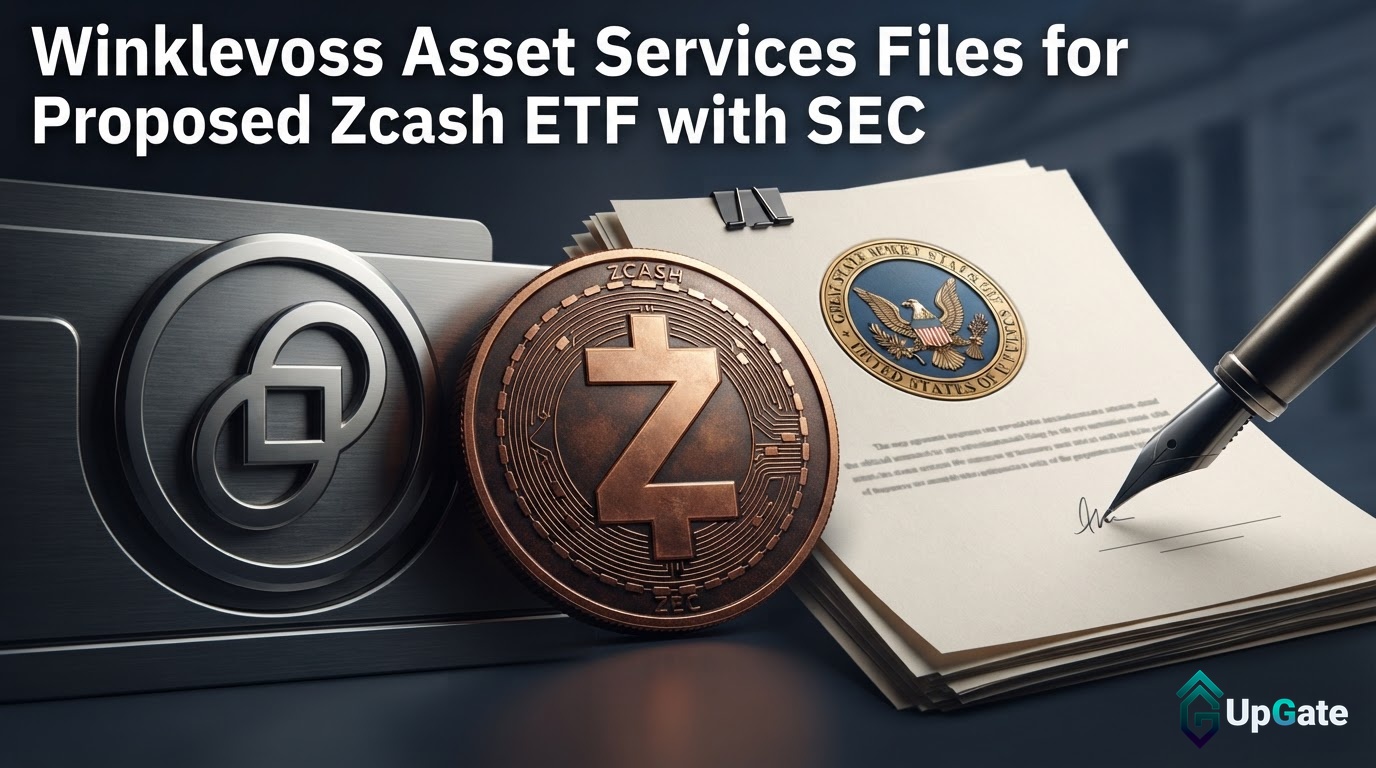
    Winklevoss Asset Services has filed an S-1 registration statement with the U.S. Securities and Exchange Commission (SEC) for a proposed exchange-traded fund (ETF) that would directly hold Zcash (ZEC). The ETF, intended to be listed on the Nasdaq, is named the Winklevoss Zcash ETF.

    The preliminary prospectus outlines a sponsor fee of 0.25%. Winklevoss Capital has indicated nonbinding interest in purchasing up to $100 million of the ETF’s shares.

    It remains uncertain whether the SEC will approve the Winklevoss Zcash ETF, and the exact listing date on Nasdaq is undetermined. The final sponsor fee is also subject to change.

    Why This Matters

    The filing by Winklevoss Asset Services for the proposed Zcash ETF is a documented update.

    Broader Context

    Winklevoss Asset Services has filed an S-1 with the SEC for the Winklevoss Zcash ETF, a proposed Nasdaq-listed product designed to hold ZEC directly. The preliminary prospectus sets a 0.25% sponsor fee, while Winklevoss Capital has indicated nonbinding interest in purchasing up to $100 million of shares.

  • Rep. French Hill: Current Crypto Rulemaking Insufficient, Legislative Action Urged

    Rep. French Hill: Current Crypto Rulemaking Insufficient, Legislative Action Urged

    The U.S. digital asset industry faces a persistent gap in regulatory clarity, as agency rulemaking by the Securities and Exchange Commission (SEC) and the Commodity Futures Trading Commission (CFTC) is increasingly viewed as insufficient to provide the durable legal framework needed for market stability, according to Rep. French Hill.

    Rep. French Hill, who chairs the House Financial Services Committee, stated this week that the current rulemaking efforts by the SEC and CFTC regarding digital assets do not substitute for comprehensive legislation. He believes a legislative solution is necessary for permanent law changes to ensure U.S. leadership in digital assets and blockchain technology. Hill argued that agency actions, such as exemptions and guidance, are fragile and can be challenged in court or unwound by a future administration, whereas a statute is durable.

    Regulatory Actions vs. Legislative Imperative

    This perspective emerges as the SEC and CFTC have been active in developing rules and guidance for the crypto market. The SEC has introduced an ‘innovation exemption’ for tokenized stocks and proposed new rules for how investment advisers and funds can custody crypto assets. Meanwhile, the CFTC has sent crypto-market rulemakings to the White House and floated a plan to bring crypto exchanges under federal oversight.

    However, according to Rep. French Hill, these regulatory moves fall short of what is required. He emphasized that “These regulatory policies fall short of what we have to do, which is a legislative solution.” The urgency for such a solution is underscored by the fact that a significant piece of crypto legislation, the Clarity Act, stalled in the Senate last month in a 49-50 vote. Hill expressed hope that the Clarity Act or similar legislation could still pass during the current Congress’s lame-duck session, though uncertainty remains whether a bill that failed in the Senate can be revived before the year’s end.

    Persistent Uncertainty and the Path Forward

    The core assertion is that regulatory uncertainty persists in the U.S. crypto market despite these agency actions. The limitations of current rulemaking highlight the need for legislative action as the only path to long-term stability for the U.S. digital asset industry. Hill has consistently framed legislation as the industry’s only path to lasting certainty, aiming to ensure America remains at the forefront of digital assets and blockchain technology.

    The situation presents a critical juncture for the U.S. digital asset sector. While agencies are taking steps to regulate, the lack of a durable legislative framework leaves the market vulnerable to shifts in policy and legal challenges. The long-term durability and legal standing of SEC and CFTC crypto guidance and exemptions remain uncertain, as does the future direction of crypto regulation in the U.S. without comprehensive legislation. The question of whether a bill that couldn’t clear the Senate weeks ago can be revived before year’s end looms large over the industry’s prospects.

    Why This Matters

    The materials describe a narrow update: Rep. French Hill’s continued emphasis on the need for legislative action in the digital asset space, highlighting the fragility of current agency rulemaking and the uncertainty surrounding future legislative efforts.

    Broader Context

    Source materials place the factual news in this context: The article discusses the ongoing efforts of the SEC and CFTC to regulate the cryptocurrency market through rulemaking and exemptions, contrasted with the stalled legislative efforts in Congress.

  • Bitcoin Consolidates Near Yearly Open Amid Shifting ETF Demand and Reduced Futures Leverage

    Bitcoin Consolidates Near Yearly Open Amid Shifting ETF Demand and Reduced Futures Leverage

    Bitcoin (BTC) is trading near $84,000, having repeatedly failed to surpass its yearly open price of $87,700. The current price action, occurring alongside weakening demand from spot Bitcoin Exchange Traded Funds (ETFs) and a reduction in futures leverage, suggests a period of potential consolidation rather than a reported trend reversal.

    ETF Demand Slowdown

    Demand from spot Bitcoin ETFs has cooled significantly. From September 28 to October 2, US spot Bitcoin ETFs saw net inflows of $241.1 million, a notable decrease from the $2.39 billion recorded the previous week. This slowdown was preceded by a $148.7 million outflow on September 30, which ended a nine-day streak of positive inflows. During this recent period, BlackRock’s IBIT attracted $450.2 million, while Fidelity’s FBTC experienced $168 million in outflows.

    According to Bitfinex, this weaker ETF demand is partly linked to Bitcoin trading near the average ETF holder’s cost basis of approximately $84,320. Historically, ETF inflows have averaged around $65 million when Bitcoin trades within 2% of this cost basis, compared to $136 million when it trades more than 10% above it.

    Futures Leverage Declines

    Concurrent with the dip in spot demand, futures leverage has also reduced. Open interest in Bitcoin futures had increased by $2.1 billion prior to the September payrolls report. However, following the data release, open interest fell by $1.5 billion as traders unwound positions. Aggregate futures open interest now stands at approximately 625,000 BTC, the lowest level since January 1, indicating reduced leverage in the market.

    Key Price Levels and Outlook

    Several key price levels are under scrutiny. Bitfinex sees $86,000 as a significant level. A drop below $82,600 could potentially place ETF holders back into a loss-making position. The $84,000 to $84,500 range is a critical cluster, holding around 867,000 BTC, which represents roughly 75% of Bitcoin’s supply and is considered a significant cost-basis area.

    Bitfinex expects Bitcoin to consolidate between $84,000 and its yearly open. The firm suggests that the next move will depend more on renewed spot demand than on increased futures leverage. Stronger ETF inflows could potentially support a move towards $90,000. Conversely, sustained trading below $81,300 might lead to a retest of support levels near $77,000 and the True Market Mean around $77,200.

    Uncertainties Remain

    Bitcoin’s near-term trajectory remains uncertain. It is unclear whether the current trend of failed breakouts will be reversed. The precise impact of recent macroeconomic data, such as weak payroll growth on potential interest rate decisions, also adds a layer of speculation. The market awaits clearer signals from institutional demand and macroeconomic factors to determine Bitcoin’s next significant move.

    Why This Matters

    The materials describe a narrow update: Bitcoin has repeatedly failed to surpass its yearly open price of $87,700, trading near $84,000. Whether Bitcoin may flip the trend of failed breakouts.

    Broader Context

    Source materials place the market analysis in this context: Bitcoin (BTC) was trading near $84,000 after another failure to break above its yearly open at $87,700.

  • US Government Moves $470 Million in Seized Bitcoin and Tether to Coinbase Prime

    US Government Moves $470 Million in Seized Bitcoin and Tether to Coinbase Prime

    The U.S. government has transferred approximately $470 million in seized Bitcoin and Tether to Coinbase Prime, the institutional platform designated by the U.S. Marshals Service (USMS) for handling such assets. This move is notable for the inclusion of Tether, a stablecoin, which has not been a prominent feature in previous reported government transfers of seized cryptocurrency.

    Coinbase Prime was selected by the USMS in July 2024 to manage the custody and trading of digital assets seized in federal criminal cases. The USMS is responsible for overseeing the management of these forfeited assets. On-chain data, tracked by Arkham Intelligence, has previously shown significant shipments of seized crypto assets to Coinbase Prime.

    In mid-July 2026, for instance, an estimated $288 million to $297 million in seized assets, primarily Bitcoin, were moved to Coinbase Prime. More recently, on October 7, 2026, a larger asset shift of approximately $103 million included about 833.6 Bitcoin, valued at $71.6 million, and 40,285 BNB, worth around $31.6 million, which also landed on Coinbase Prime addresses.

    The current transfer’s specific date is not explicitly stated but is implied to be recent, with activity tracked on platforms like X. The inclusion of Tether in this $470 million transfer is a distinguishing factor, as earlier reported government transfers of seized crypto did not feature USDT, despite the government holding significant amounts of the stablecoin.

    This development occurs within the context of a broader U.S. government digital asset strategy. In March 2025, President Trump signed an executive order establishing a Strategic Bitcoin Reserve, which includes a no-sale policy for seized Bitcoin. While this policy specifically addresses Bitcoin, the movement of Tether, a stablecoin pegged to the U.S. dollar, raises different considerations. Unlike Bitcoin, selling or redeeming Tether would not typically create price pressure on the market, but it signals active management of crypto assets outside the direct protection of the Bitcoin reserve’s no-sale policy.

    Transfers to a custodian like Coinbase Prime are administrative actions and do not inherently constitute a sale. Coins can be moved for consolidation, safekeeping, or administrative handling without being placed on an exchange for sale. However, the handling of seized Bitcoin may be subject to scrutiny to determine if the government’s no-sale policy is being consistently applied.

    Estimates suggest the U.S. government holds a substantial amount of cryptocurrency, potentially between $20 billion and $28 billion, including an estimated 324,000 to 325,000 Bitcoin. The exact reasons for this specific $470 million transfer, beyond administrative handling, remain uncertain, as do the specific cases from which these assets were seized, although previous transfers have been linked to individuals like Ryan Farace and Brian Krewson.

    The government’s active management of its seized crypto portfolio, particularly the inclusion of stablecoins like Tether alongside Bitcoin, highlights the evolving nature of its digital asset strategy and the ongoing questions surrounding adherence to its stated policies, such as the Strategic Bitcoin Reserve.

    Why This Matters

    The materials describe a narrow update: The US government moved $470 million worth of seized Bitcoin and Tether to Coinbase Prime, the platform selected by the US Marshals Service for handling seized digital assets. The exact date of the $470 million transfer to Coinbase Prime.

    Broader Context

    Source materials place the factual news in this context: The US government has moved $470 million in Bitcoin and Tether from seized funds to Coinbase Prime, according to a post on X tracking the activity.

  • XRP Surges on Ripple’s South Korean Partnership

    XRP Surges on Ripple’s South Korean Partnership

    Ripple and Meritz Securities Forge Strategic Partnership to Explore Digital Asset Infrastructure in South Korea

    Ripple, the blockchain payment company, has announced a strategic partnership with South Korean brokerage firm Meritz Securities to assess the potential integration of Ripple Custody and its tokenization infrastructure within the country’s capital markets. This collaboration comes at a pivotal moment as South Korea moves towards formal regulatory recognition of digital assets, while the price of XRP, Ripple’s native token, has recently dipped below $1.50.

    The partnership aims to introduce institutional-grade digital asset custody and tokenization services to the South Korean market. Meritz Securities stated that it is actively examining potential business avenues that could become relevant as digital assets are incorporated into the regulated financial system.

    The companies intend to commence their cooperation within the existing framework of securities business rules and regulations. Future expansion will be considered in stages, aligning with the ongoing development of South Korea’s digital asset regulatory landscape.

    While Meritz Securities is exploring various digital asset services that could benefit its capital markets operations amidst evolving regulations, the firm has not yet tied these potential activities to Ripple or confirmed their future implementation. The assessment will focus on how different digital asset services can be integrated into Meritz’s capital markets business.

    Tokenized securities, which represent financial assets on a blockchain, have issuance and investor rights that are contingent on the specific product and its legal structure. Consequently, the relationship between tokenization, ownership, and liquidity is crucial for evaluating any future offerings.

    Ripple Custody is designed as an institutional solution for safeguarding and managing digital assets, while Ripple’s tokenization infrastructure is intended for use by financial institutions. Both services are currently available to global financial institutions. The partnership with Meritz Securities will involve a joint review of how these offerings can be adapted for the Korean capital market.

    The announcement did not specify details regarding the blockchain network, custody volumes, asset issuance processes, customer segments, transaction mechanics, or operating models.

    For financial institutions, custody and tokenization represent distinct yet interconnected areas of infrastructure. Custody focuses on the secure holding and management of digital assets, whereas tokenization deals with the digital representation of assets. The specifics of how these functions will be integrated into a Korean service remain to be detailed.

    Institutional custody also encompasses operational controls and execution requirements that extend beyond mere asset safekeeping.

    Meritz Securities indicated that the arrangement seeks to leverage Ripple’s global digital asset infrastructure alongside the brokerage’s capital markets expertise. The firm plans to develop digital asset financial services incrementally as domestic regulations evolve.

    Fiona Murray, Ripple’s Managing Director for Asia-Pacific, stated that the company will investigate how digital asset infrastructure can support the continued growth of Korea’s capital markets. Neither company has provided a timeline for delivery or committed to a commercial launch.

    XRP is currently trading around $1.45, marking a 4.3% decrease over the past 24 hours and a 3.9% decline over the last seven days, according to CoinGecko. The token has also fallen from approximately $1.52 within the latest 24-hour period, suggesting that sellers currently hold the advantage in the short term.

    The market sentiment remains cautious, with XRP struggling to maintain recent gains despite Ripple’s expansion into South Korea’s capital markets. Prediction market data indicates that the $1.40 level is a significant downside support, while $1.60 represents a notable upside target for October.

    A sustained move above $1.60 could potentially lead to a stronger recovery in XRP’s price outlook. Conversely, a breach below $1.40 could expose the token to further declines. Currently, XRP appears to be trading within these boundaries, positioning the Ripple-Meritz partnership as a potential catalyst rather than an immediate driver of price action.

  • Bitcoin ETFs Rebound with $119M Inflow Amid Ether Losses

    Bitcoin ETFs Rebound with $119M Inflow Amid Ether Losses

    Bitcoin ETFs See Inflows Amid Price Dip, Ether Funds Continue Outflow Streak

    US spot Bitcoin exchange-traded funds (ETFs) experienced a return to net inflows on Tuesday, bringing in $119 million, even as the cryptocurrency’s price declined. This marks a reversal from Monday’s $90 million net outflow, according to data from SoSoValue.

    The positive inflow for Bitcoin ETFs occurred despite a drop in the digital asset’s price. Bitcoin fell from above $86,600 on Tuesday to below $84,000. At the time of reporting, BTC was trading at $83,971, a 2.1% decrease over the preceding 24 hours, according to CoinGecko.

    Analysts suggest that Bitcoin’s recovery efforts are encountering increased profit-taking. MorenoDV, a contributor to CryptoQuant, noted that the cryptocurrency is trading at a significant premium to the estimated cost basis of active traders, which stands around $68,900. He indicated that the sustainability of the recovery hinges on whether new demand can absorb the current selling pressure.

    In contrast, Ether ETFs continued to see outflows, with $202 million leaving the funds on Tuesday. This represents a sharp increase from the approximately $51 million in outflows recorded on Monday. The total outflows for Ether ETFs over the past six trading sessions have now reached approximately $408 million.

    Other cryptocurrency ETFs also reported varied performance on Tuesday. XRP ETFs attracted $3.1 million in inflows, while Solana (SOL) ETFs experienced $3.7 million in outflows. Zcash (ZEC) ETFs, after two consecutive sessions of outflows, recorded no net flows on Tuesday.