Tag: Neutral

  • Spain’s World Cup Upset Costs Investor $1 Million

    Spain’s World Cup Upset Costs Investor $1 Million

    A colossal wager on Spain to win its World Cup opener against debutants Cape Verde has spectacularly backfired, leaving one bettor with a seven-figure loss and igniting a firestorm of online commentary.

    A Million-Dollar Gamble Goes Awry

    The bet, placed on the prediction market platform Polymarket, saw an individual stake $1 million on Spain to secure victory. The odds, as reflected by the market, suggested a near certainty, with a draw priced at a mere 6.6 cents. The logic appeared sound: Spain, the reigning European champions, boasted an impressive 30-match unbeaten streak and were facing Cape Verde, an Atlantic island nation ranked 67th by FIFA and making its maiden World Cup appearance.

    However, the match, held at Mercedes-Benz Stadium in Atlanta, concluded with a stunning 0-0 draw, rendering the bettor’s substantial investment worthless. The potential payout of $1,085,943.48 evaporated over 90 minutes of play against a team that, according to Polymarket’s own pre-match assessment, had less than a 1% chance of winning the entire tournament.

    Goalkeeper’s Heroics Deny Favorite

    Cape Verde’s 40-year-old goalkeeper, Josimar Évora, widely known as “Vozinha,” emerged as the unlikely hero of the week, making a remarkable eight saves. He thwarted efforts from Ferran Torres and denied a header from Mikel Oyarzabal. Spain’s best opportunity, described by ESPN, saw Torres strike the crossbar, while star player Lamine Yamal was unable to impose his dominance.

    The improbable scoreline immediately drew comparisons to some of the greatest upsets in World Cup history. While Cape Verde had navigated African qualifying with a strong record, nothing in their prior results foreshadowed their ability to neutralize a Spanish side that had recently defeated formidable opponents like England, France, and Germany.

    The Counter-Bet That Paid Off

    The aftermath saw a deluge of memes and GIFs flood social media platform X, with jokes about the “surest bet in sports” taking center stage. A visual representation of Spain’s 27 shots to Cape Verde’s six became a poignant symbol of the failed wager.

    On the other side of this high-stakes trade was a Polymarket user operating under the handle “Fishalive.” This trader, who reportedly joined the platform in June 2026, had made just two prior predictions. “Fishalive” purchased “No” shares on Spain winning at an average price of 9 cents per share, effectively betting that Spain had roughly a 9% chance of victory, a stark contrast to the market’s 92% pricing.

    The user acquired over 4.7 million shares at this price. When the final whistle confirmed the 0-0 draw, these “No” shares resolved at 100 cents each, catapulting the position’s value to $4,738,433.49. This resulted in a profit of $4,310,481.12, a staggering return of over 1,000%.

    Prediction Markets: Edge or Luck?

    This outcome highlights the mechanics of prediction markets: an individual identifies a scenario dismissed by the majority, places a significant bet, and reaps the rewards when their prediction materializes. The perennial question remains whether such successes stem from superior insight or sheer luck.

    While the $1 million Spain bet is dramatic, it is not the first instance of Polymarket serving as a cautionary tale for betting at extreme odds. Traders who buy “Yes” at 90 cents or higher are essentially asserting that the true probability exceeds that figure. When reality diverges, the financial consequences can be severe.

    The platform has seen other significant losses. A trader known as “beachboy4” reportedly lost over $2 million in 35 days, with a single $1.58 million position on Liverpool to win against Leeds United on January 1, 2026, being a major contributor. Another trader, “bossoskil1,” lost $2.36 million in just eight days across 53 U.S. sports markets without employing hedging or stop-loss strategies.

    Regulatory Scrutiny and Market Trends

    A Bloomberg analysis from April 2026 revealed that since January 2025, over 100,000 Polymarket accounts had incurred losses of at least $1,000, nearly double the number of wallets posting comparable gains. Furthermore, an academic study by the University of Toronto, examining 2.4 million users, found that 68.8% had lost money since 2022, with those experiencing losses disproportionately trading at extreme prices—below 10 cents or above 90 cents.

    Meanwhile, the 2026 World Cup winner market across Kalshi and Polymarket has surpassed $2.34 billion in volume. Regulators are taking notice, with states like Tennessee issuing cease-and-desist letters to both platforms concerning sports prediction markets. Despite this scrutiny, traders continue to place bets. While the majority of participants in the Spain-Cape Verde market are likely facing financial setbacks, “Fishalive” is undoubtedly enjoying a highly profitable Monday.

    Cape Verde is scheduled to face Uruguay next on June 21.
  • Binance Futures Implements Last Price Protection on HUSDT Perpetual Contract

    Binance Futures Implements Last Price Protection on HUSDT Perpetual Contract

    Binance Futures to Implement Last Price Protected Mechanism for HUSDT Perpetual Contract Amidst Security Incident

    Binance Futures announced it will implement a Last Price Protected (LPP) mechanism on its USDⓈ-Margined HUSDT Perpetual Contract starting June 15, 2026, at 18:45 UTC. This measure is a response to observed spot price divergence and deposit/withdrawal limitations across various exchanges, following a security incident involving Humanity Protocol. Binance has assured users that their funds on the platform remain secure.

    LPP Mechanism Implementation

    The LPP mechanism will be rolled out gradually, employing a mark price smoothing process. This approach aims to mitigate sudden price fluctuations and enhance price stability during the transition period.

    The duration of the LPP period for the USDⓈ-Margined HUSDT Perpetual Contract will conclude when the spot price of Humanity Protocol (H) converges across multiple exchanges, allowing for the derivation of a stable index price from spot markets, as determined by Binance.

    A separate announcement will be issued to signal the end of the LPP period and the contract’s return to standard Mark Price calculation, which is determined by the median of three prices: Price 1, Price 2, and the Contract Price. The transition timeline is contingent upon price volatility and the availability of a stable index price.

    Understanding the Last Price Protected Mechanism

    Under the LPP mechanism, the mark price is calculated based on the average of recent transaction prices for the perpetual contract within a defined window. Specifically, it is the average of trade prices from the last 10 seconds, recalculated every second. If fewer than 21 transaction prices are recorded within the 10-second interval, the system will extend its lookback to the past 100 seconds. If more than 21 prices are available in that longer period, the average will be based on those 100 seconds of transaction data; otherwise, it will use the last 100 transaction prices recorded for the contract.

    Furthermore, a price cap of ±1% will be applied to the mark price, limiting its movement within this range every second.

    Transition to Standard Mark Price Calculation

    Upon the conclusion of the LPP period, the Mark Price will revert to the formula: Mark Price = Median (Price 1, Price 2, Contract Price). Users can find the formulas for Price 1 and Price 2 within the USDⓈ-Margined Futures Mark Price and Price Index documentation.

    Funding Rate Adjustments

    Effective from June 15, 2026, at 18:45 UTC, the funding interval for the HUSDT Perpetual Contract will be extended from one hour to four hours. Concurrently, the capped funding rate will be adjusted from ±2.00% to ±0.005%.

    The detailed schedule for these adjustments is as follows:

    • June 15, 2026, 18:00 (UTC): Max Funding Rate +2.000% / -2.000%
    • June 15, 2026, 20:00 (UTC): Max Funding Rate +0.005% / -0.005%
    • June 16, 2026, 00:00 (UTC): Max Funding Rate +0.005% / -0.005%
    • June 16, 2026, 04:00 (UTC): Max Funding Rate +0.005% / -0.005%

    The aforementioned contract is exempt from the standard Rule 8.1 regarding the Adjustment of Funding Interval. The funding interval will not revert to hourly when the previous funding rate settlement reaches the capped rate.

    Once the LPP period concludes, the funding rate will adhere to the standard perpetual futures contract rules, with maximum and minimum rates potentially reaching ±2.00%. The funding interval will then revert to hourly when the previous funding rate settlement hits ±2.00%.

    Additional Information and Disclaimers

    Users are encouraged to refer to the following resources for further details:

    • Trading Rules to Trading Parameter
    • Funding Rate History
    • Mark Price and Price Index
    • Binance Futures Contract Specification

    This notice is issued under Binance Exchange Rule 17. During the LPP period, Binance Futures will be the sole component of the price index. A stricter maximum price will be enforced, which Binance may adjust based on market risk conditions. API users can access this information via GET /fapi/v1/exchangeInfo, while UI users can find it on the designated webpage.

    Binance reserves the right to modify the specifications of the affected futures contract, including funding fees, tick size, maximum leverage, and margin requirements, in response to market risk conditions. Users should consult the Trading Rules for the most up-to-date information.

    In the event of any discrepancies between this English version and any translated versions, the original English content shall prevail.

  • USDT Perpetual Contracts: Max Order Size Update June 9, 2026

    USDT Perpetual Contracts: Max Order Size Update June 9, 2026

    Bybit Adjusts Maximum Order Sizes for Perpetual Contracts to Enhance User Protection

    Singapore, [Date] – Cryptocurrency exchange Bybit announced it will implement adjustments to the maximum order sizes for a range of perpetual contracts, a move aimed at bolstering user protection. The changes are scheduled to take effect on June 9, 2026, at 6:30 AM UTC.

    The adjustments will impact both market and limit order sizes for specific contracts, with the goal of mitigating potential risks for traders. Bybit has provided a detailed breakdown of the revised limits, which will see reductions in the maximum order sizes for several popular trading pairs.

    For instance, the 1000000BABYDOGEUSDT contract will see its maximum market order size decrease from 12,000,000 coins to 4,500,000 coins, and its maximum limit order size will be reduced from 60,000,000 coins to 22,000,000 coins. Similarly, the 1000000MOGUSDT contract’s maximum market order size will be lowered from 34,000 coins to 25,000 coins, and its maximum limit order size from 170,000 coins to 150,000 coins.

    Other contracts affected by these changes include 1000BTTUSDT, AEROUSDT, APEXUSDT, BNTUSDT, BOBBOBUSDT, BRETTUSDT, BTRUSDT, CHIPUSDT, COREUSDT, CROUSDT, CTCUSDT, DEEPUSDT, EDENUSDT, EIGENUSDT, ENSOUSDT, ERAUSDT, ESPORTSUSDT, ETHBTCUSDT, ETHFIUSDT, HOMEUSDT, HYPERUSDT, IMXUSDT, JTOUSDT, KAITOUSDT, LABUSDT, MANTAUSDT, MEGAUSDT, METUSDT, OKBUSDT, PENDLEUSDT, PIEVERSEUSDT, PNUTUSDT, POWRUSDT, PUNDIXUSDT, RESOLVUSDT, ROAMUSDT, RSRUSDT, SKYAI1USDT, SPXUSDT, SUSHIUSDT, SXTUSDT, WHITEWHALEUSDT, XDCUSDT, and ZBTUSDT.

    Bybit encourages its users to trade responsibly and consider employing lower leverage levels to safeguard their accounts against potential risks. Traders are advised to review and adjust their trading strategies in accordance with the new maximum order size limits.

    The exchange has expressed its understanding for any inconvenience these adjustments may cause.

  • OKX to Support Polygon, Kaia, Flare Upgrades

    OKX to Support Polygon, Kaia, Flare Upgrades

    Major cryptocurrency exchanges are preparing to support network upgrades for Polygon, Kaia, and Flare, with planned service suspensions to ensure a seamless transition.

    Polygon (MATIC/POL) Network Upgrade

    Deposits and withdrawals for all tokens on the Polygon network are scheduled to be suspended starting at 1:30 PM UTC on April 8, 2026. Services are expected to resume once the upgraded network has been confirmed as stable, and no separate announcement will be made for the resumption. Holders of Polygon-related tokens are advised that no action is required on their part, as their assets will remain secure throughout the upgrade process.

    Official resources for the Polygon network upgrade can be found at: https://github.com/0xPolygon/bor/releases/tag/v2.7.0

    Kaia (KLAY) Network Upgrade

    Similarly, deposits and withdrawals for all tokens on the Kaia network will be suspended from 12:30 AM UTC on April 7, 2026. The resumption of services will occur once the upgraded network is stable, without a separate announcement. Users holding Kaia-related tokens do not need to take any action, as their assets will be kept secure during the upgrade.

    Official resources for the Kaia network upgrade are available at: https://github.com/kaiachain/kaia/releases/tag/v2.2.2

    Flare (FLR) Network Upgrade

    The Flare network will also undergo an upgrade, leading to the suspension of deposits and withdrawals for all associated tokens starting at 11:30 AM UTC on April 14, 2026. Services will be reinstated once the network stability is confirmed, and no additional announcement will be issued. Token holders on the Flare network are assured that their assets will remain secure and require no user intervention.

    Official resources for the Flare network upgrade can be accessed at: https://github.com/flare-foundation/go-flare/releases/tag/v1.13.0

    Important Considerations

    While trading of the affected tokens will not be impacted, users are cautioned about potential risks associated with spot, margin, and derivatives trading of crypto assets. It is advisable to increase margin levels in advance to mitigate these risks.

    For the security of user assets, it is strongly recommended to refrain from depositing or withdrawing these tokens during the network upgrade periods to prevent any potential loss of funds.

  • iGaming Faces Regulatory and Growth Pressures

    iGaming Faces Regulatory and Growth Pressures

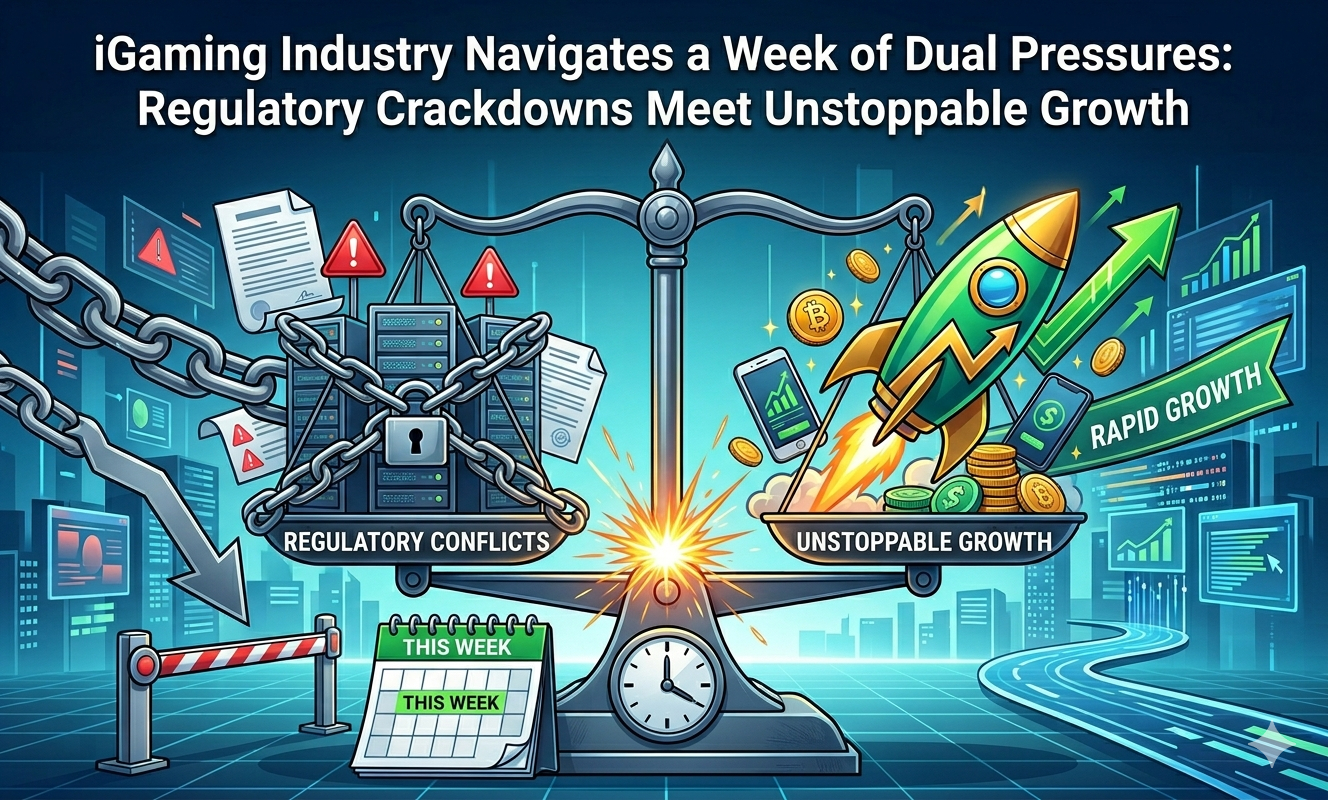
    iGaming Sector Faces Dual Pressures of Intensifying Regulation and Global Expansion

    Norwich, United Kingdom – June 15, 2026 – The iGaming industry is navigating a complex landscape defined by heightened regulatory scrutiny and persistent global market expansion, according to a new industry overview released by NyesteCasino.com, a prominent iGaming analysis resource. Operators are grappling with a delicate balance between risk management and aggressive growth strategies, a challenge underscored by U.S. Senate hearings, evolving legal interpretations, the localization of crypto casinos, and a surge in World Cup betting activity.

    Across the United States, Europe, Southeast Asia, and South America, regulators have been tightening rules concerning prediction markets, sweepstakes casinos, and the use of credit cards for deposits. Simultaneously, online gambling platforms, content providers, and policy advisors have accelerated product innovation and launched targeted, region-specific sports marketing campaigns.

    NyesteCasino.com’s analysis suggests these developments signal a significant structural shift within the industry, where agility in compliance is rapidly becoming as crucial for success as product quality. Despite increasing regulatory headwinds, the pace of innovation and sustained market demand indicate continued sector growth.

    Prediction Markets: A Battlefield of Courts, Congress, and Cross-Border Bans

    The week commenced with a highly anticipated hearing before the U.S. Senate Commerce Subcommittee, titled “No Sure Bets.” Held on May 20 under the chairmanship of Senator Marsha Blackburn, the session signaled further deliberations to come. A central point of contention emerged between American Gaming Association CEO Bill Miller and former Congressman Patrick McHenry regarding the future of prediction markets. Miller argued that sports event contracts function as clandestine betting operations, circumventing state licensing, tax regulations, and integrity safeguards. McHenry, representing the Coalition for Prediction Markets, countered that existing Commodity Futures Trading Commission (CFTC) oversight is effective.

    Adding to the legal complexities, on May 22, a panel from the Ninth Circuit Court of Appeals rejected stay requests from both Kalshi and Polymarket, refusing to halt state enforcement proceedings in Nevada and Washington. The court ruled that a federal preemption defense under the Commodity Exchange Act alone does not establish federal jurisdiction. This decision strengthens the ongoing dispute in the New Jersey appeals court, which had previously upheld an injunction against Kalshi, and further accelerates the process towards a potential Supreme Court review of state jurisdiction over event contracts.

    In Indonesia, the Ministry of Communication and Digital Affairs classified Polymarket as an online gambling site, disregarding its crypto-based structure, and requested a national ban on the platform on May 25. This action was prompted by a viral contract concerning whether President Prabowo Subianto would resign before the end of his term in October 2029, which generated approximately $46,000 in trading volume. Polymarket is now inaccessible in over 33 jurisdictions worldwide, including India, Brazil, and Singapore, with more countries implementing bans.

    State-Level Regulations: Tennessee Enacts Anti-Sweepstakes Bill

    State-level restrictions on online gambling law have also emerged in Tennessee. Governor Bill Lee signed two significant bills into law during the week. Senate Bill 2136 designates Tennessee as the ninth U.S. state to completely ban sweepstakes casinos and dual-currency systems, empowering the attorney general to enforce the ban. Senate Bill 1992, the second bill signed by the governor, classifies anyone who deliberately influences the outcome of an event while holding a prediction market contract with a Class E felony. These legislative actions are expected to influence other state legislatures considering similar regulations.

    Europe and Brazil: Tax Proposals, Ad Restrictions, and Credit Bans

    The European Parliament held a plenary debate on May 20 concerning a proposed EU-level gambling levy. Budget Commissioner Piotr Serafin confirmed that the Commission is actively evaluating this option, alongside levies on digital services and crypto-assets, as part of the next Multiannual Financial Framework. Proponent Member of the European Parliament Victor Negrescu estimated the levy could generate between €2 and €4 billion annually for education, youth, and addiction prevention programs. However, opponents from the EPP and ECR blocs voiced concerns regarding subsidiarity, competitiveness, and national tax sovereignty, with any operational package anticipated for January 2028.

    In anticipation of the FIFA World Cup tournament, scheduled from June 11 to July 19, Belgium’s Kansspelcommissie and the Netherlands Gambling Authority issued formal advertising warnings to licensed operators. France’s ANJ reported a year-on-year increase of over 25% in operator marketing budgets as the tournament approaches. Meanwhile, Brazil formalized rules on May 25 to prohibit Pix Crédito as a deposit method on regulated betting platforms. This move was partly influenced by a Folha de São Paulo audit that revealed major banks, including Bradesco and Banco do Brasil, were still processing credit transfers into betting accounts as recently as mid-May.

    Editorial Perspective

    “This week clearly illustrates that the iGaming sector is entering a phase where regulatory acumen is as strategically vital as product development,” stated the editorial team at NyesteCasino.com. “The debate surrounding prediction markets alone spans courtrooms, congressional hearings, and international bans, and it remains far from resolved. Operators adept at tracking and adapting to this multi-jurisdictional complexity, while simultaneously executing World Cup campaigns and localization strategies, will be best positioned for the latter half of 2026.”

  • Philippines Tightens Crypto Listings, Bans Privacy Coins

    Philippines Tightens Crypto Listings, Bans Privacy Coins

    Philippines Tightens Crypto Regulations with New Listing Rules

    The Philippines is reinforcing its oversight of cryptocurrency markets with new guidelines for digital asset listings. The Bangko Sentral ng Pilipinas (BSP), the nation’s central bank, has mandated that all licensed Virtual Asset Service Providers (VASPs) must implement stringent due diligence and accreditation procedures before making digital assets available to consumers.

    Promoting Financial Stability and Consumer Protection

    According to a memorandum signed by Deputy Governor Lyn Javier, these new rules are designed to “promote financial stability and protect the financial welfare of customers by ensuring that VA services are provided in a safe, sound, and consumer-centric manner.”

    Ban on Privacy Coins

    In a significant move, the central bank has also prohibited the listing or support of anonymity-enhancing cryptocurrencies, commonly known as privacy coins, by VASPs.

    Enhanced Monitoring and Delisting Thresholds

    The latest directive requires exchanges to continuously monitor their listed assets and establish specific thresholds that would trigger suspensions or delistings. These triggers include the loss of liquidity, issuer insolvency, involvement in scandals or scams, de-pegging from a stable value, material security breaches, or misleading disclosures.

    Alden Yburan, head of crypto at GCash, described the new listing standards as “long overdue” and a “minimum bar any responsible platform should already be applying.” He believes that stronger listing requirements will ultimately lead to “better products.”

    However, Yburan expressed mixed feelings about the ban on privacy coins. He acknowledged that assets like Monero and Zcash “exist for legitimate reasons,” as privacy is a “foundational value in crypto, the ability to transact without surveillance.” Yet, he also noted the Philippines’ significant remittance market, stating, “PH is remittance-heavy, we can’t be positioning the ecosystem as a trusted financial infra while simultaneously allowing anonymity-enhancing assets to flow freely.”

    Compliance with Securities Regulations

    The memorandum also highlights that platforms may need to comply with securities regulators. If a token is offered as a security, VASPs will be required to adhere to “the SEC’s CASP Rules and Guidance.”

    A Dual Regulatory Landscape

    The Philippines ranks ninth globally on Chainalysis’s 2025 Global Crypto Adoption Index, reflecting strong grassroots adoption in the Asia-Pacific region. The new listing rules fit into a regulatory framework where crypto firms are accountable to two distinct authorities: the Securities and Exchange Commission (SEC) for crypto-asset service providers on the securities side, and the BSP for licensing VASPs involved in payment and transaction services. Firms must meet the requirements of both bodies independently.

    Last June, the SEC introduced Memorandum Circular No. 5, which mandated crypto-asset service providers (CASPs) to register locally, maintain $1.8 million (₱100 million) in paid-up capital, store customer data within the Philippines, and report to both the SEC and the Anti-Money Laundering Council. By August, the SEC had blocked access to 10 offshore platforms, including OKX, Bybit, Kraken, and KuCoin.

    Luis Buenaventura, President at the Blockchain Council of the Philippines, previously commented that the SEC’s rules created “a competitive advantage for licensed players” and that the broader crackdown would steer users toward compliant services.

    Legislative Efforts and Binance’s Return Bid

    Lawmakers are also exploring separate initiatives, including Senate Bill 1330, which proposes to place the national budget on-chain, following public outcry over approximately $9.2 billion in flagged public works spending.

    Meanwhile, global crypto exchange Binance is seeking to re-enter the Philippine market through a local partner, BlockShoals Technologies Inc. BlockShoals received initial clearance from the SEC in November under the StratBox regulatory sandbox, according to local media reports. However, the BSP has clarified that neither Binance nor BlockShoals currently holds a VASP license, and participation in the sandbox “doesn’t substitute for central bank licensing.”

    The SEC has since refined its stance, reclassifying Binance as a “global crypto-asset service provider” rather than a global VASP. The commission now requires BlockShoals to integrate with a licensed domestic VASP within 90 days before it can onboard any users through Binance’s infrastructure.

  • SpaceX IPO: Ripple’s XRP Price Outlook

    SpaceX IPO: Ripple’s XRP Price Outlook

    SpaceX’s historic IPO, the largest in history, has debuted on Wall Street with a staggering $1.77 trillion valuation, having raised $75 billion. The offering also proved to be a significant draw for retail investors, attracting over $100 billion in orders. This monumental financial event prompts the question of how it might impact popular altcoins, particularly those favored by retail investors.

    Impact on XRP

    When considering XRP, the connection to this massive financial event is more complex than with Bitcoin, according to ChatGPT. The AI suggests the outlook may be less optimistic than some investors anticipate. While SpaceX has publicly acknowledged a substantial Bitcoin exposure, there is no clear indication that it holds XRP, utilizes the XRP Ledger, or plans to integrate Ripple’s payment technology.

    Consequently, XRP’s price trajectory is expected to be more influenced by broader market dynamics than by SpaceX’s IPO or stock performance. ChatGPT warns that the short-term outlook for Ripple’s token is leaning bearish, as such a large listing can drain liquidity from speculative markets, especially when retail investors are heavily involved.

    “XRP remains a high-beta crypto asset,” the AI noted, “and when traders require cash to participate in a massive IPO, altcoins are often among the first positions to be reduced.”

    Gemini echoed this sentiment, identifying a “liquidity vacuum” as an immediate threat to the cross-border token. The exchange added that even XRP’s dedicated retail community faces a challenge when a “generational tech narrative like SpaceX emerges.”

    Long-Term Potential

    However, Gemini also pointed to a potential long-term benefit for XRP, drawing a parallel to Bitcoin’s narrative. The “wealth effect” generated by the IPO could prove highly advantageous for XRP in the long run. As the initial excitement and capital raise of $75 billion subside, a significant amount of new wealth will have been generated for early private investors. This capital often flows “down the risk curve,” potentially benefiting high-cap altcoins that can offer “asymmetric returns.”

    ChatGPT also highlighted a positive aspect, stating the IPO is not “purely negative” for XRP. If SpaceX’s stock performs strongly and the broader market enters a risk-on phase, XRP could see gains alongside other large-cap cryptocurrencies.

    XRP’s Independent Bull Case

    Beyond the SpaceX IPO, XRP possesses its own independent bullish case. The company behind XRP is actively expanding its presence in payments, stablecoins, tokenization, and institutional infrastructure.

    “If the market begins rewarding real-world utility again,” the analysis suggests, “XRP could still outperform many speculative tokens, even if it is not directly linked to SpaceX.”

  • Tether Briefly Surpasses Ethereum by Market Cap

    Tether Briefly Surpasses Ethereum by Market Cap

    Tether’s USDT Briefly Surpasses Ethereum in Market Capitalization

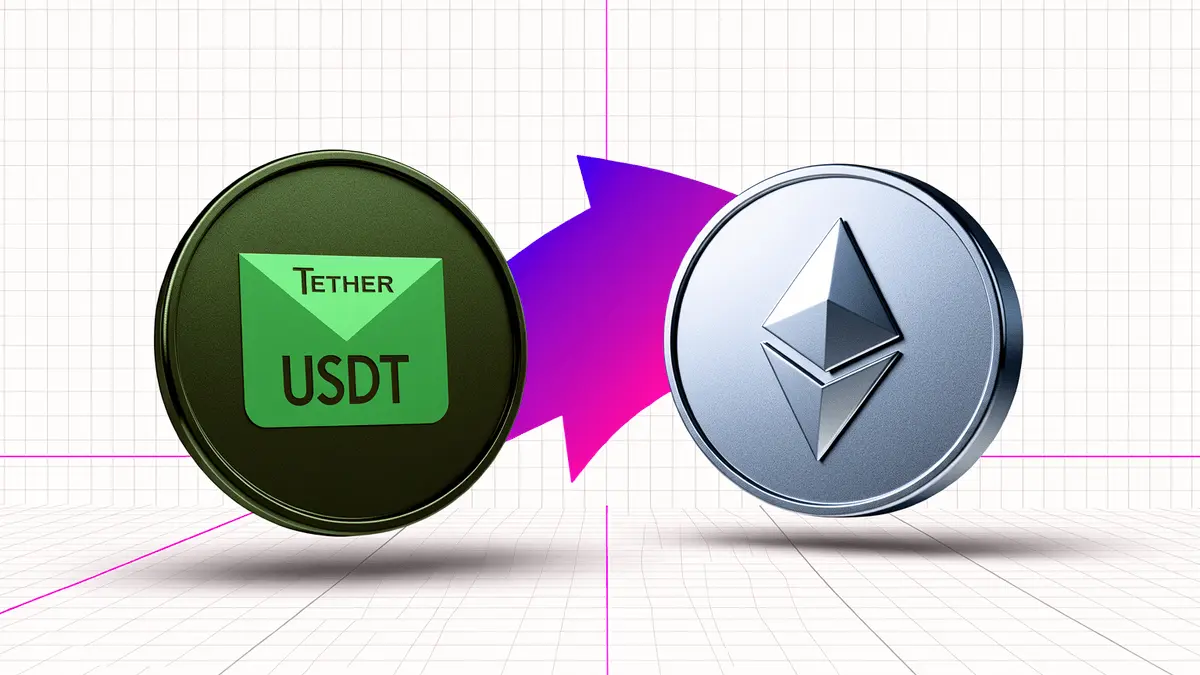
    For a few hours earlier this week, Tether’s USDT stablecoin briefly held a higher market capitalization than Ethereum, marking the first such occurrence in eight years. Data from multiple tracking platforms indicated that both assets were valued within the $183 billion to $188 billion range during this crossover period. One snapshot showed USDT at $187 billion against Ethereum’s $186 billion, a difference of less than $1 billion.

    The shift was short-lived, with Ethereum reclaiming its second-place position once its price stabilized. The underlying factors that led to the crossover – a steady expansion of USDT’s supply coupled with sustained weakness in ETH’s price – did not disappear with the reversal in rankings.

    This was not a supply shock on Ethereum’s part. What compressed ETH’s market cap was its price, while USDT’s expansion was driven by new issuances. Tether’s own fourth-quarter 2025 attestation revealed USDT at a record $187.3 billion, having added $12.4 billion in a single quarter even as the broader cryptocurrency market experienced significant downturns.

    By early 2026, USDT’s market cap had surged from $144.2 billion to $184 billion over twelve months, representing 28% growth. Concurrently, Ethereum’s dollar valuation moved in the opposite direction.

    In the three weeks leading up to the crossover, more than $7 billion exited the stablecoin sector, while the total cryptocurrency market cap shed $400 billion. Ethereum’s total value locked (TVL) in decentralized finance (DeFi) fell to approximately $36 billion. This movement suggests traders were not abandoning stablecoins but rather parking liquidity while divesting from more volatile assets.

    USDT currently holds a 59% share of the total stablecoin market, with USDT and USDC combined accounting for 82%. This indicates Tether’s significant influence within this market dynamic.

    Analyst Sees Potential for Further Stablecoin Dominance

    Mike McGlone, a senior commodity strategist at Bloomberg Intelligence, has been observing this trend for an extended period. In October 2020, McGlone noted that USDT, then valued at $16 billion against Ethereum’s $43 billion, was “on pace to match the market capitalization of Ethereum in a bit less than a year.” He described this as part of an “inexorable trend” toward stablecoins gaining mainstream traction.

    McGlone’s updated analysis suggests a more ambitious trajectory. He anticipates “the flippening to continue,” with Tether’s market cap surpassing Ethereum in 2026 and “eventually Bitcoin.” In an extreme scenario he outlines, if Bitcoin were to fall to $10,000, USDT, which would need to grow sevenfold from its current levels, could potentially challenge Bitcoin for the top spot.

    While this extreme scenario is not endorsed, dismissing it entirely due to its perceived extremity could lead to overlooking significant market shifts, similar to how the USDT-Ethereum crossover was initially underestimated.

    Outlook for Second Place Remains Uncertain

    As of the latest data, Ethereum has regained its second position in market capitalization rankings, but the margin is not substantial. For Ethereum to secure its second-place standing, it would require a sustained and meaningful price recovery, or Tether USDT’s issuance would need to plateau.

    Neither outcome is guaranteed. While structural advancements in Ethereum’s technology stack, including developments in ZK-proof scaling, offer a long-term bullish counterpoint, these catalysts operate on a different timeline than the near-term price weakness that facilitated the recent crossover.

    Tether’s supply trajectory shows no immediate signs of slowing. The stablecoin added $12.4 billion in a single quarter during a market downturn. In a neutral or risk-on environment, this pace could accelerate. Given that USDT maintains a $1 peg, its market capitalization is directly tied to its circulating supply. Consequently, every newly minted USDT represents a direct increment to its market cap, unaffected by the price volatility that influences Ethereum’s ranking.

  • Ethereum Poised for Double-Digit Quarterly Loss: Buy Signal?

    Ethereum Poised for Double-Digit Quarterly Loss: Buy Signal?

    The world’s second-largest cryptocurrency by market capitalization has experienced a turbulent price trajectory, marked by a new all-time high last year that barely surpassed its previous peak. This was followed by a significant downturn, pushing its market share against Bitcoin lower.

    Daan Crypto Trades, a prominent analyst, posted on X (formerly Twitter) today, questioning whether the current price collapse, which saw Ethereum (ETH) hit a 14-month low of $1,500 last week, presents a viable opportunity for accumulation.

    Current data indicates that ETH is on pace for its second-worst first half of the year since 2022. In that year, ETH saw a 10.75% drop in the first quarter and a substantial 67% decline in the second. This year, it has already fallen by 29% in Q1 and 21% in Q2, with several weeks remaining in the current quarter.

    Compounding the negative performance compared to 2021/2022, Ethereum is poised to close three consecutive quarters in negative territory. These losses have all been in double digits since Q4 2025 concluded with a 28% decrease.

    Daan Crypto Trades described the past nine months as “extremely bad” for the altcoin, particularly after its peak following a significant accumulation phase by Bitmine. The firm, chaired by Tom Lee, reportedly amassed billions of dollars worth of ETH, but its position is now also in the billions of dollars in the red due to the asset’s price correction.

    Despite the current market conditions, the analyst remains optimistic about Ethereum’s future role in tokenization, decentralized finance (DeFi), and other applications. He suggested that current price levels are “finally attractive again for longer-term accumulation (years).” However, he cautioned that bear markets can persist longer than anticipated and advised maintaining some “dry powder” for unforeseen circumstances.

    Meanwhile, fellow analyst Ali Martinez highlighted a recent surge in Ethereum investors withdrawing funds from exchanges. Citing data from Glassnode, Martinez reported that approximately 500,000 ETH, valued at around $800 million at current prices, were removed from trading platforms within a single week.

    Martinez suggested this trend could align with the accumulation strategy and serve as an “early sign of accumulation.”

    In a separate post, Martinez issued a warning, indicating that Ethereum’s true price bottom could be more than 50% below current levels, potentially reaching around $700.

  • US Orders Anthropic to Halt Claude Fable, Mythos AI

    US Orders Anthropic to Halt Claude Fable, Mythos AI

    U.S. Government Orders AI Firm Anthropic to Halt Access to Advanced Models Over Security Concerns

    The U.S. government has issued an emergency directive ordering AI company Anthropic to immediately suspend access to its two most powerful artificial intelligence models, Claude Fable 5 and Claude Mythos 5, for all foreign nationals. The order, citing national security concerns, was issued on Friday, just days after the models were released.

    The directive prohibits any foreign national, whether inside or outside the United States, from accessing the models. To ensure compliance with the sweeping order, Anthropic was compelled to disable the models for its entire customer base.

    While the government’s directive did not specify the exact nature of the national security concern, it is understood that officials believe a method for bypassing or “jailbreaking” the publicly available Fable 5 model has been discovered. Mythos 5, which has fewer safeguards and is particularly adept at identifying cybersecurity vulnerabilities, was only accessible to a select group of partners.

    Anthropic has disputed the severity of the government’s findings. The company stated that it reviewed a demonstration of the alleged bypass technique and concluded that the identified vulnerabilities appear relatively simple. Furthermore, Anthropic asserted that other publicly available AI models can achieve similar results without requiring any bypass.

    The company also indicated that the government has so far provided only verbal evidence of a potential, narrowly defined, and non-universal jailbreak. This bypass reportedly involves instructing the model to read a specific codebase and identify software flaws. Anthropic claims to have verified that the capabilities demonstrated are already widely available from competing models, including OpenAI’s GPT-5.5.

    While complying with the directive, Anthropic expressed concerns that the action sets a dangerous precedent. “If this standard was applied across the industry,” the company stated, “we believe it would essentially halt all new model deployments for all frontier model providers.” Access to all other Anthropic models remains unaffected, and the company is working to restore access to the restricted models as soon as possible.

    Key Figure Claims Refusal to Cooperate Led to Export Control

    David Sacks, co-chair of the President’s Council of Advisers on Science and Technology, posted on X on Saturday that a “highly credible, trusted partner” of both Anthropic and the U.S. government, while testing Fable, discovered a jailbreak of its safeguards. According to Sacks, the administration requested that Anthropic CEO Dario Amodei fix the vulnerability or deactivate the model, but Amodei allegedly refused.

    Sacks further claimed that Anthropic’s response contradicted its public statements on AI safety and regulation, a stance recently reiterated by Amodei in a blog post. “Anthropic prioritized the continued offering of the consumer model over safety,” Sacks wrote. He added that the administration issued the export control reluctantly, expressing surprise at Anthropic’s lack of cooperation with a “reasonable safety request.” Sacks characterized Anthropic’s reaction as being “very much at odds with their branding and ethos as a safe AI research community.”

    The administration, Sacks noted, hopes Anthropic will resolve the issue, allowing Fable 5 to be re-released. He stated that the administration values Anthropic’s technical capabilities and believes the issue is resolvable, concluding, “The ball is in Anthropic’s court.”

    This development follows earlier friction between Anthropic and the U.S. government this year. The AI firm reportedly refused to sign an expanded agreement that would have permitted mass domestic surveillance and the use of fully autonomous lethal weapons systems. Following the breakdown of those talks, President Donald Trump criticized the company, and the Department of Defense designated Anthropic as a “supply chain risk,” a label the firm has challenged legally. More recently, reports suggested a cooling of tensions as the government sought to utilize Claude Mythos and other models.