Tag: Neutral

  • Altcoins Surge as Bitcoin Pauses at $84K

    Altcoins Surge as Bitcoin Pauses at $84K

    Bitcoin Stabilizes Around $84,000 After Volatile Week

    Following a turbulent start to the business week, Bitcoin has found a period of calm, trading sideways in recent days at approximately $84,000. While many larger-cap cryptocurrencies have mirrored this trend, several mid-cap altcoins have posted notable gains, including ENA, CC, SUI, and PUMP.

    The primary cryptocurrency experienced a significant pause at $82,000 last Saturday, coinciding with renewed strikes between the United States and Iran. Bitcoin dipped to $80,300 on Sunday but managed to hold above the crucial $80,000 support level. The market saw a strong bullish resurgence on Monday, with a $7,000 rally pushing Bitcoin to its highest price point since late January, reaching $87,000.

    This peak proved to be a temporary ceiling, as Bitcoin quickly retreated to $84,000. An attempt to regain upward momentum the following day was thwarted by resistance at $87,300. This rejection led to a more pronounced downturn, with BTC falling to $84,000 by Wednesday and further to $83,000 on Thursday morning.

    Despite these setbacks, the $83,000 support held firm, enabling BTC to rebound to $85,000 on Friday. However, this level also acted as a resistance point, and Bitcoin has since consolidated around $84,000. Analysts suggest that pressure could build in the near future. Bitcoin’s market capitalization has stabilized at $1.680 trillion according to CoinMarketCap, though its dominance over altcoins has decreased to 58.6%.

    Altcoins Shine Amidst Bitcoin’s Sideways Movement

    In a market where certain altcoins have captured significant attention, Ethena’s ENA token has emerged as a top performer, surging by an impressive 24% today. This significant rise is largely attributed to a partnership with Binance announced yesterday. Other mid-cap altcoins such as CC, SUI, and PUMP have also experienced double-digit percentage increases, with AERO and STX following suit.

    Conversely, Zcash (ZEC) has seen a decline of over 4% in the past 24 hours, now trading at $1,525. Monero (XMR) is down 2.6% to $553. XRP, HYPE, Ethereum (ETH), and Binance Coin (BNB) are also trading slightly in the red, while Solana (SOL), Chainlink (LINK), and Uniswap (UNI) have registered modest gains.

    The total market capitalization of all cryptocurrency assets has remained largely unchanged from the previous day, standing at $2.880 trillion on CoinMarketCap.


  • Bitcoin Supply Shock: 81% Untouched in Six Months

    Bitcoin Supply Shock: 81% Untouched in Six Months

    Bitcoin Supply Tightens as Holders Lock Up Assets

    New data reveals a significant portion of Bitcoin remains inactive, while retail investors shift to accumulation.

    A substantial 81% of the circulating Bitcoin supply has remained untouched for at least six months, according to figures from financial services firm River Financial. This trend of long-term holders keeping their assets off the market is contributing to a tightening supply, with approximately 16.3 million BTC unmoved. This leaves roughly 3.7 million BTC available for active trading.

    Despite this supply constraint, Bitcoin has failed to sustain prices above $87,000, recently falling below $84,000 and entering a consolidation phase.

    River Financial’s analysis indicates that about 16.3 million BTC have been held without movement for over six months. Given Bitcoin’s circulating supply is nearing 19.7 million coins, this leaves an active float of only around 3.7 million BTC. This suggests that the majority of Bitcoin holders are choosing to retain their coins rather than engage in selling or transferring them between wallets and exchanges. This pattern has become more pronounced as Bitcoin has recovered approximately 50% from its June lows, surpassing the $87,000 mark.

    The shrinking active supply is largely attributed to long-term accumulation. River Financial data shows that long-term holders have added over 3 million BTC to their holdings since 2020. Concurrently, the movement of older Bitcoin has slowed considerably. Only about 300,000 BTC from older wallets were transacted in the first half of 2026, indicating a reduced return of long-held coins into circulation. This dynamic inherently limits the availability of Bitcoin for buyers and sellers on exchanges and trading platforms.

    Meanwhile, as long-term holders keep Bitcoin off exchanges, institutional investors are also bolstering their positions through spot Bitcoin Exchange-Traded Funds (ETFs). These ETFs have recorded net inflows of $134.51 million, bringing total weekly inflows to nearly $2.6 billion.

    River’s data also highlights a significant shift among retail investors. After a net sale of 140,000 BTC by retail holders in the first half of 2026, this trend reversed in the third quarter, with retail investors buying back more than 107,000 BTC.

    Mid-sized “dolphin” wallets, holding between 100 and 1,000 BTC, have also increased their holdings. These wallets have accumulated over 113,000 BTC since mid-July, further intensifying pressure on the available supply.

    Bitcoin is currently trading around $83,970, having recently approached the $87,385 level. A key observation is the presence of large orders on both sides of the market from significant holders, creating a distinct battle zone. Between $85,122 and $87,000, substantial sell orders totaling approximately $37 million have been placed, forming a strong sell wall that could impede Bitcoin’s ascent above the $85,000 to $87,000 range. Simultaneously, buy orders amounting to around $21.1 million are positioned between $82,000 and $83,500, establishing the $82,000 to $83,000 area as a crucial support zone, while the $85,000 to $87,000 range remains a significant resistance area.

  • US and China Highlight Divergent AI Philosophies in Trump-Xi Meeting, No Sweeping Agreements Reached

    US and China Highlight Divergent AI Philosophies in Trump-Xi Meeting, No Sweeping Agreements Reached

    The recent meeting between US President Donald Trump and Chinese President Xi Jinping underscored the fundamentally different approaches the two global powers are taking toward the development and regulation of Artificial Intelligence (AI). While the summit did not result in any sweeping agreements to slow AI advancement or impose new restrictions, it highlighted distinct philosophies: the US favoring a light-touch approach to encourage rapid development, and China emphasizing human control and state oversight.

    Trump maintained his stance on a less regulated environment for AI, reportedly suggesting that China shares this position. Conversely, Xi Jinping stressed the importance of ensuring AI development remains “under human control,” a sentiment that, while not endorsing specific international frameworks, signaled a call for guardrails. This divergence reflects a broader geopolitical dynamic where both Washington and Beijing view AI leadership as strategically critical, but are pursuing it through contrasting national strategies.

    Bilateral Dialogue Proposal Unagreed

    One significant proposal put forth during preparatory talks by US Treasury Secretary Scott Bessent was the establishment of a bilateral AI dialogue. This dialogue would include a mechanism for notifying each other of significant national security incidents related to the AI industry. The aim of this proposal was to enhance transparency and mitigate the risk of escalation in the event of a serious AI-related incident affecting critical infrastructure or military systems. However, the meeting between Presidents Trump and Xi did not lead to a formal agreement on this initiative.

    Semiconductor Controls Unchanged

    Discussions on advanced semiconductor restrictions, a key area of US policy aimed at slowing China’s access to cutting-edge computing capacity, also did not yield breakthroughs. Officials said chip export controls were not a topic of discussion during the preparatory economic talks, and the summit itself did not alter the existing framework.

    Symbolism Over Substance

    The meeting, which included prominent figures from the AI sector such as representatives from OpenAI, Nvidia, and Alphabet, as well as notable tech leaders like Elon Musk and Jeff Bezos, underscored the importance of AI on the international agenda. Despite the high-profile attendance, the summit appeared to prioritize symbolism over concrete policy shifts, failing to resolve the underlying disagreements on how aggressively AI should be developed, regulated, or constrained.

    Uncertainties remain regarding the full extent of Xi Jinping’s approval of Trump’s suggestion to rename AI to “super intelligence,” and the precise nature of the “tremendous things” Trump anticipates. Furthermore, it is unclear whether chip export controls were discussed at any point during the preparatory talks. The fundamental disagreement over the pace and control of AI development persists, indicating a continued divergence in the strategies of the US and China in this critical technological domain.

    Why This Matters

    The materials describe a narrow update: The meeting between Trump and Xi did not result in any sweeping agreements to slow AI development or impose new restrictions. Whether Xi Jinping formally approved the renaming of AI to SUPER INTELLIGENCE.

    Broader Context

    Source materials place the factual news in this context: The meeting between US President Donald Trump and Chinese President Xi Jinping produced no sweeping agreement to slow its development or impose new restrictions or regulations.

  • Bitcoin Dominance Dips Below 60%, Altcoin Season Looms

    Bitcoin Dominance Dips Below 60%, Altcoin Season Looms

    Bitcoin’s Dominance Wanes as Altcoins Show Signs of Life

    Bitcoin’s once-unshakeable hold on the cryptocurrency market appears to be loosening. BTC dominance, a key metric reflecting Bitcoin’s share of the total crypto market value, has fallen to 58.5% as of September 26. This decline comes after Bitcoin failed to maintain its position above the psychologically significant 60% threshold.

    Altcoin Cycle Signals Positive

    Meanwhile, Glassnode’s Altcoin Cycle Signal, which assesses conditions conducive to altcoin outperformance on a scale of 0 to 100, reached 81.25 on September 22. Concurrently, the total market capitalization of altcoins, excluding Bitcoin, has surged to approximately $1.17 to $1.19 trillion in late September, marking a 33% increase since mid-August.

    Bitcoin Holds Steady Amidst Market Shifts

    Bitcoin itself has been trading around the $84,000 mark, following a brief ascent towards the $86,000 to $87,000 range. The overall cryptocurrency market capitalization has now surpassed $3 trillion.

    Altcoin Season Index Remains Cautious

    Despite these positive altcoin indicators, the Altcoin Season Index, a separate gauge measuring whether altcoins are broadly outperforming Bitcoin, has remained in a neutral to Bitcoin-led zone. Recent readings have hovered between 45 and 53, falling well short of the 75 threshold that would signal a full-fledged altcoin season.

    Historical Context and Future Outlook

    Historically, periods of declining Bitcoin dominance have preceded explosive altcoin rallies. In 2017 and 2021, BTC dominance dropped from above 60-70% to the 40-50% range as capital flowed into altcoins.

    However, the current landscape, particularly looking towards 2026, is structurally different. The advent of Bitcoin Exchange-Traded Funds (ETFs) has become a significant factor in crypto capital allocation, directing institutional investment directly into Bitcoin. This institutional investor base, often engaging with Bitcoin via ETFs, is typically distinct from the demographic that ventures into smaller-cap altcoins on decentralized exchanges.

    Divergent Signals and Key Levels

    The divergence between Glassnode’s on-chain focused Altcoin Cycle Signal and the price-performance-driven Altcoin Season Index is noteworthy. Glassnode’s metric examines the underlying infrastructure of the crypto market for altcoin flows, while the Altcoin Season Index tracks actual price action relative to Bitcoin.

    For market participants, the 60% Bitcoin dominance level serves as a critical benchmark. Bitcoin’s repeated inability to reclaim and sustain this level suggests that sellers are becoming active in this price zone. A continued decline in dominance towards the mid-50s would lend further support to the argument for broader altcoin strength.

    While the 33% increase in altcoin market capitalization since mid-August is substantial, many altcoins remain significantly below their all-time highs from previous market cycles. This surge from deeply depressed levels is currently more indicative of recovery than widespread euphoria.

    If the next phase of cryptocurrency adoption continues to be predominantly channeled through Bitcoin ETF products, the capital available for altcoin rallies could be structurally constrained compared to prior cycles where such ETF-driven flows were non-existent.

  • Hester Peirce Departs SEC, Leaving Crypto Regulatory Path to Institutional Test

    Hester Peirce Departs SEC, Leaving Crypto Regulatory Path to Institutional Test

    SEC Commissioner Hester Peirce, widely known as ‘Crypto Mom’, will depart the Securities and Exchange Commission on October 2nd. Her exit marks the end of a tenure focused on establishing clearer regulatory paths for digital assets, as the SEC recently released updated crypto asset FAQs and an ‘innovation exemption’ framework for tokenized securities. This transition prompts an evaluation of the continuity and future direction of these policies.

    Peirce has been a prominent advocate for clear regulatory frameworks covering crypto assets, including mining, staking, and meme coins. She played a key role in developing a system for classifying crypto assets and clarifying jurisdictional boundaries. A significant initiative during her time was the SEC’s ‘innovation exemption’ for tokenized securities, a five-year limited trial framework designed to gather data for future permanent rules. This initiative is considered by some as a notable achievement, aiming to foster innovation while collecting essential information for rule-making.

    Coinciding with Peirce’s resignation announcement, the SEC issued updated crypto asset FAQs. These address technical details such as the definition of ‘essential managerial efforts’ and ‘staking receipt tokens,’ offering further guidance on existing regulatory interpretations.

    Peirce’s departure is interpreted by some not as a signal of a regulatory shift, but as evidence that the existing regulatory-friendly route has become ‘institutionalized.’ This perspective suggests that the pathways for innovation exemption, crypto asset classification, and tokenized securities are now embedded in SEC policy documents, reducing dependence on a single individual.

    However, uncertainties persist regarding the future of crypto regulation at the SEC. Following Peirce’s departure, the commission will comprise only two members: Chair Gary Gensler and Commissioner Mark Uyeda. It remains unclear whether this smaller commission will possess sufficient internal drive to advance existing policies into formal rules. Key areas of uncertainty include the legislative progress of ‘Regulation Crypto Assets’ and the smooth transition of the five-year innovation exemption before its expiration.

    Further uncertainty arises from potential political influences. If the current administration does not fill vacant Democratic seats on the SEC and CFTC, the commission’s ideological composition could impact the market’s perception of rule-making credibility.

    Peirce is set to become an associate professor at Regent University Law School. Her departure leaves behind established systems and frameworks, but the crypto industry will need to observe how these continue to evolve and are applied in her absence. The effectiveness of these institutionalized processes in navigating future cases and ensuring regulatory clarity will be a key focus for market participants.

    Why This Matters

    The materials describe a narrow update: SEC Commissioner Hester Peirce, known as ‘Crypto Mom’, announced her resignation, effective October 2nd. Whether the SEC, with only two commissioners, will have sufficient internal drive to advance existing policies into formal rules.

    Broader Context

    Source materials place the factual news in this context: SEC委員 Hester Peirce 正式宣布 10 月 2 日離任,結束她擔任「加密老媽」的監管生涯。.

  • Bitcoin, Ethereum Consolidate Amidst High Liquidations and ‘Greedy’ Market Sentiment

    Bitcoin, Ethereum Consolidate Amidst High Liquidations and ‘Greedy’ Market Sentiment

    The cryptocurrency market is currently characterized by price consolidation for major assets like Bitcoin and Ethereum. This period of relative stability is occurring alongside significant contract liquidations and a prevailing ‘greedy’ market sentiment, suggesting underlying volatility and complex dynamics rather than a clear directional trend.

    Market Snapshot: Consolidation and Volatility

    Over the past 24 hours, more than $276 million in cryptocurrency contracts were liquidated, with liquidations split almost evenly between long and short positions. Data from alternative.me indicates the Crypto Fear & Greed Index has risen to 74, signaling ‘greed’ among investors, a slight increase from the previous reading of 71. This ‘greedy’ sentiment has persisted for approximately eight days, with the index consistently ranging between 70 and 78.

    Bitcoin is currently trading around $83,000, while Ethereum is holding steady near $2,688.

    Technical Indicators: A Mixed Signal

    Despite the consolidation, technical indicators for both assets suggest a generally bullish trend. Bitcoin’s 14-day Relative Strength Index (RSI) stands at 64.3, and its Simple Moving Averages (SMAs) for 20, 50, and 200 periods are all below the current price. Similarly, Ethereum’s 14-day RSI is at 63.6, with its SMAs also positioned below its current trading price. However, a potential weakening of upward momentum is indicated by narrowing MACD histograms for both cryptocurrencies. Bitcoin’s price is also nearing its upper Bollinger Band, suggesting a potential for short-term consolidation.

    Altcoin Watch: Ecosystem Developments and Resilience

    In the altcoin market, Solana has seen a 3.60% increase in the last 24 hours, reaching $121.61. The network’s Alpenglow upgrade is currently in public testing, aiming to significantly reduce transaction confirmation times to 0.15 seconds. This development could potentially drive future price appreciation for Solana.

    XRP has experienced a 1.40% rise to $1.5652, demonstrating resilience despite a recent hack on the Bitget exchange. The hack resulted in a loss of $356 million, with approximately 100 million XRP reportedly stolen by the Lazarus Group. The relatively stable price action for XRP suggests that the market has absorbed this news without significant negative impact.

    Macroeconomic Undercurrents

    Broader market influences are also at play. US stocks closed higher on Friday, with the S&P 500 at 7,733 and the Dow Jones Industrial Average up 0.73%. Concurrently, the 10-year US Treasury yield, which had touched a cycle high of 5.18%, has seen a pullback, and the yield curve has steepened slightly from its flattest point. These macroeconomic shifts may influence investor sentiment and capital flows within the crypto market.

    Conclusion: Navigating Uncertainty

    The market faces several uncertainties. The precise impact of the weakening MACD momentum on Bitcoin and Ethereum’s short-term price direction remains to be seen. The long-term implications of Solana’s Alpenglow upgrade on its network performance and market position are also a point of observation. Furthermore, the full extent of the Bitget hack’s impact on XRP and the wider crypto ecosystem is still unfolding, as are the future trajectories of US Treasury yields and the yield curve.

    In conclusion, the current cryptocurrency market is a complex landscape. While Bitcoin and Ethereum are consolidating, high liquidation volumes and a ‘greedy’ sentiment suggest underlying volatility. Technical indicators offer a mixed signal, with bullish trends tempered by weakening momentum. Ecosystem developments in altcoins and macroeconomic factors add further layers to the market’s dynamics, underscoring the need for a cautious and informed approach for investors.

    Why This Matters

    The materials describe a narrow update: Bitcoin is trading near $83,000 and Ethereum near $2,688. The exact impact of the weakening MACD momentum on Bitcoin and Ethereum’s short-term price direction.

    Broader Context

    Source materials place the factual news in this context: Bitcoin has been consolidating around $83,000.

  • CZ: Bitcoin Price Not My Doing; Crypto Market Far from Saturated

    CZ: Bitcoin Price Not My Doing; Crypto Market Far from Saturated

    Zhao Denies Influence on Bitcoin Rally, Cites Market Self-Correction

    Binance founder Changpeng Zhao has dismissed claims that his social media activity directly influences cryptocurrency markets, even when the timing of his posts appears to align with significant price movements.

    Zhao addressed speculation that a tweet he posted on August 19th preceded a 20% surge in Bitcoin prices, which occurred just hours before a speech on cryptocurrency by former President Donald Trump. “The short answer is no. I do not have the power to do that,” Zhao stated. He explained that he routinely posts bullish content five to ten times daily and had no prior knowledge of Trump’s planned remarks. “If I had known, I would not have made that tweet,” he added.

    Zhao elaborated that the tweet in question was inspired by a quote about taking immediate action to foster a better future, which he adapted into commentary relevant to the crypto space while traveling. He attributed the timing to coincidence rather than insider information. “If you tweet bullish five times a day, one of the times it will be five hours before positive news,” he reasoned. “Well, for sure no one is complaining today.”

    Regarding the potential for market saturation in the cryptocurrency sector, Zhao pointed to global adoption rates, which he indicated remain below 1% worldwide. This suggests, in his view, that substantial room for future growth still exists.

    Retail Investors and Market Promotion

    When questioned about the ability of retail investors to compete against projects that employ paid market makers, key opinion leaders (KOLs), launchpads, and exchanges for promotional purposes, Zhao expressed an affirmative stance. However, he conceded that the line between honest marketing and outright deception can be blurred. “Between false and truth, it’s not always black and white,” he remarked, noting that projects can engage in overhyping or utilize deliberately ambiguous language without crossing into outright falsehoods.

    Zhao outlined a multi-faceted approach to safeguarding retail investors. This includes encouraging founders to operate responsibly, educating users to assess projects based on their fundamental value rather than speculative hype, and implementing regulatory disclosure requirements akin to those standard in traditional stock markets. He observed that such comprehensive frameworks are still largely underdeveloped across most cryptocurrency markets.

    Ultimately, Zhao posited that the market possesses an inherent capacity for self-correction. “Any new industry will have some guys who can overhype, who can over-market, and they will get a short-term benefit at the expense of users,” he said. “But in the long run, those projects will not last. The long-lasting platforms will be the ones built sustainably and solidly.”

  • Bitcoin Rally Cools Amid $15.6 Billion Options Expiry; XRP, Solana Surge

    Bitcoin Rally Cools Amid $15.6 Billion Options Expiry; XRP, Solana Surge

    Bitcoin experienced a slight pullback on Friday, trading around $83,600, a dip of approximately 1% from its previous close, as the week’s rally paused. This decline follows an intraday peak near $87,000, a level not seen in months, after the cryptocurrency broke through the $75,000 to $81,000 range that had constrained it for weeks.

    However, chart-watching traders remain unperturbed by this movement. Bitcoin’s daily technical indicators still signal a bullish outlook, with the 50-day moving average positioned above the 200-day, a configuration known as a golden cross.

    A portion of Friday’s price softness can be attributed to a mechanical factor. The expiration of $15.6 billion in Bitcoin options on Deribit often prompts dealers to unwind their hedges once this activity concludes. This routine event can cause price fluctuations without necessarily disrupting the underlying trend.

    This explanation aligns with a notable decrease in both open interest and 24-hour trading volume, which fell by 14.39% and 13.68%, respectively. Liquidations were also relatively balanced, with $161.96 million in long positions offset by $156.1 million in shorts over the past 24 hours, suggesting a recalibration of leverage rather than a significant one-sided sell-off.

    Broader macroeconomic factors continue to play a role. While the Federal Reserve raised rates by 25 basis points to a range of 3.75% to 4% on September 16, its first increase since 2023, it simultaneously continued to purchase short-term Treasury bills to maintain ample bank reserves. This dual approach softened the hawkish perception and supported risk assets.

    However, this period of relief proved short-lived. Federal Reserve Chair Kevin Warsh’s post-meeting dot plot indicated a median rate projection of just 4.1% through the end of 2027, suggesting only one additional rate hike was likely. Fed Governor Michael Barr’s statement on September 23, noting that “further policy adjustments are likely needed,” coincided with a report revealing core PCE inflation at 3.4%, nearing a four-year high.

    Consequently, the probability of an October rate hike has increased, standing at approximately 75% according to the CME’s FedWatch tool and 68.5% on Myriad Markets, a significant shift from the sentiment immediately following the September meeting.

    In parallel, spot Bitcoin ETFs attracted another $299.09 million on Friday. While this figure is lower than the daily inflows recorded earlier in the week, it indicates a cooling of the initial buying surge rather than an acceleration.

    The total cryptocurrency market capitalization currently stands at $2.87 trillion, down from the over $3 trillion mark reached earlier this week. The Fear and Greed Index has receded to 72 from a peak of 79, remaining firmly in “greed” territory but with a less euphoric sentiment.

    Most of the top 10 cryptocurrencies have followed Bitcoin’s downward trend over the past 24 hours. Ethereum is trading relatively flat, BNB has declined by 0.81%, and Tron and Hyperliquid are both in negative territory. XRP and Solana have emerged as exceptions.

    XRP has seen a notable increase, up 4.37% on the day and 15.45% over the week, trading near $1.58 with a market capitalization of $99 billion. XRP ETFs experienced a nine-day inflow streak totaling $1.6 billion in late August, and these inflows have persisted, suggesting growing institutional interest in the token.

    Solana is up 3.36% for the day and 9.33% over seven days, changing hands at around $119.84 with a market capitalization of $70 billion. The network’s Alpenglow upgrade, designed to reduce transaction finality to approximately 150 milliseconds, has already received overwhelming support in a validator governance vote, although its mainnet activation date remains tentative. Meanwhile, spot Solana ETFs from Fidelity, Grayscale, and VanEck, which launched in November 2025, continue to attract inflows as the upgrade narrative gains traction.

    The next significant test for Bitcoin is approaching rapidly. September’s Personal Consumption Expenditures inflation data is scheduled for release on September 30, followed by the September jobs report on October 2. Both of these economic indicators have the potential to reshape interest rate expectations heading into the fourth quarter.

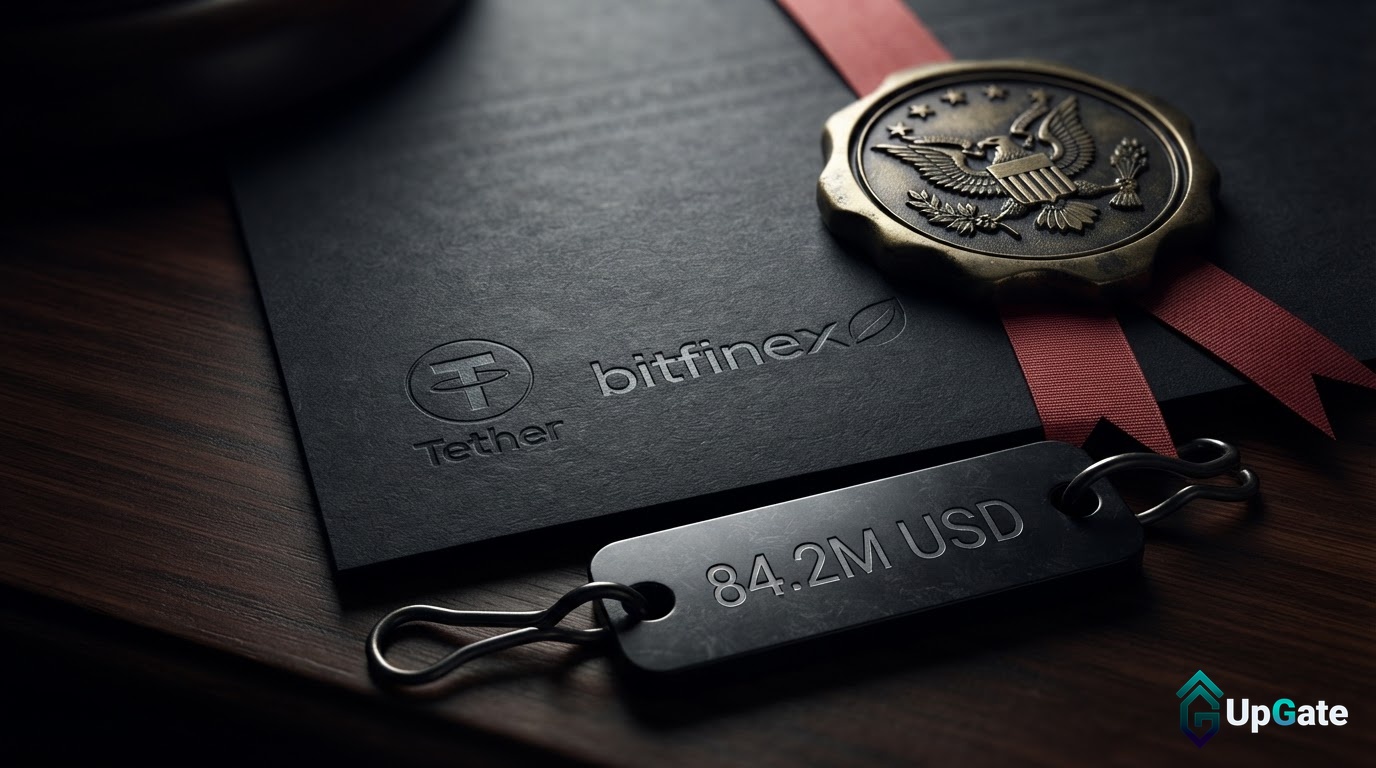
  • US Prosecutors Seek $84.2M Seizure from Capstone Ltd. Amid Allegations of Facilitating Transfers for Tether and Bitfinex

    US Prosecutors Seek $84.2M Seizure from Capstone Ltd. Amid Allegations of Facilitating Transfers for Tether and Bitfinex

    US federal prosecutors have initiated a civil forfeiture action seeking to seize approximately $84.2 million in assets from Capstone Ltd. The complaint, filed on July 15, alleges that Capstone acted as an intermediary facilitating alleged illegal banking transfers for cryptocurrency entities Tether and Bitfinex, utilizing EQIBank as a conduit to access US banking systems.

    According to the complaint, Capstone Ltd. allegedly served as a conduit for these transfers. Prosecutors claim that EQIBank, described as a Caribbean institution, directed Capstone to move hundreds of millions of dollars on behalf of Tether and Bitfinex, enabling them to access US banking rails. A California federal district judge has reportedly denied EQIBank’s motion to return seized property.

    Seized Funds and EQIBank’s Position

    The seized funds targeted in the forfeiture complaint include accounts held at Wells Fargo and JPMorgan. Approximately $79.11 million of the seized funds is reportedly held in a Wells Fargo Securities account. EQIBank claims that the frozen assets represent approximately 80% of its total monetary holdings, which amounts to roughly $89 million of its entire portfolio.

    Tether and Bitfinex: Historical Context and Current Exposure

    Tether has stated that its exposure to EQIBank is minimal, amounting to less than 0.034% of its total assets. The company indicated that its peg to the dollar has weathered more significant crises than this $84.2 million forfeiture case, which it asserts barely touches its balance sheet.

    This action occurs in the context of past regulatory scrutiny for Tether and Bitfinex. In 2021, the New York Attorney General’s office settled with both companies over claims that Bitfinex had covered up an $850 million loss using Tether’s reserves. This settlement involved an $18.5 million fine and a ban on serving New York customers for Tether and Bitfinex, though neither company admitted wrongdoing at the time.

    Broader Implications for Crypto Financial Infrastructure

    The potential implications of this enforcement action extend to the broader crypto financial ecosystem. If an institution that served as a banking partner for major crypto companies faces action due to US enforcement, other smaller banks and payment processors in the space may take notice. However, the exact nature and extent of EQIBank’s alleged orchestration, whether Capstone Ltd. knowingly participated in illegal transfers, and the full impact of EQIBank’s potential liquidation remain uncertain.

    Broader Context

    Source materials place the factual news in this context: The New York Attorney General’s office settled with both companies in 2021 over claims that Bitfinex had covered up an $850 million loss using Tether’s reserves.

  • Elon Musk’s AI Cluster Expansion Faces Energy and Regulatory Hurdles

    Elon Musk’s AI Cluster Expansion Faces Energy and Regulatory Hurdles

    Elon Musk has announced significant expansion plans for the Colossus 2 AI computing cluster in the Memphis, Tennessee and Southaven, Mississippi corridor, aiming to more than double its Nvidia chip count to over 1.1 million H100-equivalent accelerators by the end of 2026. This aggressive buildout, however, is encountering substantial energy infrastructure challenges and regulatory scrutiny.

    The Memphis-area cluster had already reached approximately 1 GW of AI compute capacity by mid-2026, with the full Colossus 2 buildout modeled for an IT load of around 946 MW. To power this immense demand, the facility currently relies on a combination of temporary gas turbines and Tesla Megapacks, a setup described as a patchwork solution treating battery storage as a bridge to more permanent infrastructure.

    Adding to the complexity, regulators have ordered the phase-out of 69 temporary turbines by mid-2027. This decision stems from local concerns regarding emissions, noise, and the overall sustainability of operating portable generators in an area adjacent to residential zones.

    In response to these energy demands and the impending phase-out of temporary solutions, a permanent 1.2 GW gas-fired power plant is under construction in Southaven. This facility is intended to replace the temporary generation equipment and provide a stable, long-term energy foundation for the cluster’s operations.

    The scale of the AI computing cluster has already attracted major technology players. Google signed a contract in June 2026 for approximately 110,000 GPUs, with a rate of $920 million per month agreed upon from October 2026 through June 2029. Anthropic has also secured capacity at the facility, underscoring the high demand for advanced AI processing power.

    The cluster itself integrates multiple sites, including the original Colossus 1 facility, Colossus 2, and newer additions referred to as Minihard and Macrohardrr. The announcement, made on September 25, highlights the rapid pace of AI infrastructure development and the critical need to align energy supply and regulatory compliance with technological ambition.

    Why This Matters

    The expansion of Elon Musk’s Colossus 2 AI computing cluster underscores the immense energy demands of advanced AI infrastructure. The project’s reliance on temporary power solutions and subsequent regulatory orders to phase them out highlight the critical need for sustainable energy development to keep pace with technological growth. This situation presents a challenge in balancing rapid AI advancement with environmental concerns and regulatory compliance, as evidenced by the ongoing construction of a permanent power plant to meet future needs.

    Broader Context

    Elon Musk laid out a concrete timeline for scaling up the Colossus 2 AI computing cluster in the Memphis, Tennessee and Southaven, Mississippi corridor, committing to more than doubling the facility’s Nvidia chip count before the end of 2026. The expansion would push the cluster toward more than 1.1 million H100-equivalent accelerators. This development is part of a broader trend of aggressive AI infrastructure buildouts across the industry, necessitating significant investments in energy and facing increasing regulatory oversight.