Tag: Neutral

  • Bitcoin Whale Accumulation Amidst Analyst Caution and Price Uncertainty

    Bitcoin Whale Accumulation Amidst Analyst Caution and Price Uncertainty

    In the past week, Bitcoin whales have accumulated approximately $3 billion worth of BTC, a significant influx of capital from major market participants. This accumulation occurred as the cryptocurrency experienced a notable price rally, surging from under $65,000 to over $81,000 within a seven-day period. During this time, whales added more than 39,150 BTC to their holdings, according to reported data. Concurrently, ETF buyers poured over $920 million into Bitcoin-related funds.

    Despite this substantial accumulation, some analysts are expressing caution regarding Bitcoin’s recent price action. The cryptocurrency’s inability to sustain its push above the $81,000 resistance level, marked by two rejections, has fueled concerns. This technical resistance, coupled with macroeconomic factors, has coincided with divided opinions on whether the recent price movement signals a sustained upward trend or a temporary relief rally.

    Data suggests that the recent rally was primarily driven by these large investors, while retail investors have largely remained on the sidelines or have been selling. The Federal Reserve’s hawkish stance, particularly following remarks from Fed Chair Kevin Warsh on Friday, has added to the uncertainty surrounding the market’s future direction. Analysts are not universally convinced that the bear market phase is over, highlighting the need for Bitcoin to demonstrate sustained strength at elevated levels.

    Some market observers suggest that if the recent surge suggests to be a bear-market relief rally, Bitcoin could experience pullbacks in the coming weeks. Specific price targets from analysts vary, with some anticipating a decline to around $74,000, potentially followed by a further drop to the $67,000 region. Others have offered broader predictions, suggesting a fall to $62,000 before a potential eventual rise to $90,000. However, these predictions are subject to significant uncertainty.

    The current market situation presents a divergence between the actions of large-scale investors and the cautious outlook of some analysts. While whale accumulation indicates continued interest from a key cohort of investors, the price action around the $81,000 mark and broader economic signals suggest that the path forward for Bitcoin remains uncertain. Investors are observing whether Bitcoin can consolidate its gains or if it may face further downward pressure.

    Why This Matters

    The materials describe a narrow update: Major market participants, referred to as ‘whales’, have purchased a significant amount of Bitcoin, while some market analysts express caution about the cryptocurrency’s recent price action, citing technical resistance and macroeconomic factors. Whether the recent surge is a bear-market relief rally or the end of the bear phase.

    Broader Context

    Source materials place the factual news in this context: Bitcoin’s major rally from under $65,000 to over $81,000 within a week or so changed the broader market sentiment from fear to greed, with analysts initially rushing to call the end of the bear phase.


  • Zcash Social Buzz Disappears Ahead of ETF Launch

    Zcash Social Buzz Disappears Ahead of ETF Launch

    Zcash has emerged as one of the year’s top-performing digital assets, successfully attracting substantial institutional investment. This week, asset manager Grayscale Investments unveiled the first exchange-traded fund designed to track the spot price of ZEC.

    However, interest in the privacy-focused cryptocurrency appears to have peaked shortly before its price reached a recent high.

    Data compiled by Santiment indicates that social media discussion surrounding Zcash began to wane by the time its spot ETF was launched. Grayscale converted its existing Zcash trust, established in 2017, into a spot ETF that commenced trading on NYSE Arca on August 25.

    In the lead-up to the ETF’s debut, ZEC experienced a significant price surge. From approximately $509 on August 18, the cryptocurrency climbed to around $878 by August 23, marking a gain of roughly 72%. Social media mentions of ZEC reached a high of 232 on August 22, a figure approximately six times the typical baseline for August. This surge in attention, however, proved to be short-lived.

    By the day the ETF launched, mentions had already returned to their baseline levels. Santiment’s analysis suggests that social activity reached its apex one day prior to ZEC’s price peak, indicating that much of the public’s interest had already materialized before the market’s high point.

    Since hitting its recent peak of approximately $878, the token has seen a pullback to around $789, representing a decline of about 10% from its recent high.

    Grayscale’s Bullish Outlook

    Grayscale Research posits that Zcash could become a significant contender to Bitcoin’s network effects as the demand for financial privacy intensifies. In a report authored by Head of Research Zach Pandl, the firm acknowledged Bitcoin’s continued dominance among digital currencies. While alternatives like Litecoin have emerged, none have posed a serious challenge to BTC’s established position.

    Grayscale, however, suggests that Zcash possesses unique attributes that could set it apart. The report highlights its combination of Bitcoin-like characteristics with advanced privacy features, which may gain increasing importance in an era of expanding AI-powered surveillance. The research also points to the ongoing development within the Zcash ecosystem, which is actively working to mitigate cybersecurity risks, including potential threats to traditional cryptography posed by quantum computing.

    An additional advantage cited is Zcash’s cross-chain interoperability, facilitated by “intents” technology integrated into modern blockchain wallets. This feature allows Zcash to function as a private asset hub without necessitating widespread merchant adoption. Despite having appreciated around 19-fold over the past year, ZEC’s market capitalization remains less than 1% of Bitcoin’s. Grayscale concludes that Zcash’s financial privacy and other differentiating features may currently be undervalued, potentially leaving ample room for future growth.

  • Sanders Pledges Bill to Halt AI Mass Surveillance

    Sanders Pledges Bill to Halt AI Mass Surveillance

    Sanders Targets Surveillance Camera Company, Citing AI and “Totalitarianism” Fears

    Senator Bernie Sanders has announced his intention to introduce legislation targeting surveillance camera company Flock Safety, warning that artificial intelligence is propelling the United States toward a “surveillance state.”

    In a lengthy post on X on Wednesday, the independent senator from Vermont framed the issue in stark terms, opening with the declaration “STOP FLOCK. STOP AI MASS SURVEILLANCE.” He cautioned that unchecked tracking technology risks steering the U.S. toward totalitarianism.

    Sanders stated that Flock, which he described as backed by tech figures Marc Andreessen and Peter Thiel, has deployed over 120,000 AI-powered cameras nationwide. These cameras, he noted, scan and record 20 billion vehicles monthly across more than 6,000 communities.

    The senator argued that the company’s reach extends into daily life, asserting that wherever Flock operates, its cameras log residents dropping off children at school, visiting doctors, or going on dates. He also highlighted newer capabilities, contending that Flock’s AI can cross-reference images of individuals and their vehicles with databases of phone numbers, relatives, and court records to identify people and track their movements. Sanders concluded his post by promising to introduce a bill to curb the technology.

    The pledge adds a prominent voice to a growing bipartisan backlash against Flock’s automated license plate readers. Opposition has already surfaced on Capitol Hill, with Representative Thomas Massie of Kentucky announcing plans for legislation to withhold federal funding from agencies that utilize the cameras. Local governments, from Los Angeles to Monroe County, Indiana, have suspended or canceled contracts due to privacy concerns, while activists in numerous states have vandalized or disabled the devices.

    Flock, an Atlanta-based company founded in 2017, maintains that its cameras do not employ facial recognition and typically retain footage for 30 days. CEO Garrett Langley has argued that critics often change their views once they understand the technology primarily photographs vehicles. He recently apologized for previously labeling anti-Flock activists a “terroristic organization.”

    In an interview with FOX News earlier this week, Langley urged Americans to “compromise” on their privacy, suggesting that citizens should prioritize safety over surveillance concerns.

    Flock has pursued aggressive expansion over the past year, including a nationwide plate-scanning initiative involving Uber drivers and a police tool for tracking drivers.

    Senator Sanders did not specify a timeline for introducing his proposed bill.

  • XRP Rally Falters: Key Level to Watch

    XRP Rally Falters: Key Level to Watch

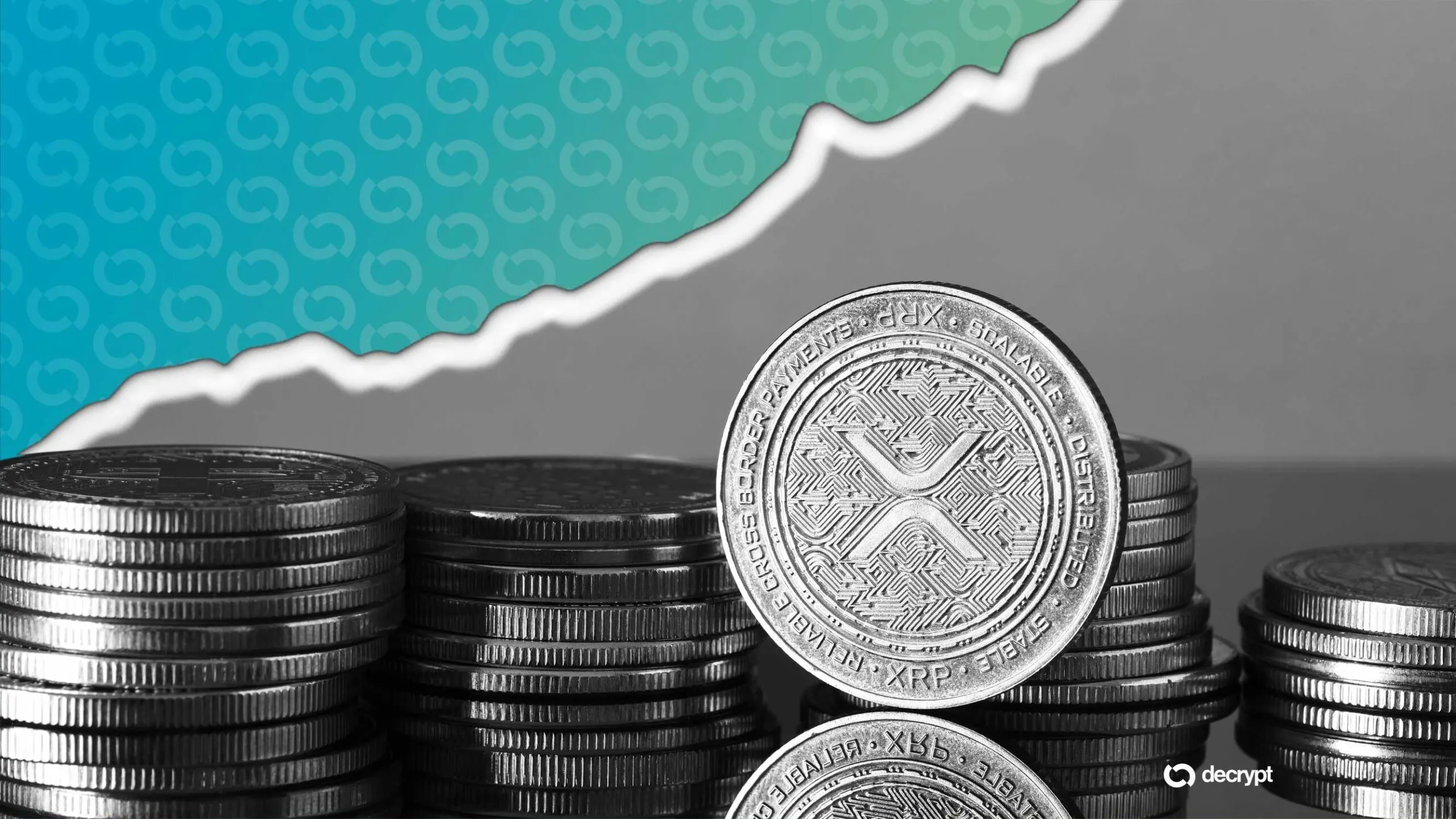
    Ripple’s XRP token experienced one of the most significant recoveries in recent days, soaring from just under $1.00 to a multi-month high of $1.70. However, this impressive rally has stalled, with momentum waning. The digital asset is currently struggling to maintain its position at $1.40, marking a 20% decline from its peak last Saturday. The market sentiment further soured on Friday following a hawkish address by Federal Reserve Chair Kevin Warsh at Jackson Hole.

    Underlying Activity and Whale Accumulation

    Prominent analyst Ali Martinez has been closely monitoring shifts in XRP’s underlying network activity during this recent price surge. As previously reported, active addresses on the XRP Ledger saw a dramatic increase, skyrocketing by over 650% at one point, jumping from 47,180 to more than 356,000. Concurrently, large holders, often referred to as “whales,” engaged in substantial accumulation, acquiring over 300 million tokens within a mere 96-hour period.

    Key Support and Resistance Levels

    The critical question now is whether this underlying demand can prevent the current pullback from escalating into a more severe downturn. The token’s technical structure has weakened since its rejection at the $1.70 mark, and it is now facing pressure at $1.40. According to Martinez, this signifies that XRP failed to hold above the 50-week exponential moving average, which stood at $1.54.

    This development has shifted focus to the $1.35-$1.38 region as the next crucial support zone, which is currently being tested. Martinez noted that approximately 3.2 billion XRP were traded within this area, according to URPD data, highlighting its significance.

    Fellow market commentator CRYPTOWZRD observed a bearish and volatile trend in XRP’s recent price action, with the token closing lower for the day. They emphasized that holding above $1.40 is vital, a level that XRP has struggled to maintain.

    Martinez also identified key resistance barriers that XRP would need to overcome should it resume its rally from the previous week. The initial hurdle is at $1.60, where 1.99 billion tokens were traded. Following that is the $1.68 level, with a similar volume of traded coins. The most significant obstacle, however, lies at $1.86, where a substantial 3.47 billion XRP changed hands. A decisive breakout above this level could pave the way for a push towards the psychologically important $2.00 mark and potentially up to $2.19.

    XRP AT KEY SUPPORT

    After rallying 71.8% from $0.988 to $1.698, XRP has entered a 20% correction and is now testing a major support zone.

    According to the URPD, roughly 3.2 billion XRP were traded between $1.35 and $1.38, making this one of the most important demand levels.

    As… pic.twitter.com/i5r1tPsMJe

    — Ali Charts (@alicharts) August 29, 2026

  • US Secures Majority Control Over Venezuelan Oil Reserves

    US Secures Majority Control Over Venezuelan Oil Reserves

    The United States has secured majority operational control over approximately 65 billion barrels of Venezuelan oil reserves through an agreement involving the US, Venezuela, and private businesses, President Trump announced on Friday. This development could potentially reshape global energy markets, though its direct impact on cryptocurrency markets remains speculative.

    Broader Context

    Source materials place the factual news in this context: The United States has secured majority control of more than 65 billion barrels of Venezuela’s oil reserves, which could reshape global energy markets, but does it actually matter for bitcoin and crypto?.

    Reported Deal Details

    The agreement grants the US a majority operational position in 17 Venezuelan oilfields, including those in the Orinoco Belt and Lake Maracaibo. American companies are expected to provide capital and expertise to boost production. Venezuela has projected close to $100 billion in private investment tied to the broader agreement. This deal could substantially increase America’s effective oil reserves, which currently stand at around 46 billion barrels, bringing the combined total to over 110 billion barrels. This represents roughly 7% of global proven reserves and would place US-controlled reserves on par with the UAE and ahead of Kuwait.

    Potential Energy Market Impact

    However, the immediate impact on global oil supply is uncertain. Venezuela currently produces around 1.2 million barrels per day, a fraction of its potential capacity, due to years of underinvestment, infrastructure deterioration, and other issues. Reports indicate that the country’s ports are already struggling to handle current export volumes, with some tankers experiencing significant delays.

    Macroeconomic Connections

    Analysts suggest that if Venezuelan supply expands significantly in the coming years and contributes to lower oil prices, it could lead to weaker inflationary pressure. This, in turn, might provide the Federal Reserve with more room to ease monetary policy. Fed Chair Kevin Warsh has recently warned that inflation remains too high and that policymakers may need to take further action if price pressures do not move convincingly toward the central bank’s 2% target. If oil prices remain elevated due to geopolitical factors, such as the conflict in the Middle East, inflation could continue to prevent the Fed from altering its monetary policy stance.

    Cryptocurrency Outlook

    While a decrease in inflation and potential easing of monetary policy could be considered favorable for cryptocurrency assets, the connection is indirect and speculative. Experts note that the oil deal between the US and Venezuela is unlikely to have an immediate impact on Bitcoin and other cryptocurrencies, as there is no direct link between the two. The long-term perspective for crypto is considered more uncertain than bearish, particularly if Venezuela can improve its production capabilities and oil prices indeed fall as predicted.

    The deal was reported by Venezuela’s President. While the agreement represents a significant development in energy resources, its practical implications for immediate oil supply, consumer prices, and broader economic conditions are subject to various factors, including Venezuela’s production capacity and global market dynamics.

  • UAE Sheikh Linked to Trump Crypto Bank: 49% Stake, $500M Raise Questions

    UAE Sheikh Linked to Trump Crypto Bank: 49% Stake, $500M Raise Questions

    UAE Official Linked to Largest Stake in Trump Crypto Bank Venture

    Sheikh Tahnoon bin Zayed al Nahyan and his co-investors are reportedly the largest shareholders in the holding company established for World Liberty Financial’s planned U.S. banking venture, according to sources cited by The Wall Street Journal. This entity holds a 49% stake in the holding company, positioning Tahnoon-linked investors as the primary stakeholders behind the Trump family’s cryptocurrency venture’s banking initiative.

    This ownership structure follows a significant $500 million investment in World Liberty Financial last year, also backed by Tahnoon, which secured him a 49% stake in the company. The new development deepens the business ties between the Trump-backed crypto firm and a senior foreign government official.

    Preliminary Approval for Banking Venture

    World Liberty Financial recently received preliminary conditional approval from the Office of the Comptroller of the Currency (OCC) to establish a federally chartered national trust bank. The proposed bank is slated to handle the issuance, redemption, and safeguarding of USD1, World Liberty’s dollar-backed stablecoin launched last year.

    This preliminary approval places the planned bank at the core of World Liberty Financial’s stablecoin operations and highlights the ownership of its holding company, where Tahnoon and his co-investors are reported to hold the largest share.

    Sheikh Tahnoon’s Role and Financial Influence

    Sheikh Tahnoon bin Zayed, who serves as the United Arab Emirates’ national security adviser and is the brother of the country’s president, is identified as a key backer of the Trump family’s new crypto bank. He reportedly oversees a vast financial empire, estimated to be worth over $1.3 trillion, funded by both personal wealth and state resources.

    While the report details the size of the stake and the investors involved, it does not provide specifics on the banking venture’s board composition, governance rights, or any veto arrangements tied to the ownership position. These details are considered crucial for understanding how the holding company’s ownership will influence the venture’s operations.

    The reporting establishes a substantial financial connection between World Liberty Financial and investors associated with a high-ranking UAE official. However, it does not indicate that Sheikh Tahnoon personally directs the planned bank’s daily management or dictates its U.S. regulatory strategy. Sheikh Tahnoon has been referred to in some media coverage as the “spy sheikh,” but the Journal’s report focuses on his official role and the ownership stake, without linking the nickname to operational control of the bank.

    The proposed bank’s role in managing USD1, the dollar-backed stablecoin, is central to the OCC’s preliminary approval. However, further details regarding the venture’s governance structure and the precise relationship between the holding company’s ownership and specific banking functions remain undisclosed.

  • XRP Price Projection: Analyst Eyes $6.85-$7.20 Range at $500 Billion Market Cap

    XRP Price Projection: Analyst Eyes $6.85-$7.20 Range at $500 Billion Market Cap

    A hypothetical market capitalization of $500 billion for XRP could translate to a price range of $6.85 to $7.20 per token, according to an analysis by EGRAG CRYPTO. This projection hinges on future circulating supply dynamics, particularly the rate at which Ripple distributes tokens from its escrow, introducing inherent uncertainties.

    Current Standing and Valuation Growth

    Currently, XRP has a circulating supply of approximately 62.74 billion tokens. With XRP trading at $1.42, its market capitalization stands around $89 billion. To reach a $500 billion market cap, XRP’s valuation would need to increase by over 460%.

    Supply Dynamics and Future Projections

    EGRAG CRYPTO’s analysis considers the potential increase in XRP’s circulating supply by 2029. The analyst estimates that Ripple has been distributing a net average of about 268 million XRP per month. If this pace continues until 2029, an additional 9.1 billion XRP could enter circulation, bringing the total projected supply to 71.9 billion tokens.

    Based on this projected supply of 71.9 billion tokens, a $500 billion market cap would result in a price of approximately $6.96 per XRP. The analyst further suggests that the potential price target could fluctuate between $6.85 and $7.20, depending on the speed at which escrowed XRP enters the circulating market.

    Uncertainties in Distribution

    It is important to note that even if Ripple unlocks a billion XRP from escrow, it does not guarantee that all of those tokens will immediately enter the circulating market. A portion may be returned to escrow or remain under Ripple’s control. This uncertainty in the distribution rate is a key factor influencing the final price projection.

    Market Context

    Recent market activity has shown a rapid return of investor appetite, with XRP experiencing surges in price. For instance, within days, XRP moved from $1.00 to $1.70, partly fueled by whale accumulation and withdrawals from major exchanges like Binance. However, as XRP’s valuation grows, staging significant price pumps becomes more capital-intensive.

    The analysis by EGRAG CRYPTO highlights the significant growth required for XRP to reach such a high market capitalization and provides a price range based on specific assumptions about future supply. The projection underscores the interplay between market cap, circulating supply, and individual token price, while acknowledging the inherent uncertainties in long-term cryptocurrency forecasts.

    Why This Matters

    The materials describe a narrow update: The article discusses a projection by analyst EGRAG CRYPTO regarding the potential price of XRP if its market capitalization were to reach $500 billion. The exact pace at which escrowed XRP will enter circulation.

  • SEC Declares Evernorth Holdings Registration Effective, Nasdaq Listing Path Contingent on Shareholder Vote and XRP Performance

    SEC Declares Evernorth Holdings Registration Effective, Nasdaq Listing Path Contingent on Shareholder Vote and XRP Performance

    The U.S. Securities and Exchange Commission (SEC) has declared Evernorth Holdings’ registration effective, a procedural step that moves the XRP treasury company closer to a potential public listing on the Nasdaq. This effectiveness declaration clears the path for Evernorth to proceed with its planned merger with Armada, a Nasdaq-listed special purpose acquisition company (SPAC).

    The merger, however, remains contingent on Armada’s shareholder approval and other closing conditions. The shareholder vote is scheduled for September 30, with the deal targeted to close in late Q3 or early Q4 of this year. Armada shareholders have until September 28 to decide whether to redeem their shares. If the merger is approved and closes, the combined entity expects to trade on Nasdaq under the ticker symbol ‘XRPN’.

    It is crucial to note that the SEC’s effectiveness declaration does not constitute an endorsement of the merger, Evernorth’s business model, or XRP as an investment. It signifies that the necessary regulatory paperwork is in order for the shareholder vote to proceed.

    Evernorth operates as a digital asset treasury (DAT), a model that involves holding a cryptocurrency on its balance sheet and raising capital to acquire more of it, distinct from an exchange-traded fund (ETF) that tracks a token’s price. This business model faces significant financial risks tied to XRP’s price volatility. The company announced plans in October with over $1 billion raised to buy XRP, and in late October, it spent approximately $947 million acquiring the digital asset. By February, this XRP stash was valued at about $446 million less than Evernorth paid for it.

    This financial exposure to XRP’s price fluctuations was evident on Friday, when XRP was trading near $1.37, down more than 5% on the day. XRP’s all-time high was $3.65 in July 2025. The viability of DAT stocks, including Evernorth’s model, relies on maintaining a premium to the value of their underlying crypto to facilitate continued capital raising and asset acquisition. A slump in the token’s price can erode this premium, potentially stalling the funding loop that supports the model.

    Evernorth founder and CEO Asheesh Birla has stated that the company aims to build an actively managed XRP treasury with the transparency and governance demanded by public markets. The company plans to deploy its treasury through DeFi yield generation, validator operations, and ecosystem investments. Backers of Evernorth include Ripple, Arrington Capital, SBI Group, Pantera Capital, Kraken, and GSR.

    The potential Nasdaq listing represents a significant step for Evernorth, which aims to become the world’s largest publicly traded XRP treasury company. However, the success of this venture is heavily dependent on shareholder approval and the unpredictable performance of XRP in the market. The uncertainties surrounding the merger’s completion and the future trading performance of XRPN on Nasdaq remain key considerations for potential investors.

    Why This Matters

    The SEC has declared Evernorth Holdings’ registration effective, allowing it to proceed with a merger with Armada, a Nasdaq-listed SPAC. The outcome of this merger is contingent on shareholder approval and the future performance of XRP.

    Broader Context

    Evernorth belongs to a category of company known as a digital asset treasury, or DAT—a publicly traded firm that holds a cryptocurrency on its balance sheet and raises fresh capital to buy more of it, rather than simply tracking the token’s price the way an ETF does.

  • IREN Reports $684 Million Loss Amid AI Transition, AI Revenue Surpasses Mining

    IREN Reports $684 Million Loss Amid AI Transition, AI Revenue Surpasses Mining

    IREN, a company transitioning from Bitcoin mining to AI data center operations, reported a significant $684 million loss for its fiscal year 2026. This financial outcome is largely attributed to substantial costs associated with the strategic pivot, including impairments and write-downs of its legacy Bitcoin mining hardware.

    In the latest quarter ending June 30, IREN’s AI cloud services generated $70.5 million in revenue, marking the first time this segment has surpassed its Bitcoin mining revenue, which stood at $66.7 million. Consequently, AI cloud services now represent 51.4% of the company’s quarterly revenue. Despite this shift, total revenue for the quarter saw a 5% decrease to $137.2 million, with Bitcoin mining revenue declining by 40% as IREN reallocated its sites for AI purposes.

    The fiscal year 2026 results were heavily impacted by the transition expenses. The quarterly loss included $450.4 million in impairments, primarily from retired mining hardware, and an additional $127.2 million in write-downs and losses on equipment. For the full fiscal year, revenue grew 41% to $707 million, but $638.8 million in impairments coincided with a net loss of $702.6 million, a significant change from the $86.9 million profit recorded in fiscal 2025.

    Adjusted EBITDA also experienced a sharp decline, falling 68% to $19.2 million in fiscal 2026 from $59.5 million in the prior period. IREN cited higher employee costs and investments made in anticipation of its AI cloud expansion as reasons for this decrease.

    Despite these financial challenges, IREN has secured substantial financing and major contracts to fuel its AI infrastructure growth. The company anticipates $4 billion in contracted annualized run-rate revenue (ARR) to be operational by year-end. It has secured $6.4 billion in GPU financing, including $3.6 billion for its five-year, $9.7 billion AI cloud agreement with Microsoft. This financing, combined with Microsoft’s prepayments, covers 96% of the associated costs. An additional $2.8 billion in GPU financing is designated for deployments with other clients.

    Furthermore, IREN entered into a $3.4 billion AI cloud contract with Nvidia in May. This agreement encompasses managed GPU services and is part of a partnership aimed at deploying up to 5 gigawatts of AI infrastructure.

    Bernstein analysts suggest that IREN will phase out its Bitcoin mining operations by 2030, as the company replaces mining hardware with GPUs for AI workloads. Daniel Roberts, Co-Founder and Co-CEO of IREN, commented, “Exponential AI consumption growth has fueled demand for compute capacity well beyond the available supply of infrastructure. IREN was built for this moment.”

    Key uncertainties persist regarding the precise timeline for IREN’s complete transition away from Bitcoin mining and the long-term profitability of its AI data center operations. The company’s ongoing investments and employee costs are also factors that may influence its future financial performance.

    Why This Matters

    The materials describe a narrow update: IREN reported a substantial loss in its fiscal 2026 results, primarily due to impairments and write-downs related to retired mining hardware and equipment as it converts mining sites for AI use. The exact timeline for IREN to fully wind down Bitcoin mining.

    Broader Context

    Source materials place the factual news in this context: IREN shares fell more than 8% after the Bitcoin miner turned AI data center operator reported a $684 million loss in its fiscal 2026 results.

  • Fed’s Warsh on AI: A New Economic Factor, But Policy Framework Lags

    Fed’s Warsh on AI: A New Economic Factor, But Policy Framework Lags

    Federal Reserve Chair Kevin Warsh has identified Artificial Intelligence as a “hinge point in history” and a potential new factor of production, underscoring its growing significance for the economy and monetary policy. However, Warsh also highlighted considerable uncertainties and acknowledged the Federal Reserve’s current lack of a framework to fully address AI’s impact.

    In a recent speech at Jackson Hole, Warsh described AI’s progress as “faster even than its evangelists predicted a couple of years ago.” He indicated that the Fed is treating AI as macro-relevant and has established a task force to study its effects on productivity and jobs. Crucially, Warsh emphasized that the task force’s findings “have no bearing on decisions we make in the current policy conjuncture.”

    Evidence of AI’s economic influence is substantial, according to Warsh. Business capital expenditures have surged, rising approximately 9% over the past four quarters—the fastest pace since 2021—with more than half of this growth attributed to AI buildout. Furthermore, annualized token sales for the two leading AI labs are reportedly exceeding $100 billion, marking an increase of over 500% from a year ago. This investment surge is reflected in corporate performance, with Nvidia reporting record quarterly revenue of $96.2 billion and disclosing $366 billion in future AI infrastructure commitments. Nvidia is also reportedly pursuing the acquisition of Hugging Face for approximately $12.9 billion.

    Warsh suggested that AI challenges the post-2008 crisis narrative of “secular stagnation,” a period characterized by economists warning of too much capital chasing too few good investments due to a perceived lack of innovation. He posited that AI could potentially lead to “substantially higher growth.”

    Despite recognizing AI as a “new variable—potentially a new factor of production,” Warsh admitted the Fed currently lacks a framework to integrate its effects into monetary policy. He raised key questions regarding AI’s future economic role, including whether it may drive a “significant, sustained rise in productivity across the economy” and when such a shift might occur. Warsh also questioned the nature of AI’s impact on labor—whether it would be complementary or competitive—and how the economic surplus generated by AI would be distributed.

    The Federal Reserve’s acknowledgment of AI’s macro-relevance, juxtaposed with its admission of an incomplete policy framework, highlights the evolving economic landscape. While investment in AI infrastructure is significant, considerable uncertainty remains regarding its ultimate impact on productivity, jobs, and overall economic growth. Warsh’s remarks indicate the Fed is closely monitoring these developments as it navigates current policy decisions.

    Adding context to AI’s rapid evolution, a report from a year ago indicated that 95% of generative AI companies were failing. This contrasts sharply with the current significant capital inflows and market activity, underscoring the dynamic and uncertain nature of the AI sector.

    Broader Context

    Source materials place the factual news in this context: Kevin Warsh’s first Jackson Hole keynote as Federal Reserve chair made headlines mostly for what he refused to say about interest rates.