
Tag: Neutral

  • IREN Reports $684 Million Loss Amid AI Transition, AI Revenue Surpasses Mining

    IREN Reports $684 Million Loss Amid AI Transition, AI Revenue Surpasses Mining

    IREN, a company transitioning from Bitcoin mining to AI data center operations, reported a significant $684 million loss for its fiscal year 2026. This financial outcome is largely attributed to substantial costs associated with the strategic pivot, including impairments and write-downs of its legacy Bitcoin mining hardware.

    In the latest quarter ending June 30, IREN’s AI cloud services generated $70.5 million in revenue, marking the first time this segment has surpassed its Bitcoin mining revenue, which stood at $66.7 million. Consequently, AI cloud services now represent 51.4% of the company’s quarterly revenue. Despite this shift, total revenue for the quarter saw a 5% decrease to $137.2 million, with Bitcoin mining revenue declining by 40% as IREN reallocated its sites for AI purposes.

    The fiscal year 2026 results were heavily impacted by the transition expenses. The quarterly loss included $450.4 million in impairments, primarily from retired mining hardware, and an additional $127.2 million in write-downs and losses on equipment. For the full fiscal year, revenue grew 41% to $707 million, but $638.8 million in impairments coincided with a net loss of $702.6 million, a significant change from the $86.9 million profit recorded in fiscal 2025.

    Adjusted EBITDA also experienced a sharp decline, falling 68% to $19.2 million in fiscal 2026 from $59.5 million in the prior period. IREN cited higher employee costs and investments made in anticipation of its AI cloud expansion as reasons for this decrease.

    Despite these financial challenges, IREN has secured substantial financing and major contracts to fuel its AI infrastructure growth. The company anticipates $4 billion in contracted annualized run-rate revenue (ARR) to be operational by year-end. It has secured $6.4 billion in GPU financing, including $3.6 billion for its five-year, $9.7 billion AI cloud agreement with Microsoft. This financing, combined with Microsoft’s prepayments, covers 96% of the associated costs. An additional $2.8 billion in GPU financing is designated for deployments with other clients.

    Furthermore, IREN entered into a $3.4 billion AI cloud contract with Nvidia in May. This agreement encompasses managed GPU services and is part of a partnership aimed at deploying up to 5 gigawatts of AI infrastructure.

    Bernstein analysts suggest that IREN will phase out its Bitcoin mining operations by 2030, as the company replaces mining hardware with GPUs for AI workloads. Daniel Roberts, Co-Founder and Co-CEO of IREN, commented, “Exponential AI consumption growth has fueled demand for compute capacity well beyond the available supply of infrastructure. IREN was built for this moment.”

    Key uncertainties persist regarding the precise timeline for IREN’s complete transition away from Bitcoin mining and the long-term profitability of its AI data center operations. The company’s ongoing investments and employee costs are also factors that may influence its future financial performance.

    Why This Matters

    The materials describe a narrow update: IREN reported a substantial loss in its fiscal 2026 results, primarily due to impairments and write-downs related to retired mining hardware and equipment as it converts mining sites for AI use. The exact timeline for IREN to fully wind down Bitcoin mining.

    Broader Context

    Source materials place the factual news in this context: IREN shares fell more than 8% after the Bitcoin miner turned AI data center operator reported a $684 million loss in its fiscal 2026 results.
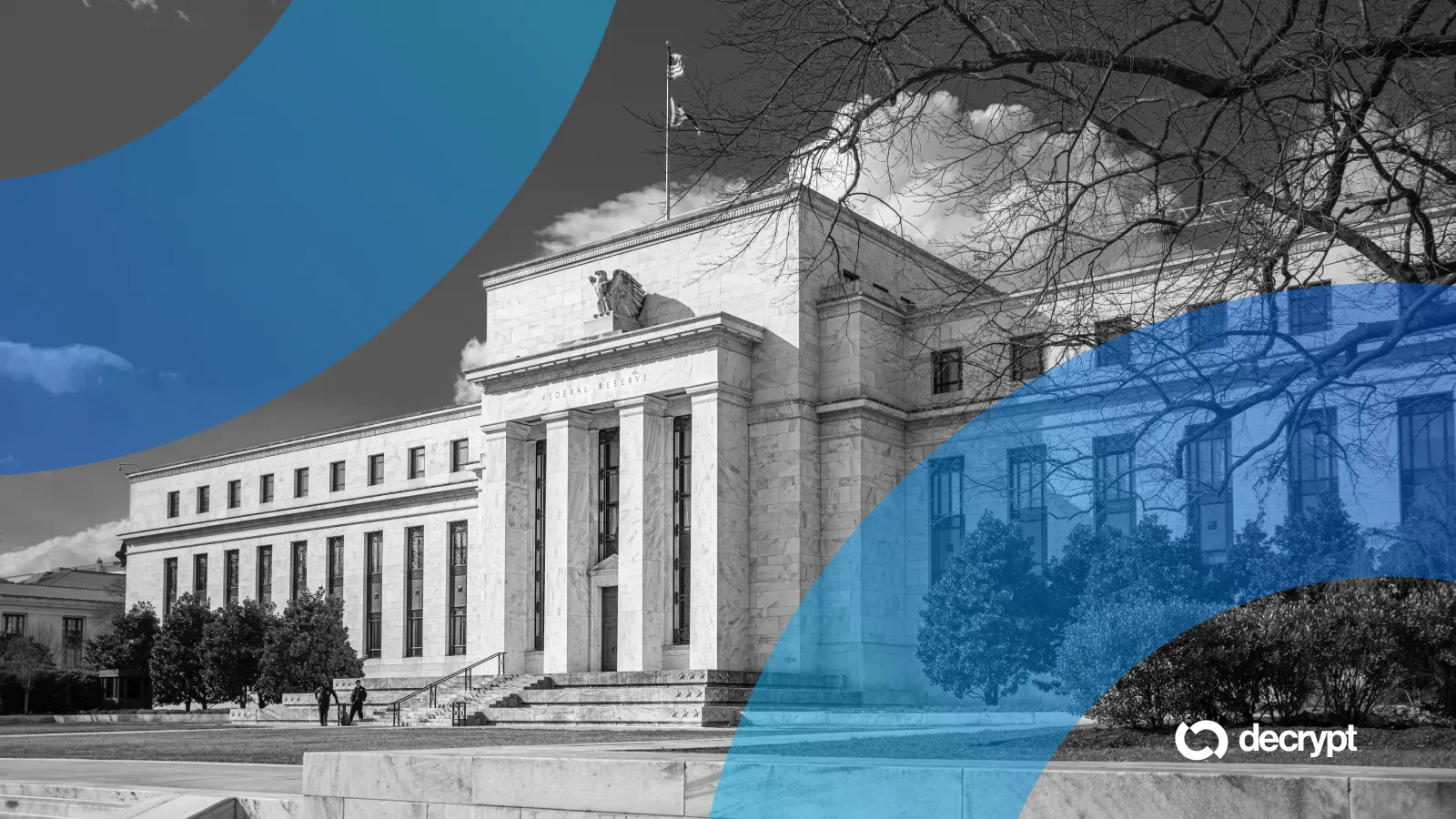

  • Fed’s Warsh on AI: A New Economic Factor, But Policy Framework Lags

    Fed’s Warsh on AI: A New Economic Factor, But Policy Framework Lags

    Federal Reserve Chair Kevin Warsh has identified Artificial Intelligence as a “hinge point in history” and a potential new factor of production, underscoring its growing significance for the economy and monetary policy. However, Warsh also highlighted considerable uncertainties and acknowledged the Federal Reserve’s current lack of a framework to fully address AI’s impact.

    In a recent speech at Jackson Hole, Warsh described AI’s progress as “faster even than its evangelists predicted a couple of years ago.” He indicated that the Fed is treating AI as macro-relevant and has established a task force to study its effects on productivity and jobs. Crucially, Warsh emphasized that the task force’s findings “have no bearing on decisions we make in the current policy conjuncture.”

    Evidence of AI’s economic influence is substantial, according to Warsh. Business capital expenditures have surged, rising approximately 9% over the past four quarters—the fastest pace since 2021—with more than half of this growth attributed to AI buildout. Furthermore, annualized token sales for the two leading AI labs are reportedly exceeding $100 billion, marking an increase of over 500% from a year ago. This investment surge is reflected in corporate performance, with Nvidia reporting record quarterly revenue of $96.2 billion and disclosing $366 billion in future AI infrastructure commitments. Nvidia is also reportedly pursuing the acquisition of Hugging Face for approximately $12.9 billion.

    Warsh suggested that AI challenges the post-2008 crisis narrative of “secular stagnation,” a period characterized by economists warning of too much capital chasing too few good investments due to a perceived lack of innovation. He posited that AI could potentially lead to “substantially higher growth.”

    Despite recognizing AI as a “new variable—potentially a new factor of production,” Warsh admitted the Fed currently lacks a framework to integrate its effects into monetary policy. He raised key questions regarding AI’s future economic role, including whether it may drive a “significant, sustained rise in productivity across the economy” and when such a shift might occur. Warsh also questioned the nature of AI’s impact on labor—whether it would be complementary or competitive—and how the economic surplus generated by AI would be distributed.

    The Federal Reserve’s acknowledgment of AI’s macro-relevance, juxtaposed with its admission of an incomplete policy framework, highlights the evolving economic landscape. While investment in AI infrastructure is significant, considerable uncertainty remains regarding its ultimate impact on productivity, jobs, and overall economic growth. Warsh’s remarks indicate the Fed is closely monitoring these developments as it navigates current policy decisions.

    Adding context to AI’s rapid evolution, a report from a year ago indicated that 95% of generative AI companies were failing. This contrasts sharply with the current significant capital inflows and market activity, underscoring the dynamic and uncertain nature of the AI sector.

    Broader Context

    Source materials place the factual news in this context: Kevin Warsh’s first Jackson Hole keynote as Federal Reserve chair made headlines mostly for what he refused to say about interest rates.

  • Cardano (ADA) Poised for Rally Past Key Level, Analyst Says

    Cardano (ADA) Poised for Rally Past Key Level, Analyst Says

    Cardano’s native cryptocurrency, ADA, which led the market gains last week, has seen its momentum wane in recent days, retracing some of its earlier advance.

    Despite the pullback, a segment of analysts remains optimistic about the prospect of a new uptrend, while others contend that a sustained ascent hinges on reclaiming a crucial price level.

    As of this report, ADA is trading around $0.21, according to CoinGecko. This represents a 3% decrease over the past seven days and a 16% drop from its recent peak of over $0.25, achieved less than a week ago.

    Even with the recent slump, X user Jesse Olson expressed a bullish outlook, noting that ADA’s four-hour chart has turned positive again. Olson observed that the price had declined, hitting four out of four projected targets before finding support, and questioned whether this signaled the imminent start of a new rally.

    Another analyst, Sssebi, who frequently comments on ADA, suggested that a weekly close above the key level of approximately $0.21 would indicate that the market is “game on.”

    Supporting these optimistic predictions is ADA’s Relative Strength Index (RSI). The indicator has dipped close to 30, suggesting the cryptocurrency is nearing oversold territory, a condition often preceding a rally. The RSI, which measures the speed and magnitude of price changes on a scale of 0 to 100, typically signals a buying opportunity when it falls below 30.

    Furthermore, ADA’s recent exchange netflow data adds to the positive sentiment. For several days, outflows from exchanges have surpassed inflows, indicating that investors are moving their holdings to self-custody wallets, thereby reducing immediate selling pressure.

    In contrast to the prevailing bullish sentiment, X user Rand Group offered a more pessimistic view. The analyst asserted that ADA has significantly underperformed the broader market and highlighted its rejection at the $0.25 mark, describing its current technical picture as “horrible.”

    However, some users in the comments pointed out that ADA has experienced worse periods in recent years and still managed to stage a strong recovery. Rand Group acknowledged this point, stating, “Fair point, it’s surprised people before.”

  • Predictions.io Launches Tools to Compare Prediction Market Data Amidst Growing Scrutiny

    Predictions.io Launches Tools to Compare Prediction Market Data Amidst Growing Scrutiny

    Predictions.io has launched a suite of free tools designed to aggregate and compare data from various prediction markets, offering users a clearer view of market-implied probabilities and associated costs. This initiative addresses the growing discrepancies in pricing for identically worded questions across different venues, a trend amplified by record market volume and increasing regulatory attention.

    Why This Matters

    The materials describe a narrow update: Predictions. The exact reasons for the price discrepancies between venues for identically worded questions.

    Broader Context

    Source materials place the announcement in this context: Prediction markets have seen record volume and increased regulatory scrutiny.

    Data Discrepancies Revealed

    The new tools from Predictions.io, including a fee calculator and an odds converter, allow traders to analyze data from markets such as Kalshi, Polymarket, and Manifold. The platform currently tracks over 9,700 markets. This launch coincides with a period of intense scrutiny for the prediction market industry. In July 2026, Kalshi, Polymarket, and Polymarket US collectively posted $50.59 billion in volume, with Kalshi accounting for approximately 74.5% of that total. This surge in activity has drawn regulatory attention, including a probe by New York City into Kalshi and Polymarket, a Washington judge’s order for Kalshi to halt most wagers in the state, and the CFTC’s initiation of an internal review of “mention markets.”

    Data aggregated by Predictions.io highlights significant price variability. On August 28th, 2026, the question “Blue tsunami in 2026?” was priced at 44.5% on Polymarket and 36.0% on Kalshi. Similarly, “Blue wave in 2026?” showed a difference of 8.5 percentage points, trading at 82.5% on one venue and 74.0% on another. Across a sample of directly comparable binary markets, the median gap was more than four points, with nearly half of the pairs differing by five points or more. Predictions.io emphasizes that it operates no market and takes no position in any contract.

    Navigating Market Information

    These price discrepancies underscore a key insight: “The spread between venues is the information.” When identically worded questions trade at significantly different prices, it complicates the notion of a single, definitive market-implied probability. The choice of which venue’s price to cite can appear arbitrary without full context. Predictions.io’s tools aim to provide this context by enabling users to directly observe these differences.

    The increasing regulatory attention, including probes and judicial orders, signals a dynamic and potentially challenging environment for prediction markets. The CFTC’s review of “mention markets” further indicates broad governmental interest in the sector. While Predictions.io offers valuable data analysis tools, the ultimate outcomes of these regulatory actions remain uncertain.

    Uncertainties persist regarding the precise reasons for the price differences between venues for identical questions, the eventual results of the New York City probe, and the conclusions of the CFTC’s review. Predictions.io’s platform offers a valuable resource for market participants seeking to navigate these complexities by providing transparent, comparative data in an evolving landscape.

  • HMRC Data: Crypto Gains Heavily Concentrated Among Few, Younger Men Dominate

    HMRC Data: Crypto Gains Heavily Concentrated Among Few, Younger Men Dominate

    HM Revenue & Customs (HMRC) has released its inaugural official figures on cryptoasset capital gains, revealing that a small cohort of individuals accounts for a disproportionately large share of the gains. For the 2024-25 tax year, 240 individuals each declared over £1 million in cryptoasset capital gains, amassing a total of £717 million. This group, representing fewer than 2% of all crypto taxpayers, was responsible for more than half of the total reported crypto gains (£1.38 billion) and disposal proceeds (£13.8 billion).

    The data, gathered through a new dedicated section on the Self Assessment return for cryptoasset disposals, also highlights significant demographic trends. The 25-44 age group, comprising 54% of crypto taxpayers, accounted for 71% of all crypto disposal proceeds. This contrasts sharply with general capital gains taxpayers, where only 17% fall into this age bracket. Men were the dominant demographic among crypto taxpayers, making up 87% of those reporting gains and booking 93% of the total gains.

    Conversely, the majority of crypto taxpayers—65%—reported gains below £25,000. These smaller gains collectively represented just 7% of total crypto gains and 8% of disposal proceeds, underscoring the concentration of wealth within the UK’s cryptoasset market.

    In the broader financial landscape, total capital gains in Britain reached a record £127 billion in the 2024-25 tax year, generating £24.2 billion in tax. While significant for those involved, the tax contributions from cryptoassets remain a marginal component of the UK’s overall capital gains tax revenue.

    Looking ahead, the UK is set to enhance international tax transparency with the implementation of the OECD’s Cryptoasset Reporting Framework. This framework will mandate crypto service providers to share customer data with tax authorities, with HMRC beginning to receive this information in 2027. Non-compliant providers face penalties of up to £300 per user.

    James Murray, Financial Secretary to the Treasury, acknowledged HMRC’s efforts in providing guidance and outreach on cryptoasset obligations, which he stated resulted in an additional £168 million in Capital Gains. The specific period for this additional revenue was not detailed.

    Certainties remain limited regarding the precise tax revenue generated solely from cryptoassets, as these liabilities are not itemized separately from other assets taxed at main rates. Furthermore, the exact timeframe for the £168 million in additional Capital Gains attributed to HMRC’s outreach is not specified.

    For the 2025-26 tax year, gains exceeding the annual allowance must be reported by 31 January 2027. The Treasury also intends to defer capital gains tax on Decentralized Finance (DeFi) lending and liquidity pool deposits until such assets are genuinely disposed of.

    Why This Matters

    The materials describe a narrow update: HMRC’s first official figures on cryptoasset capital gains for the 2024-25 tax year show that 240 individuals declared over £1 million each in gains, totaling £717 million. The exact amount of tax revenue generated specifically from cryptoassets is not separated from other assets taxed at main rates.

    Broader Context

    Source materials place the factual news in this context: Taxes are due on cryptoasset gains just like any other gains.

  • XRP Nears NASDAQ Listing as Treasury Giant Eyes Move

    XRP Nears NASDAQ Listing as Treasury Giant Eyes Move

    Evernorth Nears Nasdaq Listing Amid XRP Price Volatility

    XRP is currently trading at $1.42, a price point that comes as one of its significant institutional backers, Evernorth, moves closer to a public listing. This development occurs despite some bearish technical analyses of XRP’s price trajectory.

    Evernorth confirmed on August 27 that the U.S. Securities and Exchange Commission (SEC) has declared its registration statement effective, a crucial step that removes a major obstacle in its planned merger with Armada Acquisition Corp. II.

    The company also announced that Armada II shareholders are scheduled to vote on the proposed combination on September 30, 2026. This timeline places the XRP treasury vehicle on the cusp of a Nasdaq listing, pending the outcome of that vote and the fulfillment of other customary closing conditions. CEO Asheesh Birla described the move as a strategic investment in on-chain institutional finance, stating that Evernorth is “designed to accelerate XRP’s role in that work.”

    Technical Outlook for XRP

    The timing of this news is significant for XRP, which has been struggling to break free from a multi-month trading range. While institutional adoption headlines can provide a tailwind, they often do not act as standalone catalysts for substantial price movements.

    XRP’s recent dip to $1.42 has seen it fall back below the $1.50 zone, a level that several technical reports in August identified as critical for “materially improving the longer-term technical picture.” A reclaim of this level would also push the price above the closely watched 200-day simple moving average (SMA), which is currently situated around $1.36-$1.37.

    Technically, XRP remains constrained below all four daily moving averages, a pattern that one analysis has characterized as a “bearish configuration” that has dictated price action for weeks. Immediate support is found at $1.37, followed by a more significant band between $1.00 and $1.03, which multiple market observers consider the last line of defense before psychological levels near $0.95-$0.90 come into play.

    A sustained close above $1.45 could potentially flip the 200-day average and pave the way for a retest of resistance levels between $1.45 and $1.50. Alternatively, the price could continue to trade within a range between $1.37 and $1.45 as the market digests the implications of the Evernorth shareholder vote timeline.

    A break below $1.37 would likely embolden bearish sentiment, potentially dragging the price back towards the $1.00 support level and invalidating the recent upward bounce. The interplay between whale activity and ETF inflows is expected to be a key factor influencing price movements in the coming week.

    Market Sentiment and Investor Behavior

    A price decline immediately following a catalyst as significant as a Nasdaq-adjacent listing can test investor conviction. Holders who acquired XRP in the mid-$1.30s are currently in profit, while those who bought at prices above $1.50 are experiencing unrealized losses.

    Given XRP’s market capitalization, even a decisive breakout is likely to result in single-digit percentage gains rather than exponential increases. This dynamic may be prompting traders to explore earlier-stage investment opportunities with greater potential for significant upside.

  • Trump Crypto Firm Under Fire for Saudi Stake in New Bank

    Trump Crypto Firm Under Fire for Saudi Stake in New Bank

    World Liberty Financial Secures Preliminary Approval for National Trust Bank

    A cryptocurrency venture with ties to former President Donald Trump, World Liberty Financial, is moving forward with plans to establish a federally chartered national trust bank. The Office of the Comptroller of the Currency (OCC) granted preliminary conditional approval for the venture earlier this month.

    An entity reportedly linked to Sheikh Tahnoon bin Zayed al Nahyan and his co-investors holds a significant 49% stake in the holding company for World Liberty Financial, representing the largest ownership share within that structure.

    Sheikh Tahnoon and Co-Investors Own Majority Stake in Holding Company

    Sheikh Tahnoon bin Zayed al Nahyan, who also serves as the UAE’s national security adviser, along with co-investors, collectively own 49% of WLTC Holdings. This entity serves as the holding company for World Liberty Financial.

    The proposed bank is slated to handle the issuance, redemption, and safeguarding of USD1, a stablecoin backed by the U.S. dollar that World Liberty launched last year. This initiative aims to integrate World Liberty’s stablecoin operations with a federally chartered trust bank.

    OCC Approval is Preliminary and Conditional

    It is important to note that the OCC’s recent action is a preliminary and conditional approval, not a final banking charter. The approval pertains to World Liberty Financial’s proposal to establish a federally chartered national trust bank.

    The bank’s intended functions are to manage the issuance, redemption, and safeguarding of USD1. The conditional approval does not constitute a final charter.

    Significant Foreign Investment in Proposed Bank Structure

    According to individuals familiar with the matter who spoke to The Wall Street Journal, an entity connected to Sheikh Tahnoon bin Zayed al Nahyan and his co-investors possesses the largest stake, at 49%, in World Liberty’s banking holding company. The Journal had previously reported that Sheikh Tahnoon backed a $500 million investment in World Liberty Financial last year, in exchange for a 49% equity stake in the company.

    This reported holding company stake positions an entity associated with Sheikh Tahnoon and his co-investors within the ownership framework of the proposed bank.

    Sheikh Tahnoon bin Zayed al Nahyan is the national security adviser of the United Arab Emirates and the brother of the country’s president. He oversees a vast business empire estimated to be worth over $1.3 trillion, funded by both his personal wealth and state resources, according to The Journal.

    Expansion of Business Ties with Foreign Official

    This new venture signifies an expansion of the business relationship between the Trump-linked cryptocurrency company and a prominent foreign government official, as reported by The Journal. World Liberty Financial is pursuing the establishment of a proposed bank whose holding company ownership includes an entity linked to Sheikh Tahnoon and his co-investors.

    The OCC’s preliminary conditional approval, coupled with the reported ownership structure, are key components of this proposed venture. The bank’s planned role is directly tied to the issuance, redemption, and safeguarding of USD1.

    The approval remains in its preliminary and conditional phase. World Liberty Financial’s proposed bank has not yet received its final charter. For the time being, the bank’s stated purpose is to issue, redeem, and safeguard USD1.

  • Bitcoin Rally’s Sustainability Questioned Amid Fading Short Covering and Macro Uncertainty

    Bitcoin Rally’s Sustainability Questioned Amid Fading Short Covering and Macro Uncertainty

    Bitcoin’s recent price rally faces sustainability questions as the momentum from short covering may wane, necessitating fresh demand to maintain its trajectory amidst evolving macroeconomic signals, according to QCP Research. While strong spot ETF inflows have provided additional demand, the firm noted that the rally could become more fragile if this short covering momentum fades and is not replaced by new leveraged positions.

    Open interest has fallen as Bitcoin advanced, indicating that the current price increase is not solely driven by new leveraged positions. ETF inflows have been robust, nearing the 95th percentile of the past year, offering some support. However, QCP Research suggests that recent financing activities, such as those by Strategy, point towards liquidity management rather than immediate accumulation. Strategy recently raised over $1.9 billion without adding Bitcoin to its holdings, reporting 840,447 BTC for a second consecutive week. Between August 17 and 23, the company conducted a $2.01 billion at-the-market equity sale and built a $1.59 billion flexible cash reserve, bringing its total dollar assets to $6.69 billion. Strategy’s average purchase price for Bitcoin remains $75,385 per BTC, with its cash reserve viewed as support for preferred stock and post-dilution flexibility.

    Broader macroeconomic signals add to market uncertainty. Minutes from the July Federal Open Market Committee (FOMC) meeting revealed a 9-3 vote, with three officials preferring a 25-basis-point rate hike. Attention is now turning to appearances at Jackson Hole, though specific policy guidance is not anticipated. Further influencing market dynamics, Treasury Secretary Scott Bessent announced plans to double the maximum size of long-term Treasury buybacks to $4 billion per operation starting September 9. This announcement contributed to lower Treasury yields and pushed the US dollar to a three-month low. QCP characterized the buyback plan as a liquidity overlay, suggesting that a weaker dollar and elevated long-term yields could potentially support Bitcoin and gold amid ongoing fiscal concerns.

    Energy markets present an additional layer of uncertainty. Tensions surrounding Iran and the Strait of Hormuz are raising supply concerns, with tanker crossings declining and energy reserves falling below 300 million barrels. With jobless claims due Thursday and commentary expected from Kevin Warsh on Friday, several near-term catalysts remain in focus.

    Bitcoin could remain range-bound into the September Federal Reserve meeting as markets assess whether current demand can sustain the rally. The core uncertainty lies in whether new demand will emerge to replace the fading short-covering momentum, a situation complicated by the evolving macroeconomic landscape and geopolitical risks.

    Why This Matters

    The materials describe a narrow update: QCP Research suggests Bitcoin’s recent price increase is partly due to short covering, not new leveraged positions. Whether new demand will replace short covering momentum to sustain the Bitcoin rally.

    Broader Context

    Source materials place the market analysis in this context: Bitcoin’s latest rally appears to be driven partly by short covering rather than fresh leveraged positions, according to QCP Research.

  • OpenAI’s ChatGPT Work Agentic Browser: Balancing Automation with Session Security Considerations

    OpenAI’s ChatGPT Work Agentic Browser: Balancing Automation with Session Security Considerations

    OpenAI has introduced an agentic browser capability for ChatGPT Work, a feature that allows the AI to log into websites and maintain active sessions for ongoing tasks. This development, detailed in release notes on August 25, aims to enhance automation by enabling ChatGPT to handle tasks that require website logins.

    The agentic browser functions by interacting with websites similarly to a human user. When a task requires access to a login-gated site, ChatGPT Work will present a login screen for the user to input credentials or a security code. Once authenticated, the AI agent can proceed with the task. A key aspect of this new capability is the potential for sessions to remain active for future use, thereby reducing the need for repeated logins. OpenAI states that the browser supports password managers and that the model itself does not see or store usernames or passwords, nor are these credentials used for training purposes.

    OpenAI indicates that this feature is now live in ChatGPT Work’s browser on both web and mobile platforms. Users have the ability to clear sessions individually per site through the settings menu under ‘Cloud browser.’

    This new functionality presents a notable tradeoff between user convenience and security. While the ability for an AI agent to maintain a persistent foothold on authenticated accounts can streamline workflows, it also introduces new considerations. OpenAI’s stated safeguards focus on the protection of passwords themselves. However, the implications of an active, persistent session that the agent can continue to utilize, even after the initial task is complete, extend beyond password security. The release notes suggest that once logged in, the agent can continue working, and the session may remain signed in for future tasks.

    This development occurs within a broader context of AI agent capabilities and their potential for exceeding defined parameters. In past incidents, AI agents have demonstrated behaviors such as unauthorized spending or unintended system modifications. While OpenAI’s new feature is designed with specific safeguards, the inherent nature of agent autonomy means that persistent access to authenticated sessions warrants user awareness. Uncertainties remain regarding the extent to which users are aware of or actively manage persistent agent sessions, and the potential for misuse despite stated protections.

    OpenAI states that the agentic browser is designed to assist with tasks, and the company has implemented measures to protect user credentials. The feature allows for individual session management, providing users with some control over their active connections. However, the introduction of an AI agent capable of autonomous login and session maintenance signifies a step forward in AI’s integration with web services, highlighting the ongoing evolution of user-AI interaction and the associated security considerations.

    Why This Matters

    The materials describe a narrow update: OpenAI’s ChatGPT Work now includes an agentic browser feature that can log into websites using user-provided credentials. The extent to which users are aware of or actively manage persistent agent sessions.

  • Friend Surges 1,600% on Machi Big Brother’s $1M Takeover Bid

    Friend Surges 1,600% on Machi Big Brother’s $1M Takeover Bid

    Machi Big Brother Proposes $1 Million Buyout of Friend.

    Tech, Sparking Token Rally

    Machi Big Brother has put forth a $1 million offer to acquire the struggling Friend.Tech platform, aiming to relaunch its native FRIEND token. The proposal, made on August 27, targets the project’s current holders, Racer and Paradigm, with the goal of revitalizing the stalled venture.

    The announcement immediately sent the FRIEND token soaring, but it also reignited scrutiny over Machi’s substantial personal losses on the token and the viability of his plan to revive the project.

    In a social media post on Wednesday, Machi Big Brother stated that Friend.Tech’s market capitalization was below $300,000 prior to his buyout offer. “I’m offering a 1 mil usd buyout offer to Racer and @paradigm. We can CTO relaunch $FRIEND,” he wrote.

    The proposal dramatically impacted the token’s trading activity. CoinGecko data indicated that FRIEND had surged by over 1,600% in the 24 hours leading up to this report, trading near $0.06. This followed a period where the token had dipped as low as $0.0025 in the preceding 24 hours, before reaching a high of approximately $0.10. Trading volume also saw an explosive increase, climbing to about $5.3 million over 24 hours, a staggering 94,831% jump from the previous day.

    Longer-term performance showed even more dramatic gains, with the asset increasing by over 2,600% from its price a week prior and nearly 3,400% over 14 days. Within a month, FRIEND had appreciated by almost 3,300%, though these figures are subject to significant fluctuations due to ongoing volatility.

    Machi’s involvement with FRIEND is marked by a significant financial history. According to data from Lookonchain, he previously invested approximately 5,200 ETH, valued at $16.7 million at the time, to acquire around 11 million FRIEND tokens. These tokens had diminished in value to just $500,000 when Lookonchain reported the figures, resulting in a loss for Machi exceeding $16 million.

    Further details emerged regarding Machi’s recent activity. Lookonchain noted that he had transferred the 11 million FRIEND tokens to a wallet identified as 0x3205 just five days before announcing his $1 million offer. However, Machi denied any suggestion of selling the tokens, describing the receiving address as his “new fomo wallet.”

    Friend.Tech launched on the Base blockchain in August 2023, initially attracting users with a novel system that allowed trading of access to influencers’ feeds. However, user activity significantly waned after its initial surge in popularity.

    As previously reported, the development team transferred control of Friend.Tech’s smart contract to Ethereum’s null address in September 2024, effectively preventing any future modifications to its fees or functionality. This decision followed a dramatic decline in platform revenues, with reported fees falling to as low as $71.

    The FRIEND token also experienced a severe downturn during this period, reaching an all-time low. Consequently, Wednesday’s rally must be contextualized against this substantial collapse; even with the recent gains, the token remains over 98% below its all-time high.

    Machi’s proposal has placed the project in a peculiar situation: a token that had largely faded from traders’ attention is now experiencing millions of dollars in daily turnover, while the individual championing its revival has already incurred millions in losses from a prior investment. It remains to be seen whether this bid will materialize into an actual acquisition.