Tag: Neutral

  • Bitcoin Consolidates Around $63K Amidst Choppy Action, Uncertainty Remains

    Bitcoin Consolidates Around $63K Amidst Choppy Action, Uncertainty Remains

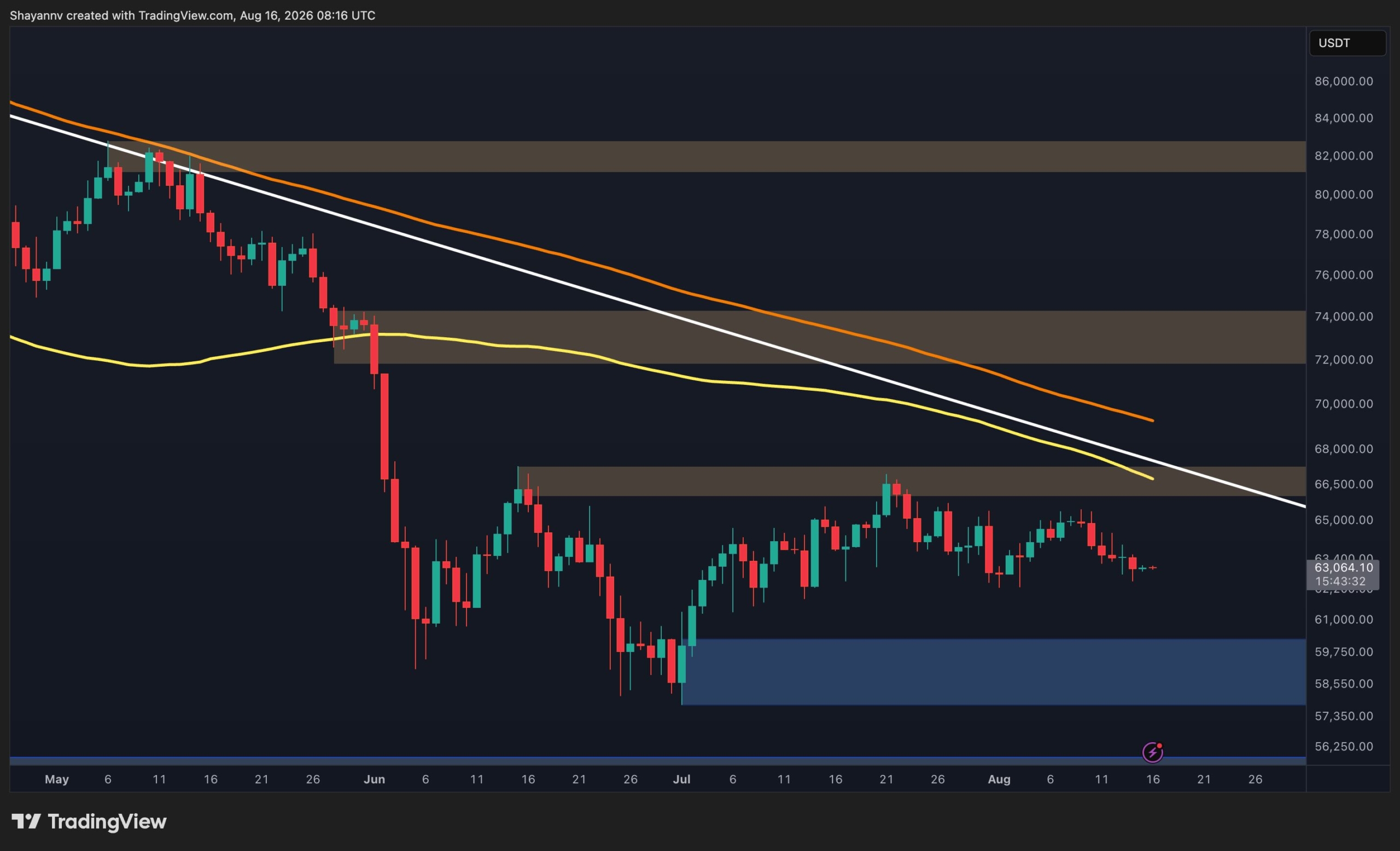
    Bitcoin is currently navigating a period of choppy consolidation, trading around the $63,000 mark with notably low volume. This sideways price action, according to the analysis, suggests a market lacking a decisive directional impulse, making its next move difficult to ascertain.

    Why This Matters

    The current market analysis indicates that Bitcoin’s price action is characterized by sideways consolidation due to limited liquidity and volume, preventing a decisive directional move. It remains uncertain whether Bitcoin may break out of its consolidation phase next week.

    Broader Context

    Source materials place the market analysis in this context: Bitcoin remains trapped in a low-momentum environment, with price action increasingly characterized by choppy consolidation rather than a decisive directional move.

    Key Technical Levels

    Resistance is identified between $66,200 and $67,200, while a significant support area lies between $58,500 and $59,800. The broader market structure remains compressed, with Bitcoin trading below major descending moving averages, and the 100-day moving average acting as an overhead reference.

    On the 4-hour timeframe, the price action is compressing between a descending upper trendline, around $64,500-$65,000, and an ascending lower trendline. This tightening range suggests that a break below the near-term support structure could lead to a revisit of lower price zones.

    Potential Downside Scenarios

    The article suggests that a notable move below the ascending lower trendline on the 4-hour chart could initiate a deeper correction. Such a move might first target the $60,300-$60,900 support zone, followed by the broader $58,100-$59,600 area. Significant liquidity concentrations exist around the current consolidation range, with notable clusters extending through the $53,000-$56,000 region. The heatmap indicates that a liquidity hunt below the $58,000 region remains a possibility if the current 4-hour support structure fails. This scenario, however, remains uncertain and requires confirmation.

    Potential Upside and Limitations

    Conversely, a notable move above the descending resistance trendline on the 4-hour chart could potentially invalidate the near-term bearish structure and improve the short-term outlook. However, the $66,200-$67,200 zone represents a more substantial resistance area that would need to be overcome for a material improvement in the short-term structure. Substantial liquidity also exists above the market around $66,000-$67,000 and at higher levels.

    The analysis highlights that the absence of significant volume favors continued consolidation rather than an immediate notable move. A downside liquidity sweep, potentially extending below $58,000, could theoretically precede a stronger bullish cycle, but this remains a speculative scenario. According to the analysis, Bitcoin would first need to reclaim key resistance zones and demonstrate meaningful volume expansion to suggest such a transition.

    Conclusion on Uncertainty

    Ultimately, the current market conditions for Bitcoin remain uncertain. The lack of liquidity and volume continues to limit follow-through, and the structure leaves room for potential liquidity-driven moves before a stronger trend develops. A decisive notable move below the $58,500-$59,800 zone would significantly weaken the bullish case, while a break above the descending trendline would introduce a more positive scenario. However, the article emphasizes that predicting the direction or timing of any significant price movement is difficult given the current ambiguous signals. The next week may provide more clarity as the consolidation range potentially resolves.

  • California Bill to Regulate AI in Mental Health Services Advances Through Assembly Committee

    California Bill to Regulate AI in Mental Health Services Advances Through Assembly Committee

    California Senate Bill 903, legislation designed to regulate the use of artificial intelligence in mental health services, has cleared the Assembly Appropriations Committee and is progressing toward a final Assembly vote. The bill aims to prevent AI chatbots from functioning as therapists and making mental health decisions without human oversight.

    The Assembly Appropriations Committee approved SB 903 with a unanimous 13-0 vote on Thursday. This follows earlier approvals in Assembly policy committees, with votes of 17-0 and 14-1. The California Senate had previously passed the bill in May by a 39-0 vote. Senator Steve Padilla is the bill’s author.

    Key provisions of SB 903 include limiting AI in psychotherapy to support roles, requiring clinician oversight, and obtaining patient consent for AI use. The bill also seeks to protect therapy data while exempting certain counseling types and federally approved tools.

    Proponents, including Senator Padilla, argue that AI algorithms lack the nuanced skills and training of human therapists and that regulatory guardrails are necessary to prevent patient harm. Concerns have been raised that AI chatbots might reinforce delusions through excessive agreement, creating an “echo chamber of one” that lacks the beneficial influence of real-world interactions, as noted by researchers.

    However, critics like Robert Boykin, executive director of TechNet, express concern that mandating clinician involvement could worsen existing shortages of behavioral healthcare workers. This, they contend, may create a “clinician bottleneck,” potentially delaying patient access to care, even for initial intake and screening tools.

    The increasing integration of AI in mental health is underscored by a recent American Psychological Association survey, which found that 77% of psychologists have patients utilizing AI for mental health purposes.

    The legislative process for SB 903 is ongoing. The date for the final Assembly vote has not yet been scheduled. It remains uncertain whether the Assembly will approve the amended bill, if it may return to the Senate for concurrence, or if Governor Gavin Newsom will ultimately sign it into law.

    As California moves forward with SB 903, the bill’s progression highlights a growing societal debate about AI’s role in sensitive sectors like healthcare, with potential implications for patient safety and access to care.

    Broader Context

    Source materials place the factual news in this context: California is one step closer to barring AI chatbots from posing as therapists and making mental health decisions without human oversight.

  • BiggerZ Launches Integrated Betting Platform Emphasizing Transparency and Verifiability

    BiggerZ Launches Integrated Betting Platform Emphasizing Transparency and Verifiability

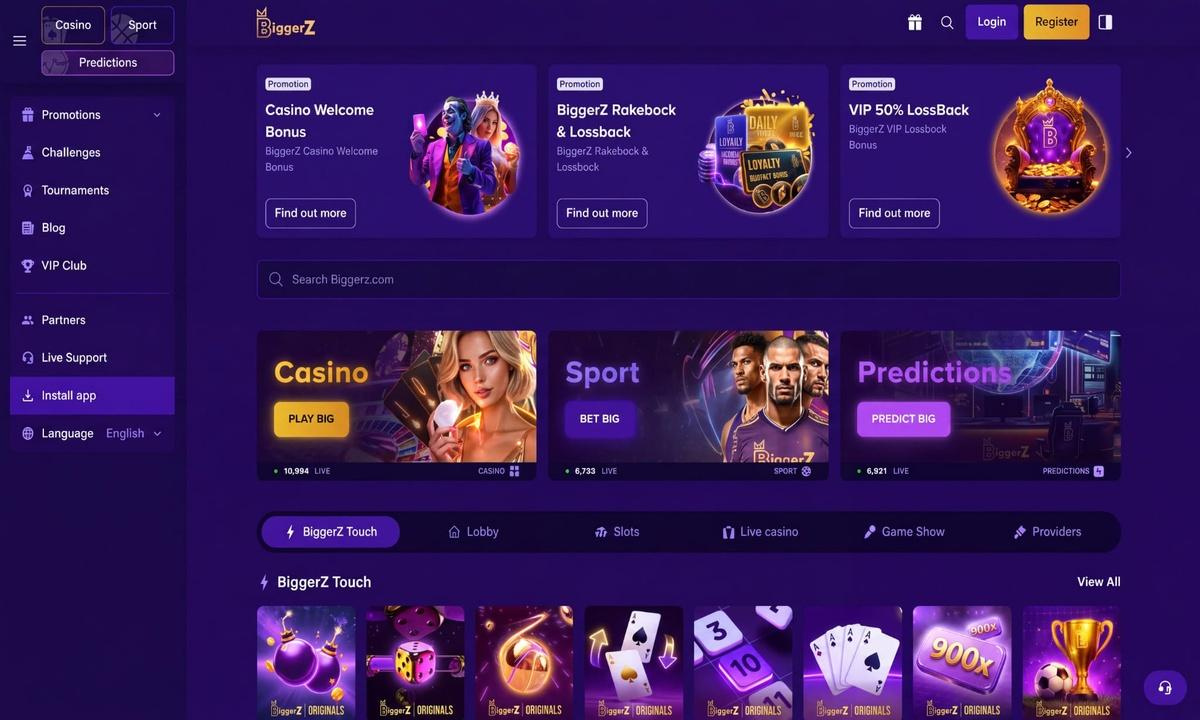
    BiggerZ has launched a new, unified platform that integrates casino gaming, sports betting, and prediction markets, offering users a single account and balance for all services. The platform, announced on August 16th, 2026, emphasizes transparency, verifiability, and clearly defined rules across its diverse offerings.

    Why This Matters

    The materials describe a narrow update: BiggerZ has launched a platform that integrates casino gaming, sports betting, and prediction markets under a single account and balance. Specific details on which fiat payment methods are supported.

    Broader Context

    Source materials place the factual news in this context: As online betting platforms expand across crypto, casino gaming, sports and prediction markets, BiggerZ is taking a different approach to how these products are presented to players: fairness should be explained rather than simply claimed.

    Platform Principles and Features

    BiggerZ states its approach is built on four core principles: transparency, clarity, verifiability, and defined rules. This philosophy is applied across its proprietary ‘BiggerZ Touch’ games, sportsbook settlement processes, and prediction market resolutions. According to BiggerZ, fairness should be explained rather than simply claimed, and users should understand the mechanisms governing outcomes before placing bets.

    For its ‘BiggerZ Touch’ games, the platform incorporates a provably fair transparency layer, which BiggerZ claims allows players to independently verify results. Third-party slots and live dealer games continue to operate under their respective providers’ certified systems and RNG controls. However, BiggerZ Touch adds a distinct verification mechanism for eligible in-house game outcomes.

    Sportsbook and Prediction Markets

    The same emphasis on fairness extends to BiggerZ’s sportsbook and prediction markets. In the sportsbook, fairness is primarily a matter of settlement clarity, with defined market rules, live betting conditions, void bets, and settlement conditions to help users understand how their bets will be resolved. For prediction markets, transparency centers on defined resolution criteria. These markets can cover real-world outcomes across various categories, including crypto, sports, finance, politics, culture, entertainment, and major world events. Each market is linked to specific resolution criteria, with its wording, timing, settlement conditions, and specified data source determining the final outcome.

    Payments and Verification

    BiggerZ also applies its principles to payments and account management. The platform supports cryptocurrency deposits, which are credited after required network confirmations. BiggerZ states it offers instant crypto withdrawals for eligible approved transactions, subject to network conditions and any necessary account verification. The company notes that requirements affecting fund access or account activity are intended to be available to players before they deposit or place a bet.

    The platform supports both cryptocurrency and selected fiat payment methods. BiggerZ is operated by CDK PLAY INC SRL and is licensed by the Government of the Autonomous Island of Anjouan, Union of Comoros.

    Brand Visibility

    BiggerZ has also focused on building brand visibility through partnerships with globally recognized figures across music, sport, and entertainment. These collaborations are intended to provide social proof and brand visibility alongside the platform’s focus on transparent game mechanics, settlement rules, and verifiable outcomes.

    Specific details remain uncertain regarding which fiat payment methods are supported, the exact criteria for ‘eligible approved transactions’ for instant crypto withdrawals, the specific network conditions that may affect withdrawals, and the precise nature of account verification required.

  • XRP Market Bottom Remains Uncertain Amidst Mixed Signals and AI Analysis

    XRP Market Bottom Remains Uncertain Amidst Mixed Signals and AI Analysis

    The cryptocurrency market is closely observing XRP’s price action, particularly following its recent dips below the $1.00 mark. While some indicators suggest a potential market bottom may be near, a definitive confirmation remains elusive, with conflicting signals and cautious analysis from AI highlighting ongoing uncertainty.

    Deteriorating Market Structure and Potential Decline

    In the past week, XRP experienced fluctuations that saw it trade below $1.00 on multiple occasions. This price level has been a significant psychological support, and its breach has raised questions about the token’s market structure. Historically, XRP has seen a substantial decline, plunging by 70% from its all-time high recorded approximately 13 months ago. This prolonged downturn has been characterized by a series of lower highs and lower lows, with most recovery attempts being short-lived. Further indicating potential downward pressure, XRP’s Taker Buy/Sell Ratio on Binance recently reached a multi-month low of 0.86. This metric indicates that aggressive sellers are outnumbering buyers on the exchange, signaling increased selling pressure. Additionally, rising futures positioning could heighten the risk of further price declines, potentially triggering a cascade of liquidations.

    Signs of Potential Recovery

    Despite the prevailing bearish trend, certain on-chain metrics offer a more optimistic perspective. Over the last three months, the number of wallets holding at least one million XRP has increased by 32. Furthermore, network activity has shown a notable surge, with the number of active XRP addresses escalating from under 24,000 to over 43,500 within a month. These developments, coupled with XRP’s resilience in fighting to maintain the $1.00 support level, suggest underlying strength that could precede a rebound.

    AI’s Cautious Outlook

    In an effort to gain further insight, ChatGPT was consulted for its analysis on whether XRP has reached a market bottom. According to ChatGPT’s assessment, while there is a possibility that the bottom is in or very close, definitive confirmation is lacking. The AI model noted that another leg down is plausible, suggesting that the recent sub-$1.00 dip might be close to a local capitulation bottom, but without certainty. ChatGPT’s analysis also highlighted that the next significant price area for XRP is observed around $0.94-$0.95. A break below this level could potentially lead to further losses, with a price dump target in the $0.80-$0.85 range. This cautious outlook from the AI underscores the prevailing uncertainty in the market.

    Conclusion: Navigating Uncertainty

    In conclusion, the XRP market presents a complex picture with mixed signals. While increased wallet holdings and network activity offer some positive signs, the deteriorating market structure and bearish trading ratios suggest that further price declines are possible. Investors and market observers are advised to approach the current situation with caution, as definitive confirmation of a market bottom remains absent.

    Why This Matters

    The materials describe a narrow update: ChatGPT analyzed XRP’s price action, considering factors like its decline from its all-time high, the increase in large XRP wallets, network usage jumps, and the Taker Buy/Sell Ratio. Whether XRP has reached a macro bottom.

    Broader Context

    Source materials place the market analysis in this context: After several months of flirting with the psychological support level at $1.00, Ripple’s XRP finally dipped below it on a couple of occasions in the past week, which aligned with many analysts’ expectations for such a move before a major rebound.

  • Gen Z’s ETF Trading Grows on Binance, But Cautious Risk Approach Remains

    Gen Z’s ETF Trading Grows on Binance, But Cautious Risk Approach Remains

    Gen Z investors on Binance are increasingly allocating capital to Exchange Traded Funds (ETFs), with ETF trading volume rising to 25.0% of their equity transactions in early August, a significant jump from 14.6% in June. This trend is particularly noteworthy as Gen Z is the only demographic group to experience growth in its ETF holder base, which increased by 2.9% during this period, contrasting with declines seen among Millennials and Gen X. Despite this growing interest in ETFs, Gen Z continues to demonstrate a cautious stance towards leveraged investment products.

    According to a Binance Research report, Millennials directed 9.5% of their equity volume to ETFs in early August. While Gen Z’s ETF holder base expanded, the report also indicated that Gen Z ETF buyers traded less frequently than their Millennial counterparts. In July, Gen Z ETF buyers made an average of 7.9 trades, compared to 10.3 trades by Millennials, suggesting a potentially more passive or long-term investment strategy for ETFs among younger users on the platform.

    Further underscoring Gen Z’s risk-averse approach, leveraged and inverse ETFs constituted a mere 9.25% of their direct-equity turnover in July and 3.93% of their net monthly inflow. By early August, this share decreased to 2.65% of their equity trading volume. The vast majority of Gen Z accounts—88.2% for TradFi-Perps and 96.5% for direct equities—showed no leveraged or inverse activity.

    This behavior occurs within the context of Binance’s recent expansion into direct stock trading, which launched in June 2026. Tokenized US equities rapidly attracted attention, reaching $100 million in assets under management within two weeks. Notably, 47% of this trading activity occurred outside regular US market hours.

    The divergence in ETF holder base trends is clear: Gen Z’s grew by 2.9%, while Millennials’ fell by 4.5% and Gen X’s by 5.9%. This suggests a unique shift in investment preferences among younger demographics on Binance. For unleveraged ETFs specifically, Gen Z’s net equity inflow share rose from 18.5% in June to 21.9% in July, despite a slight 2.0% dip in overall net inflow to these funds during July.

    It is crucial to acknowledge the report’s caveat that “two months is not enough to establish a trend.” The precise timeframe for the growth and decline in ETF holder bases across different demographics is also not explicitly defined. Additionally, ‘snapshot’ data regarding ETF buyer positions, including the number of fund symbols held and the proportion of open positions, lacks specific temporal context.

    Despite the increase in ETF trading volume, Gen Z’s total net equity deployment experienced a 17.4% decrease in July. Within July’s net inflow, single stocks accounted for 20.4% and leveraged products for 28.5%. As the report stated, “Gen Z does not appear to be committing capital to leveraged exposure.”

    Why This Matters

    The materials describe a narrow update: Exchange-traded funds (ETFs) accounted for 25. Whether the observed trend in Gen Z’s ETF trading volume is sustainable, as two months is insufficient to establish a trend.

    Broader Context

    Source materials place the factual news in this context: Binance opened direct stock trading in June 2026.

  • Apple Develops AI Model for China with Alibaba, Secures Regulatory Registration

    Apple Develops AI Model for China with Alibaba, Secures Regulatory Registration

    Apple has partnered with Alibaba to develop a generative AI model for the Chinese market, a development that has secured registration with the Cyberspace Administration of China. This collaboration is a key step in Apple’s strategy to bring its “Apple Intelligence” features to iPhones in China, navigating the country’s regulatory environment.

    Alibaba Chairman Joe Tsai reported the arrangement in February 2025, stating that Apple “chose to do business with us” after discussions with several Chinese companies. The registration of Apple’s generative AI service by the Cyberspace Administration of China last month represents a regulatory step, a process that has kept services like OpenAI’s ChatGPT and Anthropic’s Claude unavailable in the country.

    According to Reuters, Apple plans to integrate its model with technology from Alibaba’s Qwen and potentially from Baidu. The exact roles of these different systems remain unclear. The “Apple Intelligence” initiative is expected to be rolled out to Chinese iPhones via an iOS update in the coming months.

    This development occurs against a backdrop of challenges for Apple’s AI endeavors. The company previously indicated that its next-generation Foundation Models would utilize Google’s Gemini, a decision reportedly made following delays and a less-than-ideal reception for Apple Intelligence. In May, Apple agreed to a $250 million settlement to resolve claims that it had misled consumers about the availability of AI features at the launch of its products.

    The delay in rolling out advanced AI features has put Apple behind Chinese competitors such as Huawei, which already offers phones with integrated AI capabilities. Apple unveiled its revamped Siri AI in June, with plans for a beta release later this year. However, Siri AI will not be immediately available in China as Apple works through regulatory requirements.

    The partnership with Alibaba and the subsequent registration by Chinese authorities are seen as adaptations by Apple to compete in the Chinese market while complying with local regulations. The company’s ability to successfully deploy its AI features in China is critical for its global growth and competitive standing.

    Why This Matters

    Apple’s collaboration with Alibaba to build a generative AI model for China, which was registered by the Cyberspace Administration of China, is a significant step in its strategy to bring AI features to the Chinese market. However, it remains unclear what role each system (Alibaba’s Qwen, Baidu’s technology) will play in Apple’s AI model for China.

    Broader Context

    Apple trained its own AI model for China with Alibaba’s help as it races to bring Apple Intelligence to Chinese customers, Reuters reported.

  • XRP’s Conflicting Signals: Which to Trust?

    XRP’s Conflicting Signals: Which to Trust?

    XRP Flashes Contradictory Signals, Leaving Traders at a Crossroads

    The past year has been challenging for the popular cross-border token XRP, which has fallen below the psychologically significant $1.00 mark at least twice for the first time in nearly two years. This downturn has understandably dampened investor sentiment, but two distinct data points offer a compelling glimpse into potential future movements.

    Social Media Sentiment Plummets

    Analysis from Santiment Intelligence reveals a dramatic surge in negative online commentary surrounding XRP over the past week, coinciding with the asset’s struggle to rebound from its dip below $1.00. Sentiment across major social media platforms has reached its lowest point in three months.

    Open Interest Approaches Critical Levels

    Meanwhile, Bird, a developer for the XRP Ledger, has flagged another potentially concerning trend: XRP’s open interest is nearing levels seen around the significant liquidation event on October 10. That incident saw over $19 billion in leveraged positions erased in less than a day.

    Open interest quantifies the total value of outstanding derivatives contracts. Generally, an increase in this metric suggests traders are committing more capital and leverage to the market. This can be particularly risky for assets experiencing high volatility, though XRP has not been in such a state recently, unlike during the October 10 event.

    However, Bird cautioned that if volatility increases, the current elevated open interest could trigger another sharp price movement and even more substantial liquidations. It is important to note that high open interest alone does not dictate the direction of a price swing. Overleveraged long positions can exacerbate a downturn, and vice versa.

    Selling Pressure Mounts on Binance

    Adding to the cautionary signals, CryptoQuant analysts recently observed a significant rise in selling pressure for XRP on the Binance exchange in recent weeks.

    Network Activity Paints a Different Picture

    Despite these indicators pointing towards a potential major correction, the situation is not entirely straightforward. While traders have grown increasingly pessimistic, activity on the underlying XRP Ledger network is moving in the opposite direction. The same Santiment report indicated that the XRP Ledger recorded nearly 50,000 active addresses within a single 24-hour period, marking a two-month high.

    This represents a notable recovery from July figures, when network activity had fallen to near year-lows. A similar surge in network activity in May preceded a significant XRP rally that propelled the token to $1.55 at the time.

    While current circumstances differ, the confluence of rising network activity and extreme pessimism among XRP traders could soon lead to heightened volatility, especially when considering the soaring open interest.

  • Trump to Meet Crypto Leaders Amid Regulatory Uncertainty for CLARITY Act

    Trump to Meet Crypto Leaders Amid Regulatory Uncertainty for CLARITY Act

    President Donald Trump is scheduled to host a meeting at the White House on August 19 with leaders from cryptocurrency companies and regulatory agencies to discuss digital asset frameworks. This gathering occurs as legislative efforts to establish a comprehensive federal framework for cryptocurrencies, known as the CLARITY Act, face ongoing challenges.

    The meeting’s timing is significant, taking place shortly before a potential Senate vote on the CLARITY Act. This legislation aims to clarify the respective roles of the Securities and Exchange Commission (SEC) and the Commodity Futures Trading Commission (CFTC) in the digital asset space. Reports claimed that key industry participants expected at the event include representatives from Ripple, Coinbase, Chainlink, Paradigm, Kalshi, and a16z. SEC Chair Paul Atkins is also expected to attend.

    CLARITY Act Faces Hurdles
    The CLARITY Act has encountered several obstacles prior to the Senate’s August recess. Disagreements persist on various provisions, including ethics requirements, anti-money laundering (AML) safeguards, and the controversial issue of allowing digital asset companies to offer rewards on customers’ stablecoin holdings—a point of opposition from the banking industry. The Senate departed for its five-week recess without voting on the legislation.

    More recent updates reported that Senate Majority Leader John Thune filed cloture on a motion related to the CLARITY Act, with a vote now slated for September 15. However, lobbyists and policy experts suggest that the odds of the bill’s approval this year continue to decline, with passage unlikely before the upcoming midterm elections cast further uncertainty.

    Regulatory Dialogue and Uncertainty
    The White House meeting is seen as an effort to bring together various stakeholders to address the complex regulatory landscape for digital assets. Washington’s efforts to establish a clear digital asset framework remain unfinished. The upcoming discussions are expected to highlight the ongoing dialogue between industry players and regulatory bodies. Despite this engagement, significant disagreements on the CLARITY Act’s specifics mean that legislative clarity remains elusive.

    As reported, the CLARITY Act seeks to provide a federal structure for cryptocurrencies, but senators have yet to resolve outstanding issues. The meeting scheduled for August 19, therefore, takes place against a backdrop of legislative uncertainty and ongoing debate over the future regulation of digital assets in the United States. The exact impact of this meeting on the legislative process remains to be seen, with significant hurdles still to overcome before any comprehensive framework is enacted.

    Broader Context

    Source materials place the factual news in this context: Washington’s efforts to establish a comprehensive digital asset framework remain unfinished.

    Why This Matters

    The meeting signifies increased attention on digital asset regulation, with President Trump engaging directly with industry leaders and regulators. This high-level discussion occurs at a critical juncture, shortly before a key Senate vote on the CLARITY Act, highlighting the ongoing efforts and challenges in establishing a comprehensive digital asset framework in the United States. Despite the engagement, significant disagreements on the CLARITY Act’s specifics mean that legislative clarity remains elusive.

  • Pi Network Advances Node Tech, Tests Distributed Computing Amidst Token Price Swings

    Pi Network Advances Node Tech, Tests Distributed Computing Amidst Token Price Swings

    Pi Network has released Node version 0.6.2, introducing several improvements to its SoloHost functionality, node connectivity, and the Pi Desktop user experience. The Core Team also conducted a test for distributed computing, involving five volunteer Node operators.

    The new node version, released in late October 2023, includes enhancements to SoloHost, UPnP support for easier port configuration, and a new port checker. These updates aim to improve the overall stability and user experience for Pioneers operating nodes.

    Distributed Computing Test and Vision
    The distributed computing test saw volunteer operators receive computational jobs, perform the necessary calculations, and return the results. This initiative is part of Pi Network’s broader strategy to leverage its extensive network of over 420,000 Pioneer-operated computers for AI and other compute-intensive applications. The Core Team stated that the idea is for third-party clients to eventually access these resources, with node operators potentially being compensated in PI tokens for their contributions. However, it is noted that this is an early-stage test involving a small group of volunteers, and a fully operational distributed computing marketplace is not yet in place.

    Token Price Performance
    In parallel with these technical developments, the PI token has experienced notable price volatility. Approximately one month ago, the token reached an all-time low of $0.07. It subsequently rebounded, briefly challenging the $0.10 resistance level. By the end of that month, the price dipped below $0.075 but recovered to reclaim the $0.08 level. In recent days, the token reached $0.094 before settling around $0.09. Its market capitalization remains below $1 billion.

    Future Outlook and Uncertainties
    Looking ahead, uncertainties remain regarding potential market pressures. The upcoming token unlock by the end of the year could lead to increased selling pressure. The Core Team has not yet provided an official confirmation regarding the successful deployment of protocol version 26, a development anticipated by the community.

    Why This Matters
    The release of Pi Node version 0.6.2 and the initiation of a distributed computing test represent tangible progress in Pi Network’s development roadmap. While the project aims to leverage its node network for AI and other compute-intensive applications, the current distributed computing efforts are in an early, experimental phase. The PI token’s price has shown significant volatility, currently trading around $0.09, with its market cap below $1 billion. This technical progress occurs against a backdrop of market sensitivity, with potential future selling pressure anticipated from an upcoming token unlock.

    Broader Context
    The post on the only official X channel associated with the popular project informed that the new node version introduces improvements to SoloHost, node connectivity, and the Pi Desktop user experience. This update is part of Pi Network’s ongoing development to enhance its infrastructure and explore new functionalities like distributed computing.

  • OCC Grants World Liberty Trust Company Preliminary Conditional Charter

    OCC Grants World Liberty Trust Company Preliminary Conditional Charter

    The Office of the Comptroller of the Currency (OCC) has granted preliminary conditional approval for a national trust bank charter to World Liberty Trust Company, a cryptocurrency venture linked to the Trump family. This development, reported on Thursday, represents a significant step for the company, which plans to issue and redeem its stablecoin, USD1, and provide digital-asset custody services.

    According to the OCC’s decision letter, World Liberty Trust Company, National Association, will be based in Bay Harbor Islands, Florida. The institution intends to take over the role of issuing and redeeming USD1 from BitGo, the current exclusive issuer and custodian. Beyond stablecoin operations, the bank will offer digital-asset custody as a fiduciary, enabling clients to convert approved stablecoins into USD1. Importantly, as a trust bank, it may not accept deposits, carry FDIC insurance, or currently seek a Federal Reserve master account. The company has committed to operating outside the definition of a “bank” under the Bank Holding Company Act.

    The OCC’s approval is subject to several conditions. World Liberty Trust Company must meet a minimum capital requirement of $20 million and comply with the GENIUS Act, a law enacted last year that has spurred a number of crypto firms to pursue similar charters. The company has 18 months to establish its operations and open for business.

    This follows previous OCC approvals of national trust charters for other digital-asset companies, including Circle, Ripple, Paxos, Fidelity, and BitGo. World Liberty applied for its charter earlier this year.

    The Trump family’s involvement with World Liberty has prompted objections during the review process. The OCC acknowledged receiving comments flagging potential conflicts of interest involving the president, his family, the Witkoff family (with Zachary Witkoff listed as organizer, director, and president of World Liberty), and Emirati investors associated with World Liberty. Questions were also raised concerning the Emoluments Clause. However, the OCC largely dismissed these concerns as outside the scope of its review, noting that World Liberty Financial itself is not a party to the application. Passivity commitments were signed by Eric Trump for one of the investing entities.

    Separately, Senator Elizabeth Warren has called the OCC’s crypto charter approvals illegal, arguing that these firms function as banks while circumventing the safeguards typically associated with that designation.

    While the OCC has granted preliminary conditional approval, uncertainties remain regarding the company’s successful launch within the stipulated timeframe and the full implications of its compliance with the GENIUS Act. The regulator’s dismissal of conflict of interest concerns also leaves room for ongoing discussion.

    Why This Matters

    The materials describe a narrow update: The OCC granted preliminary conditional approval for a national trust bank charter to World Liberty Trust Company, which plans to issue and redeem its stablecoin, USD1, and provide digital-asset custody. Whether World Liberty Trust Company will successfully open within 18 months.

    Broader Context

    Source materials place the factual news in this context: The Office of the Comptroller of the Currency on Thursday granted preliminary conditional approval for a national trust bank tied to World Liberty Financial, the crypto venture backed by President Donald Trump and his family, clearing a major hurdle for the firm’s dollar-peggedstablecoin.