Tag: Neutral

  • FCC Implements Restrictions on Advanced Robots and Power Inverters Due to National Security Concerns

    FCC Implements Restrictions on Advanced Robots and Power Inverters Due to National Security Concerns

    The U.S. Federal Communications Commission (FCC) has added foreign-made advanced robotic devices and connected power inverters to its “Covered List,” a regulatory action driven by national security concerns identified by U.S. agencies. This move effectively prevents new models of these devices, particularly those originating from China, from receiving FCC equipment authorization, a necessary step for their import, marketing, and sale in the United States.

    The FCC’s decision, reported earlier this week, targets internet-connected robotic devices weighing over 4.4 pounds that can view their environment. This includes a range of products such as robot vacuums, humanoid robots, and quadruped robots. Connected power inverters, crucial components in energy systems, are also included in the expanded list. According to the FCC, U.S. national security agencies have determined that these products pose unacceptable security risks.

    The “Covered List” identifies communications equipment that the U.S. government considers a threat to national security. Products on this list generally cannot receive new FCC equipment authorization. This restriction applies only to future device models seeking approval, meaning previously authorized products and devices already owned by consumers are not affected. Manufacturers can seek FCC authorization for devices if they receive conditional approval from the Department of Defense or the Department of Homeland Security.

    National security agencies have raised concerns that these internet-connected devices could create supply chain weaknesses and cybersecurity risks. Potential vulnerabilities include the collection of sensitive data, the ability to monitor individuals, and the risk of remote takeover by malicious actors. For connected power inverters, concerns include the potential to disrupt critical infrastructure like the power grid, steal data, or provide unauthorized access to vital systems.

    This action by the FCC is part of a broader U.S. effort to secure critical supply chains and mitigate potential cybersecurity threats from foreign technology. The move follows findings by a White House-convened interagency group. While the specific national security agencies that made the determination have not been detailed, the FCC’s action aligns with a growing focus on securing technology beyond traditional defense applications.

    The restrictions could have implications for the global robotics market and innovation, particularly as China accelerates its development in areas like humanoid robotics. Companies such as Alibaba and Unitree have been noted for their advancements in this sector. The exact scope of ‘advanced robotic devices’ beyond the stated weight and connectivity criteria remains a point of uncertainty, as do potential retaliatory measures from China. However, the FCC has clarified that the restrictions are not a complete prohibition on all robots and do not make existing devices illegal to use or sell.

    Broader Context

    Source materials place the factual news in this context: The FCC’s action comes as China races to become a global leader in humanoid robotics.


  • Bank of Japan’s Policy Dilemma Creates Potential Global Liquidity Risk, Analysts Warn

    Bank of Japan’s Policy Dilemma Creates Potential Global Liquidity Risk, Analysts Warn

    The Bank of Japan’s decision to maintain its benchmark interest rate at 1% highlights a significant monetary policy dilemma, prompting analysts to warn of potential, though uncertain, risks to global liquidity. This policy crossroads for Japan, which has long relied on near-free money to support its economy, could have ripple effects beyond its borders.

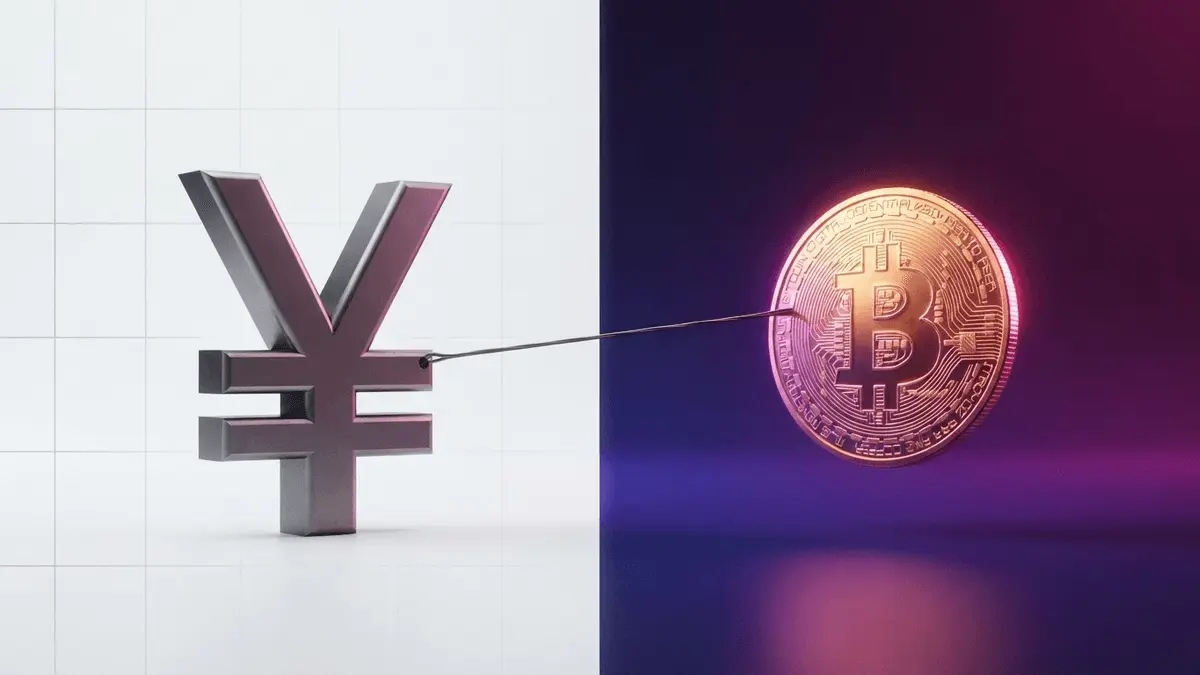
    Japan faces a delicate balancing act. Raising interest rates could impose losses on financial institutions holding low-yield bonds and increase the cost of refinancing the nation’s substantial public debt. Conversely, keeping rates low risks further depreciation of the yen. A weaker yen increases the cost of imports, particularly energy and food, and could also trigger a significant unwinding of the yen carry trade. This trade historically involves borrowing in Japan at low interest rates to invest in higher-yielding assets abroad, including cryptocurrencies like Bitcoin.

    Potential Carry Trade Unwind and Liquidity Squeeze

    According to one analyst, Japan is approaching a critical juncture in its monetary history. A rapid unwinding of the yen carry trade could force the sale of foreign assets to repay yen loans, potentially creating a chain reaction that would not be contained within Japan. This scenario could lead to a broader tightening of global liquidity as capital flows reverse.

    Monetary Policy Context

    On July 31, the Bank of Japan held its benchmark interest rate steady at 1%. This decision comes amid wage growth in Japan that has reportedly pushed past 5%, a level not seen in decades, which could challenge the rationale for maintaining ultra-low interest rates. In contrast, the US Federal Reserve kept its interest rates unchanged during the past week, holding steady in the 3.50% to 3.75% range.

    Bitcoin’s Performance Amidst Global Uncertainty

    Bitcoin traded near $64,000 following the Bank of Japan’s rate decision. The cryptocurrency had seen a nearly 9% increase over the past 30 days, though it experienced a nearly 2% decline for the week and was down roughly 18% over the preceding three months, per CoinGecko data. The OG crypto had previously shrugged off volatility associated with the US Federal Reserve’s policy stance.

    Analyst Perspectives on Crypto Markets

    Earlier in the year, analyst Ted Pillows argued that rising Japanese bond yields were already making the yen carry trade less attractive, potentially reducing capital flow into riskier assets such as cryptocurrencies. More recently, market commentator Hupzy suggested that prolonged yen weakness might continue to support demand for Bitcoin and stablecoins. However, Hupzy also cautioned that any sudden intervention by Japanese authorities could trigger short-term liquidations across crypto markets.

    The potential implications for global liquidity remain uncertain. While the Bank of Japan’s policy dilemma presents a risk, the extent of its impact on international markets and assets like Bitcoin is not definitively established. Investors are advised to monitor developments, acknowledging the speculative nature of potential carry trade unwinds and their cascading effects.

    Broader Context

    Source materials place the market analysis in this context: The BOJ left its benchmark interest rate unchanged at 1% on July 31.

  • Shiba Inu Team Issues New SHIB Army Challenge: Who Leads the Charge?

    Shiba Inu Team Issues New SHIB Army Challenge: Who Leads the Charge?

    Shiba Inu Team Launches Community Challenge to Boost Global Popularity

    The development team behind Shiba Inu, the second-largest meme coin by market capitalization, has introduced a novel challenge for its community designed to enhance the token’s global recognition.

    While some community members have expressed intentions to participate in the initiative soon, others have cited significant reasons for abstaining.

    Earlier this week, Emirates, a prominent international airline, announced a partnership with Crypto.com. This collaboration enables residents of the United Arab Emirates to book flights using digital currency through the exchange’s website and application.

    Shiba Inu’s official X account shared this development, highlighting that SHIB is among the cryptocurrencies supported by the platform. The account also encouraged its community to test out this new payment option.

    The news was met with enthusiasm by many users, with some asserting their plans to utilize the meme coin for purchases in the near future. However, others recalled the cautionary tale of programmer Laszlo Hanyecz, who famously exchanged 10,000 Bitcoin for two pizzas in 2010, and stated they would not part with their SHIB for everyday transactions.

    “Never using my SHIB for paying for anything, I don’t wanna end up being like that guy that bought pizza with his Bitcoin,” one user, CryptoKing, commented.

    Hanyecz’s transaction is widely regarded in the cryptocurrency sphere as both legendary and a stark lesson. At the time, the 10,000 BTC spent was valued at approximately $40. Today, that same amount would be worth over $630 million, underscoring the immense potential appreciation of early cryptocurrency holdings.

    In addition to promoting the use of SHIB for booking flights, the Shiba Inu team is also preparing for the token’s sixth anniversary on August 1. Speculation is rife within the community regarding potential major ecosystem updates to coincide with the celebration, though no concrete information has been released.

    Last weekend, the cryptocurrency, often dubbed the “Dogecoin killer,” experienced a sudden and significant daily surge of 35%. Potential factors contributing to this price increase include the resumption of accumulation by a dormant “whale” investor after more than six months of inactivity, as well as a notable revival of the token’s burning mechanism.

    However, the upward momentum proved short-lived as bearish sentiment took hold in the subsequent days, erasing most of the gains. SHIB is currently trading around $0.000004702, representing a 12% increase over the past week. On-chain analytics firm Santiment reported 52 whale transactions during the rally, indicating that large holders likely took profits. Simultaneously, retail investors appear to have entered the market late, providing liquidity for whales to reduce their exposure.

    Santiment suggested that an optimal strategy for meme coins like SHIB involves exiting the market during periods of peak retail investor FOMO (fear of missing out) and re-entering when sentiment turns negative and the token is widely perceived as a scam.

  • Treasury Secretary Urges Senate Vote on Crypto Clarity Act Amid Legislative Hurdles

    Treasury Secretary Urges Senate Vote on Crypto Clarity Act Amid Legislative Hurdles

    Treasury Secretary Scott Bessent is publicly urging the Senate to vote on the Crypto Clarity Act, citing economic risks and the need for consumer protection in the digital asset space. Bessent’s call to action, communicated via a statement on X and an op-ed, represents a significant effort to expedite cryptocurrency regulation.

    On July 30, 2026, Bessent argued that continued congressional inaction jeopardizes the United States’ standing as a global financial leader. He emphasized that the Crypto Clarity Act, which passed the House over a year ago, incorporates essential consumer protections and compliance mandates for digital asset intermediaries. Bessent also defended the act’s Blockchain Regulatory Certainty Act provision, designed to shield decentralized software developers from specific registration requirements, noting its current support from the Fraternal Order of Police, which had previously opposed it.

    Despite these arguments, legislative progress on the Crypto Clarity Act is currently stalled. The primary obstacle stems from disagreements over ethics provisions introduced by Senate Republicans in May 2026. These provisions aim to bar federal officials, including the president, from issuing or sponsoring digital assets while in office. Disclosures suggest these measures are partly intended to address activity related to President Trump’s crypto ventures, which reportedly generated over $1.2 billion in 2025. Democrats have voiced objections to these ethics proposals, citing concerns regarding their 2029 expiration date, reliance on the Justice Department for enforcement, and the exclusion of officials’ children.

    Negotiations involving Senate Banking and Agriculture Committee staff have been ongoing, with bipartisan revisions to the bill reportedly developed. Senators Angela Alsobrooks and Thom Tillis appeared to reach a bipartisan agreement late last month, per The Hill’s reporting. However, it remains unresolved whether this agreement has secured sufficient support from all relevant parties within the Senate and the industry.

    Bessent has framed the delay not as a substantive policy disagreement on consumer protection, but as a politically manufactured hold-up. He pointed to the passage of the GENIUS Act last year, which established a federal stablecoin framework, as evidence that bipartisan progress on digital asset legislation is achievable when the political will exists.

    Meanwhile, the broader cryptocurrency market on July 30 was processing economic data, including the FOMC decision and ETF flow information. Bitcoin, a major digital asset, largely appeared unfazed by the political discussions surrounding the Senate’s legislative schedule, a trend that continued into the following trading session. The market’s muted reaction suggests that, for now, the political stalemate has not significantly impacted Bitcoin’s price action.

    Why This Matters

    The materials describe a narrow update: Treasury Secretary Scott Bessent used a public statement on X and an op-ed to pressure the Senate to vote on the Crypto Clarity Act. Whether the agreement between Alsobrooks and Tillis commands sufficient support from both industries remains unresolved.

    Broader Context

    Source materials place the factual news in this context: Treasury Secretary Scott Bessent posted a lengthy statement on X on July 30, 2026 demanding the Senate vote immediately on the Clarity Act, closing with Bitcoin creator Satoshi Nakamoto’s dismissal, that he had no time to convince those who don’t understand, in what amounted to the most aggressive public pressure campaign from a sitting Treasury Secretary on crypto legislation in recent memory.

  • Bank of Japan Holds Policy Rate at 1.0%, Signals Tightening Bias as Yen Intervention Fades

    Bank of Japan Holds Policy Rate at 1.0%, Signals Tightening Bias as Yen Intervention Fades

    The Bank of Japan (BoJ) maintained its key policy rate at 1.0% during its July meeting, while signaling a bias towards tightening monetary policy. This decision follows reported intervention by Japan’s Ministry of Finance aimed at supporting the yen.

    On July 30, Japan’s Ministry of Finance reported it had intervened in the foreign exchange market, selling dollars and buying yen. This action coincided with a sharp, albeit temporary, strengthening of the yen, with USD/JPY falling as much as 3% from nearly ¥164 to below ¥158. However, the subsequent recovery in USD/JPY highlighted a key observation: currency intervention alone often struggles to reverse long-term trends without complementary monetary policy adjustments.

    BoJ Policy and Intervention Context
    The BoJ’s decision to hold rates steady at 1.0% was accompanied by a signal of a tightening bias, indicating a potential shift towards higher interest rates in the future. Analysts suggest that the outlook for future rate hikes, rather than the intervention itself, will be the primary determinant of whether the yen can sustain further gains. This stance from the central bank is seen as more influential than the direct market operations.

    Japan has a history of intervening to support the yen, with several such operations occurring over the past two years, including significant ones in 2024. Each instance has typically resulted in a brief strengthening of the currency before market forces reasserted control. This pattern is largely attributed to the persistent wide interest rate gap between Japan and the United States, which continues to favor holding dollar-denominated assets over yen.

    While there were reports of Japanese officials maintaining contact with US counterparts, there was no confirmation of coordinated intervention with the Federal Reserve or the US Treasury. The operation was characterized as Japan-led.

    Yen Carry Trade and Risk Asset Implications
    The yen carry trade, which involves borrowing low-cost yen to invest in higher-yielding assets, is a significant factor for leveraged risk assets, including Bitcoin. As Japanese interest rates are expected to gradually rise while the Federal Reserve potentially pauses its own rate hikes, the advantage of the yen carry trade diminishes. However, the US-Japan rate differential is still considered wide enough to keep the strategy attractive for many investors.

    Economists generally anticipate the BoJ will continue to raise rates cautiously in the coming quarters, though the exact timing remains uncertain. Some forecasts suggest another rate increase before the end of the year, while others believe policymakers will wait for further strengthening in inflation and wage growth. A gradual approach to rate increases is expected to lead to an orderly unwind of the yen carry trade, rather than a sudden market shock.

    In comparison to August 2024, when an unexpected BoJ rate hike triggered a sharp yen rally and forced leveraged positions to be unwound, current market conditions are seen as less extreme because additional tightening is already anticipated. For Bitcoin, the base case scenario remains one of gradual normalization in Japan, creating modest headwinds rather than a significant selloff. However, a faster pace of BoJ tightening or another substantial yen surge could accelerate deleveraging across crypto markets.

    Consequently, Japanese monetary policy is becoming an increasingly important macroeconomic factor for traders, even as intervention alone is unlikely to alter the yen’s broader trend.

    Why This Matters

    The materials describe a narrow update: The Bank of Japan decided to keep its policy rate at 1. The exact timing of future Bank of Japan rate hikes.

    Broader Context

    Source materials place the factual news in this context: Japan’s Ministry of Finance reported yen buying, dollar selling intervention on July 30, sending USD/JPY sharply lower before the pair recovered later.

  • Ripple Gains EU MiCA Approval Amid Fed Rate Hike Fears

    Ripple Gains EU MiCA Approval Amid Fed Rate Hike Fears

    XRP Price Stalls Below $1.10 Amid Hawkish Fed, Regulatory Milestone

    XRP is currently trading at $1.07, marking a 0.57% dip over the past 24 hours. The digital asset continues to face resistance at the $1.10 level, which has thwarted attempts at recovery for three consecutive sessions.

    While the immediate price action appears relatively stable, a deeper look at the macroeconomic and on-chain indicators reveals a more complex picture. The direction of XRP’s current trading range, whether it breaks out or reverses, hinges on rapidly evolving factors.

    Federal Reserve’s Stance Fuels Risk-Off Sentiment

    The Federal Reserve opted to maintain its interest rates within the 3.50%–3.75% range. However, Fed Chair Kevin Warsh’s hawkish remarks following the meeting, emphasizing the Fed’s commitment to achieving its 2% inflation target, have reinforced a risk-off sentiment across liquid assets.

    In a notable statement, Fed Chair Kevin Warsh indicated that the central bank did not need to raise rates at this time, as the bond market had already effectively tightened conditions. He further elaborated that inflation remains above the Fed’s 2% objective and that the Committee is resolute in delivering price stability without exception.

    On-Chain Data Shows Accumulation by Mid-Tier Holders

    Despite the headwinds from the Federal Reserve’s hawkish stance, on-chain data from Santiment indicates that mid-tier XRP holders, those possessing between 10,000 and 100,000 XRP, have increased their cumulative holdings. Their share of the total supply has risen to 11.9%, up from 11.64% on July 1. Concurrently, the cohort holding between 100,000 and 1 million XRP has also seen its share grow to 11.75% within the same period.

    Ripple Secures Key European Regulatory Approval

    Adding to the narrative, Ripple achieved a significant regulatory milestone this week by securing full authorization as a MiCA Crypto-Asset Service Provider in Europe. This development carries direct implications for institutional XRP payments across the European Union. Meanwhile, open interest in perpetual futures remains robust, standing at 2.27 billion XRP, just shy of this week’s peak of 2.29 billion.

    The confluence of a hawkish Federal Reserve, a technically capped price chart, and a crucial regulatory unlock presents a binary scenario that warrants close observation.

    Technical Analysis Points to Resistance and Support Levels

    XRP is currently trading below the Bollinger Band midline, which hovers near $1.10, and also below key exponential moving averages. The 50-day Exponential Moving Average (EMA) at $1.13 converges with the upper Bollinger Band around $1.14, forming a significant overhead resistance zone that has repelled all intraday advances thus far. The 100-day EMA at $1.21 and the 200-day EMA at $1.41 further underscore the prevailing bearish structural trend, suggesting these levels are unlikely to be tested unless there is a substantial shift in near-term momentum.

    Momentum indicators are showing weakness. The daily Relative Strength Index (RSI) is trading near 45, indicating a technically neutral but weakening trend. The Moving Average Convergence Divergence (MACD) is marginally negative, signaling a decline in bullish attempts rather than a fresh accumulation phase. Trading volume and open interest, both below their weekly highs, do not support the notion of an imminent breakout.

    The $1.00 mark remains the primary support level for traders. A daily close below this threshold would invalidate the current recovery thesis.

    Potential Catalysts for XRP’s Next Move

    A sustained increase in institutional flow driven by the MiCA authorization, coupled with open interest expanding beyond 2.29 billion XRP and XRP successfully clearing the $1.10 resistance with significant volume, could pave the way for a rally towards the $1.13 to $1.14 range.

    However, the more probable near-term trajectory involves continued range-bound consolidation between $1.05 and $1.15 as the market awaits further developments, such as ETF-related headlines and potential exchange listing catalysts. A daily close below $1.00 would signal that selling pressure is dominating, rendering the recent mid-tier accumulation data less relevant.

  • REGNUSDT Perpetual Contract Launches with 20x Leverage

    REGNUSDT Perpetual Contract Launches with 20x Leverage

    Bybit Launches REGNUSDT Perpetual Contract with Up to 20x Leverage

    Cryptocurrency exchange Bybit has announced the listing of the REGNUSDT Perpetual Contract, enabling traders to speculate on the price movements of Regeneron Pharmaceuticals, Inc. (REGN) using Tether (USDT) as the settlement asset. Trading for the new contract is now live, offering leverage of up to 20x.

    The REGNUSDT Perpetual Contract is also accessible through Bybit’s suite of Futures bots, including Futures Grid, Futures Martingale, and Futures Combo.

    Key details of the REGNUSDT Perpetual Contract include:

    • Underlying Asset: Regeneron Pharmaceuticals, Inc. (REGN)
    • Settlement Asset: USDT
    • Tick Size: 0.01
    • Maximum Leverage: 20x
    • Capped Funding Rate: 2.5%
    • Funding Fee Settlement Interval: Every 8 hours
    • Trading Hours: 24/7

    Regeneron Pharmaceuticals, Inc. is a biopharmaceutical company headquartered in Tarrytown, New York. Its official website is https://www.regeneron.com/.

  • GEUSDT Perpetual Contract Launches with 25x Leverage

    GEUSDT Perpetual Contract Launches with 25x Leverage

    Bybit Lists General Electric Perpetual Contract

    Cryptocurrency exchange Bybit has announced the listing of a new perpetual contract for General Electric (GE) against Tether (USDT), now available for trading with up to 25x leverage.

    The GEUSDT Perpetual Contract allows traders to speculate on the price movements of General Electric’s stock without holding the underlying asset. The contract is also accessible through Bybit’s suite of Futures bots, including Futures Grid, Futures Martingale, and Futures Combo.

    Key details of the GEUSDT Perpetual Contract include:

    • Underlying Asset: General Electric (GE)
    • Settlement Asset: USDT
    • Tick Size: 0.01
    • Maximum Leverage: 25x
    • Capped Funding Rate: 2%
    • Funding Fee Settlement Interval: Every 8 hours
    • Trading Hours: 24/7

    The official website for General Electric is ge.com.

  • Crypto Weekly: Bitcoin Shrugs Off Politics as Markets Diverge

    Crypto Weekly: Bitcoin Shrugs Off Politics as Markets Diverge

    The Kospi concluded July with a robust rebound, while the price of Bitcoin remained notably stable despite a flurry of significant news. The Kospi staged a sharp recovery as Bitcoin hovered near $64,300, showing little reaction to political developments, stock market fluctuations, or a major cryptocurrency security breach.

    July ended with markets diverging. South Korean equities experienced an impressive comeback, while crypto traders focused on memecoins and tokenized assets rather than driving Bitcoin prices higher. Nevertheless, Bitcoin continued to trade within a familiar range, signaling a period of patience.

    Security Breach Hits Hardware Wallets

    One of the most significant cryptocurrency stories on Friday involved a major security incident. An attacker exploited a vulnerability in older Coldcard Mk3 hardware wallets, siphoning 594 BTC from approximately 500 single-signature wallets in under 30 minutes.

    The flaw was reportedly linked to firmware version 4.0.1, where a weakness in random number generation made certain wallet seeds predictable. Many of the compromised wallets had been inactive for years before the coordinated theft occurred across three blockchain blocks.

    Wallet manufacturer Coinkite confirmed the issue, stating that its initial investigation suggests newer Mk4, Q, and Mk5 devices are unaffected. Users who secured their wallets with a BIP 39 passphrase also appear to be at significantly lower risk. Despite the magnitude of the exploit, the Bitcoin price reacted minimally, remaining close to $64,300 after briefly touching $65,300 during Asian trading before pulling back.

    Meanwhile, Ethereum traded around $1,900, and BNB held near $590, outperforming many large-cap cryptocurrencies. Activity remained concentrated in smaller speculative assets, rather than flowing into Bitcoin.

    Equities Rally, Crypto Diverges

    The Kospi delivered one of Asia’s strongest performances, recovering sharply from its recent correction. Samsung Electronics and SK Hynix were key drivers of the rally, as semiconductor stocks attracted renewed buying interest following weeks of intense selling pressure.

    Taiwan Semiconductor also posted significant gains, bolstering optimism across regional technology stocks. However, the Bitcoin price has not mirrored this equity rebound as closely as it did earlier in the month, highlighting a growing divergence between traditional markets and digital assets.

    Instead, speculative capital flowed into specific cryptocurrency sectors. Uniswap extended its rally after expanding its fee switch to additional blockchain networks, while several low-float tokens recorded triple-digit percentage gains following new exchange listings.

    South Korean regulators remained active despite legislative delays. Officials continued discussions on interim stablecoin regulations, underscoring the country’s ongoing efforts to enhance oversight as digital asset adoption expands.

    The contrast between equities and cryptocurrency defined the final trading session of July. While the Kospi recovered with remarkable speed, Bitcoin remained disciplined, largely disregarding both political headlines and market excitement.

    This resilience may prove more significant than short-term volatility. Security breaches, regulatory developments, and speculative rallies continue to dominate daily headlines, yet Bitcoin has repeatedly demonstrated an ability to absorb negative news without falling below key support levels.

    As August begins, investors will be watching to see if the Kospi can sustain its recovery and whether the Bitcoin price will finally break out of its prolonged trading range. For now, patience remains the prevailing sentiment across both markets.

  • Internet Computer (ICP) Price Decline: Analyst Predictions Highlight Market Uncertainty

    Internet Computer (ICP) Price Decline: Analyst Predictions Highlight Market Uncertainty

    Internet Computer (ICP) has experienced a significant price decline of 99.7% from its all-time high, with analysts offering divergent predictions about its future trajectory. The cryptocurrency, which began trading in May 2021 and briefly surged above $700 in its early days, is now trading around $2.06. Its market capitalization stands at approximately $1.14 billion, positioning it as the 60th-largest cryptocurrency, according to CoinGecko.

    The magnitude of ICP’s price drop is notably larger than that of other leading cryptocurrencies such as Bitcoin (BTC), Ethereum (ETH), and Ripple (XRP). Despite this substantial fall, market observers hold conflicting views on ICP’s future, with some suggesting potential for recovery and others anticipating further depreciation.

    Certain analysts point to repeating patterns and accumulation signals as potential indicators for future price movements. User CW claimed that ICP has seen strong accumulation over the past month, achieving an accumulation score of 100. CW noted that historically, such periods have been followed by significant price increases, suggesting a possibility for history to repeat itself. Additionally, KYRA BLOOM identified a potential buy setup, believing that if ICP’s price holds above $1.94, a bullish path remains a possibility, projecting a potential rise to nearly $9.

    Conversely, other analysts express a more bearish sentiment. Cryptorphic opined that ICP is at a critical level after breaking below the $2.10 support zone. Cryptorphic stated that if the $2.10–$2.12 range becomes resistance upon a retest, the notable move could continue, with $1.67 identified as a key downside area. This bearish bias, according to Cryptorphic, is expected to persist as long as ICP remains below its descending trendline and fails to reclaim the broken support level.

    Further caution was advised by Crypto Patel, who anticipated a continued decline if the $2 price level fails to hold. Crypto Patel warned that the higher timeframe (HTF) chart suggests a potential move towards $1, with $0.50 identified as the next major downside target.

    The wide range of predictions highlights the inherent uncertainty in forecasting the future of highly volatile digital assets like ICP. Whether ICP is due for a comeback or total collapse remains uncertain, as does whether history will repeat itself regarding past accumulation periods leading to major pumps. The bullish path for ICP remains a possibility only if the price holds above $1.94, and whether ICP will rise to nearly $9 is speculative. Similarly, whether ICP will decline further, whether $2.10–$2.12 will turn into resistance, or whether $1.67 will be a major downside area are all subject to market dynamics.

    ICP’s journey from an early peak above $700 to its current trading price represents an extreme example of market volatility. The ongoing debate among analysts underscores the challenges in predicting whether this dramatic decline signals a potential rebound or a continued downward spiral. As it stands, the future price movement of ICP remains uncertain, with key support and resistance levels being closely watched by market participants.

    Why This Matters

    The materials describe a narrow update: Internet Computer (ICP) has fallen 99.7% from its all-time high, with analysts offering divergent predictions about its future trajectory. Whether ICP is due for a comeback or total collapse remains uncertain.

    Broader Context

    Source materials place the market analysis in this context: Many leading cryptocurrencies, including Bitcoin (BTC), Ethereum (ETH), and Ripple (XRP), are currently trading far below their historic peaks, yet none of these declines compares to the massive crash that Internet Computer (ICP) has suffered.