Tag: Positive

  • FASB Proposal Could Allow Stablecoins as Cash Equivalents on Corporate Books

    FASB Proposal Could Allow Stablecoins as Cash Equivalents on Corporate Books

    The Financial Accounting Standards Board (FASB) is considering a rule change that could permit certain stablecoins to be classified as cash equivalents on corporate balance sheets, according to a report by Stripe’s Tempo. This proposed accounting standards revision, if adopted, could significantly impact how companies report their liquidity and manage financial covenants.

    The public comment period for the FASB proposal concludes on November 19th. A key condition for a stablecoin to be recognized as a cash equivalent under the proposal is the existence of a direct redemption right with the stablecoin issuer. this may indicate that simply purchasing a stablecoin, even one fully backed by U.S. dollars, does not automatically qualify it as a cash equivalent if the redemption mechanism is not direct with the issuer.

    Currently, many stablecoins, despite being fully backed, are not classified as cash reserves on corporate balance sheets. This can lead to understated liquidity ratios and potentially trigger violations of loan covenants. The FASB’s proposal aims to address this discrepancy, allowing qualifying stablecoins to be treated as cash, thereby providing a more accurate reflection of a company’s liquid assets.

    Coinbase, for example, has already classified USDC and other payment stablecoins as cash equivalents in its 2025 annual report, based on its direct redemption mechanism with Circle. Stripe’s Tempo report highlights that the contract arrangement between a company and the stablecoin issuer is the determining factor for this classification.

    This potential accounting shift is occurring alongside the development of regulatory frameworks for stablecoins. The GENIUS Act, a federal regulatory framework for payment stablecoins, was passed in July 2025 and is slated to become effective in January 2027, or 120 days after regulatory agencies complete implementation rules, whichever is earlier. While the GENIUS Act focuses on issuer responsibilities, the FASB proposal addresses the accounting treatment for holders.

    Together, the GENIUS Act and the FASB proposal are seen as forming a foundational infrastructure for the U.S. stablecoin ecosystem, which has a market size for USD-backed stablecoins exceeding $300 billion.

    Uncertainties remain regarding the specifics of the FASB proposal. It is not yet clear which stablecoins will qualify, nor if companies already holding stablecoins will need to adjust their redemption channels. Details on transition periods for companies to adapt to the new rules are also pending.

    Broader U.S. government initiatives may also promote USD-backed stablecoins internationally. Reports suggest the Trump administration is evaluating projects to encourage overseas use of these stablecoins. The proposed accounting change is viewed as a critical step in this strategy, potentially removing reporting and banking limitations that could hinder corporate use of stablecoins.

    Why This Matters

    The materials describe a narrow update: A report by Stripe’s Tempo suggests that a proposed accounting standards revision by FASB could permit qualifying stablecoins to be listed as cash equivalents on corporate balance sheets, provided there is a direct redemption right with the issuer. Which specific stablecoins will qualify for classification as cash equivalents.

    Broader Context

    Source materials place the factual news in this context: Stripe 旗下 Tempo 發布報告指出,FASB 八月的會計準則修訂案可能讓符合條件的穩定幣列為企業資產負債表的「現金等價物」,關鍵在於是否擁有與發行者之間的直接贖回權。.
  • Sweeney Mocks Bets on Underwear, Dictator Deaths in New Novig Ad

    Sweeney Mocks Bets on Underwear, Dictator Deaths in New Novig Ad

    Sydney Sweeney Stars in New Novig Ad Targeting Industry Rivals

    Sydney Sweeney has returned for a new advertisement promoting Novig, a sports-only prediction market. The 30-second spot retains the “just sports” slogan introduced during the platform’s September launch. This latest campaign, however, sharpens its focus on what Novig describes as insider trading, bot activity, and the controversial inclusion of “war bets” on other industry platforms.

    The ad positions Novig as a dedicated space for sports predictions, implicitly contrasting it with competitors that offer a broader, and in Novig’s view, less focused, range of speculative markets. The “sports-only” approach is presented as a cleaner, more focused alternative for users interested solely in athletic contests.

  • Robinhood’s Chain Hits 100 Days Amid $15B Stock Token Trading Surge

    Robinhood’s Chain Hits 100 Days Amid $15B Stock Token Trading Surge

    Robinhood Chain Marks 100 Days with $15 Billion in Stock Token Trading Volume

    Robinhood Chain, a new Ethereum Layer-2 network, has reached its 100-day operational milestone, reporting a significant $15 billion in cumulative trading volume for its stock tokens. Launched on July 1, 2026, the network, built on the Arbitrum Orbit stack, has quickly established a presence in the tokenized equity market.

    Key Metrics and Adoption

    The headline figure of $15 billion in stock token volume since its inception highlights rapid adoption. September proved to be a particularly strong month, with Robinhood Chain capturing approximately 42% of the on-chain equity trading volume, equating to $6.57 billion.

    Beyond trading volume, the network reports around 200,000 holders for its stock tokens, offering a broader measure of user engagement. While trading volume can be influenced by a few active participants, the number of wallets suggests a wider user base.

    Decentralized Finance Integration

    The decentralized finance (DeFi) aspect of Robinhood Chain is also showing promise. The lending protocol Morpho reports approximately $1.1 billion deposited on the network. This activity primarily involves lending markets and vaults that utilize the tokenized assets, indicating that users are not just trading but actively employing these tokens within DeFi strategies.

    Token Structure and Access

    Robinhood’s Stock Tokens are structured as ERC-20 tokens, the standard for assets on Ethereum. Legally, they are classified as tokenized debt securities issued by Robinhood Assets (Jersey) Limited. Each token is backed 1:1 by the underlying equity held in custody, providing holders with economic exposure to U.S. stocks and ETFs, meaning they benefit from price movements. However, these tokens do not confer ownership or voting rights in the underlying companies.

    The tokens are available for trading 24/7 on decentralized exchanges like Uniswap. Users can also integrate them with protocols such as Morpho for lending or as collateral for loans. Currently, access to these tokens is restricted to users outside the United States, the United Kingdom, and Canada.

    Technical Foundation and Future Outlook

    Technically, Robinhood Chain utilizes ETH for gas fees and achieves block times under 100 milliseconds. The network has experienced swift growth in decentralized exchange (DEX) volume, user numbers, and total value locked, alongside occasional surges in memecoin trading. By building on Arbitrum Orbit, Robinhood Chain maintains connectivity to Ethereum’s liquidity and tooling while controlling its own settlement layer and customizing its network. Research indicates the offering is available in over 120 jurisdictions.

    The substantial deposit volume on Morpho suggests that users are leveraging the tokenized assets for more than just speculative trading, engaging them in yield-generating strategies and as collateral.

    Competitive Landscape and Limitations

    The tokenized equity market is becoming increasingly competitive, with networks like BNB Chain and Solana also vying for activity. While Robinhood Chain’s 42% market share in September is a strong position, it remains subject to market dynamics.

    The structure of the tokens as debt securities means holders rely on the issuer and custody arrangements, rather than direct share ownership. Furthermore, the exclusion of users from the U.S., UK, and Canada, markets that represent a significant portion of Robinhood’s existing customer base, presents a key variable for future growth.

  • Standard Chartered to Offer Ripple Stablecoin Trading in Dubai

    Standard Chartered to Offer Ripple Stablecoin Trading in Dubai

    Standard Chartered to Offer Custody of Ripple’s Stablecoin to Institutional Clients in Dubai

    Standard Chartered is set to provide institutional clients in Dubai with custody services for Ripple’s dollar-pegged stablecoin, RLUSD. The bank aims to enable these clients to trade the tokens without the need to transfer them to an exchange.

    Digital Asset Custody Infrastructure Expanded

    The British bank announced Monday that it now supports institutional custody of Ripple USD (RLUSD), issued on the XRP Ledger (XRPL). This offering grants eligible clients access to Standard Chartered’s digital asset custody infrastructure. The service is being rolled out through the bank’s branch in the Dubai International Financial Centre (DIFC), which operates under the regulation of the Dubai Financial Services Authority (DFSA).

    Custody in finance refers to the secure holding of assets by a regulated institution, which assumes responsibility for their safekeeping. While the institution manages and safeguards the assets, it also gains the authority to supervise, freeze, and control funds under its custody.

    RLUSD is a stablecoin, a type of cryptocurrency designed to maintain a stable value pegged at $1. It is backed by U.S. dollars, U.S. government bonds, and cash equivalents. Ripple launched RLUSD in December 2024 on both Ethereum and the XRP Ledger, a public blockchain closely associated with Ripple. Standard Chartered’s new service specifically covers the XRP Ledger version of the stablecoin.

    Integration with LMAX Group for Collateral Use

    In parallel, Standard Chartered has joined a planned integration with LMAX Group, a London-based marketplace for currencies and cryptocurrencies. This collaboration is intended to make RLUSD eligible as collateral on agreed LMAX products. Collateral, also known as margin, is funds deposited by a trader with a trading venue as a safeguard against potential losses.

    Under a system Standard Chartered terms “collateral mirroring,” RLUSD will remain in the bank’s custody. LMAX will receive a mirrored record of the collateral’s value, which will then count towards the client’s trades. This arrangement means the stablecoins themselves will not be transferred to the exchange.

    The collateral mirroring mechanism offers a potential advantage in the event of an exchange failure. If an exchange were to collapse, a trader’s collateral would remain secured at Standard Chartered, a bank designated by the Financial Stability Board as one of the 29 institutions considered “too big to fail” and subject to more stringent capital regulations.

    Waqar Chaudry, who leads digital assets within the bank’s securities services unit, stated, “Institutional clients want to participate in digital asset markets without compromising on how their assets are safeguarded.”

    Standard Chartered has been providing crypto custody services in Dubai since 2024. In July, the bank announced it was the first globally systemically important bank to allow institutions to mint and redeem Circle’s USDC directly.

    RLUSD received regulatory approval from Dubai authorities in June 2025. The integration with LMAX is not yet operational. The bank indicated that the process is subject to final documentation, testing, and regulatory approvals, and did not provide a specific timeline for when clients will be able to use RLUSD as margin.

  • ICP Surges 14% Daily, Further Gains Expected

    ICP Surges 14% Daily, Further Gains Expected

    Internet Computer (ICP) Surges 14% in a Day, Analysts Eye Further Gains

    New York, NY – October 12, 2023 – The popular altcoin Internet Computer (ICP) is experiencing a significant surge today, marking one of the best-performing cryptocurrencies with a double-digit increase pushing its price to approximately $3.40. This notable upward movement has captured the attention of prominent analysts, who suggest the token could be poised for further appreciation in the near future, bolstered by supportive technical indicators.

    Analyst Optimism and Technical Signals

    Among those bullish on ICP is X user Lucky, who pointed to the cryptocurrency’s robust uptrend and ample room for growth, projecting a potential climb beyond $8. Lucky, who commands a following of nearly two million, also highlighted ICP’s “loudest and most passionate communities in crypto.”

    Analyst CW echoed this sentiment, having previously predicted that a break above the $3.39 mark, which has now occurred, would signal a return to bullish territory for ICP. Meanwhile, EliZ stated that the price action has unfolded precisely as forecasted, anticipating an ascent past $4.

    Adding to the optimistic outlook, WIZZ noted that Internet Computer historically performs well in the final quarter of the year. WIZZ confirmed their own investment in the asset, indicating no plans to divest in the coming months.

    However, a closer examination of historical data reveals a mixed performance for ICP in Q4. While the token has finished the fourth quarter in negative territory in three out of the last five years, the final quarter of 2023 has already proven exceptionally strong, with its price skyrocketing by over 320%.

    RSI and Exchange Netflow Support Bullish Case

    Further reinforcing the optimistic projections, ICP’s Relative Strength Index (RSI) suggests that the price may indeed align with the analysts’ expectations. This technical analysis tool, which measures the speed and magnitude of price changes, is currently positioned just above the 70 mark, a level typically interpreted as indicating strong upward momentum and potentially signaling an impending correction, but currently supporting the bullish narrative.

    The asset’s exchange netflow also warrants attention. In recent weeks, outflows from exchanges have consistently outnumbered inflows. This trend suggests a shift among investors towards self-custody, thereby reducing immediate selling pressure on the market.

  • Bitfinex Securities Launches Tokenized Funds with Tether’s Hadron

    Bitfinex Securities Launches Tokenized Funds with Tether’s Hadron

    Bitfinex Securities has launched capital raises for two tokenized funds managed by CMCC Global, broadening its platform with dollar and Bitcoin-denominated investment strategies.

    New Tokenized Funds Expand Investment Options

    The new offerings encompass the Crest Fund and the Liberty Bitcoin Accumulation Fund (LBAF). Both funds are being tokenized utilizing Tether’s Hadron platform, according to a press release. Subscriptions are open to eligible investors until October 29, with secondary trading anticipated to commence after the capital raises conclude. Bitfinex Securities stated these products mark the debut of tokenized funds of funds issued under El Salvador’s digital asset regulatory framework.

    CMCC Global, in partnership with Bitcoin analyst Willy Woo, co-founded both funds. Crest was launched in March 2022, while LBAF began operations in April 2025. Both funds allocate capital to quantitative managers employing strategies such as funding rate arbitrage, market making, and cross-exchange arbitrage within decentralized finance (DeFi).

    Investment Strategies and Return Targets

    The Crest Fund is denominated in U.S. dollars and aims to achieve returns exceeding those of U.S. Treasury bills. The LBAF, conversely, measures its returns in Bitcoin and targets net annualized returns between 8% and 12%, as detailed by Martin Baumann, Managing Partner at CMCC Global.

    “Both funds leverage diversified portfolios of quantitative, market-neutral strategies, rather than relying primarily on the directional performance of digital-asset markets,” Baumann explained. CMCC Global has previously characterized LBAF as a strategy designed to generate Bitcoin-denominated yield through quantitative trading, with its return targets expressed in Bitcoin rather than U.S. dollars.

    Token Details and Investor Benefits

    CREST tokens will be issued at $10 each, and LBAF tokens at 0.0001 BTC each. The minimum investment requirement is one token, subject to investor eligibility and verification.

    The offerings include a six-month period post-listing during which performance fees will be reduced by 50%, and redemption fees will be waived. These benefits will extend to tokens traded on the secondary market for the remainder of this introductory period.

    Fund Structure and Compliance

    Both funds are structured as segregated portfolios under CMCC Global SPC in the Cayman Islands. The tokens represent economic interests in underlying participating shares held in trust by BFXS (PTC) Limited. Tokens will be minted against these underlying shares and subsequently burned upon redemption. All transfers will be subject to identity verification and anti-money laundering controls. Eligible investors will have the ability to hold tokens in approved wallets and trade them 24/7 on Bitfinex Securities.

    Tether introduced Hadron in November 2024 as a platform for the issuance and management of tokenized assets, including equities, debt, and funds. The platform’s capabilities include token issuance and burning, compliance, and lifecycle management.

    These new offerings enhance Bitfinex Securities’ product suite, which already includes tokenized debt, Bitcoin hashrate contracts, and U.S. Treasury bills. The company reports listing over $500 million in assets and recently concluded a $50 million capital raise for Alkemya Metacore, its largest to date.

  • Kraken Secures UAE License, Eyes Dubai Expansion

    Kraken Secures UAE License, Eyes Dubai Expansion

    Kraken Secures Full Dubai License, Poised for UAE Market Entry

    Cryptocurrency exchange Kraken is set to launch its services in the United Arab Emirates following the acquisition of full market approval from Dubai’s Virtual Asset Regulatory Authority (VARA). This landmark decision permits Kraken’s parent company, Payward, to operate as a licensed virtual asset service provider within Dubai, catering to retail, professional, and institutional investors across the region.

    Initial Offerings and Future Expansion

    Upon launch, customers in the UAE will gain access to spot and margin trading, with trading pairs denominated in the UAE dirham (AED). A significant enhancement for users will be the ability to directly deposit and withdraw funds in dirhams, potentially eliminating the need to convert other currencies for trading activities.

    The initial service lineup will also encompass on-chain staking, xStocks, and Kraken’s crypto transfer service, Krak. Institutional clients can expect access to over-the-counter (OTC) spot trading and Kraken Prime. The company has indicated plans to progressively introduce additional products, with crypto derivatives and a broader spectrum of yield opportunities anticipated for release in late 2026 and into 2027, subject to further regulatory clearances. Furthermore, Payward intends to extend its trading infrastructure to regional partners through an embedded “trading-as-a-service” model.

    Regulatory Milestone and Global Footprint

    This latest approval represents the final phase of VARA’s licensing process. It follows a preliminary approval granted to Payward in May 2026, which enabled the company to finalize its operational setup before onboarding customers. Payward currently holds over 100 licenses and registrations globally, with a regulatory presence spanning Europe, the Americas, Asia-Pacific, and the Middle East.

    Arjun Sethi, Co-CEO of Payward and Kraken, commented on the development, stating, “From launch, clients in the UAE get the same order book and multi-asset coverage we run in every other market, under one of the clearest regulatory frameworks in the world. Payward’s regulatory infrastructure now connects them directly to Kraken’s market-leading liquidity, along with a growing range of opportunities across digital assets.”

    A Busy Year for Kraken

    Kraken has experienced a dynamic year. In April, Deutsche Börse invested $200 million in the crypto exchange. In June, Kraken partnered with Maple to introduce institutional-grade lending protections on the blockchain via a facility for digital asset-backed loans. More recently, in September, Nasdaq agreed to invest an additional $100 million in Payward, valuing the parent company at $21 billion. The two entities are also collaborating on tokenized stocks, with a targeted launch for the second quarter of 2027.

  • UK AI Security Institute Regains Access to Frontier AI Models After 17-Day Interruption

    UK AI Security Institute Regains Access to Frontier AI Models After 17-Day Interruption

    The UK AI Security Institute (AISI) has regained access to pre-release frontier AI models from US developers, concluding a 17-day period during which access was frozen. The interruption, which began around September 24, 2026, was reportedly due to a request from the Office of the National Cyber Director prioritizing US safety reviews.

    Access was restored on October 11, 2026. During the freeze, Anthropic notably withheld its Claude Mythos 5.1 model from non-US entities. UK AI Minister Kanishka Narayan is credited with playing a role in securing the renewed access for the AISI.

    Background on AISI and Voluntary Agreements

    The AISI, established in 2023 following the international AI Safety Summit at Bletchley Park, operates under voluntary agreements. These agreements, struck in 2023, mean the institute’s access to cutting-edge AI systems depends on developers choosing to share their models. The institute employs over 100 technical experts focused on safety evaluations. Previously, the AISI evaluated OpenAI’s GPT-6 Astra, an effort that contributed to its global role in assessing frontier models.

    National Priorities vs. International Collaboration

    The recent interruption highlighted the tension between international safety testing commitments and national priorities. When the Office of the National Cyber Director requested that domestic safety reviews take precedence, the existing framework adjusted accordingly. Anthropic’s decision to restrict access to its Claude Mythos 5.1 model for non-US entities during this period illustrated this dynamic, demonstrating how companies may balance global safety commitments with signals from their home government.

    The restoration of access may alleviate concerns that AI safety testing could become fragmented along national lines. According to the article, this development could reassure global researchers and technology investors who may have worried about a divergence between US and UK approaches to AI governance. The episode is also seen as setting a precedent that other nations pursuing international AI regulation through collaboration may observe.

    Future Outlook and Remaining Uncertainties

    Among the models now under review by the AISI is Google’s Gemini 4 Argon. Whether Anthropic’s Claude Mythos 5.1 will subsequently be shared with non-US entities is considered an early indicator of how normalized international access has become.

    Looking ahead, several uncertainties remain. It is unclear whether Anthropic will share its Claude Mythos 5.1 model with non-US entities. Additionally, questions persist about whether the US will formalize priority rules for domestic safety reviews, if more developers will resume sharing models with non-US evaluators, and whether the current voluntary framework from 2023 will be replaced by a more robust structure. The source states that AISI officials have pointed to future collaborations focused on using advanced AI to strengthen cyber defenses, an area that aligns with the concerns of the office that initiated the review prioritization.

    The timeline of events includes the establishment of AISI and its voluntary agreements in 2023, the approximate start of the access freeze on September 24, 2026, and the restoration of access on October 11, 2026.

    Why This Matters

    The materials describe a narrow update: The UK AI Security Institute had its access to pre-release frontier AI models from US developers frozen for 17 days, starting around September 24, 2026, due to a request from the Office of the National Cyber Director prioritizing US safety reviews. Whether Anthropic’s Claude Mythos 5.1 will be shared with non-US entities.

    Broader Context

    Source materials place the factual news in this context: AISI was set up in 2023, following the international AI Safety Summit held at Bletchley Park.

  • Moscow Exchange Launches Bitcoin Spot Trading for Retail Investors

    Moscow Exchange Launches Bitcoin Spot Trading for Retail Investors

    MOEX to Launch Spot Trading for Retail Investors in Bitcoin, Ether, and Tether

    Russia’s largest stock exchange, the Moscow Exchange (MOEX), is preparing to offer ordinary citizens direct access to cryptocurrencies, with spot trading for a select group of digital assets slated to begin on December 1, 2026.

    Restrictions for Retail Investors

    However, the move comes with stipulations. Retail investors will be subject to an annual purchase limit of 300,000 rubles, approximately $3,600. Furthermore, they must successfully complete a knowledge test before being permitted to trade.

    Limited Digital Asset Menu

    The initial offering for everyday investors will include three cryptocurrencies: Bitcoin, Ether, and Tether’s USDT stablecoin. This curated selection represents the entirety of available digital assets for individuals who do not possess qualified investor status.

    Shift from Derivatives to Spot Trading

    A significant development is the introduction of spot trading itself. Previously, MOEX provided cryptocurrency exposure solely through derivatives, which are contracts that mirror an asset’s price without transferring ownership of the underlying asset. Spot trading, in contrast, will allow investors to directly own the digital coins.

    Privileges for Qualified Investors

    Qualified investors will operate under more lenient regulations, facing no purchase limits and gaining access to a broader spectrum of digital assets beyond the initial three.

    Legal and Testing Framework

    The trading framework is established under Federal Law No. 282-FZ, which became effective on September 1, 2026. The exchange commenced testing the system with professional market participants on October 1, 2026, allowing for a two-month preparatory period before the official launch.

    Integrated Infrastructure and Partnerships

    MOEX is adopting a practical approach to its infrastructure, integrating digital asset trading into its existing systems and licenses rather than establishing a separate cryptocurrency venue. This means no new licenses will be required beyond its current authorization as a trading organizer. For settlement processes, MOEX will collaborate with digital depositories to manage the transfer of assets between buyers and sellers.

    Major Banks Aligning Services

    The move is not occurring in isolation. Sberbank and VTB, two of Russia’s prominent banks, are also developing digital asset services for their clientele in anticipation of the December launch.

    Strategic Asset Selection

    The restriction to three assets is notable. Bitcoin and Ether are the two largest and most established cryptocurrencies, while USDT offers a stablecoin option pegged to the U.S. dollar. Investors seeking to trade less common altcoins will need to qualify as professional investors.

    Challenges in Repatriating Crypto Activity

    Market analysts anticipate that approximately 80% of digital asset trading volume will continue to occur through unregulated channels, underscoring the difficulties in bringing offshore cryptocurrency activity back into regulated environments. Russian citizens currently trading on unregulated platforms enjoy unrestricted purchases, no mandatory tests, and access to a vast array of tokens.

    Enhanced Regulatory Oversight

    For regulators, this framework is expected to bring greater transparency to a market that has largely operated outside of direct oversight. All trades executed on MOEX will be recorded, settled through approved depositories, and fall under the purview of the central bank.

  • Evernorth Jumps 5% on Nasdaq Debut, Launches First Pure XRP Treasury Stock

    Evernorth Jumps 5% on Nasdaq Debut, Launches First Pure XRP Treasury Stock

    Evernorth Holdings Lists on Nasdaq, Becomes First Pure XRP Treasury Company

    Evernorth Holdings (XRPN) officially debuted on the Nasdaq on Monday, marking a significant milestone as the first publicly traded company to operate as a pure XRP digital asset treasury. The stock saw a 5% increase on its first day of trading. The company holds approximately 473 million XRP, valued at around $657 million, and has appointed Hugo Jeandesboz, former investment head at Coinbase, as its new Chief Investment Officer (CIO).

    First Pure XRP Treasury Stock Debuts

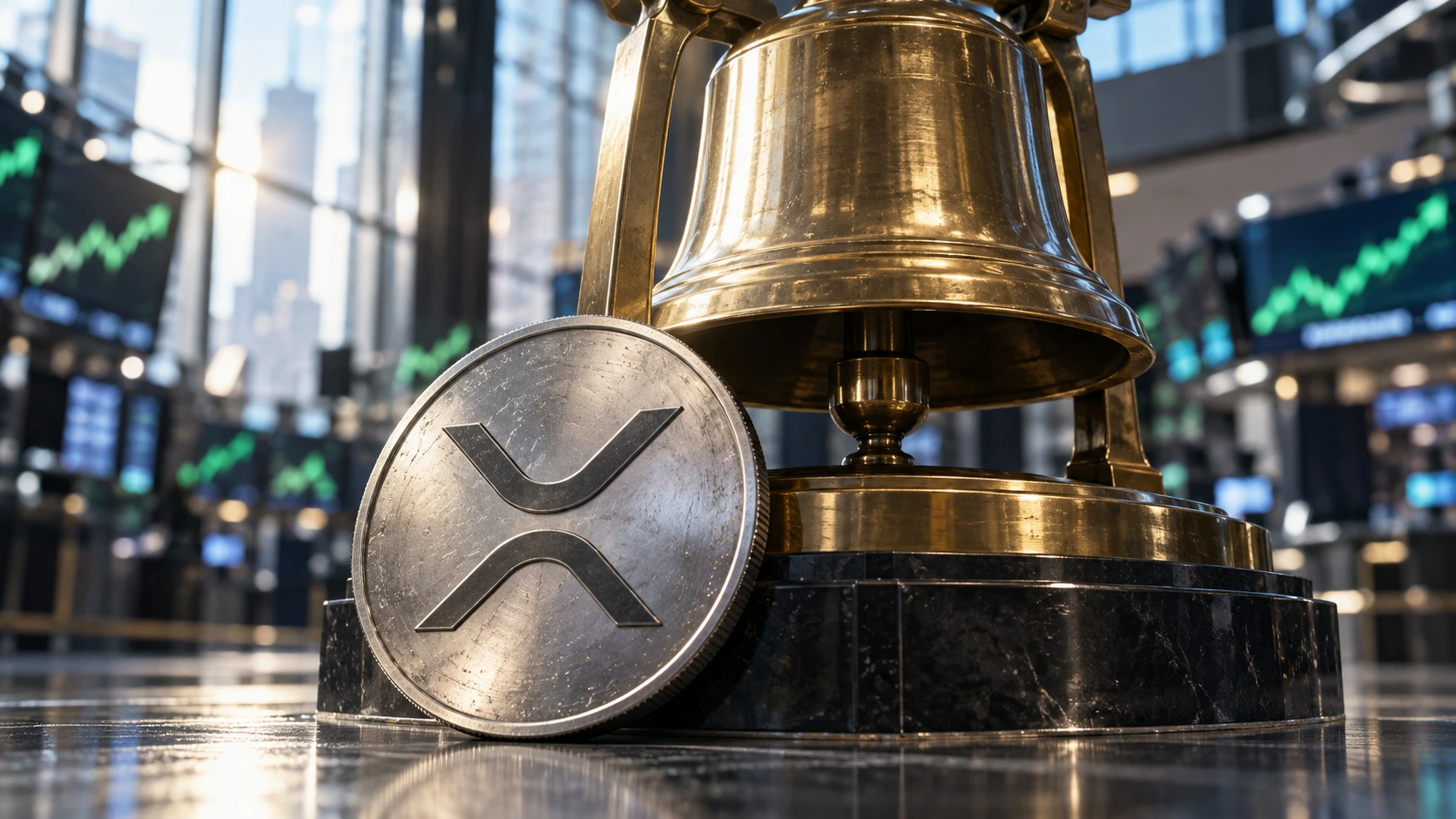
    The first pure XRP treasury stock has finally arrived. Evernorth Holdings (stock ticker: XRPN) rang the opening bell on the Nasdaq on Monday. Following its debut, the stock experienced an intraday surge of 5%, indicating investor interest in the company that is “all-in on XRP.”

    According to an official announcement from Evernorth, the company holds approximately 473 million XRP. At the current price of $1.39 per XRP, this amounts to a total value of roughly $657 million, positioning it as the largest publicly traded XRP treasury company. These assets were acquired through a SPAC merger transaction on October 2nd, where shareholders of the shell company Armada Acquisition Corp. II voted to combine with Evernorth.

    Evernorth’s operational model is straightforward: it not only secures its XRP in cold wallets but also deploys its treasury into decentralized finance (DeFi) yield strategies to generate additional returns. This dual model of “holding plus earning interest” is a key selling point for institutional investors.

    On the same day as its listing, Evernorth announced the appointment of Hugo Jeandesboz, former Co-Chief Investment Officer at Coinbase Asset Management, as its new Chief Investment Officer (CIO). In his new role, Jeandesboz will be responsible for treasury strategy, capital allocation, liquidity management, and the active management of its XRP holdings.

    Jeandesboz’s addition is more than just a personnel change. Having managed assets for one of the world’s largest crypto ETFs at Coinbase Asset Management, he brings an institutional-grade investment framework. For a newly listed SPAC, this signals to the market that it is not merely a speculative venture.

    XRP’s Market Position and Treasury Stock Model

    Evernorth’s listing is not an isolated event. XRP has emerged from the SEC lawsuit over the past two years, solidifying its market position. It currently ranks as the fifth-largest cryptocurrency by market capitalization, with $87.8 billion, and boasts a 24-hour trading volume of $1.48 billion. The treasury stock model is now following a path similar to the success of Bitcoin ETFs, allowing traditional investors to gain indirect exposure to XRP through the stock market without needing to open cryptocurrency exchange accounts.

    In comparison, Bitcoin treasury company MicroStrategy has accumulated over 600,000 BTC, with a market capitalization exceeding $40 billion. While Evernorth’s $657 million scale is smaller, its positioning as the “first pure XRP” entity grants it market scarcity. For investors looking to bet on XRP without engaging with exchanges, XRPN presents a clean avenue.

    SPACs have not always had a positive reputation in the crypto space, with many crypto-related SPACs performing poorly or trading below their initial offering price after listing. Evernorth’s 5% gain on its first day can be seen as a favorable market reception. However, the true test will come in the following months, with scrutiny on its holding reports, DeFi yield performance, and the correlation between XRP price fluctuations and its stock price.

    Another critical factor will be how Jeandesboz’s “active management” is implemented. If it remains limited to earning interest through DeFi deposits, the yield potential may be capped. However, if Evernorth ventures into more complex strategies, such as tokenizing real-world assets (RWAs) or engaging in cross-chain arbitrage, it could evolve into an institutional-grade asset management firm within the XRP ecosystem, rather than just another “coin-holding concept stock.”