Tag: Positive

  • Maestro Backs Robinhood Chain, Unveils Fastest L2 Trading Bot

    Maestro Backs Robinhood Chain, Unveils Fastest L2 Trading Bot

    Maestro, a Telegram-based trading bot, has launched on Robinhood Chain, a new Ethereum layer-2 solution built on Arbitrum. The chain has rapidly emerged as a significant hub for memecoins and new token launches, with attention growing, particularly around the CASHCAT token and subsequent new offerings.

    Maestro aims to provide traders with a seamless experience, operating entirely within Telegram to eliminate the need for separate applications or browser extensions. This integrated approach allows users to manage trades from initial purchase to open positions without any delays or detours.

    Robinhood Chain, developed by Robinhood, was initially envisioned for tokenized stocks and real-world assets. However, memecoin trading has seen substantial uptake, driven by the chain’s low fees and rapid transaction speeds, making it an attractive platform for high-frequency trading. Maestro is specifically designed for this environment, emphasizing speed, permissionless access, and 24/7 operation.

    Key Features for Traders

    Maestro offers a comprehensive suite of tools for Robinhood Chain users, including:

    • Fast Execution: The bot facilitates quick buys and swaps, enabling traders to enter positions rapidly as a token gains momentum. It prioritizes immediate execution upon clicking, bypassing the need for prior approval steps, which is crucial in fast-moving markets where every second counts.
    • Limit Orders: For trades that do not require constant monitoring, Maestro allows users to set specific price points for buying or selling. The order is executed automatically when the market reaches the designated price, enabling users to capitalize on dips or secure profits without being actively engaged.
    • Copy Trading: To leverage the insights of experienced traders, Maestro enables users to track and replicate the trades of selected wallets in real-time. This feature aims to ensure users are not left behind when smart money makes its moves.
    • Extensive DEX and Launchpad Coverage: Maestro provides access to a wide array of decentralized exchanges (DEXs) and launchpads, ensuring traders can access new token listings across platforms like Uniswap v2, v3, and v4, as well as launchpads including Virtuals, Bankr, Flap.sh, Livo.trade, Trench.today, Bags.fm, RobinFun, LeaveHood, HoodFun, ApeStore, Noxa, Printr, and Pons. The bot continuously integrates new platforms as they emerge.
    • Cashback Rewards: Maestro incentivizes trading by offering up to 30% of trading fees back to users. This cashback applies across all supported chains, including Robinhood Chain, encouraging higher trading volumes and cross-chain activity.
    • Integrated Bridging: Moving funds to Robinhood Chain is streamlined through Maestro’s in-bot bridging functionality. Users can choose between Relay Protocol for fast, low-cost transfers or Houdini Swap for private transactions that obscure the link between wallets. Both options are integrated into the trading workflow.

    Seamless Onboarding and Experience

    Getting started with Maestro on Robinhood Chain is designed to be straightforward. Users can initiate trades directly within Telegram after bridging funds. The process involves pasting a token’s contract address, setting the desired buy amount, and executing the order at the best available price. Post-trade management, including setting limit orders or adjusting positions, is also handled within the same chat interface, eliminating the need to switch between applications.

    Maestro, as the first Telegram trading bot, brings years of experience from operating on other high-speed crypto networks to Robinhood Chain. The platform’s developers state that traders on Robinhood Chain benefit from the same robust engine and comprehensive toolset that has established Maestro’s reputation across various blockchain ecosystems.

    As Robinhood Chain continues its rapid evolution, Maestro is committed to enhancing its offerings with deeper market coverage and faster execution, aiming to maintain its position as a leading trading bot solution.


  • IONQUSDT Perpetual Contract Launched with 20x Leverage

    IONQUSDT Perpetual Contract Launched with 20x Leverage

    Bybit Launches IONQUSDT Perpetual Contract

    Cryptocurrency exchange Bybit has announced the listing of the IONQUSDT Perpetual Contract, allowing users to trade with up to 20x leverage.

    The new contract is also accessible through Bybit’s suite of Futures bots, including Futures Grid, Futures Martingale, and Futures Combo.

    The IONQUSDT Perpetual Contract is based on the underlying asset Ionq, Inc. (IONQ) and settled in USDT. Key trading parameters include a tick size of 0.01, a maximum leverage of 20x, and a capped funding rate of 2.5%. Funding fees will be settled every 8 hours, and trading will be available 24/7.

    Further details on the IONQUSDT Perpetual Contract are as follows:

    • Underlying Asset: Ionq, Inc. (IONQ)
    • Settlement Asset: USDT
    • Tick Size: 0.01
    • Maximum Leverage: 20
    • Capped Funding Rate: 2.5%
    • Funding Fee Settlement Interval: Every 8 hours
    • Trading Hours: 24/7
  • APLDUSDT Perpetual Contract Launches with 20x Leverage

    APLDUSDT Perpetual Contract Launches with 20x Leverage

    Bybit Launches APLDUSDT Perpetual Contract, Offering Up to 20x Leverage

    Cryptocurrency exchange Bybit has announced the listing of the APLDUSDT Perpetual Contract, allowing traders to engage with the underlying asset, Applied Digital Corporation (APLD), with leverage of up to 20 times.

    The new contract is also accessible through Bybit’s suite of Futures bots, including Futures Grid, Futures Martingale, and Futures Combo.

    The APLDUSDT Perpetual Contract utilizes USDT as its settlement asset. Key specifications for the contract include a tick size of 0.01, a maximum leverage of 20x, and a capped funding rate of 2.5%. Funding fees will be settled every eight hours, and trading will be available 24/7.

    Applied Digital Corporation’s official website can be found at https://www.applieddigital.com/.

  • Citadel Securities Invests $400 Million in Crypto.com at $20 Billion Valuation Amid Market Downturn

    Citadel Securities Invests $400 Million in Crypto.com at $20 Billion Valuation Amid Market Downturn

    Citadel Securities has made a strategic investment of $400 million in the cryptocurrency exchange Crypto.com, valuing the company at $20 billion. This significant funding round, announced on Thursday, July 16, 2026, marks Crypto.com’s first institutional funding and signals continued traditional finance interest in the digital asset sector, even as the broader crypto market experiences a downturn.

    The investment aims to accelerate Crypto.com’s expansion into various asset classes, including tokenized securities and derivatives. “The size of the opportunity in front of us is staggering, as crypto increasingly becomes the rails for finance,” according to a statement from the company, framing the investment as pushing the industry into “a new era of institutionalization.”

    This deal hands the market maker founded by billionaire Ken Griffin a stake in the Singapore-based exchange. It is the latest in a series of traditional finance firms staking out positions in crypto infrastructure. Citadel Securities itself invested $200 million in rival exchange Kraken in November, alongside market-making competitor Jane Street. Intercontinental Exchange, which owns the New York Stock Exchange, has taken a stake in OKX, while Nasdaq invested $50 million in Gemini.

    Market Context
    The investment lands even as crypto prices sag. Bitcoin is down 28% this year, and the broader crypto market is valued at approximately $2.2 trillion. Crypto.com won conditional approval for a U.S. national trust bank charter in February, and Coinbase added stock trading for U.S. users in the same month, indicating a push by crypto platforms to broaden their offerings.

    Company Profile and Ties
    Crypto.com ranks 11th among exchanges by trading volume, according to CoinMarketCap. The exchange offers crypto, stocks, and prediction markets to retail traders. The company has also built ties with the Trump administration, acting as a business partner and investor in Trump Media & Technology Group, and its affiliated CRO token was used to pay bonuses to winners of a UFC bout staged on the White House lawn.

    Why This Matters
    This investment by Citadel Securities in Crypto.com underscores a broader trend of traditional financial institutions increasing their engagement with digital asset infrastructure. Despite a current downturn in the crypto market, evidenced by Bitcoin’s 28% year-to-date decline, such investments signal a strategic bet on the future evolution of financial markets. The convergence of traditional finance and digital asset infrastructure, as highlighted by this deal, points to potential improvements in market efficiency and the expansion of crypto platforms into new asset classes like tokenized securities and derivatives, according to the FactSheet.

  • Prediction Markets in 2026: A Guide to Leading Platforms and Their Features

    Prediction Markets in 2026: A Guide to Leading Platforms and Their Features

    Prediction markets have evolved significantly, moving from a niche crypto experiment into a more mainstream area of interest. As of July 2026, a variety of platforms offer users the ability to trade contracts on real-world events, with prices reflecting collective probabilities. This guide examines five key platforms: Polymarket, Kalshi, Limitless, Myriad, and Azuro, detailing their operational models, trading mechanisms, fees, and unique selling points.

    Polymarket: The Global Leader
    Polymarket is described as the largest prediction market globally. The company has seen substantial investment, with Intercontinental Exchange committing up to $2 billion at a valuation around $9 billion, and X partnering with Polymarket. In late June 2026, Polymarket reported annualized revenue exceeding $1 billion. The platform operates both an international, on-chain venue offering self-custody in USDC and utilizing UMA’s optimistic oracle for outcome decisions, and a separate, CFTC-regulated US exchange. The US exchange, acquired for $112 million in 2025, requires full identity verification and operates under its own rulebook. However, Polymarket’s international venue has faced market disputes, including a $16 million market that experienced significant delays in April 2026.

    Kalshi: The Regulated Contender
    Kalshi, a CFTC-designated contract market since 2020, offers a federally regulated venue. Valued at $2 billion after a recent funding round, Kalshi’s World Cup winner market alone attracted over $1.4 billion in wagers. While initially US-only, Kalshi now accepts customers from approximately 143 countries, though it remains restricted in about 54 jurisdictions. Trading on Kalshi involves depositing dollars, passing KYC, and trading Yes/No contracts on an order book. Fees for takers range from 7 cents to $1.75 per 100 contracts. Kalshi’s sports contracts have faced legal challenges, with varying court rulings across different states.

    Limitless: Speed and Crypto Native
    Limitless is highlighted as a fast-growing, crypto-native prediction market built on Base. It focuses on rapid-fire trading with hourly and 15-minute crypto price markets. Trading on Limitless is wallet-based with no default KYC, settled in USDC. The platform uses a central order book for most markets, with an AMM handling others. The Limitless LMTS token launched in October 2025, and the team filed an application with the CFTC in May 2026 to launch a regulated US exchange, which is still pending.

    Myriad: Embedded Markets
    Myriad takes a different approach by embedding prediction markets within articles, apps, and games. It functions as a non-custodial AMM where outcome prices always sum to $1. Myriad markets operate on Abstract, BNB Chain, and Linea, with funds remaining in the user’s wallet. Chainlink serves as its official oracle. This model is suggested for casual entry without needing to visit a dedicated exchange.

    Azuro: The Liquidity Layer
    Azuro is described as a liquidity layer for prediction and betting frontends, rather than a direct prediction market. Users interact with Azuro through various frontends, such as bookmaker.XYZ, DexWin, and PinWin. All plugged-in applications share the same liquidity pool, with costs built into the odds spread. The user experience on Azuro depends on the chosen frontend and the protocol’s overall scale.

    Prediction Markets vs. Sports Betting
    Prediction markets differ from sports betting in several key ways. In prediction markets, users trade against each other with floating prices and the ability to exit positions before resolution, locking in profits or cutting losses. Sportsbooks, conversely, offer fixed odds against the house. The margin on prediction markets is typically a visible fee or spread, unlike the shaded odds often found in sports betting.

    Navigating the prediction market landscape in 2026 requires understanding the distinct features of each platform. Whether prioritizing deep liquidity, regulatory oversight, self-custody, or fast-moving crypto markets, users have diverse options. However, it is essential to understand the rules governing market resolution, fee structures, and any applicable jurisdiction restrictions. Every figure in this guide was checked against primary data in July 2026.

    Why This Matters

    The materials describe a narrow update: The article reviews five leading prediction market platforms (Polymarket, Kalshi, Limitless, Myriad, Azuro) in 2026, assessing their liquidity, market breadth, fees, access, regulation, custody, and trading experience. The exact launch date and details of Polymarket’s POLY token and airdrop.

    Broader Context

    Source materials place the listicle in this context: The article is a guide to prediction markets published on CryptoPotato.

  • XRP Price Could Double as Ripple Pushes for Clarity Act

    XRP Price Could Double as Ripple Pushes for Clarity Act

    XRP is currently trading near $1.09 as market momentum remains subdued. While the $1.00 level continues to serve as a critical psychological support, buyers have yet to establish firm control. For the time being, the asset’s next significant move may be dictated less by technical charts and more by legislative developments in Washington.

    Ripple’s Legislative Push

    Ripple has maintained active engagement with U.S. lawmakers as stablecoin legislation advances through Congress. The company contends that establishing clearer digital asset regulations would bolster blockchain-based payment infrastructure, a sector where XRP has long been positioned as a bridge asset. Following years of legal uncertainty, the prospect of regulatory clarity is being viewed by many as a vital development for the ecosystem.

    Ripple’s Chief Legal Officer, Stuart Alderoty, recently warned that rejecting the CLARITY Act would only serve to preserve the regulatory gaps that have historically been exploited by bad actors. He emphasized that opposition to the act effectively maintains the status quo of uncertainty.

    This regulatory advocacy has begun to attract institutional participants who largely remained on the sidelines during Ripple’s protracted legal battle with the SEC. Despite improved sentiment surrounding recent hearings, price action has remained notably stagnant.

    Market Liquidity and Technical Outlook

    XRP’s 24-hour trading volume currently hovers near $1.03 billion, with a market capitalization of approximately $68.1 billion. This level of liquidity is sufficient to facilitate sharp price movements should a definitive catalyst emerge.

    Technically, XRP is consolidating within a range of $1.09 to $1.13, with immediate support established at $1.05. Should this level fail to hold, the next meaningful floor is situated near $0.85. Conversely, resistance begins at $1.13, with stronger selling pressure expected near $1.32.

    The bullish case for XRP—potentially pushing the price toward the $2 mark—hinges on the CLARITY Act making substantive progress in the Senate. Such a move would reinforce XRP’s utility as a compliant payment asset rather than a purely speculative token, fundamentally shifting market perception. From a technical perspective, a sustained breakout above $1.13 could open the path to $1.32, with further upside potential toward $1.46. Analysts are also monitoring exchange reserves, as a reduction in available supply could amplify price volatility once momentum returns.

    The Current Landscape

    The base case for the near term remains a sideways market between $1.05 and $1.13, pending clearer direction from lawmakers. Delays in the legislative process or renewed regulatory friction could drag the price back toward the $0.85 support zone; a weekly close below that level would significantly undermine the current bullish outlook.

    While the potential for significant gains remains, investors are mindful of the $68 billion market cap, which requires substantial fresh capital to drive meaningful appreciation. This has led some market participants to explore early-stage infrastructure projects, such as Bitcoin Hyper ($HYPER), which aims to address Bitcoin’s throughput and programmability challenges by integrating the Solana Virtual Machine (SVM) onto a Bitcoin-secured base layer.

    As the market waits for a regulatory catalyst for XRP, capital continues to rotate toward narratives centered on Bitcoin scalability and infrastructure, highlighting the ongoing search for asymmetric exposure in the current crypto environment.

  • Morgan Stanley’s E*TRADE Platform Now Offers Spot Trading for Bitcoin, Ethereum, and Solana

    Morgan Stanley’s E*TRADE Platform Now Offers Spot Trading for Bitcoin, Ethereum, and Solana

    Morgan Stanley’s E*TRADE platform has launched spot trading for Bitcoin, Ethereum, and Solana, enabling eligible customers to buy, sell, and hold these digital assets. This integration marks a significant step in bringing cryptocurrencies to a traditional brokerage service.

    The trading is facilitated through a partnership with Zero Hash, a digital asset infrastructure provider. Under this arrangement, digital assets are held in linked Zero Hash accounts, not directly by Morgan Stanley. A 50-basis-point fee will be applied to all trades, with the company anticipating the rollout of crypto transfer functionality later this year.

    This offering aligns with Morgan Stanley’s expanding digital asset strategy. Earlier this year, the firm filed registration statements with the SEC for spot Bitcoin and Solana exchange-traded funds. In April, Morgan Stanley also indicated exploration into tokenization, tokenized money market funds, and tax-management tools for digital assets, alongside the introduction of a money market fund for stablecoin issuers under the GENIUS Act.

    Morgan Stanley had previously disclosed plans in September 2025 to introduce crypto trading on E*TRADE, initially supporting Bitcoin, Ethereum, and Solana via Zero Hash. The current launch fulfills this plan, integrating direct spot crypto trading into the firm’s brokerage services.

    Company representatives highlighted the move as a response to evolving client needs. “Our clients’ needs are evolving, and they want to invest, trade, bank, and plan for the future all in one place,” said Matt Jones, Head of E*TRADE. “Whether they’re buying their first share, exploring crypto, participating in an IPO, or planning for retirement, our job is to meet them where they are – with the confidence and trust that comes from being part of Morgan Stanley.”

    Chad Turner, head of Morgan Stanley Wealth Management Platforms, added, “With the rollout of crypto trading on E*TRADE we’re advancing our digital assets strategy and bringing new capabilities to clients in an integrated way.”

    The E*TRADE platform update also includes enhancements such as retirement planning tools, fractional share trading, an updated IPO Center, and new features for active traders. A key aspect of this integration is the ability for eligible customers to view their cryptocurrency holdings alongside their stocks and other investments.

    Why This Matters

    The materials describe a narrow update: Morgan Stanley has enabled eligible customers on its ETRADE platform to buy, sell, and hold Bitcoin, Ethereum, and Solana through a partnership with Zero Hash. The new offering lets investors view their cryptocurrency holdings alongside stocks and other investments in ETRADE.

    Broader Context

    Source materials place the factual news in this context: Morgan Stanley has launched spot cryptocurrency trading on its E*TRADE platform, allowing eligible customers to buy, sell, and hold Bitcoin, Ethereum, and Solana through a partnership with digital asset infrastructure provider Zero Hash.

  • Mira Murati’s Thinking Machines Lab Launches Inkling, Open-Source Multimodal AI Model

    Mira Murati’s Thinking Machines Lab Launches Inkling, Open-Source Multimodal AI Model

    Mira Murati’s Thinking Machines Lab has released Inkling, a new multimodal open-source AI model trained from scratch. The model’s weights are available for free download under an Apache 2.0 license on Hugging Face, positioning it as a Western alternative for developers.

    Inkling is designed as a generalist model and offers a capable open-weights option for developers concerned about using models developed in Beijing. This release follows Murati’s departure from OpenAI in September 2024. Thinking Machines Lab was founded in February 2025 and reportedly raised $2 billion in July 2025 at a $12 billion valuation. However, reports in November 2025 about seeking a new round at a $50 billion valuation collapsed by January 2026.

    Technical Specifications and Capabilities

    Inkling is a mixture-of-experts model featuring 975 billion total parameters, with 41 billion active parameters per task. It processes text, image, and audio inputs and supports a context window of 1 million tokens. The model was pretrained on 45 trillion tokens, encompassing text, images, audio, and video.

    Performance Benchmarks

    Data indicates Inkling scored 74.1% on the MCP Atlas benchmark, nearly 30 points higher than Nvidia’s Nemotron 3 Ultra (44.2%). On the SWE-Bench Verified benchmark, Inkling achieved 77.6%, surpassing Nemotron 3 Ultra’s 70.7%. Inkling also recorded 78.0% on FORTRESS Adversarial, reportedly the highest score among all compared open-weights models.

    However, analysis suggests Inkling does not lead in all benchmark categories. Z.ai’s GLM 5.2 scored 82.7% on Terminal Bench 2.1, compared to Inkling’s 63.8%. Kimi K2.6 is noted as leading on the Humanity’s Last Exam benchmark. According to the FactSheet, Inkling is not the strongest model available today, whether open or closed.

    Significance as a Western Alternative

    The open-source nature of Inkling is highlighted as a key advantage for Western developers hesitant to use models developed in Beijing due to legal, security, or compliance reasons. The availability of its weights under an Apache 2.0 license allows for free download and self-hosting, offering a viable alternative.

    Thinking Machines Lab also previewed Inkling-Small, a version with 276 billion total parameters and 12 billion active parameters. The exact release timeline for Inkling-Small weights remains uncertain.

    Overall, Inkling represents a significant development in the Western open-source AI model landscape, offering advanced multimodal capabilities and a competitive alternative. Its performance relative to leading Asian models continues to be a point of comparison.

    Broader Context

    Source materials place the factual news in this context: Mira Murati left OpenAI in September 2024.

  • Visa Launches Stablecoin Platform for Financial Institutions

    Visa Launches Stablecoin Platform for Financial Institutions

    Visa has launched a new enterprise platform, the Visa Stablecoin Platform (VSP), designed to enable financial institutions to issue, hold, and transfer stablecoins. The VSP integrates stablecoin minting, redemption, wallet infrastructure, and treasury management, allowing banks and fintech companies to conduct stablecoin operations within their existing payment and settlement workflows without needing to build their own blockchain infrastructure.

    According to Visa, the platform aims to simplify the operational aspects of stablecoins for institutions by providing a single place to manage these operations with the controls, security, and network reach expected from Visa. Initially, the VSP supports Open USD (OUSD), alongside Visa’s existing support for Circle’s USDC and Paxos’ USDG.

    Stablecoins are cryptocurrencies designed to maintain a fixed value, typically pegged to a fiat currency like the U.S. dollar. The stablecoin market is currently valued at approximately $304 billion, according to CoinGecko. This launch follows Visa’s strategic engagement with digital assets. In October, Visa published research suggesting that stablecoins could potentially bring portions of the $40 trillion global credit market onto blockchain rails, citing over $670 billion in stablecoin lending in the previous five years.

    Visa’s prior involvement in stablecoin infrastructure includes joining the Canton Network as a Super Validator in March, a role aimed at helping banks utilize stablecoins for payments, settlement, and treasury operations on a privacy-focused blockchain. In April, Visa expanded its stablecoin settlement program to include Base, Polygon, Canton, Arc, and Tempo, bringing the total number of supported blockchain networks to nine. At that time, Visa reported its annualized stablecoin settlement volume had reached $7 billion and that it supported more than 130 stablecoin-linked card programs across over 50 countries.

    The Visa Stablecoin Platform is currently available to select beta users. Specific details of this beta program and the timeline for wider availability remain uncertain.

    Why This Matters

    The materials describe a narrow update: Visa has introduced the Visa Stablecoin Platform (VSP), an enterprise system that integrates stablecoin minting, redemption, wallet infrastructure, and treasury management. The specific details of the beta user program.

    Broader Context

    Source materials place the factual news in this context: Visa has introduced a new platform that enables banks, fintechs and payment providers to issue, hold and transfer stablecoins through its payments network.

  • Bitunix Card Offers Crypto Spending and Potential Yield, With Conditions

    Bitunix Card Offers Crypto Spending and Potential Yield, With Conditions

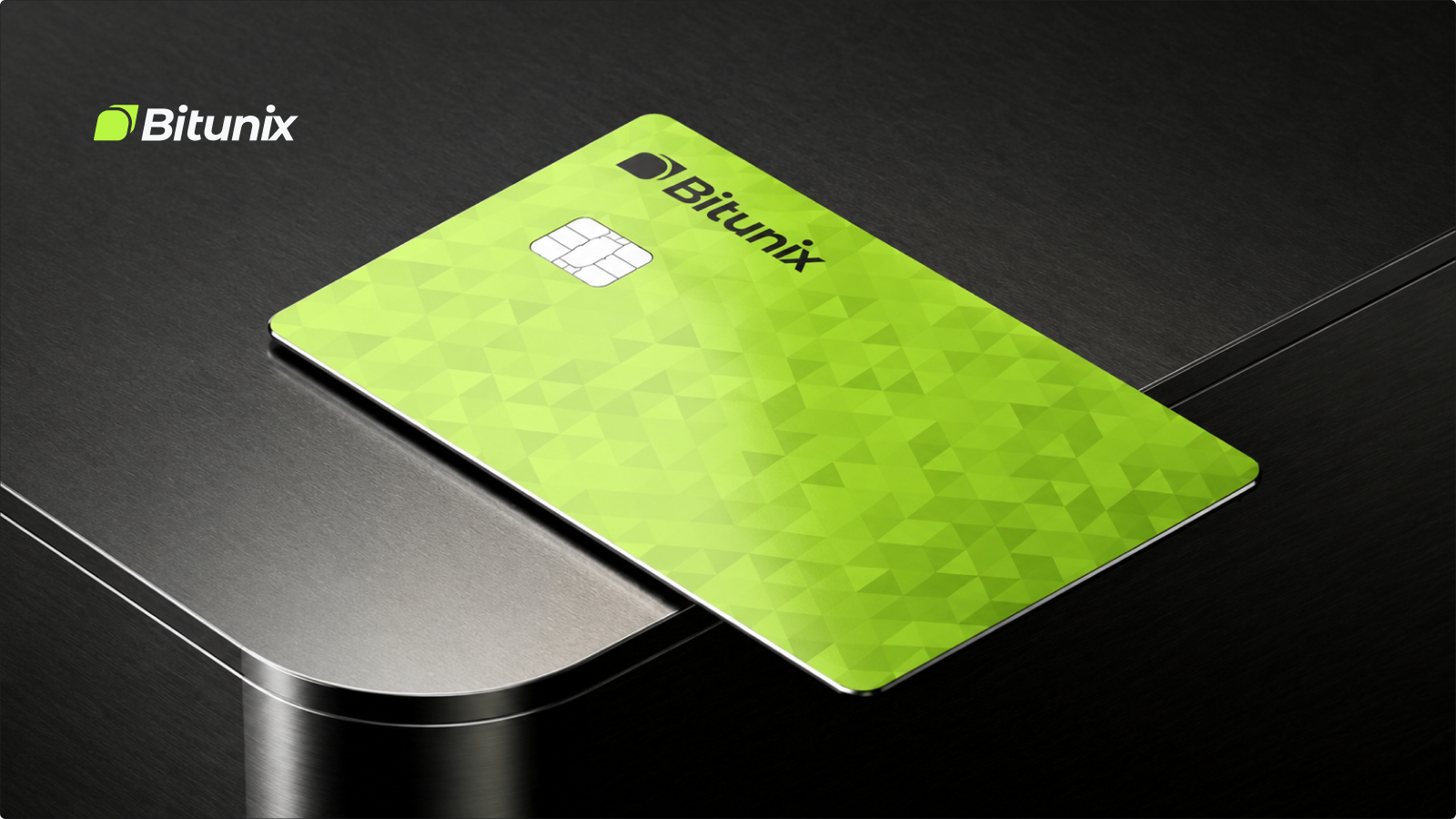
    Bitunix has launched the Bitunix Card, a Visa-powered debit card that allows users to spend cryptocurrency on everyday purchases and potentially earn yield on their balances. Introduced on July 16th, 2026, the card aims to integrate digital assets with daily financial needs by connecting with traditional payment infrastructure.

    According to Bitunix, the card is accepted globally at over 130 million merchants that accept Visa. It also supports integration with major digital wallets, including Apple Pay, Google Pay, and Paypal, alongside selected regional payment platforms, facilitating cryptocurrency spending for daily transactions.

    The Bitunix Card offers users the potential to earn yield on eligible balances, with Bitunix stating that these can accrue annual yield up to 11.6%. Additionally, the card provides up to 8% cashback on eligible spending, capped at 1,000 USDT monthly. The company notes that specific yield percentages and cashback rates may vary based on conditions and user VIP tiers.

    To activate the card, a minimum balance of 100 USDT must be transferred to the card account. Bitunix has stated there are no issuance or monthly maintenance fees associated with the card.

    Bitunix operates as a global cryptocurrency derivatives exchange serving over 5 million users across more than 150 countries. The platform emphasizes liquidity, trading capabilities, and user experience, supported by security measures like Proof of Reserves and the Bitunix Care Fund.

    The introduction of the Bitunix Card aligns with a broader trend in fintech towards creating practical crypto products that bridge digital assets with daily commerce. By combining spending and earning functionalities, Bitunix seeks to offer users enhanced ways to utilize their digital assets beyond trading.

    Why This Matters

    The Bitunix Card launch represents an effort to increase the practical utility of cryptocurrency for everyday use. The card enables users to spend cryptocurrency for daily transactions and potentially earn yield on their holdings, reflecting a growing demand for crypto products that connect digital assets with everyday spending.

    Broader Context

    Bitunix is a global cryptocurrency derivatives exchange trusted by over 5 million users across more than 150 countries. The platform is built for traders who expect more, committed to providing Ultra Trust, Ultra Products, and Ultra Experience. Bitunix offers a fast registration process and a user-friendly verification system to ensure safety and compliance. With global standards of protection through Proof of Reserves (POR) and the Bitunix Care Fund, the exchange prioritizes user trust and fund security.