Tag: Positive

  • Claude AI Opus Forecasts Major XRP Surge by 2026

    Claude AI Opus Forecasts Major XRP Surge by 2026

    Claude AI Opus, a sophisticated AI model, has identified a significant disconnect between XRP’s price action and institutional behavior that has largely escaped the attention of those tracking XRP price predictions. The model forecasts a bullish target of $3.00, with a more conservative recovery scenario projecting a price near $2.20.

    Bullish Outlook

    The optimistic scenario hinges on a fundamental factor that XRP’s price has yet to reflect. Spot XRP Exchange-Traded Funds (ETFs) have attracted approximately $1.4 to $1.6 billion in inflows since their launch in November 2025. Notably, May saw the strongest inflow month for these ETFs throughout the year, even as Bitcoin ETFs experienced record outflows totaling $3.5 billion during the same period.

    This divergence is significant, indicating that institutions are actively accumulating XRP through regulated investment vehicles, despite the token’s current price decline alongside the broader market.

    On-chain data further supports this accumulation trend. The amount of XRP held in custody has nearly doubled, increasing from 478 million tokens in January to over 900 million by June. This represents tangible evidence of accumulation rather than mere speculative interest.

    Adding to the positive fundamental backdrop are the SEC settlement in August 2025, which concluded five years of litigation, the bipartisan Senate passage of the CLARITY Act, and the continued expansion of Ripple’s RLUSD stablecoin and tokenization infrastructure. These developments paint a picture of a fundamentally stronger asset than its current price chart suggests.

    Should macroeconomic risk appetite shift, the AI model anticipates a rapid unlocking of these accumulated institutional positions. A recovery to the previous cycle high of approximately $2.20 is considered realistic. A more ambitious target of $3.00 is possible if the CLARITY Act is enacted and broader cryptocurrency market sentiment turns significantly bullish by year-end.

    Bearish Case

    The bearish outlook is stark, acknowledging the current reality. None of the positive developments have yet translated into price appreciation. XRP is down roughly 46% from its January high, trading below all major moving averages. This performance aligns with that of high-beta assets in a market characterized by a Fear and Greed Index of just 18, indicating a general decline alongside the broader market, irrespective of underlying fundamentals.

    A breach below the psychological support level of $1.00, followed by a fall through the structural support at $0.96, could pave the way for a decline to $0.85. Such a move would effectively erase most of the gains made during the ETF era, particularly if risk-off conditions persist into the third quarter.

    Technical Analysis

    The daily chart shows XRP trading at $1.04718, following a prolonged and challenging decline from highs above $3.65 reached in July of the previous year. This downward trend has been largely uninterrupted, with a particularly sharp drop occurring in October when the price collapsed from the $2.70 zone to below $1.60 within weeks.

    Since February, XRP has generally trended lower in a series of incremental steps, currently testing the critical psychological floor of $1.00, which was identified as a key level in this prediction.

    A test at such a significant round number after an extended downtrend typically signifies a crucial decision point, rather than just another temporary pause.

    Immediate resistance is observed near $1.40, a level that XRP has failed to reclaim during recent upward attempts. A more substantial ceiling is located around $2.20, aligning with the prior cycle high and the realistic recovery target.

    Support is currently holding in the $1.00 to $1.03 zone, with the $0.96 structural level serving as the next significant test should this floor falter.

    The broader chart pattern reveals a consistent series of lower highs and lower lows extending back nearly a full year, supporting the bearish narrative of a high-beta asset declining with a weak overall market.

    Momentum indicators on the daily candles appear weak and continue to trend downwards, with little evidence yet of the basing action typically preceding a genuine reversal.

    Given XRP’s current position directly atop the critical floor identified in this analysis, the next move through $1.00 is likely to determine whether the divergence between institutional buying and price finally begins to narrow.


  • FCA Unveils Landmark Crypto Rules, Aiming for UK Global Hub Status

    FCA Unveils Landmark Crypto Rules, Aiming for UK Global Hub Status

    FCA Finalizes Landmark Crypto Rules, Ushering in New Era of Regulation

    The Financial Conduct Authority (FCA) has unveiled its “landmark” rules for firms involved in the buying, trading, and holding of cryptoassets in the UK, completing a regulatory roadmap that has been years in development. The new framework mandates that trading platforms, intermediaries, custodians, stablecoin issuers, and staking providers must obtain authorization from the regulator to operate within the UK.

    This marks a pivotal moment for cryptoasset regulation in the United Kingdom. Firms facilitating consumer engagement with cryptoassets will be required to adhere to clear standards under these new rules, with an effective date set for October 2027.

    New Requirements for Crypto Firms

    Under the finalized rules, firms will face stringent financial-resilience requirements, including capital adequacy and stress testing. They will also need to comply with new market-integrity rules designed to combat insider trading and market manipulation.

    Stablecoins, which are designed to maintain a stable value, will have their own specific standards aimed at building trust in their usage. Trading platforms will assume a gatekeeper role, tasked with vetting tokens and publishing disclosure documents to an FCA-managed central repository before most assets can be listed.

    Crypto firms will also be brought under the FCA’s Consumer Duty, and retail customers will gain access to the Financial Ombudsman Service for the first time. The regulations extend to decentralized finance (DeFi) where an “identifiable controlling entity” exists, with further guidance anticipated.

    Streamlined Approach and Industry Reaction

    Following extensive consultation, the FCA has simplified certain aspects of the regime to enhance its practicality. This includes introducing lighter capital requirements for stablecoin issuers and tailoring trading rules to the operational realities of crypto markets. Notably, a key stablecoin capital coefficient has been reduced from 2% to 1%.

    David Geale, the FCA’s executive director of payments and digital finance, stated that the framework allows firms to “choose between regulatory certainty and room to innovate.” He added that providers will be “held to similar standards to other financial providers, though we can’t regulate away risk.”

    The new rules stem from February legislation that brought cryptoassets under the FCA’s purview, representing one of the most significant expansions of its oversight in recent years. Until the regime officially takes effect, the watchdog’s authority is limited to policing financial promotions and anti-money-laundering controls. Pre-application meetings are scheduled to commence in July, with firms able to apply for authorization between September 30, 2026, and February 28, 2027. The mandatory regime will go live on October 25, 2027.

    Industry groups have largely welcomed the increased clarity. Su Carpenter of CryptoUK commented that the finalized guidance will enable the UK to “move forward with more certainty” as a “competitive jurisdiction.” UK Finance praised the “balanced approach that encourages innovation and protects consumers.” The FCA is also collaborating with the Bank of England, which will oversee large, “systemic” stablecoins, on a joint regulatory regime.

    Hannah Meakin, a partner at law firm Norton Rose Fulbright, described the rules as “a significant step in bringing crypto into a more established regulatory framework in the UK.” She noted that the regulator aims to address “key risks that may have held back wider adoption,” by applying established financial services standards to areas such as consumer protection, governance, and market integrity.

    This regulatory package concludes a period of intense policymaking in the UK’s crypto sector. The FCA outlined its regulatory path through a consultation in April, and last week, the Bank of England relaxed its stablecoin rules, replacing individual holding caps with an overall issuance limit of £40 billion.

    For crypto firms, Meakin advised, “the focus will now be on preparing for authorisation and ensuring they have the necessary systems, controls and organisational arrangements in place well ahead of implementation.”

  • RedotPay Partners with OpenPayd for Global Stablecoin Payments

    RedotPay Partners with OpenPayd for Global Stablecoin Payments

    RedotPay Taps OpenPayd to Bolster Global Stablecoin Payment Infrastructure

    London, United Kingdom – June 30th, 2026 – RedotPay, a global fintech firm specializing in stablecoin-based payments, has chosen OpenPayd, a prominent financial infrastructure provider, to enhance its treasury operations, multi-currency payment capabilities, and cross-border remittance services for its international customer base.

    This strategic collaboration is set to fortify RedotPay’s payment infrastructure, facilitating a more fluid global fund transfer experience. The integration aims to empower users to effortlessly transition between local and digital currencies.

    As a direct outcome of this integration, RedotPay customers will experience accelerated and more efficient cross-border remittances, alongside seamless multi-currency payment options. The partnership also streamlines the management of liquidity behind the scenes, ensuring secure and timely transaction processing irrespective of the user’s geographical location.

    By harnessing OpenPayd’s robust infrastructure and merging traditional and digital finance elements into a unified, user-friendly platform, RedotPay is enabling its users to navigate between local and digital currencies with ease. This move supports RedotPay’s ongoing global expansion, reinforcing its commitment to delivering a fast, flexible, and customer-centric payment experience.

    Jonathan Chan, Head of Partnerships and Co-Founder of RedotPay, stated, “Our core mission has always been to make digital finance accessible and practical for daily use. By partnering with world-class infrastructure providers, we are effectively removing the friction associated with cross-border payments. This collaboration empowers RedotPay users with effortless multi-currency payments and faster cross-border remittances, enabling us to better serve our customers as our global reach continues to grow.”

    Lux Thiagarajah, Chief Commercial Officer at OpenPayd, commented, “RedotPay is cultivating a highly compelling payment experience at the nexus of traditional finance and digital assets. As they scale globally, the ability to seamlessly move between different payment rails, currencies, and stablecoins becomes a significant competitive advantage. OpenPayd is proud to provide the foundational infrastructure that allows RedotPay to deliver faster, more efficient, and more flexible money movement for customers worldwide.”

    RedotPay operates as a global stablecoin-based payment fintech, integrating blockchain solutions with established banking and financial infrastructures. Its intuitive platform is designed to enable millions globally to spend and send digital assets, promoting faster, more accessible, and inclusive financial services. The company is dedicated to advancing financial inclusion for the unbanked and supporting crypto enthusiasts, driving the worldwide adoption of secure and flexible stablecoin-powered financial solutions for real-world applications.

    OpenPayd is focused on building the universal financial infrastructure for the digital economy. Established in 2018 by Dr. Ozan Ozerk, its platform is designed to be agnostic to various payment rails, allowing businesses to move and manage funds globally across both fiat and digital assets through a single, powerful API. OpenPayd offers embedded accounts, foreign exchange services, domestic and international payments, Open Banking capabilities, and stablecoin on/off ramps, thereby ensuring interoperability between traditional finance and digital assets. With one of the most extensive banking networks available, OpenPayd facilitates real-time money movement across all regions.

    Trusted by major global brands including eToro, Kraken, OKX, and B2C2, OpenPayd processes over $240 billion in annual transaction volumes for more than 1100 businesses, serving as the underlying infrastructure for the next generation of financial services.

  • XRP Surges as FOMO Hits 3-Month Peak

    XRP Surges as FOMO Hits 3-Month Peak

    XRP Holds Key Support Amidst Growing Optimism and Network Activity

    XRP is currently trading near $1.04, maintaining its position above the critical $1.00 support level. This comes after the cryptocurrency experienced a dip to a 19-month low of approximately $1.01 on June 25.

    Despite recent price volatility, data from analytics firm Santiment indicates sustained interest in the XRP Ledger. The network saw 4,941 new wallet creations in a single day, marking the highest level of network growth in over three months. Santiment noted that this surge in new users entering the ecosystem occurred while XRP’s price was under pressure.

    Concurrently, social sentiment surrounding XRP has shifted towards optimism. Santiment’s analysis reveals a ratio of 3.7 bullish comments for every bearish comment, the most positive sentiment observed in three months. This suggests that many traders are viewing the $1.00-$1.05 price range as an opportunity to buy the dip, reflecting a growing fear of missing out (FOMO).

    Santiment attributes this optimism to several factors, including XRP’s historical ability to rebound after significant price drops, ongoing discussions about Exchange-Traded Funds (ETFs) and institutional adoption, and observations that larger holders have continued to accumulate assets during the downturn. The firm emphasized the importance of monitoring whether the increase in new wallets translates into sustained buying demand or proves to be a short-term FOMO-driven trend.

    In parallel, separate data from CryptoQuant highlights a shift in whale activity. While overall whale activity on centralized exchanges has become more prominent, its concentration on Binance has decreased. Whales appear to be diversifying their trading activities across multiple platforms.

    Even as XRP’s price faces challenges, investment products linked to the cryptocurrency have attracted new capital. On June 29, U.S.-based spot XRP ETFs recorded net inflows totaling $15.34 million. The Bitwise XRP ETF led these inflows with $11.94 million, followed by Canary XRPC with $3.40 million.

    Cumulatively, June’s inflows for spot XRP ETFs have exceeded $62 million, bringing the total net inflows across all such products to $1.48 billion, according to data compiled by SoSoValue.

  • OKX Lists ACTUSD and AAVEUSD Expiry Perps

    OKX Lists ACTUSD and AAVEUSD Expiry Perps

    New Derivatives Products Launched for ACTUSD and AAVEUSD

    A new suite of derivatives products, dubbed “Expiry Perps” or “X-Perp,” has been launched for ACTUSD and AAVEUSD trading pairs. The updates encompass the platform’s web and app interfaces, as well as its API.

    Trading Pair Availability

    Trading for ACTUSD UM (X-Perp) is scheduled to commence on June 30, 2026, at 08:15 UTC.

    Subsequently, AAVE USD UM (X-Perp) trading will become available on June 30, 2026, at 08:30 UTC.

    The X-Perp product is engineered to provide users with a more adaptable and streamlined approach to derivatives trading. Traders are strongly encouraged to thoroughly understand the inherent risks associated with leveraged trading and to manage their positions with appropriate diligence.

  • OKX Lists CAPUSD Expiry X-Perp

    OKX Lists CAPUSD Expiry X-Perp

    CAPUSD Equity USD Expiry Perp (X-Perp) Officially Launched

    Crypto exchange CAPUSD has officially launched its new CAPUSD Equity USD Expiry Perp (X-Perp) product, enhancing its derivatives trading offerings. The update encompasses improvements to its web and app interfaces, as well as its API.

    Trading Pairs and Launch Details

    Trading for the CAP USD UM (X-Perp) pair is scheduled to commence at 08:45 UTC on June 30, 2026.

    The X-Perp product is engineered to provide users with a more flexible and efficient derivatives trading experience. CAPUSD advises all users to thoroughly understand the inherent risks associated with leveraged trading and to manage their positions with appropriate diligence.

  • OKX Lists TAO/USD and TAO/EUR for Spot Trading

    OKX Lists TAO/USD and TAO/EUR for Spot Trading

    OKX Introduces Unified USD and EUR Trading Pairs to Enhance Ecosystem

    Cryptocurrency exchange OKX is expanding its trading offerings with the introduction of unified USD and EUR trading pairs. The move aims to support the growth of its USD and EUR ecosystem and cater to a wider range of user trading requirements.

    New Trading Pairs Available

    The new trading pairs will be available on OKX’s spot trading platform starting June 30, 2026, at 13:00 UTC.

    Unified USD Trading Pairs

    • TAO /USD

    EUR Trading Pairs

    • TAO /EUR
  • Ripple: XRP Ledger Lending and Credit Features Under Development

    Ripple: XRP Ledger Lending and Credit Features Under Development

    XRP Ledger Nears Institutional Lending Capabilities with New Protocol Test

    San Francisco, CA – The XRP Ledger (XRPL) is moving closer to enabling direct on-chain borrowing and lending of digital assets for institutions, as Ripple announced Monday that developers can now begin testing the XRPL Lending Protocol in a sandbox environment.

    In a blog post, the company detailed two technical specifications, XLS-65 and XLS-66, which are designed to integrate native credit infrastructure directly into the XRPL. This development aims to offer financial firms a new method for structuring agreements on the blockchain.

    Pending approval from network validators, this dual upgrade would allow tokenized real-world assets (RWAs), such as money market funds and commodities, to be utilized as working capital on the XRPL. Currently, these assets often exist as static inventory across numerous network accounts.

    The XRPL Lending Protocol is built on two core components. The “Single Asset Vault” provides a standardized framework for pooling assets on the XRPL, while the “Lending Protocol” governs loan terms, servicing, and repayment mechanisms.

    Ripple clarified that the underwriting process will remain off-chain. This means that the assessment of a borrower’s creditworthiness will not be recorded on the XRPL, a design choice intended to give institutions control over their lending decisions.

    “This separation mirrors real financial infrastructure,” Ripple stated. “By preserving that distinction, XRPL can support a wider range of credit structures over time, rather than hard-coding one lending model into a single application.”

    Despite the off-chain underwriting, repayment schedules, interest calculations, and default conditions will operate under predefined rules once a loan is initiated. Furthermore, losses stemming from defaults are designed to be contained through a multi-tiered approach, prioritizing the risk of capital from pool managers and underwriters, a structure that mirrors traditional finance.

    Ripple drew a comparison to public lending protocols like Aave, acknowledging their success in facilitating large-scale on-chain lending. However, the firm argued that these protocols’ crypto-native governance and risk frameworks do not align with the risk management procedures favored by Wall Street.

    The company highlighted potential use cases for the dual upgrade, including enabling payment providers to access short-duration liquidity and allowing treasury teams to generate revenue by lending digital assets under more transparent terms.

    This new lending protocol follows a significant milestone for the XRPL in May, when Ondo Finance utilized the network for the first cross-border, cross-bank redemption of tokenized U.S. Treasuries. Ripple described the new lending upgrade as the “missing layer” for on-chain finance, asserting that simply moving an asset onto the blockchain is only part of the equation.

    The XRPL Lending Protocol is also expected to boost the on-chain usage of Ripple’s stablecoin. Since its launch in late 2024, RLUSD has achieved a market capitalization of $1.5 billion, according to CoinGecko.

    On Monday, XRP was trading around $1.05, marking an 8.2% decrease over the past week. Last Thursday, the cryptocurrency experienced a notable dip, falling to its lowest point since President Donald Trump’s reelection, briefly touching just under a dollar, mirroring a broader market trend influenced by Bitcoin’s performance.

  • Copilot AI Forecasts Massive Bitcoin Surge by 2026

    Copilot AI Forecasts Massive Bitcoin Surge by 2026

    Microsoft Copilot AI has presented a comprehensive outlook on Bitcoin’s price trajectory, suggesting the current market stands at a critical juncture. The AI model forecasts a realistic base scenario of $100,000 to $130,000 by the close of 2026. In a more optimistic “bull case,” the price could surge to $150,000 to $180,000, provided certain conditions align favorably.

    A Pivotal Inflection Point

    Bitcoin is currently trading around $59,800, a level the AI model identifies as a pivotal inflection point. This position signifies a transition between short-term volatility and sustained long-term structural demand.

    Several enduring forces underpin the bull case, rather than relying on a single, short-lived catalyst.

    • Digital Gold Narrative: Institutional investors continue to view Bitcoin as a form of “digital gold.” This perception has strengthened as traditional capital increasingly seeks assets that can act as a hedge against inflation.
    • ETF Demand: Demand from Bitcoin Exchange-Traded Funds (ETFs) remains robust, even amidst recent outflows. This suggests that the core buyer base has not abandoned the market, despite potentially volatile headlines.
    • Halving Impact: The lingering effects of the 2024 Bitcoin halving are also significant. With daily issuance reduced to approximately 450 BTC, supply is tightening precisely as global liquidity is anticipated to ease.

    The AI model posits that if macroeconomic conditions become genuinely supportive, adoption accelerates beyond expectations, and long-term investors gain prominence over short-term traders, the combination of these factors could propel Bitcoin’s price toward the $150,000 to $180,000 range.

    The Bear Case Scenario

    Conversely, the AI model also outlines a plausible bear case. Should prevailing macroeconomic headwinds, such as prolonged high interest rates, a recessionary shock, or renewed regulatory crackdowns, dominate the financial landscape, Bitcoin could remain confined to a range of $55,000 to $75,000 for an extended period.

    This scenario would imply a considerably longer wait for the structural bull case to materialize, with the price essentially trading sideways as these headwinds are resolved.

    Current Market Dynamics

    On a daily chart, Bitcoin is trading at approximately $59,887. This follows a significant decline from highs near $128,000 reached in October. The downtrend has been persistent, punctuated by a relief rally in May that peaked near $83,000 before reversing into the current period of weakness.

    For the past several weeks, Bitcoin’s price has been consolidating in the high $50,000s to low $60,000s, aligning closely with the $59,800 level identified as the pivotal point in the AI’s prediction. This type of tight, prolonged consolidation around a psychologically significant number often indicates a market awaiting a definitive catalyst rather than committing to a particular direction.

    Immediate resistance is observed near $64,000, a level that has been tested and failed multiple times recently. A more substantial ceiling lies further up, around $76,000, where the May rally ultimately lost momentum.

    Support is holding in the $58,000 to $59,000 zone, an area Bitcoin is currently testing. The broader market structure remains a clear downtrend dating back to October, characterized by lower highs and lower lows throughout the move.

    Momentum on the daily charts appears subdued rather than decisive, with small, choppy candles clustering near the lows, indicating a lack of strong directional conviction.

    Given the precise alignment of the current price with the predicted inflection point, the next decisive break above $64,000 or below $58,000 is likely to signal which trajectory—the base or bull case—will begin to unfold.

    A Shift in Capital Allocation

    The market is already experiencing a rotation, though its full implications may only become apparent in hindsight. Large-cap cryptocurrencies are not failing but are instead facing limitations in their upside potential. Bitcoin, Ethereum, and XRP have been consolidating against similar resistance levels for weeks, while anticipated macroeconomic tailwinds continue to be delayed.

    Institutional inflows are being postponed to subsequent quarters. Holding assets whose upside is contingent on uncontrollable catalysts is less a strategy and more a form of waiting. Capital that has weathered multiple market cycles tends to move proactively rather than waiting for destinations to become obvious.

    Early-stage infrastructure projects operate on a different economic model. Their smaller market capitalization means that even modest capital rotations can lead to significant price movements. This asymmetry arises because the market has not yet fully priced in the potential of these nascent developments. The returns are generated from the gap between current valuations and the true worth of the project.

    The fragmentation of multi-chain ecosystems imposes substantial costs on decentralized finance (DeFi) daily. Bitcoin, Ethereum, and Solana maintain isolated liquidity systems with no native interoperability. Users transferring value between these ecosystems incur direct costs through fees, slippage, and failed transactions.

    LiquidChain aims to unify these three networks into a single execution layer, enabling one deployment and full ecosystem access without cross-chain transaction taxes. The market has yet to discover this solution, which is the core of its potential.

    The LiquidChain presale is currently priced at $0.01454, having raised over $840,000. This represents an early stage in its lifecycle, with inherent risks such as unproven execution and unknown adoption rates. While established assets offer a more predictable path to a visible ceiling, this opportunity provides an earlier entry into a project still in its foundational phase.

  • BNY Mellon Taps Circle’s USDC for Institutional Clients

    BNY Mellon Taps Circle’s USDC for Institutional Clients

    BNY Mellon Expands Stablecoin Services for Institutional Clients

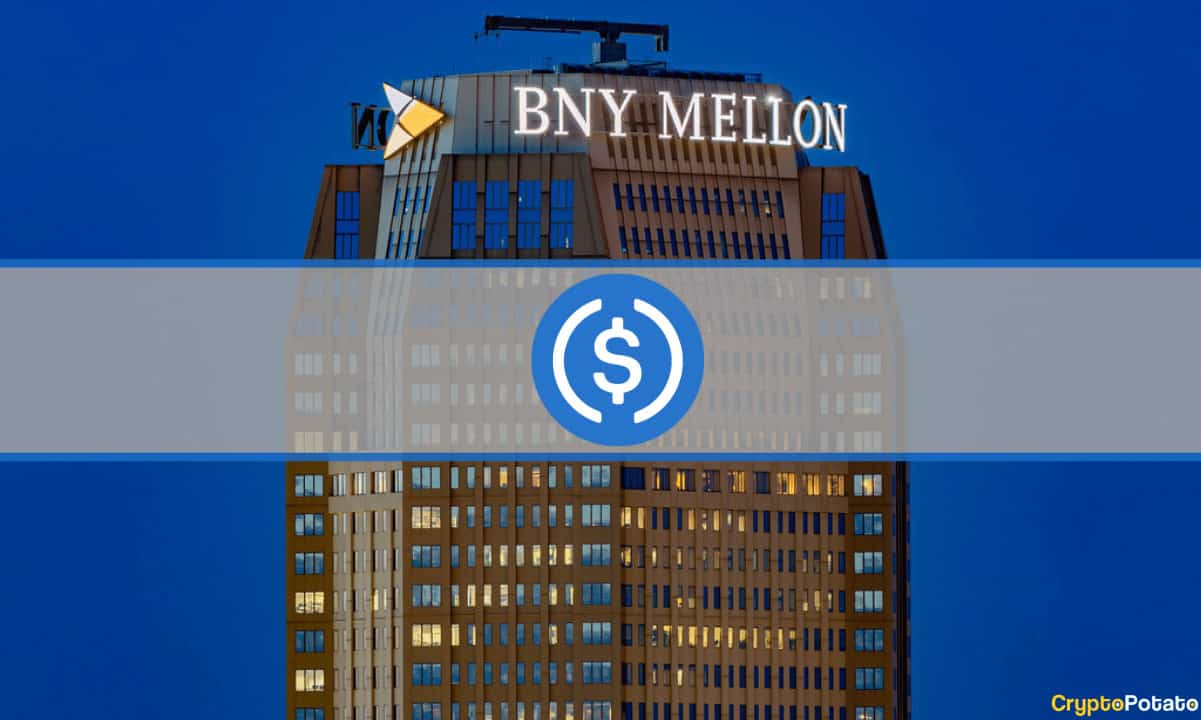
    The Bank of New York Mellon (BNY), the United States’ oldest bank, has deepened its collaboration with Circle to offer new stablecoin services tailored for institutional clients.

    Under the agreement, Circle’s USD Coin (USDC) will be the inaugural stablecoin available on BNY’s Digital Asset Custody platform. This integration will empower BNY clients to manage USDC, including storage, transfers, minting, and burning, through the bank’s established custody services.

    The move significantly expands BNY’s role as the primary custodian for USDC reserves, according to an official blog post. Institutional clients utilizing BNY’s digital asset custody platform can now hold USDC within their custody wallets and leverage the bank to facilitate the conversion of U.S. dollars into USDC via Circle.

    Clients will also have the capability to redeem USDC for U.S. dollars through the burning mechanism. Circle stated that these services are designed to encompass the full spectrum of institutional stablecoin operations, bridging traditional cash services with digital asset custody within a unified framework. BNY highlighted that these stablecoin functionalities are integral to its comprehensive Digital Assets platform, which aims to assist institutional clients in navigating the evolving intersection of traditional finance and digital assets.

    By integrating custody and cash management services, BNY intends to provide access to blockchain-based networks while upholding the stringent controls, governance, and operational resilience demanded by institutional markets. The bank also indicated plans to extend support to other stablecoin issuers and additional digital cash workflows in the future.

    Carolyn Weinberg, BNY Mellon’s Chief Product and Innovation Officer, commented, “As digital assets become increasingly integrated into financial markets, institutions need infrastructure that seamlessly works across traditional and blockchain-based systems. With the addition of our enhanced stablecoin enablement capabilities, we’re expanding the ways clients can move value with the operational scale, trust, and resiliency they expect from BNY.”

    BNY Mellon and Circle initially formed a partnership in March 2022, when the bank was appointed as a primary custodian for the reserves backing the stablecoin. Since then, BNY has consistently bolstered its presence in the digital asset sector over the past few years.

    This year, the financial institution expanded its digital asset custody business by partnering with Finstreet and ADI Foundation to develop regulated crypto infrastructure within Abu Dhabi’s ADGM financial hub.