Tag: Positive

  • Crypto Update: USDC Faces Challenges as Blackrock, Ripple Back OUSD; Bitcoin, Ethereum Rebound

    Crypto Update: USDC Faces Challenges as Blackrock, Ripple Back OUSD; Bitcoin, Ethereum Rebound

    Crypto Market Shows Resilience Amidst Institutional Sell-Offs

    The cryptocurrency market is exhibiting signs of recovery after a challenging month, with Bitcoin and Ethereum prices climbing despite some unsupportive metrics. While institutional investors continue to divest, large holders, often referred to as “whales,” and corporations appear to be capitalizing on the lower prices.

    Bitcoin has reclaimed the $60,000 mark, recovering from a recent 21-month low of $58,000. Ethereum also saw a rebound, reaching $1,600.

    Meanwhile, Blackrock is reportedly at the forefront of a new wave of exchange-traded fund (ETF) outflows, while a new stablecoin, OUSD, is emerging as a competitor to Circle’s USDC. Former President Donald Trump’s significant cryptocurrency holdings remain in the news, coinciding with ongoing regulatory shifts.

    Fed Official’s Remarks Spark Market Optimism

    A key catalyst for the recent market uptick appears to be comments from Fed Chair Kevin Warsh. His assessment that inflation risks have eased reportedly boosted cryptocurrencies and other risk assets, providing a much-needed lift to major digital currencies following a significant downturn in June. Bitcoin had briefly dipped below $59,000 amid heavy outflows before recovering, while Ethereum maintained support at $1,500, moving into positive territory alongside Solana (SOL) and Dogecoin (DOGE). Despite the “Extreme Fear” reading on the Fear & Greed Index, the market sentiment appears to be improving.

    ETF Outflows Continue Despite Price Recovery

    The recovery in Bitcoin’s price is notable given the persistent outflows from spot Bitcoin ETFs, which have been in the hundreds of millions of dollars. On a recent day, Bitcoin ETFs experienced a net outflow of $296 million. Blackrock’s IBIT led these redemptions with $219.4 million, followed by Fidelity’s FBTC ($51 million) and Grayscale’s GBTC ($62.8 million).

    June marked the worst month on record for these products, with $4.5 billion exiting. This indicates that institutions are actively reducing their exposure, even as Bitcoin’s price rises. However, on-chain data reveals that whales have accumulated approximately 270,000 BTC in the $59,000 price range, marking the largest single accumulation spike ever recorded, surpassing levels seen during the COVID-19 pandemic and the FTX collapse. Long-term holders are also demonstrating strong accumulation behavior.

    Corporate buyers are also increasing their holdings. Metaplanet, for instance, has added another 2,823 BTC, valued at $170 million, bringing its total treasury to 43,000 BTC, worth over $2.5 billion.

    Ethereum’s Development and Stablecoin Competition

    Ethereum’s price has mirrored Bitcoin’s upward trend, reclaiming the $1,600 level after touching multi-month lows of $1,505 at the start of July. Ethereum has now experienced its first three consecutive quarters of losses but is holding firm at the $1,500 support zone. While active addresses have seen a sharp decline, suggesting a potential retail exit, whale wallets holding between 1,000 and 10,000 ETH are actively accumulating. This pattern is often seen as an indicator of a market bottom.

    A significant catalyst for Ethereum remains on the horizon with the ongoing development of “Glamsterdam,” which includes active testing on Devnet-5. A public testnet is anticipated in July or August, with the mainnet launch targeted for the third quarter of 2026. Key upgrades planned for Glamsterdam include EIP-7732 for Enshrined Proposer-Builder Separation, aimed at improving MEV fairness, and EIP-7928 for Block-Level Access Lists, designed to enhance parallel processing capabilities. The project’s overarching goals are to increase Layer 1 scalability, reduce gas fees, and lay the groundwork for higher transaction throughput.

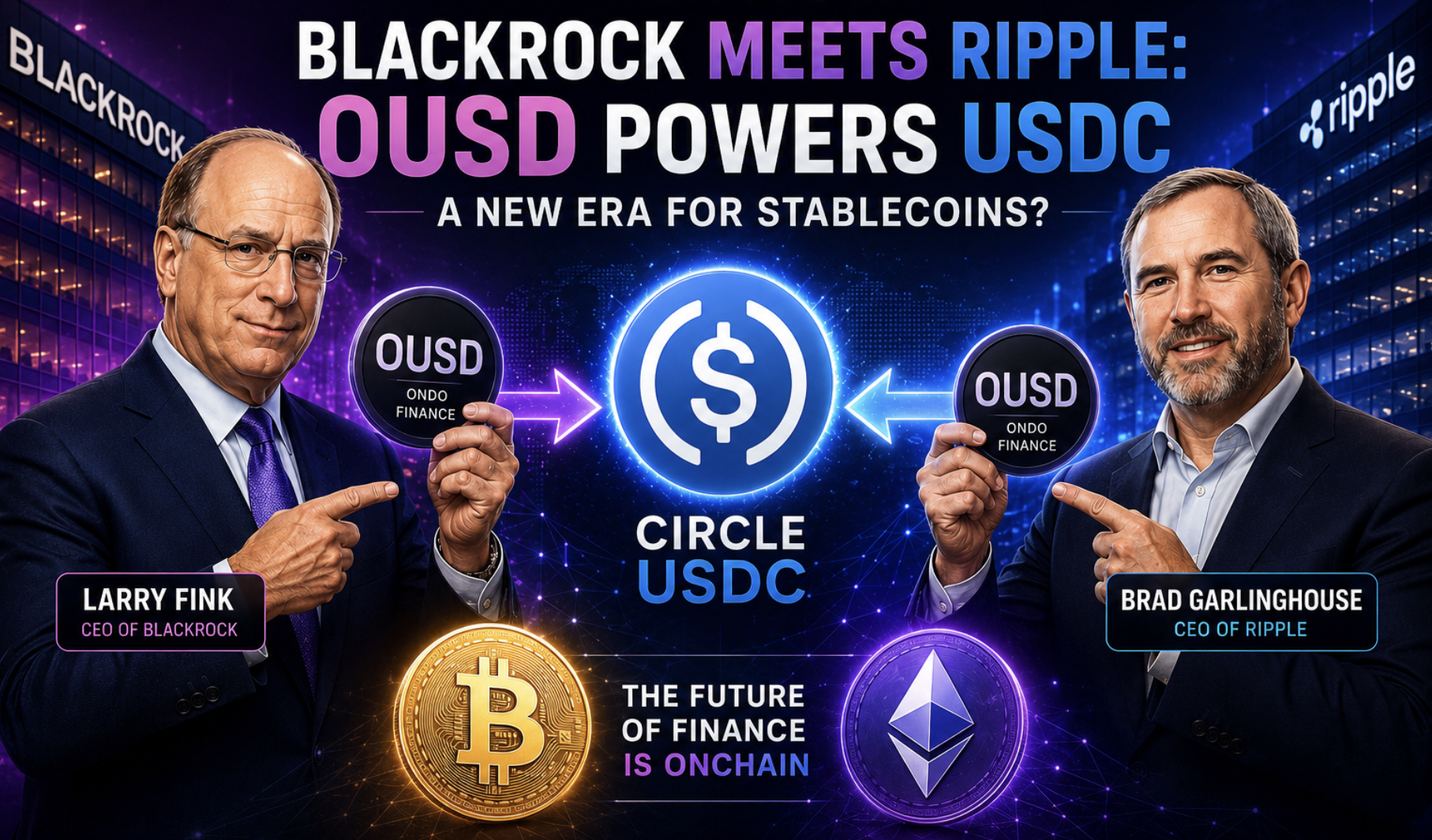
    In a notable development, Blackrock is not only reducing its Bitcoin ETF holdings but is also reportedly backing a new stablecoin consortium, Open USD (OUSD), alongside major players like Visa, Mastercard, Coinbase, and Stripe, among over 140 other firms. This move has led to a significant drop in Circle’s stock value, with its shares falling 17% as OUSD gains traction. Circle’s CEO has publicly addressed the competitive landscape, while yield-generating initiatives, such as MetaMask’s new yield-paying accounts, are also gaining momentum.

    Regulatory Landscape and Market Outlook

    The Supreme Court’s recent decision has cleared the path for former President Trump to potentially influence leadership at the SEC and CFTC, signaling potential shifts in regulatory oversight. In Europe, the grace period for the Markets in Crypto-Asset (MiCA) regulation has ended, prompting Tether to withdraw certain services from parts of the region. While Binance has secured a MiCA license, other entities like Venga are also navigating the new regulatory framework. In the U.S., the CLARITY Act’s prospects appear to be diminishing, though Trump has publicly voiced opposition to banks, and the SEC continues to solicit comments on novel ETF proposals.

    The divergence between cautious institutional investors and the aggressive accumulation by whales and corporations presents a strong bullish signal. As Blackrock and other ETF issuers continue to sell, on-chain data indicates the largest historical accumulation spike, and treasury-holding companies remain active buyers.

    The price action for both Bitcoin and Ethereum appears increasingly constructive, especially with the upcoming Glamsterdam upgrades. Regulatory clarity is progressing, despite challenges from traditional financial institutions, and whales are actively positioning themselves in the market.

  • Crypto Buy Signals Emerge: Is the Bottom In?

    Crypto Buy Signals Emerge: Is the Bottom In?

    Crypto Market Signals Potential Bottom Amidst Widespread Losses

    The cryptocurrency market has experienced significant downturns in recent weeks, with many industry participants bracing for further short-term declines. However, one prominent analyst suggests that the market may have already hit its nadir, citing simultaneous buy signals across four of the largest digital assets.

    Ali Martinez, a well-known analyst, posits that the worst of the downturn could be over, based on his analysis of the recent performance of Bitcoin (BTC), Ethereum (ETH), Ripple (XRP), and Solana (SOL). He highlighted that the Tom DeMark (TD) Sequential Indicator, on a monthly timeframe, has issued buy signals for these cryptocurrencies.

    “On high-timeframe charts like the monthly, these trend-exhaustion setups carry significant weight,” Martinez explained. “Historically, when multiple assets lock in concurrent monthly buy signals, it indicates seller fatigue and a high probability of a long-term market bottom.”

    Other market observers share the sentiment that the cycle’s floor is approaching. X users Bark and Cup are among those who believe the current period presents a prime opportunity for investors. Bark asserted that the window to “buy crypto cheap is almost gone,” while Cup argued that the prevailing bearish sentiment itself suggests the bottom has already been established.

    Despite these optimistic indicators, a significant portion of the market anticipates further pain for bulls, with some even issuing dire predictions. Notably, Dave Portnoy, founder and CEO of Barstool Sports, recently speculated that BTC could plummet to zero. This gloomy outlook has been largely dismissed by prominent industry leaders, some of whom pointed out that market cycle bottoms often coincide with peak pessimism, suggesting this could be such a juncture.

    June proved to be a challenging month for the crypto market, with BTC, ETH, XRP, and SOL all closing in negative territory. However, the current month, July, has historically been favorable for many of these assets. If past trends hold true, a decisive rebound could be on the horizon.

    Bitcoin has finished July in positive territory in 9 out of the past 13 years. Ripple’s XRP has achieved this 7 out of 12 times, while Solana’s SOL has never recorded losses during this specific interval. Furthermore, Solana’s native token typically experiences double-digit percentage gains in July.

    Ethereum stands as the sole cryptocurrency among this group that has more frequently ended July with losses than with gains.

  • VALR Unveils 200+ Hyperliquid Perps Markets

    VALR Unveils 200+ Hyperliquid Perps Markets

    VALR Unveils ‘Perps’ Product, Expanding Trading to Over 200 Global Markets

    Johannesburg, South Africa – July 2nd, 2026 – VALR, a leading digital asset exchange, today announced the upcoming launch of ‘Perps,’ a new cross-asset class perpetuals product that will introduce more than 200 markets to its platform. This significant expansion will allow users to express directional views by going long or short with leverage across a wide array of global equities, commodities, precious metals, stock indices, forex pairs, and crypto assets. The introduction of Perps builds upon VALR’s existing derivatives infrastructure, which first debuted in 2023.

    The new product is powered by an integration with Hyperliquid, a high-performance decentralized blockchain. Leveraging Hyperliquid’s permissionless infrastructure, VALR users will be able to open and manage positions directly within the VALR platform, promising a seamless user experience.

    The addition of over 200 new markets represents a substantial increase in the diversity of assets available through a single digital platform. Notably, this marks the first instance of a major regulated exchange natively integrating an on-chain Layer-1 protocol to source liquidity and execute trades for global cross-asset perpetuals. The newly accessible contracts cover multiple global asset classes, empowering traders to articulate their views on macroeconomic events and capitalize on market volatility.

    Gianluca Sacco, Chief Operating Officer at VALR, commented on the launch: “With this launch, we’re putting over 200 perpetuals markets directly inside the VALR app. This offers 24/7 access to crypto, commodities, currencies, and equities – both listed and pre-IPO – all through the regulated exchange our customers already trust. Perps are how crypto traders take a view on price, a market now exceeding hundreds of billions of dollars in daily volume. We believe they will become the standard for trading across all markets. Our integration of Hyperliquid will provide our users with the deepest on-chain liquidity available anywhere. For VALR customers in South Africa and beyond, this means access to the markets that matter, in real-time.”

    Founded in 2018 and headquartered in Johannesburg, VALR is backed by prominent investors including Pantera Capital, Coinbase Ventures, and Fidelity’s F-Prime Capital. The company stands as the leading digital asset exchange and infrastructure provider on the African continent, offering a comprehensive suite of products such as Spot Trading, Spot Margin, Perpetuals, Staking, Lending, Borrowing, OTC services, VALR Invest, Crypto Bundles, and VALR Pay. VALR holds a license from South Africa’s FSCA and a provisional license from the Cayman Islands Monetary Authority. The exchange serves over 1.9 million registered users and 1,900 corporate and institutional clients globally, with a mission to advance a just financial future that upholds human dignity and the unity of mankind.

    Hyperliquid is a decentralized Layer 1 blockchain recognized for its perpetuals and spot trading capabilities. It is currently the largest and most liquid decentralized exchange, supporting both crypto and real-world assets like oil and precious metals. The Hyperliquid ecosystem also facilitates borrowing, lending, and features a full-fledged EVM.

    Risk Disclosure
    Futures trading is provided by VALR DAM Pty Ltd, a licensed Financial Services Provider (FSP #54897) and Over-the-Counter Derivatives Provider.

    VALR Perps order management, execution, liquidation, margin requirements, position management, mark prices, and funding rates are managed and provided through certain third-party liquidity provider(s). VALR acts solely as an intermediary, enabling account holders to access services offered by these third-party liquidity providers. VALR disclaims any liability arising from or in connection with the acts, omissions, services, pricing, liquidity, order execution, system availability, or operational failures of such third-party liquidity provider(s).

    The use of VALR Perps involves inherent risks. Users are advised to refer to VALR’s Risk Disclosures and Futures Terms of Service for detailed information.

  • Grok AI Forecasts Dramatic XRP Surge by 2026

    Grok AI Forecasts Dramatic XRP Surge by 2026

    Grok AI Forecasts Significant XRP Price Surge by 2026

    Grok AI, the artificial intelligence model developed by Elon Musk, has presented a detailed bullish outlook for XRP, projecting a price range of $4 to $6 by December 2026. This forecast represents a potential four to sixfold increase from XRP’s current valuation.

    The AI’s bullish case hinges on the premise that XRP’s underlying utility is finally translating into sustained demand, a factor that the market has yet to fully reflect in its price.

    Legal Resolution and ETF Approval as Key Drivers

    Central to this optimistic scenario is the complete resolution of the Securities and Exchange Commission (SEC) lawsuit against Ripple. The model anticipates a legal clean slate by August 2025, following a settlement where Ripple pays a $125 million fine without further appeals. This resolution is expected to pave the way for the launch of multiple US spot XRP Exchange-Traded Funds (ETFs) by November 2025, which would then attract consistent institutional investment.

    RLUSD Stablecoin and Network Growth

    Further bolstering the bull case is the surging adoption of the RLUSD stablecoin on the XRP Ledger (XRPL). Grok AI notes that RLUSD has surpassed Ethereum in supply, driving billions in on-chain volume and generating significant XRP fee revenue.

    Concurrently, over 300 financial institutions are reportedly utilizing RippleNet and On-Demand Liquidity for more efficient cross-border payments. The XRPL ecosystem is also expanding with new infrastructure, including a lending protocol, tokens for real-world assets, automated market makers, and permissioned domains.

    Ripple itself is valued at $40 billion, has obtained a trust bank charter, and is forging new partnerships, such as an RLUSD launch in Japan with SBI and tokenized asset initiatives with ties to JPMorgan.

    Macroeconomic Factors and Potential Price Targets

    Grok AI suggests that if a constructive macroeconomic and cryptocurrency bull market emerges alongside these developments, institutional allocation and on-ledger activity could accelerate, driving XRP towards the projected $4 to $6 target by the end of 2026.

    Bearish Scenario and Risk-Reward Analysis

    In contrast, the AI’s bearish outlook is more constrained. Should ETF inflows falter, RLUSD adoption lag, or broader markets experience prolonged consolidation, XRP’s gains could be capped between $2 and $3.

    However, even in this less favorable scenario, Grok AI frames the risk-reward profile as heavily skewed towards the bullish case, citing the removal of regulatory uncertainty and the proven traction of XRP’s underlying infrastructure.

    Technical Analysis and Chart Patterns

    Currently, XRP is trading around $1.06010, having experienced a significant decline from highs above $3.65 in early August of the previous year. This downward trend has been largely unidirectional, with a brief recovery attempt near $2.40 in November failing to sustain momentum.

    The recent dip below $1.03 in June, followed by a modest recovery, is interpreted by the AI as a potential sign of seller exhaustion rather than a healthy pause before further declines.

    Immediate resistance levels are identified at $1.20, which has capped recent rallies, and a more substantial ceiling at $1.60. Support is currently being tested in the $1.04 to $1.06 range, where the price has been consolidating. The overall chart structure depicts a descending staircase pattern over the past year, with each rally failing to reach previous highs.

    Momentum indicators on daily charts show cautious stabilization rather than a reversal, with a slight increase in positive candle formations. The AI emphasizes that the current price action is less indicative of past performance and more a signal for the next five months, with a decisive move above $1.60 being the first significant technical indicator of Grok’s re-rating scenario.

    Market Dynamics and Investment Opportunities

    The article also touches upon broader market dynamics, noting that Bitcoin, Ethereum, and XRP have been facing similar resistance levels for weeks, awaiting a catalyst for the next upward movement. It highlights the concept of “asymmetric returns” in early-stage infrastructure projects, where the gap between intrinsic value and market perception can be substantial before a project gains wider recognition.

    The text then introduces LiquidChain, a project aiming to address cross-chain fragmentation in DeFi by eliminating fees through a unified execution layer. ChatGPT AI has flagged LiquidChain as noteworthy, with its presale at $0.01454 and over $860,000 raised. The article acknowledges that LiquidChain’s execution and adoption remain unproven, contrasting it with established assets that offer predictable, albeit capped, returns.

  • Altman’s AI Predicts Bitcoin Price Shock by 2026

    Altman’s AI Predicts Bitcoin Price Shock by 2026

    Sam Altman’s ChatGPT AI has framed Bitcoin’s current price slump not as a precursor to further decline, but as a prelude to its next significant upward movement. The model forecasts a surge to the $120,000 to $150,000 range by the close of 2026. Should progress be slower than anticipated, it projects a floor of $80,000 to $100,000.

    Bullish Outlook Hinges on Timing

    The optimistic scenario heavily relies on precise timing. With Bitcoin trading around $60,100 currently, the AI model views this as a compelling, asymmetric opportunity heading into the year’s end. The base case suggests the next major phase of the bull market will commence around November, coinciding with improving macroeconomic liquidity and a broader investor rotation back into risk assets.

    Underpinning this outlook is the accelerating institutional adoption through both exchange-traded funds (ETFs) and corporate treasury allocations. This trend, coupled with ongoing global Bitcoin accumulation and a more crypto-friendly U.S. regulatory environment, is building momentum beneath the surface.

    The CLARITY Act is identified as a key potential catalyst. A clearer market structure is expected to unlock capital currently held on the sidelines, awaiting legal certainty. Furthermore, President Trump’s repeated pledges of support for the digital asset industry and his vision for the United States as a global crypto leader are seen by the model as reinforcing long-term investor confidence, despite the uncertainty surrounding specific legislative timelines.

    If these catalysts align as the model anticipates, Bitcoin could realistically reach the $120,000 to $150,000 range by December.

    Bearish Case Centers on Delays

    The bearish scenario, however, centers on delays rather than an outright collapse. The primary risks include a stall in regulatory progress, the Federal Reserve maintaining tighter monetary policy for longer than markets expect, or institutional inflows proving weaker than anticipated.

    Should any combination of these headwinds materialize, the model suggests the rally could be capped, leaving Bitcoin trading closer to the $80,000 to $100,000 range, falling short of the more ambitious bull case target.

    Technical Analysis and Chart Patterns

    Current daily charts show Bitcoin at $59,316, following a substantial decline from its October highs near $127,000. This slide has been steep and persistent, with a notable relief rally in May peaking around $83,000 before sellers regained control.

    In recent sessions, the price has been consolidating in the high $50,000s to low $60,000s, recently dipping below $60,000. This repeated failure to hold above a key round number after an extended downtrend suggests that sellers currently maintain the upper hand.

    Immediate resistance is observed near $64,000, a level that has repeatedly rejected price advances in recent weeks. A more significant ceiling lies further up near $76,000, where the May rally ultimately lost momentum. Support is holding near $59,000, the area currently being tested, with a deeper floor near $55,000 if this level fails.

    The broader chart structure remains a clear downtrend extending back to October, characterized by lower highs and lower lows. Momentum on daily candles appears weak and bearish, with red candles dominating the recent period and limited buying follow-through on occasional bounces.

    Given the significant distance Bitcoin would need to cover to reach even the lower end of the predicted range, the chart suggests that the narrative remains focused on November and beyond. A reclaim of $76,000 would serve as the first tangible signal that the bullish case described by ChatGPT is beginning to materialize.

    Strategic Considerations in a Capped Market

    The rotation into new opportunities is already underway, though many may only recognize it in hindsight. Large-cap cryptocurrencies are not failing but rather appear capped, with Bitcoin, Ethereum, and XRP pressing against similar resistance bands for weeks as macroeconomic tailwinds are repeatedly delayed. Institutional inflows are being pushed to subsequent quarters. Holding assets whose upside is contingent on uncontrollable catalysts is characterized as waiting rather than a strategic approach.

    Capital that has weathered multiple market cycles typically moves proactively before a destination becomes obvious, rather than waiting at resistance levels. Early-stage infrastructure projects, operating with significantly smaller market capitalizations, offer a different dynamic. A modest rotation can lead to dramatic price movements due to their nascent stage. The asymmetry arises because the market has not yet priced in the full potential of these projects, creating a gap between current valuation and intrinsic worth, which drives returns.

    The fragmentation across multiple blockchain ecosystems incurs significant daily costs for decentralized finance (DeFi). Bitcoin, Ethereum, and Solana currently operate with isolated liquidity systems, lacking native interoperability. Users transferring value between these ecosystems absorb costs through fees, slippage, and failed transactions.

    LiquidChain aims to consolidate these three networks into a single execution layer, enabling one deployment and full ecosystem access without the “cross-chain tax” on every interaction. This fundamental innovation has yet to be widely recognized by the market.

    The LiquidChain presale is priced at $0.01454, with over $880,000 raised. This position is described as being at the “ground floor” of its lifecycle, not as a marketing slogan.

    The project’s execution remains unproven, and adoption is unknown, presenting real risks that are openly acknowledged. Established assets may offer a smoother path to a visible ceiling, whereas this opportunity provides an earlier entry into a nascent ecosystem.

  • DeFi Poised to Disrupt Wall Street Stock Lending, Says Securitize Exec

    DeFi Poised to Disrupt Wall Street Stock Lending, Says Securitize Exec

    Tokenization, often viewed as a Wall Street playground, also presents a “Trojan Horse” opportunity for consumers, according to Securitize President Brett Redfearn.

    A New Era for Everyday Investors

    In a recent interview with Decrypt, Redfearn, who previously served as the SEC’s director of trading and markets before joining Securitize in April, argued that bringing real-world assets onto the blockchain will directly benefit individual investors by leveraging cryptocurrency’s fundamental principle of disintermediation.

    From Redfearn’s viewpoint, empowering investors to retain control over their assets in digital form unlocks efficiencies that are typically inaccessible within traditional financial systems.

    Rethinking Stock Lending

    He cited stock lending as a prime example. This common practice on major retail brokerage platforms passively generates revenue by loaning out investors’ shares to short-sellers. Currently, retail investors allow brokers to lend their idle shares, effectively forfeiting the majority of the profits to the intermediary.

    However, Redfearn believes tokenization fundamentally alters this dynamic. By eliminating centralized gatekeepers, he contends that the technology opens new avenues for consumers to make their assets work harder, particularly within the realm of decentralized finance.

    “I think that business is totally disruptible,” Redfearn stated emphatically. “There are a lot of opportunities when you start to disintermediate traditional businesses.”

    Securitize’s Public Debut

    Securitize’s stock is slated to begin trading on the New York Stock Exchange on Thursday under the ticker symbol “SECZ.” This listing will serve as a test of whether Wall Street’s growing acceptance of tokenization extends to the companies that have been instrumental in bringing the technology to the mainstream in recent years.

    While Securitize has emerged as a leader in facilitating on-chain security issuance for firms like BlackRock, Redfearn acknowledged that the full potential of decentralized finance to drive the company’s growth hinges on the contributions of a broad range of independent developers.

    “I believe that the sky’s the limit in terms of what builders are going to be able to achieve that’s going to bring benefits for investors who are interested in participating in this sort of tokenized securities ecosystem,” he added.

    The Profit Split in Stock Lending

    The revenue share from stock lending varies significantly for consumers. For instance, Robinhood reportedly retains approximately 85% of the associated revenue, while Charles Schwab divides it equally, according to NerdWallet.

    Nevertheless, some financial institutions appear to be moving closer to Redfearn’s vision. Robinhood is expected to announce new products on Wednesday, and Compass Point analyst Ed Engel noted in a recent report that “tokenized equities compatible with DeFi” are likely to be among them. This follows Robinhood’s experimentation with the format for European customers last year.

  • Analysts: CRCL Sell-Off Overdone Amidst CEO’s USD Threat Address

    Analysts: CRCL Sell-Off Overdone Amidst CEO’s USD Threat Address

    Shares of Circle (CRCL), the issuer of the USDC stablecoin, experienced an 18% decline on Tuesday following news of a competing stablecoin launch, Open USD (OUSD), backed by global partners including Coinbase, Visa, and Mastercard. However, analysts at Clear Street believe the market reaction was an overestimation by investors.

    Market Overreaction Cited

    “While OUSD boasts strong partners, similar to other leading stablecoins, the selloff appears overdone without concrete evidence of OUSD achieving significant market traction,” the analysts stated in a note released Wednesday.

    Narrative Threat Lingers, But USDC’s Resilience Noted

    Despite the impending launch of OUSD later this year, analysts acknowledge that the narrative threat may persist. Nevertheless, they point to Circle’s USDC stablecoin as having demonstrated staying power in the face of previous stablecoin introductions.

    “Although the narrative may linger, CRCL has maintained robust market share despite the continuous emergence of new stablecoins,” the analysts wrote. “Our initial assessment suggests OUSD is comparable to USDG (Global Dollar Network stablecoin), which has not captured substantial market share.”

    Circle CEO Highlights USDC’s Strengths

    Circle CEO Jeremy Allaire offered perspective on the OUSD launch in response to investor inquiries, emphasizing his company’s strengths and the “massive scale” of the USDC network, a feature OUSD will lack at its inception.

    According to Allaire, successful stablecoin networks require a broad spectrum of services and applications, substantial liquidity, and “deep integration with the policy and regulatory environment.”

    “All of these investments by Circle and our global ecosystem of thousands of partners have culminated in providing the world’s most trusted and accessible digital dollar infrastructure,” he posted on X, adding that his firm has “no intention of slowing down.”

    USDC’s Market Position

    Currently, USDC holds the position of the second-largest stablecoin and ranks as the fifth-largest cryptocurrency overall, boasting a market capitalization exceeding $73 billion. Only Tether’s USDT, with a market cap of $184 billion, surpasses it in stablecoin rankings.

    Share Performance and Outlook

    Circle shares saw a partial recovery on Wednesday, gaining 3% to trade around $64.55. However, CRCL shares, which saw a significant surge upon their public debut last year, have fallen more than 18% in the past six months and are over 75% below their 52-week high of $262.97.

    In their Wednesday note, Clear Street set a 12-month price target for Circle at $157, representing an approximate 140% increase from its trading price on Wednesday.

  • BNB Chain Unveils BNB Agent Studio: Powering Smart Money with AI

    BNB Chain Unveils BNB Agent Studio: Powering Smart Money with AI

    BNB Chain Unveils BNB Agent Studio, Aiming to Revolutionize AI Agent Deployment

    Dubai, UAE – July 1, 2026 – BNB Chain, a prominent global blockchain ecosystem, today announced the launch of BNB Agent Studio, a groundbreaking platform designed to create a new class of AI agents. These agents are engineered to withstand infrastructure failures, process payments, and possess provable ownership and transferability, all deployable from a simple prompt in approximately 15 minutes.

    BNB Agent Studio serves as a developer platform, empowering engineers to define their desired AI agent functionalities within development tools such as Claude Code, Cursor, or any MCP-compatible environment. By simplifying the complexities of on-chain application development, this launch directly addresses three critical hurdles that have previously hindered the full autonomy of AI agents: deployment, discoverability, and continuity.

    Co-developed with the AWS Generative AI Innovation Center, the platform incorporates an Infrastructure-as-Code generator. This feature automatically provisions an agent’s cloud environment, adhering to current security best practices and the principle of least privilege. It efficiently generates the necessary code and deploys the agent to Amazon Bedrock AgentCore, Amazon’s managed runtime for AI agents.

    “Historically, building an autonomous AI agent has involved piecing together a fragile stack of four or more separate vendor integrations: a wallet, an identity layer, payments, an AI model, and hosting. This typically required days or weeks of integration work,” explained Nina Rong, Executive Director of Growth at BNB Chain. “BNB Agent Studio consolidates all of this into a single installation, conceived as a unified product from its inception.”

    Key Capabilities Highlighted

    “With Amazon Bedrock AgentCore serving as the runtime, BNB Chain is poised to unlock an entirely new category: AI agents as owned, tradeable, persistent digital entities,” Rong continued. “This vision will enable agents to be paused, resumed, migrated, recovered, and transferred, including through tokenization.”

    Today’s launch builds upon BNB Chain’s recent introduction of the BNB Agent SDK, which established a modular standard for identity (ERC8004), commerce (ERC8183), payment, and memory within AI agents. BNB Agent Studio is positioned as the most direct route from initial concept to a fully operational agent.

    This marks the initial release of BNB Agent Studio. Traditionally, financial decisions have demanded significant human time and attention for yield identification, option comparison, and timely action. The advent of autonomous agents capable of these tasks, particularly when they are owned assets that persist, earn, and compound, promises to fundamentally alter how individuals interact with their finances. BNB Chain plans to introduce new capabilities on a fortnightly basis, with each update enhancing the platform’s tooling for developers building within the burgeoning agentic economy.

    About BNB Chain

    BNB Chain is a leading, community-driven decentralized blockchain ecosystem that supports Web3 applications across various sectors, including DeFi, AI, gaming, and consumer use cases. Its multi-chain architecture encompasses BNB Smart Chain (BSC), opBNB, and BNB Greenfield, providing the essential infrastructure for developers deploying on-chain applications at scale. Further information is available on the official website.

  • XBTFX Unveils Crypto and CFD Trading Platform

    XBTFX Unveils Crypto and CFD Trading Platform

    XBTFX Unveils New Infrastructure to Connect Trading Accounts with Software Agents

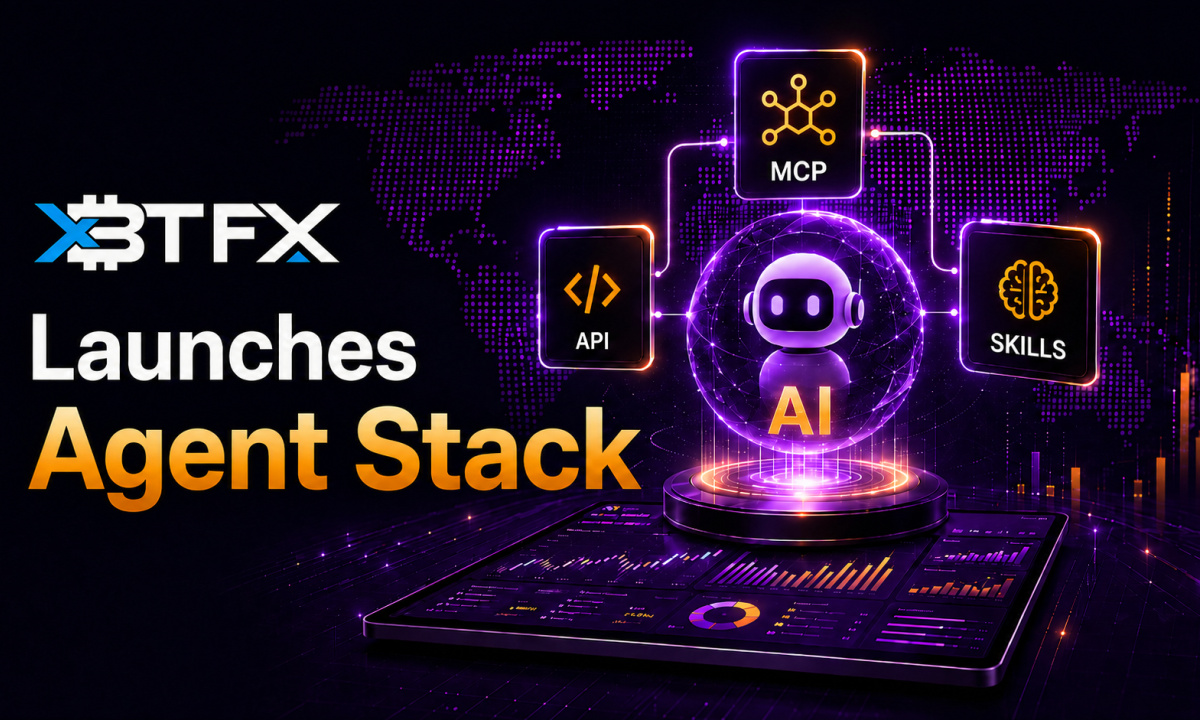
    St. John’s, Antigua and Barbuda – July 1st, 2026 – XBTFX has announced the launch of its MCP Server and Skills Hub, significantly expanding its developer ecosystem following the earlier introduction of its REST and WebSocket Trading API. This new infrastructure allows compatible software agents, coding assistants, and automation frameworks to connect with eligible live XBTFX trading accounts through structured, authenticated workflows. Supported applications can now retrieve account information, access market data, and submit structured trading requests.

    The move addresses a growing trend where intelligent software agents and automation tools are increasingly employed for market analysis, news processing, code generation, and research support. However, these tools have largely operated independently of live trading accounts, limiting their ability to access real-time account data, inspect open positions, monitor margin, or submit account-specific requests without complex, custom integrations.

    XBTFX’s new infrastructure is designed to bridge this gap. The company emphasizes that it is not introducing a proprietary decision engine, automated strategy, or a “black-box” execution system. Instead, users retain full control over their logic, instructions, permissions, and risk management, while XBTFX provides the authenticated account access, market data connectivity, and execution infrastructure.

    Infrastructure, Not a Trading Strategy

    The newly launched stack is built to make trading accounts programmable via structured, authenticated workflows. When a user interacts with a compatible client or software agent to check exposure, retrieve market prices, calculate position sizes, or prepare a trade with specific parameters, the client translates these instructions into structured tool calls or API requests. The natural-language instruction itself is not directly transmitted to the trading account.

    XBTFX then authenticates and processes the corresponding account, market-data, or trading request. Crucially, users remain responsible for their strategy logic, configurations, credentials, and risk management. This distinction is particularly relevant for cryptocurrency and active CFD traders, where automation and continuous monitoring can be beneficial, but user-defined risk controls remain paramount.

    Three Connection Pathways

    The MCP Server functions as a structured tool layer between compatible clients and the XBTFX Trading API. Supported clients can access balances, margin, positions, orders, historical data, instrument details, and pricing. Depending on granted permissions, they can also submit structured trading requests, such as opening or closing positions and modifying stop-loss or take-profit levels.

    The Skills Hub offers reusable instructions, endpoint definitions, implementation examples, and developer guidance for software agents and applications that do not connect directly through MCP. This includes workflows utilizing popular frameworks like LangChain, CrewAI, OpenClaw, and Claude Code, as well as custom agent implementations.

    The Trading API provides REST and WebSocket access for developers building dashboards, automated strategies, signal-to-execution systems, reporting tools, and account management applications.

    Collectively, these three access paths offer traders and developers diverse methods to connect automated workflows and software agents with eligible XBTFX accounts, tailored to their specific technical setups and use cases.

    Tailored for Crypto, Forex, and Continuous Market Monitoring

    The integration layer supports workflows across forex, cryptocurrency CFDs, metals, indices, energies, and stocks, offering access to over 400 instruments. The availability of specific instruments and trading conditions is contingent on the account linked to the API key.

    XBTFX also supports trading accounts denominated in BTC, ETH, and USDT, alongside major fiat currencies. This provides traders and developers with a crypto-denominated environment for automated monitoring, account management, and structured trading workflows.

    For crypto-focused traders, the 24/7 nature of digital asset markets is a key consideration. When a software agent or automated process is configured for continuous operation, it can monitor market data, account conditions, margin, and exposure outside conventional trading hours, responding according to predefined instructions, validation rules, and risk controls.

    XBTFX explicitly states that it does not provide trading recommendations through the MCP Server or Skills Hub, nor does the integration dictate when a user should buy or sell any instrument.

    Developed in Partnership with HuracanAI

    The MCP Server, Skills Hub, Trading API, and the underlying execution architecture were jointly developed by XBTFX and HuracanAI, a financial technology firm specializing in brokerage infrastructure, liquidity connectivity, trading bridges, APIs, and software-agent systems. This collaboration merges brokerage execution infrastructure with agent connectivity, fostering a more programmable model for traders and developers operating within live account environments.

    Account Holder Retains Control

    Each XBTFX API key is tied to an individual, eligible trading account. Users can manage their API keys through the XBTFX Console and revoke them if they are no longer needed or if there is a concern about exposure.

    Given that the integration operates with live trading accounts, XBTFX advises users to initially test account information and market data functions with limited exposure. They also recommend reviewing agent behavior before enabling broader automated workflows.

    “Modern software agents and automation tools have become increasingly capable of supporting research and operational workflows, but they have generally remained separate from the trading account itself,” said Peter Speros, an executive at XBTFX. “Our infrastructure is designed to provide structured, authenticated access to account information, market data, and account functions while keeping control with the account holder.”

    Getting Started

    To connect a compatible software agent or supported application, users can open or select an eligible live XBTFX trading account, generate an account-bound API key via the XBTFX Console, and connect through the MCP Server, Skills Hub, or Trading API.

    The MCP Server, Skills Hub, and Trading API are available without a separate API subscription or per-request fee. Standard spreads, commissions, financing charges, and other trading costs remain applicable. Comprehensive documentation is accessible through the XBTFX Developer Hub and Developer Documentation.

    About XBTFX
    XBTFX is a multi-asset online broker offering access to global financial markets through contracts for difference (CFDs). Its product range includes forex, cryptocurrency CFDs, metals, indices, energies, and stocks. XBTFX serves retail traders, active traders, strategy developers, and technology-focused market participants with its trading platforms, execution infrastructure, automation tools, APIs, and developer resources.

    Risk Warning
    Trading leveraged products, including CFDs, carries substantial risk and may not be suitable for all investors. AI agents and automated applications may misinterpret instructions, use incorrect parameters, encounter software or connectivity failures, or behave unexpectedly. Connecting an AI agent to a trading account does not mitigate market risk, guarantee execution quality, or improve trading performance. This information does not constitute financial, investment, or trading advice. Past performance is not indicative of future results.

  • Utorg Secures MiCA License Ahead of EU Deadline

    Utorg Secures MiCA License Ahead of EU Deadline

    Utorg Secures Full MiCA Authorization as EU Crypto Regulations Take Full Effect

    Dubai, UAE – July 1, 2026 – Utorg, a crypto wallet and card platform underpinned by institutional-grade infrastructure, announced today it has received full authorization under the European Union’s Markets in Crypto-Assets (MiCA) regulation. The authorization becomes effective today, July 1, 2026, marking the end of the industry’s transitional period and prohibiting unauthorized providers from serving European users.

    The company, which also offers regulated crypto rails, wallets, and stablecoin infrastructure to businesses in over 130 countries, is among a select group of platforms to have successfully navigated the comprehensive authorization process. This clearance permits Utorg to operate across all 29 EEA member states, representing a combined market of more than 450 million individuals.

    Understanding MiCA’s Impact on Users

    MiCA establishes the EU’s inaugural unified regulatory framework for crypto-assets, introducing binding standards for consumer protection, transparency, and financial integrity throughout its member states.

    For consumers, MiCA authorization signifies the implementation of concrete protective measures previously absent in the crypto space. These include requirements for funds to be segregated from company assets, upfront disclosure of all fees, and a legal right for users to lodge complaints with national regulators. In the event of a MiCA-authorized platform’s failure, user assets are safeguarded under EU law, rather than being subject to the discretion of offshore jurisdictions.

    For Utorg, this authorization is the culmination of a thorough regulatory review of its products, operations, and compliance infrastructure. It also entails ongoing oversight, with Utorg now subject to regular reporting obligations and supervisory review under EU financial law.

    Industry Landscape Shifts Under New Regulations

    July 1, 2026, signifies the conclusion of MiCA’s transitional period, at which point crypto-asset service providers lacking full authorization can no longer legally serve users within the EEA.

    In the months leading up to this deadline, a substantial portion of the market has either withdrawn from or significantly restricted its European operations. Utorg stands out as one of the few platforms to have completed the full authorization process and is fully operational from the inception of the new regulatory regime.

    Eugene Petrakov, Co-founder of Utorg, commented, “Most of the industry spent the last two years hoping MiCA would be delayed or softened. We spent it building toward it. For European users, July 1 means fewer options, stricter standards, and a much shorter list of platforms they can actually trust. We intend to be at the top of that list, not just because we’re authorized, but because we built a product that is safe by design. The license confirms what was already true.”

    Utorg’s Product Suite for EEA Residents

    Effective July 1, residents of the EEA can continue to access Utorg’s comprehensive product suite via the Utorg App, which includes:

    The crypto card operates under stringent Anti-Money Laundering (AML) and Know Your Customer (KYC) compliance requirements, as mandated by MiCA. This ensures users benefit from the full protections afforded by EU law.

    For card payments, Utorg holds a PCI DSS Level 2 certificate under the Payment Card Industry Data Security Standard. This is the same security framework utilized across the traditional payments industry, governing the storage, processing, and transmission of card numbers, transaction records, and personal details. Compliance is validated through regular audits conducted by an independent assessor.

    About Utorg

    Founded in 2019, Utorg is a fintech company specializing in crypto infrastructure and consumer applications, with operations spanning over 130 countries. The company provides regulated on-ramp and off-ramp solutions, wallet infrastructure, and stablecoin services to fintechs, exchanges, digital asset platforms, and other businesses globally. Its consumer app, trusted by more than 2 million users, features a self-custodial multi-chain wallet and a complimentary Visa crypto card, available on iOS (in July) and Android. Utorg is MiCA-authorized and holds PCI DSS Level 2 certification.