Tag: Positive

  • Solana CEO: China’s Crypto Return May Spark Next Super Cycle

    Solana CEO: China’s Crypto Return May Spark Next Super Cycle

    Solana CEO Predicts China’s Crypto Reopening Could Spark New Market Super Cycle

    Solana Company CEO Joseph Chee has suggested that China’s potential return to the cryptocurrency market could ignite another significant bull run, a move that would have far-reaching implications for the global digital asset landscape. Beijing is reportedly leveraging Hong Kong as a testing ground for its cryptocurrency regulations, signaling a strategic approach to managing digital assets.

    China’s Strategic Approach to Blockchain and Digital Assets

    Chee emphasized in a recent interview that China cannot afford to overlook the transformative potential of blockchain technology, despite its current restrictions on cryptocurrency trading. “They are using Hong Kong as the region to test how the technology will be implemented and are going to find ways to manage it,” he stated.

    Hong Kong is actively serving as a hub for Web3 development, with approvals for regulated spot ETFs, enhanced audit requirements for virtual asset service providers (VASPs), and the development of stablecoins like HSBC’s RedCoin. This measured approach allows mainland China to observe the functioning of crypto markets under stricter oversight before considering broader access.

    Chee believes that an increase in crypto trading and blockchain adoption in China could lead to a substantial market shift. “I think the crypto is going to go through another super cycle,” he predicted. He highlighted Asia’s significant population and its early involvement in crypto adoption, noting that China’s past restrictions had hampered this growth while the U.S. market assumed a more dominant role.

    Significant Bitcoin Holdings and Mining Influence

    Despite a ban on crypto trading in 2021, China is estimated to hold approximately 190,000 Bitcoin in government-linked wallets, valued at around $15.7 billion. While not officially purchased as a strategic reserve, these holdings position China as one of the world’s largest government-linked Bitcoin owners.

    Furthermore, China maintains a strong connection to Bitcoin mining. Estimates suggest that China-linked miners control between 14% and 20% of the global Bitcoin mining power. A policy shift towards reopening could therefore reintroduce Chinese traders and companies as significant players in the market. Chee is confident that China will ultimately devise a method for managing cryptocurrencies.

    Broader Blockchain Integration Beyond Trading

    Beyond cryptocurrency trading, China is actively developing blockchain technology for diverse applications. A 19-measure policy, as reported by Xinhua, aims to establish a nationwide blockchain and computing infrastructure. This initiative focuses on integrating blockchain into manufacturing, banking, and data sharing, while also refining data ownership rules and cross-border data flows. This indicates Beijing’s continued exploration of blockchain applications, even as access to cryptocurrencies remains limited.


  • Cardano Signals Bullish Momentum at TOKEN2049 Amid ADA Rebound

    Cardano Signals Bullish Momentum at TOKEN2049 Amid ADA Rebound

    Cardano Sees Surge in Network Activity Following New Token Standard Launch

    Despite a significant downturn in the broader market at the end of last week, on-chain data reveals a notable surge in daily active addresses on the Cardano network. Following the introduction of a new token standard, daily active addresses climbed to approximately 1.7 times the average weekday level observed in September.

    Simultaneously, Cardano has achieved a significant milestone in its pursuit of a “.ada” internet domain.

    According to data from Santiment Intelligence, Cardano recorded around 27,500 daily active addresses on October 7, with a similar figure the following day. This represents a substantial increase compared to the average weekday activity in September. Analysts investigated whether the general market decline could account for this uptick but found that active addresses on both Bitcoin and Ethereum remained at or below their respective September averages during the same period.

    The surge in activity coincided with the October 7 launch of CIP-0113, Cardano’s new programmable token standard. The Cardano Foundation explained that this standard empowers issuers of regulated assets, such as stablecoins and tokenized funds, to embed requirements like Know Your Customer (KYC) procedures, sanctions checks, and transfer restrictions directly into native Cardano tokens. The standard went live after undergoing multiple independent security audits and has received recognition from the Capital Markets and Technology Association (CMTA).

    Despite this increase in network activity, Santiment cautioned that it still falls short of Cardano’s local high recorded in late August. It remains to be seen whether this heightened activity will persist beyond the initial launch phase, particularly as the price rally for ADA has begun to cool. The cryptocurrency recently reached a multi-month peak of $0.28 before facing rejection, and a subsequent market decline pushed its price below $0.24 on Friday. However, ADA has shown a rebound, trading up by over 7% in the past 24 hours.

    The spike in network activity occurred alongside another potentially impactful development for the wider Cardano ecosystem. The Cardano Foundation announced at TOKEN2049 earlier this week that its application for the “.ada” generic top-level domain (gTLD) has advanced to the next stage of ICANN’s New gTLD Program. This proposal had previously garnered approximately 75% support from the Cardano community through an on-chain Governance Action.

    If approved, “.ada” would function as a legitimate internet top-level domain, akin to existing extensions such as “.com” or “.org.” The Cardano Foundation believes it could eventually facilitate simplified wallet addresses, integrate decentralized identity solutions, and enable domain tokenization. However, ICANN is still in the process of assessing the application’s technical, financial, and operational readiness. Successful domains from the current application round are anticipated to be delegated between 2028 and 2030.

  • XRP Ledger Patches Decade-Old Vulnerability in Payment Engine

    XRP Ledger Patches Decade-Old Vulnerability in Payment Engine

    The XRP Ledger has recently patched a decade-old vulnerability in its payment engine, a flaw that existed since 2015. This bug could have theoretically allowed for the creation of spendable XRP beyond the network’s fixed supply.

    The vulnerability was located within the code responsible for settling payments across the XRP Ledger’s decentralized exchange (DEX). According to the XRP Ledger, exploiting this flaw would have required only a small amount of XRP in reserves, estimated to be a few hundred XRP.

    While the bug persisted for nearly a decade, its potential implications were theoretical and have now been mitigated by the recent patch. This resolution reinforces the integrity of the XRP Ledger and its commitment to a fixed supply mechanism, highlighting ongoing efforts to maintain network security and stability.

    The XRP Ledger quietly patched this long-standing flaw, ensuring the network’s fixed supply remains secure. The vulnerability, present since 2015, was situated in the DEX’s payment settlement code, and the potential for an attacker to mint spendable XRP beyond the network’s established limit has now been addressed.

    Why This Matters

    The patching of this decade-old bug in the XRP Ledger’s payment engine reinforces the network’s integrity and its fixed supply mechanism. The vulnerability, which existed since 2015, posed a theoretical risk that has now been mitigated.

    Broader Context

    The issue was located within the code that settles payments across the XRP Ledger’s built-in decentralized exchange (DEX), a critical component for inter-ledger transactions.

  • Brazilian Police Recover Over $1.7M in Crypto from Self-Custody Wallets

    Brazilian Police Recover Over $1.7M in Crypto from Self-Custody Wallets

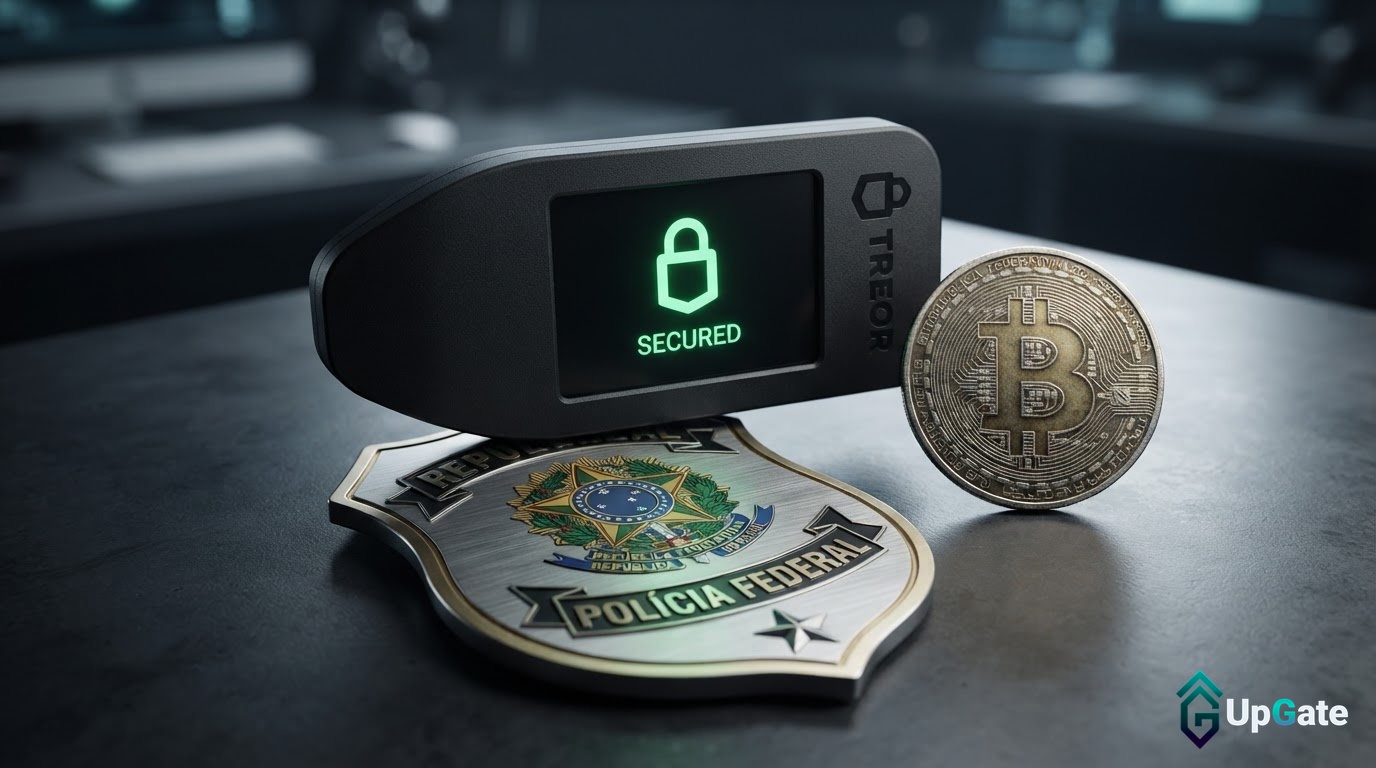
    Brazilian authorities have demonstrated advanced capabilities in recovering cryptocurrency from self-custody wallets, a significant development in the ongoing efforts to combat digital asset crime. The Civil Police of Santa Catarina (PCSC), as part of Operação ClickFix, seized over $1.7 million in various cryptocurrencies from self-custody wallets linked to a phishing operation. This operation highlights law enforcement’s evolving strategies in tackling assets held outside traditional financial institutions.

    Evolving Enforcement Capabilities

    The seizure, which occurred on September 10, 2026, involved approximately $1,708,534 (R$8.78 million at the time) in Bitcoin (BTC), Ethereum (ETH), TRON (TRX), and Tether (USDT). Authorities released details of the operation between October 7 and 9, 2026. The funds were moved in 13 separate transactions and tracked using blockchain tracing tools from Chainalysis. This technical approach allowed investigators to follow the transfers and ultimately move the seized assets to an institutional account at Foxbit, a Brazilian exchange, where they are now held under state control.

    Recovering assets from self-custody wallets presents a unique challenge for law enforcement. Unlike funds held on exchanges, where authorities can issue court orders to freeze accounts, self-custody wallets mean the owner directly holds the private keys, with no intermediary. This makes tracing and seizing such assets considerably more difficult. However, in this case, PCSC recovered seed phrases during raids, demonstrating their capacity to import wallets and analyze blockchain data, enabling controlled asset transfers.

    Broader Criminal Context and Asset Recovery

    The crypto seizure was part of a broader law enforcement effort against a phishing ring. The operation resulted in two arrests and the seizure of other assets, including luxury vehicles, such as a Corvette valued at over R$1.5 million, and R$5 million in real estate. Courts also ordered freezes on bank accounts totaling up to R$93 million. While the primary seizure involved over $1.7 million in crypto, additional funds totaling approximately $218,000 were identified, though their exact relation to the main seizure remains unclear.

    Implications for Self-Custody and Regulation

    The use of Chainalysis tooling and the subsequent transfer of seized assets to a domestic exchange like Foxbit indicates an emerging pattern in Brazilian enforcement strategies. This approach leverages specialized technology for tracking and utilizes established financial infrastructure for secure storage of recovered digital assets. According to the research findings, this operation is considered a significant self-custody digital asset recovery made by Brazilian civil police.

    Authorities released the details publicly, emphasizing that the wallets were allegedly tied to a criminal operation and not a general action against ordinary crypto holders. The case may serve to raise awareness about phishing schemes and encourage investors to strengthen their digital defenses. The research findings frame this operation as a sign of increasing regulatory scrutiny and evolving enforcement capabilities concerning self-custody wallets.

    Uncertainties remain regarding the final disposition of the assets held in the Foxbit account and how the additional identified funds will be accounted for. Nevertheless, the operation underscores law enforcement’s growing capacity to navigate the complexities of digital asset recovery in the self-custody space.

    Broader Context

    In a self-custody wallet, the owner holds the private keys directly, with no exchange or bank acting as middleman.

  • Bitcoin Insurer Meanwhile Secures New Funding

    Bitcoin Insurer Meanwhile Secures New Funding

    Meanwhile Secures $37.5 Million in Funding Amidst Growing Demand for Bitcoin Life Insurance

    Bermuda-based life insurer Meanwhile, which operates exclusively with Bitcoin, has announced a new funding round totaling $37.5 million, primarily from its existing investors. The company, backed by notable figures including OpenAI CEO Sam Altman, has now amassed over $180 million in total funding.

    The latest investment was spearheaded by Bain Capital Crypto, with participation from Haun Ventures, Framework Ventures, Pantera Capital, Apollo, Northwestern Mutual Future Ventures, and Morgan Creek Digital.

    Surge in Demand Fuels Expansion

    The funding comes as Meanwhile experiences a significant uptick in international demand for its Bitcoin-denominated life insurance policies. The company cited increased interest from clients in Asia, Europe, and the Middle East, attributing this growth to prevailing global macroeconomic instability.

    “Wealthy families around the world already hold Bitcoin. What they haven’t had is a regulated way to pass it on,” stated Zac Townsend, Meanwhile’s co-founder and CEO. “Brokers came to us because their clients kept asking. This round lets us keep up with them.”

    Innovative Insurance Products for Digital Assets

    Meanwhile launched its first product, BTC 10-Pay, designed for U.S. taxpayers, followed by BTC Life 1-Pay in early 2026. The latter is a single-premium whole life policy specifically tailored for high-net-worth individuals outside the United States. These policies are structured to be held by individuals, trusts, or companies, making them suitable for succession and estate planning purposes.

    The company reported that its net long-term underwriting income has already surpassed its total for the previous year and is projected to more than double in 2026, though specific figures were not disclosed.

    In related news, global insurance broker WTW acquired crypto insurance platform Redefind in June, launching a digital asset protection service. Redefind offers coverage for digital assets held in various custody arrangements, utilizing cryptographic proof of ownership to verify insured assets.

  • XRP Could Hit $1.20 and Stay Bullish, Analyst Claims

    XRP Could Hit $1.20 and Stay Bullish, Analyst Claims

    XRP Holds Bullish Outlook Despite Recent Downturn, Analysts Say

    Just days after trading at elevated levels with speculation mounting about its ability to breach key resistance at $1.51-$1.53 and push towards $1.60, Ripple’s native cryptocurrency, XRP, has experienced a significant pullback. Bears reasserted control, dragging the broader market lower, and XRP fell below $1.35 before finding a floor.

    However, prominent analyst EGRAG CRYPTO remains optimistic, suggesting that even a further decline would not derail XRP’s bull market trajectory. This analyst, who maintained a bullish stance on XRP even when it dipped below $1.00 in early August, believes the token can still retrace to $1.20 while preserving its bullish structure.

    Monthly Chart Analysis Points to Key Support Level

    EGRAG CRYPTO’s analysis centers on the monthly chart and the interplay between the 33 Exponential Moving Average (EMA) and the 111 EMA. Historically, this relationship has been instrumental in defining major market cycles, with $1.20 serving as a critical demarcation line.

    According to EGRAG CRYPTO, as long as XRP maintains a monthly closing price above this $1.20 level, the overarching bullish thesis remains valid. Conversely, a sustained breach below this support would necessitate a reassessment, as it would likely invalidate the current pattern.

    Potential for Significant Upside if Recovery Continues

    Should XRP successfully rebound from its recent low below $1.35, EGRAG CRYPTO has identified $1.65 as the initial significant resistance level to overcome. Beyond this, the analyst becomes even more bullish, projecting that XRP could surge to between $4.00 and $8.00 if the market structure continues to develop favorably. A more aggressive “Valhalla” scenario, though highly speculative and contingent on broader macroeconomic conditions, even envisions XRP exceeding $15.

    Four-Hour Chart Reveals Ascending Pattern

    Meanwhile, fellow XRP proponent Bird has presented a different technical outlook based on the asset’s four-hour chart, highlighting three descending resistance trendlines. Bird noted that previous instances where XRP found support after encountering the first two trendlines were followed by substantial upward price movements. The analyst suggests that a third similar setup may currently be forming.

    Bird’s analysis also points to a long-term ascending support line, a crucial demand zone between approximately $1.30 and $1.34, and resistance in the $1.52-$1.56 range. XRP has largely traded within these bounds over the past several weeks.

    Breakout Could Signal a Move Towards $2.00

    If XRP manages to break decisively above the current resistance and historical patterns repeat, Bird anticipates a move towards the $2.00 mark. This perspective is echoed by analyst Celal Kucuker, who stated that $2.00 is “within reach” by month’s end, following XRP’s bounce from what he described as a “solid support level.”

  • Bitcoin Holds Above $82.5K, ETH Recovers $2.5K as Fear Index Rises

    Bitcoin Holds Above $82.5K, ETH Recovers $2.5K as Fear Index Rises

    Crypto Market Sees Modest Rebound, Bitcoin Holds Above $82,500

    The cryptocurrency market experienced a broad, slight rebound today, with Bitcoin stabilizing above $82,564 and Ethereum approaching the $2,500 mark. Over the past 24 hours, the total value of liquidations across all exchanges reached $177 million, with short positions accounting for nearly 60% of the total. The Fear and Greed Index climbed back to 64 (Greed), up from 59 the previous day. On the macroeconomic front, U.S. stocks closed higher last Friday, indicating a recovery in risk appetite.

    Bitcoin Consolidates Near $82,500

    Bitcoin traded at $82,564 in early Asian trading today, marking a 0.94% increase over the last 24 hours. The cryptocurrency saw an intraday high of $83,528 and a low of $81,603. Its price has been oscillating between its recent 14-day peak of $86,789 on October 2nd and a low of $80,651 on October 9th, suggesting a period of consolidation.

    Ethereum Eyes $2,500 Amidst Tentative Recovery

    Ethereum also saw an upward trend, trading at $2,489, a 0.52% gain in the past 24 hours. It reached an intraday high of $2,520 and a low of $2,471. The cryptocurrency’s 14-day high was $2,754 on October 2nd, with a low of $2,413 on October 9th. Currently trading below the $2,500 level, its rebound strength remains to be confirmed.

    Liquidations Skew Towards Short Positions

    In the last 24 hours, total cryptocurrency futures liquidations amounted to $177 million. Short positions saw $106 million in liquidations (nearly 60%), while long positions accounted for $71 million (approximately 40%). Traders who bet against the market experienced more significant losses during yesterday’s modest rebound.

    Altcoins Show Mixed Performance

    Solana was trading at $109.4, showing little change (+0.15%) over the past 24 hours. Its 14-day high was $124.4 on September 27th, and its low was $106.4 on October 9th. XRP saw a more positive performance, trading at $1.399 with a 0.78% increase, reaching an intraday high of $1.407.

    Technical Indicators for Bitcoin

    Bitcoin’s daily technical indicators show a Relative Strength Index (RSI) of 50.4, placing it in neutral territory. Moving averages indicate that the closing price ($82,636) is below the 20-day SMA ($84,316) but above the 50-day SMA ($80,737) and 200-day SMA ($71,893), suggesting short-term pressure with long-term upward potential. The MACD is in a bearish configuration with widening histogram bars, indicating continued weak momentum. Within the Bollinger Bands, the closing price is situated between the middle band ($84,316) and the lower band ($81,492). Key resistance levels are the 20-day SMA at $84,316 and the upper Bollinger Band at $87,139, while support is found at the lower Bollinger Band of $81,492 and the 50-day SMA of $80,737.

    Ethereum Faces Downward Pressure

    Ethereum’s RSI (14) stands at 39.0, indicating a weaker trend. The cryptocurrency has fallen below its 20-day SMA ($2,671) and 50-day SMA ($2,555), trading only above its 200-day SMA ($2,131). The closing price ($2,488) is close to the lower Bollinger Band ($2,523), suggesting significant downward pressure. Resistance levels are the lower Bollinger Band at $2,523 and the 50-day SMA at $2,555, while support is seen at the 30-day low of $2,359 and the 200-day SMA of $2,131.

    Fear and Greed Index Recovers to Greed

    The Fear and Greed Index rose to 64 (Greed) today, a 5-point increase from the previous day’s 59, ending a streak of declines. Over the past eight days, the index has fluctuated between 59 and 73, indicating a recovery in market sentiment from previous caution.

    Macroeconomic Factors Boost Risk Appetite

    U.S. stock markets closed higher last Friday, with the Dow Jones Industrial Average up 0.83% at 51,654, the S&P 500 gaining 0.59% to 7,811, and the Nasdaq Composite advancing 0.64% to 27,366. This rise in major indices signals an increased preference for risk assets, which has benefited the cryptocurrency market.

    Outlook for Bitcoin

    In the short term, Bitcoin is consolidating around the $82,500 level. A decisive break above the 20-day SMA resistance at $84,316 could lead to further gains. Conversely, a fall below the lower Bollinger Band at $81,492 would signal potential downside risk.

  • STRK Surges as Starknet Considers Ethereum Layer 1 Shift

    STRK Surges as Starknet Considers Ethereum Layer 1 Shift

    Starknet, long a prominent scaling solution within the Ethereum ecosystem, is now openly exploring a significant shift: a potential transition from an Ethereum layer 2 to an independent layer 1 blockchain. The project announced on October 8, 2026, that it is considering this move, a development that immediately sent its native token, STRK, soaring to a nine-month high and outperforming both Bitcoin and Ether.

    Quantum Computing as the Driving Force

    The core rationale behind Starknet’s potential departure centers on quantum computing. The project aims to achieve full quantum resistance by 2027, asserting that establishing its own independent chain is the most expedient path to reaching this goal.

    Market reactions were swift and substantial. Estimates of STRK’s price surge vary, with reports indicating gains between 19% and 40% on October 8-9. The token reached approximately $0.07 to $0.073, its highest valuation in roughly nine months.

    This market activity extended beyond simple spot buying. Futures open interest for STRK saw an increase of over 50%, signaling that traders were actively taking leveraged positions based on the news. On-chain activity also saw a notable uptick. Daily trading volume on Starknet’s decentralized exchanges climbed to around $33.7 million, while network fees on October 8 reached approximately $13,685, marking a seven-day peak.

    StarkWare CEO Eli Ben-Sasson articulated the project’s concerns at the Token2049 conference, highlighting quantum computing and artificial intelligence as imminent threats that blockchains must proactively address.

    The Layer 2 Constraint and Layer 1 Ambition

    As a layer 2 solution, Starknet processes transactions independently before settling them on the Ethereum mainnet. While this arrangement leverages Ethereum’s robust security, it also subjects Starknet to Ethereum’s development and upgrade timelines. Ethereum’s projected timeline for achieving quantum resistance is 2029, whereas Starknet aims to reach this milestone two years earlier, in 2027.

    Transitioning to a layer 1 would grant Starknet direct autonomy over its consensus mechanisms, security model, and the pace of its cryptographic upgrades. Starknet’s current cryptography relies on hash functions, which are considered foundational for quantum-resistant systems. The project is eager to advance its hash-based defenses without being constrained by Ethereum’s upgrade schedule.

    Unconfirmed Transition and Future Implications

    It is crucial to note that this potential transition is not yet confirmed. Any move to a layer 1 would necessitate governance approval, extensive technical design work, and the establishment of an entirely separate validator set to secure the new chain. Currently, Starknet benefits from Ethereum’s security infrastructure. As a standalone chain, it would be responsible for building and maintaining its own consensus mechanism and attracting validators.

    For traders, the immediate outlook is characterized by volatility. The significant jump in futures open interest suggests that substantial leveraged positions are now contingent on a proposal that lacks a defined timeline.

    Should Starknet successfully transition to a layer 1 and achieve its 2027 quantum resistance target, it could establish itself as an early leader in quantum security, outpacing Ethereum’s own timeline.

    For the broader Ethereum ecosystem, Starknet’s contemplation of an exit raises pertinent questions. Layer 2 networks have largely been conceptualized as extensions of Ethereum. The fact that a prominent layer 2 is openly considering independence, citing Ethereum’s slower upgrade pace, offers a significant insight into how some development teams perceive the trade-offs of remaining integrated.

    Key developments to monitor include the emergence of a formal governance proposal, the specifics of the validator design, and Starknet’s strategy for maintaining security throughout any transition period. Observers will also be watching to see if the increased DEX volume and fee activity can be sustained once the initial excitement subsides.

  • Coinbase and Gennius Partner to Integrate Stablecoin Services into Latin American Banks

    Coinbase and Gennius Partner to Integrate Stablecoin Services into Latin American Banks

    Coinbase and fintech firm Gennius have announced a strategic partnership to offer the ONED USD stablecoin and a suite of digital asset services to banks across Latin America, beginning with Argentina. The collaboration, reported on October 8, 2026, aims to enable financial institutions to seamlessly integrate stablecoin payments, custody, trading, and loyalty rewards into their existing platforms without significant technological overhauls.

    Under the agreement, bank customers will have the ability to convert deposits and loyalty points into the dollar-pegged ONED USD token. This token facilitates instant transfers and can be used for spending via Visa cards. Each ONED USD token is issued on a 1:1 basis against USDC, held in Coinbase’s regulated custody.

    Why This Matters

    The materials describe a narrow update: Coinbase and Gennius have announced a partnership to provide banks in Latin America, beginning with Argentina, with access to the ONED USD stablecoin and a suite of digital asset services. Coinbase is embedding itself inside traditional banking infrastructure rather than relying solely on exchange activity.

    Broader Context

    Source materials place the factual news in this context: Coinbase has run into previous challenges in Argentina tied to local currency services.

    Operational Roles and Infrastructure

    Gennius will function as the program manager, overseeing the integration between participating banks’ systems and Coinbase’s infrastructure. The company brings extensive experience, having worked with over 85 financial institutions and managing more than 520 loyalty programs globally. Gennius also maintains existing relationships with payment networks Visa and Mastercard. Coinbase’s contribution includes providing regulated custody, issuance infrastructure, and the underlying USDC reserves.

    Strategic Market Entry

    This initiative marks a significant strategic shift for Coinbase, focusing on embedding its services directly within traditional banking infrastructure rather than solely relying on its exchange activities. This approach allows banks to offer digital dollar services, thereby retaining customer deposits and engagement within their own ecosystems. This is particularly pertinent in markets where consumers may already be seeking digital dollar alternatives outside of conventional banking channels.

    Argentina has been chosen as the initial market for this rollout. This selection may be influenced by Coinbase’s prior experiences with local currency services in the country. The partnership is designed to provide a streamlined solution for banks, enabling them to adopt new digital asset capabilities with minimal disruption to their core systems. The value proposition for banks is twofold: defensively, it helps retain customers, and offensively, it introduces new digital service offerings.

    The collaboration leverages the distinct strengths of both companies: Coinbase offers the regulated digital asset infrastructure and stablecoin backing, while Gennius contributes its established network of bank relationships and loyalty program data. This synergy is intended to drive the adoption of stablecoins and digital asset services within the Latin American banking sector.

  • Eliyan AI chiplet startup attracts takeover bids after $1B valuation

    Eliyan AI chiplet startup attracts takeover bids after $1B valuation

    Semiconductor Startup Eliyan Attracts Takeover Interest

    Santa Clara-based semiconductor startup Eliyan has reportedly received at least one takeover bid, a development that comes just two months after the company secured $145 million in funding at a $1 billion valuation.

    Eliyan has engaged an investment bank to explore its strategic alternatives. Among these options is a potential target valuation of $3 billion, which would represent a threefold increase from the price investors assigned to the company in late July.

    As of early October 2026, Eliyan has confirmed receiving at least one offer, though the identity of the bidder remains undisclosed. The $3 billion figure is described as a potential target rather than an agreed-upon price, with no public commitment to such a valuation yet made.

    Arm, a company with prior engagement with Eliyan, has been mentioned in acquisition discussions. Arm previously held preliminary talks with the startup and also invested $5 million. However, Arm had not submitted a formal bid as of October 2026.

    Addressing GPU Inefficiencies

    The semiconductor industry faces a significant challenge with current Graphics Processing Units (GPUs), which operate at an estimated 30-40% efficiency due to bandwidth limitations. This means that expensive chips often spend considerable time waiting for data rather than processing it.

    Eliyan’s proposed solution lies in its high-speed chiplet interconnect technology. Chiplets are smaller silicon components that are integrated into a single package, offering an alternative to traditional, large monolithic chips.

    The company’s product line includes NuLink PHYs and NuGear chiplets. A PHY, or physical layer, is crucial for the direct transfer of data bits between components, acting as the essential wiring and signaling infrastructure that enables rapid communication between chiplets.

    Technology and Funding

    Eliyan asserts that its technology has been proven on advanced fabrication nodes, including 3nm processes. The startup also holds over 100 patents and is expanding into electro-optical solutions designed to deliver high-bandwidth, low-power connectivity.

    Founded in 2021, Eliyan has raised more than $250 million in total funding across multiple investment rounds. The most substantial capital infusion occurred on July 29, 2026, when the company closed its $145 million Series C funding round, which officially granted it unicorn status with a $1 billion valuation.

    The Series C round saw significant strategic investors, including Seligman Ventures, Cisco Investments, and Lumentum. The funding was specifically allocated to enhance data transfer speeds within AI accelerators.

    Eliyan anticipates shipping its initial chiplet products by the end of 2026, with expectations of substantial revenue generation in the subsequent year.

    Factors Influencing Valuation

    The rapid shift from a $1 billion valuation in late July to a potential $3 billion target by early October signifies an aggressive repricing. Several factors are likely to influence this valuation:

    • The Bidder: An undisclosed offer could originate from various entities, including chip designers, hyperscale cloud providers, or networking companies.
    • Arm’s Involvement: Arm’s prior investment and acquisition discussions with Eliyan position it as a notable player in any potential deal.
    • Execution: The successful shipment of initial chiplet products by the end of 2026 is critical. Any delays could diminish Eliyan’s negotiating leverage, while a smooth product launch would significantly strengthen its position.