Tag: Positive

  • Blockchain.com Seeks CFTC Nod for Prediction Markets

    Blockchain.com Seeks CFTC Nod for Prediction Markets

    Blockchain.com Seeks US Regulatory Approval for Prediction Markets and Derivatives

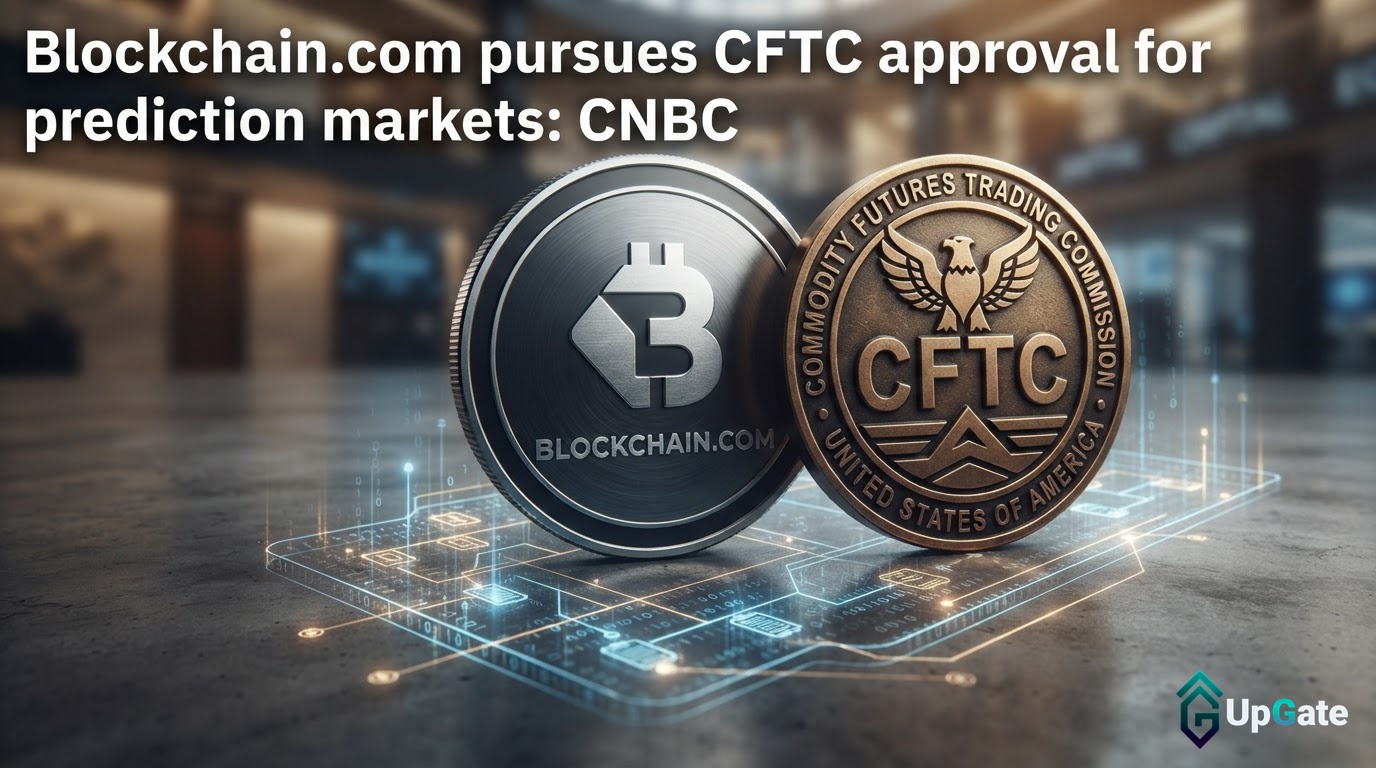
    The cryptocurrency firm Blockchain.com has reportedly applied for two licenses with the U.S. commodities regulator, as legal challenges surrounding prediction markets continue.

    According to a Friday report by CNBC, Blockchain.com has submitted applications to the U.S. Commodity Futures Trading Commission (CFTC) for approval to offer prediction market products and crypto derivatives. The exchange is seeking licenses as a designated contract market (DCM) and a futures commission merchant (FCM). These approvals would enable Blockchain.com to operate as a futures exchange for event contracts and as a broker for derivatives contracts, respectively, serving both U.S. retail and institutional investors.

    This move follows Blockchain.com’s July announcement of a planned partnership with Polymarket for the integration of prediction markets into the company’s app. However, if approved by the CFTC, the new license would allow the exchange to establish its own marketplace for event contracts.

    The regulatory landscape for prediction market platforms such as Kalshi and Polymarket is currently under scrutiny in U.S. courts. Numerous state authorities have filed lawsuits against these companies, alleging violations of laws related to betting on sports and elections. Last month, New Jersey officials petitioned the U.S. Supreme Court to review their case against Kalshi, a decision that could clarify disputes between federal and state regulators.

    In related news, prediction markets have seen a surge in activity, with Polymarket expanding into areas like Sam Altman’s ventures.

    Blockchain.com has also reportedly been exploring an initial public offering (IPO) with a valuation of up to $6 billion, aiming to raise $500 million.

    This week, CFTC Chair Michael Selig emphasized the agency’s preference for regulatory rulemaking over congressional legislation to advance cryptocurrency oversight, citing the collapse of the FTX exchange. FTX filed for bankruptcy in November 2022, leading to criminal charges against several of its executives, including former CEO Sam Bankman-Fried.

    In a Fox Business interview on Wednesday, Selig stated that proposed rules for companies registering as licensed crypto businesses would introduce “safeguards to crypto spot markets,” referencing FTX’s downfall. On Friday, he further commented that the agency’s rules are designed to prevent “theft of customer funds as we saw with FTX.”

    Selig currently serves as the CFTC’s sole commissioner and chair. As of Friday, the White House had not announced any nominations for the four vacant seats on the commission. Selig has consistently stated his intention to implement President Donald Trump’s crypto agenda and has asserted the CFTC’s exclusive jurisdiction over prediction markets.

  • Thailand’s SEC Finalizes Rules for Spot Bitcoin and Ether ETFs, Effective October 16, 2026

    Thailand’s SEC Finalizes Rules for Spot Bitcoin and Ether ETFs, Effective October 16, 2026

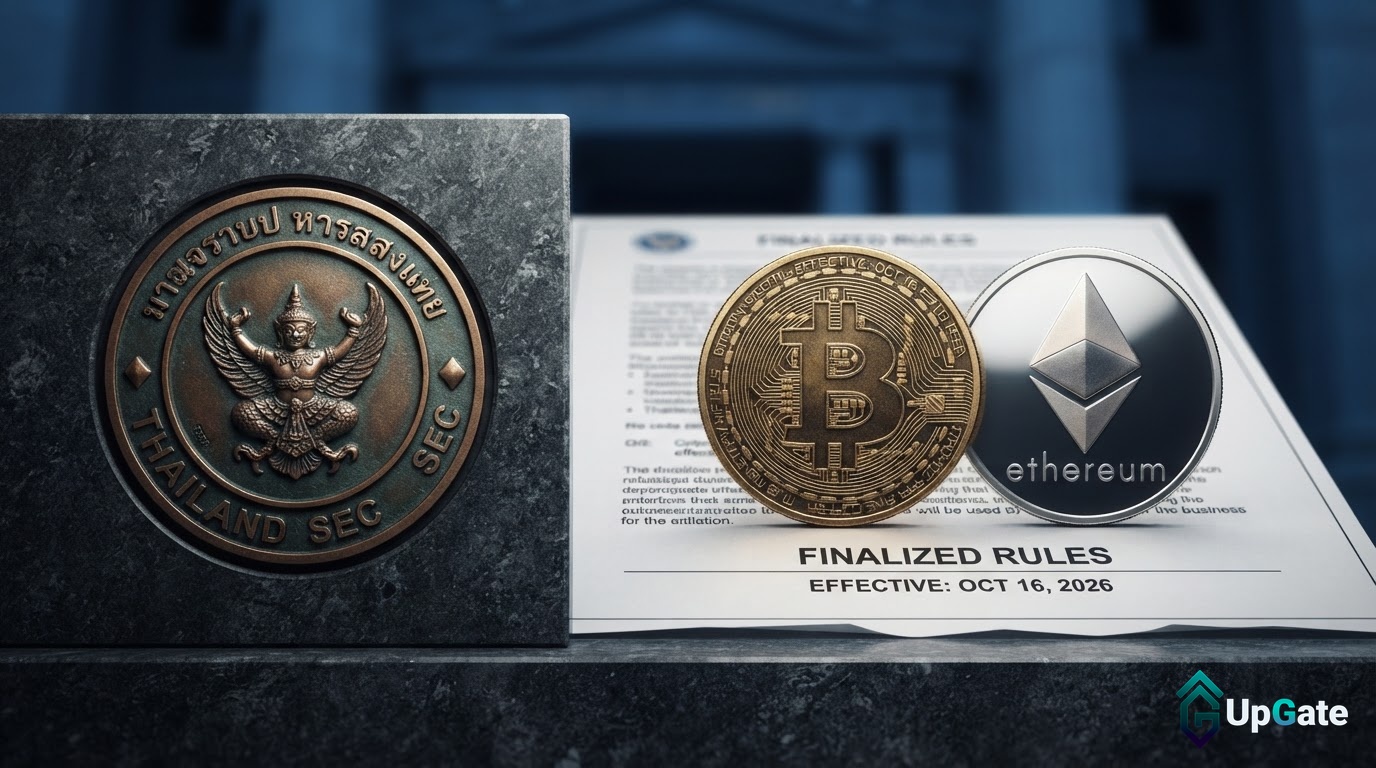
    Thailand’s Securities and Exchange Commission (SEC) has finalized a regulatory framework for the creation and trading of spot Bitcoin and Ether exchange-traded funds (ETFs) within the country, with the rules set to take effect on October 16, 2026. This framework establishes specific requirements for passively managed funds, custody, and investor safeguards.

    The regulations, announced via 11 notifications issued by the SEC on October 8, 2026, outline a structured approach to digital asset investment through traditional financial products. A key mandate is that these ETFs must be passively managed, tracking an underlying index rather than being actively managed.

    Trading of these ETFs will be exclusively permitted on the Stock Exchange of Thailand (SET). Each fund must maintain an average net exposure of at least 80% to a single underlying asset, limited to Bitcoin and Ether under the current rules. Assets held within these funds must be secured by digital-asset custodians licensed by the SEC, ensuring a regulated and secure environment for asset safekeeping.

    To bolster investor protection, the new regulations require potential buyers to complete investor education modules and provide mandatory risk acknowledgment before trading. Furthermore, securities firms are prohibited from offering margin lending for the purchase of these ETFs, limiting leverage and potential risk for retail investors.

    In a move designed to shape the domestic market, retail investors may initially be barred from accessing foreign crypto ETF-linked structures. This restriction aims to channel investment towards domestically managed products and maintain high custody standards.

    While the regulatory framework is now finalized, it is important to note that no specific ETF products or issuers have been approved yet. Asset managers must still register their funds and obtain product approval from the SEC before any trading can commence. The actual launch of these ETFs is therefore contingent on future approvals.

    This regulatory step follows Thailand’s SEC’s previous allowance of limited exposure to foreign Bitcoin ETFs, primarily for institutional and professional investors. The new framework shifts the focus towards domestic funds, emphasizing investor safeguards and a controlled market entry for spot Bitcoin and Ether ETFs.

    Why This Matters

    The materials describe a narrow update: The Thailand SEC has established a regulatory framework for the creation and trading of spot Bitcoin and Ether exchange-traded funds (ETFs) within the country. No specific ETF products or issuers have been approved yet.

    Broader Context

    Source materials place the factual news in this context: Thailand’s SEC had previously allowed limited exposure to foreign Bitcoin ETFs, aimed mainly at institutional and professional investors.

  • Bank of America Starts Penguin Solutions at Buy on AI Surge

    Bank of America Starts Penguin Solutions at Buy on AI Surge

    Bank of America Initiates Coverage on Penguin Solutions with ‘Buy’ Rating and $100 Price Target

    Bank of America has initiated coverage on Penguin Solutions with a “Buy” rating and set a price target of $100. The bank’s assessment, released on October 9, 2026, suggests a potential upside of approximately 40% from the stock’s previous closing price of around $71.57.

    The investment firm’s positive outlook is underpinned by two key factors: the burgeoning growth of agentic artificial intelligence and Penguin Solutions’ established expertise in high-performance computing. This endorsement comes just days after Penguin Solutions reported quarterly results that surpassed the expectations of its existing analysts.

    Penguin Solutions Reports Strong Fiscal Q4 2026 Results

    Penguin Solutions, which is listed on the Nasdaq under the ticker PENG, announced its fiscal fourth-quarter 2026 financial results on October 6. The company reported net sales of $567 million, marking a significant 68% increase year-over-year.

    Non-GAAP earnings per share reached $1.00, comfortably exceeding the consensus estimate of approximately $0.77. Furthermore, management revised its fiscal year 2027 revenue forecast upward, projecting it to reach about $2.43 billion at the midpoint, which implies an anticipated growth rate of around 40% for the upcoming fiscal year.

    AI-related business now constitutes 78% of Penguin Solutions’ total sales, with this segment experiencing a substantial 141% year-over-year growth. The company is currently involved in the deployment of a 36,000-GPU AI factory in Norway for a neocloud customer. This client has secured $10 billion in compute capacity from a leading AI laboratory.

    Analyst Sentiment Remains Bullish

    In the trading sessions following the earnings announcement, Penguin Solutions’ stock traded between $71 and $77 in early October. Bank of America’s $100 price target positions it significantly above this trading range.

    Bank of America is not alone in its optimistic view. Several other financial firms have maintained or upgraded their “Buy” ratings for Penguin Solutions’ stock subsequent to the latest financial disclosures. Rosenblatt Securities has set a price target of $100, mirroring Bank of America’s figure, while Goldman Sachs adjusted its target to $85. Across the analysts surveyed, price targets for Penguin Solutions range from $85 to $100.

    Penguin Solutions’ Evolution and Core Offerings

    Penguin Solutions evolved from its predecessor, Smart Global Holdings, over time, developing a comprehensive portfolio of GPU-accelerated systems and memory solutions. The company’s current focus is on AI and high-performance computing infrastructure, including GPU servers and managed services. Its flagship offering is the fully managed AI factory, a turnkey solution where Penguin designs, deploys, and operates the entire computing environment for its clients.

    A critical element of Penguin Solutions’ success is its long-standing relationship with NVIDIA. The two companies have been partners for over 25 years.

    Bank of America’s investment thesis is centered on the advancement of agentic AI, which refers to AI systems capable of taking actions and completing multi-step tasks, rather than merely responding to prompts. With 78% of its sales tied to AI and that segment experiencing 141% growth, Penguin Solutions’ financial performance is closely correlated with the continued investment pace of AI laboratories and neocloud providers. Investors will be closely watching to see if the company can achieve its revised fiscal year 2027 revenue guidance of approximately $2.43 billion, representing substantial growth following a strong 68% quarterly increase.

  • Pollak: Tokenization Supercycle Driven by Equities

    Pollak: Tokenization Supercycle Driven by Equities

    Jesse Pollak, the creator and head of Coinbase’s Base network, has outlined his vision for the next significant wave in cryptocurrency, one that he believes will not be driven by new memecoins. Speaking at Token2049 in Singapore on October 7, 2026, Pollak asserted that the forthcoming tokenization supercycle will hinge on two key pillars: tokenized equities and non-dollar stablecoins.

    His rationale is straightforward: as nations continue to utilize their own currencies, the on-chain economy will necessitate digital assets that mirror these local monetary systems. Pollak envisions this supercycle unfolding along two parallel paths. The first involves local-currency stablecoins, which he anticipates will facilitate everyday payments and transactions within individuals’ home currencies.

    The second path centers on tokenized U.S. equities. These are digital tokens designed to represent actual shares of publicly traded companies, enabling them to be traded on a blockchain. This is not merely a theoretical concept discussed in a keynote address. Base is already providing tokenized U.S. stocks to its users, lending tangible weight to Pollak’s prediction.

    In August 2026, Coinbase launched 1:1-backed tokenized equities on the Base network. The initial offerings included digital representations of shares for prominent companies such as Nvidia, Meta, Apple, and Google. The designation “1:1-backed” is crucial, signifying that each token is intended to correspond directly to an actual underlying share, rather than acting as a synthetic derivative based on price movements.

    A significant advantage of these tokens is their 24/7 tradability, a stark contrast to traditional stock markets, which operate on set business hours and close on weekends. Blockchains, by their nature, are always active.

    Tokenized Equities on Base

    Base manages corporate actions, such as stock splits, through on-chain multipliers and Chainlink oracles, bypassing the need for physical share transfers. Oracles are services that relay real-world data to a blockchain. In this context, an oracle informs the token contract when an event like a stock split occurs. Instead of distributing new shares to all holders, the system updates a numerical value that reflects the current underlying stock ownership represented by the token.

    As of early October 2026, daily spot trading volume for tokenized equities on Base reportedly surpassed $100 million, with its market share described as experiencing growth.

    Lending and Future Developments

    Pollak also highlighted lending as a subsequent development. The concept involves portfolio-backed borrowing, where users would pledge their tokenized equity holdings as collateral to borrow stablecoins. Pollak is targeting an estimated loan-to-value ratio of 30-40% for this service. In practical terms, an individual holding a portfolio of tokenized equities could borrow an amount equivalent to roughly one-third of its value in stablecoins.

    Base operates as Coinbase’s Ethereum Layer-2 network. A Layer-2 solution is a separate blockchain built on top of Ethereum, designed to enhance transaction speed and reduce costs while still leveraging Ethereum’s robust security.

    Pollak characterized the strategic shift towards tokenized assets as a pivot for Base. The network was initially focused on consumer applications and social features but is now reorienting towards building financial infrastructure. This move also intensifies Base’s competition with other entities actively pursuing the tokenization of assets, including established players like Robinhood and Kraken.

    For investors, the most tangible implication is the transition of tokenized equities from pilot programs to fully-fledged products. The reported daily spot trading volume exceeding $100 million indicates a demand that extends beyond a small group of early adopters. The 1:1 backing model is likely to be a critical factor for larger institutional investors, who typically prioritize the direct linkage to real shares—verifiable by auditors—over the convenience of 24/7 trading.

    Several questions remain open. The reliance on oracles introduces a dependency on external data, making the reliability of services like Chainlink a key component of the trust framework for these products. Furthermore, lending against volatile equities inherently carries liquidation risk, which likely explains the conservative loan-to-value ratio being targeted.

  • DogeOS Testnet Launches Ahead of Dogecoin Upgrade

    DogeOS Testnet Launches Ahead of Dogecoin Upgrade

    Dogecoin’s New Frontier: A Joke Coin Eyes Decentralized Finance with DogeOS

    Dogecoin, a cryptocurrency famously born from a meme, is charting a new course, moving beyond its origins as a joke and a payment mechanism to explore the burgeoning world of decentralized finance (DeFi). The team behind the MyDoge wallet has launched DogeOS, a novel application layer, with its public testnet, dubbed Chikyū, going live on September 30, 2026.

    Building on Dogecoin’s Foundation

    Chikyū, operating under chain ID 6281971, aims to provide developers with a dedicated platform for building smart contract applications that ultimately settle on the Dogecoin blockchain, all without necessitating alterations to the original chain’s core protocols.

    DogeOS functions as an EVM-compatible zero-knowledge rollup. This architecture allows transactions to be processed off the main Dogecoin chain in batches, with cryptographic proofs subsequently verifying the validity of this bundled activity. The EVM compatibility is a key feature, meaning DogeOS utilizes the same programming language as Ethereum. This interoperability is designed to enable developers familiar with Ethereum’s tools to deploy applications on DogeOS with relative ease, avoiding the need to start from scratch.

    Ambitious Performance Targets

    The testnet’s performance metrics are a significant highlight. DogeOS aims to achieve approximately 300 transactions per second (TPS) with block times of around three seconds. This represents a substantial leap compared to Dogecoin’s base layer, which currently handles about 30 TPS and generates blocks roughly every minute. If these targets are met, it would translate to a tenfold increase in throughput and blocks that are approximately twenty times faster.

    DOGE at the Core of Gas Fees

    Gas fees on DogeOS will be paid in DOGE, ensuring the native token remains central to the network’s operations. To facilitate testing, users can claim 42.069 test DOGE daily from a faucet, a nod to the project’s meme-infused origins that has evidently persisted through its engineering development.

    Expanding Use Cases Beyond Tipping

    The envisioned applications for DogeOS extend far beyond its initial use case of internet tipping. The development team has outlined plans for lending protocols, perpetual futures exchanges, and a broader spectrum of DeFi applications, alongside gaming and consumer-focused applications tailored for DOGE holders.

    Several projects have already begun integrating with the testnet. Superposition Finance is developing lending solutions, Barkswap is focusing on liquidity, and USDoge is working on stablecoins, with Derps and other projects also in the pipeline.

    Seed Funding and Foundation Support

    The development of DogeOS has been bolstered by significant financial backing. The project secured $6.9 million in a seed funding round in May 2025, led by Polychain Capital. Furthermore, DogeOS has garnered support from within the established Dogecoin community, with Timothy Stebbing of the Dogecoin Foundation endorsing the project as a means to enhance utility at a higher layer without modifying the foundational ledger.

    Security Model and Future Development

    The security of rollups is intrinsically linked to the systems that validate their operations. Currently, DogeOS employs a hybrid approach, incorporating validators, a trusted execution environment, and a permissioned sequencer. A select group of authorized parties is responsible for ordering transactions and providing final sign-offs. State changes are only accepted upon the validation of zero-knowledge proofs and the receipt of validator signatures.

    A crucial missing piece for enhanced security is native proof-checking directly on the Dogecoin blockchain. A proposal for a Dogecoin Core upgrade, known as OP_CHECKZKP, which would enable the base chain to verify zero-knowledge proofs natively, was submitted on July 22, 2025, but has yet to be implemented. Consequently, no mainnet launch timeline for DogeOS has been publicly announced.

    Until Dogecoin can independently verify these proofs, the rollup’s security will partially rely on the integrity of its operators, rather than being solely anchored by mathematical principles on the main chain.

    The DOGE Token’s Evolving Role

    The design of DogeOS, with its reliance on DOGE for gas fees, represents the most direct integration of the native token. Should DogeOS achieve substantial activity on its mainnet, every transaction, loan, and trade executed on the layer would consume DOGE, thereby bestowing the token with a functional utility that transcends speculation and basic payments.

    For developers, EVM compatibility significantly lowers the barrier to entry. Teams already active on Ethereum-compatible chains can readily port their existing code, which helps explain the early emergence of lending, liquidity, and stablecoin projects on the testnet. The development of stablecoins, exemplified by USDoge, is particularly noteworthy, as DeFi ecosystems often require dollar-pegged assets for trading pairs and collateral to foster growth. The inclusion of a stablecoin project on the testnet addresses this fundamental building block.

    Key Risks and Future Outlook

    The primary challenges facing DogeOS revolve around timing and decentralization. With the OP_CHECKZKP proposal still pending and no mainnet launch date established, DogeOS currently operates with a more centralized security framework than its zero-knowledge branding might initially suggest.

    Key developments to monitor include progress on the OP_CHECKZKP proposal within Dogecoin Core, any forthcoming announcements regarding a mainnet schedule, and the extent to which testnet projects like Superposition Finance and Barkswap attract significant developer and user engagement.
  • Anthropic Unlocks Top AI for Cybersecurity Scanning

    Anthropic Unlocks Top AI for Cybersecurity Scanning

    Anthropic Launches “OSS Scanner” to Proactively Identify Code Vulnerabilities in Open-Source Projects

    San Francisco, CA – Artificial intelligence company Anthropic has unveiled “OSS Scanner,” a new opt-in service designed to allow open-source software projects to request scans of their code for vulnerabilities using Anthropic’s most advanced AI models, including the undisclosed Claude Mythos. The initiative, launched on Thursday, October 9th, saw immediate interest from prominent cryptocurrency-related projects, with Nethermind, ZEUS, and VirtEngine submitting applications within the first 24 hours.

    The move comes as the cybersecurity landscape faces increasing pressure from AI-assisted attacks, prompting projects to seek an edge in patching defensive gaps before malicious actors can exploit them.

    A Faster Approach to Vulnerability Detection

    OSS Scanner is an evolution of Anthropic’s previous Project Glasswing. Historically, Anthropic would periodically scan open-source software for vulnerabilities, but each discovery required a manual review before it could be reported, a process that proved to be slow. In an official announcement, Anthropic explained that the pace of manual review meant they “could not always share vulnerabilities as quickly as possible.” OSS Scanner aims to significantly shorten this defensive window by delivering scan reports directly to participating projects immediately after completion.

    Early Adopters Seek Critical Audits

    Among the first to apply is Nethermind, a developer of Ethereum client software, which has requested an audit of its entire codebase on GitHub. ZEUS, a Bitcoin and Lightning wallet, is seeking to identify weaknesses that could impact payments, private keys, and Lightning services. VirtEngine, a decentralized computing market built on the Cosmos SDK, is another applicant. Anthropic will evaluate each request on a case-by-case basis, considering the project’s infrastructure importance, exposure to remote attacks, and user dependency before deciding whether to accept the audit.

    The Growing Threat of AI-Powered Attacks

    The urgency behind these applications is underscored by several AI-assisted attacks that have occurred this year. In August, Bitcoin exchange service Boltz temporarily suspended operations after attackers developed exploits faster than the team could patch them. Crypto payment service PayPerQ has also reported multiple suspected AI-driven attacks.

    These incidents align with a warning issued by Anthropic in a cybersecurity mission statement released concurrently with the OSS Scanner announcement: in the short term, AI’s balance tips toward the attacker. AI lowers the barrier to entry for launching attacks, while verifying and fixing vulnerabilities still relies on human effort and cannot keep pace. The decentralized nature of crypto infrastructure, the inability to enforce client upgrades, and its 24/7 remote accessibility make it particularly vulnerable in this asymmetric environment.

    A Defensive Advantage in an Asymmetric Landscape

    Anthropic positions OSS Scanner as a “defensive advantage,” leveraging its most powerful models to identify vulnerabilities that attackers might exploit in open-source projects. This direction resonates with the current sentiment in the crypto community. Ethereum researcher Justin Drake has repeatedly called for a “shelter-in-place” mode, expressing concerns that AI’s advancements in cryptography and vulnerability discovery could outpace defensive upgrade capabilities.

    Structural Challenges and Future Outlook

    However, OSS Scanner also highlights a structural issue: access to frontier AI models remains limited. The service is currently offered unilaterally by Anthropic and operates on an application and review basis, meaning not all projects will receive audit resources. As attackers gain access to AI capabilities through lower barriers, the long-term asymmetry will persist if defenders rely solely on the goodwill of a few AI companies to patch vulnerabilities.

    Key questions for the crypto community moving forward include whether OSS Scanner will expand to offer access to more models or APIs for developers to conduct their own scans. It remains to be seen if other AI companies, such as OpenAI, Google, and xAI, will introduce similar services. The ultimate concern is whether AI-powered defense will become an exclusive “security privilege” affordable only to large corporations.

  • Thailand Finalizes Spot Bitcoin and Ether ETF Regulations, Effective October 16

    Thailand Finalizes Spot Bitcoin and Ether ETF Regulations, Effective October 16

    Thailand’s Securities and Exchange Commission (SEC) has finalized regulations for spot exchange-traded funds (ETFs) tracking Bitcoin and Ether, with the rules set to take effect on October 16th. This development paves the way for such investment products to be listed on the Thailand Stock Exchange (SET).

    The finalized framework, comprising 11 official announcements, mandates that these ETFs will initially focus on a single cryptocurrency asset, with Bitcoin and Ether as the sole qualified underlying assets. The regulations prohibit the mixing of multiple tokens within a single ETF and explicitly forbid exposure through futures or other derivative contracts. To ensure alignment with the underlying asset, each fund must maintain an average net exposure of at least 80% of its net asset value (NAV) to the single crypto asset annually.

    Regarding investor access, Thai-domiciled mutual funds and private equity funds may invest in these ETFs, subject to existing limits. However, retail investors’ access to overseas crypto ETFs through brokers remains restricted, primarily available to institutional and ultra-high-net-worth clients.

    The regulatory process included principle consultations from April to May 2026 and specific draft consultations from August to September 2026. While the regulations are finalized, asset management companies must still submit applications and obtain official approval before any products can be listed. The scope of qualified crypto assets may expand in the future, depending on market liquidity, acceptance, network security, and investor protection.

    These finalized regulations mark a significant step for Thailand in establishing a regulated environment for digital asset investment products, aiming to enhance investor protection and market integrity.

    Why This Matters

    The materials describe a narrow update: The Thailand SEC has finalized regulations for the issuance and management of Bitcoin and Ether spot ETFs. The future scope of qualified crypto assets to be determined based on market liquidity, acceptance, network security, and investor protection.

    Broader Context

    Source materials place the factual news in this context: Thailand SEC拟开放「散户海外加密衍生品」!三道门槛:合规交易所、中央清算、风险控制.

  • Ripple Expands Prime Brokerage to Offer Swap Financing for Leveraged ETFs

    Ripple Expands Prime Brokerage to Offer Swap Financing for Leveraged ETFs

    Ripple is expanding its prime brokerage services to offer swap financing for leveraged ETFs, entering a traditional finance sector traditionally dominated by banks. This strategic move, facilitated by the acquisition of Hidden Road (now Ripple Prime), positions the company to compete in a fee-heavy segment of the market.

    According to a Wall Street Journal report, Ripple entered the leveraged ETF swap financing business last year through its $1.25 billion acquisition of Hidden Road. The platform is now actively engaging with ETF providers and seeking business from other investment managers, including hedge funds. On October 6, Ripple Prime announced its prime brokerage, clearing, and financing services for Brevan Howard, adding another hedge fund to its client roster. Noel Kimmel, president of Ripple Prime, described swap financing as a “growing and meaningful part” of the business.

    Leveraged ETFs use derivative instruments, such as total return swaps, to amplify the daily performance of stocks or indexes. These swaps are provided by banks or brokers at a cost, with the provider typically hedging the exposure by purchasing the underlying security. Morningstar Direct data, quoted by the Wall Street Journal, indicates that there are 593 US leveraged ETFs with over $256 billion in assets. Single-stock leveraged funds constitute a significant portion of this market, with 426 such ETFs, a category that regulators first approved in 2022.

    The competitive landscape is shifting as banks face tighter capital limits on the risk they can assume. This has created an opening for nonbank firms like Jane Street and Clear Street, which are also increasing their presence in this space. Ripple’s expansion into swap financing signifies a strategic diversification beyond its core cryptocurrency trading and payments operations, moving its prime brokerage into a financing business that has historically generated substantial fees for Wall Street firms.

    One example illustrating the fee potential is the Tradr 2X Long SDNK Daily ETF. This fund pays Ripple a fee tied to the overnight bank funding rate plus four percentage points. As of October 7, this amounted to approximately 8% of the fund’s assets on an annualized basis. These financing charges are distinct from management fees and are incorporated into the ETF’s net asset value.

    However, the Wall Street Journal report also highlights potential risks. If leveraged ETFs are held by investors over extended periods, the compounding swap costs, combined with market movements, can become very expensive for returns. Furthermore, swap financing carries inherent risks for providers. A substantial one-day decline in an underlying stock could deplete a leveraged ETF’s equity, potentially leading to losses for its counterparty. Providers mitigate this exposure by hedging through other asset managers or market makers.

    As CryptoPotato reported yesterday, Ripple Prime has expanded its relationship with Brevan Howard to encompass multi-asset prime brokerage, clearing, and financing. This development follows Hidden Road’s earlier expansion into US institutional crypto OTC swaps, cross-margining, and financing after its acquisition by Ripple.

    It is important to note that the exact total value of swap financing provided by Ripple remains undisclosed. Additionally, the specific risks Ripple faces in this venture and the effectiveness of its hedging strategies are not fully detailed. The long-term impact of compounding swap costs on leveraged ETF returns for investors also presents an area of uncertainty.

    Why This Matters

    The materials describe a narrow update: Ripple, through its acquisition of Hidden Road (now Ripple Prime), is providing swap financing to leveraged ETF providers. The exact total value of swap financing provided by Ripple.

    Broader Context

    Source materials place the factual news in this context: Ripple is moving deeper into Wall Street’s leveraged ETF business, with its prime brokerage arm providing swap financing to funds that use derivatives to amplify bets on stocks and indexes.

  • Hyperliquid Policy Chief: All Exchanges On-Chain in 10 Years; CME Lawsuit a Delay Tactic

    Hyperliquid Policy Chief: All Exchanges On-Chain in 10 Years; CME Lawsuit a Delay Tactic

    Exchanges Must Embrace Blockchain Infrastructure to Remain Competitive, Says Hyperliquid Policy Center CEO

    Singapore – In a bold prediction delivered at the Digital Asset Summit 2026 Asia, Jake Chervinsky, CEO of the Hyperliquid Policy Center, stated that within the next decade, all exchanges will need to integrate blockchain infrastructure to stay competitive. This applies to both crypto-native firms like Coinbase and Kraken, as well as traditional giants such as CME Group and Intercontinental Exchange (ICE).

    Chervinsky articulated his vision clearly: Hyperliquid is not an exchange itself, but rather an infrastructure that exchanges can utilize. He drew an analogy between the Hyperliquid protocol and foundational blockchains like Bitcoin, Ethereum, and Solana. These public blockchains, he explained, do not require registration as exchanges because they serve as underlying technology, with compliant entities providing the actual trading interfaces.

    “Hyperliquid is not looking to compete with Kalshi, Coinbase, Robinhood, or CME,” Chervinsky stated. “Hyperliquid sits one layer lower in the technology stack. It’s a technology that they can use to improve their products.” His overarching goal is for the entire financial system to upgrade its technology, adopting public blockchains as its fundamental infrastructure.

    “If we are successful, in 10 years, every exchange you can think of, whether it’s crypto-native or traditional, will have to integrate this technology to be competitive,” he added.

    Chervinsky’s remarks follow Kraken’s parent company, Payward, announcement in September that it would deploy a U.S. compliant perpetual market on Hyperliquid. In this setup, Bitnomial, a CFTC-regulated exchange and clearinghouse acquired by Payward, is responsible for creating and clearing contracts, while NinjaTrader Clearing handles account custody.

    This architecture is designed to circumvent the challenge of whether a public blockchain itself needs to be registered as an exchange. The compliance responsibilities are handled by regulated traditional financial entities at the upper layer, while the Hyperliquid chain’s infrastructure executes trades at the lower layer.

    Chervinsky noted that U.S. regulators have already permitted registered exchanges to offer crypto perpetual contracts to domestic clients. In August 2026, President Trump publicly directed the Commodity Futures Trading Commission (CFTC) to “bring Hyperliquid to U.S. shores in a compliant manner.” Prior to this, the CFTC had paved the way for Kalshi to offer regulated perpetual futures to U.S. customers.

    However, regulators have yet to approve the underlying on-chain infrastructure itself. Chervinsky believes this step will occur “in the not-too-distant future.”

    “There’s no question that regulators are working to bring on-chain markets into the U.S.,” he said. “I respect that they are approaching this in a systematic and thoughtful way. It’s not simple.”

    He clearly outlined the benefits of bringing on-chain markets under regulatory purview: shared public ledgers and decentralization offer resilience, security, and transparency, while lower costs and higher speeds improve existing market systems.

    Chervinsky also indicated that the next regulatory development will likely involve the expansion of perpetual contracts to other underlying assets. Oil and metals are already among the most active markets on Hyperliquid, with agricultural contracts also in development.

    Chervinsky also commented on the lawsuit filed by CME Group in June. CME sued the CFTC, seeking to overturn the regulator’s prior decision to approve perpetual contracts as futures products, arguing they should be classified as swaps.

    “If you choose not to compete, you can’t complain about the competition you decided not to enter,” Chervinsky remarked. He pointed out that perpetual contracts are not cannibalizing the volume of CME’s existing dated futures; rather, they represent a new, independent market that exchanges can choose to participate in or not.

    “I think this is purely a tactic by CME to slow things down because they are not yet ready to capitalize on this development themselves. It’s a delay tactic,” he stated.

    He also referenced CME’s recent decision to withdraw its 24/7 energy futures plan, citing “human resources issues” as the official reason. Chervinsky, however, was unconvinced. “I don’t think it’s a human resources issue. I think CME was too aggressive and didn’t understand the actual needs of the energy industry for 24/7 trading.”

  • Thailand Finalizes Rules for Bitcoin and Ether ETFs, Effective October 16

    Thailand Finalizes Rules for Bitcoin and Ether ETFs, Effective October 16

    Thailand’s Securities and Exchange Commission (SEC) has finalized a comprehensive rulebook for Bitcoin and Ether exchange-traded funds (ETFs), with the new framework set to take effect on October 16, 2026. This development marks a significant shift towards a regulated, domestic approach for investors seeking exposure to digital assets.

    Broader Context

    Source materials place the factual news in this context: Previous measures included limited institutional exposure to foreign crypto products, which meant exposure ran through overseas vehicles and was open to a restricted group of investors.

    Framework Details

    The SEC issued 11 notifications establishing the regulatory framework, which will initially permit ETFs to hold Bitcoin and Ether as their underlying assets. These ETFs are slated to trade on the Stock Exchange of Thailand (SET). The rules mandate that these funds must be passive, track a single asset, and maintain an average net exposure of at least 80% to the underlying cryptocurrency over each accounting year. Furthermore, the digital assets must be held by onshore custodians supervised by the SEC.

    Investor Protections and Access

    To enhance investor protection, the framework includes requirements for risk education, suitability assessments, and a confirmation process for investors. The use of margin lending to purchase these ETFs will not be permitted. This regulatory path contrasts with previous measures that relied on foreign investment vehicles and were accessible only to a restricted group of investors.

    For investors, the primary benefit of this new framework is access through a regulated and familiar channel. Investing in an ETF on the SET eliminates the need for self-managed wallets, seed phrase management, and the assessment of offshore exchange trustworthiness. This move aims to provide a more secure and accessible entry point into the cryptocurrency market.

    Market Implications

    The new regulations also present distinct implications for market participants. Asset managers may find themselves competing primarily on operational efficiency, execution costs, and the speed of their approval processes, given the requirement for funds to be passive and single-asset focused. For onshore custodians, the mandate to hold the underlying crypto assets represents a clear business opportunity, as demand for their services is expected to grow directly with any inflows into these ETFs.

    Context and Future Outlook

    Previously, Thailand’s approach to crypto investments involved limited institutional exposure through overseas products, which had a narrower reach. The SEC had previously conducted consultations on the principles and structure for these crypto ETF products earlier in 2026, paving the way for the finalized rules.

    While the framework is now reported, several uncertainties remain. It is not yet clear which asset managers will secure approval to launch these ETFs, how quickly approved products will become available on the SET after the effective date, or whether the list of eligible underlying assets will expand beyond Bitcoin and Ether in the future. The practical implementation of the investor protection measures also remains to be seen.

    The regulator has not committed to an expansion of eligible assets beyond Bitcoin and Ether, though the current structure leaves room for future additions. The finalized rules are designed to provide a regulated pathway for crypto investments, moving away from reliance on foreign products and offering a more structured environment for both investors and service providers within Thailand.