Tag: Positive

  • Bitcoin Bear Market Ends: Cycle Position Revealed

    Bitcoin’s Bear Phase May Already Be Behind It

    Bitcoin is once again at the center of a fierce debate. While many market participants have interpreted recent weakness as the beginning of a new bear market, crypto trader @CryptoFergani argues the opposite. According to his assessment, the market has already endured its bearish phase, and current conditions point to a different stage of the cycle altogether.

    To understand his argument, it is important to look beyond daily price swings and focus on the larger structure of the market. @CryptoFergani’s chart presents Bitcoin moving within a long-term ascending channel that has guided price action across multiple cycles. Historically, the lower boundaries of this channel have acted as accumulation zones, while the upper boundaries have marked periods of optimism and cycle peaks.

    The chart highlights several occasions where Bitcoin touched the lower sections of the channel before beginning substantial recoveries. In previous cycles, those moments coincided with widespread pessimism before being followed by powerful advances. The current position on the chart places Bitcoin near a similar region, leading the analyst to conclude that the market is emerging from a prolonged corrective period rather than entering a fresh bear market.

    Market psychology is central to this thesis. Many investors following the traditional four-year cycle have recently reduced exposure or exited positions. With fewer potential sellers, downward pressure weakens, and even small increases in demand can significantly move the price. This is why the analyst interprets recent weakness as exhaustion rather than collapse, suggesting the market is resetting ahead of another expansion phase.

    Bitcoin’s Next Chapter

    If the bear market is indeed over, the next question becomes where Bitcoin currently sits in the cycle. The answer, according to the analyst’s framework, is somewhere between accumulation and acceleration. Several factors support this view. Institutional participation in digital assets continues to expand, regulatory discussions in the United States are gaining importance, and expectations of future economic stimulus remain part of the broader outlook.

    @CryptoFergani also highlights business cycle shifts, US dollar movements, Federal Reserve policy changes, and commodity trends as parts of a larger setup that could favor risk assets.

    At the same time, Bitcoin’s short-term performance remains mixed. It is currently trading around $67,176 after a 4.3% decline over 24 hours. From @CryptoFergani’s perspective, these pullbacks are not a new bear market but turbulence within a broader transition. His long-term projection still anticipates a sharp upside move after the current consolidation, with a potential rise from the $60,000–$80,000 range to $320,000–$340,000 later in the cycle, provided Bitcoin stays within its long-term ascending channel.

    Whether that forecast ultimately materializes remains to be seen. However, the central message is clear: while much of the market is focused on recent declines, some analysts believe Bitcoin is no longer fighting a bear market at all. Instead, it may be laying the groundwork for the next major stage of the cycle.

  • Mastercard Adds XRP Ledger and 7 Other Blockchains to Stablecoin Settlement

    Mastercard Adds XRP Ledger and 7 Other Blockchains to Stablecoin Settlement

    Mastercard announced Wednesday its intention to integrate regulated stablecoins into its global card-settlement network, a strategic move aimed at enabling card issuers and acquirers to process transactions directly on-chain. The company stated that this new service will be operational across eight distinct blockchains, thereby enhancing the “real-world utility” of digital assets. In addition to the on-chain settlement capabilities, Mastercard also plans to introduce settlement cycles that operate intraday, on weekends, and during holidays.

    Stablecoin Integration and Blockchain Support

    Mastercard’s announcement specified that the stablecoins supported by this initiative include Circle’s USDC, a rival to Tether, which the company noted is already facilitating early on-chain settlement activities in select markets. The company also listed stablecoins issued by Paxos, such as PYUSD, USDG, and USDP. Furthermore, Ripple’s RLUSD and SoFi’s SoFiUSD were cited as part of the initial stablecoin lineup for the network.

    The stablecoins will be accessible across a wide array of supported blockchain networks, including Arbitrum (ARB), Base, Canton, Ethereum (ETH), Polygon (POL), Solana (SOL), Tempo, and the XRP Ledger (XRPL). While Mastercard did not detail any changes to the types of partners eligible to utilize the network, it indicated that the plan will allow customers to leverage both traditional payment settlement and digital-asset-based settlement through their existing infrastructure.

    Expansion Plans Through 2026

    Raj Dhamodharan, executive vice president of Blockchain & Digital Assets at Mastercard, articulated the company’s perspective that the next phase of stablecoin adoption hinges on practical applications in scenarios where timing and liquidity are critical. He specifically highlighted settlement as a key area, describing intraday and weekend settlement options as a means for partners to optimize liquidity management within an always-on digital economy.

    Mastercard further stated that these expanded capabilities will be rolled out globally, contingent upon regulatory approval. The initial deployment will be confined to “parts of the United States and Latin America.” The payment giant indicated that additional regions, partners, and regulated stablecoins are slated for inclusion through 2026, as its stablecoin settlement offering grows beyond its initial launch areas.

  • Crypto4me: Recurring Buys Cement Crypto’s Status as Regular Asset

    Crypto4me: Recurring Buys Cement Crypto’s Status as Regular Asset

    Crypto4me Rolls Out Recurring Purchases to Simplify Regular Digital Asset Investment

    Bratislava, Slovakia – June 3, 2026 – crypto4me, a service operated by licensed crypto-asset provider Madison Six j. s. a., has launched a new feature designed to streamline regular cryptocurrency investments. Dubbed “Recurring Purchases,” the functionality allows users to automate their monthly crypto acquisitions, catering to both novice and experienced digital asset investors.

    The new feature enables clients to pre-set a monthly investment amount, select one or more cryptocurrencies, and designate their funding source. Once activated, purchases are executed automatically on a monthly basis according to the user’s defined parameters. Users retain full control, with the ability to modify, pause, or cancel their recurring purchase plans at any time, ensuring flexibility in their investment strategy.

    Introduced in mid-May, Recurring Purchases complement crypto4me’s existing cryptocurrency packages, which offer exposure to curated digital asset groups through pre-designed strategies. This latest addition underscores crypto4me’s commitment to enhancing user convenience, promoting regularity, and simplifying the day-to-day management of digital asset investments.

    “Many individuals are drawn to cryptocurrencies but prefer not to navigate the same purchase process repeatedly each month or constantly make decisions about timing their next investment,” stated Miloš Mázor, Chairman of the Board of Directors and CEO of Madison Six. “Recurring Purchases simplify this by allowing users to establish their preferences once and adjust them as needed. It’s a practical feature that aligns with crypto4me’s core mission: making crypto access more straightforward while empowering users with control.”

    Prior to finalizing a recurring purchase plan, users are presented with a comprehensive overview detailing the selected amount, cryptocurrencies, associated fees, and payment information. The objective is to foster transparency and manageability in regular cryptocurrency transactions without introducing undue complexity.

    About crypto4me

    crypto4me facilitates the acquisition of major cryptocurrencies, including Bitcoin, Ether, and SOL. Operating under the stringent requirements of the European MiCA license, the company upholds high security standards for trading and cryptocurrency storage. Additional security measures include multi-factor client authentication, encryption, and regular penetration testing.

    Madison Six j. s. a. operates the crypto4me service. As of December 18, 2025, the company holds authorization from the National Bank of Slovakia (license number 100-001-025-213), granted in accordance with the MiCA regulation, to provide cryptocurrency-related services. This license also permits the company to offer cryptocurrency services on a cross-border basis throughout the EU/EEA.

    *Regulation (EU) 2023/1114 of the European Parliament and of the Council of 31 May 2023 on markets in crypto-assets and amending Regulations (EU) No 1093/2010 and (EU) No 1095/2010 and Directives 2013/36/EU and (EU) 2019/1937.

    Cryptocurrencies are highly volatile and may carry an increased risk of investment loss.

  • Zcash Completes Landmark Upgrade, ZEC Price Surges

    Zcash Completes Landmark Upgrade, ZEC Price Surges

    Critical Flaw in Zcash Transaction System Patched in Emergency Upgrade

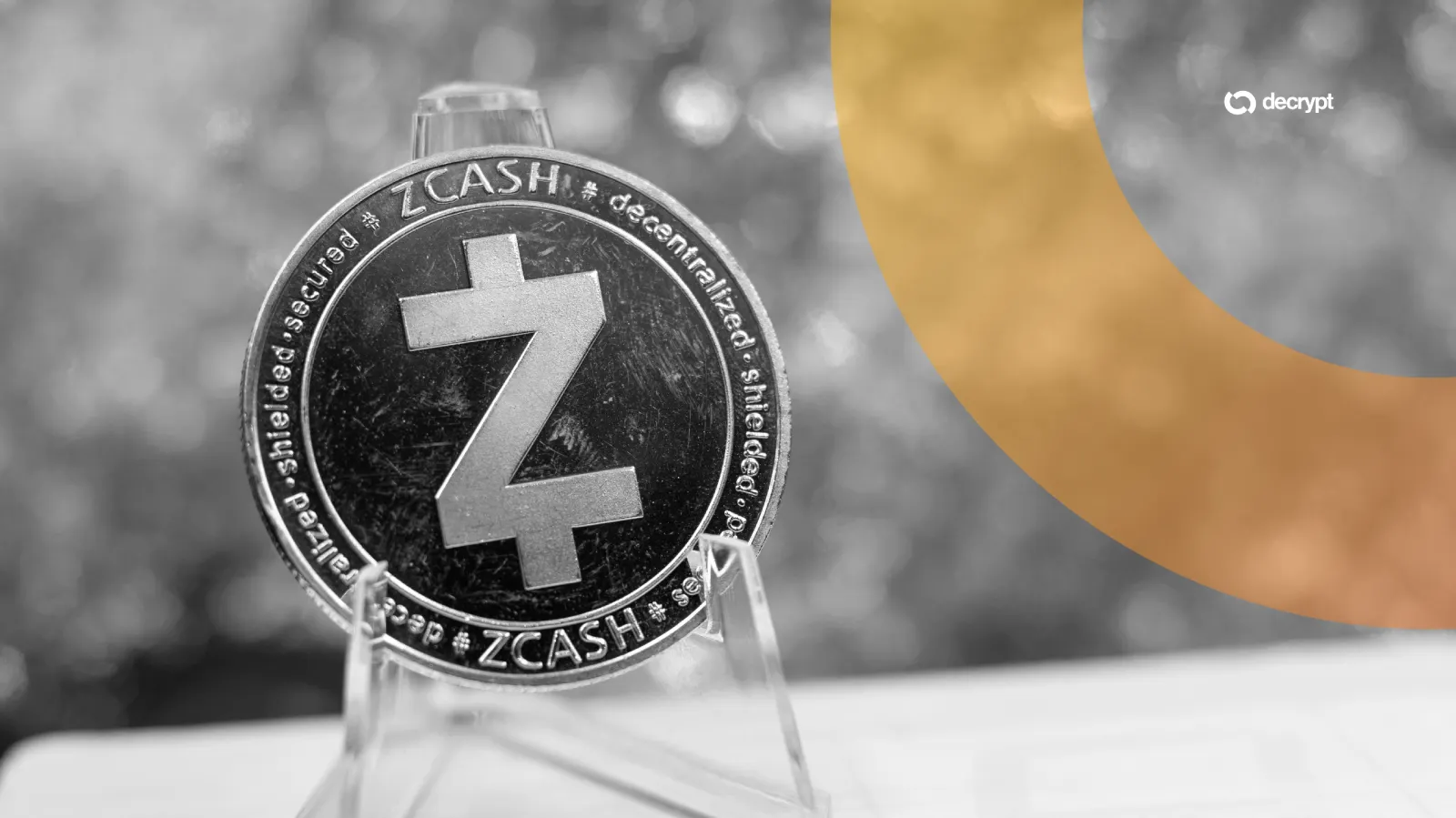
    The Zcash Foundation announced Wednesday that it has quietly addressed a critical vulnerability within the privacy cryptocurrency’s core transaction system, implementing a rare emergency network upgrade. The bug, discovered by a security researcher, could have potentially allowed malicious actors to spend funds they did not possess.

    The vulnerability was identified on May 29 by independent security researcher Taylor Hornby. It was located within the Orchard Action circuit, the cryptographic mechanism that powers Zcash’s most advanced privacy pool. The Orchard pool, introduced in 2022, is considered a cornerstone of Zcash’s privacy features, requiring no trusted setup and holding a substantial portion of the circulating ZEC tokens.

    Hornby reported the flaw to engineers at Zcash Open Development Lab (ZODL) the same evening. Within hours, a team of protocol developers confirmed the issue and initiated a carefully managed, confidential response aimed at preventing exploitation before a fix could be deployed.

    The coordinated repair process spanned five days. Initially, developers enacted an emergency soft fork, a temporary rule change that completely halted Orchard transactions while the patch was finalized. Private discussions with miners and exchanges commenced on the evening of May 31. An initial attempt to activate the fix encountered deployment challenges, but a second effort succeeded early Monday morning, effectively stopping all Orchard activity at block 3,363,426.

    A permanent solution was implemented on Wednesday with a full network upgrade, designated NU6.2. This upgrade restored Orchard functionality by incorporating a corrected circuit. Such a hard fork was deemed necessary because rectifying a zero-knowledge proof system requires updating a cryptographic verifying key, a change that cannot be achieved through standard software patches.

    Officials have stated that the total supply of ZEC was never compromised. Zcash’s internal “turnstile” mechanism, which monitors value across all transaction pools, confirmed that no unauthorized coins were generated. There is currently no evidence that the bug was ever exploited.

    Josh Swihart, founder of ZODL, described the operation on X, stating, “Given the time available and the number of parties involved (the devs at ZODL and Zcash Foundation, miners, exchanges, others), this was the most ambitious network upgrade in Zcash’s history.”

    The Foundation has urged all node operators to upgrade immediately to Zebra 5.0.0, the software release that implements the corrected network rules.

    Following the upgrade, some block explorers initially appeared to show a period of network inactivity, leading to speculation about downtime. However, experts and the block explorers themselves clarified that the network remained operational. The apparent lack of activity was attributed to block explorers temporarily pausing as they upgraded their own network nodes.

    CipherScan, a block explorer, explained on X, “Block explorers are just readers. They pull data from a node, parse it, and display it. If the node is upgrading or resyncing, the explorer goes stale. The chain itself kept producing blocks the entire time. Miners didn’t stop. Transactions kept confirming.”

    The price of Zcash (ZEC) has shown no adverse reaction to the disclosure of the emergency upgrade. The privacy-focused coin has continued its recent upward trend, trading at approximately $629, marking a more than 10% increase over the past 24 hours and a 53% rise over the last 30 days. ZEC has surged 1,084% over the past year, reaching a recent high near $700, though it remains significantly below its all-time peak of $3,191 set in 2016.

  • ICP Surges Amidst Crypto Slump: $10 Target in Sight?

    ICP Surges Amidst Crypto Slump: $10 Target in Sight?

    Internet Computer (ICP) Defies Crypto Carnage: Analysts Eye Significant Upside

    Finding a leading cryptocurrency that has managed to remain in positive territory on a weekly basis has proven a difficult task, given the significant downturn experienced across the broader market in recent days.

    Internet Computer (ICP) stands out as one of the few assets posting gains, with some analysts suggesting its valuation could soon reach considerably higher levels.

    Despite Bitcoin’s 11% weekly decline and Ethereum’s 10% drop, ICP has appreciated by 3% over the same period, currently trading just above $3. Its market capitalization has climbed to nearly $1.7 billion, positioning it as the 53rd-largest cryptocurrency.

    A key driver behind ICP’s ascent appears to be advancements within its ecosystem. The popular X account BSCN highlighted that the protocol processed 7.2 million transactions last month, surpassing all other blockchain networks. Solana followed in second place with fewer than 3 million transactions.

    ICP’s positive performance has captured the attention of traders and analysts, sparking a series of optimistic predictions. For instance, X user Crypto Tony posited that a successful retest of $3.15 could pave the way for long positions targeting $3.50 and $4, “while we hold above.”

    JAVON MARKS observed ICP’s move above the $3 mark, indicating a potential for a 220% surge towards $10. Such a significant rise would not be unprecedented for the asset, which briefly traded above $400 in its early stages.

    Earlier, X user Nehal also shared their analysis. The analyst’s assessment of ICP’s price trajectory suggested that a confirmed breakout above the descending resistance zone between $4.50 and $5 could ignite a substantial rally towards $8-$12, with the possibility of reaching $16+ if momentum accelerates.

    “Rejection at resistance could send price back toward the $2-$2.50 support zone,” they added.

    The recent trend of users shifting from centralized trading platforms to self-custody methods lends further support to these bullish forecasts. Data from CoinGlass indicates that exchange outflows have exceeded inflows in recent days, suggesting investors are not eager to liquidate their holdings.

    Meanwhile, ICP’s Relative Strength Index (RSI) remains in neutral territory but has been gradually approaching overbought levels, a condition that often precedes price corrections. This technical analysis tool measures the speed and magnitude of recent price changes, with readings ranging from 0 to 100. Values above 70 typically signal an impending correction, while readings below 30 are often interpreted as buying opportunities. As of this report, ICP’s RSI stands at approximately 62.

  • Whale.io Unveils Whale Printer for $WHALE Token Staking

    Whale.io Unveils Whale Printer for $WHALE Token Staking

    Whale.io Unveils “The Whale Printer” Staking System for $WHALE Token

    Mahe, Seychelles – June 3rd, 2026 – Whale.io, a prominent online crypto casino and sportsbook, has officially launched “The Whale Printer,” an integrated platform staking system designed for its native $WHALE token. The new feature allows eligible token holders to lock their $WHALE tokens for specified durations in exchange for guaranteed token rewards.

    Staking Structure and Yields

    The Whale Printer staking system is built around three distinct lock-up periods. Each period is associated with a fixed multiplier and a corresponding annual percentage yield (APY). Multipliers are set at the moment a staking position is established, ensuring predictable reward terms throughout the chosen lock-up duration.

    Reward Pool and Sustainability

    All rewards distributed through The Whale Printer will be drawn from a dedicated pool of 20 billion $WHALE tokens, which constitutes 20% of the total token supply. This pool is finite and will not be replenished. Once depleted, The Whale Printer will permanently cease operations, and no new staking positions will be accepted. This mechanism is intended to incentivize early participation while promoting long-term sustainability and value accrual for $WHALE stakers.

    How to Stake $WHALE

    To engage with The Whale Printer, users must have $WHALE tokens available in their Whale.io account balance. Staking positions can be initiated via the token page on the platform, where users select the amount of tokens to stake and their preferred lock period.

    The system permits up to 10 concurrent staking positions per account. Each position operates independently, with its own token allocation, lock period, and completion timer. The minimum staking requirement is determined by platform parameters. It is important to note that early withdrawal of funds from active staking positions is not permitted.

    Utility of $WHALE Token

    $WHALE functions as the native utility token within the Whale.io ecosystem. According to the project, token distribution has historically occurred through platform gameplay, missions, and general user activity, with no allocations made to private sales, presales, or venture capital investors.

    The Whale Printer enhances the utility of the $WHALE token by introducing a staking mechanism that rewards users with $WHALE based on their chosen lock periods and the platform’s predefined reward structures.

    The Whale Printer is now accessible on whale.io/token.

    About Whale.io

    Whale.io operates as a leading online crypto casino and sportsbook, offering a range of features including exclusive Whale Originals games, blockchain-integrated rewards, substantial cashback programs, and a strong commitment to transparency, community ownership, and on-chain verifiability. With $WHALE as its core utility token, Whale.io aims to cultivate one of the most rewarding ecosystems in the crypto gaming industry.

  • Blockmaze Unlocks $500T RWA Tokenisation with Compliance-First Infrastructure

    Blockmaze Unlocks $500T RWA Tokenisation with Compliance-First Infrastructure

    Blockmaze Pioneers Compliant Infrastructure for Tokenized Assets, Bridging Traditional Finance and Blockchain

    Dubai, UAE – June 3rd, 2026 – Blockmaze, a regulated ecosystem for tokenized assets backed by Finvasia Group, is establishing new benchmarks in the financial technology sector. The company is developing a compliance-centric infrastructure designed to seamlessly integrate traditional financial markets with blockchain technology, addressing critical challenges of trust and legal ownership in asset tokenization.

    With a significant regulatory footprint spanning over 45 registrations across Europe, the GCC, and Asia, including licenses in eight jurisdictions, Blockmaze aims to accelerate the adoption of real-world asset (RWA) tokenization. The platform ensures that tokenized assets are not only created but also legally recognized, compliant, and linked to real-world ownership within a global asset market estimated to exceed $500 trillion. This robust framework empowers issuers to bring assets on-chain with enhanced speed, security, and regulatory confidence.

    Blockmaze offers ready-to-deploy solutions for issuers, institutions, brokers, exchanges, and financial platforms seeking to engage in the evolving landscape of on-chain finance. The platform is built by and for compliant entities, facilitating the transition of traditional assets onto the blockchain in an era increasingly defined by Web3 technologies. Industry projections, such as those from McKinsey, suggest that over $2 trillion in assets could be tokenized by 2030.

    Tokenization of RWAs represents a significant evolution for financial markets, bringing established assets onto blockchain infrastructure. While the current cryptocurrency market is valued at approximately $3 trillion, the broader global investable asset pool, encompassing real estate, stocks, bonds, commodities, and more, is estimated at over $500 trillion.

    The acceleration of RWA tokenization globally is met with a persistent challenge: bridging the gap between digital tokens and legally recognized ownership. As regulatory frameworks for tokenized assets mature worldwide, regulated infrastructure is poised to become the cornerstone of sustainable adoption.

    Blockmaze addresses this by embedding compliance at the foundational level of its infrastructure. Its regulatory-first framework enables issuers to develop tokenized assets with integrated licensing, verification, and connectivity to traditional financial systems. This approach is designed to foster institutional confidence and support the next phase of RWA adoption, where trust, underpinned by robust regulatory frameworks, will be paramount.

    “The future opportunity extends far beyond cryptocurrencies; the true transformation lies in bringing the world’s existing financial assets on-chain,” stated Tajinder Virk, Co-Founder & CEO of Blockmaze and Finvasia Group. “Current penetration remains remarkably low, with only about $40 billion of the $500 trillion global asset opportunity tokenized today. While token creation technology is readily available, the primary hurdles have always been connecting these tokens to real-world ownership, achieving regulatory acceptance, and building institutional trust. This is precisely the gap Blockmaze was engineered to fill.”

    Virk elaborated, “The next wave of tokenization will not be determined by speed of compliant token creation, but by the ability to establish trusted, legally recognized assets supported by strong regulatory frameworks. The global shift towards a regulated blockchain environment necessitates that tokenized assets possess licensing, compliance, and legal recognition to cultivate long-term trust.”

    He added, “Blockmaze harmonizes regulatory-first infrastructure with the finality of blockchain, enabling secure, transparent, and verifiable ownership of tokenized assets, thereby safeguarding both issuers and investors throughout the asset lifecycle.”

    “Despite blockchain technology’s decade-long existence, mainstream adoption hinges on institutions, regulators, and governments transitioning from legacy financial systems to trusted digital infrastructure,” Virk explained. “The fundamental challenge is not token creation itself, but rather establishing trust, legal recognition, and regulatory acceptance. While anyone can create a token today, the critical question is whether that token represents a genuine underlying asset and if its ownership is recognized and enforceable beyond the blockchain.”

    “A token representing real estate, for instance, only attains true value when ownership rights are legally recognized beyond the blockchain and integrated into the jurisdiction’s legal framework. Tokenization must bridge digital ownership with real-world ownership – a gap Blockmaze is built to span,” he emphasized. “We are future-proofing tokenized assets through legal compliance, transparency, real-time transactions, and blockchain efficiency to facilitate secure, large-scale adoption.”

    Blockmaze facilitates the migration of traditional financial assets into the digital asset economy by linking real-world ownership with blockchain technology. Distinct from conventional crypto platforms, Blockmaze is specifically engineered to empower issuers and institutions to transform traditional assets into secure, accessible, and compliant digital investment products. Developed from extensive experience in regulated financial markets, Blockmaze integrates profound financial expertise, regulatory insight, and blockchain innovation to support the future of tokenized finance.

    The platform is purpose-built for real-world assets, featuring a regulation-first infrastructure prioritizing security, compliance, and institutional adoption. Backed by a robust licensing framework across key financial hubs including the UAE, Europe, and the GCC, Blockmaze has established extensive regulatory coverage to support its global vision for trusted tokenized finance.

    Blockmaze operates as a Layer-1 blockchain infrastructure designed to power the inevitable tokenization of real-world assets. It is conceived not merely as another blockchain, but as a regulated financial infrastructure for a future where real-world assets can transition on-chain securely, transparently, and with legal recognition.

    About Blockmaze

    Blockmaze is a regulated tokenized asset infrastructure platform, supported by Finvasia Group, dedicated to bridging traditional finance and the digital asset economy. Positioned as a leading regulated ecosystem for tokenized assets, Blockmaze empowers businesses and institutions to launch, manage, and scale compliant tokenized asset offerings across multiple jurisdictions.

    The platform provides enterprise-grade solutions encompassing tokenized stocks, tokenized CFDs, tokenized gold, tokenized real estate, and white-label tokenization infrastructure, complemented by integrated payment, compliance, custody, and regulatory frameworks. By merging blockchain innovation with institutional-grade governance, licensing, and operational trust, Blockmaze aims to accelerate the global adoption of legally recognized real-world asset tokenization.

    Blockmaze operates across major financial jurisdictions, including the UAE, Europe, and the GCC, assisting financial institutions, brokers, exchanges, wealth managers, fintechs, and payment providers in participating in the next phase of global capital markets.


  • Mastercard Taps Ripple’s RLUSD for Stablecoin Push

    Mastercard Taps Ripple’s RLUSD for Stablecoin Push

    Mastercard Broadens Stablecoin Integration for Global Settlements

    Global payments powerhouse Mastercard is significantly advancing its integration of blockchain technology into traditional finance, announcing expanded settlement capabilities that now encompass a range of stablecoins. The move includes Ripple’s RLUSD, Circle’s USDC, Paxos-issued PYUSD, USDG, USDP, and SoFi’s SoFiUSD.

    These U.S. dollar-pegged crypto assets will be supported across multiple networks, including XRPL, Solana, Ethereum, Arbitrum, and Base. This strategic expansion allows merchants and partners to settle transactions using these digital assets, marking a transition from pilot programs to practical, real-world applications.

    Mastercard has been developing its cryptocurrency strategy through its Multi-Token Network (MTN), an initiative designed to bridge traditional finance and digital assets. The company recently highlighted a new collaboration involving prominent industry players such as Binance, Ripple, and PayPal.

    The company’s focus on stablecoins intensified in March with the $1.8 billion acquisition of payments firm BVNK.

    Ripple’s RLUSD is particularly noteworthy due to the company’s established presence in cross-border payments. However, Mastercard’s announcement extends to other established stablecoins like USDC and PYUSD, which are already gaining traction in institutional and payment use cases. By supporting a diverse set of stablecoins, Mastercard appears to be positioning itself as a neutral infrastructure provider rather than endorsing a single issuer.

    This latest development in the stablecoin arena comes amid a surge in demand for faster and more cost-effective cross-border transactions. Stablecoins are increasingly recognized as a viable alternative to traditional correspondent banking systems, offering near-instant settlement and reduced fees.

    Mastercard’s decision to broaden its stablecoin support underscores growing confidence in their long-term role within the global financial system. The company has also emphasized its commitment to regulatory compliance, security, and interoperability, crucial elements for widespread institutional adoption.

    “The next phase of stablecoin adoption is about real-world utility, especially in settlement, where timing and liquidity matter most,” said Raj Dhamodharan, executive vice president, Blockchain & Digital Assets at Mastercard. “By introducing intraday and weekend on settlement options across our global network, we’re expanding how partners manage liquidity and operate in an always-on digital economy while maintaining the trust, resilience and safeguards they expect from Mastercard.”

  • Blockchain Firm Aims to Launch Digital Gold in 30 European Markets

    Blockchain Firm Aims to Launch Digital Gold in 30 European Markets

    Digital Gold Token Nears European Debut After MiCA Filing

    NatGold Digital announced on June 2 that its NATG token is poised for availability across all 30 European Economic Area (EEA) member states. This significant step follows the company’s filing of its Markets in Crypto-Assets (MiCA) White Paper with the Central Bank of Ireland in April, and its subsequent publication under Article 9 of the EU’s MiCA regulation on May 7, 2026.

    The announcement represents a key milestone for NatGold Digital, a Miami-based firm focused on “digital gold mining.” This patent-pending process involves tokenizing the intrinsic value of verified, in-ground gold resources, a departure from traditional gold-backed tokens that represent ownership of physical bullion held in storage. Unlike tokens such as PAX Gold, which signify title to stored gold, NATG represents certified ownership of unextracted gold. NatGold positions this innovation with its tagline: “Not Gold. Not Bitcoin. The Natural Evolution of Both.”

    MiCA Filing and Its Implications

    The NATG MiCA White Paper was submitted to the Central Bank of Ireland, NatGold’s chosen EU regulatory point of contact, on April 3, 2026. It was subsequently published on May 7, in accordance with Article 9 of Regulation (EU) 2023/1114. The company’s press release noted that the acceptance of this filing does not imply endorsement or approval of NATG by any regulatory authority, nor should it be construed as a recommendation or assessment of the token’s value. This is standard disclosure language for issuers operating under MiCA’s notification framework.

    The precise date for NATG’s European market launch will be communicated separately. Under MiCA’s framework for asset-referenced tokens, NATG will be accessible to eligible market participants throughout the EEA, leveraging passporting provisions that permit EU-wide distribution based on a single national filing.

    Andrés Fernández, CEO of NatGold Digital Ltd., stated in the press release that NATG was conceived as a globally relevant digital asset from its inception. He added that the international response to the company’s pre-market reservation program indicated that the NatGold model resonates with a broad audience beyond any single market.

    Demand Metrics Underscore Ambition

    The pre-market figures provide context for NatGold’s European expansion plans. The company’s reservation program, which concluded for new participants on February 25, 2026, saw 17,466 individuals from 162 countries reserve a total of 133,518 NATG tokens. This represented over $469 million in gross demand, based on a Baseline Intrinsic Value of $3,518 per token at the program’s close, according to NatGold’s official website.

    The institutional infrastructure supporting the token’s launch was finalized on May 22, when NatGold announced the appointment of High Ridge Trust as its independent custodian. This appointment marked the final element of the NATG tokenization ecosystem prior to its market debut, as per a previous announcement. Karen J. Wendel, President of High Ridge Trust, described the custody structure as designed to ensure operational integrity and foster institutional confidence within the ecosystem.

    This development is seen as a significant moment for the emerging sector of commodity-backed digital assets in Europe, particularly concerning gold. A MiCA-compliant gold token backed by certified in-ground resources, rather than vaulted bullion, entering 30 markets simultaneously represents a novel test for financial products within the EU’s new regulatory landscape. This could potentially reshape how both institutional and retail investors gain exposure to gold within the digital economy.

  • XRP Sees Short-Term Dip, Analyst Eyes Larger Setup

    XRP Sees Short-Term Dip, Analyst Eyes Larger Setup

    Patience Could Yield Significant Gains for XRP Investors

    Investors who demonstrate patience through the current market downturn may stand to be among the biggest beneficiaries when sentiment eventually shifts, according to one analyst closely monitoring XRP’s performance during this period of weakness.

    A Resilient Floor for XRP

    The analyst’s assessment of prevailing market conditions suggests that XRP is unlikely to fall below the $1 mark. The cryptocurrency has been trading near the lower end of its recent range, pressured by a broader cryptocurrency sell-off that has seen Bitcoin breach key support levels and shaken market confidence.

    In a video report, the analyst identified the $1.20 area as a potential floor, anticipating it as a precursor to any substantial recovery. This level, in his view, represents the kind of final capitulation that has historically preceded significant rallies, a pattern he believes is currently unfolding.

    Geopolitical Pressures Impacting the Market

    The analyst attributes much of the near-term risk not to fundamental cryptocurrency factors, but to geopolitical developments in the Middle East. Heightened tensions in the region have fueled concerns about potential disruptions to crude oil supplies. Reports indicate declining oil inventories, drawdowns in Japan’s strategic petroleum reserves, and renewed conflict between Iran and Israel. Furthermore, idle vessels in the Gulf are reportedly facing operational challenges that could impede energy transportation. The analyst cautioned that even if a peace agreement is reached, supply chains could require months to fully normalize. This lingering uncertainty, he argues, leaves the door open for further selling pressure across risk assets, including cryptocurrencies.

    Traditional Markets Signal Caution

    Traditional financial markets are offering little solace to investors. The U.S. bond market remains in a prolonged downturn, and while the S&P 500 has reached new highs, these gains are concentrated among a select few companies. Market breadth is narrow, and valuations have reached historic extremes. The analyst’s recommendation is to forgo the overheated equity market and instead focus on assets that have already experienced significant corrections.

    A Delayed, Not Denied, Bull Run

    The analyst maintains that XRP’s long-term investment case remains robust, with a major rally anticipated in 2026. He intends to continue buying during dips, viewing the current environment of heavy selling and widespread fear as an ideal setup for substantial future gains. Reports indicate that even significant institutional investors have been unable to halt the price decline. However, the analyst views this as a characteristic of the market, rather than a flaw, noting that it tends to reward those who persevere through challenging periods.