A directory within Ripple’s payments documentation has sparked interest among XRP supporters after a user highlighted its extensive list of over 500 financial institution identifiers across various regions. These identifiers primarily facilitate payment routing and operational processes. However, the directory’s size has renewed focus on Ripple’s global payments network and the potential role of XRP within it.
Ripple’s Expanding Banking Network
The central point of discussion is Ripple’s payments documentation, which includes comprehensive bank identifier directories used within its payment ecosystem. The directory encompasses financial institutions from numerous countries and regions, featuring entries from major banks such as ANZ, Commonwealth Bank, HSBC Australia, ING, Macquarie Bank, Westpac, and National Australia Bank, as well as smaller regional institutions and many others. Each organization is assigned a unique identifier to streamline payment routing within Ripple’s network.
It is crucial to understand that the presence of an identifier in Ripple’s directory does not automatically signify that a bank is using XRP. These identifiers primarily serve as routing references, enabling payment participants to identify financial institutions and process transactions accurately across Ripple’s payment network.
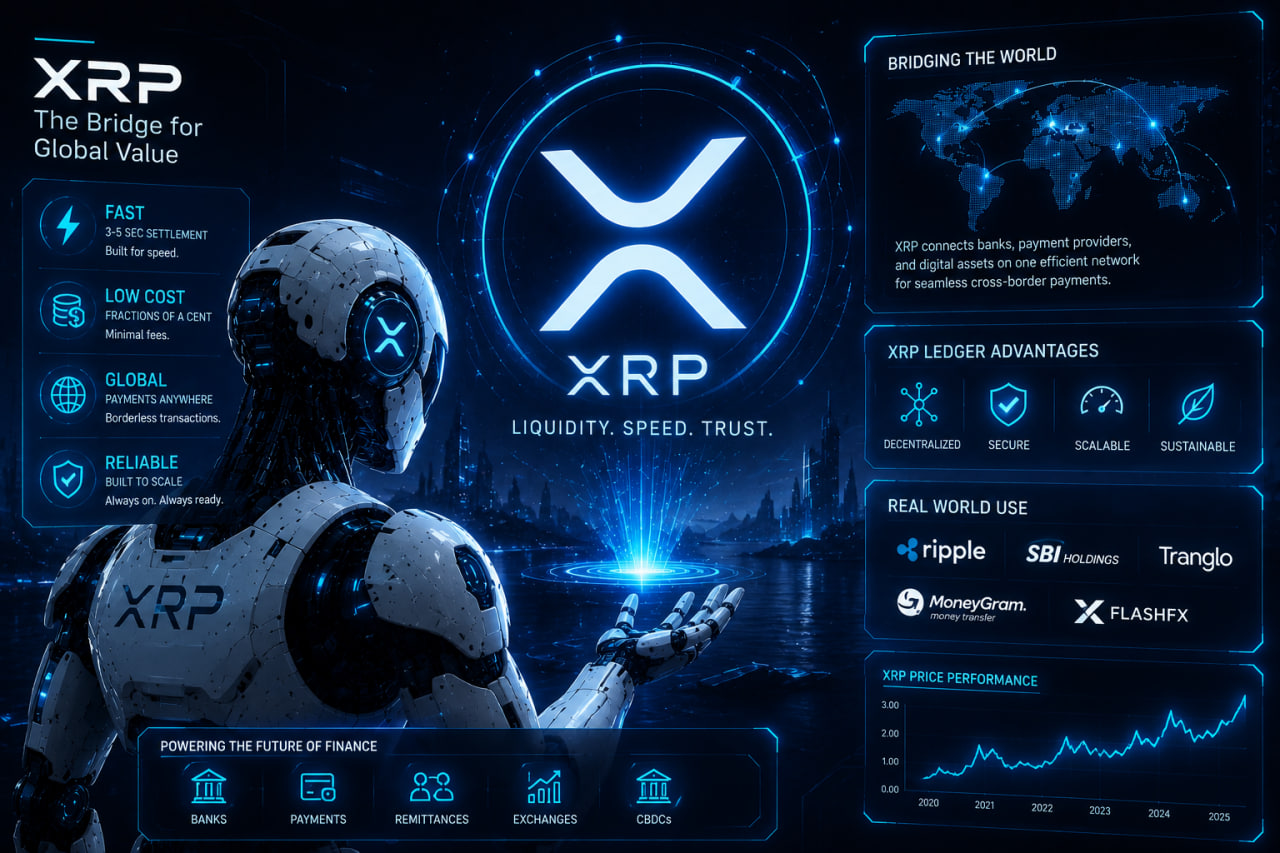
What is of interest to XRP investors is not the existence of the identifiers themselves, but what they reveal about Ripple’s long-term strategy. Ripple Payments can be viewed as a global payment rail connecting banks, payment providers, exchanges, and financial institutions. Once institutions are connected to the network, they can transfer money across borders more efficiently than through traditional correspondent banking systems.
XRP’s Place In The Network
Traditionally, banks often need to maintain substantial amounts of foreign currency in pre-funded accounts worldwide to facilitate international transfers. Ripple’s On-Demand Liquidity (ODL) solution can mitigate this requirement by utilizing XRP as a bridge asset.
For example, if a bank in Australia wants to send funds to a recipient in another country, XRP can act as the temporary settlement layer. The payment can be converted into XRP, transferred within seconds, and converted into the destination currency almost instantly. The transaction settles quickly without requiring multiple intermediaries or pre-funded accounts.
The practical implication is straightforward: the greater the payment volume flowing through XRP-based liquidity solutions, the greater the potential demand for XRP. Increased utility can support adoption because institutions are using the asset. This does not mean every institution in Ripple’s directory will adopt XRP, nor does it guarantee higher prices. Many organizations currently use Ripple’s payment technology without utilizing XRP for settlement. Nevertheless, the presence of over 500 identifiable institutions within Ripple’s payment framework demonstrates that the company has already built substantial financial infrastructure. If a growing portion of these connections eventually migrates toward XRP-powered liquidity, the result could be increased transaction volume, stronger network effects, broader institutional adoption, and potentially greater long-term demand for XRP.