Tag: Positive

  • Bitwise NEAR ETF Clears Regulatory Hurdles, Launch Nears

    Bitwise NEAR ETF Clears Regulatory Hurdles, Launch Nears

    Bitwise Secures Key Approvals for NEAR Protocol ETF, Eyes Late September Launch

    Bitwise Investment Advisers has successfully navigated two significant regulatory milestones for its proposed spot NEAR Protocol Exchange Traded Fund (ETF), paving the way for a potential launch around September 29, 2026. On September 24, 2026, NYSE Arca approved the ETF’s listing application, and the Securities and Exchange Commission (SEC) confirmed the effectiveness of the trust’s registration statement via Form 8-A on the same day.

    The ETF, slated to trade under the ticker symbol NRR, is structured to hold NEAR Protocol tokens directly. A key feature of the fund is its intention to stake the entirety of its holdings, aiming to generate additional yield from staking rewards on top of any potential price appreciation of the underlying asset. This approach distinguishes it from Bitcoin or Ether ETFs, which typically hold their assets in cold storage without actively generating yield.

    Coinbase Custody will be responsible for the safekeeping of the NEAR tokens, while BNY Mellon will provide cash custody and administrative services. The fund’s annual management fee has been set at 0.75%.

    The trust was established as a Delaware statutory trust in April 2025, indicating a regulatory journey of approximately 17 months from its formation to the recent listing approval.

    Initial seed capital for the filing was modest, comprising 8 shares valued at $25 each, totaling $200 in net assets as of July 28, 2026. A planned subsequent seed basket of 20,000 shares, valued at $500,000, is expected to establish the necessary working capital base prior to the public debut.

    Following the news of the regulatory approvals, the price of NEAR’s token experienced a notable surge, climbing approximately 20% within 24 hours and extending its gains to around 26% over the subsequent week.

    It is important to note that the SEC’s approval of the registration statement does not constitute an endorsement of the NEAR Protocol token itself or the ETF security.

  • Aave Unlocks Tokenized US Stocks for USDC Collateral

    Aave Unlocks Tokenized US Stocks for USDC Collateral

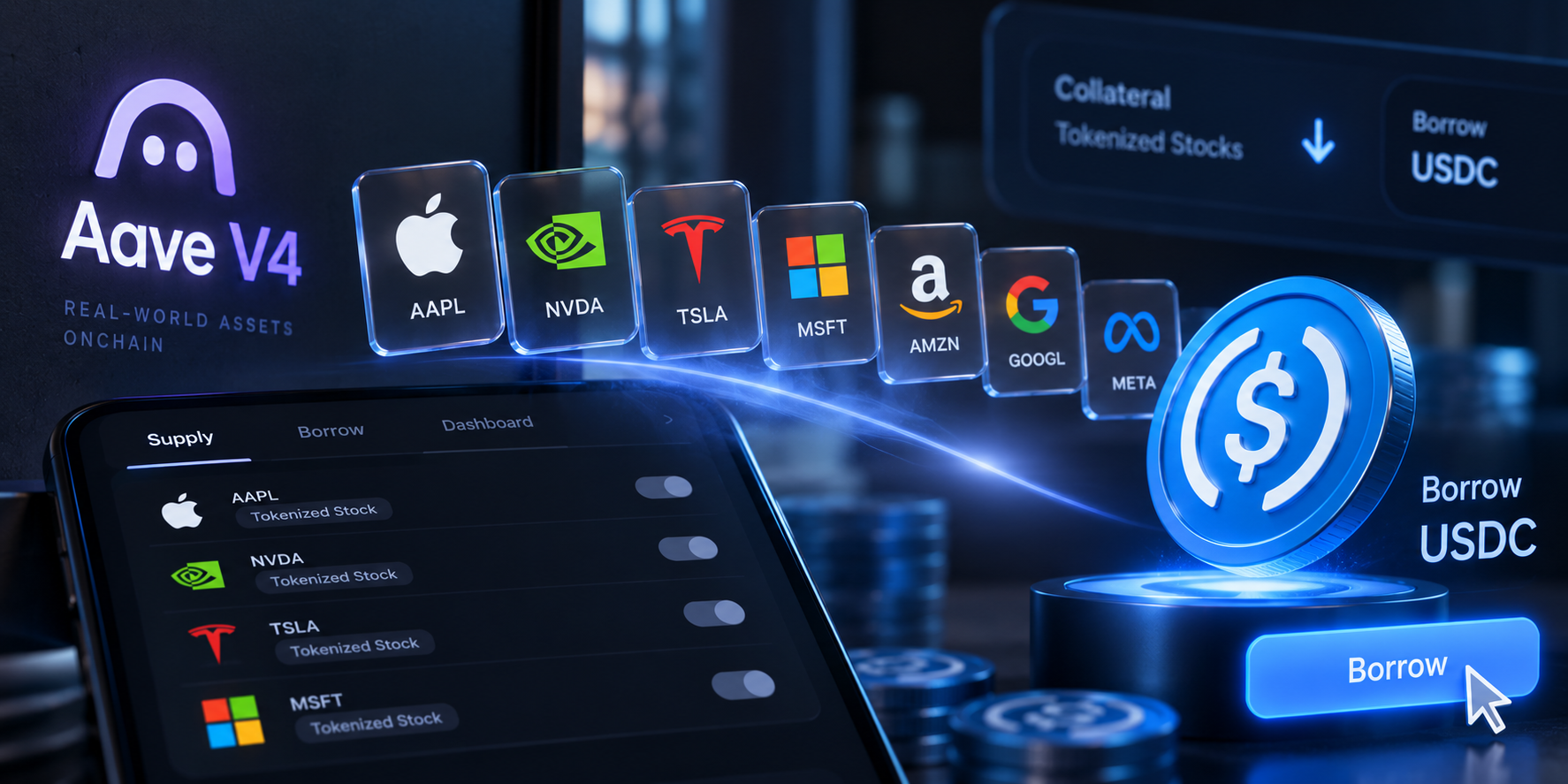
    Aave V4 Launches Equities Hub on Base, Enabling Non-US Users to Borrow USDC Against Tokenized US Stocks

    Decentralized finance protocol Aave V4 has launched its Equities Hub on the Base network, allowing eligible non-US users to borrow USDC by using seven tokenized US stocks issued by Coinbase as collateral. This feature marks a significant expansion for Aave, extending its lending capabilities beyond purely crypto assets and tapping into the vast liquidity of the public equity markets, estimated at nearly $150 trillion, through tokenization.

    The Equities Hub went live on September 25th, initially listing seven tokenized stocks tracking major companies: Apple, Amazon, Alphabet, Meta, Microsoft, Nvidia, and Tesla. All these assets are issued by Coinbase. Chainlink is providing on-chain pricing for these seven assets through its tokenized stock price feeds.

    The Equities Hub operates on Aave V4’s “Hub and Spoke” architecture, consolidating all stock collateral into a single USDC market. However, risk parameters are set independently for each asset. This design ensures that issues with one stock will not affect others, a crucial consideration given the varying volatility of US equities.

    Risk parameters set by Aave’s risk supplier, LlamaRisk, include a total collateral cap of approximately $29 million for the seven stocks, a USDC supply cap of $32 million, and a borrowing cap of $21 million. The collateral factor, which determines how much can be borrowed against an asset, ranges between 65% and 79%, depending on the specific stock.

    Currently, these seven tokenized stocks are only available as collateral and cannot be borrowed. Aave has indicated that it may introduce more tokenized stocks from Coinbase in the future, and potentially include GHO as a borrowable asset. However, any such additions would be subject to governance and risk assessments.

    Stani Kulechov, founder and CEO of Aave Labs, stated in an announcement that public equities represent one of the largest pools of capital globally, and tokenization is bringing this capital onto the blockchain. “Until now, tokenized stocks were just something you could hold or trade,” Kulechov said. “Today, they become collateral against which you can borrow.”

    This is not the first time Kulechov has highlighted the potential of tokenized assets. In a mid-September interview with The Block, he noted that institutions “bring scale,” which could drive a substantial increase in on-chain lending demand. He believes that tokenization and DeFi are no longer technical challenges but rather marketing and adoption issues.

    Following the obstruction of the CLARITY Act in the Senate by a vote of 49 to 50, Kulechov suggested that DeFi might need to adopt an “Uber-like” strategy, expanding to a sufficient user base to compel lawmakers to address regulatory concerns.

    This collaboration involves three key players: Aave providing the DeFi lending protocol, Coinbase issuing the tokenized stocks, and Chainlink supplying the on-chain pricing.

    Johann Eid, Chief Business Officer at Chainlink, commented that Aave’s adoption of Coinbase’s tokenized stocks, coupled with Chainlink as the official oracle solution, is a significant step towards bringing the global stock market, valued at over $150 trillion, onto the blockchain.

    Antonio García-Martínez, Head of Growth at Base, pointed out that eligible clients outside the US can now borrow USDC using these stocks, while USDC providers can earn interest. This initiative introduces a new source of liquidity to the Base ecosystem and creates a closed loop with Coinbase’s own tokenized stock offerings.

    Aave has accumulated $3.6 trillion in deposits and facilitated over $1 trillion in total loans. The introduction of tokenized US stocks positions the protocol to move beyond pure crypto lending towards broader real-world asset (RWA) collateralized lending. However, the initial cap of $29 million is considered conservative and still a distance from attracting institutional-grade capital.

    Two key areas to watch in the future are whether LlamaRisk will relax the collateral cap and whether Aave will allow tokenized stocks to be borrowed as assets, not just used as collateral. If institutions can directly borrow tokenized stocks on-chain for shorting or hedging, Aave would truly become a cross-asset lending protocol. In the short term, this launch appears more like a technical validation, with the stability of the Hub and Spoke architecture in handling traditional asset risk parameters being a critical determinant for future steps.
  • Ethereum Approaches $2,800 Resistance Amidst Uncertainty and Shifting Market Dynamics

    Ethereum Approaches $2,800 Resistance Amidst Uncertainty and Shifting Market Dynamics

    Ethereum is currently positioned near a significant technical hurdle at the $2,800 resistance level, a point that has historically influenced its recent price action. While the cryptocurrency has recently reclaimed its 200-day moving average—a move analysts suggest could signal a bullish reversal—its ability to decisively break through $2,800 remains a key uncertainty, poised to dictate its short-term market direction.

    Technical Landscape: Reclaiming Averages and Historical Levels

    The rally that began in August and gained momentum in September has led Ethereum to reclaim its 200-day moving average and push into the $2,800 region. This level has acted as both support and resistance multiple times over the past two years, often preceding significant price movements. Daan Crypto Traders highlighted that a weekly close above the 200-day moving average and exponential moving average has solidified a bullish reversal structure. However, the $2,800 level stands as a primary obstacle, and its successful conversion into support could pave the way for further upward movement towards the $3,000 to $4,000 range.

    Market Dynamics: Leverage and Selling Pressure

    Market dynamics surrounding leverage have also shifted. According to CW, the size of Ethereum’s high-leverage positions has decreased significantly, with long positions reportedly falling to approximately $2.1 billion and short positions standing near $4 billion. This reduction in leverage occurred after many accumulated high-leverage positions were liquidated. Merlijn The Trader has indicated that much of the forced selling pressure may have already been absorbed during an earlier drawdown, suggesting that the market might be better positioned for upward volatility. However, this reduced positioning also leaves Ethereum vulnerable to increased volatility as it approaches the critical $2,800 resistance.

    Analyst Perspectives: Interpreting the Signals

    Analyst sentiment, while largely constructive, emphasizes the prevailing uncertainty. Michaël van de Poppe has expressed a view that a strong upside notable move for Ethereum is a matter of time. Yet, the broader market context suggests that while the higher-timeframe trend has improved, the market must still suggest its ability to turn the stubborn $2,800 resistance zone into support. Merlijn The Trader concluded that Ethereum’s recent performance, which has seen it rise 80% from its July bottom, might have been underestimated this cycle.

    Conclusion: Navigating Uncertainty

    Ultimately, Ethereum’s path forward hinges on its ability to overcome the $2,800 resistance. While technical indicators and analyst sentiment point towards potential upside, the historical significance of this level and the inherent volatility associated with such junctures mean that the outcome remains uncertain. the market may be closely watching whether Ethereum can convert this key resistance into a new support base, or if it may face a rejection that could lead to increased price fluctuations.

  • AMD Surges 300%, Hits $1 Trillion Market Cap

    AMD Surges 300%, Hits $1 Trillion Market Cap

    AMD Surpasses $1 Trillion Market Cap, Joins Elite Semiconductor Club

    Advanced Micro Devices (AMD) has achieved a remarkable milestone, crossing a valuation threshold that seemed improbable just a few years ago. On September 21, 2026, AMD’s market capitalization surged past $1 trillion for the first time, marking it as the fourth U.S. semiconductor company to reach this valuation.

    The company’s stock experienced a significant surge, hitting an intraday high of approximately $616 and closing around $613, reflecting a roughly 10% increase in a single trading day. Year-to-date in 2026, AMD’s stock has climbed an impressive 180% to 187%, significantly outperforming Nvidia’s return of approximately 21% to 23% over the same period. Nvidia currently holds a market capitalization of roughly $5.4 trillion.

    Strong Q2 Results Fuel Investor Enthusiasm

    AMD’s second-quarter 2026 financial results provided investors with substantial reasons for optimism. The company reported total revenue of $11.54 billion, a 50% increase compared to the same quarter in the previous year. The data center segment was a particular highlight, with revenue reaching $6.7 billion, a remarkable 107% year-over-year increase.

    AI Workloads Drive Growth for EPYC and Instinct

    The robust growth is largely attributed to AMD’s EPYC server CPUs and Instinct GPUs, which have become integral components for large-scale artificial intelligence training and inference workloads. Key customers deploying AMD’s silicon include Meta, Microsoft, OpenAI, and Anthropic. Anthropic, in particular, is reportedly making significant investments in AMD’s MI450 GPUs. Meta currently accounts for approximately 5.5% of AMD’s total revenue.

    A Select Group of Chipmakers

    AMD now joins a distinguished list of U.S. chipmakers that have surpassed the $1 trillion market capitalization mark: Nvidia, Broadcom, and Micron.

    Challenging the Incumbent in the AI Arena

    AMD’s achievement is particularly noteworthy as the company continues to operate as a challenger in a market dominated by Nvidia. Nvidia’s $5.4 trillion valuation significantly overshadows AMD’s milestone. Nvidia’s H100 and Blackwell chips remain the preferred choice for major AI training initiatives, and its CUDA software ecosystem presents considerable switching costs that are difficult to overcome with hardware specifications alone.

    AMD’s strategy for hyperscale customers centers on addressing the risks of supply concentration. The company emphasizes that its ROCm software stack has matured sufficiently to support major workloads with competitive performance. For companies like Microsoft and Meta, which are investing tens of billions annually in AI infrastructure, even a 20% allocation to AMD hardware translates into substantial contract volumes.

    Future Outlook and Customer Concentration

    The issue of customer concentration warrants close observation. While Meta’s approximately 5.5% contribution to revenue is significant, the growing list of major clients such as Microsoft, OpenAI, and Anthropic suggests a path toward diversification. However, the exceptional 107% growth rate in the data center segment is expected to normalize as the comparison base expands.

  • CFTC Clarifies Tokenized Asset Use for Futures Firms with No Action Letter

    CFTC Clarifies Tokenized Asset Use for Futures Firms with No Action Letter

    The Commodity Futures Trading Commission (CFTC) has issued a “No Action Letter” this week, establishing a regulatory pathway for futures commission merchants (RIAs) to manage client funds using tokenized assets and to accept blockchain ledgers as official records. This guidance, a direct response to a petition from the Futures Association (FIA), clarifies bookkeeping and record-keeping requirements under the Commodity Exchange Act (CEA) in the context of tokenized assets.

    The “No Action Letter” permits RIAs to utilize tokenized traditional assets for client fund management and employ blockchain technology for official record-keeping, provided specific conditions are met. These include ensuring that the tokenized assets are investable under U.S. federal or state law, that investment decisions remain with the regulated RIA, and that on-chain records are verifiable, immutable, and fully accessible to the CFTC for enforcement.

    This development is poised to streamline operations for futures firms by potentially eliminating the need for parallel ledgers, thereby reducing compliance costs associated with tokenized assets. The FIA has stated that this guidance removes a significant hurdle for asset tokenization within the futures industry, suggesting a potential acceleration in the expansion of real-world asset (RWA) tokenization.

    It is important to note that the CFTC’s guidance specifically applies to tokenized traditional assets, such as tokenized Treasuries, commercial paper, structured products, and stocks, and does not extend to crypto-native assets like Bitcoin or Ethereum. The “No Action Letter” serves as informal guidance, not a formal regulation, and applies solely to CFTC-regulated futures commission merchants, not to SEC-regulated advisors or banks.

    The CFTC’s action complements recent regulatory steps, such as the SEC’s exemption for on-chain U.S. stock trading. While other bodies like the SEC and Federal Reserve continue to explore regulations for stablecoins and tokenized assets, the CFTC’s stance offers a defined framework for a segment of the financial market. However, uncertainties remain regarding the precise standards for blockchain record verifiability, immutability, and accessibility as defined by the CFTC, and the extent to which other regulatory bodies will adopt similar guidance is yet to be determined.

    Why This Matters

    The materials describe a narrow update: The CFTC released a No Action Letter in response to a petition from the FIA, clarifying that registered futures commission merchants (RIAs) can use tokenized assets to manage client funds and use blockchain ledgers as official records, provided certain conditions are met. The specific conditions under which blockchain records are deemed ‘verifiable, immutable, and fully accessible’ by the CFTC.

    Broader Context

    Source materials place the factual news in this context: CFTC issued ‘No Action Letter’.

  • Tokenized Asset Count Surges to 1,473 This Year

    Tokenized Asset Count Surges to 1,473 This Year

    Mantle Network Reports Explosive Growth in Tokenized Assets

    Mantle Network is experiencing a significant surge in its tokenized asset business, with both the number of assets on its platform and their total value reaching unprecedented levels. The network now hosts 1,473 tokenized assets, a dramatic increase from just 71 at the start of 2026. Concurrently, the Distributed Asset Value has climbed to approximately $476.1 million, marking a roughly 110% increase over the past 30 days.

    Asset Count Surges More Than Twentyfold

    The growth in Mantle’s tokenized asset count has been substantial, more than twentyfold since January. This expansion goes beyond typical month-to-month fluctuations often seen in Total Value Locked (TVL) metrics. The network attributes this acceleration to a broadening array of tokenized products, including equities, exchange-traded funds (ETFs), regulated stablecoins, and yield-bearing assets. Key issuers and infrastructure providers within the Mantle ecosystem include xStocks, Securitize, Ethena, and Paxos.

    Beyond Issuance: Focus on Distribution

    The increasing diversity of tokenized assets, encompassing stocks, funds, stablecoins, and structured products, signifies a maturation of the tokenization market beyond its initial focus on Treasury products. While the technical and legal challenges of representing regulated financial assets on public blockchains are increasingly being addressed, Mantle is emphasizing the crucial next stage: distribution.

    The network aims to facilitate the liquidity, collateral use, settlement, and integration of these tokenized assets by connecting issuers with exchanges, custodians, market makers, and decentralized finance (DeFi) protocols. This strategic positioning focuses on the ecosystem’s ability to distribute assets, a factor Mantle believes will capture as much value as the issuance itself.

    While the $476 million figure remains modest compared to traditional securities markets, the rapid pace of growth is a significant indicator. The jump from 71 to 1,473 tokenized assets in less than a year suggests a rapidly expanding ecosystem, moving beyond a few dominant products to a more robust and diversified market. Tokenized finance is beginning to resemble a functional market rather than a series of isolated experiments.

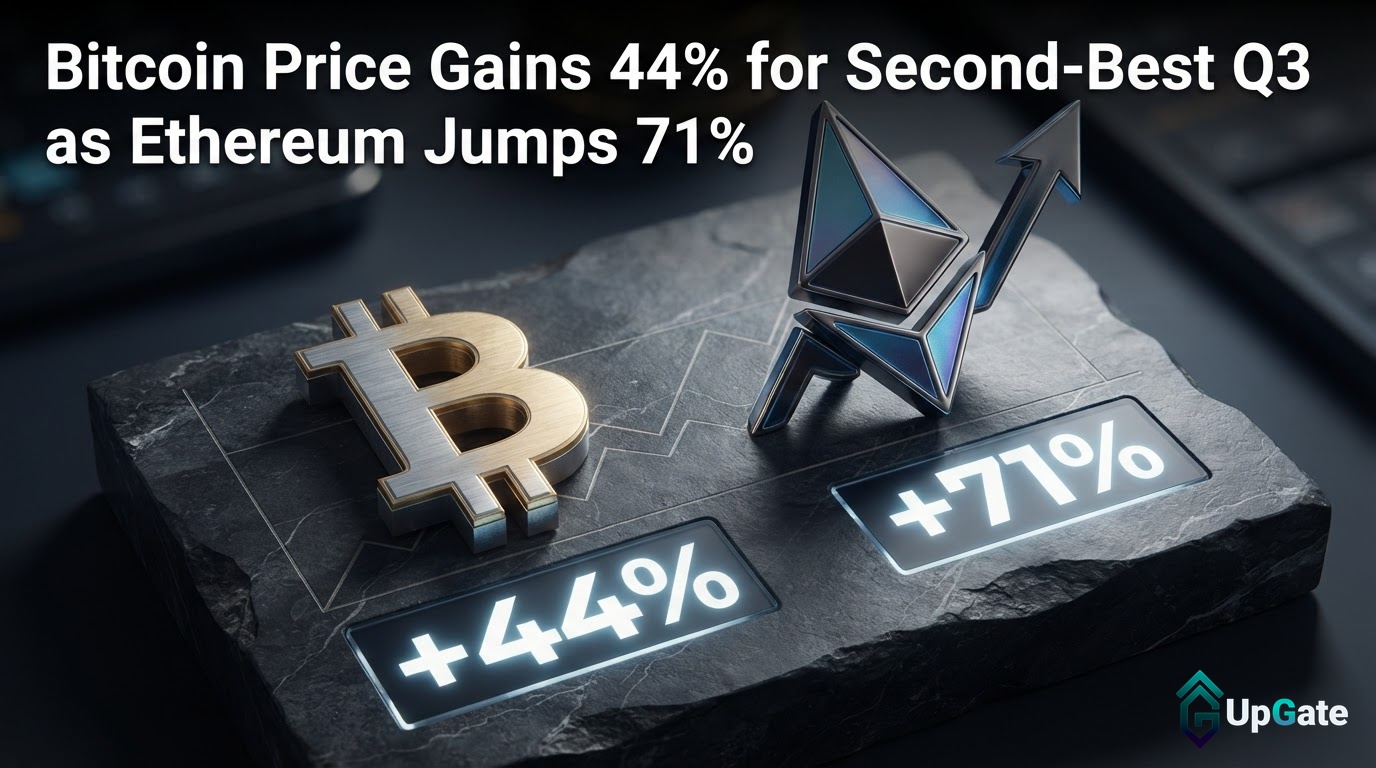
  • Bitcoin Surges 44% in Strong Q3; Ethereum Soars 71%

    Bitcoin Surges 44% in Strong Q3; Ethereum Soars 71%

    Bitcoin Poised for Strongest Third Quarter in Years, Ethereum Achieves Record Performance

    Bitcoin is on track for its second-best third quarter on record, while ethereum has already secured its strongest Q3 performance to date. With the month of September nearing its close, robust demand for exchange-traded funds (ETFs), increased spot market activity, and limited profit-taking are fueling speculation about bitcoin’s potential to sustain its current rally. Ethereum has seen a significant surge of 71%, as bitcoin continues its upward trajectory.

  • Solana Activates Alpenglow Consensus Upgrade on Testnet and Devnet

    Solana Activates Alpenglow Consensus Upgrade on Testnet and Devnet

    Solana has activated its Alpenglow consensus mechanism upgrade on its testnet and devnet, a significant technical milestone aimed at enhancing transaction finality. This overhaul replaces the existing TowerBFT consensus with a new protocol called Votor, targeting transaction finality within a range of 100 to 150 milliseconds.

    The Alpenglow upgrade was deployed on the Solana testnet on September 24th and on the devnet the following day, September 25th. These activations are crucial steps in the testing phase for the new consensus mechanism before any potential mainnet deployment.

    At its core, Alpenglow’s introduction of Votor is designed to improve the efficiency and speed of Solana’s network. The shift from TowerBFT, a foundational element of the network, to Votor is positioned as a major advancement. If the targeted transaction finality of 100 to 150 milliseconds is achieved on the mainnet, it could substantially boost the network’s performance.

    Described as Solana’s biggest consensus overhaul since its launch, the development has drawn attention. Solana co-founder Anatoly Yakovenko remarked on the significance, stating, “You are not ready for this.”

    While the activation on test and development networks represents concrete progress, the targeted transaction finality speeds have yet to be proven under full mainnet conditions. The performance and stability of Alpenglow will require further validation through ongoing testing and eventual mainnet deployment.

    The activation on testnet and devnet signals forward movement toward achieving faster transaction finality, a key objective for the Solana network. Future stages will focus on assessing the real-world implications and performance of Alpenglow as development progresses.

    Broader Context

    Source materials place the factual news in this context: Alpenglow is described as Solana’s biggest consensus overhaul since launch.

  • Institutional Investors Hold Steady on Crypto Exposure Despite Market Downturn, Bitwise Survey Reveals

    Institutional Investors Hold Steady on Crypto Exposure Despite Market Downturn, Bitwise Survey Reveals

    Institutional investors have largely maintained or increased their exposure to cryptocurrencies despite a significant market downturn between the fourth quarter of 2025 and the second quarter of 2026, according to a survey by Bitwise. During this period, the crypto market experienced a decline of approximately 50%, yet none of the 15 surveyed institutions reduced their digital asset allocations.

    Shifting Strategies Amid Volatility
    The survey highlights a strategic evolution among institutions, with the conversation moving from whether to invest in crypto to determining optimal allocation sizes and preferred investment vehicles. Among the surveyed institutions, crypto allocations ranged from 0.5% to 13% of their investable assets, with most holding between 1% and 2%. This indicates that while crypto holdings remain a relatively small portion of overall portfolios, the commitment to the asset class persists.

    Institutions are exploring a variety of investment avenues, including spot crypto exchange-traded funds (ETFs), direct holdings, venture capital, and hedge funds. Some investors are moving away from less liquid private placements and are incorporating market-neutral strategies to mitigate volatility and streamline internal approval processes for crypto investments.

    Bitcoin Dominates Institutional Portfolios
    Bitcoin continues to be the primary cryptocurrency held by institutions, with every surveyed institution that owns crypto also holding Bitcoin. It is often viewed as a store of value and a hedge against currency debasement, drawing comparisons to gold. Within institutional crypto portfolios, Bitcoin typically accounts for around 80% of the exposure. Some institutions hold Bitcoin as a standalone position, while others include it in a market-cap-weighted basket.

    In contrast, institutions that hold Ethereum and Solana generally maintain smaller positions with shorter investment horizons. Decisions regarding these assets are often tied to specific expectations for adoption and value accrual. Some investors avoid Ethereum and Solana due to a perceived lack of clear connection between blockchain activity and token value, while others treat them as venture-style technology investments, closely monitoring real-world usage, transaction activity, and fees.

    ETFs Gain Traction, With Caveats
    The adoption of spot crypto ETFs is a significant development, with almost every institution interviewed either currently using them or planning to do so. Investors cite lower costs, reduced operational work, and simpler reporting as key advantages over direct crypto custody. ETFs also offer improved liquidity and greater flexibility for portfolio rebalancing.

    However, some institutions face regulatory constraints that prevent them from holding spot commodities through ETFs, while others prefer direct control of their crypto assets and are developing their own custody solutions. Concerns have also been raised regarding the public disclosure of ETF holdings through 13F filings.

    The survey indicates that institutional interest in cryptocurrencies remains robust, with a strategic evolution in how these assets are integrated into portfolios. The conversation has moved beyond initial entry to optimizing allocation size and selecting the most efficient and compliant investment vehicles.

    Why This Matters

    The materials describe a narrow update: A survey by Bitwise of 15 institutional investors revealed that none reduced their cryptocurrency exposure during a period of approximately 50% market decline between Q4 2025 and Q2 2026. The exact total value of crypto allocations across all surveyed institutions.

    Broader Context

    Source materials place the factual news in this context: The survey was conducted by Bitwise.

  • SEC Staff Guidance Offers Nuanced Clarifications on Crypto Asset Classification and Issuer Activities

    SEC Staff Guidance Offers Nuanced Clarifications on Crypto Asset Classification and Issuer Activities

    The U.S. Securities and Exchange Commission (SEC) has issued new staff guidance providing nuanced clarifications on the regulatory treatment of certain crypto assets and issuer activities, particularly concerning staking tokens and buybacks. This guidance aims to offer a more detailed understanding of how existing securities laws, specifically the Howey Test, apply to these areas within the digital asset market.

    Staking Tokens and Digital Tools
    The SEC staff guidance addresses the classification of staking receipt tokens. According to the watchdog, a staking receipt tied to a digital commodity that is not subject to an investment contract can be considered a digital tool. This classification hinges on the receipt simply evidencing ownership of the underlying asset. In certain circumstances, such a token may qualify as a digital commodity when issued by a protocol-based liquid staking provider. The distinction, SEC staff indicated, depends heavily on the specific rights the receipt creates. A true “receipt,” the agency stated, should not transfer ownership or control of the deposited asset to the issuer, nor permit the issuer to lend, pledge, rehypothecate, or otherwise use it.

    Issuer Activities and the Howey Test
    Furthermore, the guidance delves into the application of the Howey Test concerning ongoing efforts by issuers. The SEC staff indicated that continuing to secure, maintain, improve, or enhance a functional blockchain network, including funding development or encouraging network effects, does not constitute the type of “essential managerial efforts” typically associated with an investment contract under Howey. Once a crypto system is functional and lacks a central controlling party, statements by an original issuer are generally less likely to create a new investment contract around the native asset.

    Regarding issuer buybacks, the SEC staff guidance suggests that announcing a buyback of a non-security token for a functional crypto system would not amount to a promise of essential managerial efforts. However, this assessment changes if the network is not yet functional and the issuer markets the buyback as a mechanism designed to generate yield or returns for holders. Broader marketing efforts receive similar treatment; the SEC staff noted that simply promoting a network’s existing utility or capabilities would generally not be enough to establish an investment contract. Even aspirational statements about future features may fall outside this threshold if they do not promote the prospect of profit.

    Context and Limitations
    This guidance follows the recent failure of the CLARITY Act in the U.S. Senate on September 15, an event that highlighted the ongoing legislative challenges in defining a clear regulatory path for digital assets. While the legislative process has stalled, the SEC’s staff guidance provides interpretive clarity on existing frameworks. It is important to note that this guidance represents staff interpretation and does not constitute new law or a definitive ruling on any specific asset or transaction.

    The SEC staff guidance emphasizes that the classification of crypto assets and the assessment of issuer activities are highly contextual. Factors such as the rights created by a token, the functionality of the underlying network, and the nature of marketing and issuer efforts are critical in determining whether an arrangement constitutes an investment contract. The guidance underscores that the distinction depends heavily on the specific facts and circumstances of each case.

    Why This Matters

    The materials describe a narrow update: The SEC released new FAQs to clarify crypto regulation, specifically addressing when tokens might be outside securities regulation and how issuer activities relate to the Howey Test. The exact rights created by a staking receipt token determine its classification.

    Broader Context

    Source materials place the factual news in this context: The failure of the CLARITY Act in the US Senate on September 15 hasn’t deterred the two largest local regulators from trying to clear the air on crypto regulation in the country, with the Securities and Exchange Commission now issuing fresh staff guidance addressing several long-running questions.