Tag: Positive

  • Binance Wallet Now Accepts USDT for Gas Fees Across Four Major Blockchains

    Binance Wallet Now Accepts USDT for Gas Fees Across Four Major Blockchains

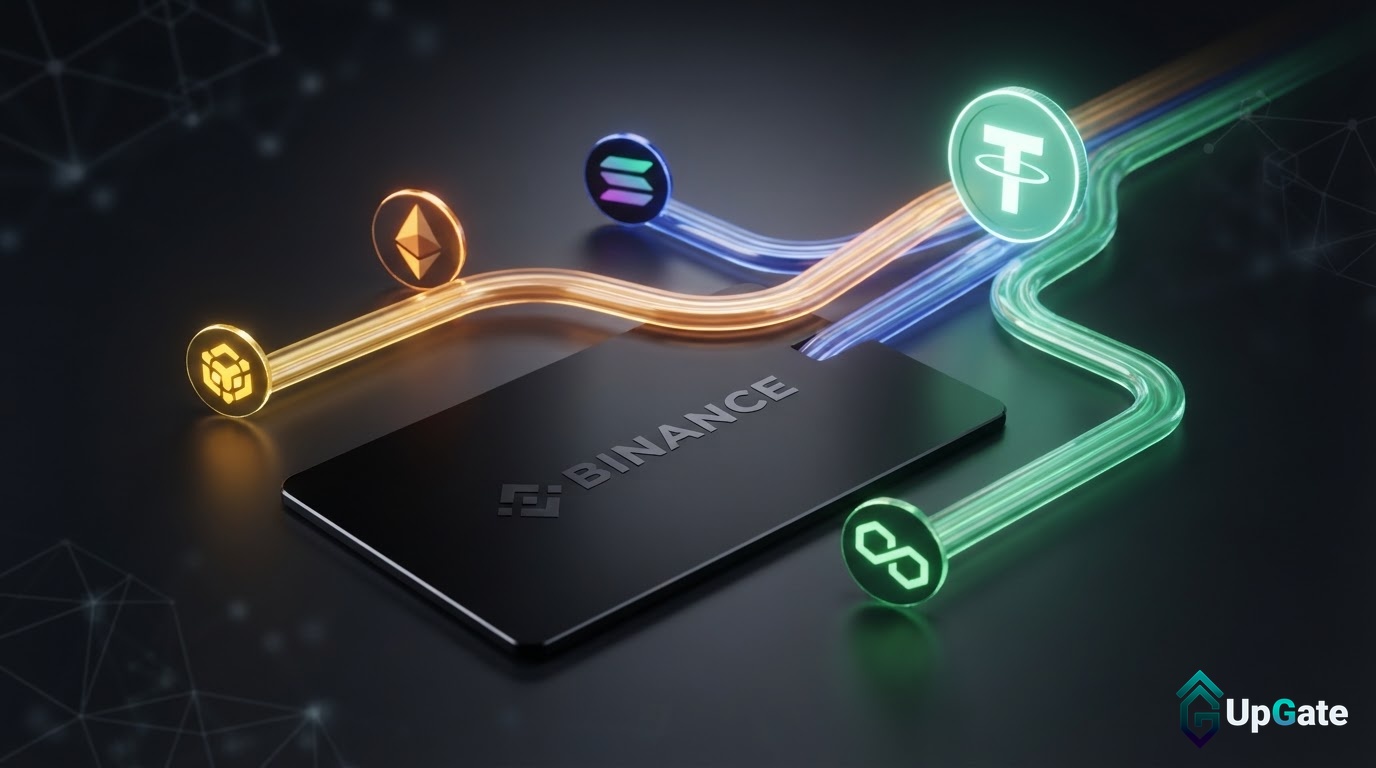
    Binance Wallet has introduced a new feature allowing users to pay network gas fees with USDT across four major blockchain networks: BNB Smart Chain, Ethereum, Solana, and TRON. This update aims to simplify cryptocurrency transactions by eliminating the need for users to hold the native tokens of these blockchains for gas payments.

    According to Binance’s FAQ, this functionality enables users to conduct transactions, including those involving tokens other than USDT, without needing to pre-acquire native cryptocurrencies like BNB, ETH, SOL, or TRX to cover gas costs. The equivalent cost of the gas fee is deducted directly from the user’s USDT balance.

    TRON Network Promotion Offers Zero Gas Fees

    For transactions on the TRON network, Binance is offering a limited-time promotion. From September 23, 2026, to December 22, 2026, qualifying TRON transfers will incur zero gas fees. This promotion is backed by TRON DAO. Following the promotional period, a standard fee of 1 USDT per transaction will be applied to TRON transfers.

    User Benefits and Ecosystem Integration

    This new functionality is integrated within the Binance ecosystem, providing a direct pathway for users who already hold USDT on the platform. It eliminates the need for additional steps such as bridging funds, setting up new wallets, or learning unfamiliar interfaces. The introduction of a predictable 1 USDT flat fee for TRON transactions after the promotion also positions Binance Wallet to compete with centralized exchange withdrawal fees, offering a clear benchmark for comparison.

    Unspecified Details

    While the feature offers significant convenience, certain details remain unspecified. The exact criteria for ‘qualifying TRON transfers’ eligible for the zero gas fee promotion are not detailed. Additionally, the specific technical mechanisms by which Binance Wallet handles the underlying gas payments are not publicly disclosed.

    The update to Binance’s FAQ detailing this feature was made on September 25, 2026.

    Why This Matters

    The materials describe a narrow update: Binance Wallet has introduced a feature enabling users to pay gas fees with USDT instead of the native tokens of the respective blockchains. The exact definition of ‘qualifying TRON transfers’ for the zero gas fee promotion is not specified.

    Broader Context

    Source materials place the factual news in this context: One of crypto’s most persistent annoyances has a new workaround.


  • South Korea’s Financial Services Commission Explores Digital Asset Market-Making

    South Korea’s Financial Services Commission Explores Digital Asset Market-Making

    South Korea’s Financial Services Commission (FSC) is reportedly considering the introduction of a market-making system for digital assets, a move that could significantly alter the country’s regulatory landscape for cryptocurrencies. This consideration follows a notable price surge of the JPYC stablecoin on the Upbit exchange, which highlighted issues of limited liquidity in the domestic market.

    Currently, market-making activities for digital assets are restricted in South Korea under existing rules designed to prevent market manipulation. However, recent events and discussions suggest a potential shift in the FSC’s stance. Yoo Young-joon, director of digital finance policy at the FSC, indicated that the commission is reviewing the possibility of implementing market-making systems to enhance the efficiency and stability of the digital asset market.

    The JPYC stablecoin, a yen-backed digital asset, experienced a significant price spike on Upbit on September 17, 2024. It reached a high of 37.6 Korean won, more than four times its pegged value, which was reportedly due to limited liquidity on the exchange. The stablecoin had opened trading at 12 Korean won on the same day.

    This incident has brought renewed attention to the challenges posed by the absence of a formal market-making framework in South Korea. Yoonyoung Choi, from the Korbit Research Center, previously argued in a paper published in the Seoul Law Review that the domestic crypto market suffers from “serious liquidity problems.” According to Choi, this lack of a formal market maker system leads to price discrepancies and high volatility, citing the “Kimchi premium” as an example of market inefficiency.

    Academics have previously debated the merits of allowing market makers in the South Korean crypto space. In a 2024 paper, Lee Min Jung, a researcher at KB Securities, noted that regulators at the time did not permit crypto market making due to concerns about potential market manipulation. Lee suggested that regulators might consider carve-outs for market makers once the market achieves greater stability.

    The FSC’s exploration of a market-making system comes as South Korea works to establish a more comprehensive regulatory framework for its digital asset industry. In July 2024, the FSC announced plans to introduce a consolidated Digital Asset Basic Act. This proposed legislation aims to cover stablecoins and the broader crypto market, including provisions for digital asset businesses, exchanges, disclosures, and internal controls. However, key aspects of this act, such as rules governing issuers of won-denominated stablecoins, are still under discussion among lawmakers.

    While the FSC is considering market-making systems, uncertainties remain regarding the specifics and timeline of any potential regulatory changes. The extent to which lawmakers will finalize the Digital Asset Basic Act also remains to be seen. The reported consideration by the FSC suggests a potential evolution in South Korea’s approach to digital asset regulation, aiming to balance market stability and investor protection with the need for efficient and liquid markets.

    Why This Matters

    The materials describe a narrow update: Following a significant price spike of the JPYC stablecoin on the Upbit exchange, South Korea’s FSC is reviewing its stance on crypto market making, which is currently restricted under market manipulation rules. Whether South Korea will formally introduce a market-making system for digital assets.

    Broader Context

    Source materials place the factual news in this context: Crypto market making is effectively restricted under South Korea’s manipulation rules.

  • Ethereum’s Hegotá Upgrade May Mark Shift Beyond Traditional Forks to Advanced Cryptographic Technologies

    Ethereum’s Hegotá Upgrade May Mark Shift Beyond Traditional Forks to Advanced Cryptographic Technologies

    Ethereum’s upcoming Hegotá upgrade, planned for 2027, could represent the last ‘normal’ fork before the network embarks on a path focused on more advanced technologies, according to Vitalik Buterin. This potential shift signals a broader evolution of Ethereum from a conventional blockchain to what Buterin describes as a ‘cryptographic world computer.’

    Buterin stated that Hegotá is likely to be the final upgrade whose features and technology would still be recognizable to someone familiar with Ethereum in 2015. Following Hegotá, development is expected to pivot towards complex areas such as recursive STARKs, automated formal verification, optimized consensus, and quantum-safe cryptography. The introduction of PeerDAS, which allows nodes to verify data availability by sampling rather than downloading entire datasets, is seen by Buterin as the beginning of this transition.

    This evolution involves moving beyond a model where nodes simply download and re-execute transactions. Instead, the architecture will combine blockchains with cryptographic verification, privacy features, and decentralized offchain components. This shift could fundamentally alter how Ethereum applications are built, by enabling more computation to occur offchain while the base layer is used for verification, transaction settlement, and preserving access to shared onchain state. Such a model could significantly reduce the workload on the network and facilitate lighter nodes.

    The potential for expanded decentralized finance (DeFi) applications is a key implication of this architectural change. Cryptographic, a pseudonymous commentator, suggested that allowing more complex computation outside of smart contracts, with Ethereum verifying the resulting transactions, could broaden DeFi capabilities. For instance, in DeFi lending, collateral analysis, liquidation routing, or borrower-lender matching could be handled offchain before Ethereum verifies and settles the outcomes.

    However, this proposed evolution is not without its debates. Ethereum researcher Barnabé Monnot argued that a ‘world computer’ should still maintain critical records directly onchain to ensure users can observe and interact with applications without relying on external servers or intermediaries. This perspective highlights an ongoing discussion about the optimal balance between onchain data and offchain processing.

    Further questioning the direction, crypto lawyer Gabriel Shapiro raised concerns about the demand for proof-based systems compared to traditional trust-based models. Shapiro pointed out that many existing financial services rely on reputation, regulation, and legal enforcement rather than continuous cryptographic verification, suggesting a potential gap between the proposed technological advancements and current market needs.

    The timeline indicates that while Hegotá is planned for 2027, the underlying concepts of Ethereum’s evolution are already in motion. The transition envisions a future where Ethereum acts as a robust platform for complex computations and verifiable transactions, pushing the boundaries of what decentralized systems can achieve.

    Why This Matters

    The materials describe a narrow update: Vitalik Buterin stated that the upcoming Hegotá upgrade for Ethereum, planned for 2027, might be the last ‘normal’ fork. How much computation and state should ultimately move offchain.

    Broader Context

    Source materials place the factual news in this context: Vitalik Buterin says Hegotá could be Ethereum’s last ‘normal’ fork.

  • Jupiter Ultra Users Report Fewer Sandwich Attacks

    Jupiter Ultra Users Report Fewer Sandwich Attacks

    Sandwich Attacks Plague Solana, But One Platform Shows Promise

    Sandwich attacks have become a pervasive issue on the Solana blockchain, with an estimated 28 million such incidents recorded over the past three years. However, a new academic study suggests that traders utilizing Jupiter Ultra may be experiencing significantly fewer of these exploits. This finding emerges from the first multi-year academic analysis of protected order flow attacks across major blockchain networks.

    Study Highlights Application-Level Design Impact

    The research, titled “No Place to Hide: An Analysis on Protected Order Flow Sandwich Attacks,” was published on arXiv on September 23, 2026. Conducted by researchers from Category Labs, ETH Zurich, Flashbots, and the University of Lisbon, the study examined sandwich attack activity on Ethereum, Solana, Tron, Base, Arbitrum, and Monad. The results underscore the critical role that application-level design choices play in determining the frequency of user exploitation.

    A sandwich attack occurs when a bot detects a pending user swap, places a buy order immediately before it to inflate the price, and then sells after the user’s trade executes at the higher price. This results in the user receiving a worse execution price, with the bot profiting from the difference.

    Solana’s technical architecture is considered particularly conducive to such attacks. Its low transaction fees enable bots to conduct sandwich attempts cheaply and at a large scale, while the visibility of its mempool provides bots with the necessary information to front-run trades.

    Jupiter Ultra Demonstrates Superior Protection

    To quantify the impact of these attacks, the study employed an “excess ratio” to measure how often users of each application fell victim to sandwich attacks relative to a statistical baseline. Jupiter Ultra recorded an overall excess ratio of 0.7, indicating that its users were sandwiched less frequently than statistically expected. In scenarios involving single victims, this ratio rose to 2.0, still considerably lower than its competitors.

    The contrast with other Solana trading platforms is striking. Axiom registered an excess ratio of 18.9, Photon 11.1, and both BullX and GMGN exceeded ratios of 10.

    Jupiter attributes its superior performance to Ultra V3, launched on October 17, 2025, which introduced several protective features. Private routing conceals transaction details until execution, thereby removing the information advantage that sandwich bots exploit. Dynamic slippage estimation adjusts tolerance levels in real-time, moving away from static user-defined parameters. The platform also integrated “Iris meta-aggregation” and “Ultra Signaling” to further enhance transaction privacy and execution quality.

    Jupiter claims aggressive results, including 34 times better sandwich protection compared to competitors, an average positive slippage of +0.6 basis points, and execution fees that are 8 to 10 times lower than rival platforms.

    Blockchain Architecture Not the Sole Factor

    A significant conclusion from the study is that the blockchain itself is not the only determinant of vulnerability. Application-level design choices—such as how a trading platform routes orders, what information it exposes to the public mempool, and how it manages slippage—play a crucial role in dictating which users are targeted and how often.

    Despite these advancements, the researchers emphasized that sandwich attacks have not been eradicated on Solana. Validators still present a potential vector for exposure, and while Jupiter Ultra mitigates the problem, it does not entirely eliminate it.

  • Evernorth Nasdaq Vote Looms as XRP Faces Pivotal Week

    Evernorth Nasdaq Vote Looms as XRP Faces Pivotal Week

    Armada Acquisition Corp. II Shareholders to Vote on Evernorth’s Public Listing

    Armada Acquisition Corp. II shareholders are scheduled to vote on September 30 on a proposed business combination that could see Evernorth, a cryptocurrency-focused treasury company, become publicly traded.

    A positive vote would remove the final significant hurdle for Evernorth to begin trading on Nasdaq under the ticker symbol XRPN.

    The move has garnered praise from prominent cryptocurrency commentators, particularly those who favor Ripple and its native token, XRP. BankXRP, for instance, recently emphasized that the company is “one vote away” from bringing an XRP-focused treasury to the Nasdaq. This distinction is crucial, as Evernorth is not structured as a passive XRP fund. Instead, it aims to actively manage and deploy XRP across the ecosystem through yield strategies, infrastructure investments, and capital markets activities, with the goal of increasing the value represented by each share over time.

    Evernorth currently holds approximately 473 million XRP, positioning it as one of the largest corporate holders of the asset. If the merger is approved, this substantial XRP treasury would become accessible to investors through a publicly traded U.S. equity, eliminating the need for individual investors to purchase, custody, and manage the token themselves.

    Vincent Van Code, another prominent figure within the XRP community, has argued that direct cryptocurrency ownership presents significant operational challenges for large institutions, including issues with custody, compliance, audits, insurance, and internal controls. He suggests that alternatives like Evernorth offer a more streamlined path for investors seeking XRP exposure without the burden of building their own infrastructure.

    In a social media post on September 25, 2026, Van Code highlighted the contrast between the SEC’s past lawsuit against Ripple, which alleged XRP was a security, and Evernorth’s current pursuit of a public listing as the first XRP holding company. He commented, “And people are still not bullish for crypto. It’s no wonder 90% of people live pay check to pay check.”

    CryptoPotato previously reported that Evernorth had agreed to raise an additional $30 million through 4% convertible senior PIK notes due in 2031. This financing is contingent upon the approval and finalization of Evernorth’s business combination with Armada II.

    The newly raised funds could be allocated towards further XRP acquisitions and other initiatives within the broader Ripple ecosystem. This $30 million injection follows over $1 billion in gross proceeds previously secured from investors, including Ripple, SBI Holdings, Pantera Capital, Kraken, and Arrington Capital.

  • Vitalik Buterin Envisions Ethereum’s 2030 Architecture: A Hybrid of Cryptographic Proofs and Off-Chain Computation

    Vitalik Buterin Envisions Ethereum’s 2030 Architecture: A Hybrid of Cryptographic Proofs and Off-Chain Computation

    Vitalik Buterin has outlined a vision for Ethereum’s architecture in 2030, proposing a significant shift from its current model to a hybrid system integrating cryptographic proofs with off-chain computation. This evolution aims to enhance scalability and privacy on the network.

    Buterin described this future state as a move away from the current paradigm where every node verifies the same transactions. Instead, the proposed architecture will leverage cryptographic proofs to verify computations performed off-chain. This approach is expected to allow different machines to perform distinct tasks and mutually verify each other’s results, thereby increasing the network’s capacity as the number of participating nodes grows. The current method, where every machine repeats the same computation, is identified as a bottleneck limiting scalability.

    The Hegotá upgrade, anticipated next year, is characterized by Buterin as the final ‘traditional’ hard fork for Ethereum. Following Hegotá, the network’s development narrative will increasingly focus on this transformation towards a system reliant on mathematical proofs and formal verification.

    Key to this future vision is the maturation of cryptographic technologies, particularly zero-knowledge proofs. These advancements are enabling the proposed system, which combines a base blockchain with cryptographic verification and off-chain computation networks. Buterin expects this new architecture to result in cheaper, more scalable, and more private secure computation compared to previous generations. He also anticipates a reduction in transaction finality times, potentially to between 8 and 32 seconds.

    Buterin’s plan also includes measures to enhance privacy, such as encrypting balance queries, which would protect transaction content and wallet signing rules. This focus on privacy is a core component of the proposed 2030 vision.

    However, the realization of this vision faces certain challenges. Buterin acknowledges that the cost of generating cryptographic proofs needs further reduction for widespread adoption. Additionally, coordinating updates to the same balance or contract state among nodes performing distributed computation without overwriting each other presents an engineering hurdle. The exact implementation details and timeline for achieving this 2030 vision are subject to ongoing engineering efforts.

    Despite these challenges, the proposed architectural changes could have a notable impact, potentially leading to continuously decreasing on-chain transaction fees and enhanced privacy protection for businesses and individuals. The shift signifies a long-term technical direction for Ethereum, moving towards a more efficient and private network.

    Why This Matters

    The materials describe a narrow update: Vitalik Buterin described a future Ethereum architecture for 2030 that moves away from every node verifying the same transactions. The cost of generating cryptographic proofs needs to be further reduced for widespread application.

    Broader Context

    Source materials place the factual news in this context: Vitalik Buterin’s latest article outlines his vision for Ethereum in 2030.

  • Visa Survey: Consumer Interest in Stablecoins Hinges on Trust and Security, Not Just Technology

    Visa Survey: Consumer Interest in Stablecoins Hinges on Trust and Security, Not Just Technology

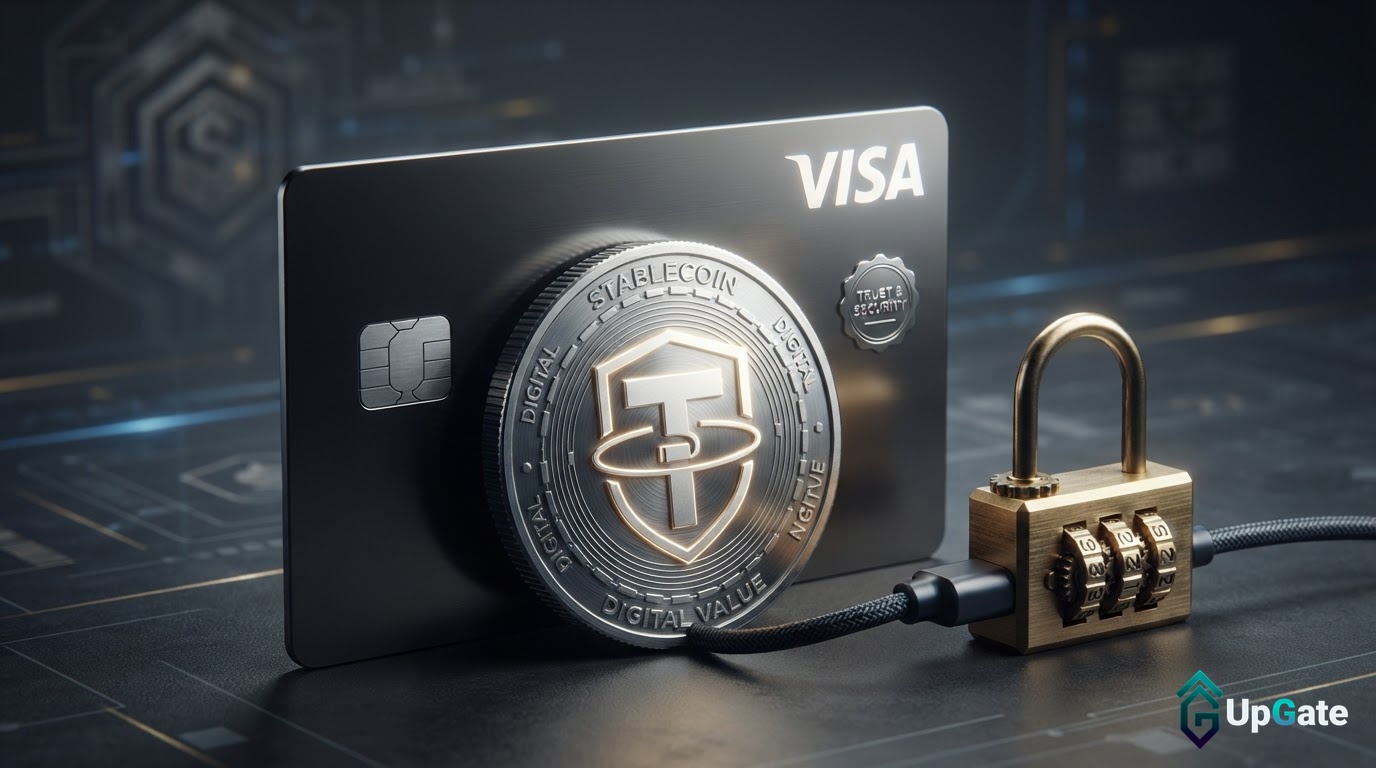
    Consumer willingness to adopt stablecoins is significantly tied to the perceived trustworthiness of the provider and the hypothetical presence of bank-level safeguards, rather than the underlying technology, a Visa-sponsored survey indicates. The study suggests that a majority of Americans would be more inclined to use stablecoins if they were offered with protections such as fraud protection and deposit insurance.

    A survey conducted by Morning Consult found that 56% of Americans would use stablecoins with hypothetical bank-level fraud protection and deposit insurance, compared to 36% who would use them without these safeguards. This highlights that for many consumers, trust in a payment method depends more on the provider than the technology itself, with 64% of Americans holding this view.

    When an existing financial provider offered stablecoins, willingness to use them rose to 45%. Traditional banks and global payment networks emerged as the most trusted providers for digital currency services, with 61% and 60% of respondents, respectively, expressing trust. Globally, this trust figure stood at 69% for providers of digital currency services.

    However, a significant portion of the population remains unaware of stablecoins, with 56% of respondents having never heard of them. Among those familiar with stablecoins, many assumed they fluctuated in value like Bitcoin, indicating a gap in understanding.

    The survey also revealed a consumer willingness to prioritize security over speed in financial transactions. With more than a third of Americans having encountered fraud, 45% of respondents indicated they would accept a 24-hour delay on a transfer for stronger protection. Concerns about security are further amplified by the fact that 44% of Americans worry about AI deepfakes impersonating family members.

    It is crucial to note that the safeguards mentioned in the survey are hypothetical, and no stablecoin currently carries deposit insurance. The survey involved 2,192 U.S. adults and is part of a larger study covering 45,445 people across 20 markets, with a focus on remittances.

    Visa plays a role in the stablecoin ecosystem, serving as a founding validator on Circle’s Arc blockchain alongside entities like BlackRock and Mastercard. The company also handles a significant portion of stablecoin card transactions, which reached $18 billion in 2025, according to Artemis. In August of the previous year, Visa expanded its settlement stablecoins to include PayPal USD (PYUSD) and the Global Dollar (USDG), utilizing chains like Stellar and Avalanche.

    Visa indicated that stablecoins represent a growing share of cross-border money flows. Dollar stablecoins in circulation currently total approximately $312 billion, with Tether’s USDT accounting for $184 billion and Circle’s USDC for $76 billion, according to DefiLlama.

    These findings suggest that for stablecoins to achieve broader adoption, providers must focus on building trust through established financial frameworks and robust security measures, addressing consumer concerns about fraud and the need for reliable oversight. The path forward for the industry, as suggested by Vira Platonova, Global Head of Visa Direct, will be determined by providers who prioritize earning that trust.

    Why This Matters

    The materials describe a narrow update: A Visa-sponsored survey found that 56% of Americans would use stablecoins if they were offered with bank-level fraud protection and deposit insurance, compared to 36% without these hypothetical safeguards. The actual availability of bank-level fraud protection and deposit insurance for stablecoins.

    Broader Context

    Source materials place the factual news in this context: The report, Money Travels 2026, draws on a Morning Consult survey of 2,192 U.S. adults run from February 24 to March 2. The full survey covers 45,445 people across 20 markets and is built around remittances.

  • Tokenized Funds Surge, Outpacing Stablecoins Fourfold

    Tokenized Funds Surge, Outpacing Stablecoins Fourfold

    Tokenized Funds Surge as On-Chain Investors Seek Yield

    Two years ago, tokenized funds were a minor presence in the stablecoin market, accounting for just $2.99 for every $100 held in stablecoins. That figure has now surged to $11.39, a nearly fourfold increase, signaling a clear trend: investors operating on-chain are actively seeking yield and finding it in these new financial instruments.

    This shift occurs against the backdrop of a stablecoin market valued at approximately $300 billion, still heavily dominated by USDT and USDC. Tokenized real-world assets, encompassing Treasury-backed funds and money market products, now represent between 10% and 17% of this stablecoin universe, depending on the methodology used for calculation.

    The growth, however, has not been uniform. A select few products from major issuers are driving the majority of this activity. Circle’s USYC has amassed an estimated $2.5 billion to $3 billion in value, while BlackRock’s BUIDL fund, which garnered significant attention upon its launch on Ethereum, holds approximately $2.2 billion to $2.7 billion. Ondo’s USDY has also secured a notable position, with a valuation around $2.1 billion to $2.3 billion.

    The total value of tokenized Treasury and money market funds currently ranges between $15 billion and $33 billion. This broad range reflects the inherent challenges in tracking assets distributed across multiple blockchains and structured in various formats. During periods of peak expansion, some of these products have experienced monthly growth rates of 8% to 10% or even higher.

    The appeal of tokenized funds is straightforward. Traditional stablecoins like USDT and USDC function as digital dollars, ideal for payments and settlements, but they do not offer any returns to their holders. The issuers typically generate yield on the reserves backing these tokens, retaining the profits. Tokenized funds invert this model by distributing short-term Treasury yields directly to investors, transforming idle on-chain capital into an income-generating asset.

    Favorable Regulatory Outlook

    The evolving regulatory landscape appears to be surprisingly supportive of tokenized funds, particularly when compared to stablecoins. The GENIUS Act, anticipated to take shape in 2025, is expected to place explicit restrictions on yield payments for payment stablecoins while simultaneously designating tokenized funds as acceptable reserves.

    Institutional Interest and Infrastructure Potential

    JPMorgan analysts estimate that tokenized funds currently constitute about 5% of the broader stablecoin ecosystem. Their assessment suggests that without substantial legal adjustments, particularly concerning transferability and cross-platform interoperability, tokenized funds are unlikely to capture more than 10% to 15% of the total stablecoin market.

    The issue of transferability remains a significant hurdle. Most tokenized fund shares lack the seamless transferability of stablecoins. They are subject to Know Your Customer (KYC) requirements, redemption windows, and compliance protocols, rendering them less liquid than a simple USDT transaction.

    Beyond their yield-generating capabilities, tokenized funds are also emerging as crucial infrastructure components. Several protocols are already utilizing tokenized Treasury products as collateral or reserves to back other stablecoins. Ethena’s products, for instance, have integrated tokenized assets into their reserve structures.

    For institutional investors, this inherent composability is a key attraction of blockchain technology. BlackRock’s launch of BUIDL was not merely a speculative endeavor, nor did JPMorgan begin analyzing tokenized fund market share without strategic intent. These firms foresee a future where the on-chain settlement of traditional financial products becomes commonplace and are positioning themselves accordingly.

    Future Considerations

    The final form of the GENIUS Act will be critically important. If it solidifies yield restrictions on payment stablecoins while establishing clear compliance pathways for tokenized funds, a significant rotation of capital is likely to accelerate.

    Furthermore, the impact of potential interest rate reductions remains a key consideration. Tokenized Treasury funds are currently attractive due to elevated short-term rates. Should the Federal Reserve implement aggressive rate cuts, the yield advantage driving this market shift would diminish, potentially making the friction costs associated with tokenized funds harder to justify compared to the simplicity of holding a standard stablecoin.

  • XRP and Solana ETFs Attract Strong Inflows, Reaching Record Cumulative Highs

    XRP and Solana ETFs Attract Strong Inflows, Reaching Record Cumulative Highs

    Investor confidence in regulated digital asset products is underscored by significant and sustained inflows into XRP and Solana (SOL) Exchange Traded Funds (ETFs). In the week ending September 23, 2023, XRP ETFs attracted $75.89 million in net inflows, pushing their cumulative all-time high to $1.79 billion. Simultaneously, SOL ETFs recorded their second-best week ever, drawing $188.22 million and reaching a 2026 high for weekly inflows, with cumulative inflows now at $1.61 billion.

    Sustained Momentum for XRP ETFs
    XRP ETFs have demonstrated consistent investor interest, marked by ten consecutive weeks of positive inflows. While the prior week saw a more modest $9.56 million, the period ending September 23 represented the strongest weekly performance for these funds in a month. Daily inflows during the week included $20.02 million on September 22 and $18.04 million on September 23, with additional inflows of $14.89 million on Thursday and $22.65 million on Friday.

    Among the leading XRP ETFs, Bitwise’s fund holds the top position with cumulative net inflows of $677 million. Franklin’s XRPZ follows with $501 million, and Canary Capital’s XRPC has accumulated $489.37 million.

    Solana ETFs Hit New Milestones
    Solana ETFs have also shown robust performance, maintaining a streak of positive inflows since September 11. The $188.22 million in weekly inflows for SOL ETFs marks a 2026 high and is second only to their launch week’s $199.21 million. The total net inflows for SOL ETFs have now surged to a new all-time high of $1.61 billion.

    Daily inflows for SOL ETFs during the week were substantial: $26.10 million on Monday, $28.87 million on Tuesday, $13.77 million on Wednesday, and $32.81 million on Thursday. Friday saw a significant surge with $86.67 million, the highest single daily inflow since the funds’ inception.

    Bitwise also leads the SOL ETF market, with its fund reporting cumulative net inflows of $1.22 billion. Fidelity’s FSOL has attracted $231.35 million in cumulative inflows, and Grayscale’s GSOL has $164.15 million.

    Why This Matters

    The materials describe a narrow update: XRP ETFs saw a strong week of inflows totaling $75. Sustained investor interest in both XRP and SOL ETFs is driving record cumulative inflows and strong weekly performance.

    Broader Context

    Source materials place the factual news in this context: The spot exchange-traded funds tracking the performance of Ripple’s cross-border token started the week quietly but built on by the end of it, reaching a new cumulative all-time high.

  • Bitcoin ETF Surge: $2.4B Week Turns Year-to-Date Flows Positive

    Bitcoin ETF Surge: $2.4B Week Turns Year-to-Date Flows Positive

    Bitcoin ETFs Stage Remarkable Comeback, Turning Year-to-Date Flows Positive

    Despite significant outflows recorded in the first half of the year, spot Bitcoin ETFs have managed a dramatic turnaround, now showing positive year-to-date performance.

    Ethereum ETFs Recover, Approaching Previous Inflow Peaks

    Spot Ethereum ETFs have successfully erased last week’s losses, with cumulative net inflows climbing back to nearly $14 billion.

    This week saw a robust start for Bitcoin ETFs, with Monday’s inflows setting a multi-month record as investors poured nearly $1 billion into the funds in a single trading session. While daily inflows moderated towards the end of the week, they remained consistently positive. The funds attracted $714.75 million on Tuesday, followed by $346.98 million on Wednesday, $190.65 million on Thursday, and $134.47 million on Friday.

    Consequently, this pivotal week concluded with $2.39 billion in net inflows for spot Bitcoin ETFs, bringing the cumulative total to $57.55 billion. As noted, the year-to-date figures have now turned positive, a scenario that seemed improbable after June. At that point, investors had withdrawn a record $4.51 billion from the funds, following a challenging May which saw net outflows of $2.43 billion. The year-to-date performance for the ETFs was nearly $5.5 billion in the red.

    However, the trend shifted significantly in July with modest net inflows of $172 million, followed by a substantial surge in August and September. The ETFs attracted $3.52 billion in August and have gained $2.7 billion so far in September. This recent performance has pushed the year-to-date numbers to a positive $925 million.

    Underlying Asset Trails ETF Performance

    Despite the strong inflows into Bitcoin ETFs, the underlying asset, Bitcoin, remains approximately 40% below its all-time high. Crypto Rover suggests this divergence may not persist, citing “institutional money is accumulating like never before and has shortened the bear market dramatically.”

    A recent post from Crypto Rover highlighted this disparity: “THIS IS INSANE: Bitcoin is still more than 40% away from its all time high. Meanwhile, spot cumulative ETF flows are only 10% away from their all time highs. Institutional money is accumulating like never before and has shortened the bear market dramatically.”

    Ethereum ETFs Also See Strong Weekly Gains

    Exchange-traded funds tracking Ethereum also experienced a strong start to the business week, garnering nearly $270 million on Monday. These funds maintained positive inflows throughout the following four trading days, concluding the week with $689.88 million in net inflows. This performance effectively offset previous week’s losses and pushed cumulative net inflows to a new multi-month high of $13.94 billion.

    In parallel, the price of Ethereum touched $2,800 during the week before experiencing a slight pullback, and is currently trading around $100 lower.