Tag: Positive

  • Perplexity AI: BTC Poised for Major 2026 Surge Despite Dip

    Perplexity AI: BTC Poised for Major 2026 Surge Despite Dip

    Perplexity AI has forecast a significant surge for Bitcoin, predicting it could reach $180,000 by January 1, 2027, should a full-fledged bull market return in the fourth quarter. The AI’s bullish outlook places Bitcoin’s potential range between $140,000 and $180,000, with the possibility of a late-cycle rally pushing the cryptocurrency beyond $200,000.

    Currently trading around $83,000, a move to $180,000 would represent an approximate 115% increase. Notably, Bitcoin has already experienced a substantial correction from its previous cycle high of approximately $126,200, recorded on October 6, 2025, followed by a sharp decline throughout 2026.

    Historically, Bitcoin has demonstrated its capacity for substantial gains during robust market cycles. Annual data shows BTC appreciated by roughly 154% in 2023 and 110% in 2024. If current projections materialize, a similar upward trend could be on the horizon.

    Technical Outlook

    Bitcoin has recently broken free from a pattern of lower highs that had persisted since May, reclaiming several key moving averages. According to Reuters’ technical analysis, $81,781 is identified as a crucial support level, while $86,500 represents significant resistance. Beyond this, immediate technical targets are situated around $90,000 and $97,867.

    CryptoQuant has echoed this sentiment, designating $81,700 as a pivotal level due to its alignment with Bitcoin’s 365-day moving average. Resistance levels above this threshold are observed near $86,600 and $88,700.

    Key Resistance Levels

    Bitcoin’s initial major hurdle involves surpassing the $85,000 mark, followed by the $86,000 to $88,000 range. A sustained breakout through this zone is critical, as it would eliminate one of the most significant technical obstacles separating its current price from the $100,000 level.

    A recent analysis highlighted Bitcoin’s potential breakout from a double bottom pattern, with the cryptocurrency now retesting the $82,000 neckline. If this level holds as support, the retest could present a buying opportunity before a rally towards the pattern’s $100,000 target.

    The next significant milestone is approximately $98,000. Beyond this point, the market will approach the all-time high of $126,200, a level where price action becomes particularly dynamic.

    Entering Price Discovery

    Once Bitcoin decisively breaks above $126,000, it is expected to enter a phase of genuine price discovery. Historical resistance above this level is minimal, paving the way for psychological targets such as $130,000, $140,000, and $150,000 to attract momentum traders and institutional investors.

    While a daily drop of 2.5% may not be a major concern for large holders (“whales”) who acquired Bitcoin at significantly lower prices, it could create discomfort for those who purchased above $80,000. This dynamic underscores the appeal of presale opportunities.

    Bitcoin Hyper ($HYPER)

    Bitcoin Hyper ($HYPER) is emerging as the first Bitcoin Layer 2 solution featuring full SVM integration. It promises smart contract execution speeds that surpass Solana, while leveraging Bitcoin’s base-layer security for final settlement.

    The presale for Bitcoin Hyper has reportedly raised over $33.1 million, with the current token price at $0.0136864. Staking rewards are slated to go live at launch with an annual percentage yield (APY) of 35%. The project aims to address Bitcoin’s limitations in transaction speed, fees, and programmability without compromising its inherent trust. A Decentralized Canonical Bridge is designed to facilitate native BTC transfers.

  • BitMine Immersion Technologies Reports 6 Million ETH Holdings, Acquires 17,362 ETH

    BitMine Immersion Technologies Reports 6 Million ETH Holdings, Acquires 17,362 ETH

    BitMine Immersion Technologies reported holding 6,001,302 Ethereum (ETH) as of the week ending September 27, having acquired 17,362 ETH during that period. This acquisition follows a trend of weekly ETH purchases that began on June 30, 2025, as part of the company’s treasury strategy. The latest purchase was smaller than the 27,562 ETH acquired the previous week.

    As of September 27, BitMine Immersion Technologies’ total ETH holdings represent approximately 4.9% of the total ETH supply, approaching its stated goal of holding 5%. The company has valued its ETH holdings at $2,698 per token, contributing to a total valuation of its crypto, cash, securities, and equity stakes at $17.2 billion.

    BitMine has been acquiring ETH weekly since June 30, 2025. The company reported that 5,067,309 ETH of its total holdings were staked, valued at $13.7 billion. This staked amount constitutes 84% of its total ETH holdings. Staking operations are conducted through its Made in America Validator Network (MAVAN), launched in March, and via external partners.

    Projected annualized staking revenue currently stands at $358 million, based on a 2.62% seven-day yield from BitMine’s operations. This projection could rise to $424 million annually if all of its ETH holdings were to be staked.

    In addition to its ETH position, BitMine Immersion Technologies also held 213 Bitcoin (BTC) as of September 27. The company reported other investments, including a $180 million stake in Beast Industries and a $115 million position in Eightco Holdings, which BitMine describes as offering indirect exposure to OpenAI.

    During the week ending September 27, BitMine Immersion Technologies’ cash and marketable securities decreased to $672 million from $714 million in the previous week. The company gave no reason for this decline.

    In the broader market context, ETH has outperformed the S&P 500 by 6,728 basis points in the quarter to date. Tom Lee, who is scheduled to speak at Korea Blockchain Week in Seoul on September 30, has noted that institutions are currently underweight in crypto and are expected to increase their exposure in the final months of 2026.

    Uncertainties remain regarding the specific reason for the decline in BitMine’s cash and marketable securities. The exact total supply of ETH is a dynamic figure, and the precise date of the previous week’s purchase of 27,562 ETH was not specified.

    Why This Matters

    The materials describe a narrow update: BitMine Immersion Technologies reported holding 6,001,302 ETH as of September 27, after purchasing 17,362 ETH in the preceding week. The specific reason for the decline in BitMine’s cash and marketable securities was not provided.

  • ETH Rejection Sparks $2.4K Price Drop Fears

    ETH Rejection Sparks $2.4K Price Drop Fears

    Ethereum Consolidates Below $2.7K Amidst Shifting Market Dynamics

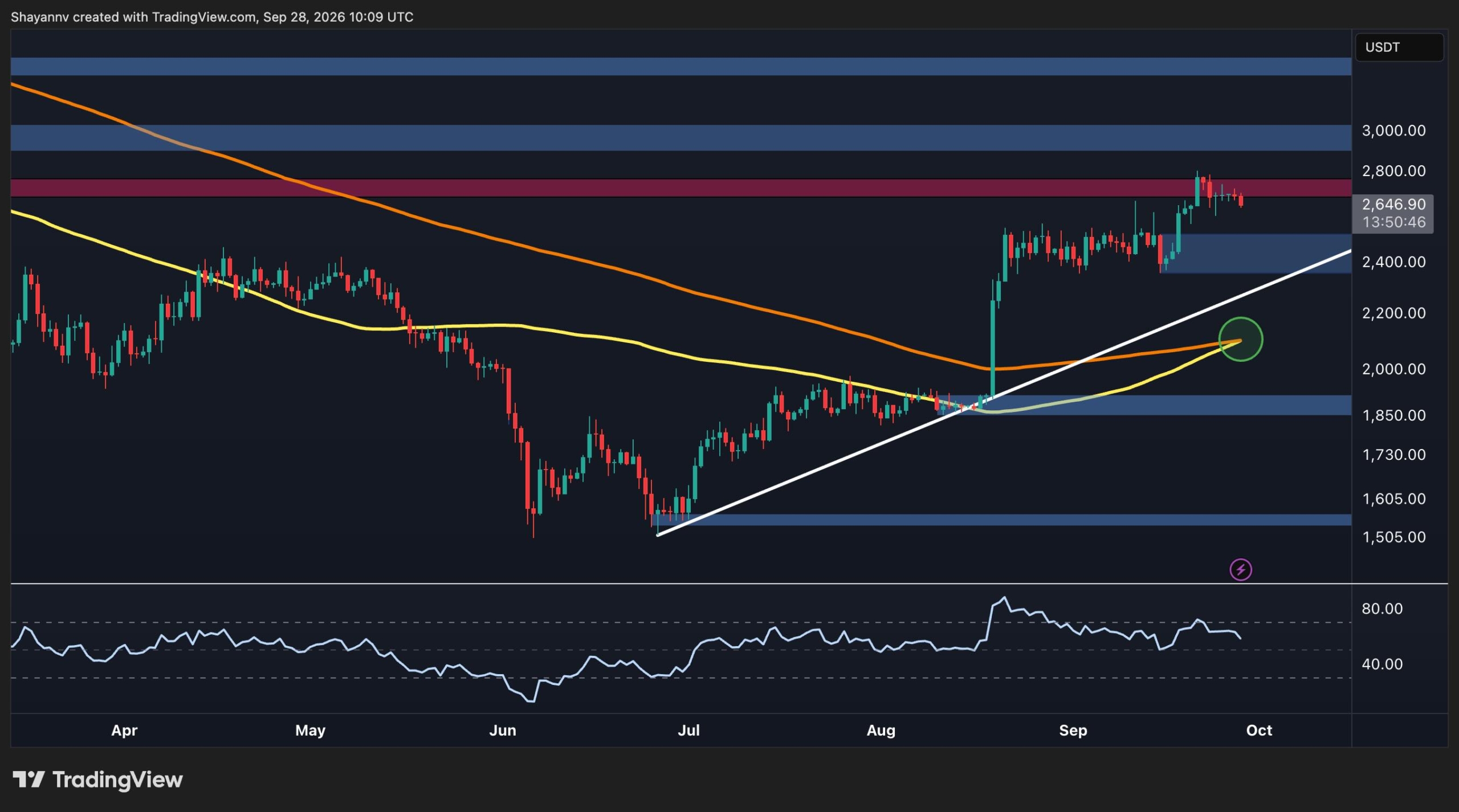
    Ethereum is currently consolidating below the $2,700 mark, following a notable recovery from its June lows. Technical indicators suggest a constructive medium-term outlook, though momentum has softened after Ether (ETH) failed to maintain its advance into the $2,700 resistance zone. The critical question for traders and investors is whether the cryptocurrency can hold its ground above a rising trendline and a nearby demand zone situated around $2,400.

    Daily Chart Structure Shows Improvement

    On the daily timeframe, ETH has exhibited significant structural improvement since hitting a low near $1,500 in June. The asset has established a pattern of higher lows along an ascending trendline and recently surpassed the $2,400 level, which had previously acted as a barrier.

    This breakout propelled ETH towards the $2,700 region, where it encountered a well-defined resistance area. The price briefly touched $2,800 before retreating, with recent trading sessions showing a modest pullback around $2,680. This suggests that buyers have yet to secure a sustained breach above the upper resistance band.

    The most immediate support level is identified around $2,400, the site of the latest consolidation. Moving averages also offer crucial structural reference points. The 100-day and 200-day moving averages are converging near the $2,100 mark and are poised for a bullish crossover, potentially signaling a long-term shift in market structure from bearish to bullish after months of downward price action.

    Short-Term Outlook Remains Neutral

    The 4-hour chart presents a more neutral short-term perspective. ETH experienced a sharp rally from approximately $2,400, establishing a new local high near $2,800. However, the price has since entered a consolidation phase below the $2,700 resistance zone.

    The current price, trading around $2,650, is positioned between resistance near $2,700 and a short-term bullish order block located around $2,500. This order block is particularly significant as it marks the area from which the most recent impulsive upward move originated.

    A rising trendline, currently pointing towards the $2,300-$2,400 area, continues to serve as a structural reference. This trendline has underpinned the sequence of higher lows. A decisive break below it would indicate a more substantial deterioration in the short-term market structure.

    The Relative Strength Index (RSI) on the 4-hour chart has retreated below the mid-range after reaching overbought territory during the September rally. This cooling-off period aligns with the current consolidation rather than an outright trend reversal.

    Consequently, the immediate market structure can be viewed as a range between roughly $2,500 and $2,700. A breakout from either side of this range is expected to provide greater clarity on the next directional move. Above resistance, the psychologically significant $3,000 level emerges as the primary target, while below support, the $2,200-$2,300 area becomes increasingly relevant.

    Network Activity Diverges from Price Action

    An intriguing divergence has emerged between Ethereum’s transaction count and its price performance. The total number of transactions has significantly rebounded from lows observed in early 2026, with the metric recently climbing from approximately 1.6 million to over 2 million transactions, signaling a resurgence in network activity.

    However, the latest price recovery towards $2,600 has coincided with a decline in transaction activity, offering key insights into market participation. This divergence may suggest that the price increase has encouraged investors to hold their ETH rather than engage in short-term trading and profit-taking.

    Given the constructive price action observed on the charts over recent months and the network activity divergence pointing towards holding behavior, investors may find grounds for optimism regarding ETH’s potential to reach higher prices in the coming weeks. This outlook remains contingent on the absence of significant geopolitical or macroeconomic events that could overshadow positive sentiment in the cryptocurrency market.

  • Bitcoin ETFs Attract Significant Inflows, Marking Strongest Week Since October 2025

    Bitcoin ETFs Attract Significant Inflows, Marking Strongest Week Since October 2025

    U.S. crypto exchange-traded funds (ETFs) saw substantial inflows totaling $2.39 billion for the week ending September 25. This marks the strongest week for Bitcoin ETF inflows since October 2025, with Bitcoin funds attracting the entirety of the $2.39 billion.

    Beyond Bitcoin, Ether funds attracted $689.88 million in net inflows during the same period. Other cryptocurrency ETFs, including those tracking Solana, XRP, Zcash, and HYPE, also concluded the week with net positive gains, indicating broader positive sentiment across various digital assets.

    Major financial institutions played a significant role in driving these inflows. Blackrock and Fidelity were specifically noted for their substantial contributions, collectively bringing $1.86 billion into Bitcoin ETFs within a single week. This highlights the increasing participation of established financial players in the digital asset market through regulated investment vehicles.

    The strong inflow figures suggest renewed investor interest in Bitcoin and other cryptocurrencies. The significant capital allocation into these ETFs may indicate a growing acceptance and demand for regulated exposure to digital assets. The participation of large firms like Blackrock and Fidelity further underscores this trend.

    However, it is important to interpret these inflow figures with caution. While substantial inflows are indicative of positive investor interest, they do not necessarily may provide future price movements or definitively reflect long-term market sentiment. The data primarily reflects capital entering these specific ETF products during a defined period. The context of this being the “best week since October 2025” provides a historical comparison but should not be interpreted as a sole indicator of a sustained market upturn.

    In summary, the week ending September 25 saw a significant influx of capital into U.S. crypto ETFs, led by Bitcoin funds and supported by Ether and other digital asset ETFs. The involvement of key institutions like Blackrock and Fidelity underscores this trend, suggesting a notable period of renewed investor engagement with the cryptocurrency market through regulated investment products.

    Why This Matters

    The materials describe a narrow update: U. Strong investor confidence in Bitcoin and other cryptocurrencies is indicated by the significant inflows into related ETFs.

    Broader Context

    Source materials place the factual news in this context: This marks the best week for Bitcoin ETF inflows since October 2025.

  • Tether Invests in Shiga Digital to Bolster Self-Custodial Finance in Africa and GCC

    Tether Invests in Shiga Digital to Bolster Self-Custodial Finance in Africa and GCC

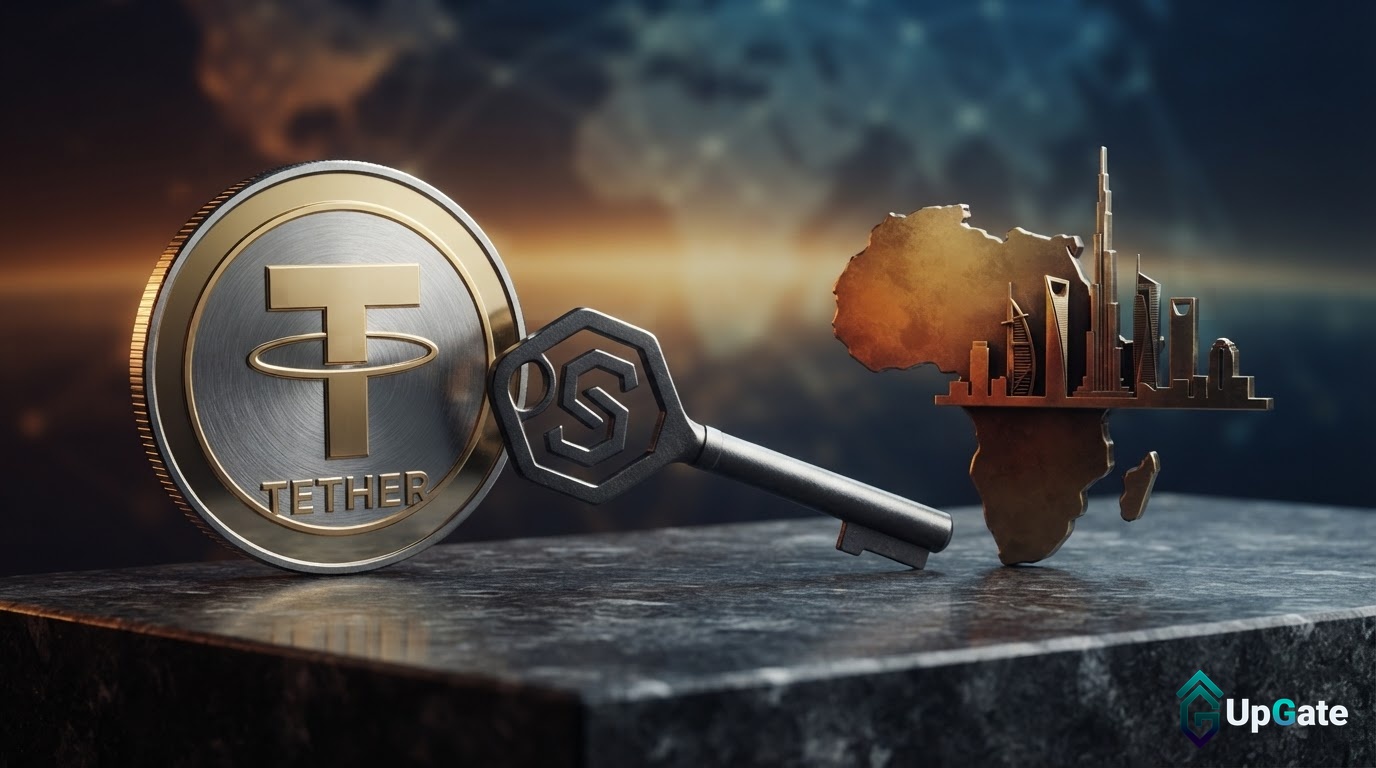
    Tether has strategically invested in Shiga Digital, an Abu Dhabi-based fintech startup, to expand self-custodial digital asset products and financial infrastructure across Africa and the Gulf Cooperation Council (GCC). The partnership will utilize Tether’s open-source Wallet Development Kit (WDK) to enable businesses and individuals to hold and transact in USDT without central custodians.

    Shiga Digital, operational since 2016, provides services such as virtual accounts, over-the-counter (OTC) transactions, and treasury management. Its primary offering is the Enta wallet, a self-custodial solution supporting USDT, Bitcoin, and tokenized gold. The company has processed over $350 million in transaction volumes and holds a DIFC Innovation License, working with licensed financial transmitters across African and Gulf countries to ensure regulatory compliance.

    This investment addresses the challenge of currency depreciation in African economies, where rapid dollar fluctuations can impact business planning and savings. For businesses in these regions, holding USDT offers a hedge against the erosion of working capital. The partnership also aims to enhance cross-border payments between Africa and the GCC, an area where stablecoins present a significant advantage over traditional banking. Transactions that typically take three to five business days via correspondent banking networks could potentially settle on-chain in minutes at a reduced cost.

    The GCC, with the UAE, Saudi Arabia, and Qatar actively vying to become digital finance hubs, provides a fertile ground for this expansion. Abu Dhabi’s regulatory environment, particularly within the DIFC where Shiga holds its license, is designed to attract fintech companies in the digital asset space. Tether’s WDK is an open-source toolkit that aids in building secure wallets with native USDT integration, supporting the development of financial infrastructure for direct digital asset transactions.

    The collaboration between Tether and Shiga Digital is poised to enhance financial stability for businesses in Africa and the GCC by providing access to self-custodial financial tools. Shiga Digital’s established transaction volume and commitment to regulatory compliance provide a strong foundation for scaling self-custodial finance solutions. By integrating Tether’s technology with Shiga’s local expertise and infrastructure, the partnership seeks to foster a more efficient and stable financial ecosystem for the target regions.

    Why This Matters

    The materials describe a narrow update: Tether has made a strategic investment in Shiga Digital, a fintech startup, to develop and expand self-custodial digital asset products and financial infrastructure in the African and GCC regions. The partnership is designed to address the challenges of currency depreciation in African economies by offering USDT as a stable store of value.

    Broader Context

    Source materials place the factual news in this context: African economies face a particular challenge: local currencies that can depreciate rapidly against the dollar, making it difficult for businesses to plan, price goods, or hold savings with any confidence.

  • SEC Greenlights Token Buybacks for Crypto

    SEC Greenlights Token Buybacks for Crypto

    SEC Clarifies Token Buybacks, Easing Crypto Network Concerns

    The U.S. Securities and Exchange Commission (SEC) has issued a significant clarification regarding token buybacks for cryptocurrency networks, potentially resolving a long-standing area of uncertainty for the industry. In an update to its crypto Frequently Asked Questions (FAQ) on Friday, the SEC’s Division of Corporation Finance stated that announcing a token buyback does not constitute a promise of “essential managerial efforts” once a network is operational.

    This distinction is crucial under the Howey test, which determines whether an asset qualifies as a security based on an expectation of profit derived from the efforts of others. By clarifying that a buyback announcement alone does not meet this threshold for functional networks, the SEC has provided much-needed clarity for protocols that have operated in a state of regulatory ambiguity.

    The SEC staff further elaborated that maintaining, upgrading, or expanding a functional network, or promoting its current activities, does not qualify as an investment contract. Similarly, vague aspirational statements that do not promise profit are also excluded. Gabriel Shapiro, a securities attorney at MetaLeX Labs, noted that the buyback guidance “goes further than I expected,” suggesting that the SEC’s application of securities laws to crypto is becoming increasingly nuanced.

    However, the guidance maintains a clear boundary. If a network is not yet functional and an issuer promotes a buyback as a source of yield or returns for token holders, it can still fall under securities regulations. Therefore, the guidance acts as a filter rather than a blanket exemption. The message is clear: launching a working product and subsequently engaging in token buybacks is permissible, whereas promising returns before a product is developed carries regulatory risk.

    The announcement is poised to benefit numerous projects that have implemented token buyback programs. Data from DefiLlama indicates that protocols such as HYPE, PUMP, ENA, AAVE, SKY, LDO, PENDLE, AERO, RAY, JTO, NEAR, ETHFI, SYRUP, LIT, ASTER, KMNO, MET, CC, CARDS, PONS, and STONK, among others, operate live products with revenue streams that fund these buybacks. For instance, Hyperliquid utilizes USDC reserve yield for HYPE buybacks, while Pump.fun has burned $451 million worth of tokens. Pons directs approximately 80% of its V1 revenue to buybacks, and Ethena’s holders have approved routing 95% of net revenue to ENA buybacks. These initiatives, previously operating in a legal gray area, now appear to have regulatory endorsement.

    The SEC’s guidance quietly validates a model that the industry has increasingly adopted: viewing tokens as claims on protocol cash flow rather than speculative bets on future development. This “revenue meta” has now received regulatory approval, suggesting a potential re-evaluation of the valuations for projects demonstrating strong revenue generation.

  • US Spot Bitcoin ETFs Capture $2.4 Billion in Weekly Inflows, Reversing Previous Deficits

    US Spot Bitcoin ETFs Capture $2.4 Billion in Weekly Inflows, Reversing Previous Deficits

    US spot Bitcoin exchange-traded funds (ETFs) recorded their largest weekly net inflows in nearly a year, attracting $2.4 billion for the week ending September 25. This surge has flipped the year-to-date net flows to a positive $934 million, a significant recovery from the approximately $5.8 billion deficit the category faced as recently as mid-July.

    The week ending September 25 marked the strongest inflow period for Bitcoin ETFs since early October 2025. Leading the charge was BlackRock’s iShares Bitcoin Trust (IBIT), which attracted about $1.2 billion. Fidelity’s FBTC followed with approximately $702 million, and ARK 21Shares’ ARKB secured $295 million. These three products collectively accounted for over 90% of the week’s capital inflows.

    Daily flow data revealed a peak on Monday, with inflows reaching nearly $999 million. However, momentum tapered off as the week progressed, with Friday’s inflows dropping to $135 million. This deceleration coincided with Bitcoin’s price pullback from an early-week high near $87,000 to the $83,000-$84,000 range, suggesting that price volatility may have tempered buying enthusiasm.

    The positive trend was not limited to Bitcoin. Ether ETFs attracted approximately $690 million during the same week, while XRP ETFs saw inflows of $76 million, and Solana ETFs garnered $188 million.

    Contextualizing this recovery, spot Bitcoin ETFs experienced substantial outflows earlier in the year, including a record $4.51 billion in June. The shift from a mid-July deficit of $5.8 billion to a positive year-to-date balance of $934 million underscores a sustained period of aggressive buying. The preceding seven-session inflow streak suggests this trend may represent a more durable change in investor positioning.

    Since their launch in January 2024, spot Bitcoin ETFs have accumulated over $57 billion in cumulative net inflows. By late September 2026, these products held approximately $108 billion in assets under management. The recent strong inflows signal a renewed investor interest and a significant rebound in capital allocation towards Bitcoin ETFs, despite earlier market challenges.

    Why This Matters

    The materials describe a narrow update: Spot Bitcoin ETFs in the US recorded $2. The exact date of the “early October 2025” inflow peak.

    Broader Context

    Source materials place the factual news in this context: US spot Bitcoin ETFs just had their best week in nearly a year.

  • Strategy’s Market Cap Surpasses First Abu Dhabi Bank on Bitcoin Gains

    Strategy’s Market Cap Surpasses First Abu Dhabi Bank on Bitcoin Gains

    Software Firm Surpasses Middle Eastern Bank in Market Value Through Bitcoin Holdings

    Five years ago, Strategy Inc. was a mid-tier software company with a market capitalization under $2 billion. Today, its valuation exceeds that of First Abu Dhabi Bank, one of the largest financial institutions in the Middle East.

    As of September 25, 2026, Strategy’s market capitalization reached $60.94 billion, narrowly surpassing First Abu Dhabi Bank’s $60.10 billion. The company, which trades on Nasdaq under the ticker MSTR and was formerly known as MicroStrategy, has fundamentally transformed itself into a publicly traded Bitcoin treasury vehicle.

    Strategy holds over 840,000 Bitcoin as of mid-to-late 2026. This substantial position has been amassed almost entirely through aggressive capital markets activities, including equity issuances, convertible notes, and preferred stock offerings that have tripled the company’s outstanding shares since 2020.

    MSTR’s market capitalization had previously peaked near $128 billion in 2025 before experiencing a pullback to its current levels. In contrast, First Abu Dhabi Bank boasts AED 1.4 trillion (approximately $382 billion) in total assets and reported a net profit of AED 10.7 billion in the first half of 2026 alone. Nevertheless, in the stock market’s assessment of future value, a company focused on holding Bitcoin now ranks higher.

    Michael Saylor, Strategy’s executive chairman, initiated the conversion of the company’s treasury into Bitcoin in 2020. Strategy has since issued multiple tranches of convertible debt and preferred stock specifically to raise capital for Bitcoin acquisitions, effectively repositioning the company as something akin to a leveraged Bitcoin ETF rather than a traditional operating business.

    Evolving Strategy and Regulatory Scrutiny

    Recent strategic adjustments indicate a maturing approach. The company has authorized share buybacks, conducted preferred stock repurchases, and introduced limited Bitcoin sales as a tool for liquidity management.

    The crossover in market capitalization between MSTR and First Abu Dhabi Bank serves as a tangible illustration of capital reallocation toward Bitcoin-adjacent assets, even as traditional financial institutions continue to generate significantly more revenue and hold substantially larger actual assets.

    Following the template established by Saylor, several other companies have begun allocating portions of their treasuries to Bitcoin. Regulators in both the United States and the Gulf region are closely monitoring companies like Strategy as the digital asset class continues to grow. A single listed company holding over 840,000 Bitcoin represents a concentration that would typically invite scrutiny across any asset class, particularly concerning disclosure, leverage limits, and custody requirements.

    For the moment, the market’s valuation stands: a Bitcoin treasury company at $60.94 billion, compared to a Gulf bank with AED 1.4 trillion in assets at $60.10 billion.

  • Jumper Launches JUMP Token Sale on Legion, Spins Out Super-App for Onchain Finance

    Jumper Launches JUMP Token Sale on Legion, Spins Out Super-App for Onchain Finance

    Jumper Unveils Independence and Token Sale as it Aims to Become Onchain Finance Super-App

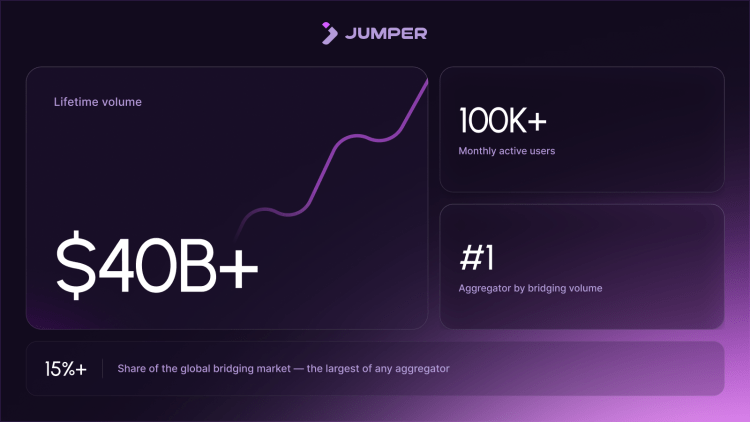
    British Virgin Islands – September 28, 2026 – Jumper, a leading consumer application for onchain asset movement and trading, today announced its transition to an independent company and plans for its inaugural JUMP token sale via Legion. The move marks a significant growth phase for the platform, which has already facilitated over $40 billion in lifetime volume and boasts more than 100,000 monthly active users, establishing itself as the top aggregator by bridging volume.

    Expanding Ambitions Beyond Bridging

    Initially gaining traction through cross-chain trading, Jumper is now broadening its scope with the ambition to become the definitive super-app for onchain finance. This envisioned platform will serve as a single destination for users to execute a wide range of financial activities, including swapping assets, bridging between blockchains, trading perpetual futures, accessing tokenized stocks and other real-world assets, and exploring yield opportunities. Ultimately, Jumper aims to provide access to any asset available on the blockchain.

    “Bridging was the starting point for Jumper, and we’ve grown into the #1 aggregator by bridging volume with more than 15% market share,” stated Marko Jurina, CEO of Jumper. “As more financial assets move onchain, the opportunity gets much bigger than bridging. We want Jumper to become the application users open whenever they want to trade, invest, or move value onchain.”

    New Products and Strategic Spin-off

    Jumper has already expanded its offerings to include advanced trading and real-world assets. Its upcoming major launch, Jumper Perps, is set to aggregate perpetual futures venues into a unified trading experience and is expected to go live in the coming weeks. Each new product is designed to generate fresh volume and revenue for Jumper while enhancing the value proposition for its existing user base by consolidating onchain activities within a single application.

    Originally incubated within LI.FI, Jumper is now being established as a standalone venture with its own dedicated capital, leadership, and strategic roadmap. The two entities will focus on different aspects of onchain finance growth: LI.FI will concentrate on orchestration infrastructure, while Jumper will serve as the consumer-facing application.

    JUMP Token Sale and Token-First Ownership Model

    The upcoming Legion sale will represent Jumper’s first capital raise. The proceeds are earmarked for accelerating product development, user acquisition, and expanding distribution across Jumper’s evolving product suite. The JUMP token is slated for a separate launch following the fundraising process.

    This fundraising structure underscores Jumper’s commitment to a token-first ownership model, aligning stakeholders through a single asset. “Jumper is not conducting a separate equity financing round alongside JUMP token, reflecting a deliberate decision to align the key stakeholders,” Jurina explained. “Users, contributors and investors will hold the same asset. We believe the token should be the only way to have ownership and exposure to the value being created by Jumper. There shouldn’t be one group holding equity and another group holding a token.”

    Jurina further elaborated on the company’s philosophy: “Getting here has meant pushing against a lot of incumbent processes and thinking that still treat the token as something separate from the underlying business. We think that model needs to change. If crypto is serious about creating new forms of ownership, the people who use, support, and build these businesses should be able to participate directly in the value they help create. We want Jumper to be at the forefront of that shift. We believe token-first ownership should become an industry standard, and we want to help lead that change.”

    About Jumper

    Jumper is positioned as the super-app for onchain finance, consolidating a comprehensive range of onchain products and assets under a single interface. Users can seamlessly swap, bridge, access yield opportunities, trade perpetual futures, and discover diverse assets, from major cryptocurrencies and memecoins to tokenized stocks and other real-world assets. Jumper simplifies the complexities of various blockchains, protocols, and liquidity venues, offering a more streamlined, asset-centric trading experience. Currently, Jumper stands as the #1 aggregator by bridging volume, with over $40 billion in lifetime volume and more than 100,000 monthly active users.

  • Bitcoin ETFs See $2.4B Inflow, Biggest Week Since October 2025

    Bitcoin ETFs See $2.4B Inflow, Biggest Week Since October 2025

    Bitcoin ETFs See Record Inflows Amid Market Volatility

    US spot Bitcoin exchange-traded funds (ETFs) experienced their most robust week of inflows this year, attracting a total of $2.39 billion. This surge followed a $134.5 million inflow on Friday, according to data from SoSoValue.

    The weekly inflow figure marks the highest since the week ending October 10, 2025, when net inflows reached $2.71 billion. It also eclipses the previous 2026 high of $1.92 billion recorded in August.

    The year-to-date flows for these funds climbed to approximately $926 million by Friday, a significant recovery from a deficit of roughly $5.55 billion seen in early July.

    Bitcoin Price Pullback Follows Strong Inflows

    The momentum of daily inflows moderated after hitting nearly $1 billion on Monday, coinciding with Bitcoin’s retreat from levels above $87,100. At the time of publication, Bitcoin was trading around $83,116, a 1.6% decrease over the preceding 24 hours, though it remained up 1.7% over the past seven days, according to CoinGecko.

    Investor Sentiment Remains Optimistic

    The Crypto Fear & Greed Index stood at 74, indicating continued “Greed” in the market, a slight increase from 70 recorded a week prior, as reported by Alternative.me.

    Ether and XRP ETFs Also Attract Capital

    Beyond Bitcoin, US spot Ether ETFs garnered approximately $690 million in net inflows last week, reversing the $140 million in outflows from the preceding week. Spot XRP ETFs also saw positive momentum, adding about $76 million in inflows, according to SoSoValue.