Tag: Positive

  • Bitcoin Surges 40% This Quarter, Outperforming Gold; Fidelity Sees Double Bottom Breakout, $100K Target

    Bitcoin Surges 40% This Quarter, Outperforming Gold; Fidelity Sees Double Bottom Breakout, $100K Target

    Bitcoin Surges Over 40% This Quarter, Outperforming Gold and US Stocks

    Bitcoin has achieved a feat many considered improbable at the start of the year: outperforming gold. As of September 29th, BTC’s third-quarter gains exceeded 40%, leaving gold, the S&P 500, and other major assets in its wake. Even as the 10-year Treasury yield climbed to its highest point since 2007 and the US Dollar Index (DXY) rose from 98.78 back towards 101.50, causing gold to drop nearly 4% in a single day, Bitcoin only experienced a minor 1% dip before quickly recovering.

    This resilience extends beyond intraday movements. Bitcoin has maintained its hold above the $80,000 mark after a period of slowing momentum, with prices consistently staying above their May highs. Technical analysts are interpreting this pattern as a “double-bottom breakout,” signaling the potential start of a new upward trend.

    Technical Breakout and Institutional Outlook

    Jurrien Timmer, Fidelity Investments’ Director of Global Macro, shared his insights on the significance of Bitcoin’s breach of the $80,000 level via the X platform. A chart accompanying his post illustrated Bitcoin’s two previous dips this year, at $60,033 and $57,742, forming a W-shaped double-bottom structure. The resistance level in the middle of this pattern was identified around $82,800.

    In technical analysis, a double-bottom breakout signifies that prices have found buying support at the same level twice, with the intervening peak acting as resistance. Breaking through this peak suggests that selling pressure has been exhausted and a new uptrend is commencing. Timmer stated, “Bitcoin is currently challenging the key resistance level at $80,000. A breakout would confirm the double-bottom structure, with targets pointing towards $100,000.”

    This is not Timmer’s first technical assessment of BTC. Previously, he noted that a catalyst for a rebound had yet to emerge as Bitcoin approached its “Power Law” support. His current explicit bullish technical outlook suggests a shift in Fidelity’s internal view on Bitcoin’s short-term structure.

    Options Market Signals Strong Bullish Sentiment

    While technical patterns offer analyst perspectives, the open interest in the options market reveals where institutions and retail investors are truly placing their bets. Data from Deribit indicates that the most active Bitcoin call options are concentrated at three strike prices:

    • $90,000 calls have an open interest of $2.45 billion, ranking first.
    • $95,000 calls follow closely with $2.33 billion.
    • $100,000 calls also show significant interest at $1.79 billion.

    These three price levels form a dense cluster of bullish sentiment, implying that market participants anticipate Bitcoin reaching or surpassing $90,000 in the short term with a high probability.

    Buyers of call options hold the right, but not the obligation, to purchase an asset at a fixed price, profiting when the market rises. The substantial open interest in calls within the $90,000-$100,000 range suggests traders view these levels as achievable short-term targets. However, it’s also important to note that options positions can represent speculative bets and can quickly reverse as trends shift.

    Challenging Seasonal Patterns and Macroeconomic Headwinds

    Bitcoin has a long-standing seasonal pattern: since 2013, when August closes in the green, September has almost invariably closed in the red. If the current trend holds for the final two trading days of September, BTC will mark its first “positive August leading to a positive September” since records began in 2013, and achieve three consecutive months of gains from July to September.

    While seasonal patterns do not imply causation, the consistent breaking of such a trend often suggests a change in market structure. This could be driven by institutional capital inflows from ETFs, a shift in the macroeconomic environment, or a combination of both.

    On the other hand, the trajectory of the 10-year Treasury yield is causing concern for some analysts. There are views that yields could climb to 6%, a level not seen since 2000. Traditionally, high yields are bearish for risk assets, as higher risk-free returns tend to draw capital back into government bonds.

    However, Bitcoin’s performance this quarter indicates a declining sensitivity to Treasury yields. Gold saw a 4% drop in a single day due to rising rates, while BTC experienced only minor fluctuations before recovering. This contrast is noteworthy: if Bitcoin is indeed transitioning from a “risk asset” to a “reserve asset,” its outperformance of gold in a high-interest-rate environment serves as an initial test.

    Key Watchpoints for the Coming Weeks

    While technical patterns and options positioning lean bullish, historical lessons are clear: double-bottom breakouts can fail, and false breakouts have often trapped those who chased the rally. The key watchpoints for the coming weeks are threefold:

    1. Can Bitcoin hold the $80,000 level without a significant breakdown?
    2. Will Treasury yields indeed surge towards 6%?
    3. Will the open interest on Deribit options continue to shift upwards from $90,000 towards $100,000?

    If all three of these conditions align, Timmer’s $100,000 target will gain significantly higher credibility.


  • Canary Capital Buys Entire $3.96M XRP ETF Inflow

    Canary Capital Buys Entire $3.96M XRP ETF Inflow

    XRP ETFs See Surge in Institutional Demand

    U.S. spot XRP Exchange Traded Funds (ETFs) are experiencing robust institutional interest, with a significant inflow recorded by Canary Capital’s XRPC on September 28. The fund received the entire $3.96 million in XRP ETF inflows for that day, contributing to a broader trend of sustained positive net inflows for U.S. XRP ETFs, now spanning 11 consecutive weeks.

    Canary Capital’s XRPC Attracts Investment

    Canary Capital’s spot XRP ETF, XRPC, saw its net assets climb above $372.1 million following the latest institutional investment. This $3.96 million inflow, while modest in the context of Canary’s overall assets, underscores the ongoing demand for XRP exposure through regulated investment vehicles.

    XRP ETF Market Snapshot

    The U.S. XRP ETF market has seen substantial growth, with total net inflows across all active funds now exceeding $1.79 billion. Canary Capital’s XRPC, which was the first to launch a direct-custody spot XRP ETF on Nasdaq in November 2025, currently ranks third in cumulative net inflows with $489.37 million. Bitwise leads the market with $676.29 million, followed by Franklin Templeton’s XRPZ with $500.99 million. The combined net assets of these funds saw an 80% increase in the third quarter, reaching a record $1.79 billion.

    Inflows Accelerate in Late September

    The recent surge in demand is particularly evident in the sharp acceleration of inflows in late September. For the week ending September 25, weekly inflows jumped by 691% from $9.6 million to $75.59 million, extending the market’s streak of positive net inflows to 11 weeks.

    Growing Investor Confidence in XRP

    This consistent ETF demand coincides with increasing attention on XRP from large investors. Matt Hougan, Chief Investment Officer at Bitwise, noted that financial advisors are becoming more comfortable with XRP due to its established history and clear real-world applications. Hougan explained that XRP’s utility in areas such as stablecoins, cross-border payments, and liquidity provides tangible use cases that resonate with advisors seeking to understand the fundamental value of digital assets.

    The growing institutional appetite for XRP is also reflected on-chain, with reports indicating that large wallets have accumulated approximately 1.54 billion XRP, valued at $2.2 billion, over a four-day period.

  • Raydium Revenue Surges to Mid-2025 High Amid Tokenized Equity Boom on Solana

    Raydium Revenue Surges to Mid-2025 High Amid Tokenized Equity Boom on Solana

    Raydium, Solana’s largest decentralized exchange, has reported its strongest weekly revenue figures in over a year, driven not by another memecoin surge, but by the trading of tokenized stocks.

    Revenue Surge Fueled by Tokenized Equities

    The protocol’s 30-day holder revenue reached $4.43 million, with $1.19 million generated in the most recent seven-day period alone. Total protocol revenue over the past 30 days hit $6.94 million, a level not seen since the summer of 2025.

    This significant revenue increase is attributed to a single integration: on September 5, 2026, Raydium incorporated StonkFun, a platform focused on tokenized equities, via its LaunchLab infrastructure. This partnership dramatically reduced the cost of deploying a new token from 0.29 SOL to 0.03 SOL, a reduction of approximately 90% in launch fees.

    Impact on Trading and Token Value

    The more accessible on-ramp immediately spurred a surge in tokenized equity trading. Assets mirroring major companies like Boeing and Roblox began to see substantial trading volume on Raydium’s pools. On September 6, the day after the integration, Raydium recorded a single-day protocol revenue peak of nearly $440,000.

    On the same day, protocol buybacks of Raydium’s governance token, RAY, amounted to $640,788, the highest daily buyback figure since February 2025. This buyback mechanism functions similarly to a stock repurchase program, where protocol revenue is used to purchase RAY from the open market, thereby reducing circulating supply and theoretically bolstering the token’s price.

    The market responded positively. RAY experienced a rally of approximately 90% within a week, reaching an 11-month high of around $2.01. Its market capitalization neared $543 million at the peak of this surge.

    Repurposing LaunchLab for Traditional Finance

    Raydium’s early history was closely linked to the memecoin economy, serving as a primary liquidity hub for Solana’s numerous dog-themed, frog-themed, and celebrity-adjacent tokens throughout 2024 and 2025. As the memecoin trend cooled, Raydium’s performance also declined.

    The StonkFun integration marks a significant shift. Tokenized asset trading volume on Raydium saw substantial growth in Q2 2026, reaching $2.09 billion for the quarter. Raydium’s LaunchLab, initially designed for memecoin token creation and liquidity bootstrapping, has been effectively repurposed. By drastically lowering deployment costs, it has become a viable launchpad for tokenized versions of traditional financial instruments.

    The $2.09 billion in tokenized asset trading volume during Q2 2026 indicates genuine market demand. With daily revenue reaching $640,788, the protocol is generating sufficient income to meaningfully support its own token price through open-market purchases.

    Regulatory Hurdles Loom

    However, the burgeoning market for tokenized equities faces potential regulatory challenges that memecoins largely sidestepped. Synthetic stock tokens currently exist in a regulatory gray area in most jurisdictions. Should regulators classify these instruments as securities, platforms facilitating their trading could face enforcement actions. The cost reduction that made StonkFun’s integration so impactful also makes it exceptionally easy to launch tokens that might attract regulatory scrutiny.

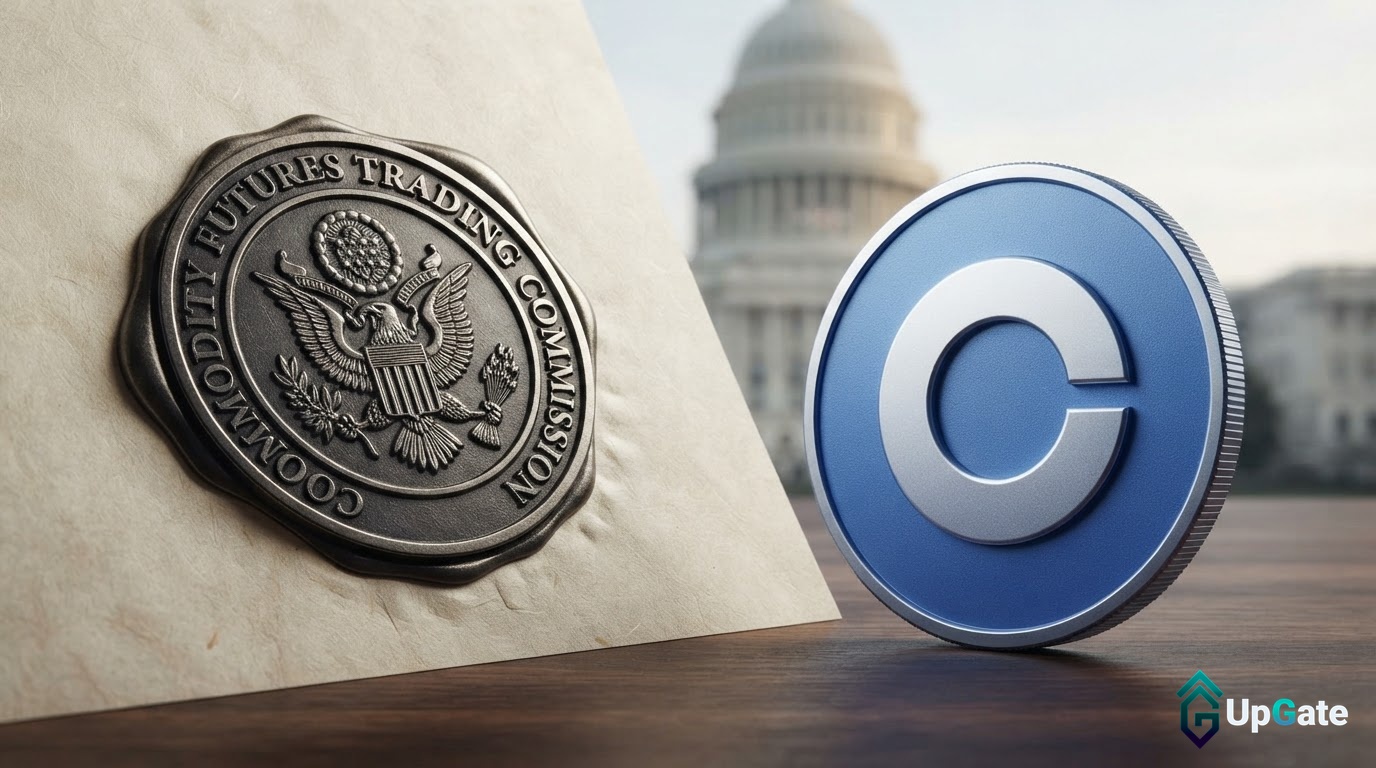
  • Coinbase Clearing LLC Secures CFTC Registration as Derivatives Clearing Organization

    Coinbase Clearing LLC Secures CFTC Registration as Derivatives Clearing Organization

    Coinbase Clearing LLC has been registered by the Commodity Futures Trading Commission (CFTC) as a Derivatives Clearing Organization, a significant regulatory milestone for the cryptocurrency exchange’s subsidiary. This approval empowers the clearinghouse to process fully collateralized futures, options on futures, and swaps.

    The newly registered entity is engineered to leverage USDC for collateral and facilitate round-the-clock settlement, aligning with modern financial market demands. This development signifies Coinbase’s expansion into regulated financial services within the derivatives sector.

    The CFTC’s registration permits Coinbase Clearing LLC to handle a defined set of financial instruments. Its operational framework includes the utilization of USDC as collateral, aiming to streamline transactions and offer continuous settlement capabilities.

    This regulatory achievement positions Coinbase to enhance its service offerings in the derivatives market. The integration of USDC collateral and the provision for 24/7 settlement are key features designed to improve efficiency for market participants.

    Why This Matters

    The materials describe a narrow update: Coinbase’s subsidiary, Coinbase Clearing LLC, has received registration from the Commodity Futures Trading Commission (CFTC) to operate as a Derivatives Clearing Organization. Coinbase’s new clearinghouse is designed for efficient and modern financial operations.

  • Smarter Web Secures Shareholder Approval for UK’s First BTC-Backed Preferred Stock

    Smarter Web Secures Shareholder Approval for UK’s First BTC-Backed Preferred Stock

    Bristol-based web design firm The Smarter Web Company (LSE: SWC) has achieved a first for a UK-listed entity, securing shareholder approval on September 28 to introduce a novel class of perpetual preferred shares. These shares are uniquely backed by the company’s corporate Bitcoin treasury, marking the debut of such an instrument on the London Stock Exchange.

    The shareholder vote was overwhelmingly in favour, with over 99.8% approving the resolutions, reflecting near-unanimous consent in corporate governance.

    The new preferred shares, set to trade under the ticker MORE, aim to raise between £15 million and £25 million, with a minimum target of £10 million. The proceeds will be allocated to bolstering the company’s Bitcoin holdings. These shares will feature a cumulative variable-rate preferential dividend, ensuring that any missed payments accrue rather than being forfeited. In the event of liquidation, they will rank above ordinary shares. Notably, these preferred shares will not carry voting rights.

    The official launch of this instrument remains contingent upon approval from the Financial Conduct Authority (FCA) and prevailing market conditions.

    Earlier this year, the company completed a significant financial restructuring. In June 2026, shareholders sanctioned a £210 million share premium reduction, which subsequently freed up approximately £132.5 million in distributable reserves. This move has provided the company with the necessary balance-sheet flexibility to make credible dividend commitments for the new preferred share class.

    The Smarter Web Company currently holds around 2,878 BTC, establishing it as the largest publicly disclosed Bitcoin treasury among companies listed in the UK. This substantial holding is notable for a firm whose primary business is web design and digital marketing. However, the company has been strategically pivoting towards a Bitcoin accumulation strategy, which it terms its “10-Year Plan.”

    Analysts at TD Cowen have taken notice of the development. Following the announcement, the firm revised its price target for SWC shares upwards to £0.73 from £0.64, reiterating a “Buy” rating. This new target suggests a potential upside of approximately 90% from the stock’s trading price at the time of the analyst note.

    The primary challenge ahead lies in execution. FCA approval is not guaranteed, the fundraising effort must meet its £10 million minimum threshold, and the inherent volatility of Bitcoin’s price could rapidly alter the financial dynamics of a variable-rate preferred dividend tied to a BTC treasury. Investors in MORE will be exposed to a multifaceted risk profile, encompassing credit risk associated with the company, Bitcoin price risk via the treasury, and liquidity risk inherent in a relatively small LSE-listed instrument.

  • Chainlink Surges 11%, Bitcoin Tops $84K

    Chainlink Surges 11%, Bitcoin Tops $84K

    Bitcoin Holds Steady Amidst Volatile Week, Altcoins Show Strong Gains

    Bitcoin has settled into a narrow trading range, oscillating between $83,000 and $85,000, currently positioned near the midpoint of this corridor. Meanwhile, Ethereum has surpassed the $2,700 mark once more, and smaller-cap cryptocurrencies like Chainlink (LINK) and Stellar (XLM) have outperformed larger assets with double-digit percentage increases.

    The primary cryptocurrency experienced a significant surge last Monday, recovering from a weekend dip to $80,000. Within approximately 12 hours, Bitcoin added over $7,000 in value, breaking through $87,000 for the first time since late January. The initial downturn saw Bitcoin fall to $85,000 before bullish sentiment attempted to breach the $87,000 resistance level again.

    The subsequent rejection proved more substantial, pushing BTC below $84,000 within hours, and further declining to $82,800. Although a rebound followed, the price was once again capped at $85,000.

    Since then, Bitcoin has largely remained within the aforementioned trading range. An attempted breakout over the weekend was thwarted at $85,000. Bears then attempted to drive the price lower, but failed to break through the $82,500 support level. As of this report, BTC has recovered to just over $82,000.

    Bitcoin’s market capitalization has climbed to $1.680 trillion according to CoinMarketCap, while its dominance over altcoins remains stable at 58.6%.

    Ethereum has seen a gain of over 3% in the past 24 hours, reclaiming its position above $2,700. XRP is trading above $1.50 following a 2.3% increase. Solana (SOL), Binance Coin (BNB), Tron (TRX), and Dogecoin (DOGE) are also showing modest gains. Cardano (ADA) has risen above $0.25 after a notable 4% surge.

    Chainlink’s LINK token has experienced a significant rally, soaring by over 11% in a single day to trade above $15. XLM has mirrored this performance with a similar jump, currently priced around $0.23. Hedera Hashgraph (HBAR) has surged by 20%, now trading near $0.12. In contrast, Zcash (ZEC) and NEAR Protocol (NEAR) have seen declines of up to 9%. Other notable gainers among larger-cap altcoins include Crypto.com Coin (CRO), Aave (AAVE), and Internet Computer (ICP).

    The total market capitalization of all cryptocurrency assets has seen a slight increase from the previous day, reaching $2.860 trillion on CoinMarketCap.

  • Bitcoin ETF Inflows Surge, Draining Exchanges of 35,800 BTC

    Bitcoin ETF Inflows Surge, Draining Exchanges of 35,800 BTC

    Bitcoin Reserves Shrink as ETFs Attract Record Inflows

    Approximately 35,800 Bitcoin, valued at roughly $2.52 billion, were withdrawn from cryptocurrency exchange wallets last week. These significant outflows were not indicative of market distress but rather a shift into the long-term holding structures of exchange-traded funds (ETFs) and cold storage.

    ETFs See Strongest Weekly Inflow Since Late 2025

    The week ending September 25 marked a robust period for U.S. spot Bitcoin ETFs, which collectively attracted approximately $2.4 billion in net inflows. This represents the strongest weekly influx of capital since early October 2025, signaling a substantial demand for direct Bitcoin investment vehicles. The capital infusion did more than just increase fund balances; it effectively removed Bitcoin from the readily available trading supply.

    BlackRock Leads Institutional Demand

    BlackRock’s iShares Bitcoin Trust (IBIT) spearheaded this surge, recording around $1.2 billion in weekly inflows. This performance solidifies IBIT’s position as the primary channel for institutional investors seeking exposure to Bitcoin. Fidelity’s FBTC followed with approximately $702 million in inflows, and ARK 21Shares’ ARKB contributed around $295 million.

    ETF Assets Surpass $108 Billion

    Since their launch in January 2024, U.S. spot Bitcoin ETFs have accumulated over $57 billion in cumulative net inflows. The total assets under management for these ETFs now stand at approximately $108 billion.

    Reversal from Earlier Negative Flows

    The ETF landscape experienced a notable turnaround this year. Year-to-date ETF flows had dipped into negative territory earlier in the year, reaching a low of approximately -$5.8 billion in mid-July. The subsequent recovery has been significant, pushing 2026 flows back into positive territory, currently standing at around $934 million.

    Exchanges Witness Substantial Outflows

    In parallel with ETF inflows, centralized cryptocurrency exchanges experienced net outflows of about 31,782 BTC, equivalent to roughly $2.52 billion at current market prices. Binance was the largest contributor to these withdrawals, accounting for nearly 19,500 BTC, representing more than half of the total outflows from exchanges.

    Holders Favor Long-Term Storage

    On-chain data indicates a growing trend among Bitcoin holders to move their assets into long-term storage solutions, coinciding with an improvement in market sentiment.

    ETF Ecosystem Recovers from Confidence Crisis

    The negative flow of -$5.8 billion in mid-July had signaled a significant crisis of confidence within the ETF ecosystem. The subsequent recovery has been decisive, effectively alleviating most of those concerns.

    Bitcoin ETFs Achieve Scale Rapidly

    The $108 billion in total assets under management places Bitcoin ETFs in a distinguished position among commodity-linked investment products. For context, gold ETFs took several years after their 2004 introduction to reach a comparable scale, whereas the Bitcoin ETF complex achieved this milestone in under three years.

    Limited Supply Meets Growing Demand

    With Bitcoin’s supply capped at 21 million coins, and approximately 19.7 million already mined, the substantial weekly absorption by ETFs, coupled with outflows from exchanges, is tightening the available supply for active trading.

    BlackRock’s Dominance Raises Questions for Competitors

    BlackRock’s significant share, accounting for roughly half of the weekly inflows, suggests that IBIT is emerging as the default investment vehicle. This dominance could pose challenges for smaller competitors as the market matures, potentially impacting their ability to maintain relevance.

  • BlackRock’s Ethereum ETFs Show Strong Asset Growth and Market Dominance

    BlackRock’s Ethereum ETFs Show Strong Asset Growth and Market Dominance

    BlackRock’s Ethereum Exchange Traded Funds (ETFs), including the iShares Ethereum Trust (ETHA) and the iShares Staked Ethereum Trust ETF (ETHB), have demonstrated significant asset accumulation and captured substantial market share within the US spot Ethereum ETF landscape. By late September 2026, ETHA alone had amassed over $13 billion in net inflows since its inception in July 2024, establishing BlackRock as a leading entity in this evolving sector.

    On September 28, the iShares Ethereum Trust (ETHA) recorded net inflows of $15.35 million, equivalent to approximately 5,730 ETH. This daily inflow contributed to a strong weekly performance, with ETHA attracting $326 million in net capital for the week ending September 28. This figure represents nearly half of the total $690 million gathered by all US spot Ethereum ETFs combined during the same period.

    The overall US spot Ethereum ETF market reached approximately $17.78 billion in assets under management by late September 2026. ETHA’s substantial inflows have secured it a significant portion of this market. The pace of accumulation, with ETHA gathering over $13 billion in roughly two years since its July 2024 launch, highlights robust investor demand for regulated Ethereum investment products.

    BlackRock also introduced the iShares Staked Ethereum Trust ETF (ETHB) in March 2026. This ETF provides investors with exposure to Ethereum’s staking yield, enabling them to earn consensus rewards without the complexities of running a validator node. ETHB has maintained consistent investor interest since its launch, notably achieving zero outflow days—meaning that on no trading day has more capital exited the fund than entered it.

    Collectively, ETHA and ETHB represent approximately 5.4% of Ethereum’s total market capitalization as of late September 2026. The strong performance and significant asset gathering by BlackRock’s Ethereum ETFs indicate a growing investor appetite for regulated digital asset investment vehicles and underscore the increasing maturity of the cryptocurrency market.

    Why This Matters

    The materials describe a narrow update: BlackRock’s iShares Ethereum Trust (ETHA) saw $15. Accumulating $13 billion in roughly two years is a pace that most fund launches can only dream about.

    Broader Context

    Source materials place the factual news in this context: BlackRock’s iShares Ethereum Trust, known by its ticker ETHA, pulled in $15.35 million in net inflows on September 28.

  • ICP Surges 35% Monthly, Analysts Predict $10+ Rally

    ICP Surges 35% Monthly, Analysts Predict $10+ Rally

    ICP Surges Amidst Analyst Optimism, But Caution Remains

    The Internet Computer (ICP) token has experienced a significant surge in value over the past 30 days, climbing by double digits and surpassing the $3.30 mark on both Monday and Tuesday, according to data from CoinGecko. While this revival falls short of its all-time high, a growing number of market observers believe it could signal the beginning of a substantial rally.

    Accumulation Signals and Potential Breakout

    One prominent voice on X, user CW, has asserted that the cryptocurrency is exhibiting continued accumulation signals. They pointed to a repeating pattern that has historically preceded previous price gains. “The next phase following this accumulation will be an upward move,” CW stated, adding that ICP has likely reached a critical buy wall zone, increasing the probability of a rebound from current price levels.

    Ambitious Price Targets Emerge

    Further bolstering the optimistic outlook, analysts JAVON MARKS and Nehal have made notably bullish predictions for Internet Computer. MARKS highlighted the altcoin’s “consistent strength,” noting a breakout from a key Falling Wedge pattern. This technical formation, according to MARKS, suggests a potential upward movement exceeding 208%, targeting the $10 area and possibly extending even higher.

    Nehal, after an in-depth review of the ICP code, described it as akin to “alien technology.” Based on this research, Nehal forecast a dramatic price explosion for the asset, projecting a rise to $60, which would represent an approximately 1,560% increase from its current valuation.

    Exchange Flows Support Bullish Sentiment

    ICP’s recent exchange netflow data also lends support to these optimistic forecasts. For several weeks, outflows have consistently outweighed inflows, indicating a shift of investors from centralized platforms to self-custody. This trend is seen as easing short-term selling pressure.

    Contrasting Views and Potential Downside

    However, not all market participants share the bullish sentiment. X user Crypto With Gopal has suggested that ICP is currently forming a rising wedge pattern. According to this analysis, the price is experiencing a pullback after a strong rally, with sellers testing support levels and momentum waning as buyers struggle to maintain the $3 threshold.

    “A breakdown below support could trigger further downside, while reclaiming resistance may revive bullish momentum. Bears watching for confirmation,” Gopal concluded, underscoring the potential for a bearish scenario if key support levels are breached.

  • Coinbase Clears Derivatives In-House Post-CFTC Registration

    Coinbase Clears Derivatives In-House Post-CFTC Registration

    Coinbase Brings Derivatives Clearing In-House After CFTC Registration

    The Commodity Futures Trading Commission (CFTC) has granted Coinbase Clearing LLC registration as a derivatives clearing organization, a move that brings a critical function in-house for the cryptocurrency exchange. Previously outsourced to a third party, this development grants Coinbase direct control over its derivatives clearing operations. The company is positioning Coinbase Clearing as the first derivatives clearinghouse in the United States to operate natively with USDC, the stablecoin issued by Circle.

    A clearinghouse acts as an intermediary in futures or options trades, guaranteeing that each party involved will be paid, irrespective of the other’s financial standing. Traditionally, these guarantees rely on dollar transactions processed through the banking system, meaning collateral transfers and margin calls are subject to banking hours and settlement schedules.

    Coinbase states that its USDC-native clearinghouse will bypass these limitations by utilizing blockchain technology for 24/7 settlement. This allows collateral to be moved and margin calls to be met around the clock, eliminating the dependency on traditional banking hours. For institutional investors managing risk across different time zones, this offers a significant advantage by removing a scheduling constraint inherent in dollar-based clearing.

    This initiative appears to be driven by the growing role of stablecoins in institutional settlement infrastructure, rather than a specific mandate from the CFTC. The framework builds upon a digital-asset pilot program initiated by the CFTC in December 2025, which allowed Bitcoin, Ether, and USDC to be used as acceptable collateral in regulated derivatives markets.

    According to the CFTC registration order, Coinbase Clearing is authorized to clear fully collateralized futures, options on futures, and swaps. This scope is more limited than a broad derivatives clearing license, focusing on products that are backed one-to-one and designed to mitigate counterparty risk.

    Prior to this registration, Coinbase Derivatives, the company’s CFTC-designated contract market, relied on Nodal Clear as an external clearinghouse for trade routing. The establishment of Coinbase Clearing transforms this arrangement into an in-house operation, giving Coinbase direct oversight of the clearing process. The company had reportedly been collaborating with Nodal Clear on a 2026 rollout of USDC-backed collateral for futures before securing its own registration.

    The practical impact of this change lies in increased control rather than an expansion of product offerings. Coinbase now possesses three key components of its regulated derivatives infrastructure: Coinbase Financial Markets as the futures commission merchant, Coinbase Derivatives as the trading venue, and Coinbase Clearing as the post-trade settlement guarantee layer.

    This integrated infrastructure already extends beyond domestic markets. In May, Coinbase Financial Markets became the first CFTC-regulated futures commission merchant to connect U.S. clients to global crypto perpetuals and options markets, which constitute 80% of global crypto trading volume.

    By bringing the clearing function in-house, Coinbase gains a more comprehensive grip on margin, collateral, and risk management decisions across its entire derivatives pipeline, rather than sharing these responsibilities with a third-party operator.

    It is important to note the specific scope of the CFTC’s approval: registration to clear fully collateralized futures, options on futures, and swaps. The order does not mandate USDC as the settlement asset for all products cleared by the entity, nor does it extend to leveraged crypto derivatives.

    The broader question of how U.S. digital-asset oversight will evolve remains a subject of ongoing debate in Washington, with legislative efforts like the CLARITY Act still progressing through the Senate.

    Coinbase Clearing’s registration represents a tangible regulatory achievement within this evolving landscape. However, the ultimate impact of this service will depend on the volume of trading that ultimately migrates to fully collateralized, USDC-settled structures once it becomes operational.