Tag: Positive

  • HSBC RedCoin: Hong Kong Dollar Stablecoin Set for Second-Half Launch

    HSBC RedCoin: Hong Kong Dollar Stablecoin Set for Second-Half Launch

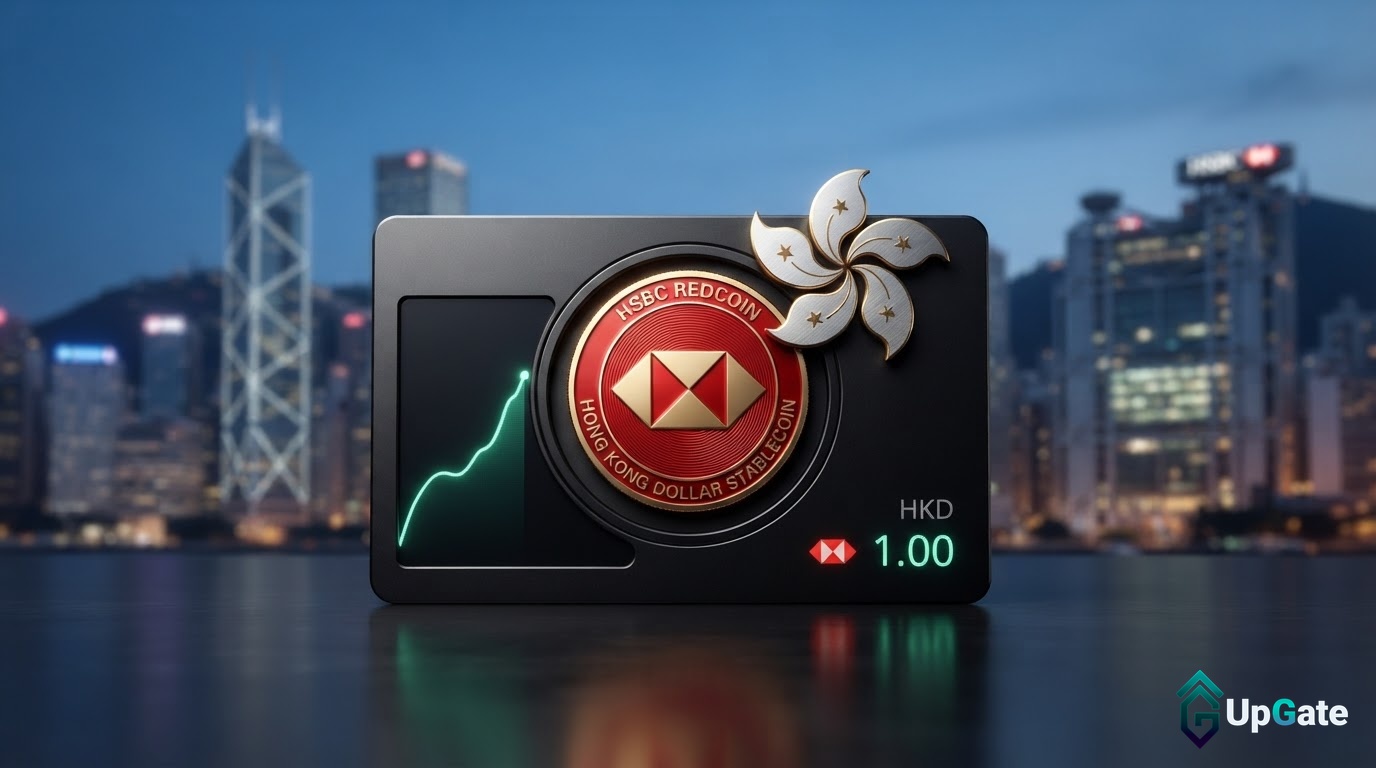
    HSBC has announced the official name for its Hong Kong dollar stablecoin: HSBC RedCoin. The bank plans to launch the stablecoin in the second half of the year, initially focusing on personal transfers and merchant payments. This move marks a significant step for a major traditional financial institution entering the digital asset space in Hong Kong.

    HSBC obtained one of the first stablecoin issuer licenses from the Hong Kong Monetary Authority (HKMA) on April 10th, under the new ‘Stablecoin Ordinance.’ The stablecoin will be backed by the Hong Kong dollar. According to HSBC’s press release, the initial phase of HSBC RedCoin will be accessible through the PayMe platform and the HSBC Hong Kong mobile banking app, supporting peer-to-peer (P2P) transfers and person-to-merchant (P2M) payments.

    Customer Insights Inform Phased Rollout

    A recent survey conducted by HSBC among its customers aged 18-64 revealed significant interest in digital assets, alongside key concerns that the bank aims to address with its phased rollout strategy. The survey, which included 1,060 participants, found that 74% of respondents could name at least one use case for stablecoins. The most frequently cited uses were digital asset trading and tokenized investments (57%), followed by P2P transfers (53%), and cross-border remittances and merchant payments (52%).

    However, the survey also highlighted misconceptions and areas where customer confidence needs to be built. For instance, 26% of surveyed customers believed stablecoins are government-issued, and 10% thought they earn interest, while HSBC stated that the current Hong Kong regulatory framework does not include interest-bearing stablecoins. To foster trust, 53% of respondents identified fraud protection as a confidence builder, 51% cited smooth conversion back to cash, and 39% pointed to transparent reserves. Clearer regulation (62%) and enhanced education (55%) were also identified as crucial factors.

    Strategic Approach and Public Caution

    HSBC stated that these survey results support their phased approach to launching HSBC RedCoin. Maggie Ng, CEO of HSBC Hong Kong, said that naming the stablecoin reflects HSBC’s heritage and that its launch is the beginning of supporting financial innovation in Hong Kong. HSBC emphasized that HSBC RedCoin is unrelated to any fraudulent stablecoins impersonating HSBC and advised caution against investment scams. The HKMA also reminded the public to use regulated channels when obtaining or using stablecoins and to check the HKMA’s register of licensed stablecoin issuers.

    While HSBC RedCoin is slated for launch in the second half of the year, specific details regarding the exact launch date, the underlying blockchain technology, and the timeline for expanding use cases beyond initial personal and merchant payments remain uncertain.

    Why This Matters

    The materials describe a narrow update: HSBC announced its Hong Kong dollar stablecoin will be named HSBC RedCoin and is planned for launch in the second half of the year. The exact launch date for HSBC RedCoin within the second half of the year.

    Broader Context

    Source materials place the factual news in this context: HSBC’s stablecoin issuance is based on a license from the Hong Kong Monetary Authority (HKMA) under the ‘Stablecoin Ordinance’.

  • US Spot Bitcoin ETFs See Nine-Day Inflow Streak, Attracting $3 Billion

    US Spot Bitcoin ETFs See Nine-Day Inflow Streak, Attracting $3 Billion

    US spot Bitcoin ETFs have recorded a nine-day streak of positive inflows, attracting approximately $3 billion in capital. This period, beginning September 17, marks a significant reversal from previous outflows and has shifted year-to-date net flows into positive territory.

    Inflow Surge Details
    The week ending September 25 saw substantial inflows, with approximately $2.4 billion entering the ETFs. The strongest single day during this period was September 21, which recorded nearly $999 million in inflows. This sustained buying activity has brought the total assets under management across US spot Bitcoin ETFs to nearly $108 billion by late September.

    Among the leading performers during this inflow streak were BlackRock’s iShares Bitcoin Trust (IBIT), Fidelity’s FBTC, and ARK 21Shares’ ARKB. For the week ending September 25, IBIT attracted approximately $1.2 billion, FBTC saw around $702 million, and ARKB garnered roughly $295 million. Together, these three ETFs accounted for over 90% of the capital inflows during that week.

    Context of Reversal
    This recent surge in inflows contrasts with earlier periods where the ETFs experienced significant capital outflows. At the midpoint of the year, the category was approximately $5.8 billion underwater. By the end of the reported streak, cumulative net flows for US spot Bitcoin ETFs had turned positive, reaching approximately $934 million. Since their launch in January 2024, these ETFs have accumulated over $57 billion in net inflows.

    Market and Investor Behavior
    During the nine-day inflow streak, the spot price of Bitcoin generally stabilized within the range of $83,000 to $87,000 USD. This price range is notably lower than Bitcoin’s peak near $126,000 in October 2025, a drawdown of approximately 34%.

    The performance of IBIT and FBTC simultaneously attracting capital suggests broad-based institutional demand, rather than a single large investor making a directional bet. The inclusion of ARKB indicates that growth-oriented investment strategies are also contributing to the inflows. This trend indicates a renewed institutional appetite for Bitcoin ETFs, with current price levels potentially viewed as an attractive entry point by value-conscious investors.

    Why This Matters

    The materials describe a narrow update: Following a period of capital outflows, US spot Bitcoin ETFs recorded nine consecutive days of inflows starting September 17, totaling approximately $3 billion. The exact end date of the nine-day winning streak beyond September 29 is not explicitly stated.

    Broader Context

    Source materials place the factual news in this context: Months of bleeding capital preceded the nine-day winning streak.

  • Bitcoin Eyes $215K as BTC Recovers Key Market Levels

    Bitcoin Eyes $215K as BTC Recovers Key Market Levels

    Bitcoin Bear Market Declared Over, With Upside Target of $215,000

    New analysis suggests the cryptocurrency’s downturn has concluded, projecting significant gains.

    A report released Wednesday by BIT Research asserts that Bitcoin’s bear market has ended, presenting an optimistic scenario for the current cycle that could see the price reach between $185,000 and $215,000. The leading cryptocurrency is currently trading above $83,000 and is poised to conclude its third consecutive month in positive territory, with quarterly gains reaching 42%.

    The firm claims to have accurately predicted the cycle’s low in late July. At that time, Bitcoin had met a downside target derived from Elliott Wave analysis and successfully held above the $62,900 level.

    Technical Indicators Signal Bullish Turn

    Key technical indicators have also pointed towards a bullish reversal. The weekly Relative Strength Index (RSI), a measure of price momentum, ceased its decline in June and July even as Bitcoin’s price hit new lows. The report draws a parallel between this divergence and the market bottom observed in 2022. Subsequently, Bitcoin surpassed its 21-week moving average at $69,272 and reclaimed the $70,000 mark. It is now trading around $83,000, exceeding its March 2024 high of $73,084.

    Cost Basis and Macro Factors Support Rally

    BIT’s analysis also leaned on cost basis data. The “True Market Mean,” which estimates the average price at which holders acquired their Bitcoin, stands at $76,897. This indicates that both typical long-term holders and recent spot ETF buyers are now in profit, a development the analysts believe removes a significant source of selling pressure.

    Furthermore, the report considers the escalating US federal debt, which has now surpassed $40 trillion. Rising Treasury yields, driven by concerns over government finances, could potentially drive capital towards both gold and Bitcoin as safe-haven assets.

    Debt Model and Potential Headwinds

    BIT’s debt model provides a reference valuation for Bitcoin near $105,000. However, the primary headwind identified is a strengthening US dollar, coupled with market expectations of further Federal Reserve interest rate hikes and ongoing geopolitical tensions in the Strait of Hormuz. Despite these challenges, the firm does not anticipate them derailing the current rally, noting that historical dollar strength has impacted gold more severely than Bitcoin.

    Recent Performance and ETF Inflows

    The original cryptocurrency has been trading within the $83,000 to $85,000 range since facing resistance near $87,000 last week. As of this writing, Bitcoin was trading just above $83,000, representing a dip of over 4% in the past seven days. Nevertheless, this price point signifies a nearly 10% increase over two weeks and a more than 7% rise compared to 30 days ago. Data from Coinglass shows the third quarter closing with gains of 42.22%, marking the best quarterly performance since Q4 2024 and the strongest Q3 since 2017.

    ETF flows have also shown improvement. Spot Bitcoin ETFs recorded net inflows of $2.8 billion in September alone, bringing cumulative inflows to $57.6 billion and total net assets under management to approximately $108 billion.

    Future Projections and Market Dynamics

    In previous cycles, Bitcoin has historically climbed at least 85% above the average holder’s cost basis, which is currently estimated at around $142,000. BIT’s analysts clarified that this level serves as a reference point for tracking a bull market rather than a minimum target or a definitive peak. While prices have historically continued to rise after crossing this threshold, they cautioned that past performance is not indicative of future results.

    During the last cycle, Bitcoin reached the 85% mark near $73,000 in March 2024 and subsequently peaked at $126,000, approximately 1.7 times higher. If this multiple were to shrink to between 1.3 and 1.5 times on the current $142,000 base, it would translate to a price range of $185,000 to $215,000.

    The timing of such a surge remains uncertain. The previous cycle took roughly 19 months to advance from the 85% level to its peak. Applying a similar pattern could place Bitcoin at $200,000 around 2028 or 2029, though the analysts emphasized the speculative nature of such pattern matching and the inherent uncertainty in timing. They also noted that the asset currently appears “stretched” after a rapid ascent, suggesting that a period of consolidation or a more significant pullback remains a possibility in the near term.

  • GhostSwap 2026: Private Crypto Swaps

    GhostSwap 2026: Private Crypto Swaps

    GhostSwap, a cryptocurrency swap platform, is built on three foundational principles: speed, user control, and privacy. Unlike conventional centralized exchanges that require account creation, identity verification, and depositing funds into exchange-controlled wallets, GhostSwap operates as a non-custodial service. This allows users to exchange various cryptocurrencies without the need for an account or Know Your Customer (KYC) procedures for standard transactions, while maintaining full control of their assets throughout the process.

    The platform positions itself as a streamlined method for exchanging digital assets across different networks, bypassing the typical setup of a full trading account. According to its official website, GhostSwap currently supports over 1,600 cryptocurrencies, including major ones like Bitcoin, Ethereum, and Solana. It also reports a user base exceeding 1.5 million worldwide, with over 2 million transactions completed and a swap volume of $750 million. GhostSwap is designed for users seeking a straightforward way to move between cryptocurrencies without holding balances on centralized exchanges.

    How GhostSwap Works

    GhostSwap simplifies the crypto exchange process into a few straightforward steps. Users first select the cryptocurrency they wish to send and the asset they want to receive. They then enter the desired exchange amount, review the quoted rate, and provide a receiving wallet address. The final step involves sending their cryptocurrency to complete the transaction, after which the converted assets are delivered to the provided wallet.

    For example, to exchange BTC for USDT, a user would select BTC as the outgoing asset and USDT as the incoming asset. They would then specify the amount, enter their USDT wallet address, review the swap details, and send BTC to the deposit address provided for that specific transaction.

    Custody and User Responsibility

    The primary distinction between GhostSwap’s model and a centralized exchange lies in custody. On traditional platforms, users deposit funds into an exchange-controlled wallet, where assets may remain for extended periods. GhostSwap asserts that it does not hold customer funds in this manner, functioning instead as a non-custodial platform where assets pass through the swap process and are ultimately delivered to a user-controlled wallet.

    This approach enhances privacy and seamlessness but places greater responsibility on the user. Without a conventional exchange account holding the resulting funds, the accuracy of the receiving address and the selected blockchain network is critical before initiating a transaction. Incorrectly entered addresses mean transactions cannot be reversed.

    Speed of Transactions

    Speed is a key component of GhostSwap’s value proposition. Most swaps are completed within five minutes, though this can vary significantly based on network load, the chosen network, congestion, and processing routes. In practice, GhostSwap’s workflow is typical of a crypto swap service prioritizing speed, privacy, and convenience.

    Privacy and KYC

    GhostSwap’s account-free model minimizes the personal information required from users. The platform emphasizes privacy as a core philosophy, aiming to collect minimal personal data while empowering users to maintain control over their funds.

    However, the absence of routine KYC has important qualifications. All swaps are automatically screened by processing partners. If a deposit is flagged during this process, GhostSwap may request identity verification from the user. This means KYC is not a standard requirement for typical swaps but is not entirely eliminated. This responsible approach to handling personal information is a notable aspect.

    For privacy-conscious users, GhostSwap eliminates the friction of registration and identity verification common to centralized exchanges. Users can initiate swaps without creating profiles or submitting identification upfront. Simultaneously, the screening policy ensures a compliance layer operates behind the scenes, and users should be aware that certain transactions may necessitate additional checks.

    Asset Coverage

    A significant selling point of GhostSwap is its extensive support for over 1,600 cryptocurrencies across major blockchain networks, offering substantial flexibility compared to services focused on a limited selection of major coins. This broad coverage allows users to exchange less common coins directly for others, avoiding the need to transfer them to a large centralized exchange and execute multiple trades.

    It is important to note that the availability of specific trading pairs depends on the network and available liquidity. Users are advised to check the live exchange interface to confirm direct swap possibilities and current rates.

    Cross-Network Swaps

    GhostSwap supports swaps involving assets on entirely different networks. For instance, Bitcoin and Ethereum operate on separate native networks, as do Solana, Monero, and XRP. GhostSwap abstracts this complexity, allowing users to simply select the asset they are sending and the asset they wish to receive.

    Privacy Coins and Anonymity

    GhostSwap supports privacy coins, such as Zcash (ZEC) and Monero (XMR), which are often a subject of debate within the crypto community. This feature is particularly relevant for users seeking access to assets not readily available on mainstream exchanges, especially after several centralized exchanges delisted Monero.

    However, support for privacy coins should not be mistaken for a guarantee of complete anonymity. As previously mentioned, GhostSwap screens transactions, and flagged deposits may be subject to identity verification.

    Liquidity Aggregation

    GhostSwap aggregates liquidity from multiple providers rather than relying on a single market source. This allows the system to search for available rates before routing transactions and executing at the best possible price. This aggregation enhances liquidity and expands the number of available swap routes, which is crucial when dealing with less common cryptocurrencies.

    Rates and Fees

    GhostSwap does not have a central order book, meaning there are no typical maker and taker fees. Instead, platform fees are integrated into the slippage, which varies based on available liquidity and the assets being swapped.

    Conclusion

    GhostSwap offers convenience, privacy, and broad cryptocurrency support, appealing primarily to users seeking a simple, account-free method for exchanging digital assets. It is well-suited for individuals who manage their crypto on-chain and prefer to avoid centralized intermediaries. The platform is particularly attractive to privacy-conscious users who wish to bypass account creation and routine KYC.

    However, for users requiring advanced trading instruments like stop losses, limit orders, or trailing stops, other platforms may offer more suitable options.

  • Kalshi Valued at $40 Billion After Four Months, Sequoia Leads Round

    Kalshi Valued at $40 Billion After Four Months, Sequoia Leads Round

    Kalshi Reportedly Seeking $1 Billion in New Funding at $40 Billion Valuation

    Funding Round Signals Rapid Growth for Prediction Market Platform

    Prediction market platform Kalshi is reportedly in advanced talks to raise approximately $1 billion in new funding, a deal that would value the company at a staggering $40 billion. This latest fundraising effort comes just four months after Kalshi secured $1 billion in Series F funding in May at a $22 billion valuation, effectively doubling its worth in a remarkably short period. Existing investors Sequoia Capital and Wellington Management are said to be leading the round, with Tiger Global and Dragoneer also participating.

    Valuation Surge Raises Eyebrows

    The speed at which Kalshi’s valuation has escalated is notable. The company’s valuation reportedly stood at $11 billion in December of the previous year, jumped to $22 billion in May, and is now rumored to be targeting $40 billion. This rapid ascent has been a subject of discussion in the market, with reports of Kalshi seeking a $40 billion valuation emerging as early as June. At that time, The Financial Times reported that the company was in fundraising negotiations with that target valuation, aiming to close the round in the third quarter. Reuters’ latest report suggests these talks are now in an advanced stage.

    Prediction Markets Gain Traction

    The prediction market sector has seen a significant redefinition over the past year. Platforms like Polymarket and Kalshi have experienced rapid growth in trading volume and user activity, drawing attention from traditional finance circles. These platforms are increasingly viewed not just as gambling venues but as novel tools for price discovery. The integration of artificial intelligence, particularly following the White House’s release of an AI self-regulation framework in early 2026, has further expanded the potential for prediction markets, serving as a crucial data layer for AI agents.

    Private Markets as a Haven for Growth Companies

    Amidst a subdued IPO market in 2026, with some crypto-related companies reportedly pausing their U.S. IPO plans, the private market has become a vital refuge for growth-stage technology companies seeking capital. The involvement of funds like Tiger Global and Dragoneer, known for their pre-IPO tech investments, signals confidence in Kalshi’s business model scalability.

    Regulatory Hurdles Loom Large

    Despite the impressive valuation, Kalshi continues to face significant regulatory challenges. This year has seen conflicting rulings from various circuit courts regarding the nature of Kalshi’s contracts. While the Sixth Circuit Court of Appeals ruled that sports-related contracts do not fall under the Commodity Futures Trading Commission’s (CFTC) jurisdiction as swaps and should be regulated by individual states, other circuits, including the Third, Eighth, and Ninth, have reached different conclusions. This “circuit split” makes a Supreme Court battle between Kalshi and the CFTC increasingly likely.

    A High-Stakes Gamble for Investors

    For investors, this legal uncertainty presents both risk and opportunity. A favorable Supreme Court ruling that supports Kalshi’s federal jurisdiction model could solidify the legal standing of prediction markets, potentially validating the $40 billion valuation as just the beginning. Conversely, an unfavorable outcome could lead to contract suspensions and necessitate a significant business restructuring, with potentially catastrophic consequences. The current capital market activity suggests investors are betting on the former scenario.

    Potential for a Landmark Deal

    The Reuters report has not yet received official comment from Kalshi or any of the involved investment firms. If this funding round closes in the fourth quarter, it would represent one of the largest and highest-valued private placements in the cryptocurrency-related sector for 2026. Further developments, particularly concerning the potential Supreme Court intervention and its impact on the broader prediction market industry’s regulatory landscape, will be closely monitored.

    Defining the Future of Prediction Markets

    Prediction markets have transitioned from a niche sector to a mainstream capital focus in 2026. Kalshi’s ability to sustain its $40 billion valuation will depend not only on user growth but also on its success in the courtroom, where it will fight for the definition of what constitutes a futures contract versus gambling.

  • MAX Digital Asset Exchange Integrates Native Tether USDT on Aptos for TWD Conversions

    MAX Digital Asset Exchange Integrates Native Tether USDT on Aptos for TWD Conversions

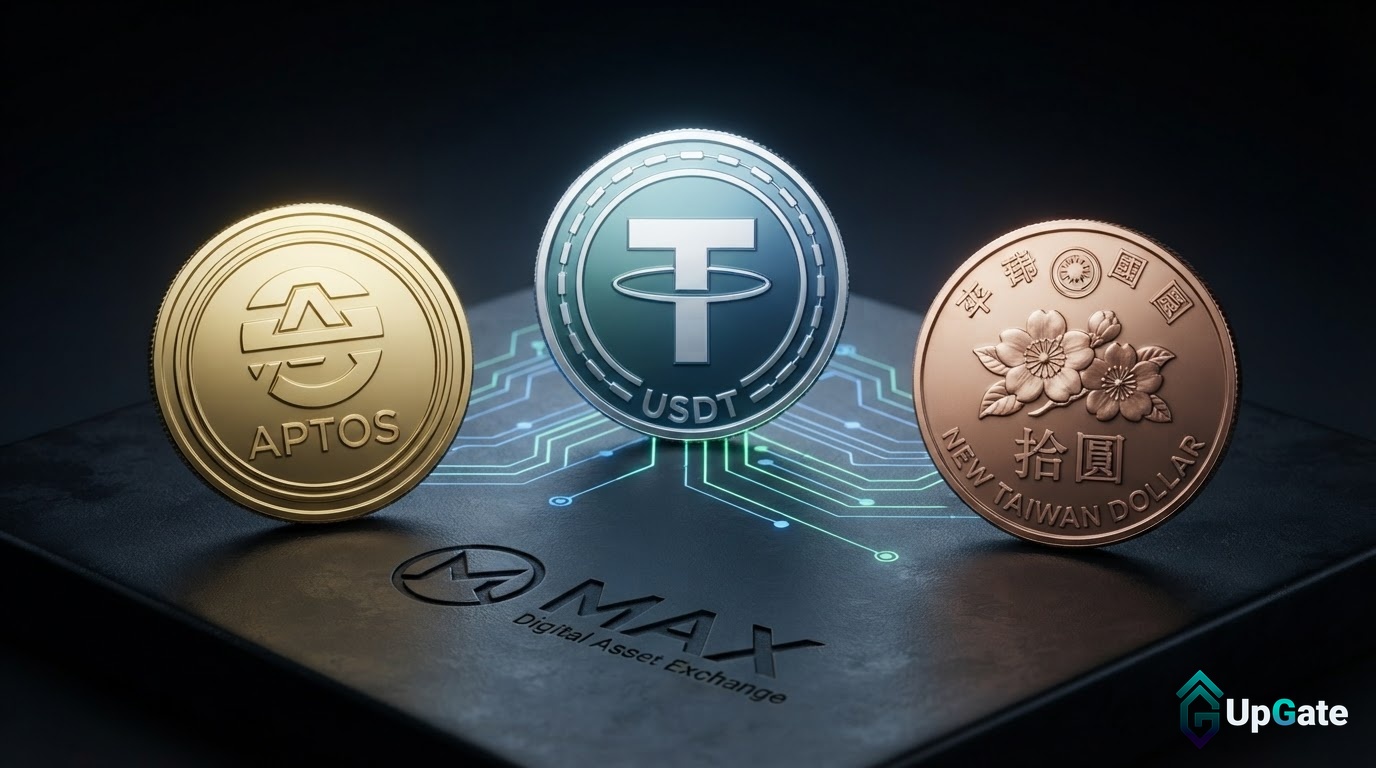
    MAX Digital Asset Exchange, operated by MaiCoin Group, has integrated native Tether USDT on the Aptos blockchain, enabling direct conversions with Taiwanese Dollars (TWD) and enhancing accessibility to the Aptos ecosystem for TWD users.

    Key Dates and Functionality
    Deposits and withdrawals for Aptos-native USDT on MAX went live on September 29. New trading pairs are scheduled to launch on September 30 at 15:00 GMT+8. This integration facilitates seamless on-ramp and off-ramp functionality, allowing users to convert TWD to Aptos-native USDT and withdraw it directly to an Aptos wallet, or vice versa, without relying on wrapped assets or cross-chain bridges.

    Expanded Trading Options
    In addition to USDT support, MAX is introducing new trading pairs for HYPE, GRAM, APT, and RENDER, also commencing on September 30. These additions aim to offer users greater trading flexibility.

    Critical User Warning
    MAX has issued a crucial advisory: users must select the correct Aptos network when initiating USDT deposits. Failure to do so could result in the permanent loss of assets, highlighting the importance of user diligence when managing digital assets across blockchain networks.

    Ecosystem Context
    Tether began issuing USDT natively on the Aptos blockchain in late 2024. This move has been followed by adoption from major exchanges, including Binance and Bithumb, signaling a growing trend for Aptos-native USDT.

    For Taiwan’s market, TWD-denominated trading pairs on platforms like MAX are significant. As the Taiwanese Dollar is less commonly supported on global exchanges compared to major currencies like the US Dollar, Euro, or Japanese Yen, local exchanges play a vital role in bridging this gap for domestic users.

    MaiCoin Group, the operator of MAX, emphasizes a compliance-focused approach for the exchange, aligning with the evolving digital asset regulatory landscape in the region. The group also issues its own utility token, MAX, which provides trading fee discounts on the platform.

    Why This Matters

    The materials describe a narrow update: MAX Digital Asset Exchange, operated by MaiCoin Group, has enabled support for native Tether USDT on the Aptos blockchain. TWD-denominated trading pairs on local platforms like MAX fill a critical gap because the Taiwanese Dollar is not as widely supported by global exchanges as the US Dollar, Euro, or Japanese Yen.

  • Robinhood to Launch Weekend Equity Trading

    Robinhood to Launch Weekend Equity Trading

    Robinhood Disrupts Wall Street by Planning Weekend Stock Trading

    Robinhood has signaled a significant shift for Wall Street, announcing plans to offer equities trading on weekends for a select group of U.S. stocks and ETFs. This move, unveiled at the company’s HOOD Summit in Houston, marks a first for modern American brokerages.

    Weekend Trading Infrastructure

    Orders placed during the weekend will be processed through Bruce ATS, an alternative trading system operated by Bruce Markets. Robinhood and PEAK6 Investments hold majority ownership of Bruce Markets, granting the brokerage direct control over the infrastructure supporting these new trading sessions.

    Phased Rollout and Regulatory Hurdles

    The initial offering will feature a curated selection of stocks and ETFs, rather than the entire spectrum of listed securities. While a specific launch date has not yet been set, the feature requires regulatory approval and could be introduced soon or in early next year, according to Robinhood.

    Expanding Beyond Traditional Hours

    This initiative builds upon Robinhood’s previous expansion of trading hours. In 2023, the company launched its 24 Hour Market, which currently operates from Sunday 8 p.m. ET to Friday 8 p.m. ET. The proposed weekend trading would effectively bridge the remaining gap, creating a near seven-day market for participating securities.

    Evidence of Demand

    The demand for extended trading hours is already apparent. On active trading days, approximately 25% of the daily volume on Robinhood’s 24 Hour Market originates from outside conventional market hours.

    Broader Strategic Announcements

    Weekend equities trading was not the sole announcement at the HOOD Summit. Robinhood also revealed plans for AI-powered trading agents, earnings contracts through a new partnership with Cboe, and perpetual futures for select cryptocurrencies, following its acquisition of the Bitstamp exchange.

    Steve Quirk, an executive at Robinhood, articulated the underlying rationale: “Breaking news doesn’t wait for an opening bell.”

    Potential Risks and Mitigation Strategies

    However, potential risks are associated with this development. Thinner weekend liquidity could lead to wider bid-ask spreads and increased price volatility for individual trades. Alternative trading systems typically lack the order flow depth found on primary exchanges during regular trading hours. Traders not employing limit orders could face unexpected costs when trading on a Sunday.

    Robinhood’s strategy of initially limiting the offering to a curated list of tickers is likely intended to manage these risks, focusing on highly liquid securities where spreads are less prone to significant widening.

  • CSD BR Partners with Ripple to Mirror Securities Data on XRP Ledger

    CSD BR Partners with Ripple to Mirror Securities Data on XRP Ledger

    CSD BR, Brazil’s Central Securities Depository, has partnered with Ripple to mirror securities ownership data on the XRP Ledger. This integration represents a measured adoption of distributed ledger technology (DLT) by a regulated financial infrastructure provider, operating deliberately within existing regulatory frameworks.

    Mirroring Data, Not Transferring Assets

    The core of the partnership involves mirroring securities ownership data. This means information is replicated on the XRP Ledger, but CSD BR fundamentally remains the official source of record for all registrations and settlements. Consequently, this process does not alter investor rights or existing legal frameworks. The initial phase of this integration focuses on investment fund shares from BTG Pactual, identified as Latin America’s largest standalone investment bank.

    Technical Backbone and Regulatory Approach

    This collaboration leverages XRPL’s Multi-Purpose Token standard, a capability designed to accommodate a broader range of asset types. Ripple Custody provides the essential asset security layer for this integration. Significantly, the partnership was executed without the need for new regulatory approvals, underscoring a strategic approach to operate within current rules rather than challenge their boundaries.

    CSD BR manages a substantial BRL 22 trillion in registered assets across Brazil’s financial markets and processes millions of transactions. The institution operates under the oversight of Brazil’s securities regulator, the CVM (Comissão de Valores Mobiliários), and the central bank, the BCB (Banco Central do Brasil). The selection of BTG Pactual’s fund shares for the initial phase adds credibility, representing a meaningful and liquid asset class.

    Phased Innovation and Future Potential

    Executives from both CSD BR and Ripple have characterized this cautious rollout as intentional. This approach, described as real-world testing through mirroring, is positioned as a pathway toward safe innovation. The mirroring phase is explicitly designated as step one, with future phases potentially becoming more ambitious.

    The integration of securities ownership data on a public blockchain by a regulated entity like CSD BR signals an increasing adoption of DLT within traditional finance. The use of the XRP Ledger for this purpose highlights its expanding utility beyond cryptocurrency transactions. The partnership’s execution within existing regulatory frameworks emphasizes a compliance-driven strategy for DLT adoption.

    While the initial focus is on mirroring data, future phases of the partnership roadmap may include potential native asset issuance directly on the XRP Ledger and peer-to-peer trading. Specific details regarding the timeline for these future phases, as well as the exact nature of potential native asset issuance and peer-to-peer trading, remain uncertain. Brazilian equivalents of real estate and agribusiness receivables certificates, known as CRIs and CRAs respectively, are mentioned as potential assets for future phases.

    Why This Matters

    The materials describe a narrow update: CSD BR, a Brazilian Central Securities Depository, has integrated with Ripple to mirror securities ownership data on the XRP Ledger. The exact timeline for future phases of the partnership.

    Broader Context

    Source materials place the factual news in this context: CSD BR manages more than BRL 22 trillion in registered assets across Brazil’s financial markets.

  • Aztec Labs Relaunches zk.money for Private Stablecoin Transactions on Ethereum

    Aztec Labs Relaunches zk.money for Private Stablecoin Transactions on Ethereum

    Aztec Labs has relaunched zk.money, its privacy-focused Ethereum wallet, enabling users to conduct private stablecoin transactions. The self-custodial wallet operates on the Aztec Network, a layer-2 solution designed for privacy.

    The relaunched zk.money allows users to send and receive stablecoins such as USDC, USDT, and DAI without revealing transaction details like balances, amounts, or recipients to the public. While transactions within zk.money remain private, deposits originating from the Ethereum network are publicly visible. According to Aztec’s posts on X, users can claim a tag, for example, bob.zk.money, which resolves to a deposit address through the Ethereum Name Service (ENS), enhancing usability.

    Privacy functions within zk.money are processed on the user’s device, generating zero-knowledge proofs. These proofs serve as cryptographic receipts that validate transactions without disclosing their specifics. The company’s developer documentation describes the Aztec Network as a privacy-first Ethereum layer-2.

    However, the service includes limitations: transactions are capped at $2,500 each, and all users share a collective daily deposit ceiling of $50,000. Aztec Labs emphasizes that as a self-custodial wallet, it cannot control or freeze user funds, and no administrator holds such privileges.

    The original zk.money debuted in 2021, attracting over 75,000 wallets and processing approximately $100 million in volume before the team focused on building its own network. In 2021, Aztec Labs secured $17 million in a funding round led by Paradigm. The company also expanded its offerings with Aztec Connect, a toolkit designed to integrate its privacy technology into decentralized finance (DeFi) protocols.

    The relaunch of zk.money occurs amid a broader focus on privacy enhancements within the Ethereum ecosystem. Proposals for the upcoming Hegecta upgrade are being considered, which could potentially allow privacy pools to manage their own transaction fees without intermediaries. Ethereum co-founder Vitalik Buterin has also discussed the potential for special-purpose applications to achieve significant privacy through zero-knowledge proofs as part of his vision for a “cryptographic world computer.”

    Why This Matters

    The relaunch of zk.money by Aztec Labs offers enhanced privacy for stablecoin transactions on Ethereum, operating as a self-custodial layer-2 solution. This development is significant as it aligns with growing interest in privacy solutions on Ethereum and Vitalik Buterin’s vision for cryptographic privacy.

    Broader Context

    Three years after initially shelving the project, Aztec Labs has relaunched zk.money. The original iteration of the wallet debuted in 2021, attracting substantial user interest and volume before the team shifted focus to developing their underlying network infrastructure.

  • Robinhood Expands Perpetual Futures Trading to Traditional Assets in Europe

    Robinhood Expands Perpetual Futures Trading to Traditional Assets in Europe

    Robinhood announced on July 1 that it is expanding its perpetual futures trading offerings in Europe to include traditional assets such as commodities, exchange-traded funds (ETFs), and foreign exchange (FX) pairs. This move marks a significant diversification beyond the cryptocurrency-only perpetual futures that the platform previously offered in the region.

    Eligible European customers can now trade perpetual futures contracts linked to assets including gold, crude oil, popular ETFs like QQQ and EWY, and FX pairs such as EUR/USD. These new offerings come with up to 10x leverage and are available for trading 24 hours a day, seven days a week. Perpetual futures are financial contracts that allow traders to speculate on an asset’s price without owning the underlying asset, and they do not have an expiration date. Their price is typically kept aligned with the spot price through a mechanism known as funding rates.

    This expansion into traditional assets represents a notable step for Robinhood, moving beyond its initial focus on crypto perpetual futures. According to the FactSheet, when Robinhood first introduced perpetual futures for Bitcoin and Ethereum in Europe, the product line eventually expanded to include other cryptocurrencies like XRP, DOGE, SOL, and SUI, offering up to 7x leverage. These crypto perpetual futures quickly became one of the fastest-growing products on the platform following their European rollout.

    The expansion of perpetual futures to traditional assets is part of a broader international strategy for Robinhood. The company is actively pursuing other international market opportunities, including seeking crypto trading capabilities in the United Kingdom. Additionally, Robinhood has acquired WonderFi to establish a presence in the Canadian market and is pursuing a capital markets service license in Singapore.

    Beyond product and market expansion, Robinhood is also developing its own blockchain infrastructure. The company is working on Robinhood Chain, a Layer-2 blockchain designed for tokenized assets, with a public mainnet launch planned. Furthermore, users of the Robinhood Wallet in eligible regions can access decentralized perpetual futures through the Lighter exchange, which includes incentive structures tied to the $LIT token.

    This strategic diversification and international push indicate Robinhood’s ambition to broaden its appeal and service offerings to a wider range of investors and markets globally.

    Why This Matters

    The materials describe a narrow update: Robinhood has launched perpetual futures trading for traditional assets such as commodities, ETFs, and foreign exchange pairs in Europe. The expansion into traditional assets represents a meaningful leap beyond Robinhood’s previous crypto-only perpetual futures.

    Broader Context

    Source materials place the factual news in this context: Robinhood announced on July 1 that it’s expanding its perpetual futures offerings in Europe to include traditional assets like commodities, ETFs, and foreign exchange pairs, a meaningful leap beyond the crypto-only perps it launched earlier.