Tag: Positive

  • Aerodrome’s Slipstream V3 Upgrade Introduces Protocol-Native MEV Auction and Dynamic Fees

    Aerodrome’s Slipstream V3 Upgrade Introduces Protocol-Native MEV Auction and Dynamic Fees

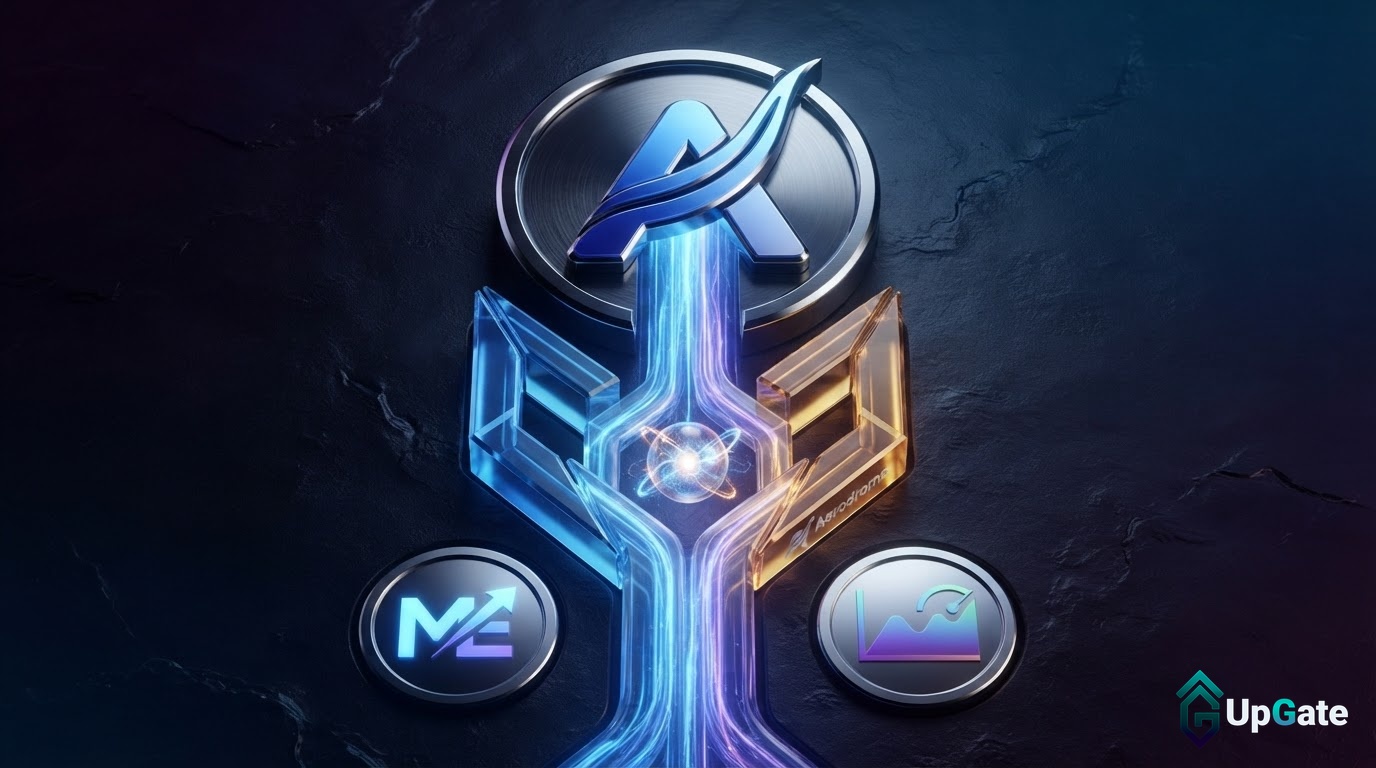
    Aerodrome has upgraded its concentrated liquidity automated market maker (AMM) with Slipstream V3, introducing a protocol-native Miner Extractable Value (MEV) auction and a dynamic fee model. This upgrade aims to capture value previously lost to bots and redistribute it to liquidity providers and sAERO token holders, while also enhancing capital efficiency.

    MEV Capture and Redistribution
    The core of the Slipstream V3 upgrade is the integration of an internal MEV auction directly into the AMM. This mechanism is designed to capture the value generated from MEV opportunities, such as front-running or sandwich attacks, which traditionally benefits bots operating outside the protocol. According to the protocol’s estimates, the proceeds from this MEV internalization could potentially reach tens of millions. These captured funds are slated to be distributed to liquidity providers and holders of the sAERO token, creating a new income stream that was previously lost to the mempool.

    Dynamic Fees and Capital Efficiency
    Slipstream V3 also features a dynamic fee model that adjusts based on market volatility. This model is intended to provide better compensation for liquidity providers during periods of high market activity, addressing a common complaint about static fee tiers in traditional AMMs. Slipstream claims this approach can achieve capital efficiency up to 4,000x compared to traditional constant-product AMMs in targeted price ranges, though the precise impact of this claim requires further observation.

    The concentrated liquidity model employed by Slipstream V3 follows the design philosophy pioneered by Uniswap V3, allowing liquidity providers to allocate their capital to specific price ranges for potentially higher returns. This approach contrasts with older AMM models that spread liquidity across the entire price curve.

    Strategic Context and Future Plans
    Aerodrome currently operates on the Base blockchain, while its sister protocol, Velodrome, is based on Optimism. Both protocols are part of a broader strategy to consolidate under a single AERO token. The upgrade also includes features aimed at institutional compliance, with planned integrations into platforms like Circle’s Arc. Aero Lite has already launched Slipstream pools on Circle’s Arc, which is designed with institutional compliance in mind.

    This development positions Slipstream V3 as a notable implementation in the DeFi space. While Uniswap V4 introduced hooks that theoretically allow for similar MEV strategies, Slipstream has delivered a production-ready implementation. Other decentralized exchanges like Curve, Balancer, and Trader Joe have their own concentrated liquidity approaches, but none currently internalize MEV at the protocol level in the same manner.

    Future plans include a deployment on the Ethereum mainnet in Q2 2026. The full consolidation of Aerodrome and Velodrome under a single AERO token beyond this deployment remains a point of future development.

    Key uncertainties surrounding the upgrade include the exact amount of projected revenue from MEV internalization and the precise impact of the 4,000x capital efficiency claim. The timeline for the complete consolidation of Aerodrome and Velodrome also remains to be fully detailed.

    Why This Matters

    The materials describe a narrow update: Slipstream V3, an upgrade to Aerodrome’s concentrated liquidity AMM, has implemented an internal MEV auction to capture value previously lost to bots and redistribute it to liquidity providers and sAERO token holders. The exact amount of projected revenue from MEV internalization.

    Broader Context

    Source materials place the factual news in this context: Traditional decentralized exchanges lose substantial value to MEV extraction, where bots front-run or sandwich user trades to profit from predictable price movements.

  • ONDO Finance Launches BlackRock-Backed Portfolios Amid 18% Rally

    ONDO Finance Launches BlackRock-Backed Portfolios Amid 18% Rally

    Ondo Token Surges as BlackRock Partnership Unveils Onchain Portfolio Products

    In a market environment where surging Treasury yields were punishing most risk assets, Ondo Finance’s native token, ONDO, charted a decidedly different course. The token experienced a significant rally, climbing approximately 18-22% within 24 hours of Ondo Finance announcing its new product line: a suite of onchain portfolio tokens built on model strategies developed by BlackRock.

    The timing of this launch appears to be either remarkably audacious or meticulously planned. The announcement coincided with U.S. 10-year Treasury yields spiking to roughly 5.14%, their highest point in 19 years, while 30-year yields reached levels not seen since 2004. Despite these headwinds, ONDO’s trading volume surged past $600 million in a single day.

    Introducing Ondo Intelligent Portfolios

    The new product, branded as Ondo Intelligent Portfolios, comprises three distinct tokenized portfolio strategies. BLKHIon is designed for high income generation, BLKDIGon aims for diversified growth, and BLKGRWon is engineered for high growth potential. Each strategy is represented by a single, transferable token that provides economic exposure to a weighted basket of tokenized assets.

    Key features of these portfolios include real-time visibility into holdings, weightings, and rebalancing activities. Investors have the ability to mint, redeem, and transfer these tokens across various wallets, exchanges, and decentralized finance (DeFi) protocols, bypassing the need for traditional brokers or the typical three-day settlement period.

    Navigating Regulatory Landscapes

    Crucially, these portfolios are accessible to eligible non-U.S. investors in permitted jurisdictions. This geographic restriction is significant, as it allows Ondo to circumvent the complex U.S. regulatory environment while still capitalizing on BlackRock’s brand recognition and intellectual capital for product design.

    It is important to clarify the roles of each entity. BlackRock provided the nondiscretionary model portfolio strategies, essentially designing the allocation blueprints. However, BlackRock is not involved in managing the onchain portfolios, handling the tokenization process, or operating any of the underlying infrastructure. Ondo Finance is responsible for all these operational aspects.

    Market Reaction and Broader Implications

    The market’s response was swift and pronounced. ONDO’s price surged to approximately $0.50, boosting its market capitalization to around $2.4 billion. The substantial 24-hour trading volume exceeding $600 million indicates that this rally was driven by more than just a few large investors seeking momentum.

    In a market where rising Treasury yields typically drive capital towards safe havens and away from speculative assets, ONDO’s performance stood out. While Bitcoin held steady near $84,000 without significant upward movement, and most altcoins remained flat or declined, ONDO convincingly bucked the trend, emerging as the top-performing altcoin of the day.

    This collaboration is not the first between Ondo and BlackRock in the tokenization space. The two entities previously partnered on tokenizing exposure to assets such as the iShares Core S&P 500 ETF (IVV), utilizing a third-party custodial model. That earlier initiative served as a proof of concept, demonstrating the feasibility of representing and transferring traditional ETF exposure onchain while adhering to regulatory requirements.

    The Intelligent Portfolios represent a significant advancement beyond single-asset tokenization. Rather than tokenizing a single ETF, Ondo is now packaging entire allocation strategies, complete with automated rebalancing, into composable onchain instruments.

    BlackRock has consistently signaled its interest in tokenization for years, and its willingness to contribute model strategies for an onchain product underscores the firm’s perception of substantial commercial potential in this sector. When an asset manager overseeing more than $10 trillion in assets lends its name and methodology to a DeFi-native platform, it sends a powerful signal to the broader traditional finance industry.

    The introduction of portfolio-level tokenized products, underpinned by institutional-grade strategy design, signifies a maturation of the real-world asset (RWA) tokenization narrative. For the past two years, discussions around RWA tokenization have largely focused on individual assets like Treasuries, money market funds, or single equities. Ondo’s latest offering shifts the conversation towards portfolio construction.

    While the restriction to non-U.S. investors narrows the immediate addressable market, it also positions Ondo to capture demand from international investors seeking exposure to U.S.-style portfolio construction without the complexities of traditional brokerage accounts.

    However, the inherent risks associated with onchain portfolio products warrant consideration. These include smart contract vulnerabilities, reliance on oracles for rebalancing, and potential liquidity mismatches between the token and its underlying assets.

  • Glassnode: Bitcoin Bear Market Unprecedented, No Realized Price Drop

    Glassnode: Bitcoin Bear Market Unprecedented, No Realized Price Drop

    Bitcoin’s Bear Market Defies Historical Pattern as Realized Price Holds Firm

    Every Bitcoin bear market since at least 2017 has followed a brutal, predictable pattern: the price eventually crashes below the realized price, an on-chain metric representing the average cost basis of every coin on the network. This time, however, that ritual was conspicuously absent.

    A New Bear Market Paradigm

    Glassnode’s latest on-chain report, dated September 23, 2026, confirms that Bitcoin never posted a daily close below its realized price during the current bear market. Even the June 2026 low, which marked the cycle’s deepest drawdown, managed to stay above this critical threshold. In stark contrast, during the 2018-2019 bear market and again in 2022-2023, Bitcoin spent significant periods trading below this line, indicating that the average holder was operating at an unrealized loss.

    The realized price can be understood as Bitcoin’s collective break-even point. It is calculated by valuing each coin at the price it last moved on-chain, and then averaging this across the entire supply. When the market price falls below this figure, the typical Bitcoin holder finds themselves “underwater.”

    Network-Wide Profitability Maintained

    Glassnode’s Net Unrealized Profit/Loss metric, commonly known as NUPL, further underscores this divergence. NUPL remained positive throughout the entire cycle, a phenomenon never before observed in a Bitcoin bear market. This suggests that while individual investors may have incurred losses, the network as a whole never succumbed to aggregate loss territory.

    The percentage of Bitcoin supply in profit did indeed dip to levels comparable to those seen in November 2022. While losses were widespread, they were also shallow, which helps explain why selling pressure never escalated to the capitulation levels witnessed in prior cycles.

    Recovery and Key Resistance Levels

    As of late September 2026, Bitcoin has staged a recovery, trading back above the True Market Mean, which is currently situated at approximately $77,000. The price is now hovering near a significant supply cluster associated with long-term holders, found between $84,000 and $85,000.

    The next major hurdle lies higher. Glassnode identifies the mean Market-Value-to-Realized-Value price at roughly $96,700 as the key resistance level. Analysis of options market gamma positioning also aligns with this zone, showing a concentration of activity between $95,000 and $97,000.

    ETF Influence and Holder Behavior

    Inflows into U.S. spot Bitcoin ETFs have surged recently, with approximately $1.3 billion entering the market over just five trading sessions. This marks the largest intake since early July, and spot trading volumes have more than doubled from their recent lows.

    The advent of spot ETFs, which were not available during the 2018 or 2022 bear markets, has introduced a new class of investor. These investors typically utilize traditional brokerage accounts and tend to adopt a buy-and-hold strategy.

    Furthermore, weekly net realized profit and loss during the current recovery phase remains significantly below the peaks observed during the 2024-2025 bull run. This indicates that holders are not rushing to realize profits in the same manner they did when Bitcoin was reaching new all-time highs.

  • USDT0 Aims for $20M in Transfers Amid Ethereum-Tron Liquidity Surge

    USDT0 Aims for $20M in Transfers Amid Ethereum-Tron Liquidity Surge

    USDT0 Focuses on Ethereum-Tron Corridor for Stablecoin Transfers

    USDT0 is significantly deepening its focus on cross-chain stablecoin infrastructure, with over 80% of its USDT route volume now flowing between the Ethereum and Tron networks. The project announced it is increasing liquidity on this pathway, aiming to support maximum single transactions of $20 million.

    This strategic move is designed to expedite larger transfers and minimize downtime on the routes most frequently utilized by users. According to USDT0, the Ethereum-Tron pathway already accounts for the majority of its overall route volume, underscoring the concentration of activity.

    USDT0’s overarching objective is to facilitate the movement of Tether’s stablecoin and gold assets across all networks. The project’s core proposition centers on interoperability that operates seamlessly in the background, reducing friction and consolidating liquidity across different blockchains.

    The Ethereum-Tron corridor has emerged as the primary area of concentration. The project’s latest update indicates that more than 80% of USDT0’s USDT route volume is exchanged between these two networks. This high concentration provides a clear target for the ongoing liquidity expansion efforts.

    USDT0 has boosted liquidity between Ethereum and Tron with the goal of enabling single transactions of up to $20 million. The stated aim is to facilitate transfers of this magnitude across the route while simultaneously reducing operational downtime. Users can access this transfer service via USDT0’s platform, bypassing the complexities of the underlying liquidity infrastructure.

    The project characterizes this update as delivering larger, improved, and faster transfers on the routes that users rely on most.

    Paolo Ardoino, CEO of Tether, has previously highlighted USDT0 as an example of how stablecoins can leverage efficient technology for global scaling, with practical interoperability engineered to be largely imperceptible to users. The underlying principle is to reduce friction and unify liquidity, thereby expanding USDT’s function as a settlement layer across diverse ecosystems.

    The latest USDT0 update directly applies this approach to the Ethereum-Tron corridor, where the bulk of its USDT route volume is already concentrated. By increasing liquidity to accommodate $20 million transactions, USDT0 is positioning itself to simplify larger cross-chain transfers.

  • OpenZeppelin Security Development Suite Now Available for TRON Network Developers

    OpenZeppelin Security Development Suite Now Available for TRON Network Developers

    OpenZeppelin, a recognized leader in smart contract security and development, has integrated its comprehensive suite of tools and audited libraries with the TRON network. This integration aims to equip developers building on TRON with enhanced security features and a more streamlined development process, according to the organizations involved.

    Why This Matters

    The materials describe a narrow update: OpenZeppelin’s security-focused development framework, including audited smart contract libraries and upgrade tools, is now available for developers building on the TRON network. The integration aims to enhance the security and development experience for applications built on the TRON network by leveraging OpenZeppelin’s established security standards and tools.

    Broader Context

    Source materials place the announcement in this context: OpenZeppelin is the security standard for onchain finance and secure smart contract development.

    Enhanced Security and Development Tools for TRON

    The integration makes OpenZeppelin’s security-focused development framework, including its audited smart contract libraries and upgrade tools, accessible to the TRON developer community. According to OpenZeppelin, this initiative is designed to offer developers trusted building blocks for creating tokens, managing access control, facilitating governance, and developing evolving applications. The framework incorporates built-in security checks and AI-assisted development support.

    “Developers need primitives they can trust on the network they are deploying to,” stated an OpenZeppelin representative. “Bringing our contracts and tooling to TRON lets teams keep the assurances they know from other ecosystems, while accounting for the network-specific requirements that matter in production. The goal is a robust path from first line to production.”

    This integration is expected to lower development friction for builders on the TRON network, providing them with stronger foundations for applications designed to operate at scale. OpenZeppelin’s offering for TRON includes its Contracts Wizard, enabling developers to generate secure, audited smart contracts tailored for the TRON environment.

    TRON Network’s Growing Ecosystem

    The TRON network, founded in September 2017 with its MainNet launching in May 2018, has experienced significant growth. As of September 2026, the network hosts the largest circulating supply of USD Tether (USDT) stablecoin, exceeding $94 billion. TRONSCAN data indicates that as of the same date, the TRON blockchain has recorded over 405 million total user accounts, more than 15 billion total transactions, and over $29 billion in total value locked (TVL).

    According to TRON DAO, the community-governed organization dedicated to accelerating internet decentralization, TRON continues to support a growing range of applications across stablecoins, decentralized finance, payments, and other on-chain use cases. The integration of OpenZeppelin’s tools is seen as a step to further bolster the network’s capabilities and developer ecosystem.

    OpenZeppelin, founded in 2015, has been involved in numerous security engagements, surfacing over 10,000 vulnerabilities before they reached production. The company’s security-focused development framework is widely recognized across the blockchain industry.

    This integration is anticipated to increase developer confidence and potentially enhance application scalability on the TRON network by providing access to OpenZeppelin’s established security standards and tools, adapted for TRON’s specific network capabilities. The move supports TRON’s broader objective of “Moving Trillions, Empowering Billions.”

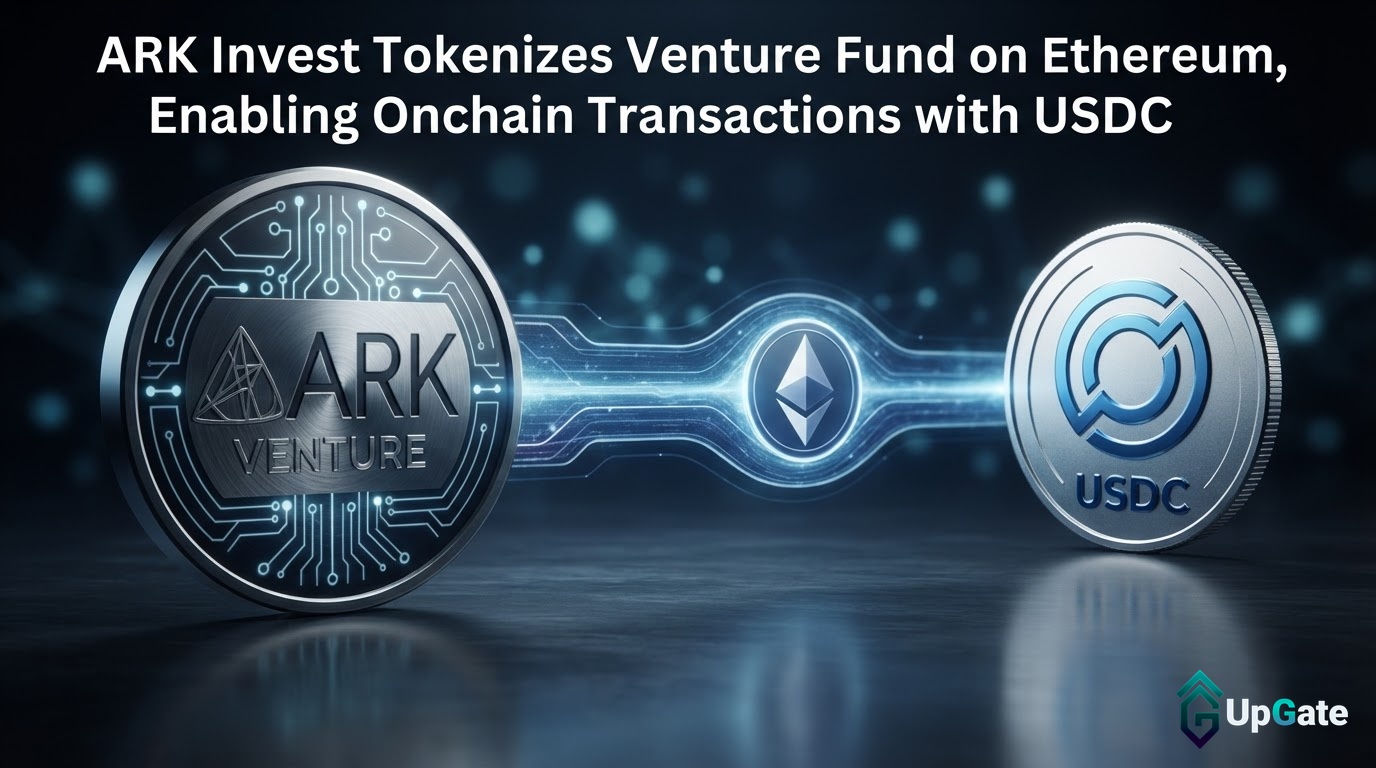
  • ARK Invest Tokenizes Venture Fund on Ethereum, Enabling Onchain Transactions with USDC

    ARK Invest Tokenizes Venture Fund on Ethereum, Enabling Onchain Transactions with USDC

    ARK Invest has tokenized its Venture Fund (ARKVX) on the Ethereum blockchain, allowing investors to subscribe and redeem holdings using the stablecoin USDC via Securitize’s platform. This development integrates a traditional investment vehicle with blockchain technology, facilitating onchain transactions while preserving the fund’s established structure.

    The tokenized ARKVX, representing a Class D share, processed its initial onchain subscriptions on September 24, 2026. The process leverages a subscription flow based on the ERC-7540 standard for asynchronous vault requests. All transactions are recorded on the Ethereum blockchain, with settlements occurring after the end-of-day Net Asset Value (NAV) is determined. Prior to the token launch on September 23, 2026, the NAV stood at $60.49 per share. A 2% subscription fee is applied before the NAV is calculated.

    Each tokenized interest provides a 1:1 claim on shares of the underlying ARK Venture Fund. BNY Mellon serves as the custodian for the actual fund shares, maintaining the legal and regulatory framework expected by investors in a traditional interval fund. The fund focuses on disruptive innovation, with concentrated exposure to sectors such as artificial intelligence and aerospace, holding stakes in private companies including SpaceX and OpenAI. The minimum investment for the tokenized fund is set at $500, a considerably lower threshold compared to the typical minimums for accredited investors in alternative investment vehicles.

    While the tokenization introduces onchain transparency for subscription and redemption requests, it does not alter the fund’s inherent liquidity structure. No secondary market is planned for the tokenized assets. Liquidity is managed through quarterly repurchase offers, capped at 5% of outstanding shares. If redemption demand exceeds this cap in any quarter, redemptions may be prorated. Although running redemption requests onchain makes the queue visible on the blockchain, it does not enhance liquidity. investors may encounter the same constraints as with a traditional interval fund, albeit with a more transparent digital record.

    As of June 30, 2026, the ARK Venture Fund managed approximately $1.3 billion in assets. The fund reported a 20.35% return in the second quarter of 2026, surpassing the S&P 500’s 15.20% gain during the same period. Year-to-date performance through mid-2026 reached 26.71%. The fund’s annual expenses are approximately 3.49%.

    ARK Invest’s strategic investment in Securitize in October 2025 highlights the firm’s commitment to the evolution of capital markets. Carlos Domingo, CEO of Securitize, emphasized the significance of integrating established financial products onto blockchain rails, rather than solely focusing on new crypto-native offerings. Cathie Wood, CEO of ARK Invest, views the launch as evidence of ARK’s dedication to this ongoing evolution.

    Potential uncertainties persist regarding the precise timing and impact of end-of-day NAV calculations on share allocation, as well as the possibility of proration in redemptions if demand exceeds the quarterly cap.

    Broader Context

    Source materials place the factual news in this context: ARKVX’s portfolio targets disruptive innovation, with concentrated exposure to sectors like artificial intelligence and aerospace.

  • Ripple CEO Backs Top 5 Cryptos, Dismisses Solana Rivalry

    Ripple CEO Backs Top 5 Cryptos, Dismisses Solana Rivalry

    Ripple CEO Brad Garlinghouse has outlined what he believes is the simplest cryptocurrency strategy for investors today: purchase the top five cryptocurrencies by market capitalization and hold them for five years. “You are going to do great,” he stated. Currently, this top tier includes Bitcoin, Ethereum, Tether, BNB, and XRP, placing Ripple’s native token within the recommended portfolio.

    On Solana, He’s Not Picking Sides

    When questioned about why an individual might choose XRP over Solana, Garlinghouse indicated he is not attempting to persuade anyone to favor one over the other. He disclosed that he personally holds a modest amount of Solana and expressed a generally optimistic outlook on a variety of cryptocurrencies for diverse reasons, extending beyond just XRP.

    Garlinghouse attributed a significant influx of liquidity into the Solana network to the activity surrounding meme coins, noting that much of this engagement has been built upon Solana’s infrastructure. He does not necessarily view Solana as a direct rival to XRP, suggesting that the success of each network will likely hinge on the evolution of their respective ecosystems rather than one definitively outperforming the other.

    A Basket Approach Over Picking Winners

    Garlinghouse’s remarks echo a recurring theme in his recent interviews: his disinterest in urging retail investors to concentrate solely on XRP. Instead, his guidance emphasizes diversification across the largest and most established cryptocurrencies, rather than attempting to identify a single winning asset, even as his company’s core business revolves around XRP.

    He anticipates that both Solana and XRP will perform well, with their ultimate success largely dependent on how Ripple’s trajectory compares to that of the Solana Foundation over time. Garlinghouse reiterated that he does not consider Solana a competitor and described his relationship with its proponents as amicable, while acknowledging that Ripple faces more direct competition from other projects.

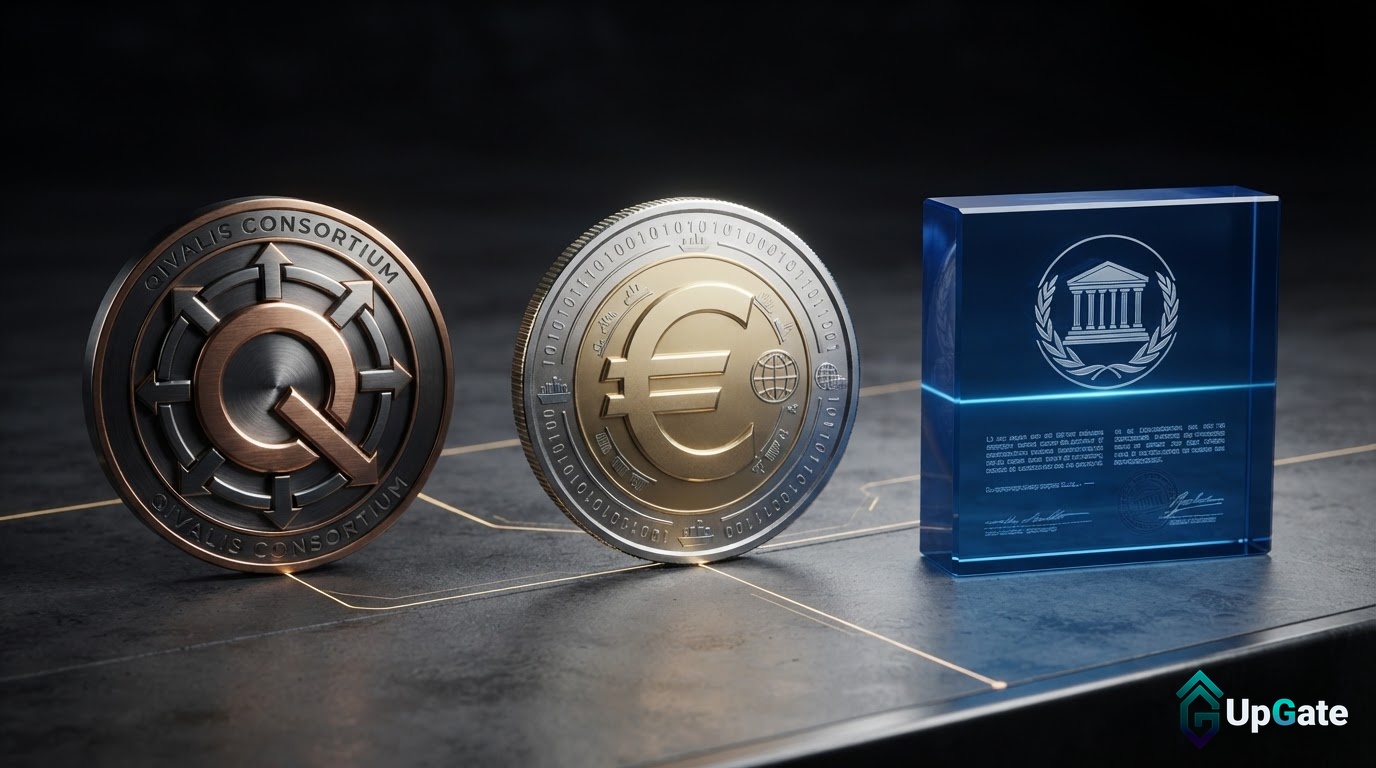
  • Qivalis Consortium Developing Euro Stablecoin for Trade Finance, Awaiting Regulatory Decision

    Qivalis Consortium Developing Euro Stablecoin for Trade Finance, Awaiting Regulatory Decision

    Qivalis, a consortium comprising 37 banks across 15 European countries, is developing a euro-pegged stablecoin aimed at trade finance and cross-border settlement. The project plans to launch the token on the public Ethereum blockchain in the second half of 2026, pending a regulatory decision from De Nederlandsche Bank (DNB).

    Currently in its pre-issuance regulatory phase, Qivalis has not yet minted any tokens. The successful issuance is contingent on DNB granting authorization for Qivalis to operate as an electronic money institution under the EU’s Markets in Crypto-Assets Regulation (MiCA), which involves demonstrating compliance with capital requirements, governance standards, and consumer protection obligations.

    Structured as an electronic money token under MiCA, Qivalis plans to back its stablecoin with at least 40% in bank deposits and the remainder in high-quality euro-area sovereign bonds. The consortium selected Fireblocks as its technology partner for tokenization and compliance infrastructure in April 2026.

    Established in September 2025 and formally branded in December of that year, Qivalis has seen significant growth, expanding from nine founding member banks to its current 37. Jan-Oliver Sell leads Qivalis as CEO, with Sir Howard Davies serving as the chair of the supervisory board.

    Qivalis targets the Europe-Asia trade finance corridor, a market valued at approximately $5 trillion annually. Traditional trade finance often involves paper-based processes, numerous intermediaries, and settlement times measured in days. By introducing an on-chain euro settlement layer, Qivalis aims to shorten these settlement periods and reduce the counterparty risk inherent in multi-step transactions.

    The decision to deploy on the public Ethereum blockchain marks a departure from the preference for permissioned or private blockchains seen in many bank-led digital currency initiatives. Qivalis is instead leveraging Ethereum’s composability and existing decentralized finance (DeFi) ecosystem.

    In the broader stablecoin market, dollar-denominated stablecoins dominate with over 95% of global market share, while euro-denominated stablecoins represent a smaller fraction, between 0.2% and 1%. Although competitors such as Circle (EURC) and Societe Generale’s Forge unit (EUR CoinVertible) have introduced euro-denominated stablecoins, Qivalis’s extensive multi-bank consortium backing could offer a substantial distribution network and a competitive edge.

    Despite the potential for efficiency gains in trade finance, the project faces key uncertainties, primarily the pending regulatory decision from De Nederlandsche Bank. The future market share of euro-denominated stablecoins and the long-term value of utilizing a public blockchain remain to be determined. The project is currently on hold, awaiting confirmation of regulatory approval before it can proceed with issuing its stablecoin.

    Why This Matters

    The development of Qivalis’s euro stablecoin for trade finance is a significant institutional effort, but its success is contingent on regulatory approval from De Nederlandsche Bank and market adoption in a nascent euro stablecoin space.

    Broader Context

    Qivalis’s initiative highlights the ongoing efforts to leverage blockchain technology for trade finance, with the consortium aiming to address inefficiencies in the Europe-Asia corridor.

  • NEAR Tokenized Stock Launch Prioritizes Distribution Over Scale

    NEAR Tokenized Stock Launch Prioritizes Distribution Over Scale

    NEAR Crypto and Ondo Finance Launch Tokenized Stocks on NEAR.com

    NEAR Protocol and Ondo Finance have introduced access to tokenized U.S. stocks and exchange-traded funds (ETFs) through the NEAR.com platform, initially offering 20 assets. These include major companies like Nvidia, Tesla, Apple, Microsoft, and Amazon, as well as ETFs such as SPY and QQQ.

    Eligible users can fund their accounts using stablecoins or other supported cryptocurrencies from over 30 different networks. NEAR Intents, functioning as a cross-chain distribution layer, will eventually route these tokenized securities to connected wallets, applications, and decentralized finance (DeFi) protocols.

    This launch emphasizes distribution capabilities rather than the sheer number of assets. While Ondo’s broader tokenized stocks platform lists over 100 stocks and ETFs, NEAR’s initial rollout via Near.com provides access to approximately one-fifth of that catalog.

    NEAR Intents Powers Cross-Chain Access

    NEAR.com serves as the primary user interface for this integration, with NEAR Intents operating as the underlying cross-chain routing layer, according to information released by Ondo Finance. This distinction is significant: NEAR.com is where users create accounts and execute trades, while NEAR Intents is designed to enable other wallets and DeFi protocols to surface these real-world assets to their own user bases.

    Ondo’s comprehensive platform offers more than 100 tokenized stocks and ETFs, encompassing individual equities, indexes like QQQ and SPY, and fixed-income ETFs such as TLT, TIP, and AGG. The selection of 20 assets on NEAR is a subset of this larger offering, and the full Ondo application at app.ondo.finance remains the definitive source for the complete list.

    Transaction Flow and USDon Stablecoin

    Purchases are processed using USDon, a stablecoin that Ondo states is backed 1:1 by U.S. dollars held in an Ondo Stocks brokerage account. If a user initiates a purchase with a different stablecoin, the platform automatically swaps it into USDon before executing the tokenized stock purchase. This process is reversed upon redemption, a mechanism designed by Ondo to ensure instant buy-and-sell transactions, bypassing traditional settlement windows.

    The user experience is designed to be straightforward: eligible NEAR.com users deposit stablecoins or other supported cryptocurrencies from any of the more than 30 connected networks, then directly swap into an available tokenized stock or ETF in a single transaction. This streamlines what would typically be a multi-step bridging and onboarding process into a single action within the NEAR.com interface. The current offering is limited to 20 assets, not the full Ondo catalog, and a complete list beyond the named examples was not provided. Traders seeking specific tickers outside this initial set are advised to verify availability directly.

    Distribution Layer as Key Innovation

    The more significant aspect of this launch is the routing layer, NEAR Intents, rather than the initial ticker list. NEAR Intents is a cross-chain distribution mechanism capable of delivering Ondo’s tokenized equities to wallets, applications, and DeFi protocols beyond NEAR.com. This positions the 20-asset figure as a starting point for an expanding infrastructure, not a limitation.

    Ondo currently restricts its tokenized securities to companies listed on the NYSE and NASDAQ, with the potential to expand to other international exchanges in the future. Other platforms are exploring different distribution methods; for instance, Robinhood’s tokenized stock initiative on its own chain offers a point of comparison for how competing platforms are structuring access, though the underlying mechanics differ.

    Regulatory Considerations and Geographic Restrictions

    It is important to note that these offerings are not available to U.S. persons. Ondo’s documentation explicitly states that Ondo Stocks products are offered exclusively to organizations and individuals outside the United States and other prohibited jurisdictions, subject to their own eligibility criteria. Access is also restricted in certain regions.

    These are tokenized exposures to securities listed on the NYSE and NASDAQ, distinct from shares held in a conventional brokerage account. Regulators are still determining how to classify these distinctions across various jurisdictions. The broader U.S. regulatory stance on tokenized equities remains unsettled, and this launch does not alter the landscape for U.S.-based traders.

  • DeepBook App Launches on Sui Mainnet, Introducing Ultra-Short-Term Prediction Markets

    DeepBook App Launches on Sui Mainnet, Introducing Ultra-Short-Term Prediction Markets

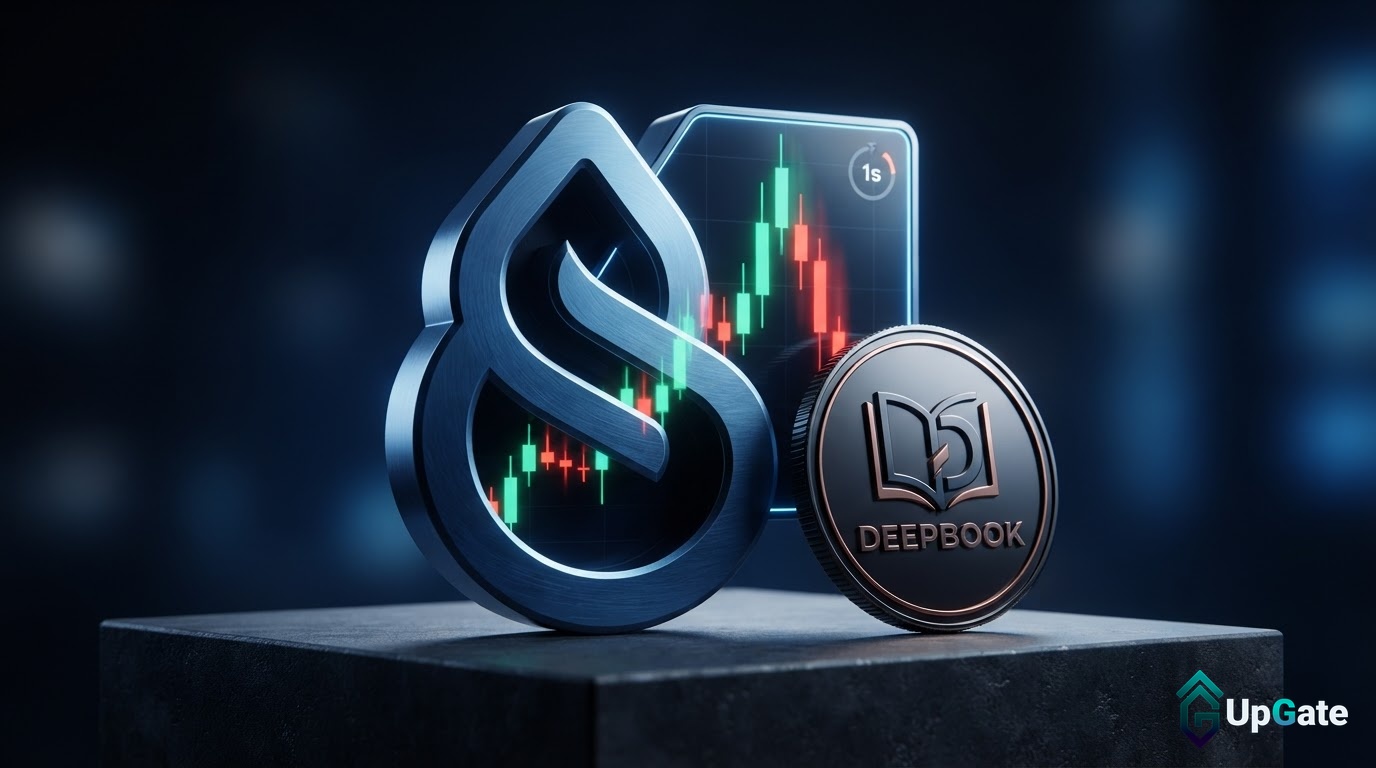
    The DeepBook App has launched in alpha on the Sui mainnet, introducing an integrated trading interface that combines spot markets, margin trading, and a novel prediction market feature. This new offering allows users to speculate on Bitcoin price movements with expiry windows as short as one minute, significantly compressing the typical speculation timeline in decentralized finance.

    According to the FactSheet, the platform’s core feature, ‘Predict,’ enables traders to engage with Bitcoin price movements, with initial expiry windows set at a minimum of one minute from the time a position is opened. This approach differs from traditional prediction markets, which are often event-based, by focusing on price-based speculation. The system utilizes advanced oracles for dynamic pricing and a continuous strike model, aiming to provide greater accessibility compared to rigid traditional options.

    DeepBook operates on a shared on-chain central limit order book (CLOB), a system that directly connects buyers and sellers. This CLOB has reportedly processed over $20 billion in cumulative trading volume across more than 15 applications within the Sui ecosystem. The DeepBook App provides users with a direct interface to this existing infrastructure.

    In addition to the prediction markets, the app offers spot trading with pairs such as SUI/USDC, xBTC/USDC, and DEEP/USDC, alongside margin trading capabilities. The integration of these diverse trading functions into a single interface is a notable product design aspect, as many DeFi users currently navigate multiple protocols for similar functionalities.

    The ‘Predict’ feature was initially tested on Sui’s testnet in May 2026, in collaboration with Block Scholes. The waitlist for the alpha launch reportedly surpassed 150,000 traders, indicating significant user interest.

    The underlying Sui network’s infrastructure plays a crucial role in enabling the rapid execution required for such short-term trading. Sui’s network average finality speed is approximately 390 milliseconds, allowing transactions to settle in under half a second. This speed is cited as a factor that shifts the trading bottleneck from blockchain performance to user interaction speed.

    The DEEP token is integral to the DeepBook ecosystem, serving functions related to trading fee management, user incentives, and governance.

    DeepBook’s model is characterized by its price-based, rather than event-based, prediction markets and its compressed speculation window, which the FactSheet suggests resembles high-frequency trading more than traditional prediction markets. The continuous strike model further differentiates it from conventional options, aiming for increased retail accessibility. The shared liquidity model, where the CLOB supports multiple applications, also means that the depth available to Predict traders is not isolated to the DeepBook app itself. Bitcoin is the initial asset for the Predict feature, with plans to expand to other assets anticipated.

    Why This Matters

    The materials describe a narrow update: The DeepBook App has launched in alpha on the Sui mainnet, offering an integrated trading interface for spot markets, margin trading, and prediction markets. DeepBook operates a shared on-chain central limit order book, or CLOB, which connects buyers and sellers directly, rather than routing trades through automated market makers that rely on liquidity pools.

    Broader Context

    Source materials place the factual news in this context: The DeepBook App went live in alpha on the Sui mainnet on September 24, bringing with it something the network has been building toward for years: a fully integrated trading interface that combines spot markets, margin, and ultra-short-term prediction markets under one roof.