Tag: Positive

  • NEAR Tokenized Stock Launch Prioritizes Distribution Over Scale

    NEAR Tokenized Stock Launch Prioritizes Distribution Over Scale

    NEAR Crypto and Ondo Finance Launch Tokenized Stocks on NEAR.com

    NEAR Protocol and Ondo Finance have introduced access to tokenized U.S. stocks and exchange-traded funds (ETFs) through the NEAR.com platform, initially offering 20 assets. These include major companies like Nvidia, Tesla, Apple, Microsoft, and Amazon, as well as ETFs such as SPY and QQQ.

    Eligible users can fund their accounts using stablecoins or other supported cryptocurrencies from over 30 different networks. NEAR Intents, functioning as a cross-chain distribution layer, will eventually route these tokenized securities to connected wallets, applications, and decentralized finance (DeFi) protocols.

    This launch emphasizes distribution capabilities rather than the sheer number of assets. While Ondo’s broader tokenized stocks platform lists over 100 stocks and ETFs, NEAR’s initial rollout via Near.com provides access to approximately one-fifth of that catalog.

    NEAR Intents Powers Cross-Chain Access

    NEAR.com serves as the primary user interface for this integration, with NEAR Intents operating as the underlying cross-chain routing layer, according to information released by Ondo Finance. This distinction is significant: NEAR.com is where users create accounts and execute trades, while NEAR Intents is designed to enable other wallets and DeFi protocols to surface these real-world assets to their own user bases.

    Ondo’s comprehensive platform offers more than 100 tokenized stocks and ETFs, encompassing individual equities, indexes like QQQ and SPY, and fixed-income ETFs such as TLT, TIP, and AGG. The selection of 20 assets on NEAR is a subset of this larger offering, and the full Ondo application at app.ondo.finance remains the definitive source for the complete list.

    Transaction Flow and USDon Stablecoin

    Purchases are processed using USDon, a stablecoin that Ondo states is backed 1:1 by U.S. dollars held in an Ondo Stocks brokerage account. If a user initiates a purchase with a different stablecoin, the platform automatically swaps it into USDon before executing the tokenized stock purchase. This process is reversed upon redemption, a mechanism designed by Ondo to ensure instant buy-and-sell transactions, bypassing traditional settlement windows.

    The user experience is designed to be straightforward: eligible NEAR.com users deposit stablecoins or other supported cryptocurrencies from any of the more than 30 connected networks, then directly swap into an available tokenized stock or ETF in a single transaction. This streamlines what would typically be a multi-step bridging and onboarding process into a single action within the NEAR.com interface. The current offering is limited to 20 assets, not the full Ondo catalog, and a complete list beyond the named examples was not provided. Traders seeking specific tickers outside this initial set are advised to verify availability directly.

    Distribution Layer as Key Innovation

    The more significant aspect of this launch is the routing layer, NEAR Intents, rather than the initial ticker list. NEAR Intents is a cross-chain distribution mechanism capable of delivering Ondo’s tokenized equities to wallets, applications, and DeFi protocols beyond NEAR.com. This positions the 20-asset figure as a starting point for an expanding infrastructure, not a limitation.

    Ondo currently restricts its tokenized securities to companies listed on the NYSE and NASDAQ, with the potential to expand to other international exchanges in the future. Other platforms are exploring different distribution methods; for instance, Robinhood’s tokenized stock initiative on its own chain offers a point of comparison for how competing platforms are structuring access, though the underlying mechanics differ.

    Regulatory Considerations and Geographic Restrictions

    It is important to note that these offerings are not available to U.S. persons. Ondo’s documentation explicitly states that Ondo Stocks products are offered exclusively to organizations and individuals outside the United States and other prohibited jurisdictions, subject to their own eligibility criteria. Access is also restricted in certain regions.

    These are tokenized exposures to securities listed on the NYSE and NASDAQ, distinct from shares held in a conventional brokerage account. Regulators are still determining how to classify these distinctions across various jurisdictions. The broader U.S. regulatory stance on tokenized equities remains unsettled, and this launch does not alter the landscape for U.S.-based traders.


  • DeepBook App Launches on Sui Mainnet, Introducing Ultra-Short-Term Prediction Markets

    DeepBook App Launches on Sui Mainnet, Introducing Ultra-Short-Term Prediction Markets

    The DeepBook App has launched in alpha on the Sui mainnet, introducing an integrated trading interface that combines spot markets, margin trading, and a novel prediction market feature. This new offering allows users to speculate on Bitcoin price movements with expiry windows as short as one minute, significantly compressing the typical speculation timeline in decentralized finance.

    According to the FactSheet, the platform’s core feature, ‘Predict,’ enables traders to engage with Bitcoin price movements, with initial expiry windows set at a minimum of one minute from the time a position is opened. This approach differs from traditional prediction markets, which are often event-based, by focusing on price-based speculation. The system utilizes advanced oracles for dynamic pricing and a continuous strike model, aiming to provide greater accessibility compared to rigid traditional options.

    DeepBook operates on a shared on-chain central limit order book (CLOB), a system that directly connects buyers and sellers. This CLOB has reportedly processed over $20 billion in cumulative trading volume across more than 15 applications within the Sui ecosystem. The DeepBook App provides users with a direct interface to this existing infrastructure.

    In addition to the prediction markets, the app offers spot trading with pairs such as SUI/USDC, xBTC/USDC, and DEEP/USDC, alongside margin trading capabilities. The integration of these diverse trading functions into a single interface is a notable product design aspect, as many DeFi users currently navigate multiple protocols for similar functionalities.

    The ‘Predict’ feature was initially tested on Sui’s testnet in May 2026, in collaboration with Block Scholes. The waitlist for the alpha launch reportedly surpassed 150,000 traders, indicating significant user interest.

    The underlying Sui network’s infrastructure plays a crucial role in enabling the rapid execution required for such short-term trading. Sui’s network average finality speed is approximately 390 milliseconds, allowing transactions to settle in under half a second. This speed is cited as a factor that shifts the trading bottleneck from blockchain performance to user interaction speed.

    The DEEP token is integral to the DeepBook ecosystem, serving functions related to trading fee management, user incentives, and governance.

    DeepBook’s model is characterized by its price-based, rather than event-based, prediction markets and its compressed speculation window, which the FactSheet suggests resembles high-frequency trading more than traditional prediction markets. The continuous strike model further differentiates it from conventional options, aiming for increased retail accessibility. The shared liquidity model, where the CLOB supports multiple applications, also means that the depth available to Predict traders is not isolated to the DeepBook app itself. Bitcoin is the initial asset for the Predict feature, with plans to expand to other assets anticipated.

    Why This Matters

    The materials describe a narrow update: The DeepBook App has launched in alpha on the Sui mainnet, offering an integrated trading interface for spot markets, margin trading, and prediction markets. DeepBook operates a shared on-chain central limit order book, or CLOB, which connects buyers and sellers directly, rather than routing trades through automated market makers that rely on liquidity pools.

    Broader Context

    Source materials place the factual news in this context: The DeepBook App went live in alpha on the Sui mainnet on September 24, bringing with it something the network has been building toward for years: a fully integrated trading interface that combines spot markets, margin, and ultra-short-term prediction markets under one roof.

  • U.S. Bitcoin ETFs Attract $346.98 Million in Fifth Consecutive Day of Inflows

    U.S. Bitcoin ETFs Attract $346.98 Million in Fifth Consecutive Day of Inflows

    U.S. Bitcoin Exchange-Traded Funds (ETFs) continued their positive momentum on Wednesday, attracting $346.98 million in inflows. This marks the fifth consecutive session of capital entering these funds, signaling sustained investor interest.

    Beyond Bitcoin, other cryptocurrency-related ETFs also experienced positive performance. Ether, XRP, and Solana ETFs concluded Wednesday with gains, indicating a broader trend of investment across various digital assets. In contrast, HYPE ETFs saw a decline.

    The consistent inflow streak for Bitcoin ETFs, now spanning five sessions, alongside the positive performance of other crypto ETFs, suggests a steady flow of new capital into the leading cryptocurrency exchange-traded funds. While the specific drivers behind this sustained buying are not detailed, the trend points to an increasing appetite for crypto-related investments.

    Major issuers, including Blackrock and Fidelity, are part of the landscape of Bitcoin ETFs. The ongoing influx of funds into these products serves as a key indicator of current investor sentiment and the growing accessibility of cryptocurrencies through traditional financial instruments.

    Why This Matters

    The materials describe a narrow update: U. Momentum has become difficult to ignore regarding fresh capital flowing into the largest crypto exchange-traded funds (ETFs).

    Broader Context

    Source materials place the factual news in this context: Fresh capital continued flowing into the largest crypto exchange-traded funds (ETFs) […].

  • Crypto vs. Stocks: 200-Day MA Signals Divergence

    Crypto vs. Stocks: 200-Day MA Signals Divergence

    Stocks Show Weak Internal Strength Despite S&P 500’s Proximity to Record Highs

    The S&P 500 index is currently trading near its all-time highs, yet a significant portion of its constituent companies are performing below their 200-day moving averages, according to data shared by analyst Scott Melker on X. This contrasts sharply with the cryptocurrency market, where 88 of the top 100 digital assets are trading above their respective moving averages. Melker suggests that this divergence indicates a healthier technical position for cryptocurrencies, even as many major tokens remain considerably below their previous peak valuations.

    Market Breadth Divergence: Stocks Lagging, Crypto Leading

    As of Wednesday, 257 stocks within the S&P 500 were trading below their 200-day moving averages, meaning approximately 49% of the index’s components were above this widely monitored trend indicator. Melker characterized the internal condition of the stock market as bearish, despite the index’s close proximity to record levels.

    In contrast, the cryptocurrency landscape presented a different picture. Bitcoin and Ethereum were among the 88 top-100 cryptocurrencies that had surpassed their 200-day simple moving averages. Furthermore, most of these digital assets were also holding their ground above their 50-day and 100-day averages. Melker described this combined scenario as a “clean, bullish configuration across the board.” He also highlighted the significant distance between current cryptocurrency prices and their previous all-time highs, contrasting this with equities, which he believes have already priced in substantial positive news.

    “Weak breadth in stocks near highs has historically been a yellow flag,” the market observer noted. “Strong breadth in crypto while prices remain far from peaks is the opposite setup.”

    It is important to note that these figures measure the number of assets trading above a long-term average, rather than the magnitude of price increases or the sustainability of those gains. Consequently, they offer a snapshot of market participation but do not guarantee the continuation of current market trends.

    Bitcoin’s Recent Volatility and Shifting Correlations

    Bitcoin’s recent price action provides further context for this comparison. The cryptocurrency experienced a rebound from approximately $75,000 following setbacks, including the failed CLARITY Act vote and the Federal Reserve’s interest rate hike in July 2023. It briefly surpassed $87,000 before encountering renewed selling pressure.

    At the time of reporting, CoinGecko data indicated Bitcoin trading around $84,000, representing a nearly 3% decrease over the past 24 hours but a roughly 10% increase over the last seven days. Ethereum was trading near $2,700, also down close to 3% in a day, but up by 10% over the week.

    XRP saw a 6.5% drop in 24 hours, second only to Dogecoin’s nearly 7% plunge in the same period. Zcash also experienced a significant decline, shedding over 6% of its value. These price dips contributed to a broader crypto market capitalization of approximately $2.96 trillion, nearly 3% lower than the previous day, with Bitcoin dominance standing at just over 57%.

    Meanwhile, Santiment data reveals that Bitcoin’s correlations with stocks, gold, and the U.S. dollar have weakened. This shift complicates any assumption that the cryptocurrency market will simply mirror the movements of equities.

  • BlackRock: AI Stablecoins to Boost Ethereum Demand

    BlackRock: AI Stablecoins to Boost Ethereum Demand

    Ethereum Trades Sideways as BlackRock Eyes AI-Driven Stablecoin Payments

    Ethereum is currently trading at $2,695, marking a 2.6% decrease over the past 24 hours. This pullback follows a significant 10.3% gain over the preceding seven days, leaving the cryptocurrency in a volatile short-term trading range after its recent rally.

    BlackRock’s AI-Powered Commerce Vision

    A more significant narrative is emerging around the concept of machines transacting autonomously without human intervention. BlackRock’s latest research posits that stablecoins could become the primary settlement mechanism for “agentic commerce”—a future where artificial intelligence systems engage in transactions independently. The firm has identified Ethereum and Circle’s Arc as potential platforms for this burgeoning field.

    This represents a notable shift in perspective, with a major asset management firm now considering AI-to-AI payments as a viable investment thesis rather than a mere novelty. Despite a recent dip, Ethereum’s price performance remains robust, with the token still up 8.3% over the last 14 days and 7.1% over the past 30 days.

    Ethereum’s market capitalization stands at approximately $329 billion, with a 24-hour trading volume of $16.71 billion. This context suggests that the AI-payment thesis is developing within a market where ETH has demonstrated increasing momentum in recent weeks, even amidst ongoing short-term price fluctuations.

    Technical Outlook for Ethereum

    Ethereum’s current technical structure appears to be consolidating after its recent surge, rather than indicating a definitive trend reversal. The $2,542–$2,550 zone, which aligns with the 50-week moving average, remains a critical support level. Holding this area is key to maintaining the broader positive outlook.

    On the upside, $2,672 is the immediate level to monitor, having been breached during the latest price movement. A sustained break above this point could draw attention to $2,805, identified by recent analysis as the next significant breakout level.

    Should buyers successfully maintain control above $2,805, further targets are anticipated around $2,950–$3,000, followed by the $3,150–$3,250 region. Such a move would reignite discussions about whether current momentum and institutional inflows can sustain another upward trajectory. Conversely, a decline below the $2,542–$2,550 support zone would weaken the current structure, bringing $2,533 into focus, with further support expected around $2,450.

    While ETH holders who participated in the recent rally have cause for optimism, the scale of potential gains needs to be contextualized. A move from the current $2,695 to $3,000 represents an approximately 11% increase. While solid, this is not a transformative gain, reflecting the reality of investing in an asset with a market capitalization already in the hundreds of billions.

    The Road Ahead for AI Payments

    The extent to which AI-driven payment volume will translate into actual fee revenue for Ethereum remains an open question. This will be crucial to track through developments in stablecoin payment infrastructure, rather than assuming it is already factored into current valuations. This gap between the compelling narrative and immediate upside potential is precisely what is attracting interest to early-stage infrastructure projects.

    LiquidChain Aims to Unify Liquidity

    LiquidChain ($LIQUID), a Layer 3 project, is developing a unified execution environment designed to integrate liquidity from Bitcoin, Ethereum, and Solana. This initiative aims to allow developers to deploy applications once and access all three ecosystems, thereby avoiding fragmentation across different blockchains.

    The project’s presale is priced at $0.014958, and it has so far raised $970,000. Key features include Single-Step Execution and Verifiable Settlement, intended to streamline cross-chain interactions within a single, deploy-once architecture. Investors are advised to conduct their own research into LiquidChain before significant capital inflows potentially impact its price.

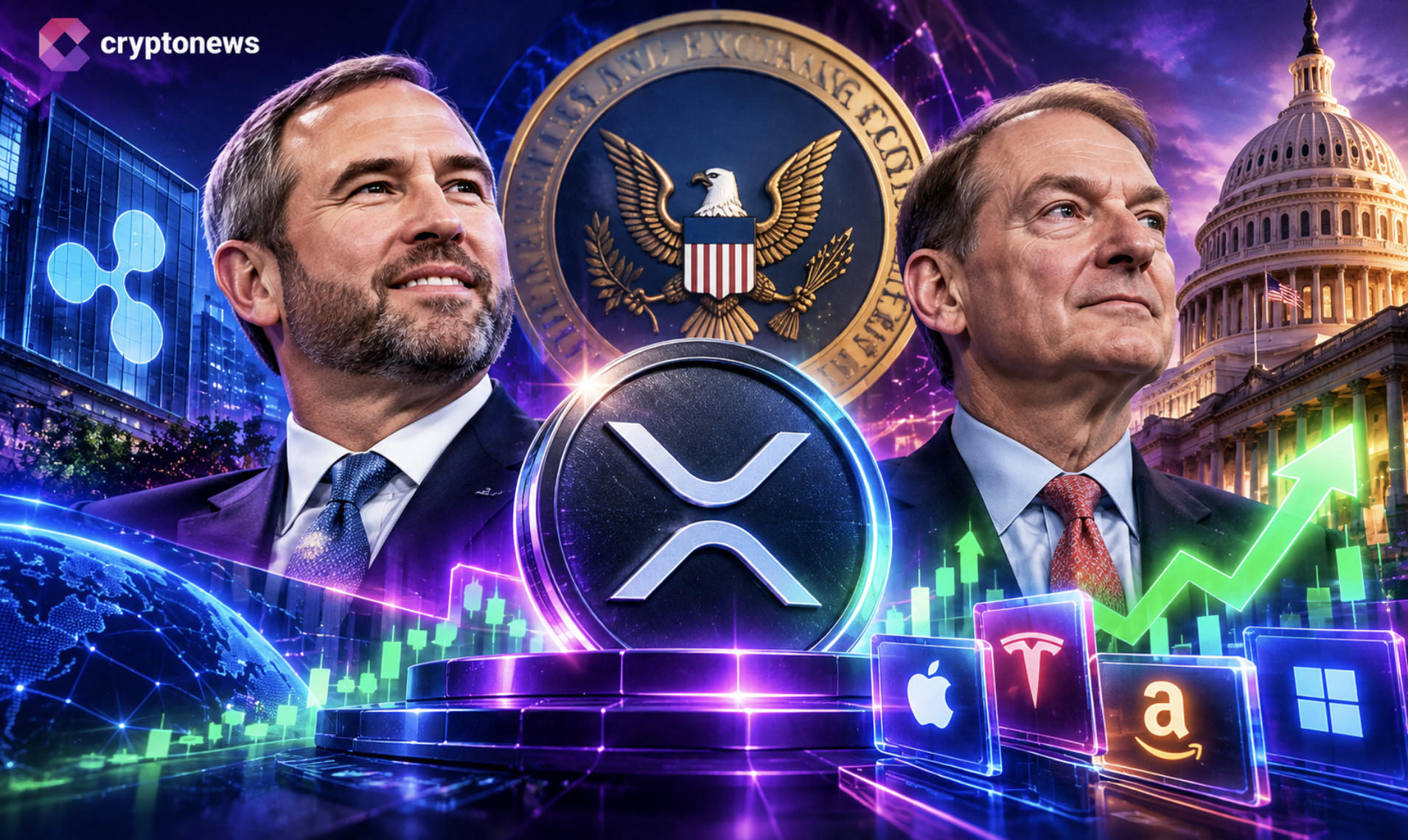
  • SEC Greenlights AMMs for Tokenized Stocks; XRPL Poised to Lead

    SEC Greenlights AMMs for Tokenized Stocks; XRPL Poised to Lead

    SEC Decision Puts XRP Ledger’s AMM Tech in Spotlight

    The U.S. Securities and Exchange Commission (SEC) has opened a new regulatory pathway for tokenized stocks to trade via automated market makers (AMMs), a move that has placed the XRP Ledger (XRPL) back in the spotlight. The SEC’s September 17 decision grants a temporary exemption to certain blockchain-based platforms, allowing them to facilitate the trading of tokenized U.S. stocks through permissioned AMM liquidity pools.

    While the SEC’s order does not specifically mention XRP, Ripple, or the XRP Ledger, it establishes a framework for “Tokenized Securities Venues.” This framework permits eligible platforms to operate AMM-based markets under defined conditions.

    Potential Bullish Implications for XRP

    The decision could be seen as bullish for XRP due to the XRP Ledger’s existing native AMM functionality. The XRPL’s AMM amendment went live on its mainnet in March 2024, integrating built-in liquidity pools alongside its established decentralized exchange (DEX). This pre-existing infrastructure makes the SEC’s recent decision particularly significant for the XRP ecosystem.

    The SEC’s “Innovation Exemption” offers temporary relief from specific securities regulations for these Tokenized Securities Venues. These venues can leverage AMMs and liquidity pools to connect buyers and sellers of tokenized National Market System (NMS) stocks.

    Conditions and Requirements for Tokenized Trading

    The exemption is conditional, not a blanket approval for tokenized equities across all crypto markets. The SEC has stipulated that participating venues must operate permissioned systems and adhere to stringent investor protection requirements. These include ensuring that tokenized stocks grant holders the same rights and privileges as traditional shares, such as dividend and voting rights.

    Furthermore, the framework allows the original stock issuer to object if a third party tokenizes its shares. Trading of tokenized stocks must also cease if trading in the underlying traditional stock is halted on its primary listing exchange.

    For the broader crypto market, a key takeaway is the SEC’s explicit acknowledgment of AMM liquidity pools as a component of an on-chain securities trading structure. The SEC’s order also provides conditional relief for liquidity providers supplying tokenized stocks to these pools. These exemptions are set to last for five years, allowing regulators to monitor market development.

    XRP Ledger’s Integrated AMM

    This regulatory development has spurred renewed interest in blockchain networks that already possess native AMM infrastructure. The XRP Ledger’s AMM functionality, introduced via the XLS-30 amendment, became active on its mainnet on March 22, 2024. Unlike a separate application, the XRPL’s AMM is integrated directly into its DEX. This allows users to create liquidity pools for asset pairs, contribute liquidity, and receive LP tokens representing their stake.

    The XRPL’s DEX is designed to combine order-book liquidity with AMM liquidity for trade execution, enabling transactions to utilize whichever route offers the most favorable exchange rate. This native design is gaining relevance as regulators begin to address on-chain securities markets.

    Infrastructure Over Immediate Endorsement

    However, it is premature to interpret the SEC’s decision as an approval of tokenized stocks on the XRP Ledger itself. The Innovation Exemption is technology-neutral and sets requirements for eligible Tokenized Securities Venues, rather than endorsing specific blockchains.

    For XRP holders, the significance lies more in the potential for infrastructure development than an immediate new use case for XRP. If regulated tokenized equity markets eventually expand onto public blockchains, networks with existing AMM and DEX infrastructure, like XRPL, could possess a foundational advantage. The SEC has now provided a regulatory framework that explicitly considers AMM-based trading.

    The crucial next step is whether financial firms will opt for public networks such as the XRP Ledger for these markets. The SEC has opened the door, but the industry must now decide whether to walk through it.

    Ultimately, the current XRP news centers on a regulatory development that could enhance the relevance of XRPL’s AMM architecture for tokenized assets, rather than an explicit SEC endorsement of XRP.

  • UK Banks Pioneer Interbank Tokenized Deposit Transactions

    UK Banks Pioneer Interbank Tokenized Deposit Transactions

    UK Banks Pioneer Blockchain-Based Tokenized Deposits in Landmark Trial

    London, UK – Major British banks, including Lloyds, NatWest, Barclays, and HSBC, have successfully conducted the world’s first interbank transactions using tokenized bank deposits on blockchain technology. The landmark trials, part of the Great British Tokenised Deposit (GBTD) project, signal a significant step towards faster, more programmable financial settlements within the UK’s banking sector.

    Real-World Tests Showcase Programmable Payments

    The GBTD project, announced by UK Finance, demonstrated the ability of tokenized deposits from different banks to move seamlessly across separate blockchain systems and automate payment settlements. This innovation aims to deliver the benefits of digital currency while maintaining the security and protections associated with traditional bank deposits.

    Lloyds Banking Group, NatWest, and Barclays participated in live remortgage transactions. In these tests, funds were held securely on the blockchain until the property transfer was confirmed. Upon verification, the money was automatically disbursed between the banks.

    Concurrently, HSBC led a separate trial simulating an online marketplace purchase. This test utilized programmable deposits to hold the buyer’s funds, which were then automatically released to the seller once the delivery of goods was confirmed by the system. The technology powering these transactions was provided by Quant Network.

    Supporting Regulated Digital Currency

    The successful trials align with the Bank of England’s objective to ensure digital money remains within the purview of regulated financial institutions. Unlike privately issued stablecoins, tokenized deposits represent existing bank deposits converted into digital tokens on a blockchain. This approach leverages the security of bank money while incorporating blockchain’s efficiency and programmability, enabling faster payments and the implementation of automated rules for fund transfers.

    Bank of England Governor Andrew Bailey has previously voiced concerns regarding the risks associated with privately issued stablecoins.

    Future Expansion to Digital Bonds

    UK Finance has indicated that banks are already progressing to the next phase of development, with plans to issue three tokenized digital bonds in early 2027. These bonds are expected to utilize the same tokenized deposit system for trading, clearing, and settlement, offering a platform for banks to explore blockchain applications beyond basic payments and into larger financial transactions.

    Industry analysts anticipate substantial growth in tokenized financial assets. The Citi Institute, for instance, forecasts that the market for tokenized financial assets could expand to between $5.5 trillion and $8.2 trillion by 2030.

  • Bitcoin Whales Buy the Dip, Double Down on Rally

    Bitcoin Whales Buy the Dip, Double Down on Rally

    Bitcoin Briefly Touched $87,000, Whales Accumulate Amid Shifting Market Dynamics

    Earlier this week, Bitcoin briefly surged to $87,000 for the first time since January before pulling back and stabilizing around $84,000. Despite the short-term volatility, a key segment of investors, often referred to as “smart money,” has continued to bolster their positions.

    Whale Accumulation Signals Confidence

    Data from Santiment indicates that Bitcoin’s whale wallets are actively increasing their holdings. Wallets containing between 100 and 1,000 BTC have collectively acquired an additional 113,950 units since July 15. This has pushed their total holdings up by 2.22% to approximately 5.24 million BTC. Santiment, which has monitored this specific wallet group for five years, notes that their activity often correlates closely with broader cryptocurrency market movements. Historically, periods of significant accumulation by these large holders have preceded or coincided with substantial Bitcoin price increases.

    This trend has persisted as the cryptocurrency has experienced a sharp ascent since mid-August. The data suggests that not only have large holders continued to purchase during the recent rally, but the surge is also not solely driven by retail traders.

    Technical Indicators Point to a Bullish Trend

    The recovery and subsequent rise in market optimism follow Bitcoin’s successful re-establishment above its 365-day moving average, which was hovering around $80,500. The last time Bitcoin achieved a similar technical feat was in March 2023, a period that subsequently saw a significant price appreciation. This latest breakout could signal a positive shift in the longer-term trend.

    Bitcoin also navigated through a substantial supply zone situated between $76,000 and $81,000. The next significant resistance level to monitor is between $88,000 and $90,000, where a considerable amount of Bitcoin is concentrated, presenting the next major hurdle for the ongoing rally.

    Expectations for the Current Cycle

    However, the current market cycle may not replicate the extreme price swings that Bitcoin was once known for. Ki Young Ju, founder of CryptoQuant, anticipates a more moderate rally of 3-to-5 times the current price, rather than another tenfold surge. He foresees a potentially milder bear market ahead, attributing this to the growing market maturity and increasing institutional interest, which he believes are dampening extreme price volatility.

    Short Squeeze and ETF Inflows Drive Momentum

    Not all market observers view the recent price action as a widespread return of risk appetite. Bernardo Brites, co-founder of Trace Finance, suggested to CryptoPotato that the speed of the recovery was partly fueled by a short squeeze. He raised the question of the origin of the new capital entering the market.

    Notably, U.S. spot Bitcoin ETF inflows attracted nearly $1 billion on Monday alone. Smaller inflows were also recorded in the subsequent two trading sessions. This suggests that a significant portion of the fresh capital is entering the market through traditional financial channels rather than directly via cryptocurrency platforms.

    Brites commented, “I wouldn’t read this as a broad return of risk appetite. Bitcoin rallying through a rate hike, $100 oil, and elevated yields suggests some investors are treating it as a hedge against inflation, fiscal and geopolitical risk rather than as a bet on easy money.”

    For Brites, the crucial factor moving forward is the sustained inflow into ETFs. He anticipates a stronger foundation for the rally if demand remains robust and stablecoin supply begins to increase again.

    “If ETFs remain the only engine, the move is vulnerable, and Bitcoin could give back a good part of these gains as positioning normalizes,” he added.

  • 21Shares Lists Europe’s First Zcash ETP on Euronext Exchanges

    21Shares Lists Europe’s First Zcash ETP on Euronext Exchanges

    21Shares has launched Europe’s first exchange-traded product (ETP) for Zcash, listing on Euronext Paris and Euronext Amsterdam on September 22. The ETP, trading under the ticker ZCASH, offers investors regulated exposure to the privacy-focused cryptocurrency.

    The fund is physically backed, meaning it holds the underlying Zcash tokens, with BitGo serving as the institutional custodian. On its launch day, the Zcash ETP had 5,000 securities outstanding, a net asset value of $20.04 per unit, and approximately $100,000 in assets under management. The ETP charges an annual management fee of 2.5%.

    This new product aims to simplify access to Zcash for European investors by removing the operational complexities associated with direct cryptocurrency ownership, such as setting up exchange accounts or managing private keys. The ETP provides exposure to Zcash’s unique features, including its optional shielded transactions that allow users to obscure sender, receiver, and transaction amounts, a capability not present in more transparent cryptocurrencies like Bitcoin and Ether.

    Zcash, which forks Bitcoin’s code, maintains a 21 million coin cap, proof-of-work mining, and a halving schedule. Coinholders recently voted with 98.9% in favor of retaining the Bitcoin-style halving model. This structure is designed to keep inflation in check.

    The 2.5% annual management fee for the Zcash ETP is higher than those typically seen for Bitcoin or Ethereum ETPs. According to interpretations of the market, this premium is attributed to the less common nature of Zcash custody for institutional custodians, suggesting 21Shares is betting on regulated demand for privacy coin exposure justifying the increased cost.

    Recent market activity shows Zcash has experienced significant gains, with its price (ZEC) reportedly gaining over 2,700% this year. On Wednesday, ZEC pushed past $1,600, reaching an intraday high near $1,680 before settling around $1,522. The cryptocurrency’s market capitalization is reported to be near $27.5 billion.

    In related developments, Grayscale converted its Zcash Trust into the ZCSH ETF on NYSE Arca in August. Grayscale’s ZCSH has attracted over $233 million and holds close to $890 million in assets. A 3-for-1 share split for Grayscale’s ZCSH is scheduled for September 30.

    The launch of the Zcash ETP by 21Shares may indicate increased investor interest in privacy coins, a trend also reflected in the performance of ZEC and the actions of asset managers like Grayscale. The ETP offers a regulated avenue for European brokerage investors to gain exposure to Zcash’s distinct features and market dynamics.

    Why This Matters

    The materials describe a narrow update: 21Shares launched a physically backed Zcash ETP on Euronext Paris and Euronext Amsterdam, charging a 2. The ETP removes the operational headache of buying Zcash directly for investors, such as opening crypto exchange accounts or managing private keys.

    Broader Context

    Source materials place the factual news in this context: Zcash is a privacy coin that allows its users to shield balances and transfers, unlike more traditional crypto assets like Bitcoin and Ethereum, which are transparent by default.

  • Bitcoin Price Levels Tested Amidst ETF Inflows and Spot Market Activity

    Bitcoin Price Levels Tested Amidst ETF Inflows and Spot Market Activity

    Bitcoin has surpassed key technical levels, including its True Market Mean of $77,000 and a long-term holder supply cluster between $84,000 and $85,000. Analysis from Glassnode indicates these levels are being tested, with potential for further price movement towards $95,000-$97,000, supported by strengthening inflows into US spot Bitcoin ETFs and increased spot market trading activity. However, the ability of Bitcoin to hold above $84,000 is a key factor for maintaining the path towards the $96,700 resistance zone, and a move back below this level could refocus attention on the $77,000 support level.

    Current Market Position and Driving Factors
    In recent days, Bitcoin has moved above these significant levels. Glassnode analysts have identified the next potential resistance around $96,700. Selling pressure has remained relatively light during this period, and spot trading volumes have seen a substantial increase. This surge in volume, a 121% climb in 24-hour exchange volume since the rally began, is noteworthy as it marks the first significant volume expansion in approximately a year to occur while Bitcoin’s price was rising.

    US spot Bitcoin ETFs have resumed net buying, attracting approximately $1.3 billion over the past five days. This marks a return to positive inflows after a period of outflows, with the latest session recording the largest single-day inflow since early July. The current market movement appears to be driven primarily by spot buying rather than a significant buildup in leverage, as indicated by the minimal increase in perpetual futures open interest over the past 30 days.

    Altcoin Performance and Holder Behavior
    Altcoins have also participated in the market’s upward trend, with about 72.5% of tracked altcoins outperforming Bitcoin over the past week. This broad market participation without a corresponding leverage buildup suggests a potentially healthier market dynamic. From a holder behavior perspective, weekly realized profits remain well below the levels seen near the 2024 and 2025 market tops, indicating that holders are not yet aggressively taking profits.

    Historical Context and Uncertainties
    Furthermore, Bitcoin’s June low remained above its Realized Price. Glassnode noted that if Bitcoin continues to hold above $77,000, this June low could represent the shallowest bear market low observed in the cycles they have examined since 2017. Uncertainties remain regarding Bitcoin’s ability to sustain its position above key levels, with $84,000 serving as a critical threshold for maintaining the upward trajectory towards potential resistance.

    Why This Matters

    The current analysis indicates that Bitcoin has surpassed key price levels including its True Market Mean ($77,000) and a long-term holder supply cluster ($84,000-$85,000). Whether Bitcoin may hold above $84,000 to maintain the path towards the $96,700 resistance zone remains a key point of observation.

    Broader Context

    Analysis places the factual news in this context: Bitcoin has moved above its $77,000 True Market Mean and a major long term holder supply cluster around $84,000 to $85,000.