Tag: Positive

  • Circle’s StableFX Goes Live on Arc Mainnet for Continuous On-Chain FX

    Circle’s StableFX Goes Live on Arc Mainnet for Continuous On-Chain FX

    Circle has launched StableFX, its on-chain foreign exchange platform, enabling 24/7 currency trading on the Arc Layer 1 blockchain just six days after the mainnet went live. The system allows institutional participants to exchange more than 20 fully reserved stablecoins with atomic payment-versus-payment settlement, meaning both sides of a trade settle simultaneously or not at all.

    The global foreign exchange market handles approximately $10 trillion daily. However, much of this volume still relies on infrastructure that closes on weekends, necessitates bilateral agreements, and takes one to two days for settlement.

    StableFX integrates off-chain request-for-quote pricing with on-chain settlement on Arc. This approach allows users to obtain price quotes through traditional methods while executing trades on a continuous, always-available network that eliminates the need to trust counterparties with funds during the settlement period.

    The core innovation lies in its atomic payment-versus-payment mechanism. In conventional FX trading, a time lag exists between when one party sends their currency and when the other delivers theirs. This gap introduces settlement risk, historically known as Hershatt risk, named after a German bank that failed in 1974 due to such timing mismatches. StableFX eradicates this gap, ensuring that both legs of a trade either complete instantaneously or fail entirely.

    The platform supports currency pairs across over 20 fully reserved stablecoins. Circle’s Partner Stablecoins program, introduced with the StableFX testnet in November 2025, has been actively onboarding regional issuers to ensure the availability of stablecoins for currencies that institutions require for trading.

    Arc itself utilizes USDC for transaction fees and provides deterministic sub-second finality, a stark contrast to Ethereum’s approximately 12-minute finality. Sub-second finality signifies that a transaction is irreversibly confirmed in less time than it takes to blink.

    Mainnet Launch and Institutional Adoption

    Arc’s mainnet commenced on September 16, 2026, with over 100 institutional participants, including prominent names like BlackRock and Visa. This broad participation suggests that Arc is not merely a crypto-native experiment seeking mainstream acceptance but rather a mainstream financial solution built on blockchain technology.

    Circle minted 10 billion ARC tokens at the mainnet genesis. However, the company has not yet disclosed any plans for a public token launch.

    StableFX followed six days later on September 22, indicating that Circle had the FX platform ready for deployment as soon as the underlying blockchain proved stable. The testnet had been operational since late 2025, providing developers and early partners months to identify and resolve issues before live trading commenced.

    Streamlining Traditional FX Operations

    The traditional FX market operates through a complex network of bilateral relationships. For instance, a bank in Singapore looking to exchange yen for euros would need a willing counterparty, often involving routing through dealer banks, incurring spreads at each step, and facing settlement delays across different time zones and banking hours.

    StableFX aims to simplify this structure. By consolidating exchange operations onto a single blockchain with atomic settlement, it eliminates the need for intermediary banks, reduces the number of counterparty relationships each participant must manage, and ensures the market remains accessible around the clock, regardless of geographical location or banking hours.

    Payment providers and fintech firms are reportedly among the early adopters, a logical development given their high volumes of cross-border transactions and the FX costs associated with them.

    For investors monitoring the stablecoin sector, the Arc launch signifies a fundamental shift in how stablecoins derive value. USDC’s utility now extends beyond trading pairs on crypto exchanges or serving as collateral in decentralized finance. It has become the native gas token for a blockchain specifically designed for institutional finance, and StableFX integrates it directly into one of the world’s largest financial markets, valued at $10 trillion daily.

  • Solana Price: What’s the Ceiling?

    Solana Price: What’s the Ceiling?

    Solana Surges Past $110, Chart Analyst Eyes $133 Target

    Solana has broken through the $110 mark, a resistance level that had capped its gains for weeks, potentially paving the way for a run toward $133, according to a technical analyst closely monitoring the cryptocurrency’s chart. This development follows the same analyst’s recent prediction of a possible 20% surge for Solana, a forecast that now appears to be materializing.

    Why $133 Is the Next Level to Watch

    The $133 price point aligns with a significant resistance zone on Solana’s chart. While not a guaranteed destination, the analyst anticipates Solana reaching this level, provided Bitcoin’s own upward momentum continues, given the historical correlation between the two assets. As momentum builds, the analyst intends to continuously adjust support levels based on where the price finds its next trough.

    Solana Is Outperforming Bitcoin

    Solana has recently demonstrated stronger performance than Bitcoin. When examining their relative trading action, Solana still has considerable room for ascent before encountering its own resistance area.

    The analyst suggests that this current bounce is likely not over, indicating that Solana could continue to gain ground against Bitcoin in the short term. This trend would only reverse if Solana were to fall back below a specific lower support level, which would signal a shift in momentum favoring Bitcoin.

    Is Solana Officially in a Bull Market? Not Yet Confirmed

    The analyst remains cautious about definitively declaring a full-blown bull market at this juncture. To confirm such a shift, a clear pattern of price increases in stages, followed by only partial pullbacks, and then a push to new highs is required. Currently, Solana has achieved a higher high compared to its previous peak, surpassing its May high even before Bitcoin did, which aligns with its current outperformance. However, the analyst is still awaiting confirmation of a higher low before classifying this as a genuine trend reversal rather than a mere bounce.

    Key Levels for the Coming Days

    On shorter-term charts, the analyst is observing $107.40 as the immediate support level. As long as Solana maintains its position above this level, the short-term uptrend is expected to remain intact. A breach below this level would serve as the initial indication of a local peak forming. An even tighter, more immediate support is situated at $111.06, a crucial level for those tracking very short-term price movements.

    For the time being, Solana’s momentum appears robust. However, the analyst emphasized that no guarantees exist in the cryptocurrency market. The current setup favors further upside toward $133, contingent on Bitcoin’s continued ascent and Solana’s ability to hold its support levels. Nevertheless, a confirmed bull market call awaits further evidence, particularly a solid, higher low after the next peak is established.

  • Bitcoin Cash Surges 28% in 24 Hours, Tops Crypto Market

    Bitcoin Cash Surges 28% in 24 Hours, Tops Crypto Market

    Bitcoin Cash Surges as CME Announces Futures, Grayscale Eyes ETF

    Bitcoin Cash (BCH) experienced a significant surge of 28% over the past 24 hours, positioning it as the top performer among the 100 largest cryptocurrencies by market capitalization. This upward momentum propelled BCH’s price towards intraday highs between $330 and $347, boosting its market cap into the $6 billion to $7 billion range. Trading volumes during the session surpassed $1 billion.

    Key Catalysts Drive Price Rally

    The primary driver behind this surge appears to be an announcement from CME Group detailing its plans to launch Bitcoin Cash futures contracts on October 19, 2026, subject to regulatory approval. The exchange intends to offer both standard contracts, each sized at 250 BCH, and micro contracts at 25 BCH, catering to traders with varying capital bases. This development comes as CME’s average daily notional volume in crypto futures reached $8.3 billion in the first half of 2026.

    A secondary catalyst emerged around September 11, when Grayscale filed to convert its existing BCH Trust into a spot Exchange Traded Fund (ETF) slated to trade on NYSE Arca.

    While the BCH protocol undergoes annual updates focused on enhancing scalability and smart contract functionality, these routine improvements do not appear to be linked to the recent price movement. Instead, the rally is attributed to sentiment and strategic positioning, fueled by the anticipation of regulated futures and ETF products potentially attracting new capital into the asset.

    This pattern echoes a similar surge in August 2026, when BCH saw a roughly 29% increase driven by macroeconomic factors, absent any specific BCH-related developments.

    Market Infrastructure and Future Outlook

    Bitcoin Cash currently has a circulating supply of approximately 20.09 million coins, nearing its hard cap of 21 million. The potential introduction of CME futures, followed by a spot ETF through Grayscale’s conversion filing, could position BCH among a select group of crypto assets with comprehensive institutional market infrastructure in the United States, should regulators approve both products.

    Grayscale’s filing is particularly significant given the firm’s established success in navigating the trust-to-ETF conversion process, as demonstrated by its Bitcoin trust conversion which facilitated substantial new capital inflows.

    The October 19 launch date for CME’s futures contracts represents the next critical milestone. Regulatory approval is not guaranteed, and any delays or rejections could potentially reverse some of the gains BCH has recently achieved.

    The sustainability of BCH’s current price levels, which are fluctuating in the $300-$340 range following the initial spike, will hinge on whether the surge in trading volume signifies genuine new investor positioning or is primarily driven by short-term momentum trading.

  • Bitwise Avalanche ETF’s Staking Model Introduces New Demand Dynamics for AVAX Amidst Market Uncertainty

    Bitwise Avalanche ETF’s Staking Model Introduces New Demand Dynamics for AVAX Amidst Market Uncertainty

    The Bitwise Avalanche ETF (BAVA) has launched with an active staking strategy for a majority of its Avalanche (AVAX) holdings, a move that introduces new demand dynamics for AVAX and could influence future cryptocurrency ETF structures. This regulated vehicle, trading on NYSE Arca, is the first to offer direct exposure to Avalanche tokens and differentiates itself through its innovative staking approach.

    ETF Mechanics and Demand Impact

    The BAVA ETF is designed to stake approximately 70% of its AVAX holdings to generate yield, targeting average staking rewards of about 5.4%. Bitwise is also waiving the 0.34% sponsor fee for the first month on the initial $500 million in assets. This active staking model aims to create structural demand for AVAX by purchasing tokens on the open market and then locking a significant portion into staking contracts, thereby reducing circulating supply.

    While early inflows have been modest—with one recorded period showing around $231,000 and single-day peaks near $5 million—the potential for this mechanism to influence market dynamics exists as assets under management (AUM) grow. For context, AVAX was trading around $9.50 with a market capitalization of approximately $4.1 billion when the BAVA ETF went live. In the week following the ETF’s introduction, AVAX experienced a notable price increase, posting a 55% gain. However, the extent to which this price surge is directly attributable to the ETF’s launch and staking mechanism remains a subject of ongoing observation, and uncertainty remains regarding the long-term success and growth of the BAVA ETF’s AUM.

    Avalanche Network Capabilities

    The underlying Avalanche network positions itself as an enterprise-grade blockchain, claiming a throughput of up to 4,500 transactions per second. Its customizable architecture allows for the creation of dedicated subnets, which have attracted interest from major organizations like Visa and FIFA for exploring tokenized assets and payment infrastructure.

    Future Implications and Uncertainties

    The BAVA ETF’s innovative staking approach could serve as a blueprint for future cryptocurrency ETFs. Fund managers considering products for other staking-enabled tokens, such as Solana, Polkadot, or Cosmos, may examine BAVA’s structure as a potential model. However, at current levels, estimated between $18 million and $22 million shortly after launch, the impact of the staking mechanism on AVAX’s circulating supply is not yet significant enough to move the needle substantially. The potential influence of this model on broader market dynamics and its replication by other ETFs will depend on its sustained performance and market reception. The ETF’s structure represents a new source of demand for AVAX, but its ultimate impact is still unfolding.

    Broader Context

    Source materials place the factual news in this context: The ETF, trading under the ticker BAVA on NYSE Arca, represents the first regulated vehicle offering direct exposure to Avalanche tokens, and it comes with a twist: most of the fund’s holdings are actively staked to generate yield.

    Why This Matters

    The introduction of the Bitwise Avalanche ETF (BAVA) with its active staking strategy represents a novel approach within the regulated cryptocurrency investment landscape. This innovation in ETF structure, particularly its potential to influence demand and supply dynamics for underlying assets like AVAX, signals a developing trend in institutional crypto products. The success of such models could shape future offerings in the market.

  • Arch Lending Plans to Explore Tokenized Equities as Collateral Amid Market Growth

    Arch Lending Plans to Explore Tokenized Equities as Collateral Amid Market Growth

    Arch Lending, a crypto lender, is reportedly planning to expand its services to accept tokenized equities as collateral for loans. This potential move aligns with the growing market for onchain stocks and the exploration of new collateral use cases within the digital finance space.

    The market for tokenized equities has seen significant expansion, with distributed tokenized stock value climbing to approximately $3.15 billion from about $630 million a year ago, according to RWA.xyz data. This growth indicates an increasing adoption of tokenized traditional assets within the blockchain ecosystem.

    Arch Lending has previously diversified its collateral offerings beyond cryptocurrencies, recently launching loans backed by tokenized real-world assets like Paxos Gold and Tether Gold. However, Bitcoin (BTC) continues to dominate its existing loan book, representing over 80% of its value, as stated by Himanshu Sahay.

    This strategic exploration into tokenized equities follows similar initiatives by other platforms. In February, Ondo Finance introduced DeFi lending markets for its tokenized ETFs, including the SPDR S&P 500 ETF and Invesco QQQ, via an integration with the Morpho lending protocol. These tokenized ETFs are now usable as collateral for borrowing on Ethereum.

    Tokenized stocks are also finding broader applications. Kraken began allowing 10 of its xStocks to back futures and margin positions in July, and Coinbase launched its B20 stocks on the Base network in August, featuring price-feed infrastructure to support DeFi borrowing and lending.

    Despite the market’s expansion, lending against tokenized equities remains limited, with expectations of increased competition as more lenders are anticipated to enter the space. Arch Lending’s planned entry is positioned as a development within this evolving market, with the potential for multiple lenders to eventually offer credit against tokenized assets.

    Arch Lending anticipates entering the tokenized equity lending market “pretty soon,” according to Sahay. The company has also observed a recent rise in interest for XRP as collateral, particularly among U.S. borrowers. Uncertainties remain regarding the specific launch timeline, the exact number of future market participants, and the precise types of tokenized equities Arch Lending will prioritize.

    Why This Matters

    The materials describe a narrow update: Arch Lending, a crypto lender, intends to offer loans backed by tokenized equities. Specific date for Arch Lending’s entry into the tokenized equity lending market.

    Broader Context

    Source materials place the factual news in this context: Arch Lending’s Himanshu Sahay said on Cointelegraph’s Chain Reaction podcast that the lender plans to move into tokenized equities as onchain stocks gain traction as collateral.

  • CME Group Expands Crypto Futures to Bitcoin Cash and Uniswap, Pending Regulatory Approval

    CME Group Expands Crypto Futures to Bitcoin Cash and Uniswap, Pending Regulatory Approval

    CME Group is set to expand its regulated cryptocurrency derivatives offerings by introducing futures contracts for Bitcoin Cash (BCH) and Uniswap (UNI), the exchange announced. The planned launch date is October 19, contingent upon regulatory review.

    These new contracts will be available in both standard and micro sizes. The standard Bitcoin Cash futures contract will represent 250 BCH, with micro contracts at 25 BCH. For Uniswap, standard contracts will cover 10,000 UNI, and micro contracts will be for 1,000 UNI.

    This expansion continues CME Group’s strategy of broadening its crypto futures suite beyond Bitcoin and Ether. Previously, the exchange launched contracts for Cardano, Chainlink, and Stellar in February, followed by Avalanche and Sui futures in May. Before this latest announcement, CME’s crypto offerings included Bitcoin, Ethereum, XRP, Solana, Cardano, Chainlink, and Stellar.

    CME Group highlighted that its expansion into altcoin futures has demonstrated significant market traction. The exchange reported that these futures generated over $1 billion in total notional value year-to-date. During the first half of 2026, CME’s crypto complex averaged 279,800 contracts daily, translating to $8.3 billion in notional volume. Average open interest across the complex in the same period stood at 264,600 contracts, valued at $15.4 billion.

    Bitcoin Cash, which originated from a 2017 split from Bitcoin, is currently trading around $338 per coin with a market capitalization of approximately $6 billion. Uniswap’s native token, UNI, is trading near $9.28, holding a market cap of about $5.75 billion. Uniswap is known for operating the largest decentralized exchange in the cryptocurrency space, with UNI serving as the protocol’s governance token.

    CME Group stated that as crypto markets mature, participants require more comprehensive, regulated tools to manage price risk. The new contracts are designed for capital efficiency and to offer exposure to key crypto networks within a regulated, 24/7 venue. This expansion is described as another step in providing clients with regulated tools to access these digital assets.

    In related market developments, Ripple Prime secured a $200 million facility in May to enhance its lending capacity, following Ripple’s acquisition of Hidden Road in 2025. Institutions managing crypto exposure often seek round-the-clock access to regulated derivatives, supported by robust clearing and financing infrastructure.

    The introduction of the Bitcoin Cash and Uniswap futures contracts remains subject to regulatory review, a condition consistently emphasized by CME Group.

    Why This Matters

    The materials describe a narrow update: CME Group announced plans to launch futures contracts for Bitcoin Cash and Uniswap on October 19, pending regulatory review. The launch of Bitcoin Cash and Uniswap futures contracts is pending regulatory review.

    Broader Context

    Source materials place the factual news in this context: Bitcoin Cash split off from Bitcoin in 2017, built for a larger block size and cheaper payments rather than store-of-value use.

  • SEC’s ‘Innovation Exemption’ Offers Five-Year Path for Tokenized Securities Trading Amidst Legislative Stalemate

    SEC’s ‘Innovation Exemption’ Offers Five-Year Path for Tokenized Securities Trading Amidst Legislative Stalemate

    The U.S. Securities and Exchange Commission (SEC) has introduced an “Innovation Exemption” that provides a five-year period of temporary relief for venues trading tokenized National Market System (NMS) stocks. This move, spearheaded by Jamie Selway, Director of the SEC’s Division of Trading and Markets, aims to foster innovation in digital asset markets while navigating a landscape where comprehensive digital asset legislation has stalled in Congress.

    According to Jamie Selway, the SEC is actively building a framework to modernize markets through digital assets, advocating for bipartisan support for tokenization and crypto. The “Innovation Exemption,” issued on September 17, 2026, allows these trading venues to operate without full exchange registration for a period of five years. A key provision of the exemption permits the use of Automated Market Maker (AMM)-style liquidity pools for tokenized stocks. This mechanism could potentially enhance liquidity, particularly during off-peak hours when traditional market makers are less active, leveraging the inherent 24/7 nature of blockchain technology.

    Selway has consistently championed the principle of “innovation without arbitrage,” emphasizing that tokenized assets are subject to the same regulatory rules as their traditional counterparts. this may indicate that tokenized stocks will not receive special advantages but will also not face additional penalties. The SEC stated that its approach ensures a level playing field, with no special advantages for tokenized assets, but no extra penalties either.

    The SEC’s proactive stance through exemptions and guidance is a direct response to the lack of legislative progress on digital assets in the Senate. Without Congressional action, the SEC is essentially charting the regulatory path on its own. This approach is strategic, as Selway’s call for bipartisan support is aimed at building consensus for future legislative action. The five-year window for the exemption is designed to be long enough for businesses to develop and operate, yet short enough to create urgency for permanent legislation.

    This regulatory development has potential implications for market structure. Selway has previously connected his tokenization framework to discussions about extending equity market trading hours beyond the current 9:30 AM to 4:00 PM Eastern window. The introduction of AMM-style pools for tokenized securities could facilitate continuous trading and liquidity provision, aligning with the 24/7 capabilities of blockchain rails.

    Major exchanges like Nasdaq and the NYSE have signaled intentions to develop platforms for trading tokenized securities, suggesting a growing industry interest in this evolving market. Furthermore, Selway has been a proponent of enhanced coordination between the SEC and the Commodity Futures Trading Commission (CFTC), particularly concerning swap reporting and portfolio margining, indicating a broader effort to integrate digital assets within existing financial regulatory structures.

    However, uncertainties remain. It is unclear whether bipartisan support for tokenization and crypto may materialize into concrete legislative action. The long-term outcome of digital asset regulation remains in flux, and the extent to which Nasdaq and NYSE will implement their tokenized securities platforms is yet to be seen. The specific impacts of SEC-CFTC coordination also await further clarity. The five-year duration of the “Innovation Exemption” will be closely watched as it could spur significant developments in the tokenized securities market while awaiting a more permanent legislative framework.

    Broader Context

    Source materials place the factual news in this context: Jamie Selway, Director of the SEC’s Division of Trading and Markets, is making a case that tokenization and crypto shouldn’t be a partisan football.

  • Bitcoin Price Action Amidst Mixed Market Signals and Federal Reserve Policy Considerations

    Bitcoin Price Action Amidst Mixed Market Signals and Federal Reserve Policy Considerations

    Bitcoin’s price has moved above $86,500, contributing to a total cryptocurrency market capitalization exceeding $3 trillion. This price movement occurred alongside a record close for the Nasdaq Composite, influenced by gains in AI-related stocks, and a decrease in oil prices. The interplay of these market trends, alongside the Federal Reserve’s monetary policy, presents a complex picture for market participants, with significant uncertainties remaining.

    Market Sentiment and Equity Performance
    The broader market sentiment appeared to favor risk assets, as evidenced by the Nasdaq Composite’s performance. The tech-heavy index closed at a record high on Monday, up 2.26%, with significant contributions from chipmakers like Intel, which jumped 12%, and AMD, which gained about 10%. This rally in technology stocks has been ongoing, marking their longest winning streak since April.

    Geopolitical Factors and Oil Prices
    In contrast to the upward trend in equities and cryptocurrencies, oil prices experienced a decline. Brent crude briefly slipped below $98 a barrel, and West Texas Intermediate (WTI) fell under $93. These movements followed reports suggesting Iran might reopen the Strait of Hormuz, a development that could potentially ease supply concerns. President Donald Trump indicated expectations of a deal with Iran following the upcoming U.S. elections, according to the U.N. General Assembly, while Saudi Arabia is reportedly working to restart its East-West pipeline.

    Federal Reserve Policy Considerations
    The Federal Reserve’s monetary policy continues to be a factor influencing market dynamics. On September 16, the Fed raised its benchmark interest rate by 25 basis points to a range of 3.75%-4%, a move prompted by inflation data, including an acceleration in the Producer Price Index to 5.4% annually in August. However, the Fed has also resumed purchases of short-term Treasury bills to maintain ample bank reserves. According to reports, these purchases absorb Treasury supply and inject liquidity into the system, potentially counteracting some of the tightening effect of the rate hikes. This creates a scenario where rates are rising, but the Fed’s balance sheet is not shrinking.

    Bitcoin’s Technical Indicators and Altcoin Performance
    Technically, Bitcoin’s price action shows certain signals. The cryptocurrency has cleared previous resistance zones between $79,673 and $84,144. Bitcoin is currently exhibiting a ‘golden cross’ pattern, where the 50-day moving average crosses above the 200-day moving average, a technical formation often recognized as bullish. Analysts suggest potential resistance levels at $90,763 and $95,074 if recent price movement continues. Conversely, a failure to hold the $79,673 support zone could lead to a pullback towards $75,436 and $73,617.

    Altcoins have also seen gains, with XRP climbing to $1.57, Solana increasing by 18.2% over the past week, and Zcash extending its rally to $1,551, up 36.7% in seven days. Data indicates that 97 of the top 100 cryptocurrencies have reported positive performance over the last seven days.

    Lingering Uncertainties
    Significant uncertainties remain regarding the sustainability of these market movements. The Federal Reserve’s next policy meeting on October 27-28 will be important in determining whether the recent rate hike was a singular response to oil price shocks or the beginning of a series of increases. Market participants are also awaiting further clarity on geopolitical developments concerning Iran and the potential impact on oil markets, as well as the timeline for Saudi Arabia’s pipeline restart. The sustainability of Bitcoin’s current price levels and the broader market’s risk-on sentiment are subject to these evolving factors.

    Why This Matters

    The materials describe a narrow update: Bitcoin’s price rose above $86,500, pushing the total cryptocurrency market capitalization over $3 trillion. Whether September’s Fed hike was a one-off response to an oil shock or the first of several planned this year.

    Broader Context

    Source materials place the factual news in this context: The move puts total crypto market capitalization above $3 trillion, with the Crypto Fear & Greed Index reading 79—solidly in “greed” territory—and the Altcoin Season Index at 49, meaning Bitcoin still leads even as altcoins start moving.

  • Canada’s Big Six Banks Collaborate on Tokenized Deposit System, Bolstered by Regulatory Clarity

    Canada’s Big Six Banks Collaborate on Tokenized Deposit System, Bolstered by Regulatory Clarity

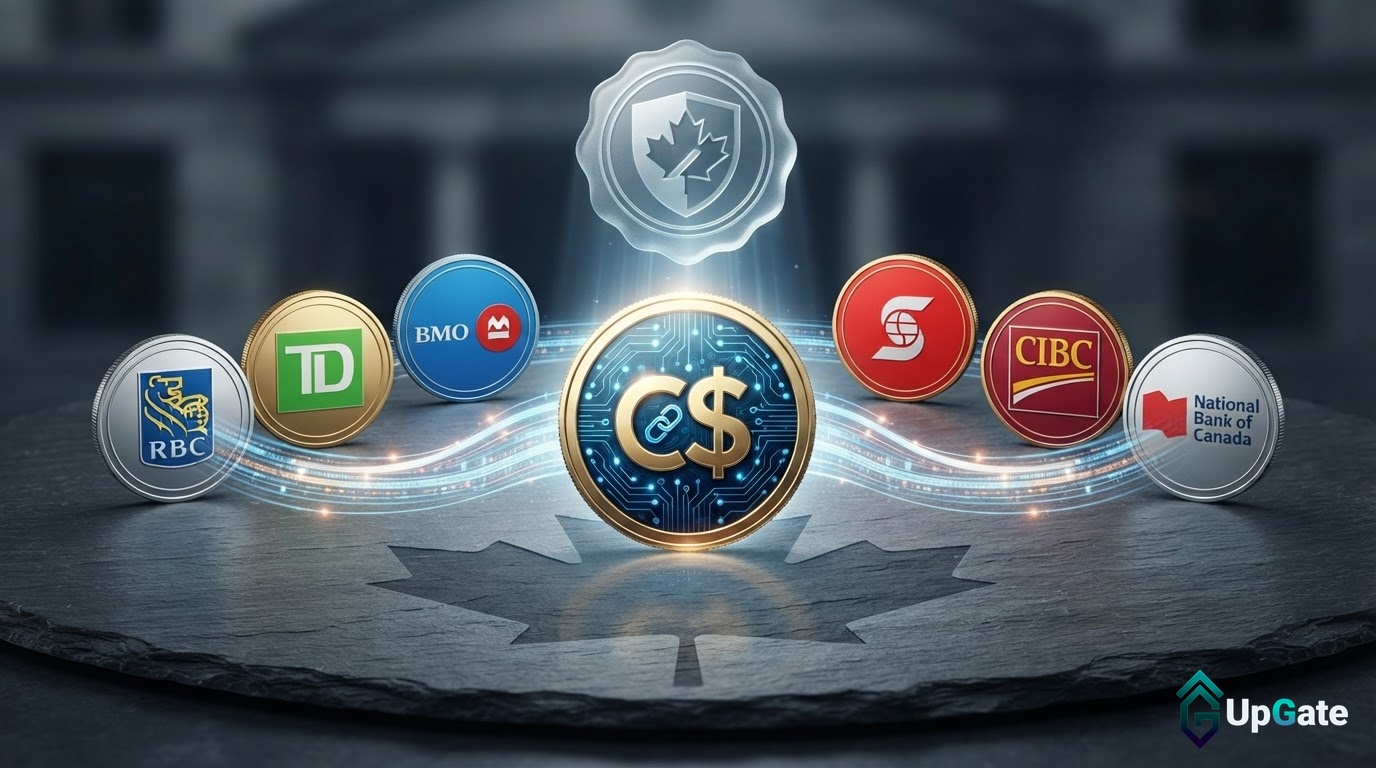
    Canada’s six largest banks are jointly developing a tokenized deposit system for Canadian dollars, a move aimed at enabling faster and eventually programmable interbank payments. This collaborative initiative, announced on September 22, involves Bank of Montreal, CIBC, National Bank of Canada, Royal Bank of Canada, Scotiabank, and TD Bank Group, and follows closely on the heels of clarifying guidance from the Office of the Superintendent of Financial Institutions (OSFI).

    On September 10, OSFI issued guidance that clarified tokenized deposits, even when utilizing distributed ledger technology, would not be treated as a separate asset class. This regulatory clarification effectively removed a significant ambiguity that had previously hindered financial institutions exploring such innovations. The timing of the banks’ announcement, just 12 days after the OSFI guidance, suggests a coordinated strategy, likely informed by discussions with regulators and Payments Canada.

    Understanding Tokenized Deposits

    Tokenized deposits represent traditional bank deposits as digital tokens on a distributed ledger. This technological approach offers potential advantages over existing interbank payment systems, including near-instant settlement, the capability for conditional payments, and more seamless movement of funds across institutions. The OSFI’s clarification provides a clearer regulatory path for banks to experiment with and implement these technologies.

    Strategic Collaboration for Network Effects

    The decision for all six systemically important banks to participate from the outset is a strategic move designed to ensure network effects and overcome potential adoption hurdles. Tokenized deposits are most effective for interbank transfers when counterparties also recognize and accept them. By launching with full participation from Canada’s Big Six, the initiative proactively avoids the “chicken-and-egg” problem that has presented challenges for similar projects in other jurisdictions.

    Global Context and Canada’s Position

    This comprehensive approach distinguishes Canada’s initiative from other international efforts. For example, Singapore’s Project Guardian, led by the Monetary Authority of Singapore, has explored tokenized deposits alongside other digital assets. Similarly, the Bank for International Settlements has overseen projects examining tokenized money across borders. However, Canada’s initiative is notable for its broad institutional buy-in at the core banking sector level, coupled with explicit regulatory backing.

    While the announcement focuses on the development of the system, specific timelines for full implementation and detailed technical specifications have not yet been publicly disclosed. The initiative aims to modernize interbank settlement by leveraging distributed ledger technology for more efficient and programmable transactions. BMO, for instance, had previously partnered with Google Cloud and CME Group in March 2026 to develop tokenized cash capabilities, indicating prior exploration of such technologies within the sector.

    The coordinated launch by Canada’s Big Six banks, directly following OSFI’s guidance, signals a proactive approach to payment innovation within a defined regulatory framework. This development could set a precedent for how financial institutions and regulators collaborate on the adoption of new digital payment technologies.

    Why This Matters

    The materials describe a narrow update: Six major Canadian banks have announced a joint initiative to create a Canadian-dollar tokenized deposit system. Tokenized deposits offer advantages over traditional systems, such as near-instant settlement, conditional payments, and seamless movement across institutions.

    Broader Context

    Source materials place the factual news in this context: Canada’s financial regulator made this approach considerably easier to pursue.

  • Aave Mobile App Now Supports USDC Deposits

    Aave Mobile App Now Supports USDC Deposits

    Aave has enabled USDC deposits from the Base network within its mobile application, a subtle yet significant move towards making decentralized lending accessible on smartphones. The feature is now live, building upon an existing Base market that has already attracted between $178 million and $182 million in USDC deposits.

    Aave’s V3 market on Base has been operational since 2023, facilitating loans and generating yield for depositors without widespread awareness among retail investors. The market currently boasts a utilization rate of approximately 89% to 90%, indicating that nearly all deposited funds are actively being borrowed.

    This high utilization presents a dual scenario: lenders benefit from increased yields, while borrowers face higher costs, with current borrowing rates on the V3 market hovering around 4.6%. For depositors, the Aave app is promoting USDC and USDT yields in the 3% to 6.5% range, subject to daily market fluctuations.

    The iOS application entered an early access phase in August 2026, with a full public launch scheduled for later this year. This early access period has served as a live beta, allowing Aave to collect valuable usage data before a wider rollout.

    Base’s inclusion in this development is noteworthy because USDC on Base is natively issued by Circle. This means users are interacting with a first-party asset, bypassing the smart contract risks associated with bridged assets. Native issuance eliminates this additional layer of risk, a crucial distinction for those who have witnessed liquidity drain from protocols due to bridge exploits.

    Cross-chain operations within the Aave app are powered by Chainlink’s Cross-Chain Interoperability Protocol (CCIP). This integration enables users to deposit and transfer assets across different networks without the need for manual routing through third-party bridges or managing multiple wallet states.

    Yield Compounding and Loan Volume

    The feature set includes automatic yield compounding, removing another manual step that has historically deterred casual users from engaging with DeFi products long enough to realize substantial returns.

    As of August 2026, Aave’s cumulative loan volume across all its markets surpassed $150 billion. This figure is comparable to the annual GDP of a mid-sized European economy, all processed through smart contracts without intermediaries like loan officers, credit checks, or business hours.

    Base Network’s Role

    Base, Coinbase’s Ethereum Layer 2 network, has emerged as a prominent hub for DeFi activity since its inception. Its integration with Circle’s native USDC issuance provides a structural advantage for protocols focused on stablecoins.

    The high utilization rate of 89% to 90% on the Base V3 market suggests that new deposits from the mobile app can be quickly absorbed. High utilization signifies existing demand from borrowers, ensuring that fresh capital from mobile users is put to work almost immediately, thereby sustaining yields and maintaining momentum.

    Strategic Importance of Base USDC Integration

    In practical terms, the Base USDC feature provides the Aave app with its most critical currency pairing at launch. USDC is a stablecoin widely held by retail users, and Base is the network most closely aligned with Coinbase’s retail-focused offerings.