Tag: Positive

  • 21shares Launches Zcash and Ether.fi ETPs in Europe, Expanding Regulated Access

    21shares Launches Zcash and Ether.fi ETPs in Europe, Expanding Regulated Access

    European asset manager 21shares has launched two physically-backed Exchange Traded Products (ETPs) in Europe, tracking the price of Zcash (ZEC) and Ether.fi’s governance token (ETHFI). The ETPs were listed on Euronext Paris and Amsterdam on Tuesday, marking an expansion of regulated access to privacy coins and decentralized finance (DeFi) tokens.

    This development represents the first ETP for Zcash in the European market, following the existence of a US-listed Grayscale Zcash ETF. The new ETPs carry an annual management fee of 2.5%. The launch is seen as a step towards mainstream financial channels for these types of digital assets.

    The introduction of these ETPs suggests an evolving regulatory landscape for privacy-focused cryptocurrencies and DeFi tokens. The ability for 21shares to list these products on major European exchanges may indicate a potential regulatory balance, though uncertainties remain regarding the exact regulatory mechanisms that facilitated these listings. The higher management fees for these ETPs could reflect ongoing compliance costs for emerging crypto assets and investor willingness to pay a premium for convenience.

    Zcash, a privacy coin, utilizes a Proof-of-Work (PoW) consensus mechanism and has a fixed maximum supply of 21 million coins. Recent reports indicate that Zcash’s price has surpassed $1,500. Fortitude Digital Mining, a significant miner of ZEC, indicated that it mined approximately 28% of ZEC in the first half of 2026 and views Zcash as a valuable long-term mining target due to its PoW, fixed supply, and privacy features. The NU7 upgrade aims to shorten block times and increase transaction speed, though its impact on these metrics is not yet reported.

    Ether.fi is a liquid staking protocol built on Ethereum. The launch of its ETP alongside Zcash highlights growing institutional interest in diverse segments of the digital asset market.

    While the listings expand regulated access, uncertainties persist. It is unclear whether other privacy coins, such as Monero or Oasis Network, will see similar compliant products emerge in Europe. Additionally, the long-term sustainability of the 2.5% management fee for these ETPs, given potentially small Assets Under Management (AUM), remains a point of consideration. The narrative of Zcash as a ‘Bitcoin privacy alternative’ is still developing, with its validation in institutional investment yet to be fully determined.

    The expansion of ETPs for Zcash and Ether.fi by 21shares occurs within a context of increasing institutional adoption of privacy coins, evidenced by the prior launch of a Zcash ETF in the US. This trend could signal a broader shift in investment strategies and regulatory tolerance towards these asset classes, though the full implications and long-term viability are subject to ongoing market and regulatory developments.

    Why This Matters

    The materials describe a narrow update: European asset manager 21shares listed two physically-backed Exchange Traded Products (ETPs) on Euronext Paris and Amsterdam. Whether other privacy coins (Monero, Oasis Network) will see compliant products emerge in Europe.

    Broader Context

    Source materials place the factual news in this context: 21shares previously listed Zcash and Ether.fi ETPs.

  • Adani Group Settles Regulatory Cases with SEBI and US SEC, No Wrongdoing Admitted

    Adani Group Settles Regulatory Cases with SEBI and US SEC, No Wrongdoing Admitted

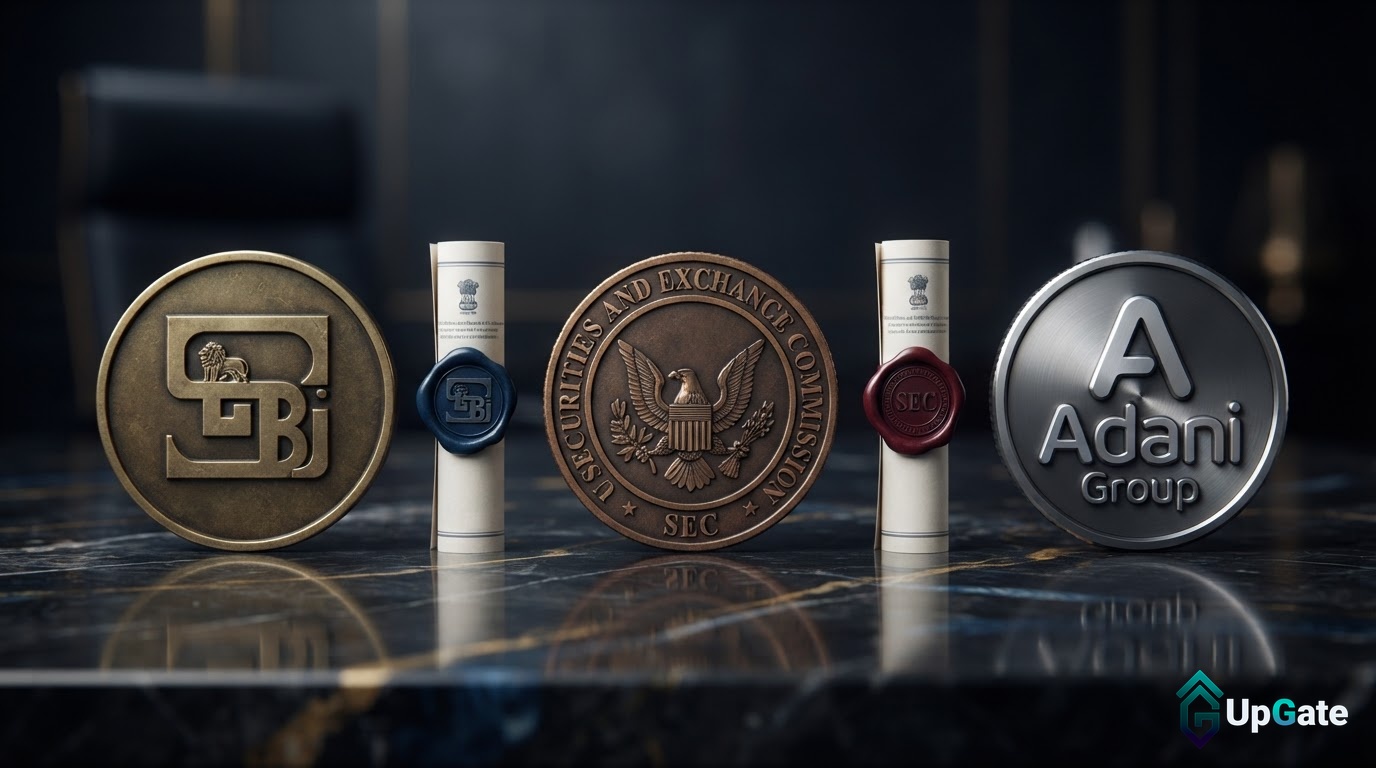
    The Adani Group has resolved significant regulatory proceedings with India’s Securities and Exchange Board of India (SEBI) and the U.S. Securities and Exchange Commission (SEC), a development that reduces the regulatory scrutiny surrounding the conglomerate since early 2023. Crucially, in both settlements, the involved parties did not admit or deny any wrongdoing.

    SEBI Settlement
    Five Adani Group companies settled allegations of disclosure lapses and corporate governance violations with SEBI by collectively paying ₹1.51 crore (approximately $158,000 USD). Adani Enterprises Ltd contributed ₹76.05 lakh to this settlement, Adani Green Energy Ltd paid ₹45.50 lakh, and three other companies—AWL Agri Business Ltd, Adani Total Gas Ltd, and Adani Energy Solutions Ltd—each paid ₹9.75 lakh.

    US SEC Settlement
    In a separate action, Gautam Adani and Sagar Adani settled civil fraud charges with the US SEC for $18 million. These charges were related to alleged bribery in connection with Indian solar energy contracts.

    Key Terms and Implications
    A central tenet of both settlements is the absence of any admission of guilt or findings of fraud. The Adani Group entities and individuals involved maintained that they did not admit or deny the allegations. Consequently, these settlements did not result in any finding of fraud and did not impose structural remedies that would restrict the group’s operations.

    The financial outlay for these settlements is considered minimal relative to the Adani Group’s overall scale. The ₹1.51 crore paid to SEBI and the $18 million paid to the US SEC are modest sums in the context of the conglomerate’s substantial business operations.

    Background Context
    These regulatory resolutions follow a period of intense scrutiny, notably initiated by a January 2023 report from Hindenburg Research, which accused the conglomerate of extensive corporate malfeasance. The allegations in that report coincided with a significant, albeit temporary, decline in the market capitalization of Adani Group companies. It is noteworthy that SEBI had previously dismissed key manipulation charges against the group by September 2025.

    In related developments, Hindenburg Research announced its dissolution in early 2026. The SEBI settlement was announced on September 22, 2026, and the US SEC settlement was finalized in May 2026.

    The resolution of these SEBI and SEC proceedings effectively diminishes the regulatory cloud that has been over the Adani Group. While the financial impact of the settlements is negligible, the reduction in ongoing legal uncertainty represents a significant development for the conglomerate.

    Why This Matters

    The materials describe a narrow update: Five Adani Group companies settled allegations of disclosure lapses and corporate governance violations with SEBI by paying ₹1. The specific details of the alleged bribery in Indian solar energy contracts.

    Broader Context

    Source materials place the factual news in this context: The regulatory cloud that has hung over Gautam Adani’s sprawling conglomerate since early 2023 just got a lot thinner.

  • U.S. Spot Bitcoin ETFs See Significant Inflows, Average Holders Return to Profitability

    U.S. Spot Bitcoin ETFs See Significant Inflows, Average Holders Return to Profitability

    U.S. spot Bitcoin exchange-traded funds (ETFs) recorded nearly $1 billion in inflows on Monday, a notable increase following a week of historically low activity. This development coincided with Bitcoin’s price rising above the estimated cost basis for the average ETF holder, returning them to profitability for the first time since January.

    On Monday, the ETFs collectively saw inflows totaling $998.95 million, according to SoSoValue. This marks a substantial turnaround from the week ending September 18, when the funds experienced their smallest weekly net inflow of $6.2 million across 141 weeks of trading. Bloomberg Intelligence analyst Eric Balchunas noted that Monday’s total inflow was the largest single-day haul since last October.

    The price increase pushed Bitcoin above an estimated ETF holder cost basis of $81,722 per coin. With Bitcoin trading near $85,900 at the time, the average holder of a U.S. spot Bitcoin fund was back in profit, a milestone not reached since January, as reported by Balchunas’ colleague James Seyffart.

    Key ETFs saw significant inflows: BlackRock’s IBIT attracted $381.37 million, Ark & 21Shares’ ARKB followed with $289.12 million, and Fidelity’s FBTC brought in $238.84 million. Morgan Stanley’s MSBT added $61.67 million, and Bitwise’s BITB saw $21.56 million. Grayscale’s funds received single-digit millions each, while VanEck’s HODL and Valkyrie’s BRRR recorded no inflows.

    Trading volume for the ETFs was noted as not exceptionally high relative to the price move, with approximately $4.5 billion traded on Monday, slightly below Friday’s $4.6 billion, according to Seyffart. However, Balchunas highlighted that this volume was elevated compared to stock and gold ETFs, with IBIT ranking among the top 10 by volume.

    Experts caution that flows booked to one session often reflect the previous day’s activity. Seyffart suggested that Monday’s total likely captured Friday’s buying, meaning the market’s full reaction to Monday’s price action may still be unfolding.

    David Wachsman, president of Hawkeye Digital, emphasized the significance of reaching the break-even point for holders who have been at a loss, noting that this can influence selling pressure. With the average buyer now in the green, it may become clearer whether recent institutional interest signifies a desire for more Bitcoin exposure or was primarily a response to the recent rally.

    Commentary from industry figures suggests Bitcoin’s recovery toward the $86,000–$87,000 range is supported by renewed institutional demand and stronger spot ETF inflows, alongside evolving U.S. regulatory developments. Vikas Gupta, country manager for India at Bybit, observed that the market has shown resilience despite the Federal Reserve’s rate hike and the failure of the Clarity Act, indicating that sentiment is influenced by factors beyond monetary policy.

    Cumulatively, U.S. spot Bitcoin ETFs have seen net inflows of $56.16 billion since their launch. The funds currently hold $110.14 billion in assets, representing 6.30% of Bitcoin’s total market capitalization. The market may continue to observe whether the return to profitability for average holders translates into sustained demand or increased selling pressure.

    Broader Context

    U.S. spot Bitcoin ETFs took in $998.95 million on Monday, according to SoSoValue, one week after the same funds posted the smallest weekly net inflow of their history.

  • DraftKings Shares Climb Amid Regulatory Setback

    DraftKings Shares Climb Amid Regulatory Setback

    DraftKings Stock Surges as Court Paves Way for Prediction Market Gambling Classification

    DraftKings shares experienced a significant intraday surge of up to 10% on August 28, following an unexpected court decision that allows states to classify prediction markets as gambling.

    Appeals Court Ruling Favors State Regulation

    The Ninth Circuit Court of Appeals ruled that Nevada can apply its gaming laws to Kalshi’s sports-related event contracts. The court classified these contracts as gambling, rather than federally regulated swaps overseen by the Commodity Futures Trading Commission (CFTC). DraftKings concluded the trading day with a 4.29% increase, closing just under $25 per share. While this is still more than 50% below its early 2025 highs, the upward momentum was a key development.

    Prediction Markets Pose Challenge to Sportsbooks

    Prediction markets had emerged as a growing concern for established sports betting operators. Platforms like Kalshi offered contracts tied to sports events that operated under federal commodity regulations, thereby bypassing the complex and costly state-by-state licensing process that companies such as DraftKings and FanDuel must navigate. These platforms presented an increasingly appealing alternative for bettors due to lower tax obligations and broader geographic reach.

    Flutter Entertainment Also Poised to Benefit

    Flutter Entertainment, the parent company of FanDuel, is also positioned to gain from this regulatory shift. However, DraftKings may have more to gain, given its own aggressive expansion into the prediction market over the past year.

    DraftKings’ Dual Role in Prediction Markets

    Ironically, DraftKings is not only a beneficiary of potential prediction market regulation but also an active participant. The company acquired Railbird Technologies in October 2025 and subsequently launched its DKeX exchange in June 2026, which powers its own Predictions platform.

    Significant Trading Volume Reported

    DraftKings’ Predictions platform currently operates in 18 states. For the week ending June 21, 2026, the company reported a total trading volume of $11.3 billion across its predictions segment, with annualized consumer volume reaching $3.4 billion.

    Investor Anticipates Regulatory Impact

    Notably, at least one prominent investor foresaw this regulatory outcome. Michael Burry, the fund manager renowned for his prescient bet against the housing market prior to the 2008 financial crisis, purchased DraftKings shares in July 2026. His investment thesis was reportedly based on the expectation that regulatory actions would mitigate the competitive pressure exerted by prediction markets on traditional sportsbooks.

    Supreme Court Petition Filed

    While the Ninth Circuit’s ruling is significant, it may not be the final word. On September 2, a petition was filed with the US Supreme Court from New Jersey, seeking clarification on the boundaries between federal authority and state gambling regulation.

    Existential Stakes for Kalshi

    For Kalshi, the implications of this ruling are profound. The company’s business model was predicated on its contracts being classified as federally regulated financial instruments, not state-regulated gambling products. If courts continue to favor state regulatory authority, Kalshi would be compelled to fundamentally alter its operations, at a minimum requiring it to obtain gaming licenses in every state where it wishes to offer sports-related contracts.

    DraftKings’ Compliance Becomes Strategic Asset

    In contrast, DraftKings already possesses the necessary gaming licenses. The company’s compliance infrastructure, often viewed as a drain on profit margins compared to less regulated prediction platforms, now appears to be a strategic advantage rather than a cost center.

  • Bitcoin ETFs See Near $1B Inflow as Holders Reclaim Profits

    Bitcoin ETFs See Near $1B Inflow as Holders Reclaim Profits

    Bitcoin ETFs See Near $1 Billion Inflow, Largest Daily Surge in a Year

    U.S. spot Bitcoin exchange-traded funds (ETFs) experienced a significant surge on September 21, attracting nearly $1 billion in a single trading day. This marks the largest daily inflow for these products in approximately one year. The substantial influx of $998.95 million coincided with Bitcoin’s price briefly surpassing $87,000, its highest point since January, returning many investors to profitability after a prolonged period of price stagnation.

    This inflow ranks as the ninth-largest daily inflow since the launch of spot Bitcoin ETFs on January 11, 2024. The last time such a large daily inflow was recorded was in early October 2025.

    BlackRock’s iShares Bitcoin Trust (IBIT) led the day’s activity, with net inflows totaling $381 million. ARK 21Shares’ Bitcoin ETF (ARKB) followed, bringing in approximately $289 million. Fidelity’s Wise Origin Bitcoin Fund (FBTC) secured the third position with around $239 million. Collectively, these three funds accounted for over 90% of the day’s total inflows.

    Bitcoin’s intraday rally above $87,000 was the key driver that shifted a significant portion of holders back into profit. Although the price has since retreated to the $85,000 to $86,000 range, this level still represents a quarterly gain of approximately 44%.

    These substantial inflows are part of a broader trend. In August 2026, Bitcoin ETFs saw a total of $3.52 billion flow in throughout the entire month. As of September 21, the month-to-date total for September has already reached $1.31 billion, with the month not yet concluded.

    Spot Ether ETFs also demonstrated strong performance on September 21, attracting inflows of approximately $270 million.

    The nearly $1 billion inflow day also underscores the transformative impact of the ETF structure on Bitcoin’s investor landscape. Prior to January 2024, gaining institutional exposure to Bitcoin involved complex custody arrangements, regulatory hurdles, and risk management frameworks that were often beyond the capabilities of traditional asset managers. The advent of ETFs has simplified this process, making Bitcoin accessible through a simple ticker symbol in a brokerage account.

  • Bitcoin ETFs Near $1B Milestone Amid Record Inflows

    Bitcoin ETFs Near $1B Milestone Amid Record Inflows

    Bitcoin ETFs See Near $1 Billion Inflow, Boosting Crypto Market

    US spot Bitcoin exchange-traded funds (ETFs) experienced their largest daily inflow since October 2025 on Monday, attracting nearly $1 billion as the price of Bitcoin briefly surged above $87,000.

    The funds recorded net inflows of $998.9 million on Monday, surpassing the previous 2026 high of $844 million seen on January 14, according to data from SoSoValue. This latest influx also marks the most significant daily inflow since October 6, 2025, when US spot Bitcoin ETFs drew over $1.2 billion. Despite this surge, US spot Bitcoin ETFs have collectively registered net outflows of approximately $464 million year-to-date in 2026.

    Leading the inflows on Monday was BlackRock’s iShares Bitcoin Trust (IBIT), which garnered $381 million. Following closely were the ARK 21Shares Bitcoin ETF (ARKB) with $289 million and Fidelity’s Wise Origin Bitcoin Fund (FBTC) with around $239 million, according to data from Farside Investors.

    At the time of publication, Bitcoin was trading at $85,430, marking a 4.7% increase over the past 24 hours and a 12.3% rise over the last month. The cryptocurrency briefly climbed above $87,200 on Monday, as reported by CoinGecko. Julio Moreno of CryptoQuant noted on Monday that Bitcoin had moved above its 365-day moving average, a development he described as the final confirmation signal for a new bull market.

    In related news, US spot Ether ETFs attracted approximately $270 million on Monday, their highest daily inflow of 2026. US spot XRP ETFs, meanwhile, recorded no net flows for the day, maintaining their cumulative net inflows at about $1.71 billion.

  • Crypto Market Dynamics May Be Shifting Towards Reduced Volatility, Data Suggests

    Crypto Market Dynamics May Be Shifting Towards Reduced Volatility, Data Suggests

    The nature of cryptocurrency boom-and-bust cycles may be evolving, with current market data suggesting a potential reduction in volatility driven by increased liquidity and institutional participation, rather than a complete absence of market fluctuations. Solstice CEO Ben Nadareski stated on Cointelegraph’s Chain Reaction show that future cryptocurrency bull runs are likely to be less volatile than historical cycles, attributing this shift to growing institutional capital and household wealth replacing speculative trading.

    This perspective is supported by recent market data. According to a report from Glassnode and Fasanara Digital, Bitcoin’s one-year realized volatility has fallen significantly, decreasing from 84.4% to 43%. Concurrently, daily Bitcoin spot volumes have seen a substantial increase, ranging between $8 billion and $22 billion, a notable rise from the $4 billion to $13 billion observed in previous market cycles. These figures suggest deeper markets and potentially lower volatility.

    Nadareski’s analysis indicates that institutional participation and deeper trading markets are reshaping the crypto market structure. This shift is moving the market towards a state where household wealth plays a more significant role than pure speculative trading, a change that could temper the volatility characteristic of earlier crypto cycles. Other industry participants have also voiced similar views, with some suggesting that institutional capital and inflows into spot Bitcoin ETFs have already begun to moderate Bitcoin’s traditional four-year cycles, though the complete disappearance of these cycles remains a subject of discussion.

    Looking ahead, Nadareski also projected significant growth for Solana’s stablecoin market. He anticipates that the market capitalization of stablecoins on Solana could rise above $50 billion and approach $100 billion within the next five years. Currently, Solana holds approximately $16 billion in stablecoin market capitalization. This prediction is contextualized by broader trends in stablecoin usage, as data from CEX.IO indicates that stablecoins accounted for 75% of total crypto trading volume in Q1 2026, marking a record high. Total transaction volume also surpassed $28 trillion in the same period.

    While the evidence points towards a potential tempering of volatility, inherent uncertainties remain. It is not definitively established whether the traditional four-year Bitcoin cycle has entirely disappeared, nor can the exact timing and magnitude of future market fluctuations be precisely predicted. Therefore, while increased liquidity and institutional involvement may be contributing to a more stable market environment, the cryptocurrency space continues to present inherent risks and unpredictability.

    Why This Matters

    The materials describe a narrow update: Solstice CEO Ben Nadareski stated that increased liquidity and institutional involvement are likely to make future cryptocurrency bull runs less volatile than historical cycles. Whether the traditional four-year Bitcoin cycle has entirely disappeared.

    Broader Context

    Source materials place the market analysis in this context: Solstice CEO Ben Nadareski’s statements on Cointelegraph’s Chain Reaction show.

  • Bitcoin Faces Resistance After Rally Fueled by ETF Inflows and Short Squeeze

    Bitcoin Faces Resistance After Rally Fueled by ETF Inflows and Short Squeeze

    Bitcoin’s price reached an eight-month high exceeding $87,400 on Monday morning, driven by substantial inflows into Bitcoin ETFs and a significant short squeeze. This rally occurred despite a backdrop of recent negative market and geopolitical developments.

    The preceding week presented several headwinds for the cryptocurrency market. A setback for the CLARITY Act in the US Senate and the Federal Reserve’s first interest rate hike in over three years were associated with Bitcoin’s price dipping to a three-week low of $75,000. Escalating geopolitical tensions over the weekend also contributed to price corrections, with Bitcoin trading around $80,300 after reaching $82,000 on Saturday.

    Demonstrating resilience, Bitcoin initiated a strong upward movement on Friday that continued into Monday. Data from SoSoValue shows that ETF inflows on Monday alone reached $998.95 million, representing the single-best performance for these funds in nearly a year. This influx of capital was a primary driver of the price increase.

    CryptoQuant’s analysis further indicates that spot demand complemented ETF inflows, leading to the liquidation of over $340 million in shorts in a classic short squeeze. The analysts noted minimal historical resistance between $80,000 and $85,000, allowing Bitcoin to ascend rapidly through this range.

    However, Bitcoin has now encountered major resistance levels at $85,000 and $95,000. The sustainability of the current rally hinges on continued ETF inflows. A potential concern is the negative Coinbase Premium Gap, suggesting U.S. spot demand may have cooled. CQ predicted that market participants are closely watching the U.S. session to see if ETFs can sustain their strong performance.

    Significant uncertainties remain regarding Bitcoin’s ability to break through these resistance levels and the overall sustainability of the current price surge. The market may be closely monitoring ETF flows and U.S. market activity in the coming sessions.

    Why This Matters

    The materials describe a narrow update: Bitcoin experienced a significant price increase, reaching over $87,000, following a period of negative macro and industry news. Whether the CLARITY Act will see further progress.

    Broader Context

    Source materials place the factual news in this context: Despite all the negative macro and industry developments that took place in the past week, bitcoin’s price went on an impressive run on Monday morning, surging to a new eight-month high of just over $87,000.

  • Bitcoin FOMO Surges as Traders Pile Back In: Crowded Bets Risk Sharp Reversal

    Bitcoin FOMO Surges as Traders Pile Back In: Crowded Bets Risk Sharp Reversal

    Bitcoin Surges Past $87,000, Igniting Widespread Market Optimism

    Bitcoin’s ascent past the $87,000 mark on Monday, followed by a slight stabilization below that threshold, has fueled a significant surge in market optimism. Data from Santiment reveals that Bitcoin-related fear of missing out (FOMO) has reached levels not observed since late 2024.

    Social Media Sentiment Shifts Dramatically

    Discussions across social media platforms are now heavily skewed towards expectations of further price appreciation. This shift follows a powerful short squeeze that propelled Bitcoin prices upward, liquidating approximately $648 million in bearish cryptocurrency positions within a 24-hour period and injecting fresh buying pressure into the market.

    Adding to the momentum, cryptocurrency trading volumes saw a notable 39% increase during this period. However, this surge has also been accompanied by an increase in trader leverage. Open interest across the crypto market rose by roughly 7.6% to $156 billion, even after a substantial number of short positions were eliminated. This suggests that some traders are rapidly establishing new positions rather than reducing their risk exposure.

    Extreme Optimism as a Potential Warning Sign

    Santiment cautions that such extreme optimism can serve as a warning signal when market expectations become excessively one-sided. While the current sentiment does not guarantee a price reversal, the dramatic swing from fear to FOMO indicates a growing confidence among traders following Bitcoin’s recent upward movement.

    Analysts See Further Upside Potential

    Despite the potential for sentiment shifts, some experts believe the current rally has further room to grow. Analyst Doctor Profit observes that Bitcoin appears to be replicating a pattern seen during the 2022-2023 period. The cryptocurrency recently surpassed the critical 50-week moving average, currently situated around $78,700. A weekly close above this level could further bolster the bullish outlook. Doctor Profit identifies $88,000 as the next significant target should Bitcoin overcome remaining resistance levels.

    Looking further ahead, ‘The Long Investor’ has projected a Wave 5 target of $350,000 by 2030. Crypto Patel, meanwhile, has set even more ambitious sights. Analyzing previous major market cycles, he notes a consistent 364-day gap between market peaks and troughs. With this timing pattern reappearing, Patel suggests that if history repeats itself, $370,000 could be Bitcoin’s next destination.

    “Bullish Regime” Confirmed by On-Chain Data

    On-chain analytics firm Glassnode has also weighed in, stating that Bitcoin remains in a “bullish regime” after considering various cost basis models and timeframes. The firm highlighted that Bitcoin’s price is trading above both the True Market Mean and the short-term holder cost basis.

    “Holding above these levels is what historically defines a sustained uptrend,” Glassnode noted.

  • Mynt Inc. IPO Proceeds with Regulatory Approvals, Eyes Lending Expansion

    Mynt Inc. IPO Proceeds with Regulatory Approvals, Eyes Lending Expansion

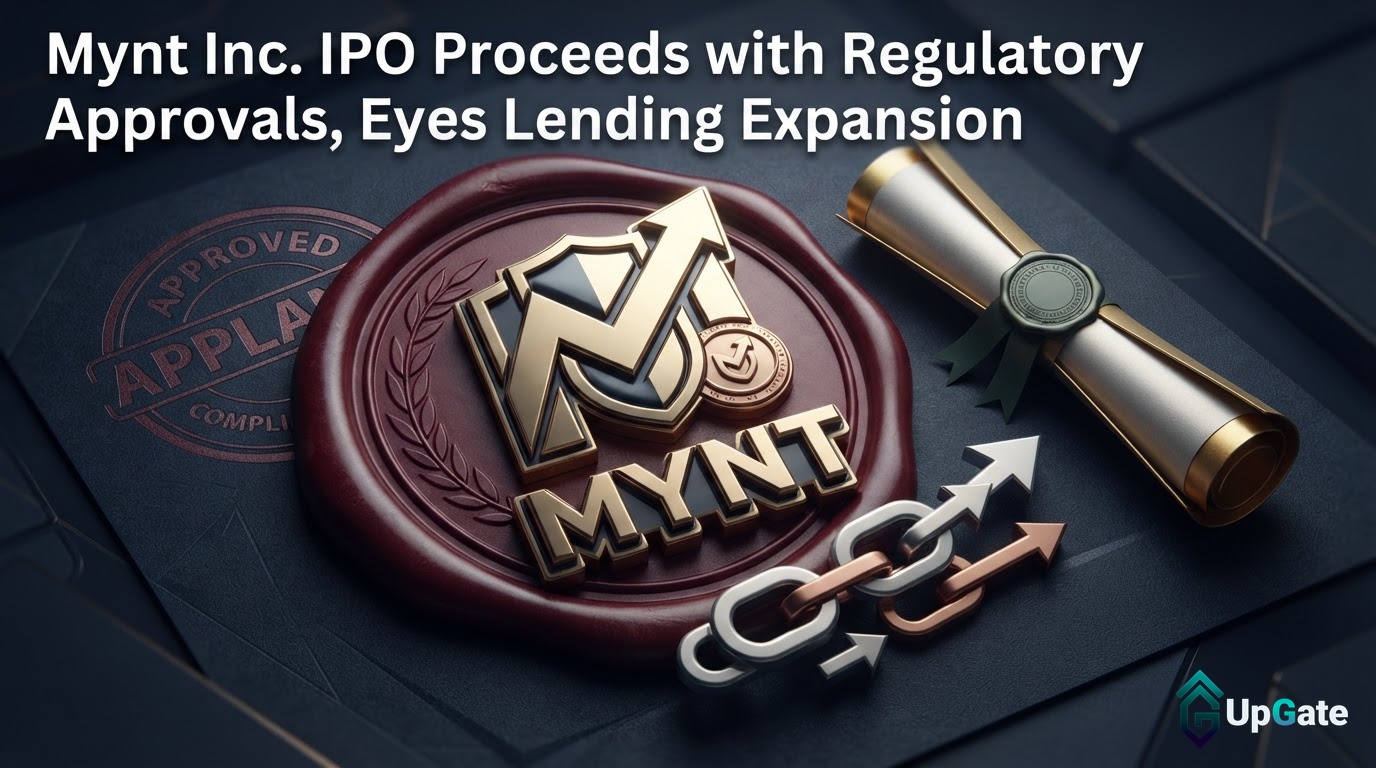
    Mynt Inc., the parent company of GCash, is advancing its initial public offering (IPO) in the Philippines, having secured key regulatory approvals and setting a clear timeline for October 2026. The offering is positioned to be the largest in the country’s history, with a significant portion of the proceeds earmarked for expanding the company’s lending services, leveraging its extensive user base.

    Regulatory Milestones and Timeline

    The IPO has received approval from the Philippine Securities and Exchange Commission (SEC) in early September 2026 and the Philippine Stock Exchange (PSE) on September 18, 2026. The offer period is expected to commence in early to mid-October 2026, with trading anticipated to begin around October 19-20 under the ticker symbol GCASH. Mynt initially filed for its IPO on June 27, 2026, pricing shares at PHP 10 each. The offering comprises up to 8.03 billion common shares and an additional 1.2 billion secondary shares from existing investors. The SEC has also granted Mynt permission for a reduced minimum public float of 12%.

    Fundraising and Strategic Allocation

    Morgan Stanley, J.P. Morgan, and UBS are serving as the joint global coordinators for the offering. The IPO aims to raise up to PHP 92.3 billion (approximately $1.5 billion) at its maximum target. Proceeds from the primary shares will be directed towards expanding lending services and general corporate purposes, while secondary share sales allow existing investors to partially divest.

    Leveraging User Base for Lending Growth

    GCash boasts a substantial user base, reporting approximately 39 to 40 million monthly active users drawn from a total of 90 million registered accounts. The platform facilitates a significant volume of transactions, processing PHP 17 trillion in payment transactions annually. This extensive reach and transaction data are seen as crucial assets for Mynt’s strategic push into consumer and small business lending, where the company can leverage its data to underwrite credit at scale.

    Financial Performance Highlights

    Financially, Mynt has demonstrated strong growth. In 2025, the company reported revenue of PHP 79.8 billion, marking a 27% year-on-year increase. Net income for the same period reached PHP 17.2 billion, a substantial 56% surge compared to the previous year. This financial performance underpins the company’s valuation and growth narrative.

    Ownership and Potential Investment

    The ownership structure of Mynt includes major stakeholders such as Globe Telecom, which holds approximately 34% pre-offer, along with Ayala Corp., Ant International (affiliated with Alibaba and Alipay), and MUFG Bank. Bloomberg has reported that BlackRock is planning to invest in the IPO, though this remains a reported intention rather than a reported commitment.

    Market Outlook and Uncertainties

    The success of the IPO and its valuation will likely depend on Mynt’s ability to justify its market position through continued user growth and the effective expansion of its lending operations. Uncertainties remain regarding the final amount raised and the extent of investor participation, including that of BlackRock.

    Why This Matters

    The materials describe a narrow update: Mynt Inc. Whether BlackRock’s investment will materialize.

    Broader Context

    Source materials place the factual news in this context: Mynt filed for its IPO on June 27, 2026, pricing shares at PHP 10 apiece.