Tag: Positive

  • Trump Launches AI Task Force, Names AI Czar

    Trump Launches AI Task Force, Names AI Czar

    President Donald Trump has announced plans to establish an “AI Force” and appoint a dedicated “AI czar” to oversee the rapidly advancing artificial intelligence sector. This initiative signals the administration’s intention to consolidate AI policy under a single authority, a structure reminiscent of the “crypto czar” role previously created when venture capitalist David Sacks was tasked with a dual AI and cryptocurrency mandate in December 2024.

    Building on Existing Initiatives

    The new “AI Force” concept is an extension of the administration’s existing US Tech Force initiative, which was unveiled on December 15, 2025. That program aimed to recruit approximately 1,000 AI engineers and specialists, deploying them across various federal agencies, including the Department of Defense and the Treasury. The core objective is to integrate private-sector expertise into government operations, with companies such as AWS and Apple already participating in the initiative.

    The Sacks Precedent

    David Sacks, appointed as the White House AI and cryptocurrency czar on December 5, 2024, served as the model for this centralized oversight role. Sacks held the position until March 2026, during which time he advocated for a lenient regulatory approach to both AI and digital assets.

    Executive Order and Regulatory Landscape

    Executive Order 14179, signed on January 23, 2025, was specifically designed to remove obstacles hindering American leadership in AI. The order aimed to create a unified national policy framework, intended to override the fragmented landscape of state-level AI regulations that had begun to emerge across the country.

    Under Sacks’s influence, the administration took further steps. In May 2026, a proposed executive order that would have mandated extensive federal reviews of advanced AI models was withdrawn before implementation. The rationale was that prolonged review periods would impede development and grant an advantage to international competitors, particularly China.

    Stance on AI Safety

    President Trump has been unequivocal in his views on AI safety concerns. As of September 2026, he publicly dismissed the necessity of additional regulatory safeguards for AI technology, characterizing safety worries as exaggerated. His administration’s stance is that robust leadership, rather than new regulations, is the most effective means of mitigating potential AI risks.

    Synergies Between AI and Digital Assets

    David Sacks’s dual mandate underscored this philosophy. By combining oversight of both AI and digital assets under one individual, the White House signaled its view that these sectors are complementary rather than competing priorities.

    Opportunities for the Tech Sector

    The tech industry can anticipate an increase in federal contracts and collaborative opportunities. Companies already engaged with the Tech Force initiative are poised to strengthen their ties with government agencies. Cloud providers like AWS are expected to be significant beneficiaries, as the government seeks to rapidly modernize its AI capabilities without developing all necessary infrastructure internally.

    Reports from within the White House indicate internal discussions have highlighted a division between officials who advocate for oversight and those who perceive any regulation as a hindrance to competitiveness. This tension appears to have been largely resolved in favor of an innovation-first approach.

  • Grayscale’s Zcash ETF to Implement 3-for-1 Share Split Aiming for Broader Investor Accessibility

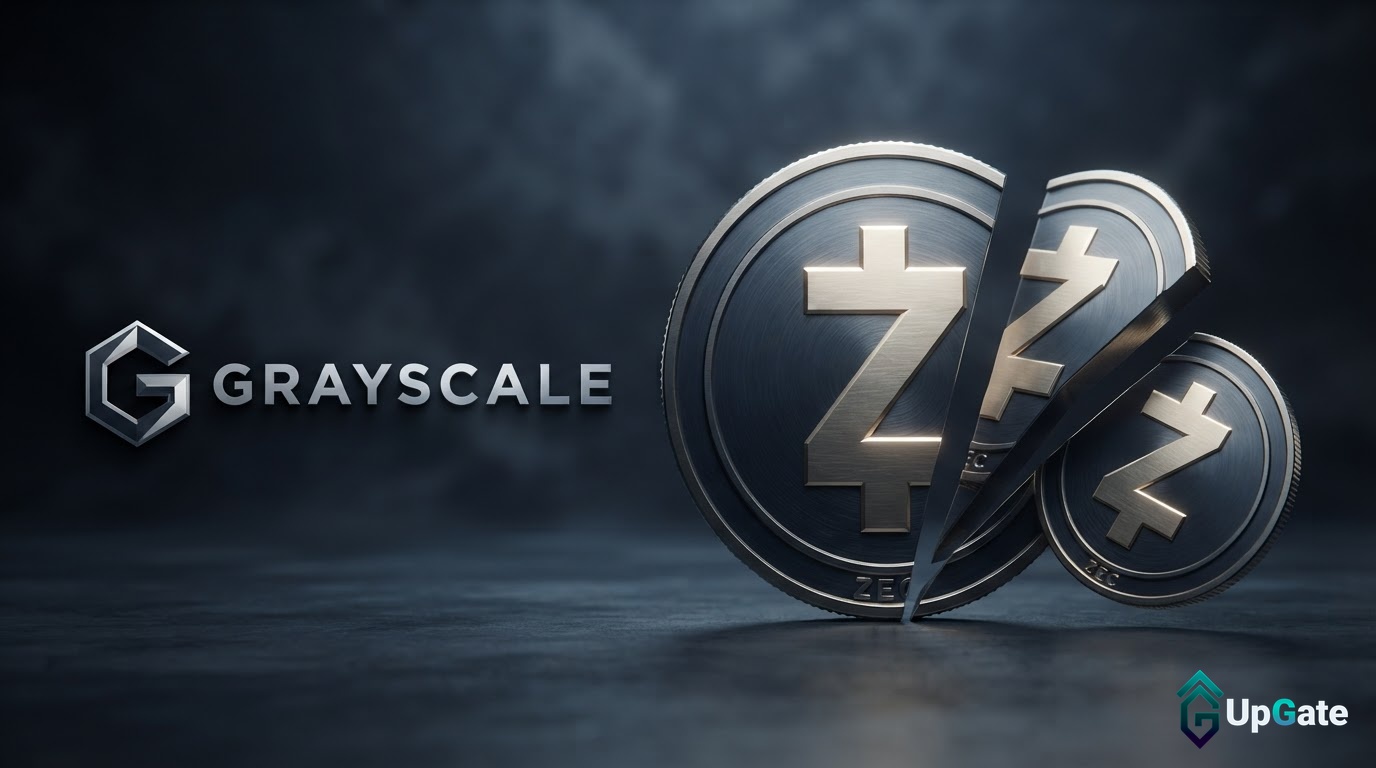
    Grayscale’s Zcash ETF to Implement 3-for-1 Share Split Aiming for Broader Investor Accessibility

    Grayscale has announced a 3-for-1 forward share split for its Zcash ETF (ZCSH), a strategic move designed to increase the accessibility of its shares for investors. This split will triple the number of outstanding shares and proportionally reduce the per-share price, with split-adjusted trading set to commence on September 30.

    The Zcash ETF, which began trading on August 25, 2026, has already garnered significant investor interest, attracting over $233 million in net inflows and accumulating approximately $890 million in net assets as of September 17. The fund has also demonstrated robust market activity, recording over $11 billion in cumulative trading volume since its late August launch.

    Shareholders of record on September 28 will receive two additional shares for every one currently held. The distribution of these new shares will occur after market close on September 29. Grayscale’s objective with this split is to make the ETF shares more accessible to a wider range of investors, potentially leading to a deeper order book and tighter bid-ask spreads, according to market analysis.

    Supporting this development, the underlying asset, ZEC, the native token of the Zcash protocol, has shown recent strength. ZEC traded between $1,478 and $1,521, reflecting an approximate 25% gain over the past week. This price momentum is occurring alongside strengthening network fundamentals, with Zcash’s hash rate climbing to nearly 32 GSol/s and its mining difficulty reaching approximately 291 million.

    The Grayscale Zcash ETF is notable as the first US-listed product offering exposure to ZEC within an ETF structure. The ETF leverages zero-knowledge proofs for shielded transactions, a key feature of the Zcash protocol.

    Looking ahead, the Zcash network is scheduled to undergo the NU7 network upgrade on November 5, 2026, an event intended to reduce block times on the network.

    It is important to note that while the share split aims to enhance accessibility, the total value of an investor’s holdings will remain unchanged by the transaction. The long-term impact on market liquidity and the ETF’s performance will likely be influenced by the continued strength of ZEC, broader market conditions, and the effects of the upcoming protocol upgrade.

    Why This Matters

    The materials describe a narrow update: Grayscale is implementing a 3-for-1 forward share split for its Zcash ETF (ZCSH) on the NYSE Arca. The exact impact of increased retail participation on bid-ask spreads and order book depth.

    Broader Context

    Source materials place the factual news in this context: Grayscale is splitting its Zcash ETF three ways, and no, nobody’s losing anything.

  • Hyperliquid Posts $3M Daily Revenue Amidst Onchain Protocol Surges

    Hyperliquid Posts $3M Daily Revenue Amidst Onchain Protocol Surges

    Onchain Platforms See Surge in Protocol Revenue, Hyperliquid Leads Pack

    A wave of robust performance has swept across decentralized finance, with four major onchain platforms simultaneously reporting their strongest weekly revenue figures. Hyperliquid, a decentralized derivatives exchange, spearheaded this surge, raking in $3.07 million in protocol revenue within a single 24-hour period.

    Data compiled by DefiLlama reveals that Hyperliquid’s seven-day revenue total reached approximately $13.47 million. This achievement solidifies its standing as one of the most profitable protocols in decentralized finance, excluding stablecoin issuers.

    Joining Hyperliquid in this notable performance were three other platforms: Pump (pump.fun), StonkFun (Stonk), and Pons. Each of these protocols also set new personal weekly revenue records.

    Hyperliquid’s revenue generation is primarily driven by perpetual futures trading. The protocol directs nearly 99% of eligible perpetual futures fees into its Assistance Fund, which is then used for HYPE token buybacks and burns.

    StonkFun, which operates within the token launchpad sector, recorded a peak single-day revenue of $1.84 million during the same period. Pons demonstrated remarkable consistency, generating around $17.8 million in revenue over its trailing 30-day window.

    Pump, a memecoin launchpad built on the Solana blockchain, completed the quartet. Its strong performance is attributed to the sustained activity within the Solana ecosystem.

    When stablecoin issuers like Tether and Circle are excluded, DefiLlama’s rankings now position these protocols among the leading onchain revenue generators. This distinction is significant, as stablecoin revenue models are fundamentally based on interest income from reserves, differing from the user-generated protocol fees that drive the other platforms.

    Activity levels saw a notable increase around mid-September, leading to frequent shifts in revenue leadership among these platforms.

    Hyperliquid employs a particularly aggressive strategy, channeling almost all eligible fees into its Assistance Fund for HYPE token buybacks and burns. In contrast, the launchpad protocols typically allocate their earnings between treasury accumulation and token buyback initiatives.

    For Hyperliquid, the $13.47 million in weekly revenue translates to an annualized run rate exceeding $700 million.

  • Ethereum Surges as Whales Accumulate, Wallet Count Peaks

    Ethereum Surges as Whales Accumulate, Wallet Count Peaks

    Ethereum Surges Past $2,600 Amidst Whale Activity and Staking Growth

    Ethereum’s recent ascent beyond the $2,600 mark has been propelled by a confluence of factors, including a resurgence in whale transactions, a record number of non-empty wallets, and significant developments in the realm of staking, according to data from Santiment Intelligence.

    While an increase in whale transactions doesn’t definitively signal accumulation, as large transfers can represent both buying and selling, the price action of Ether (ETH) has shown a clear inclination towards purchases.

    Santiment’s analysis reveals that the number of non-empty Ethereum wallets has reached an all-time high, exceeding 207 million. This growth indicates a continued broadening of ETH ownership, even after periods of subdued price performance. Concurrently, a substantial portion of Ethereum’s circulating supply remains committed to staking, rather than being held idly.

    With entities like Bitmine actively staking significant token holdings, the total amount of ETH currently staked has surpassed 40 million. Furthermore, Ethereum continues to dominate the decentralized finance (DeFi) landscape, boasting a total value locked (TVL) of approximately $50 billion.

    This combination of on-chain metrics underscores the underlying strength behind Ethereum’s latest recovery, which saw the leading altcoin rebound from below $2,400 to its current position above $2,600. Ethereum’s investment appeal appears to extend beyond short-term price speculation, with the asset deeply integrated into staking, stablecoins, lending, decentralized exchanges (DEXes), and other DeFi applications.

    Adding to the positive momentum, the cost of transacting on the Ethereum network has become significantly more affordable. The average transaction fee has fallen to below $0.10, representing a decrease of over 85% from its peak of $0.72 in April.

    This improving on-chain environment coincides with Ethereum approaching a critical technical resistance level. Popular analyst Ted Pillows has identified the current resistance zone as a significant hurdle for ETH’s recovery, suggesting that a sustained breakout could pave the way for new local highs.

    On a shorter timeframe, Pillows indicated that a weekly close above $2,550 would strengthen ETH’s potential to reach the $2,900-$3,000 range, a projection echoed by recent analysis from Ali Martinez. Looking further ahead, the long-term outlook for Ethereum appears even more optimistic. Pillows has set an ambitious target of $10,000 for the asset, citing its need to “catch up with global M2 supply.”

    [Image: A tweet from Ted Pillows stating “Ethereum has a lot of catching up to do with global M2 supply. $10,000 ETH remains the target by 2029.”]

  • CLARITY Act Uncertainty Fuels Wall Street Blockchain Adoption

    CLARITY Act Uncertainty Fuels Wall Street Blockchain Adoption

    Senate’s CLARITY Act Fails Procedural Vote, SEC Unveils “Innovation Exemption” for Tokenized Stocks

    Washington D.C. – The U.S. Senate’s CLARITY Act, a landmark piece of legislation aimed at structuring the digital asset market, failed a procedural vote by a narrow margin of 49 to 50. Just two days later, the Securities and Exchange Commission (SEC) issued an “Innovation Exemption,” effectively greenlighting the on-chain trading of tokenized U.S. stocks.

    Financial commentator Wen Hongjun believes this outcome, while seemingly a setback for legislative certainty, may actually accelerate Wall Street’s migration to the blockchain. The exemption, he argues, truly elevates the importance of trading pair rules, with compliant payment stablecoins now directly integrated into the settlement leg of the U.S. stock market on-chain.

    Who Will Be the Market Maker, Which Chain Will Be Used, Whose Pool Will Be Tapped, and Whose Currency Will Set the Price?

    On September 15th, the U.S. Senate’s procedural vote on the CLARITY Act (Digital Asset Market Structure Act) fell short of the 60-vote threshold, failing 49 to 50. This significant deficit, a full 11 votes shy of the supermajority, has drastically reduced market predictions for its legislative success this year from over 80% in February to single digits.

    On September 17th, the SEC unveiled its “Innovation Exemption,” permitting qualified “Tokenized Securities Trading Venues” (TSVs) to utilize licensed Automated Market Maker (AMM) liquidity pools for the on-chain trading of tokenized U.S. equities.

    This timing is not coincidental but rather a strategic division of labor. As Paul Atkins stated in his announcement, “With Congress unable to advance the CLARITY Act this week, the SEC is taking a step forward today within its statutory authority.” In simpler terms, when Congress cannot provide certainty, the executive branch takes action.

    Legislation aims to provide “legal certainty” to industries, but Wall Street has never waited for approval to innovate. What it requires is a pathway that ensures “doing so won’t lead to prosecution.” The failure of the CLARITY Act has seen the SEC’s Section 36(a) exemptive authority fill the void. While the path may differ, the direction remains unchanged.

    Administrative exemptions are faster than legislation but are considerably more fragile, with a five-year sunset clause, temporary status, and conditional terms. The next administration could revoke it, courts could challenge it, and a change in SEC leadership could rewrite it. The industry is well aware that if Congress cannot deliver, the focus shifts back to how much space the SEC and CFTC can unlock under existing laws.

    In essence, the industry has traded “legislative permanence” for “administrative speed.” This is a time-bound transaction.

    The roadblock this time was not technical provisions but ethical clauses. Democrats demanded enforceable bans on profits from cryptocurrency for presidents and high-ranking officials during rule-making periods. Republicans, on September 14th, presented a 630-page version incorporating 126 amendments requested by Democrats, yet still failed to secure votes. Furthermore, if the Senate shifts hands after the midterm elections, the Banking Committee could be led by Elizabeth Warren.

    My conclusion is that the failure of the bill does not mean the migration to the blockchain will stop. I have repeatedly emphasized that Trump will not disappoint, and the bill’s failure will actually accelerate the migration. Because the window is only five years, and it’s first-come, first-served, the migration of talent, capital, and industry officially begins this week. Once the industry has migrated to the blockchain, and the interests of Wall Street financiers behind the Democratic Party are secured, the deed will be done. Will subsequent legislation fail? Or will it pass under a different name, with the benefits merely redistributed to their own financiers?

    Technical Breakdown: Four Key Points

    • Dual Exemption: TSVs are exempted from the definition of “exchange,” and market makers providing liquidity in their own capital within the pool are exempted from the definition of “dealer.”
    • Must Be True Equity: Tokens must retain corresponding dividend and voting rights; synthetic versions are explicitly prohibited. Robinhood’s Stock Tokens, Kraken’s xStocks, and Ondo’s offshore products only offer price exposure without shareholder rights. Their current forms cannot enter this arena and must restructure their products to do so.
    • Permissionless Chain + Permitted Participants: Smart contracts must be auditable, public, and deployed on a “public, permissionless” distributed ledger. However, participants are permitted, limited to U.S. persons, and must comply with sanctions regulations. This provision effectively blocks two types of entities: traditional institutions seeking to launch private consortium chains and DeFi purists aiming for fully open, KYC-free pools.
    • Strict Controls: There are caps on the number of listed tickers and trading volumes. Trading must halt in sync with primary listing exchanges. Issuers must be notified in writing before third-party tokenization, with the right to object.

    Most media outlets have covered the above points. What truly warrants amplification are the trading pair rules.

    Under the exemption, tokenized U.S. stocks can only be traded against three types of assets: another tokenized NMS stock, non-security crypto assets (such as stablecoins issued by compliant payment stablecoin issuers), or tokenized money market funds. Each pair constitutes an independent pool, with its own reserves and pricing.

    The SEC has directly incorporated “compliant payment stablecoins” into the settlement leg of the on-chain U.S. stock market.

    This represents a leap in the positioning of stablecoins, elevating them from “transaction mediums within the crypto sphere” and “cross-border payment tools” to units of account and settlement assets in the U.S. capital markets. The GENIUS Act provided them with legal status, and the Innovation Exemption has provided them with use cases.

    Even more intriguing is the third option: tokenized money market funds. The GENIUS Act prohibits interest payments on payment stablecoins, forcing the on-chain “cash leg” to bifurcate into two forms:

    • Non-interest-bearing payment stablecoins: Pure settlement, high liquidity, and pricing benchmarks.
    • Interest-bearing tokenized MMFs: Capital parking and yield accrual (e.g., BUIDL, BENJI, USTB).

    Wall Street’s familiar tiered cash management system is being meticulously rebuilt on-chain. Whoever’s cash leg is chosen as the primary trading pair will simultaneously gain three advantages: float, order flow, and pricing benchmarks.

    This is where market making truly lies. It’s not about who lists the most stocks, but about whose cash leg becomes the market’s unit of account.

    • Issuer Layer: Circle/USDC, banks and payment consortia like the OUSD camp, and brokerage firms’ own stablecoins – who will become the default pricing currency for tokenized U.S. stock pools?
    • Public Chain Layer: Ethereum, Solana, and BNB Chain, by meeting the criteria of “public and permissionless,” can directly serve as settlement networks for TSVs, indirectly benefiting from the spillover of compliant trading volume. The phrase “public and permissionless” is the biggest hurdle for traditional institutions building their own closed chains.
    • Platform Layer: DeFi mainstays like Uniswap, Hyperliquid, and Aave are essentially gaining a compliant lane, but KYC gates and other guardrails will limit their speed. Their positions differ: Uniswap is an AMM model directly written into the exemption; Hyperliquid, with its on-chain order book architecture, is already in discussions with regulators for implementation pathways but hasn’t secured a position in this round; Aave represents the next step, where tokenized U.S. stocks, once eligible as collateral, will open the door to leverage and re-collateralization for lending protocols.

    DeFi will henceforth be formally bifurcated into two worlds: “permissioned pools” and “permissionless pools.” The divergence point is not technology but the willingness to implement KYC.

    • Asset Side: Names like Securitize, Superstate, Ondo Finance, and Dinari, already involved in tokenization, are the most obvious early applicants. Ondo is particularly noteworthy, appearing on two lists: its existing offshore Global Markets product is ineligible due to offering only price exposure, but it acquired Oasis Pro in 2025, securing SEC-registered broker-dealer, ATS, and transfer agent licenses. Oasis Pro was one of the earliest institutions in the U.S. approved to settle digital securities with fiat currency or stablecoins like USDC and DAI. While its offshore products need modification, its onshore licenses are ready, representing a strategic approach for the five-year window.

    Licenses, cash legs, and chains are all indispensable. Those possessing only one are merely supporting the U.S. (dollar and Treasury bonds).

    The market’s reaction over the past two days has been telling: Securitize up nearly +15% in a single day, UNI up nearly +18% in 24 hours, Bullish up +6%, with Coinbase and Robinhood rising in tandem.

    It’s also important to remember a parallel second path: In March of this year, the SEC approved Nasdaq’s proposal for tokenized trading of Russell 1000 constituents and index ETFs, with full launch planned for October, utilizing the existing NSCC/DTCC clearing pipeline. The same company will soon have two stock markets: one operating through Wall Street’s old pipes, and another through public chains and AMMs. They will compete directly for the same underlying assets.

    The market’s appetite is already evident: Token Terminal data shows the scale of tokenized stocks approaching $3.2 billion, with year-over-year growth exceeding 1200%. Over the past 30 days, DEX trading volume reached approximately $15.75 billion, with nearly $3 billion occurring over weekends when NYSE and Nasdaq are closed. That $3 billion over the weekend represents demand that the old system cannot accommodate.

    Stablecoins have been upgraded from “payment/remittance tools” to “units of account and settlement in capital markets.” Their demand now extends beyond crypto trading to 24/7 U.S. stock trading, including weekends. This is a pool of entirely different magnitude.

    While the GENIUS Act’s prohibition of interest on stablecoins might seem to weaken them, the exemption’s inclusion of tokenized MMFs in trading pairs effectively permits the coexistence of a “non-interest-bearing settlement layer” and an “interest-bearing parking layer” on-chain. The tiered cash management system on-chain has truly taken shape at this moment.

    This is what Wall Street is truly vying for. Whichever “currency” (in reality, all are dollars) becomes the primary trading pair determines the price benchmark, liquidity depth, and settlement rhythm. Today, the door to trading has opened; tomorrow, the door to collateral will open. The key to both doors is “stablecoins,” a.k.a. Hayek’s “on-chain dollars” born from free competition in currency.

    The U.S. has integrated stablecoins into the infrastructure of its capital markets. Taiwan’s VASP special law and central bank are still discussing them within the framework of “payment tools.” This gap in positioning is more dangerous than any technological disparity.

    My view from Series-8 remains unchanged: general-purpose retail TWD stablecoins will struggle to find clear use cases in the short term. However, this exemption serves as a reminder: the real battlefield is not retail payments but the settlement leg of capital markets.

    Taiwanese brokerages and financial holding companies should not be asking “whether to issue stablecoins,” but rather: “Within this five-year window, do we have the capability to connect to the cash leg, custody leg, and settlement leg of on-chain U.S. stocks?”

    Taiwan holds a critical position in the global AI computing power supply chain. It should leverage this physical advantage to gain a voice in on-chain U.S. dollar settlement.

    The failure of the CLARITY Act proves only one thing: rules may lack clarity, but the migration of technology and innovation will not wait for you.

    Stablecoins are not just settlement networks for new ledgers; they are becoming Wall Street’s new battleground. And the true game of the “Innovation Exemption” has never been about “whether stocks can go on-chain.” It’s about who will be the market maker, which chain will be used, whose pool will be tapped, and whose currency (the dollar) will set the price.

    CLARITY is not dead! Senator Tillis calls for a re-vote, industry shifts focus to SEC/CFTC rulemaking.
    After CLARITY Act’s failed bid, a move is made: U.S. CFTC submits crypto regulation draft to the White House, proposing a dedicated compliant market.
    “Wen Hongjun’s Stablecoin New Finance 20”: One year of America’s genius bill! Crypto narrative fully taken over by traditional finance, where is Taiwan’s strategy?
  • Vietnam Eyes 2026 for First Crypto Service Provider Licenses Under Pilot Framework

    Vietnam Eyes 2026 for First Crypto Service Provider Licenses Under Pilot Framework

    Vietnam is reportedly developing a pilot legal framework for crypto-asset service providers, with plans to issue the first licenses in 2026. This initiative is part of the country’s broader efforts to modernize its financial market oversight.

    The development signals Vietnam’s move towards regulating the burgeoning crypto-asset sector. The country is actively building a pilot legal framework, a crucial step in establishing formal oversight for businesses operating within the digital asset space. The timeline indicates that the first licenses are anticipated to be issued in 2026.

    This regulatory push aims to modernize Vietnam’s financial market oversight. By establishing clear guidelines and a licensing process, the country seeks to bring greater structure and control to the crypto-asset industry, adapting its financial regulations to the evolving landscape of digital finance.

    While specific details of the pilot framework are yet to be fully disclosed, the intention to license crypto-asset service providers by 2026 provides a clear target for the industry. The development is being closely watched by crypto investors, financial regulators, and blockchain industry participants interested in the Southeast Asian market.

    Why This Matters

    The materials describe a narrow update: Vietnam is establishing a pilot legal framework and intends to license its first crypto-asset service providers in 2026 as part of its efforts to modernize financial market oversight. The move by Vietnam is seen as an effort to modernize its financial market oversight.

    Broader Context

    Source materials place the factual news in this context: Vietnam has built a pilot legal framework and plans to license its first crypto-asset service providers in 2026.

  • Morpho Powers cirBTC on Arc Lending

    Morpho Powers cirBTC on Arc Lending

    Circle’s Arc blockchain launched with Morpho integrated as its primary lending engine, yielding immediate results. On its first day, deposits exceeded $150 million across USDC and EURC vaults, with all borrowing collateralized by cirBTC, Circle’s 1:1 Bitcoin-backed wrapped token.

    Core Concept: Liquidity Without Selling Bitcoin

    The fundamental concept is simple: users can hold Bitcoin and still access liquidity without needing to sell their holdings. cirBTC represents a claim on actual Bitcoin held in segregated custody. This allows holders to deposit cirBTC as collateral on Morpho’s lending markets and borrow USDC or EURC against it.

    Morpho Blue and Fintech Integration

    Morpho Blue, the protocol’s permissionless lending layer, manages variable-rate earning and borrowing positions. It also offers integration with APIs tailored for fintech applications. Chainlink’s proof-of-reserves system provides verification that the underlying Bitcoin is indeed held in custody.

    Arc as the Primary Venue for cirBTC

    The supply of cirBTC on Ethereum was capped at approximately 40 BTC outstanding as of mid-August. This suggests that the primary focus for activity was always intended to be on Arc itself, rather than on existing blockchain networks.

    Institutional Backing and Network Security

    Morpho’s architecture enables isolated markets with configurable risk parameters. The validator set for Arc includes prominent institutions such as BlackRock, DTCC, and Visa, who are securing the network.

    Streamlined Transactions with USDC Gas Fees

    Arc utilizes USDC for gas fees, removing the inconvenience of requiring a native token solely for transaction purposes.

    Upcoming Fixed-Rate Lending and Traditional Finance Engagement

    Morpho Midnight, a fixed-rate lending product, is reportedly under development for Arc. Institutional treasuries typically favor predictable borrowing costs, and the lack of fixed-rate options has been a significant barrier preventing deeper engagement from traditional finance in on-chain lending.

    Key Metrics to Monitor

    Future indicators to watch will include the utilization rates of Morpho’s cirBTC vaults, the speed at which new cirBTC is minted, and whether fixed-rate products offered through Morpho Midnight attract a different segment of borrowers compared to the current variable-rate markets.

  • BlackRock Clients Pour $108M into Bitcoin via IBIT Amid Strong Institutional Demand

    BlackRock Clients Pour $108M into Bitcoin via IBIT Amid Strong Institutional Demand

    BlackRock clients injected $108.44 million into the firm’s iShares Bitcoin Trust (IBIT) in a single trading session, underscoring a consistent demand pattern that has seen daily inflows range from $80 million to over $200 million.

    Dominance in Spot Bitcoin ETFs

    Since its launch in January 2024, IBIT has emerged as the leading product in the U.S. spot Bitcoin exchange-traded fund market. It routinely captures between 50% and 80% of the total daily or weekly inflows across all competing funds. In contrast, Grayscale’s GBTC, which was once the primary avenue for institutional Bitcoin investment, has experienced sustained outflows as investors shift to lower-fee alternatives.

    BlackRock’s Growing Bitcoin Holdings

    IBIT’s holdings have expanded significantly, now ranging between 770,000 and 786,000 Bitcoin. This positions BlackRock as one of the largest institutional holders of the cryptocurrency globally, despite the firm itself not holding any Bitcoin on its balance sheet. BlackRock acts solely as a conduit for client transactions, processing Bitcoin purchases only at their explicit request, a distinction that highlights its role as an intermediary rather than a speculator. Custody of the underlying Bitcoin is managed by Coinbase Prime.

    Sustained Institutional Demand

    Consistent multi-day buying trends have propelled cumulative weekly inflows for IBIT to exceed $680 million in some instances. This sustained level of demand suggests that institutional allocation to Bitcoin via IBIT is not a speculative trend but rather a methodical, recurring investment strategy, akin to how institutions allocate capital to gold through ETFs like GLD.

    Strategic Product Adjustment Fuels Conversions

    A significant, though understated, product adjustment made by BlackRock in 2026 lowered the minimum threshold for in-kind conversions from $25 million to $1 million. This change allows investors who already hold Bitcoin directly to exchange their coins for IBIT shares at a substantially more accessible entry point.

    Cumulative in-kind conversions have now surpassed $5 billion, as investors holding direct Bitcoin positions have transitioned into the regulated ETF structure. Motivations for this shift include simplified tax reporting, enhanced custody solutions, and compliance with institutional mandates that require regulated investment vehicles.

    The reduction in the conversion minimum has broadened participation to include family offices, smaller registered investment advisors (RIAs), and high-net-worth individuals who were previously excluded from this conversion mechanism due to its high entry barrier.

  • Bitcoin Tops $80K Amid Regulatory Push Post-Clarity Setback

    Bitcoin Tops $80K Amid Regulatory Push Post-Clarity Setback

    US Regulators Advance Crypto Agenda Amidst Congressional Stalemate

    New actions from the two largest regulatory bodies in the United States indicate that the domestic cryptocurrency industry continues to make progress on the regulatory front, even in the absence of legislative action from Congress.

    The Commodity Futures Trading Commission’s (CFTC) move coincided with a broader market price resurgence on Friday, prompting questions about whether the rally in Bitcoin and other cryptocurrencies was driven by these regulatory developments.

    On September 17, the Securities and Exchange Commission (SEC) introduced a five-year “Innovation Exception” program designed to streamline the process for qualifying platforms to trade tokenized U.S. stocks on-chain. This initiative offers eligible trading venues relief from certain exchange requirements and provides liquidity providers with temporary exemptions from dealer-registration rules.

    While tokenized stocks must still afford the same fundamental shareholder rights as traditional equities, including dividends and voting rights, synthetic products that merely track share prices will be excluded. The SEC argued that this framework could facilitate 24/7 trading, accelerate settlement times, enhance transparency, and enable self-custody, thereby lowering barriers for blockchain-based securities platforms.

    The timing of this announcement is particularly noteworthy, coming shortly after the setback of the CLARITY Act. It may carry a more significant message than simply regulating tokenized stocks. SEC Chair Paul Atkins had previously stated that the agency would pursue its cryptocurrency agenda regardless of whether Congress passed the CLARITY Act.

    The commodity watchdog has taken a similar step by submitting “Regulation Crypto Asset Transactions and Regulation Crypto Asset Markets” to the White House Office of Information and Regulatory Affairs for review. This submission marks the next phase toward establishing a formal crypto market framework under the CFTC’s existing authority.

    The CFTC also issued a no-action position that shields certain software developers from being classified as introducing brokers, provided specific conditions are met. CFTC Chair Michael Seling had indicated, even before the CLARITY vote, that his agency would leverage its existing powers to begin constructing a crypto market-structure regime, even if legislative efforts stalled.

    It is important to note that neither the SEC’s nor the CFTC’s proposals are a substitute for the CLARITY Act. Rules established by regulators are inherently less durable than legislation passed by Congress, as they can be more easily altered by a future administration. Nevertheless, these developments may have provided reassurance to markets that the regulatory process has not been entirely reset.

    This may explain Bitcoin’s price rally on Friday, which surged from approximately $78,000 to a two-week high of over $81,000 following the CFTC’s announcement.

  • Bitcoin Surges: $115K Rally Imminent?

    Bitcoin Surges: $115K Rally Imminent?

    Bitcoin Surges Past $81,000 as Geopolitical Easing and Regulatory Clarity Boost Crypto Market

    Bitcoin, the world’s leading cryptocurrency, has experienced a significant price surge, climbing over 5% to approximately $81,015. This recovery from the mid-$77,000 range comes amid a backdrop of easing geopolitical tensions, forward movement on U.S. crypto regulations, and robust inflows into Bitcoin exchange-traded funds (ETFs). The rally has also led to substantial liquidations of crypto positions, totaling over $603 million.

    Geopolitical Calm Aids Bitcoin’s Ascent

    A key driver behind Bitcoin’s sharp rebound is the de-escalation of tensions in the Middle East. Crude oil prices have fallen below the $100 mark, a development attributed to Saudi Arabia securing alternative supply routes through Oman. This has alleviated concerns about potential disruptions to oil supply and transit. Earlier in the week, oil prices had neared $108, their highest in nearly four months, following reports of suspended crude shipments from Saudi Arabia’s Red Sea export hub in Yanbu and canceled deliveries to Europe after a pipeline attack. Rising tensions between Saudi Arabia and Yemen’s Houthi rebels had previously fueled fears about future oil supplies.

    U.

    S. Regulatory Developments Provide Support

    Further bolstering Bitcoin’s price action are recent moves by U.S. regulators. The Commodity Futures Trading Commission (CFTC) has submitted new proposed rules, titled “Regulation Crypto Asset Transactions and Regulation Crypto Asset Markets,” to the White House for review, marking an early stage in the rulemaking process. Concurrently, the Securities and Exchange Commission (SEC) has granted a five-year exemption for limited on-chain trading of tokenized stocks, allowing regulators to explore blockchain-based trading while ensuring investor protection. These developments follow the Senate’s failure to advance the CLARITY Act, shifting regulatory focus towards direct rule-making.

    ETF Inflows Fuel Institutional Demand

    The demand for Bitcoin ETFs has also played a crucial role in the cryptocurrency’s recent rally. U.S. spot Bitcoin ETFs have recorded net inflows of $591 million over the past two days. September 18 alone saw inflows of $433 million, with Fidelity’s FBTC leading the pack with $311 million and BlackRock’s IBIT following with $108 million. This resurgence in institutional interest is adding significant buying pressure to Bitcoin as it climbs.

    Technical Outlook and Potential Price Targets

    The current price action has also triggered substantial liquidations for short positions. Approximately 119,948 traders have seen their positions liquidated, resulting in total losses of $603.39 million, with short traders accounting for over $523 million in the last 24 hours.

    From a technical perspective, Bitcoin is approaching a bullish W-shaped pattern on its daily chart. A decisive break and sustained hold above the $82,917 level could confirm this bullish structure. Should this breakout occur, the chart suggests an initial move towards approximately $99,000, potentially followed by a pullback to around $91,000. If buyers maintain control after this consolidation, the next significant target is projected to be around $115,751, which represents a major resistance level on the chart. Conversely, failure to breach $82,917 could lead to Bitcoin remaining range-bound, delaying the anticipated bullish setup.