Tag: Positive

  • Ethereum Dominates Euro Stablecoin Market Cap Growth

    Ethereum Dominates Euro Stablecoin Market Cap Growth

    Ethereum has captured the largest share of a recent surge in the euro-denominated stablecoin market, adding $32 million in market capitalization over the past 30 days. This significant contribution accounts for the bulk of a $39.9 million overall increase across three networks, with Arc and Base securing the remaining growth.

    While $32 million may seem modest compared to the colossal dollar-denominated stablecoin market, where Tether alone boasts over $100 billion, it signifies substantial progress for euro stablecoins. This sector, which was virtually nonexistent just two years ago, has experienced remarkable expansion, growing from approximately €50 million in early 2024 to an estimated $835 million by mid-August 2026.

    Ethereum currently dominates the euro stablecoin landscape, holding an impressive 69.5% of the total market share. Its current supply ranges between $579 million and $589 million. Since January 2026, Ethereum has facilitated the injection of roughly $125 million in additional euro stablecoin supply.

    Dominant Players and Regulatory Framework

    Two primary stablecoins, Circle’s EURC and SG-Forge’s EURCV, are the leading forces in this market, collectively representing over 80% of the total euro stablecoin supply. Both are designed to comply with the European Union’s Markets in Crypto-Assets (MiCA) framework, which has become the de facto standard for legitimate euro stablecoin issuance. By mid-2026, an estimated €674 million of the euro stablecoin supply had achieved MiCA compliance.

    Arc and Base’s Contributions

    Arc launched its public mainnet on September 16, 2026, with a specific focus on stablecoin-native payments and foreign exchange. The network has so far deployed approximately $7 million in EURC. Base contributes a smaller but notable share, accounting for around 6-7% of the overall euro stablecoin market.

    The Impact of MiCA

    The MiCA regulation has provided stablecoin issuers with a clear and defined set of rules. Compliance with MiCA allows issuers to operate across all 27 EU member states with a single license. This regulatory passport is a significant advantage for companies like Circle and SG-Forge, a subsidiary of the major French bank Société Générale, as they target enterprise and institutional clients.

    The substantial growth of the euro stablecoin market, from €50 million to over $800 million, has been largely driven by institutional adoption. This expansion has been catalyzed by MiCA’s regulatory infrastructure, rather than by retail speculation.

    Market Concentration and Potential Risks

    Ethereum’s commanding 69.5% market share positions it as the clear leader. However, Arc’s strategic placement presents a potential conflict of interest, as Circle serves as both the issuer of EURC and the operator of Arc. With two stablecoins controlling over 80% of the supply and one network holding nearly 70% of the market capitalization, any significant disruption affecting these key entities could have widespread repercussions throughout the entire sector.

  • Paxos USDG Surges to $21.8B on Uniswap in September

    Paxos USDG Surges to $21.8B on Uniswap in September

    Stablecoin USDG Sees Explosive Trading Volume on Uniswap

    A stablecoin that was virtually unknown a year ago has posted monthly trading volumes that rival those of many established mid-cap cryptocurrencies. Paxos’ USDG, also known as Global Dollar, recorded $21.8 billion in trading volume on the decentralized exchange Uniswap during September, accounting for 98% of its total decentralized exchange activity.

    To contextualize this surge, USDG’s circulating supply is approximately $3.2 billion. This means the stablecoin effectively turned over nearly seven times its entire supply on a single decentralized exchange within a single month.

    This dramatic increase in volume is directly attributable to Uniswap’s introduction of its StablePair Hook on September 10. This new feature, integrated into Uniswap v4, enables dynamic fee structures for stablecoin trading pairs, such as USDC/USDG on the Ethereum network.

    USDG currently holds over $600 million in total value locked across decentralized exchange pools. This substantial liquidity base is a key factor in the token’s ability to absorb such a high level of trading activity without significant deviations from its dollar peg.

    Paxos Digital Singapore launched USDG in November 2024, with each token backed 1:1 by liquid U.S. dollar assets and overseen by Singapore’s Monetary Authority. Paxos established the Global Dollar Network, a consortium of partners who share in the economic benefits derived from USDG’s reserve assets. By mid-2026, this network had grown to include over 150 partners, featuring prominent entities like Robinhood and Kraken.

    USDG is now operational across multiple blockchain networks, including Ethereum, Solana, Robinhood Chain, X Layer, and most recently Mantle. The introduction of native issuance on Mantle aims to capture additional decentralized finance trading activity.

    Uniswap’s total monthly decentralized exchange activity exceeded $70 billion, indicating that USDG pairs represented approximately 31% of the platform’s overall volume in September.

    Uniswap v4’s hook system, which allows developers to customize pool behavior through modular smart contract add-ons, is emerging as a competitive advantage for stablecoins that adopt it early. The significant volume surge for USDG suggests that technical integration with advanced decentralized finance infrastructure can be as impactful as market capitalization.

    No notable expert evaluations or market valuation discrepancies were reported during September’s volume spike, suggesting stable market performance for USDG.

  • Paradex Executes Record $16M ETH Options Trade, Undercutting Deribit

    Paradex Executes Record $16M ETH Options Trade, Undercutting Deribit

    A substantial Ethereum options trade, valued at $15.76 million, recently settled on Paradex, a decentralized derivatives exchange operating on the Starknet network. The transaction incurred a premium of $45,220, representing approximately 0.29% of the notional value. Paradex asserts that the execution costs for this trade were lower than those typically incurred on Deribit, the dominant player in centralized cryptocurrency options.

    Record Trade Follows Integration of RFQ Network

    This significant trade occurred shortly after Paradex integrated Paradigm’s request-for-quote (RFQ) liquidity network on September 15, 2026. Unlike traditional order books where traders post limit orders, RFQ systems allow a trader to solicit prices from multiple market makers simultaneously. These market makers then compete to fulfill the order. This mechanism is particularly advantageous for large trades, as it mitigates slippage that could erode profits on a standard order book. According to Paradex, Paradigm’s RFQ network is designed to support trades that are up to 100 times larger and more competitively priced than those executed through standard Deribit channels.

    Trading Volumes Surge Post-RFQ Launch

    The impact of the RFQ integration was swift. Daily notional trading volumes on Paradex saw a notable increase, fluctuating between $14.5 million and $17.6 million in the period immediately following the RFQ launch. Open interest, which represents the total value of outstanding derivatives contracts, experienced a substantial surge of 2.6 times, reaching $202 million.

    Successful Closed Beta Phase

    Prior to its public launch, Paradex conducted a closed beta for its RFQ functionality. During this testing period, the platform facilitated over $50 million in options notional volume, including trades totaling $30 million executed across 46 blocks.

    Privacy and Institutional Liquidity

    Paradex offers zero fees for retail traders and utilizes ZK-based encryption on Starknet to ensure trade privacy. This allows participants to execute trades without publicly broadcasting their positions on the blockchain before settlement. By connecting to Paradigm’s network, Paradex gains access to the same institutional liquidity layer utilized by sophisticated traders.

    New European-Style Options and Unified Margin

    The exchange has also introduced European-style ETH options with cash settlement based on the time-weighted average price (TWAP). European options can only be exercised at expiration, in contrast to American-style options which can be exercised at any time. Cash settlement via TWAP provides a smoothed price reference over a period, rather than relying on a single price point, thereby reducing the risk of manipulation at the moment of settlement. Furthermore, Paradex employs a unified margin system across its trading products, allowing collateral posted for one position to support others.

    Addressing the DeFi Options Cold-Start Problem

    Paradex’s strategy of partnering with an established off-chain liquidity network, rather than attempting to build liquidity organically, effectively circumvents the “cold-start problem” that has hindered the growth of many decentralized finance options protocols.

    Proof of Concept for Decentralized Infrastructure

    While the $202 million in open interest is modest when compared to the multi-billion-dollar figures seen on Deribit, it serves as a significant proof of concept. The results demonstrate that institutional traders are willing to execute large positions on decentralized infrastructure when the quality of execution and cost structure are competitive.

  • NEAR Soars 80% on Confidential Futures Launch

    NEAR Soars 80% on Confidential Futures Launch

    NEAR Protocol’s token price surged dramatically, climbing from approximately $2.34 to $3.60 in just a few days. This increase of over 80% coincided with the debut of its confidential perpetual futures trading product. The rally boosted NEAR’s market capitalization from an estimated $3.2 billion to $4.46 billion, while 24-hour trading volume saw a spike of more than 120%, surpassing $1.24 billion.

    A Novel Integration Drives Growth

    The primary driver behind this surge is a groundbreaking integration between NEAR’s Confidential Intents privacy layer and Hyperliquid’s established execution engine. This new offering allows for leverage of up to 40x across more than 50 markets, all while keeping ownership and funding details concealed from public ledgers.

    While user orders are still processed on Hyperliquid’s public order book, ensuring market liquidity and price discovery, the specifics of deposits, origins, and holdings are routed through a private shard on NEAR, rendering them invisible to the broader blockchain.

    Cross-Chain Funding and Enhanced Privacy

    Deposits are managed by NEAR Intents, which facilitates funding using assets from over 35 blockchains through automatic swaps for margin. This means a trader holding Solana-based assets can finance a leveraged Ethereum position without needing to interact with centralized exchanges or disclose their entire wallet portfolio.

    The product, which launched on or around September 17, 2026, elicited an immediate market reaction. The total value locked in Confidential Intents jumped to $70 million, triggering the activation of NEAR’s @3.33 incentive program, a rewards system designed to accelerate adoption once the total value locked (TVL) threshold was met.

    For perspective, Hyperliquid handled approximately $240 billion in perpetual volume in the month leading up to this launch.

    Balancing Privacy and Market Integrity

    By maintaining a public order book while safeguarding participant data, the protocol aims to solve a long-standing challenge for privacy-focused projects: preserving market integrity while offering traders a degree of anonymity.

    By leveraging Hyperliquid for execution, NEAR gains access to robust order books without the need to build its own derivatives exchange from the ground up. However, it is important to note that the product is not available in the United States or certain other jurisdictions.

    The achievement of the $70 million TVL milestone indicates that substantial capital is being deployed into the product. The 120% surge in trading volume, exceeding $1.24 billion, suggests widespread market engagement rather than price movements driven by a few large holders.

    The increase in market capitalization, from $3.2 billion to $4.46 billion, signifies the addition of approximately $1.26 billion in new market value.

    Confidential Intents was initially unveiled at NEARCON in early 2026, with access gradually expanding throughout the year before the integration with Hyperliquid brought the functionalities together.

  • Crypto Derivatives Market Shifts: Options Gain Prominence Over Dated Futures

    Crypto Derivatives Market Shifts: Options Gain Prominence Over Dated Futures

    The cryptocurrency derivatives market is undergoing a significant transformation, marked by a pronounced shift away from dated futures towards perpetual futures and options. Options, in particular, have nearly doubled their share of Bitcoin notional open interest, rising from approximately 25% to close to 50%, according to a Glassnode study produced with Bybit. Concurrently, the volume for dated futures has seen a substantial decline, falling about 97% below its 2021 peak.

    This evolution signifies a growing sophistication in how traders engage with crypto derivatives. While perpetual futures offer continuous leverage, options are increasingly recognized for their utility in pricing, managing risk, trading volatility, and hedging. The data suggests that options are becoming integral to comprehensive risk management strategies, not solely instruments for directional bets. This trend is further underscored by the observation that options have gained market share across four of the five market regimes examined by Glassnode since 2019, with the most significant increase occurring during a prolonged bear market—a period when hedging demand typically rises.

    Bybit’s Growing Role in Options Trading

    The changing dynamics of the derivatives market are also reshaping trading activity concentration. Recent data, up to August 23, 2026, reveals that Bybit has significantly expanded its share of Bitcoin options volume across four crypto-native venues, rising from below 10% to 28%. Ether also represents a substantial component of Bybit’s options activity, accounting for 32% of its options volume over the previous 90 days. Among the four venues analyzed, Bybit led in Ether options volume for 143 consecutive days, ahead of OKX (26%), Binance (24%), and Deribit (12%).

    Broader Market Expansion

    The expansion of options trading is not confined to crypto assets alone. Bybit’s tokenized gold perpetual market has maintained the largest share among tracked crypto venues for 476 consecutive days, and the platform holds 97.1% of the open interest in gold options. Bybit’s overall options market has experienced considerable growth, with its options book expanding from $529 million in its initial month to $2.33 billion. However, the study notes that growth was not always linear, with options initially losing share as perpetual activity grew before recovering.

    The shift towards options and perpetual futures signifies a maturing derivatives market, offering traders more nuanced tools for navigating the volatile crypto landscape. The increasing utility of options for risk management, coupled with the strategic growth of platforms like Bybit, highlights a significant evolution in how digital asset derivatives are utilized and traded.

    Why This Matters

    The materials describe a narrow update: The crypto derivatives market is seeing a shift from dated futures to perpetual futures and options. The exact timing and reasons for the initial loss of share while perpetual activity expanded before recovering in Bybit’s broader options market.

    Broader Context

    Source materials place the factual news in this context: A Glassnode study produced with Bybit found that options increased their share of Bitcoin notional open interest from about 25% to nearly 50%.

  • Injective Meridian Mainnet Upgrade Approved by Stakers, Introduces Regulated Token Standards

    Injective Meridian Mainnet Upgrade Approved by Stakers, Introduces Regulated Token Standards

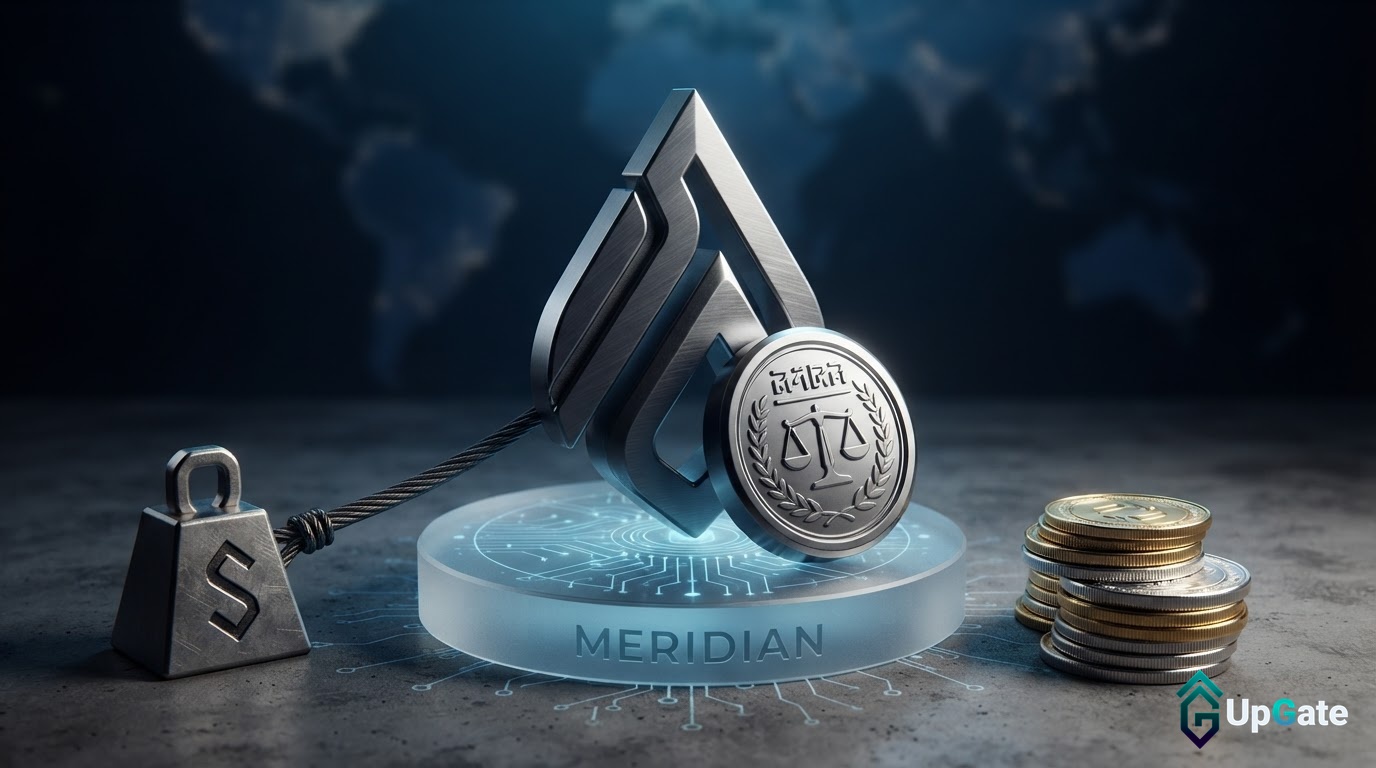
    Injective’s Meridian Mainnet Upgrade proposal has received approval from approximately 99% of INJ stakers, paving the way for the introduction of regulated token standards on its EVM layer. The upgrade, scheduled to go live on September 24, 2026, at block height 184,394,000, aims to facilitate the compliant issuance of real-world assets (RWAs) and enhance institutional adoption.

    The Meridian Mainnet Upgrade (IIP-701) introduces features designed to allow token issuers to integrate regulatory requirements directly into their assets on the Injective EVM. This move is intended to position Injective as a platform where institutions can balance blockchain efficiency with regulatory compliance. The upgrade also unifies MultiVM markets, enabling seamless trading and settlement for tokenized assets across different virtual machine environments. Furthermore, Meridian initiates early testing of private Request-for-Quote (RFQ) transaction flows, which are considered foundational elements for Injective’s planned privacy platform, CypherOS.

    Beyond these features, the upgrade incorporates improvements to market execution mechanics, risk controls, and oracle reliability. This development follows Injective Institutional Services receiving SEC transfer agent registration, effective August 19, 2026. The Injective Mint tool was launched in July 2026, providing the necessary tooling for token creation, followed by the SEC registration in August. The Meridian upgrade delivers the on-chain compliance infrastructure to connect these elements.

    This strategic sequencing of developments highlights Injective’s focus on building a compliant ecosystem for institutional activity. By making compliance a protocol-level feature rather than an application-level add-on, regulatory requirements are automatically inherited by all applications built on Injective. This approach aims to simplify the process for issuers, eliminating the need for custom compliance solutions for each deployment.

    The high staker support for the Meridian upgrade is not unprecedented for Injective, as the prior Vulcan upgrade also received over 99% staker support. The voting window for the Meridian upgrade closed on September 22, 2026, with the deployment set for two days later, indicating a rapid turnaround.

    The Meridian upgrade positions INJ as a potential settlement asset for institutional RWA trading activity. As tokenized securities are issued, traded, and settled on Injective, the demand for the native token to cover transaction fees and participate in governance is expected to increase. The upgrade is scheduled to go live on September 24, 2026.

    Why This Matters

    The materials describe a narrow update: The Meridian Mainnet Upgrade (IIP-701) was approved by approximately 99% of INJ stakers. The Meridian upgrade is Injective’s biggest institutional play yet.

    Broader Context

    Source materials place the factual news in this context: Injective’s governance process delivered a near-unanimous result.

  • XRP Surges: Stripe AI Integration Fuels Ripple Rally

    XRP Surges: Stripe AI Integration Fuels Ripple Rally

    XRP Surges as Stripe Integration Fuels AI Payment Potential

    XRP is experiencing a significant uptick, reaching levels not seen since August. The digital asset surpassed $1.38 on CoinGecko, marking a 2% gain over the past week. This surge follows Ripple’s integration of XRP with Stripe’s payment tools, announced on September 17. Despite this recent momentum, the token remains 54% below its 2021 peak.

    Trading Volume Spikes Amidst Key Support Test

    In the last 24 hours, XRP has seen a slight dip of 3%, falling below the crucial $1.40 support level. However, trading volume has surged to $2.8 billion, signaling robust investor interest in the token.

    AI-Driven Demand Emerges with Machine Payments Protocol

    Fresh enthusiasm surrounds Ripple’s project following news of its XRPL’s connection to the Machine Payments Protocol. This integration enables AI agents to conduct transactions for data and services using XRP and RLUSD.

    XRPL Starter Kit Update Enhances Interoperability

    Ripple released version 1.1 of its XRPL Starter Kit on September 17. This update integrates XRP with the Machine Payments Protocol, developed by Stripe and Tempo. The new version introduces two key components: Machine Payments Protocol support and the Open Wallet Standard. The latter allows software to manage wallets across multiple blockchains through a single interface.

    The standard request-price-authorize-deliver flow now supports one-time payments using XRP and XRPL-issued assets like RLUSD. This development allows programs to pay for data and services in XRP autonomously, a novel demand mechanism that has emerged recently. Given Stripe’s substantial annual transaction volume, even a small fraction flowing through XRP could significantly impact the token’s dynamics. XRP also received a notable designation in March when the CFTC classified it as one of 18 digital commodities.

    Technical Outlook Suggests Potential for Further Gains

    XRP is currently trading at $1.38 as of September 20, having recovered from a weekly low of $1.29. The token is now testing its 50-day moving average, situated near $1.45. A sustained close above this level could pave the way for a move towards $1.55, the August high.

    Analysts at crypto.news project a bullish scenario for XRP, with a potential year-end price target of $3.00. The recent partnership with Stripe introduces a significant new use case that was not present just a week ago. XRP continues to trade 54% below its all-time high established in 2021.

    A decisive break above $1.55 would represent the first higher high since May and could rapidly reignite trading volume. Furthermore, exchange-traded fund (ETF) flows remain positive, with the current week showing an inflow of approximately $9 million.

    The latest XRP news underscores the strategic Ripple-Stripe collaboration, indicating substantial investment activity within the cryptocurrency space. Such developments tend to benefit digital assets with tangible operational tools. A sustained upward movement above $1.55 would mark a significant technical milestone, potentially attracting increased trading volume.

  • Coinbase, Robinhood Could Benefit from SEC Innovation Exemption, Goldman Sachs Analysts Say

    Coinbase, Robinhood Could Benefit from SEC Innovation Exemption, Goldman Sachs Analysts Say

    SEC Grants Crypto Platforms Regulatory Breathing Room with New “Innovation Exemption”

    The U.S. Securities and Exchange Commission (SEC) has provided crypto-native trading platforms with a significant regulatory concession, a move that Goldman Sachs analysts believe will primarily benefit Coinbase and Robinhood. The agency’s new “Innovation Exemption” establishes a five-year framework allowing firms to experiment with on-chain stock trading without the burdensome process of registering as traditional exchanges.

    A New Category for Tokenized Securities

    The exemption introduces a novel classification: Tokenized Securities Venues (TSVs). These entities will be permitted to utilize permissioned automated market makers and liquidity pools to facilitate the trading of tokenized National Market System stocks.

    Conditional Relief and Key Requirements

    Set to take effect on September 17, 2026, and expiring five years later, the Innovation Exemption offers conditional regulatory relief. Rather than mandating that every venue trading tokenized equities register as a full-fledged exchange, the SEC is allowing TSVs to operate under a more streamlined framework.

    A crucial stipulation of the exemption is that tokenized stocks traded under this provision must confer full shareholder rights, including dividends and voting power. Synthetic products that only offer derivative price exposure without actual ownership will not qualify.

    Coinbase and Robinhood Positioned for Impact

    Goldman Sachs analysts have identified Coinbase as a primary beneficiary, noting that its existing tokenized equity offerings already align with the exemption’s requirements concerning shareholder rights and dividends.

    Robinhood’s situation presents a more complex scenario. The company currently provides offshore stock products that grant derivative price exposure but lack full ownership rights – precisely the type of product excluded by the SEC’s new framework. To leverage the exemption, Robinhood will need to significantly retool these offerings to comply with U.S. regulations.

    The market reacted swiftly to the announcement, with Coinbase shares climbing approximately 5-11% and Robinhood jumping about 9.6%.

    Stablecoins and Infrastructure Poised for Growth

    The Goldman Sachs analysis also highlighted Circle as a potential beneficiary. The rationale is straightforward: the infrastructure for tokenized stock trading necessitates a settlement mechanism, and stablecoins are the most logical medium for on-chain transactions. Coinbase’s established partnership with Circle for USDC positions both firms to capitalize on the increased utility of stablecoins in tokenized equity trading.

    Acknowledging Evolving Markets

    By creating a controlled environment for experimentation, the SEC is implicitly acknowledging that the current regulatory landscape does not adequately accommodate tokenized trading. The agency has also solicited public feedback for future rulemaking, suggesting that this exemption could serve as a foundation for permanent regulations.

    While Robinhood possesses the retail distribution and brand recognition to potentially lead in tokenized stock trading, the necessity of transitioning from synthetic offshore products to full-ownership tokenized equities represents a substantial product overhaul.

  • XRP and SOL ETFs Extend Positive Inflow Streaks Amidst Market Volatility

    XRP and SOL ETFs Extend Positive Inflow Streaks Amidst Market Volatility

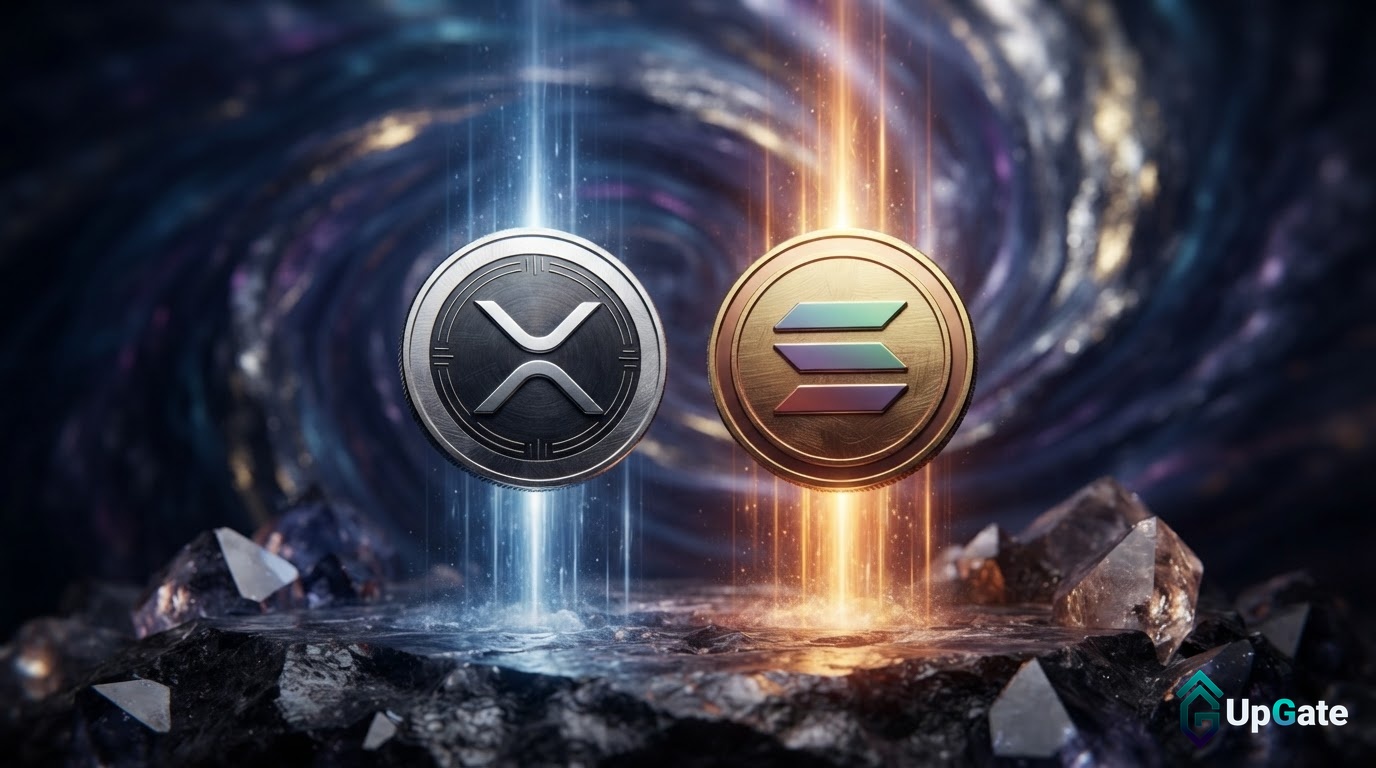
    Investor confidence in spot XRP and Solana (SOL) Exchange Traded Funds (ETFs) remains robust, as both asset classes have continued their streaks of positive net inflows over the past week, despite market volatility and significant legislative and monetary policy events. XRP ETFs have now maintained positive inflows for 10 consecutive weeks, while SOL ETFs have achieved a notable 12-week streak.

    XRP ETF Performance: Resilience Through Volatility
    The previous week saw XRP ETFs attract a total of $9.56 million in net inflows. This performance extended their positive run, with the last instance of weekly net outflows occurring in the first full week of July. Despite a notable event on Tuesday, the day the CLARITY Act failed to pass the Senate, XRP ETFs recorded $0.00 in reportable net inflows, according to SoSoValue. This occurred even as the underlying asset experienced a price drop of over 8%. On Wednesday, the day the Federal Reserve announced a rate hike, XRP ETFs attracted $3.50 million. The week concluded with net withdrawals on Thursday ($5.15 million) and Friday ($43,700).

    During Wednesday, the cumulative total net inflows for XRP ETFs reached an all-time high of $1.720 billion, though this figure slightly decreased to $1.710 billion by Thursday. The overall weekly inflow of $9.56 million underscores a sustained investor interest.

    SOL ETF Performance: Extended Positive Momentum
    Similarly, spot SOL ETFs demonstrated strong performance, accumulating $13.19 million in net inflows for the week. This marks the twelfth consecutive week of positive inflows for SOL ETFs, with their last weekly net outflow occurring in late June. The week began with strong inflows for SOL ETFs, attracting just over $11 million on Monday and an additional $1.35 million on Tuesday. Inflows moderated to under $840,000 on Wednesday and recorded $0.00 on Thursday. Data for Friday’s net inflows for SOL ETFs was not available, and it is assumed to be $0.00. Given this information, it is considered highly unlikely that investors withdrew over $13.19 million on Friday alone, which would be necessary to break the streak.

    In related market activity, the underlying asset for SOL experienced a significant rally, reaching a multi-month peak of around $115 during the Friday/Saturday period. However, by Sunday afternoon, it saw a rejection and fell below $110.

    Market Context and Investor Sentiment
    The consistent inflows into both XRP and SOL ETFs, particularly in the face of legislative uncertainty surrounding the CLARITY Act and the Federal Reserve’s monetary policy adjustments, may suggest a persistent investor confidence in these digital assets as investment vehicles. The extended positive performance streaks for both ETFs highlight a steady demand, with SOL ETFs showing a longer duration of sustained investor interest.

    Why This Matters

    The materials describe a narrow update: Spot XRP ETFs attracted $11. The exact net inflows/outflows for SOL ETFs on Friday are not available, assumed to be $0.00.

  • Bitcoin Price: When Will BTC Reach $100K?

    Bitcoin Price: When Will BTC Reach $100K?

    Bitcoin is currently trading at $80,441.66, marking a 1.2% increase for the day and a 4.6% gain over the past week. This upward movement follows a significant breach of its 50-week moving average, a technical level that has historically signaled the end of bear markets and the beginning of new trends.

    The Significance of the 50-Week Moving Average

    According to a chart analyst closely monitoring Bitcoin’s technical structure, simply surpassing the 50-week moving average is not the sole determinant of future price action. The crucial factor, the analyst explained, is Bitcoin’s ability to sustain its position above this threshold for several consecutive weeks. Current momentum indicators suggest an upward trajectory, potentially heralding a more substantial rally, though the analyst cautioned that such outcomes are not guaranteed.

    Three Potential Trajectories

    The analyst has outlined three distinct scenarios for investors to consider moving forward.

    The first, and currently the most probable, scenario involves Bitcoin completing one more upward surge to form a clear five-wave upward pattern. This would then be followed by a smaller, three-wave corrective pullback. Such a development would serve as a robust indicator that Bitcoin is indeed in a sustained uptrend, rather than merely experiencing a temporary bounce. This could pave the way for a potential ascent towards $120,000 or even higher. A similar, albeit smaller, pattern was observed in July and August of last year, preceding a subsequent rally.

    The second scenario posits a more significant pullback, potentially reaching the $39,000 to $44,000 range, should the current upward momentum falter after hitting a peak. However, the analyst emphasized that this would not necessarily signal a catastrophic downturn. Given that Bitcoin’s broader, multi-year trend remains bullish, such a substantial dip would likely be interpreted as a buying opportunity rather than a cause for alarm.

    The third scenario looks further into the future. If Bitcoin achieves new all-time highs, it could eventually experience a sharp corrective decline, mirroring the inverse of the current pattern. The analyst warned that in such an event, market sentiment could become excessively bullish just before the reversal occurs, much like the widespread bearish sentiment that preceded the recent rally.

    Key Levels to Monitor This Week

    Immediate support for Bitcoin is identified between $78,888 and $80,359. Holding this zone is considered vital for the continuation of the short-term uptrend. On the resistance side, $83,000 stands as a key level. The invalidation point for the more bearish alternative scenario is situated near $82,813.

    The analyst highlighted the importance of this weekend’s weekly closing price. A close above the 50-week moving average, in contrast to recent weeks where Bitcoin has closed below it, would be a bullish signal. This would increase the likelihood of Bitcoin gradually moving higher towards the aforementioned upper price targets.