Tag: Positive

  • Ethereum Price Outlook: Glamsterdam Upgrade Impact

    Ethereum Price Outlook: Glamsterdam Upgrade Impact

    Ethereum’s price is hovering just below the $2,500 resistance level, as attention and predictions increasingly focus on the network’s upcoming major overhaul. The more significant narrative isn’t the daily price action, but rather what’s on the horizon for October and whether the market has already factored it into current valuations.

    Developers this week successfully completed a crucial rehearsal for the Glamsterdam upgrade. Test blocks are continuing to finalize under new block-building rules, with a proposed deployment date of October 6 on the Sepolia public testnet.

    Glamsterdam Upgrade Progress

    Nethermind’s client processed 570.7 billion gas across 2,302 tests in three minutes and 15 seconds, averaging 2.9 billion gas per second. This process involved validating block-level access lists, which enable nodes to pre-fetch data rather than processing it sequentially. Following the testnet’s activation, its gas limit was increased from 60 million to 200 million, representing a nearly 3.3-fold enhancement in per-block capacity.

    This is more than a superficial adjustment. Higher gas ceilings are expected to mitigate fee spikes during periods of high demand, such as token launches or cascading DeFi liquidations, provided that node operators can manage the increased block sizes. The market’s response thus far has been characterized by cautious optimism rather than outright euphoria, creating an intriguing technical landscape worth examining.

    Technical Analysis and Market Sentiment

    Ether’s current trading price of $2,495 places it within a consolidation range that has persisted since early September. Recent daily closing prices have fluctuated between $2,446 and $2,488. Trading volume has been unremarkable, showing no signs of capitulation or excessive buying, but rather a steady accumulation.

    Daily moving averages remain bullishly aligned (20-day above 50-day, both above 200-day), technically favoring a continuation of the upward trend. However, the price has struggled to decisively break above the $2,493–$2,508 resistance zone on a closing basis.

    Holders are looking for a clear break above $2,508, which could pave the way for a move to $2,550, and subsequently to the $2,723–$2,822 supply zone, potentially validating the broader $2,800 target that analysts have suggested. Persistent sideways trading between $2,440 and $2,508 is possible while the market awaits concrete mainnet dates for Glamsterdam.

    Conversely, a decline below the $2,378–$2,403 support band would undermine the near-term technical structure and could lead to a drop towards $2,300.

    Outlook and Investment Considerations

    Maintaining an ETH position through this consolidation period is not unreasonable. The fundamental case for Glamsterdam is robust, and a 3.3x increase in the gas limit represents a significant capacity enhancement that is likely to have a material impact over quarters, rather than days. However, it’s important to acknowledge the realities of Ethereum’s current scale: even a successful upgrade cycle is likely to result in percentage gains in the double digits, rather than the exponential returns that can dramatically reshape portfolios.

    This ceiling on potential gains is precisely why traders with a higher risk tolerance often explore earlier-stage infrastructure projects.

    Emerging Infrastructure Plays

    LiquidChain ($LIQUID) is a Layer 3 infrastructure project designed to integrate liquidity from Bitcoin, Ethereum, and Solana into a single execution environment. Its “deploy-once” architecture allows developers to build on a single layer and access all three ecosystems without the complexities of bridging.

    The project’s presale is priced at $0.014956, with approximately $960,000 raised to date. Its Unified Liquidity Layer and Single-Step Execution model aim to address the fragmentation issues that have hindered cross-chain DeFi adoption for years.
  • Binance Sees 4,618 BTC Inflow on September 15

    Binance Sees 4,618 BTC Inflow on September 15

    Significant Bitcoin Inflow to Binance Coincides with Price Dip

    On September 15, a substantial amount of Bitcoin, nearly 4,618 BTC, was transferred into the Binance exchange. This single-day net inflow marked the largest recorded within the observed period, according to on-chain data analytics firm CryptoQuant. The influx occurred on a day when Bitcoin’s price reached a session low of $75,640.

    The net inflow to Binance significantly overshadowed activity across other exchanges. During the same week, the aggregate netflow across all platforms averaged a modest +877 BTC daily.

    Complementing this trend, stablecoin transaction activity also indicated heightened engagement on Binance. For the week concluding September 16, Binance recorded an average of 48,230 daily stablecoin deposit transactions, a figure representing a 190% increase compared to the quarterly baseline.

    Bitcoin’s price saw a subsequent rise, climbing to $76,152 on September 16.

    Meanwhile, net realized profit and loss figures plummeted to $31.8 million, an 89% week-over-week decline. A sharp drop in realized profits typically suggests that coins being moved to exchanges are not being sold at a profit.

    This period of market activity unfolded against a backdrop of anticipated policy decisions from the Federal Reserve, which had been a significant factor influencing market sentiment.

    In an interesting divergence, Bitcoin Exchange-Traded Fund (ETF) flows on September 15 actually showed outflows. This meant that institutional investment vehicles were experiencing redemptions at the same time Binance was processing its largest Bitcoin inflow.

    The $75,640 price point on September 15 represented the lowest Bitcoin traded during that session. The coincidence of Binance’s largest inflow with the day’s lowest price suggests opportunistic accumulation by investors rather than panic-driven deposits onto the exchange.

  • Crypto Market Pulse: ETH, XRP, ADA, BNB, HYPE Analysis

    Crypto Market Pulse: ETH, XRP, ADA, BNB, HYPE Analysis

    Ethereum (ETH)

    Ethereum saw a 2% increase this week as buyers successfully defended support at the $2,400 level. As long as this critical threshold holds, the cryptocurrency has a strong probability of reaching new higher highs in the short term. Sellers had previously re-emerged at $2,500, triggering a pullback that appears to be nearing its end. A subsequent test of the $2,500 resistance could lead to a breakout and a renewed rally, provided that trading volume supports the upward movement. Ethereum remains in an uptrend, characterized by consistent higher lows, which favors bullish sentiment. A decisive break above $2,500 would be a significant development, potentially paving the way for a climb to $2,800 before encountering further seller activity.

    Ripple (XRP)

    XRP also finished the week in positive territory, albeit with a modest 1% gain. This upward movement allowed buyers to reclaim the $1.3 support level, which had been briefly breached. This recovery is viewed as a positive indicator and could fuel further gains in the near future. The recent correction was somewhat anticipated, given that XRP had surged to $1.6 in under a week. Establishing a strong base around $1.3 is crucial for XRP to challenge the $1.6 resistance. Looking ahead, XRP is exhibiting a clear bullish pattern with higher highs and lows. A break above the current resistance could see $2 emerge as the next significant target, likely attracting considerable buyer interest.

    Cardano (ADA)

    Cardano experienced a robust week, rallying 8% and reversing recent losses. The cryptocurrency is now on the offensive, with the $0.23 resistance level serving as its primary near-term objective. A successful breach of $0.23 on renewed buying pressure could propel ADA towards the $0.30 mark. The current support is situated just below $0.20 and held firm during recent tests, attracting new buyers who are currently dominating the price action. The key question remains whether sellers will re-enter the market at $0.23. For ADA to confirm a bottom below $0.15 and facilitate a rapid ascent towards $0.30 and beyond, buyers will need to demonstrate increased trading volume.

    Binance Coin (BNB)

    Binance Coin closed the week 4% higher after buyers re-established support at $690. This development has restored confidence in BNB’s price trajectory, with the cryptocurrency now aiming to achieve a new higher high and potentially target $900. The price action suggests that the dip below $580 in July was a bearish trap and a local low, as BNB has been on an upward trend since then, despite normal pullbacks. It is anticipated that BNB will continue its rally and revisit price levels seen in early 2026, around $900. This area is expected to witness significant activity from both buyers and sellers, with the outcome determining BNB’s year-end performance.

    Hyperliquid (HYPE)

    Hyperliquid concluded its correction this week with an impressive 11% surge, making it the top performer among the analyzed cryptocurrencies. While the price did not reach a new all-time high, it is nearing that milestone and could soon surpass $90 if the current momentum is sustained. The hope is that buyers will solidify $85 as a key support level, enabling further price expansion and eventually targeting the psychologically significant $100 mark. Hyperliquid’s rally has a good chance of continuing, but it is likely to encounter resistance as it approaches a three-digit valuation, where sellers may emerge to take profits.

  • Solana Mainnet Reduces Slot Time to 250ms, Increasing Block Production Speed by 17%

    Solana Mainnet Reduces Slot Time to 250ms, Increasing Block Production Speed by 17%

    Solana’s mainnet has officially reduced its slot time from 300 milliseconds to 250 milliseconds, a technical adjustment implemented on September 18th that increases block production speed by approximately 17%. This change boosts the network’s block production rate to around 4 blocks per second, up from the previous ~3.3 blocks per second. Importantly, the amount of computation and data allowed per slot has been proportionally reduced, ensuring that the overall transaction throughput capacity of the network remains unchanged.

    This marks the third phase of Solana’s ongoing efforts to shorten slot times. The previous 300ms slot time has been a consistent feature, and this reduction to 250ms is a direct technical evolution. Each leader’s consecutive leadership period has been adjusted to 1 second (comprising four slots), down from 1.2 seconds. Consequently, an epoch, which consists of a fixed number of slots (432,000), now takes approximately 30 hours to complete, compared to the previous duration of 36 hours.

    The primary impact of this faster block production is a reduction in the time it takes for transactions to be reported and for price information to be updated across the network. This can directly benefit decentralized exchange (DEX) and oracle applications, which rely on timely data. For users of wallets, exchanges, and trading applications, obtaining the latest on-chain data more rapidly can narrow the price slippage window during swap transactions, potentially reducing losses from failed trades and slippage.

    Furthermore, the faster handover of transaction ordering rights among validators may have positive implications for decentralization and censorship resistance by reducing the control time of any single validator over transaction order. However, the reduced slot time also introduces considerations for certain users. Enterprises or individuals with high-security requirements that involve manually intervened transactions, such as offline signing or delayed approvals, may need to adjust their processes due to shorter operational windows. The effective validity period of blockhashes in the current real-time clock has shortened, which could necessitate redesigns for systems with strict timing dependencies.

    The Solana development team has previously indicated plans to further reduce slot time to 200 milliseconds, though a specific mainnet launch date for this next phase has not yet been announced. The success of the current 250ms implementation hinges on real-world performance, particularly the block-skip rate. If the network operates stably with an acceptable skip rate, it may represent a significant achievement in the public chain performance competition. Conversely, if the skip rate becomes unmanageable, the timeline for future reductions may be extended or existing parameters may require re-evaluation. While the network’s overall transaction capacity has been maintained, the increased block production speed is a notable technical upgrade, with its long-term implications for network stability, decentralization, and user experience for decentralized applications becoming clearer as the 250ms slot time operates under various network conditions.

    Broader Context

    Source materials place the factual news in this context: Solana is transitioning from a ‘Memecoin haven’ to a ‘Wall Street favorite’.

  • JPMorgan: Bitcoin May Outshine Gold

    JPMorgan: Bitcoin May Outshine Gold

    Bitcoin is trading near $77,700, a 1.6% increase on the day, as fresh commentary from JPMorgan has reignited debate over whether the cryptocurrency can finally outperform gold. Analysts at the bank believe they have identified a crucial signal in positioning data that many are overlooking, and it could prove more significant than this week’s price movements.

    JPMorgan analysts, led by Nikolaos Panigirtzoglou, argue that Bitcoin investors remain significantly more hedged against downside risk compared to their counterparts invested in gold ETFs. This holds true even as both assets have seen renewed inflows since the Federal Reserve’s July meeting, which revived interest in assets seen as a hedge against currency debasement.

    Gold ETFs have already recouped all of their outflows from 2026, while Bitcoin ETFs have recovered only about half. On the surface, this suggests gold is currently outperforming. However, JPMorgan’s interpretation is different: they posit that if investors unwind their excess Bitcoin hedges, the cryptocurrency has more structural room for growth than current flow data indicates.

    This thesis emerges during a week where Bitcoin has been consolidating within a narrow range, leaving traders to question whether this represents accumulation before a breakout or exhaustion before a decline. Recent price analysis suggests the next move will be a contest between buyers defending support levels and sellers capping any attempts at a rebound.

    Bitcoin has been trading between $76,200 and $77,900 over the past 24 hours. The daily gain of 1.6% has done little to break the broader sideways trend that has characterized recent trading sessions. While trading volume remains elevated, it has not yet led to a decisive breakout in either direction, indicating the market is awaiting a catalyst.

    Key resistance levels are situated at $77.8K directly overhead, with a more significant ceiling at $79K–$80K. Support is layered at $75.2K, with further levels at $72K and $68K should sentiment turn negative.

    The bullish scenario unfolds if Bitcoin can cleanly reclaim $77.8K, potentially triggering a run towards $80K, particularly if JPMorgan’s hedge-unwind thesis gains traction among institutional investors. The base case anticipates continued trading within the $75K–$78K band as the market digests Federal Reserve policy statements.

    However, a drop below $75.2K would negate near-term strength and bring $72K back into play. Macroeconomic conditions, including Fed policy and Treasury yields, are expected to remain the primary drivers influencing price action in either direction.

    A 1.6% daily increase is noteworthy if an investor already holds a position. For those observing from the sidelines, aggressively buying Bitcoin as it approaches resistance near $77.8K, especially with JPMorgan’s thesis still unconfirmed as an active market driver, represents a speculative trade. The potential upside for an asset with a market capitalization exceeding $1.5 trillion moves more slowly compared to emerging infrastructure projects, which are currently attracting investor attention.

    Bitcoin Hyper ($HYPER) is positioning itself as the first Bitcoin Layer 2 solution with full Solana Virtual Machine (SVM) integration. It offers smart contract execution designed for speed that surpasses Solana itself, while leveraging Bitcoin’s base-layer security for final settlement.

    Bitcoin Hyper aims to enhance network visibility. Improved observability will assist the team in tracking performance, understanding transaction flows, identifying issues proactively, and refining the ecosystem as it expands.

    The project’s presale has raised $33.1 million to date, with the current token price at $0.0136864. Staking rewards are available at launch with an annual percentage yield (APY) of 35%.

    The core proposition is to address Bitcoin’s limitations of slow transactions, high fees, and lack of programmability without compromising the trust inherent in the Bitcoin network. A Decentralized Canonical Bridge is designed to handle Bitcoin transfers natively.

  • Zcash NU7 Upgrade Confirmed for November Launch, Boosting Block Speed 3x

    Zcash NU7 Upgrade Confirmed for November Launch, Boosting Block Speed 3x

    Zcash Confirms NU7 Upgrade for November 5th Mainnet Launch, Halving Mechanism Intact

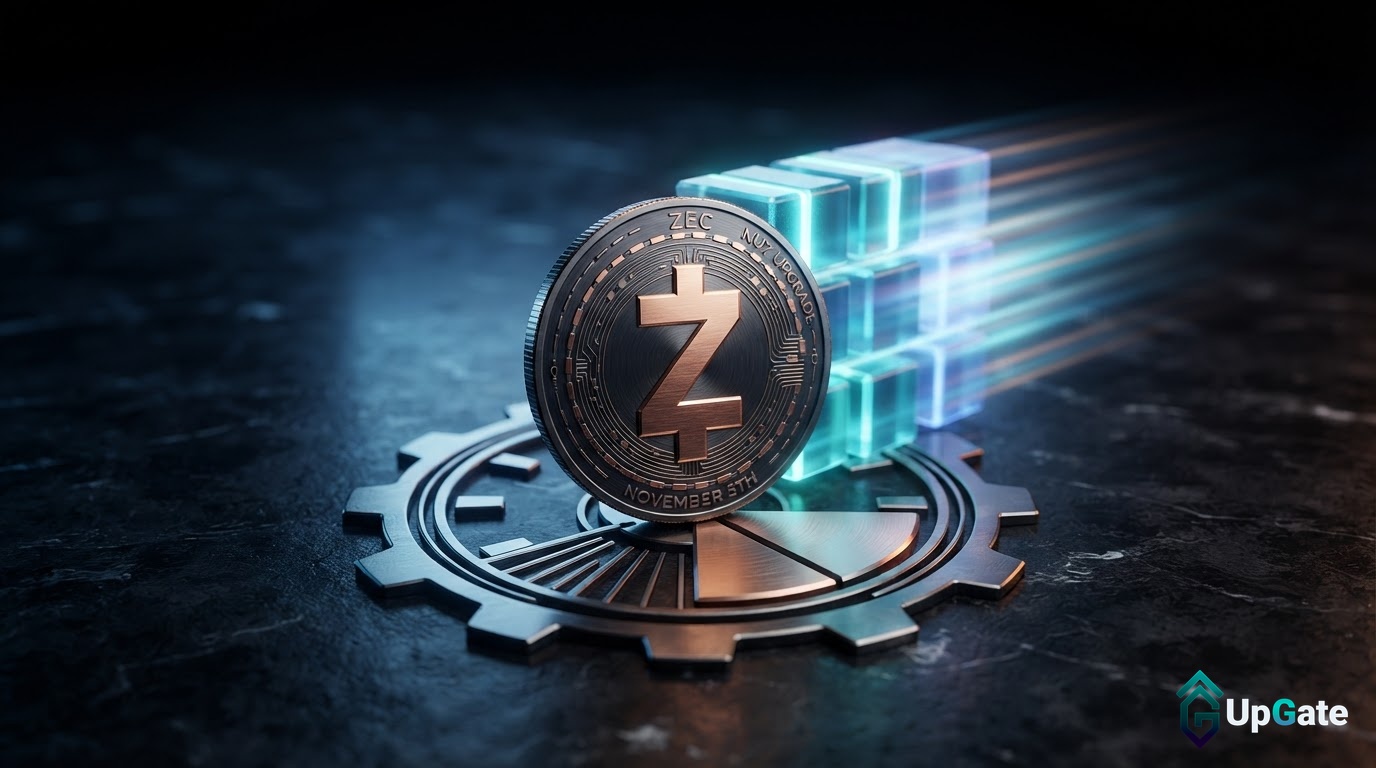
    The Zcash development team has finalized the schedule for the NU7 upgrade, targeting November 5th for its mainnet launch. The upgrade will significantly reduce block times from 75 seconds to 25 seconds, effectively tripling block production speed, while retaining the cryptocurrency’s halving mechanism. This news has spurred a notable surge in ZEC’s price, with the token climbing 20% in a single day and outperforming the broader privacy coin sector.

    NU7 Upgrade Details and Timeline

    The NU7 upgrade is slated to go live on the Zcash mainnet on November 5th. Developers have reached a consensus on the timeline, with the testnet scheduled to launch earlier on October 6th. A final decision on the mainnet launch block height will be made on October 20th, contingent on the testnet’s performance.

    A core change in NU7 is the compression of Zcash’s block interval from 75 seconds to 25 seconds. Alongside this speed enhancement, the upgrade will also disable the version 4 transaction format and integrate the “Network Sustainability Mechanism” (NSM).

    Network Sustainability Mechanism and Halving

    The configuration of the NSM has been the most contentious and critical aspect of NU7. A recent vote among ZEC holders overwhelmingly supported retaining the halving mechanism, with 98.9% in favor. Additionally, 99.9% of weighted votes approved the faster block production proposal. The adopted NSM version preserves Zcash’s existing halving schedule, with the previously removed miner subsidy set to be reintroduced starting February 2031.

    This design effectively defers short-term inflationary pressure over a five-year period, signaling a clear control on dilution for ZEC holders. The retention of the halving mechanism means the reward for miners will continue to be cut in half approximately every four years, aligning Zcash with Bitcoin’s scarcity narrative.

    Impact on Ecosystem and ZEC Price Action

    Sean Bowe, a developer, emphasized that NU7 will not introduce new transaction formats, minimizing potential disruption for wallet users. However, full nodes, indexers, and block explorers will require adjustments to accommodate the new 25-second block cadence. These ecosystem development teams are expected to manage these changes within the two-month window between October and November.

    Following the confirmation of the upgrade timeline, ZEC’s price experienced a significant uplift. The cryptocurrency saw a roughly 20% increase in the 24 hours leading up to Thursday, with the privacy token sector generally outperforming the market. Data from Glassnode indicates that the privacy coin sector is currently at 213% of its October 2025 peak, while a basket of privacy coins excluding ZEC has seen an approximate 85% gain over the past year. ZEC’s recent performance demonstrates a clear strength relative to its peers.

    The threefold increase in block production speed through NU7 directly enhances Zcash’s transaction throughput capacity, offering substantial benefits for privacy-focused payment use cases. However, the faster 25-second block times also introduce pressure on node synchronization and confirmation times, making the performance of the October testnet a key point of observation. Another factor to monitor will be whether Zcash’s recent price surge is intrinsically linked to the NU7 narrative. If the upgrade does not translate into corresponding ecosystem adoption, the short-term gains may revert to fundamental market drivers.

  • XRP Flashes Bullish Signal: A Prime Buying Opportunity?

    XRP Flashes Bullish Signal: A Prime Buying Opportunity?

    Ripple’s cross-border token, XRP, experienced a significant surge in late August, reaching a high of $1.70. However, the market has since shifted, with bears taking control and driving the price down substantially.

    The failure of the CLARITY Act further impacted XRP’s standing, pushing its value down to approximately $1.26. While it has since recovered some ground and is currently trading around $1.30, the token remains down about 6% on a weekly basis. Despite this recent weakness, one prominent analyst believes the current situation presents an attractive buying opportunity.

    A Historically Oversold Indicator

    X user Cryptollica highlighted that XRP’s two-week Relative Strength Index (RSI) has fallen to around 33.5. This marks the lowest point in its history, surpassing levels seen during the 2018 bull run, the 2020 COVID-19 pandemic, and the 2022 bear market.

    “That is the part the market is misreading,” Cryptollica stated. “Sentiment has been destroyed, momentum has been washed out to a historical extreme, and the asset is being treated as if the story is already over. But this is exactly where asymmetry becomes interesting. The market has already delivered the pain while the long-term structure is still active.”

    Cryptollica observed that investors often seek certainty and are drawn to XRP after a breakout, showing little interest when the chart appears “broken.”

    Bullish Implications of Oversold Conditions

    A drop to such low RSI levels is often interpreted as a bullish signal. It suggests that XRP has entered an unprecedented oversold territory, which could precede a strong recovery.

    Institutional Demand Remains Strong

    Another positive indicator is the sustained institutional appetite for XRP. Last week, spot XRP Exchange-Traded Funds (ETFs) reached a new all-time high in cumulative total net inflows, surpassing $1.7 billion. Despite volatile price action, these investment vehicles continue to attract capital, with September 2nd being the only day with outflows in the past month and a half.

    Analyst Predictions Point to Upside

    XRP began the current business week positively, trading above $1.40. Analyst Ali Martinez noted this resurgence, forecasting that a sustained close above $1.38 could confirm a bullish trend and pave the way for a rally towards $1.60. While the price briefly climbed to nearly $1.50, it subsequently declined and did not reach the analyst’s target.

    Other analysts have also shared optimistic outlooks. STEPH IS CRYPTO identified a “cup and handle” pattern on XRP’s price chart, projecting a potential jump to $2.50. Meanwhile, Crypto Bitlord expressed 99% certainty of a push towards $2 in the near future.

  • Zcash NU7 Upgrade Set for November 5th: Faster Blocks, Preserved Halving Schedule

    Zcash NU7 Upgrade Set for November 5th: Faster Blocks, Preserved Halving Schedule

    Zcash is gearing up for its NU7 mainnet upgrade, scheduled for November 5th, which aims to significantly reduce block processing times to 25 seconds while integrating a mechanism to preserve its future halving schedule. The upgrade follows a planned testnet launch on October 6th.

    The NU7 upgrade will decrease Zcash’s target block spacing from the current 75 seconds to 25 seconds. This adjustment includes the disabling of version 4 transactions and the implementation of the Network Sustainability Mechanism (NSM). According to Zcash developer Sean Bowe, the NSM is configured to maintain Zcash’s halving schedule, with a provision for reintroducing previously removed supply beginning in February 2031.

    Community support for the upgrade is robust, as evidenced by recent voting results. ZEC holders overwhelmingly backed the proposed changes, with approximately 98.9% supporting the preservation of the halving schedule and 99.9% of the Zcash (ZEC)-weighted vote in favor of the faster-block proposal. A definitive decision on the mainnet upgrade and its activation height is slated for October 20th, pending an evaluation of NU7’s performance on the testnet.

    Sean Bowe noted that NU7 is not expected to introduce new transaction formats and should have minimal impact on user wallets. However, he cautioned that full nodes, indexers, and block explorers may require adjustments to accommodate the upcoming changes. The precise activation height for the mainnet upgrade remains contingent on the testnet performance assessment.

    This upgrade arrives amid a notable increase in ZEC’s market activity. On Thursday, ZEC experienced a price rise of approximately 20% within a 24-hour period. This trend is part of a broader outperformance in the privacy coins sector, which, according to Glassnode data, was 213% above its level at Bitcoin’s October 2025 peak. A basket of privacy coins excluding ZEC has seen an 85% increase over the past year.

    The NU7 upgrade signifies a substantial technical and economic evolution for Zcash. Its successful implementation will depend on a smooth deployment and the long-term efficacy of the NSM in managing the network’s economic model, all underpinned by strong community backing.

    Why This Matters

    The materials describe a narrow update: Zcash developers are targeting November 5th for the NU7 mainnet upgrade, which will reduce block times from 75 seconds to 25 seconds, disable version 4 transactions, integrate the Network Sustainability Mechanism (NSM) to preserve the halving schedule, and reintroduce removed supply starting February 2031. Full nodes, indexers, and block explorers may require adjustments due to NU7.

    Broader Context

    Source materials place the factual news in this context: NU7 will cut Zcash block times to 25 seconds and preserve its halving schedule, with testnet activation planned for Oct. 6.

  • SEC’s 5-Year ‘Innovation Exemption’ for Tokenized Stock Trading: A Controlled Experiment

    SEC’s 5-Year ‘Innovation Exemption’ for Tokenized Stock Trading: A Controlled Experiment

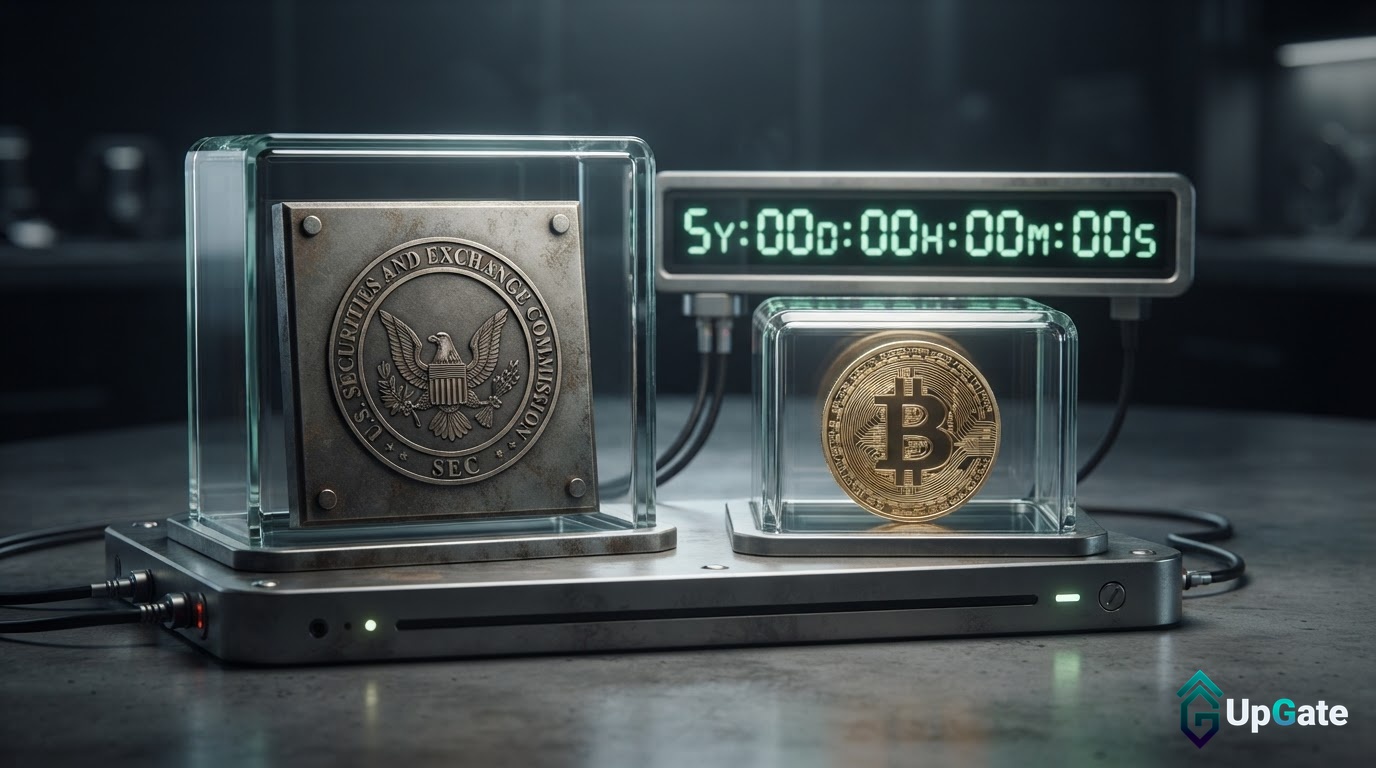
    The U.S. Securities and Exchange Commission (SEC) has introduced a five-year ‘innovation exemption,’ permitting select platforms to trade tokenized U.S. stocks on public blockchains under strict conditions. This move represents a controlled experiment in integrating digital assets with traditional market infrastructure, allowing eligible platforms, termed Tokenized Securities Venues (TSV), to operate without immediate registration as a national securities exchange.

    The exemption, effective Thursday, allows TSVs to utilize smart contracts and liquidity pools for trading eligible tokenized U.S. stocks. However, this operates within defined limitations. For highly liquid stocks, a TSV can tokenize up to 75 different stocks, with a trading volume cap of 0.25% of the average daily trading volume for the underlying stock. For second-tier stocks, these limits increase to 250 stocks and 2.5% of daily trading volume, respectively. These measures are intended to keep the sandbox small, allowing for observation and measurement of its effects.

    Crucially, tokenized stocks must retain all rights associated with the underlying security, including voting rights and dividend entitlements. Synthetic products, which merely track stock prices without conferring ownership rights, are explicitly excluded from this exemption. Furthermore, if the trading of the underlying stock is halted on the primary market, the tokenized version must also halt trading. Issuers of tokenized stocks must also be notified 30 days in advance of any listing, and they retain the right to object, a mechanism described as a key safeguard.

    This exemption follows a period of regulatory exploration. In September, the SEC proposed allowing blockchains to serve as official records for securities ownership. SEC Chair Paul Atkins had previously indicated that the agency would act within its existing authority, a sentiment echoed after the CLARITY Act failed to pass a vote. The SEC’s approach appears to be testing blockchain’s potential as operational machinery for the U.S. stock market, rather than simply allowing existing securities to be wrapped in a digital format.

    The SEC is also providing conditional exemptions for market makers to register as dealers, facilitating their participation in liquidity pools. This is seen as crucial for the functioning of automated market makers (AMMs) in this new environment. The framework is designed to accelerate the development of ‘native tokenized securities’ and establish multiple on-chain liquidity venues in a controlled and regulated manner.

    Despite the potential for innovation, significant uncertainties remain. The long-term impact of this exemption on the broader U.S. stock market is yet to be determined. It is uncertain whether tokenized stocks will suggest their trading efficiency and settlement speed advantages within the five-year period, and the extent to which this may influence global asset allocation remains to be seen. Whether similar paths will be adopted by Taiwanese ETFs and local stocks is also a point of ongoing observation.

    The exemption is seen as a significant, albeit limited, step by a major regulator, potentially paving the way for broader adoption and transformation of financial market infrastructure. However, the SEC’s cautious approach, emphasizing limitations and safeguards, underscores the ongoing effort to balance innovation with investor protection.

    Why This Matters

    The SEC’s ‘innovation exemption’ allows qualified platforms to trade tokenized U.S. stocks on public blockchains for five years without registration, subject to limitations. This represents a controlled test of blockchain’s potential as part of the U.S. stock market’s infrastructure, moving beyond simple digital wrappers for existing securities. The outcome of this five-year experiment could influence global asset allocation and the future of traditional asset tokenization.

    Broader Context

    The SEC’s exemption was introduced after the CLARITY Act failed to pass a vote, indicating a regulatory path forward within existing authority. This follows a September proposal to allow blockchains to serve as official records for securities ownership, suggesting a broader SEC exploration into blockchain integration in financial markets.

  • NEAR Surges 21% on Historic Confidential Perps Launch

    NEAR Surges 21% on Historic Confidential Perps Launch

    Near Protocol Unveils Industry-First Privacy-Centric Perpetual Trading

    Near Protocol has launched what it claims is the industry’s first privacy-centric perpetuals trading platform, a move designed to bolster corporate data sovereignty and shield trading strategies from tracking. The new feature, available on near.com, operates on a “Confidential by Default” basis, obscuring all details of perpetual positions, including asset types, sizes, entry times, and trading direction.

    This development marks a significant step in the decentralized finance (DeFi) landscape, aiming to blend the privacy often found on centralized exchanges with the speed, decentralization, and non-custodial nature of blockchain technology.

    Addressing the Limitations of Transparency

    While blockchain’s inherent transparency is a cornerstone of its appeal, it can present disadvantages for large traders, institutional investors, and their automated trading systems. Near’s latest innovation seeks to mitigate these issues.

    The new perpetuals trading functionality is powered by Near’s multi-chain Confidential Intents pipeline, which recently surpassed a $70 million total value locked (TVL) milestone. This underlying technology is engineered for high-speed execution and incorporates selective disclosure mechanisms to facilitate regulatory compliance.

    Furthermore, the integration of USDC on the network enables inter-agentic payments using stablecoins. The partnership with Hyperliquid provides the execution and liquidity layer, offering users access to over 50 perpetual markets with leverage up to 40x.

    A Growing Demand for Private Transactions

    This initiative underscores a growing industry demand for private transaction capabilities on blockchain networks, while simultaneously adhering to regulatory requirements. Other projects are also exploring privacy solutions in DeFi, including Ethereum’s confidential yield vaults, optional privacy wrappers from platforms like Zama and Fhenix, and Cardano’s Midnight chain, which offers rational privacy.

    However, Near’s confidential perpetuals trading is currently restricted in the United States and Canada due to regulatory considerations.

    Market Reaction and Price Outlook

    Following these developments and a broader sector rotation into AI-linked cryptocurrency tokens, the NEAR token has seen a significant surge. It climbed 21.36% to trade at $3.21. Technical analysis suggests that if NEAR can maintain its position above $3.00, it may retest the $3.33 resistance level. Conversely, a drop below $2.80 could lead to a decline towards the $2.57 Fibonacci support.

    Meanwhile, the HYPE token has gained 10.82% to trade at $86.72. This rise comes after Payward, the parent company of Kraken, announced its intention to introduce Hyperliquid to the U.S. market.