Tag: Positive

  • CFTC Guidance Creates Regulatory Path for Non-Custodial Wallets in Derivatives Markets

    CFTC Guidance Creates Regulatory Path for Non-Custodial Wallets in Derivatives Markets

    The Commodity Futures Trading Commission (CFTC) has issued staff guidance that provides a regulatory pathway for non-custodial crypto wallets to connect users to regulated derivatives markets, provided the wallet providers maintain a strictly passive role. This development, detailed in Staff Letter No. 26-09, offers clarity for certain fintech products operating at the intersection of digital assets and traditional finance.

    Conditions for Passive Access
    The guidance, initially issued on March 17, 2026, to Phantom Technologies, grants formal relief from registering as an introducing broker or having its staff enrolled as associated persons. The core condition for this relief is that the non-custodial wallet must remain passive. This means the wallet provider cannot hold customer assets, generate trading signals, or exercise any discretion over trade execution. Instead, users interact directly with registered entities, such as designated contract markets and futures commission merchants, on the other side of the trade. Phantom Technologies, according to the letter, must make specific disclosures to users, ensuring they understand the regulated counterparties involved.

    In September 2026, CFTC staff expanded this no-action relief to other passive technology service vendors that meet the same criteria. These criteria closely mirror those applied to Phantom Technologies: no custody of customer funds, no discretionary control over trade execution, no generation of trading signals, and the maintenance of direct user relationships with the registered exchange or merchant.

    Regulatory Boundaries and Exclusions
    This regulatory move signals a deliberate distinction drawn by the commission between regulated derivatives access and the broader decentralized finance (DeFi) ecosystem. Activities related to DeFi protocols and unregistered prediction markets are explicitly excluded from this exemption, indicating that the CFTC is carefully defining the boundaries of its current regulatory approach.

    Broader Regulatory Context and Future Outlook
    The guidance does not exist in isolation. The Securities and Exchange Commission (SEC) has reportedly undertaken parallel thinking regarding non-custodial interfaces for securities. This suggests the emergence of a dual regulatory track for fintech products that interact with both the commodities and securities markets, potentially paving the way for integrated financial platforms.

    Industry participants have discussed the concept of a “super app,” where a single wallet could eventually serve as a user’s interface for spot markets, derivatives, lending, and payments simultaneously. This CFTC guidance offers a potential regulatory framework for such integrated services, provided they adhere to the strict conditions of passive operation and direct user relationships with regulated entities.

    However, several uncertainties remain. The full scope and long-term implications of this guidance for the broader DeFi ecosystem are yet to be determined. Furthermore, the evolution of the SEC’s parallel thinking on non-custodial securities interfaces will be closely watched. The potential for “super app” wallets to integrate various financial services while strictly adhering to regulatory requirements presents both opportunities and challenges for innovation in the fintech space.

    Why This Matters

    The materials describe a narrow update: The CFTC provided no-action relief to Phantom Technologies, a non-custodial wallet provider, allowing it to facilitate user access to regulated crypto derivatives markets without requiring the wallet provider to register as an introducing broker. The full scope and long-term implications of this regulatory clarity for the broader DeFi ecosystem.

    Broader Context

    Source materials place the factual news in this context: The Commodity Futures Trading Commission has quietly redrawn one of the more contested lines in crypto regulation.
  • Hyperliquid’s USDC Supply Surpasses Solana’s, Securing Second Place Behind Ethereum

    Hyperliquid’s USDC Supply Surpasses Solana’s, Securing Second Place Behind Ethereum

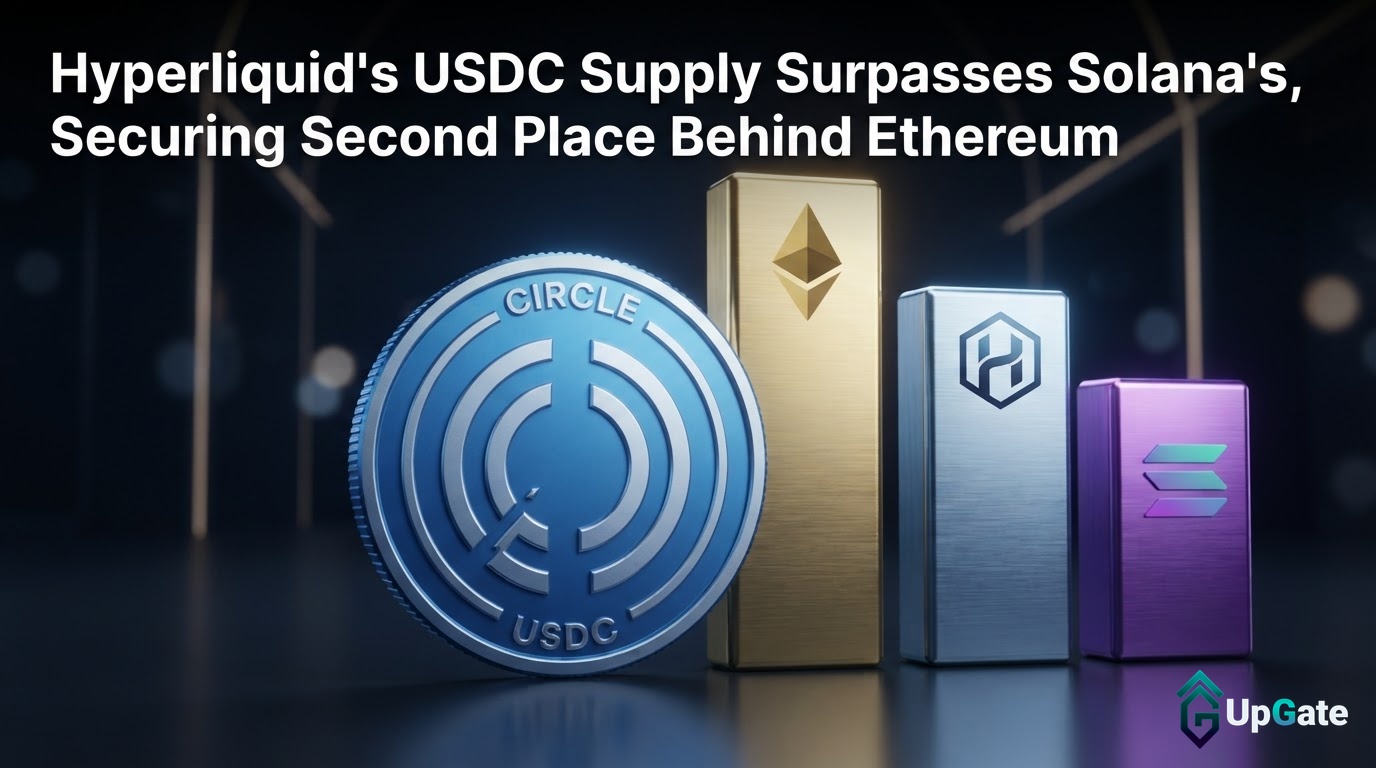
    Hyperliquid has ascended to become the second-largest blockchain network by circulating USD Coin (USDC) supply, overtaking Solana. The network now holds approximately $6.73 billion in USDC, trailing only Ethereum in this significant metric. This substantial accumulation of stablecoin reserves is primarily attributed to Hyperliquid’s specialized function as a derivatives exchange and its native USDC issuance capabilities.

    According to data from the Hyperliquid ecosystem tracker hl.eco, Hyperliquid’s circulating USDC supply stands at roughly $6.73 billion, narrowly edging out Solana’s $6.72 billion. A significant portion of Hyperliquid’s USDC, approximately $6.28 billion, is natively issued on its HyperEVM layer. An additional $453.6 million is bridged from the Arbitrum network, highlighting a primary reliance on direct issuance for its stablecoin reserves.

    USDC as Collateral and Ecosystem Driver

    USDC plays a critical role within Hyperliquid’s ecosystem, serving as the primary collateral for its perpetual futures markets. This focus on derivatives trading means that a substantial amount of stablecoin activity on the platform is directly tied to its core functionality. In total, USDC constitutes approximately 98% of Hyperliquid’s total stablecoin supply, which amounts to $6.85 billion.

    Hyperliquid’s design as a blockchain specifically engineered for derivatives trading, rather than a general-purpose smart contract platform, is a key factor in its rapid accumulation of USDC. Traders are reportedly utilizing the platform by holding billions in USDC to engage with its futures markets. This specialized vertical approach distinguishes it from broader blockchain ecosystems.

    Historical Context and Issuer Strategy

    Historically, Solana’s USDC supply experienced a notable surge in late August 2026, reaching approximately $8 billion after Circle processed around $11 billion worth of USDC mints that month. This figure has since decreased to its current level of $6.72 billion.

    Partnerships established between May 2025 and 2026 with Circle, the issuer of USDC, and Coinbase, have been instrumental in supporting Hyperliquid’s minting and treasury infrastructure. These collaborations have provided Hyperliquid with direct access to USDC issuance pipelines, reducing its dependence on bridged supply from other networks.

    Internal Incentives and Market Impact

    Internally, Hyperliquid’s protocol design fosters a feedback loop involving its native HYPE token. A portion of the yield generated from its USDC reserves is directed towards HYPE token buybacks and burns. This mechanism creates an incentive for further USDC deposits, as increased reserves lead to higher yield, which in turn drives buying pressure on the HYPE token.

    For Circle, the distribution of significant USDC supply across various chains, including Hyperliquid, Ethereum, and Solana, helps to mitigate concentration risk. This diversification also expands the utility of USDC across different market segments, reinforcing its position as a leading stablecoin.

    Why This Matters

    The materials describe a narrow update: Hyperliquid’s network now holds approximately $6. The exact date of the current USDC supply figures for Hyperliquid and Solana.

    Broader Context

    Source materials place the factual news in this context: Hyperliquid’s partnerships with Circle and Coinbase, established around May 2025 to 2026, have supported the minting and treasury infrastructure that enabled this scale, giving Hyperliquid direct access to USDC issuance pipelines rather than relying solely on bridged supply from other networks.

  • SEC Grants Temporary Exemption for Tokenized NMS Stocks

    SEC Grants Temporary Exemption for Tokenized NMS Stocks

    SEC Opens Door for Tokenized Stocks in U.

    S. Equity Market

    The U.S. Securities and Exchange Commission (SEC) has formally paved the way for tokenized stocks to enter the American equity market. On September 17, the agency unveiled a temporary “Innovation Exemption,” granting five years of regulatory relief to Tokenized Securities Venues. This exemption permits these venues to facilitate trades of tokenized National Market System stocks using permissioned automated market maker liquidity pools on public blockchains.

    In simpler terms, qualified platforms can now connect buyers and sellers of actual stock tokens, which carry full shareholder rights, on open blockchain infrastructure. Crucially, these platforms will not be classified as exchanges under the Securities Exchange Act of 1934.

    This new regulatory framework establishes a specific, albeit limited, pathway for operation. Tokenized Securities Venues (TSVs) are authorized to run permissioned automated market maker (AMM) liquidity pools on public, permissionless blockchains. The defining characteristic is “permissioned”: while the underlying blockchain is open, only pre-approved participants are allowed to provide liquidity or engage in trading. The exemption mandates that smart contracts must be auditable, and public transaction data, including price, size, time, and volume statistics, must be disclosed regularly.

    The tokens themselves must grant the exact same shareholder rights as their traditional stock counterparts. This includes dividends, voting rights, and entitlements to corporate actions, all of which are transferred with the token. The exemption explicitly prohibits synthetic or derivative tokens that merely track price without conferring these ownership rights.

    Furthermore, certain liquidity providers will be relieved from classification as dealers. These providers must be U.S.-based entities and operate within strict volume limitations tied to predefined criteria.

    The timing of this announcement is significant. Congress recently failed to pass the CLARITY Act, legislation intended to establish a more permanent statutory framework for digital asset classification. With legislative clarity absent, the SEC has opted for this temporary relief measure. This allows the market to test tokenized equity trading while the agency gathers data for potential future rulemaking.

    Commissioner Mark T. Uyeda voiced support for the exemption, highlighting tokenization’s potential to lower costs, enhance transparency, and boost liquidity, particularly for less liquid assets.

    Chairman Paul S. Atkins and Director Jamie Selway underscored the SEC’s commitment to its dual mandate: safeguarding investors while fostering innovation within on-chain capital markets. The stringent conditions attached to the exemption, such as permissioning requirements, auditable smart contracts, and transparency mandates, are designed to prevent the opacity that has previously affected segments of the decentralized finance ecosystem, thereby prioritizing investor protection.

    This exemption also builds upon previous internal SEC initiatives. The agency’s “Project Crypto” has been assessing various tokenization pilot programs, and major exchanges like Nasdaq and the NYSE have been exploring the issuance of tokenized stocks.

    The prohibition on synthetic tokens represents a deliberate policy decision. It clearly distinguishes between tokenized equity, where a token signifies genuine ownership of a share, and synthetic exposure products that have become prevalent on offshore platforms.

    The five-year duration of the exemption provides the SEC with ample opportunity to observe the performance of these venues under real-world market conditions. This will inform the agency’s decision on whether to make the framework permanent, amend it, or allow it to expire.

  • Ethena Seeks Independence from Bitcoin Volatility, Founder States

    Ethena Seeks Independence from Bitcoin Volatility, Founder States

    Ethena Labs founder Guy Young is pursuing a path that many crypto projects consider heretical: building a business that isn’t tethered to Bitcoin’s volatile price movements.

    The protocol behind the synthetic dollar, USDe, is actively overhauling its revenue model to diminish its reliance on the cryptocurrency market’s most dominant influence. The shift involves embracing tokenized real-world assets and diversifying yield sources, aiming to generate returns irrespective of Bitcoin’s trading performance.

    Ethena’s flagship product, USDe, debuted in February 2024 with a sophisticated yet inherently crypto-dependent mechanism. The protocol combines spot crypto collateral, such as staked Ethereum or Bitcoin, with short positions in perpetual futures contracts. This strategy neutralizes market exposure—the “delta-neutral” aspect—while the protocol accrues yield from funding rates and staking rewards.

    During bullish market phases, when traders are eager to leverage and willing to pay premiums for long positions, these funding rates can be substantial. However, when market sentiment shifts, the financial dynamics become less favorable.

    This is precisely the dependency Young aims to dismantle. A revenue engine solely reliant on crypto derivatives markets inevitably mirrors the crypto market’s boom-and-bust cycles. For a protocol striving to offer a stable dollar product, this presents a fundamental structural challenge that requires resolution.

    The trajectory of USDe’s supply clearly illustrates this sensitivity. It reached a peak of over $14 billion in October 2025 before contracting to approximately $4 billion by late August 2026. This drawdown, representing roughly a 70% decrease from its high, underscores how susceptible the synthetic dollar’s appeal is to broader market conditions.

    Ethena’s most concrete step away from crypto-native revenue streams involves a $200 million reallocation into tokenized AAA-rated collateralized loan obligations (CLOs), specifically within the Janus Henderson Anemoy fund. CLOs are securities backed by pools of corporate loans, with AAA-rated tranches positioned at the top of the repayment hierarchy. These instruments are about as far removed from speculative crypto assets as possible.

    The rationale is straightforward: by allocating a significant portion of its reserves to traditional, yield-bearing assets that operate entirely outside crypto’s price fluctuations, Ethena can establish a baseline revenue stream even during extended bear markets. This can be viewed as a hedge against its existing hedge.

    Young’s professional background lends credence to this strategic pivot. Prior to establishing Ethena Labs in March 2023, he spent approximately six years at Cerberus Capital Management, a firm managing tens of billions across credit, real estate, and private equity. The traditional finance playbook of diversifying across uncorrelated yield sources is a standard practice. Applying this methodology to a crypto-native protocol represents the innovative aspect.

    The reallocation to real-world assets is not the sole initiative. On September 1, 2026, Ethena launched the beta version of Ethena Pay on the Avalanche network. This service enables USDe holders to spend their synthetic dollars via Visa cards, offering yields of up to 6% and rewards linked to the ENA governance token.

    Transforming a yield-bearing stablecoin into a spendable currency accessible at everyday points of sale is a significant stride toward broader adoption. From a user’s perspective, it rebrands USDe from a decentralized finance instrument into something akin to a high-yield checking account paired with a debit card.

    In terms of regulatory compliance, Ethena recently completed a SOC 2 Type II audit without any exceptions. This audit standard assesses a company’s data security and operational controls over time. A clean audit is a prerequisite for any fintech company seeking institutional investment and is increasingly becoming a distinguishing factor in the crypto space, where many protocols still operate without comparable oversight.

    Collectively, these developments signal a protocol striving to bridge the credibility gap between decentralized finance experimentation and institutional-grade financial infrastructure.

    The governance framework is also undergoing evolution. An approved fee-switch proposal mandates that 95% of net revenue be directed towards ENA token buybacks. However, this mechanism is contingent on USDe supply reaching $7.5 billion. With the current supply hovering around $4 billion, this target effectively doubles the outstanding amount. This incentive structure is designed to align token holders with the protocol’s growth, though achieving this threshold will necessitate reversing the supply contraction observed over the past year.

    Ethena’s strategic direction mirrors a broader trend emerging among major crypto protocols. Tether, the leading stablecoin issuer, has been diversifying its reserves into U.S. Treasuries and other traditional assets for years. Similarly, Hyperliquid and other DeFi platforms are exploring revenue models that do not solely depend on crypto trading volumes or token price appreciation.

    The common thread is the acknowledgment that purely crypto-native business models are inherently cyclical. When Bitcoin experiences a rally, all systems tend to perform well. Conversely, during downturns, protocols often face user attrition, revenue decline, and diminished relevance. Building sustainable financial infrastructure requires income streams that remain robust through market contractions.

    For Ethena specifically, the critical question is whether this pivot will be executed swiftly enough to be impactful. The 70% contraction in USDe supply suggests that the market has already expressed its sentiment during the current cycle. The combination of real-world asset yields, payment functionality, and enhanced compliance credentials positions the protocol to present a compelling case during the next market upswing.

    The success of this proposition will depend partly on execution and partly on the evolution of the competitive landscape. The synthetic dollar sector is becoming increasingly crowded, with every new entrant adopting similar strategies involving delta-neutral approaches and RWA diversification. Ethena’s early mover advantage and institutional credibility offer a distinct edge. However, maintaining this lead while USDe supply remains significantly below its peak will be the ultimate test of whether its new model can truly deliver on the promise of cycle-resistant revenue.

  • Zcash Coinholders Approve Network Upgrade Parameters, Including Halvings; Vote Coincides with Price Surge

    Zcash Coinholders Approve Network Upgrade Parameters, Including Halvings; Vote Coincides with Price Surge

    Zcash coinholders have approved key network upgrade parameters, including retaining Bitcoin-style halvings and adopting faster 25-second block times, in a recent vote. The community also agreed to immediately deprecate the legacy Sprout pool and set a scope deadline of September 30 for the NU7 upgrade. The results, announced on Sunday following a 66% voter turnout, coincided with a notable price movement for Zcash (ZEC) on Thursday.

    Price Movement and Market Performance

    Following the vote outcomes, ZEC experienced gains, trading at $1,368 with a 10.9% increase on the day. This movement extends a trend, with ZEC up 168% over the past 30 days and over 2,500% in the last year. Zcash now stands as the ninth-largest cryptocurrency by market capitalization, valued at $22.9 billion, according to CoinGecko data.

    Network Sustainability Mechanism Decision

    A separate decision involved the network sustainability mechanism. Coinholders voted by 96.6% to begin recycling fees back to miners in February 2031. This timeline diverges from the preference of advisory panels, which advocated for implementation “as soon as possible.” Key entities, including Shielded Labs, Project Tachyon, ZODL, the Zcash Foundation, and Valar Group, have publicly aligned with the February 2031 date, characterizing it as the “most conservative interpretation of the results.” It remains an uncertainty whether the February 2031 start date will be revisited through another poll.

    Upgrade Details and Context

    The decision to maintain Bitcoin-style halvings, which inherently limit the supply of new coins, was supported by 98.9% of voters, contrasting with a smooth issuance model. The adoption of 25-second blocks represents a notable acceleration for the network’s transaction processing.

    This vote and subsequent price action are occurring within a broader context where the market is perceived to be “redefining the value of privacy,” according to Tim Sun, senior researcher at HashKey. He positions Zcash as “the leading front-runner in this wave of narratives.”

    Factors contributing to the increased attention on privacy coins include the recent launch of Grayscale’s Zcash Trust ETF, which has provided institutional investors with a new investment avenue. Roxana Nasoi, a core contributor at Logos, highlighted the strategic advantage of privacy, stating, “Privacy denies everyone else the knowledge that makes you a target.” The narrative for privacy coins is reportedly evolving from “pure anonymity to financial privacy and confidentiality,” potentially influenced by AI advancements that are making on-chain behavior analysis more accessible.

    Joe Andrews, chief executive of Aztec Labs, observed a growing global recognition of the need for “on-chain privacy.” He pointed to Zcash’s recent proactive measures, such as addressing a critical bug and implementing post-quantum upgrades in the July-activated Ironwood upgrade. This upgrade was a response to a four-year-old flaw that could have enabled counterfeit ZEC creation; disclosure of this flaw had previously been associated with a price decrease. The Ironwood upgrade was designed to contain any counterfeit coins and introduce quantum-resistant transaction records.

    The NU7 upgrade’s scope is now limited to features ready by the September 30 deadline, and the legacy Sprout pool will be deprecated immediately.

    Why This Matters

    Zcash coinholders voted in favor of keeping Bitcoin-style halvings, adopting faster 25-second blocks, deprecating the legacy Sprout pool, and setting a scope deadline of September 30 for the NU7 upgrade. The decision on the network sustainability mechanism start date is set for February 2031, though the possibility of revisiting this date through another poll remains an uncertainty.

  • BlackRock iShares ETF Surges 133% in Strive SATA Holdings

    BlackRock iShares ETF Surges 133% in Strive SATA Holdings

    BlackRock’s iShares Preferred and Income Securities ETF (PFF) has significantly increased its holdings in Strive Inc.’s Variable Rate Series A Perpetual Preferred Stock (SATA), more than doubling its stake since June. This 133% surge has brought BlackRock’s position to 236,159 SATA shares, signaling a notable endorsement from the $10 trillion asset manager for what is essentially a Bitcoin accumulation vehicle structured as preferred equity.

    Strive, co-founded by Vivek Ramaswamy, has established a unique model: it issues preferred stock offering investors an approximate 13% annualized variable dividend, with the proceeds then used to purchase Bitcoin. The company operates without debt or convertible notes, relying solely on equity to fund its direct Bitcoin acquisitions.

    The Nasdaq-listed preferred stock is designed to trade within a narrow range of $99 to $101, centered around its $100 par value. This structure aims to mimic the behavior of a high-yield bond rather than a volatile growth stock, with dividends disbursed daily on business days.

    The instrument debuted through an oversubscribed initial public offering in November 2025, raising $160 million at $80 per share. SATA carries no maturity date, relieving Strive of any obligation to redeem the shares. For U.S. tax purposes, the dividends are classified as a return of capital, a feature that can allow holders to defer taxable income. By mid-September 2026, SATA’s outstanding notional value had surpassed $1 billion, with approximately 10.4 million shares in circulation.

    Bitcoin Acquisition Strategy

    Every dollar raised through SATA issuances is dedicated to purchasing Bitcoin. During the week of September 8-11, Strive acquired 469 BTC at an average price of roughly $77,954 per coin, totaling approximately $36.6 million. This acquisition was funded entirely by proceeds from SATA.

    Strive’s total Bitcoin holdings now exceed 25,000 BTC. The company reports a Bitcoin Net Asset Value (NAV) amplification ratio of 53.5%, a metric that quantifies how much its Bitcoin holdings per share surpass what would be expected from raw equity contributions alone.

    Index Inclusion and Compliance

    BlackRock’s investment in SATA is not driven by individual portfolio manager sentiment towards Bitcoin. PFF is a rules-based index ETF that tracks the ICE Exchange-Listed Preferred & Hybrid Securities Index. SATA’s inclusion in this index, and the subsequent increase in BlackRock’s position, indicates that the security meets the index’s criteria for market capitalization, liquidity, and credit characteristics.

    Fidelity is also listed among SATA’s institutional holders. The presence of both BlackRock and Fidelity on the company’s capitalization table suggests that SATA has evolved beyond a niche crypto-finance experiment and now meets the compliance standards of major asset managers.

    Potential Risks

    A notable risk factor to monitor is the duration mismatch inherent in SATA’s structure. The preferred stock has no maturity date and offers a variable dividend rate, meaning Strive is not bound by fixed financing costs. However, its underlying asset, Bitcoin, is subject to significant price volatility, capable of dropping 30% within a single quarter. Should Bitcoin enter a prolonged downturn, the NAV amplification ratio could work in reverse, presenting a considerable challenge in maintaining a 13% dividend on a diminishing asset base.

  • Taiwanese Youth Flock to Investment Opportunities, Driving Surge in Market Participation

    Taiwanese Youth Flock to Investment Opportunities, Driving Surge in Market Participation

    A significant surge in investment interest among young people in Taiwan is becoming increasingly evident, marked by a substantial rise in new stock account openings and overwhelming demand for student investment club activities. Recent statistics from the Taiwan Stock Exchange reveal that in August, a notable 70.3% of new stock accounts were opened by individuals under the age of 30. This trend is further underscored by the experience of the National Taiwan University (NTU) Securities Research Society, whose first club meeting of the semester on the evening of September 16th saw an unusually long queue of students, with the line extending onto the road.

    The NTU Securities Research Society’s policy of admitting only the first 200 students who successfully pay their membership fees at the meeting created a competitive environment. A video capturing the extensive queue for the event, posted on Threads, garnered 124,000 views by the afternoon of September 17th, illustrating the high level of student engagement. The meeting itself focused on ‘Fundamental Investment and Stock Selection Strategy,’ led by Xue Ren, a former president of the NTU Securities Research Society and an investor from the popular fan page ‘Xue Ren’s Investment Summer.’ The club also offered free trial access to individuals of any school, major, or age, further indicating broad interest.

    Broader market data corroborates this heightened engagement among younger demographics. According to Taiwan Stock Exchange statistics, 64,246 new stock accounts were opened by individuals under 30 in August, with 24,032 of those accounts belonging to individuals aged 20 to 30. Data from KGI Securities internal statistics shows a notable increase in university students (aged 19-22) investing in both US stocks, up by 41.9% compared to last year, and Taiwan stocks, up by 32.2% compared to last year.

    While the exact number of students who were unable to join the NTU club due to capacity limits or the total number of attendees at the free trial session remain uncertain, the available data points to a clear trend. The high turnout for the NTU Securities Research Society meeting and the significant percentage of young investors in new stock accounts collectively suggest a growing interest in investment among Taiwanese youth. This trend is likely influenced by a confluence of factors, including increased access to financial information and a desire among younger generations to build wealth.

    The article also touches upon related market discussions, including a debunked rumor about a stock split for the 0050 ETF by Yuanta Investment Trust and a Bloomberg interview mentioning Barney Barney’s perspective on borrowing money to invest in Taiwan stocks. These elements, while part of the broader financial discourse, do not detract from the central observation of increased youth participation in the investment landscape.

    Why This Matters

    The materials describe a narrow update: The National Taiwan University Securities Research Society held its first club meeting of the semester, which attracted a large queue of students, with the line extending onto the road. The exact number of students who attempted to join the NTU Securities Research Society but did not get a spot.

    Broader Context

    Source materials place the factual news in this context: The article is about a student investment club at National Taiwan University.

  • CryptoQuant: Bear Cycle Return Unlikely Amid Macro Headwinds

    CryptoQuant: Bear Cycle Return Unlikely Amid Macro Headwinds

    Bitcoin’s On-Chain Data Suggests Bear Market’s End, Not Beginning

    On-Chain Metrics Signal Shift Amidst Macro Headwinds

    Despite a prevailing sense of pessimism in cryptocurrency markets, on-chain data for Bitcoin is painting a more optimistic picture. A recent CryptoQuant Quicktake report, published on September 17 and authored by contributor Crypto Dan, highlights a significant drop in the percentage of Bitcoin UTXOs (unspent transaction outputs) currently held at a loss. Historically, this pattern has been indicative of the latter stages of bear cycles, rather than the onset of new downturns.

    The report acknowledges that recent macroeconomic events, including the Federal Reserve’s first interest rate hike since 2023 and the US Senate’s narrow rejection of the CLARITY Act just two days prior, have provided ample reason for trader apprehension. However, CryptoQuant’s analysis concludes that structural improvements within the Bitcoin network are more influential than these macro pressures, making a full return to bear market territory improbable.

    Understanding UTXOs and Market Distress

    UTXOs, the fundamental components of Bitcoin’s ledger, can be visualized as individual units of cryptocurrency within wallets. Each UTXO carries the price at which it was last transacted. When a substantial portion of UTXOs are “in loss”—meaning their current market value is below the price at which they were last moved—it signifies widespread financial pain across the network.

    The core finding of Crypto Dan’s analysis is the notable decline in this “in loss” percentage. This is significant because, historically, a rapid decrease in UTXOs at a loss has coincided with market transitions from bearish to bullish phases.

    Network Health Outweighs External Factors

    While the report does not offer specific price targets, its directional signal is clear: the Bitcoin network’s structural health is improving in ways that have reliably preceded bullish periods in past cycles.

    The Federal Reserve’s decision to increase interest rates, the first such move since 2023, has tightened financial conditions at a time when risk assets might benefit from more accommodative circumstances.

    Separately, on September 15, the US Senate voted 49-50 against the CLARITY Act. This procedural failure has dampened hopes for comprehensive cryptocurrency legislation, leaving the industry in a prolonged state of regulatory ambiguity.

    CryptoQuant recognizes these challenges. Nevertheless, the report’s central thesis posits that on-chain dynamics typically exert a greater influence on Bitcoin’s long-term trajectory than transient economic or political events.

    A Shift in CryptoQuant’s Stance

    This report signifies a notable shift in CryptoQuant’s own market assessment. The analytics firm had previously confirmed bear market conditions in late 2025, a call that proved accurate as Bitcoin navigated a protracted downturn. The transition from this bearish outlook to a more optimistic view has been gradual, unfolding throughout mid-to-late 2026 as on-chain metrics showed consistent improvement.

    The analytical approach employed here prioritizes blockchain-native signals over external catalysts. The primary focus is on on-chain activity: investor holding patterns, selling behavior, and the extent of financial distress within the network.

    Investor Outlook and Future Considerations

    For investors, the UTXO analysis provides a data-driven counterpoint to the anxiety generated by the Federal Reserve’s actions and the Senate’s vote. While it does not guarantee a market rally or eliminate the risk of short-term price declines, it suggests that the underlying conditions necessary for sustained downward pressure—the widespread holder distress that fuels extended bear markets—are diminishing.

    Traders operating in the current environment face a common dilemma concerning time horizons. In the short term, the macroeconomic landscape appears challenging, with rate hikes creating potential resistance and the failure of the CLARITY Act leaving regulatory clarity elusive. However, looking at the longer term, the on-chain data presents a more constructive narrative, indicating that the network is moving past the distress characteristic of the bear phase. The key uncertainty remains whether the current macroeconomic environment, particularly a tightening Federal Reserve, will exert enough influence to overshadow these on-chain improvements. CryptoQuant, based on its analysis, believes this is unlikely.

  • Seven Democratic Senators Signal Renewed Bipartisan Push for CLARITY Act Ahead of Year-End Deadline

    Seven Democratic Senators Signal Renewed Bipartisan Push for CLARITY Act Ahead of Year-End Deadline

    Seven Democratic senators are signaling a willingness to re-engage in bipartisan negotiations to advance the CLARITY Act before the end of the year, following a recent procedural vote failure in the U.S. Senate. This renewed effort suggests that legislative attempts to establish a framework for stablecoin interest rate mechanisms and clarify the tax classification of digital assets like Bitcoin and Ether are not entirely stalled.

    The CLARITY Act faced a setback on September 16th when it failed a procedural vote with a 49-50 margin, delaying its progression to full Senate debate. Despite this outcome, a group of Democratic senators, including Kirsten Gillibrand, Mark Warner, Ruben Gallego, and Angela Alsobrooks, are reportedly in early discussions to explore the feasibility of reviving the bill. Their commitment to working in a bipartisan manner underscores a desire to find common ground on digital asset regulation.

    Industry figures have reacted to the vote failure with a mix of disappointment and cautious optimism. Ripple CEO Brad Garlinghouse described the result as “heartbreaking,” while Galaxy CEO Mike Novogratz pointed to “ethical differences” as a contributing factor. Senator John Kennedy acknowledged that the vote failure was “not surprising” but emphasized that the bill is “not necessarily dead.”

    The U.S. Senate is set to enter a lame-duck session following the November presidential election, a period often characterized by increased legislative activity. This timeframe presents a narrow window for senators to revise, negotiate, and vote on the CLARITY Act, with the end of 2026 as the target for potential passage. The success of these renewed efforts hinges on the ability of lawmakers to overcome existing hurdles and establish a revised legislative approach.

    If passed by year-end, the CLARITY Act could establish the interest rate mechanism for USD stablecoins, potentially impacting the cost of dollar funding. Furthermore, it aims to clarify the tax classification of Bitcoin and Ether in the U.S., which could lead to corresponding adjustments in compliance rules for Asian exchanges. However, the full impact of such regulatory certainty may not be felt by market participants until the first quarter of the following year, drawing a parallel to Taiwan’s experience with implementing its crypto regulations, which took nearly a year after their announcement.

    Significant uncertainties remain regarding the CLARITY Act’s future. It is unclear whether bipartisan negotiations will successfully restart or what specific ‘repackaged’ approach the bill might take if it is advanced. The exact timeline for the implementation of its provisions, even if passed by year-end, is also uncertain. Additionally, the SEC has indicated it may proceed with its regulatory framework regardless of the CLARITY Act’s passage, adding another layer of complexity to the evolving regulatory landscape for digital assets.

    While the renewed commitment from Democratic senators offers a potential path forward, the legislative process remains challenging. The limited time remaining in the current session and the need for bipartisan consensus mean that the CLARITY Act’s ultimate fate is still undetermined.

    Why This Matters

    The materials describe a narrow update: Following a failed procedural vote on the CLARITY Act in the Senate, seven Democratic senators have expressed their commitment to working in a bipartisan manner to pass the bill by year-end. Whether bipartisan negotiations will successfully restart.

    Broader Context

    Source materials place the factual news in this context: CLARITY Act vote failure in the Senate was postponed until September.

  • Dunamu Partners with Alatau City for Digital Finance Infrastructure Development

    Dunamu Partners with Alatau City for Digital Finance Infrastructure Development

    South Korean company Dunamu has signed a Memorandum of Understanding (MOU) with the Alatau City Administration and Alatau City Bank to develop digital financial infrastructure in Central Asia. The agreement, formalized in Seoul on September 15-16, 2026, aims to establish key digital financial services, including real-world asset tokenization, security token offerings (STOs), stablecoins, and digital payment solutions.

    This partnership is a significant component of the broader Alatau City megaproject, which has an estimated total investment target of $6 billion. Dunamu, known for operating South Korea’s largest cryptocurrency exchange, Upbit, will contribute its technical expertise to the initiative. The Alatau City Administration is expected to handle regulatory coordination and local institutional connections, with Alatau City Bank serving as the operational center for the project.

    As part of the agreement, Alatau City Bank is targeting up to $60 million in tokenization pilots focused on real estate and logistics projects. These programs are slated to launch before the end of 2026, leveraging the infrastructure of the Kazakhstan Stock Exchange. This initiative positions Alatau City as a potential hub for digital finance in Kazakhstan.

    Alatau City Bank has already demonstrated progress in digital payments, having integrated Binance Pay across more than 5,000 point-of-sale terminals. The megaproject has also attracted partnerships with Halyk Bank and Solana for payment integrations, underscoring a broader effort to build a comprehensive digital finance ecosystem.

    While the MOU outlines ambitious goals, several uncertainties remain. The exact nature and success of the pilot programs are yet to be determined, as is the specific regulatory framework that may govern these proposed digital financial services in Kazakhstan. The extent of Dunamu’s technical contribution beyond its established experience and the precise roles of other partners like Halyk Bank, Solana, and Binance in the broader project also require further clarity.

    The signing of the MOU coincided with Kazakh President Kassym-Jomart Tokayev’s state visit to Seoul, suggesting a deliberate diplomatic effort to foster technology partnerships within Kazakhstan’s emerging fintech sector. The success of the tokenization pilots by the end of 2026 could serve as a key indicator of Alatau City’s progress towards its digital finance hub ambitions.

    Broader Context

    Source materials place the factual news in this context: Dunamu is the company behind South Korea’s largest crypto exchange Upbit.

    Why This Matters

    This partnership signifies a significant move towards establishing digital financial infrastructure in Central Asia, with potential implications for tokenization, stablecoins, and payment solutions. The agreement between Dunamu, Alatau City Administration, and Alatau City Bank aims to develop these services, with specific targets for tokenization pilots by 2026. However, the full success and regulatory landscape remain to be seen, highlighting the developing nature of this story.