Tag: Positive

  • US House Committee Advances Bill to Institutionalize Bitcoin Reserves with 20-Year Freeze

    US House Committee Advances Bill to Institutionalize Bitcoin Reserves with 20-Year Freeze

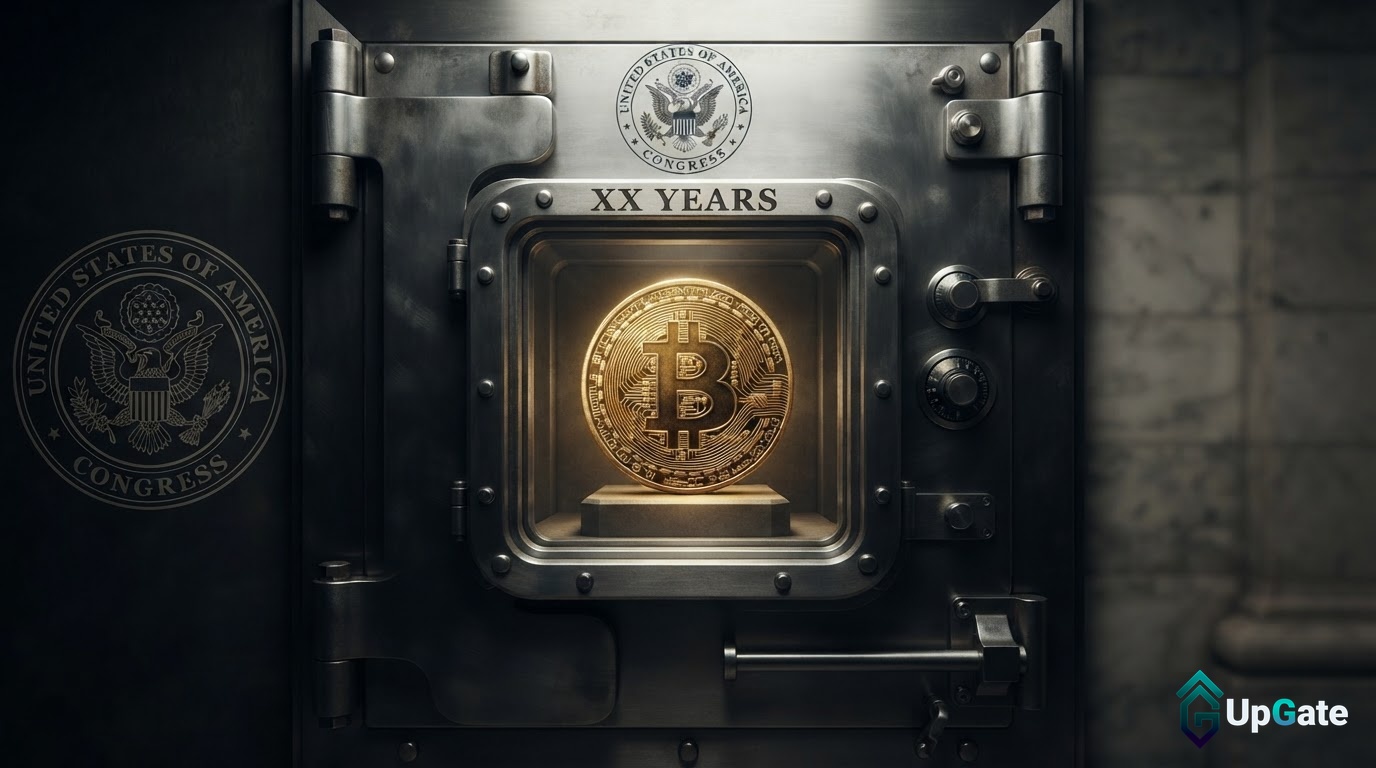
    The US House Financial Services Committee has passed the American Reserve Modernization Act (H.R. 8957), a bill that seeks to institutionalize Bitcoin reserves by mandating a 20-year freeze on confiscated cryptocurrency. The legislation advanced on June 16 with a vote of 28-21.

    The bill aims to codify a policy that would require Bitcoin confiscated by the government to be held for a minimum of 20 years, preventing its sale. Additionally, it mandates quarterly transparency audits and proof-of-reserve reports for these digital assets. This move could transform Bitcoin from a liquidatable law enforcement asset into a long-term national reserve asset, comparable to gold reserves.

    According to the bill, the US government currently holds approximately 324,527 Bitcoin, valued at around $24.7 billion at the time of writing. The bill proposes consolidating confiscated Bitcoin into a ‘Strategic Bitcoin Reserve’ and other confiscated crypto assets into a ‘Digital Asset Stockpile’ managed by the Treasury Department. The current fragmented custody of these assets poses cybersecurity risks and lacks accountability.

    Introduced by Representative Nicholas Begich on May 21, the American Reserve Modernization Act also acknowledges the right to private Bitcoin ownership and self-custody. The bill defines ‘holding private keys’ as a foundational principle of financial sovereignty, privacy, and individual liberty in the digital age. This federal recognition of self-custody rights is considered a significant development in cryptocurrency policy.

    While the bill has passed the committee stage, it still requires approval from the full House and Senate, presenting potential obstacles. The exact implementation details and the potential impact on the Bitcoin market are yet to be determined.

    The bill allows for research into ‘budget-neutral’ Bitcoin expansion strategies and permits state governments to store their Bitcoin holdings within the Federal Reserve system. Much of the government’s Bitcoin holdings were seized from dark web markets like Silk Road.

    If enacted, this legislation would mark the first time the US government legally recognizes Bitcoin as a national reserve asset. The bill’s passage through the committee is seen by some as increasingly likely due to Republican control in Congress and a potential shift in former President Trump’s stance on Bitcoin.

    Why This Matters

    The materials describe a narrow update: The US House Financial Services Committee passed the American Reserve Modernization Act (H. The bill still needs to pass the full House and Senate.

    Broader Context

    Source materials place the factual news in this context: The bill was proposed by Representative Nicholas Begich on May 21.

  • Kraken Lists Hyperliquid Perps for US Market

    Kraken Lists Hyperliquid Perps for US Market

    Hyperliquid to Offer Perpetual Futures to US Traders via Kraken Partnership

    Hyperliquid, a decentralized derivatives platform, is set to make its perpetual futures accessible to American traders through a strategic partnership with Payward, the regulated parent company of cryptocurrency exchange Kraken. This collaboration aims to bridge the gap between decentralized finance (DeFi) and regulated markets, allowing U.S. clients to access Hyperliquid’s trading services.

    Navigating Regulatory Hurdles

    Currently, Hyperliquid’s web interface is geo-blocked in the United States to comply with the nation’s derivatives regulations. However, this new partnership leverages Kraken’s established regulatory framework. According to an announcement from Payward, the deal will enable U.S. clients to trade Hyperliquid perpetual futures.

    The platform’s global operations have seen significant growth, with its total value locked reaching $6.7 billion since 2023 and accounting for approximately 9% of global open perpetual positions. This surge in DeFi derivatives has previously drawn scrutiny from traditional exchanges concerned about user financial risks on unregulated platforms.

    A Regulated Path Forward

    To address these compliance concerns in the U.S. market, Payward and Hyperliquid have devised a structure where users will access Hyperliquid’s order book. However, the perpetual contracts will operate under the purview of Bitnomial Exchange and Bitnomial Clearinghouse, both of which are regulated by the Commodity Futures Trading Commission (CFTC) and owned by Payward.

    Prospective traders will be required to have their accounts approved by both the NinjaTrader Clearing broker and Bitnomial.

    Awaiting Regulatory Approval

    The partnership is currently awaiting approval from the CFTC, with more operational details expected to be released upon clearance. Industry experts anticipate that the full implementation of the project could take several months. Furthermore, the U.S. offering will be subject to stringent regulations, including sanctions screening and lower leverage limits compared to its global counterpart.

    This initiative is seen as a potential blueprint for how traditional finance can integrate with DeFi architecture in a compliant manner. Payward has indicated that this is the first of several similar partnerships it plans to pursue.

    Market Reaction and Price Outlook

    Following the announcement, the price of Hyperliquid’s native token, HYPE, saw an increase of 1.71%, trading at $78.23. This positive movement was also attributed to fee-funded token buybacks and record open interest.

    Analysts suggest that if the positive sentiment persists, HYPE could retest its upper resistance level at $82.30. Conversely, a failure to maintain this momentum might lead to a decline below the support zone of $75.83, potentially triggering a more significant correction.

  • Ripple: XRP is Digital Commodity, Not Security

    Ripple: XRP is Digital Commodity, Not Security

    Ripple’s Chief Legal Officer, Stuart Alderoty, asserted that XRP’s regulatory standing in the United States is now definitively clear, following years of legal battles and pronouncements from federal agencies. He highlighted a pivotal 2023 federal court decision and a subsequent interpretation by the Securities and Exchange Commission (SEC) and the Commodity Futures Trading Commission (CFTC) in March, which classified XRP as a digital commodity.

    Ripple and XRP on Firm Legal Footing

    Alderoty stated that Ripple and XRP now occupy settled ground, with XRP’s legal and regulatory position remaining robust and unambiguous.

  • Column N.A. Integrates Stablecoin and Card Issuing for Fintech Clients

    Column N.A. Integrates Stablecoin and Card Issuing for Fintech Clients

    Column N.A., a federally chartered U.S. bank, has integrated support for USD Coin (USDC) and Tether (USDT) into its core banking platform, alongside full-stack card issuing capabilities for debit, credit, and prepaid products. This offering targets fintech companies seeking consolidated financial infrastructure.

    The platform bundles stablecoin settlement, card issuing, and traditional payment networks. Column’s stablecoin support directly interfaces with its existing fiat infrastructure, enabling clients to transition between USDC, USDT, and traditional currencies across payment networks such as ACH, FedNow, RTP, Fedwire, and SWIFT. This integration aims to streamline stablecoin-to-fiat conversions by reducing reliance on prefunding requirements and third-party intermediaries.

    As a chartered bank, Column N.A. manages its own ledger, processor, and banking rails under a unified regulatory framework. This structure allows the bank to directly handle stablecoin-to-fiat conversions, potentially mitigating counterparty risk and settlement delays associated with middleware providers. The bank also provides multicurrency account capabilities with access to global banking networks, including SEPA Instant transfers.

    Column reported annualized stablecoin transaction volume in the tens of billions shortly after the platform’s launch. The exact number of clients onboarded before the public announcement is not specified. This volume suggests commercial payment flows, card funding, and cross-border settlement are among the use cases.

    This development occurs amidst increased activity in the fintech infrastructure market. Mastercard acquired stablecoin infrastructure provider BVNK in August 2026, and Marqeta, a card-issuing platform, recently partnered with BVNK to enhance its stablecoin card capabilities. Column’s direct banking approach is positioned as an architectural advantage over processors like Marqeta, which depend on partner banks for essential functions. Column’s strategy emphasizes independence from card network overhead for backend infrastructure needs.

    Founded by William and Annie Hockey, Column N.A. is founder and employee-owned, distinguishing it from many venture capital-backed fintech companies. The bank’s chartered status is highlighted as a key differentiator, enabling direct deposit holding, Federal Reserve payment clearing, and operation under a single regulatory framework, unlike the fragmented licensing required for many fintech companies.

    While Column’s card issuing capabilities still utilize existing networks for point-of-sale transactions, the integrated offering provides consolidation benefits by reducing the number of vendors and potential points of failure in a fintech’s technology stack. The competitive pressure on Marqeta could be significant, as Column’s integrated product offering potentially weakens the value proposition of standalone card processors. For Mastercard, the BVNK acquisition provides stablecoin capabilities within its existing network, serving a different market segment than Column’s direct banking approach for backend infrastructure.

    Why This Matters

    The materials describe a narrow update: Column N. The exact number of clients onboarded before the public announcement.

    Broader Context

    Source materials place the factual news in this context: Column N.A., a federally chartered US bank, just made its play for the stablecoin infrastructure market.

  • US House Committee Advances Bill to Codify Strategic Bitcoin Reserve

    US House Committee Advances Bill to Codify Strategic Bitcoin Reserve

    The US House Committee on Financial Services has advanced a bill that could codify a strategic Bitcoin reserve into law. The American Reserve Modernization Act of 2026 (H.R. 8957) passed the committee on Wednesday by a vote of 28-21.

    Introduced by US Representative Nicholas Begich on May 21, the legislation aims to establish a Strategic Bitcoin Reserve and a Digital Asset Stockpile within the Department of the Treasury. These reserves would hold Bitcoin and other digital assets acquired by the federal government through criminal or civil forfeiture, mandating a minimum holding period of 20 years for these assets.

    The US government is estimated to hold approximately 324,527 Bitcoin, valued at around $24.7 billion at the time of writing, according to Arkham Intelligence. The bill requires federal agencies to provide a comprehensive accounting of all digital assets they hold or control and establishes transparency measures, including quarterly “proof of reserve” reports and third-party audits.

    Further provisions in H.R. 8957 direct a study into budget-neutral strategies for expanding the Strategic Bitcoin Reserve. The bill also allows states to store their Bitcoin holdings within the Federal Reserve and affirms private ownership and self-custody rights of Bitcoin, recognizing the control of private keys as fundamental to financial sovereignty, privacy, and personal liberty.

    “We cannot allow Bitcoin to be held by the federal government to languish in fragmented and inconsistent custody,” said US Representative Nicholas Begich. “It poses unacceptable cybersecurity risks and fails to give an adequate accounting of what the federal government actually owns.”

    Industry figures have reacted positively to the bill’s advancement. Connor Brown, executive director of the Bitcoin Policy Institute, called it a “genuinely historic step for Bitcoin policy.” Strive CEO Matt Cole similarly commented that it is “the single most important crypto legislation that can come out of DC.”

    The committee’s approval is a significant step, but the bill must still pass the full House and Senate before it can be sent to the president’s desk. Uncertainties remain regarding its passage through the remaining legislative stages and its eventual enactment.

    Why This Matters

    This legislative development brings the US closer to formalizing a strategic Bitcoin reserve, potentially impacting how federally held digital assets are managed and secured. The bill’s progression through the House Committee on Financial Services signifies a move towards codifying existing practices and introducing enhanced transparency and accountability measures for digital assets acquired through forfeiture, with a mandated 20-year holding period.

    Broader Context

    Source materials place the factual news in this context: The legislation would effectively codify Trump’s Bitcoin reserve policy, locking up Bitcoin acquired through civil and criminal forfeiture for 20 years.

  • Michael Saylor: Regulatory Action Under Existing Law to Drive Bitcoin Institutional Adoption

    Michael Saylor: Regulatory Action Under Existing Law to Drive Bitcoin Institutional Adoption

    Michael Saylor, Strategy Executive Chairman, asserts that Bitcoin’s institutional adoption will advance through regulatory actions leveraging existing laws, rather than requiring new legislation from Congress. This perspective suggests that the U.S. financial system can see increased institutional engagement with Bitcoin even as legislative efforts like the CLARITY Act remain stalled.

    According to Michael Saylor, regulators are expected to implement rules using current legal frameworks. Saylor expects this approach to foster an expansion of Bitcoin custody and lending services offered by banks. This viewpoint posits that regulatory clarity or action, independent of new congressional acts, will be sufficient to drive institutional involvement with the cryptocurrency.

    The CLARITY Act, a piece of legislation relevant to Bitcoin regulation, is currently stalled in Congress. Saylor’s assertion implies that this legislative standstill does not represent a barrier to Bitcoin’s continued integration into the U.S. financial system.

    However, several uncertainties remain regarding the specific existing laws regulators may utilize, the extent to which banks will expand their Bitcoin custody and lending operations, and the exact timeline for these regulatory advancements. These factors contribute to the evolving landscape of cryptocurrency regulation and institutional access.

    Why This Matters

    The materials describe a narrow update: Michael Saylor, Strategy Executive Chairman, stated that Bitcoin’s institutional progress is not dependent on Congress passing the CLARITY Act. The specific existing laws regulators may use.

    Broader Context

    Source materials place the opinion in this context: The article is based on statements made by Michael Saylor.

  • US House Committee Advances Bill for Strategic Bitcoin Reserve

    US House Committee Advances Bill for Strategic Bitcoin Reserve

    A bill to formally establish a U.S. Strategic Bitcoin Reserve has advanced through the House Financial Services Committee, marking a significant step in the legislative process. The American Reserve Modernization Act of 2026 (H.R. 8957) proposes a 20-year holding period for federal Bitcoin holdings managed by the Treasury Department, with no sales permitted during that time. The legislation also seeks to extend wash-sale rules to cryptocurrency transactions and create a separate stockpile for other digital assets, while explicitly stating that privately held Bitcoin cannot be seized by the government for the reserve.

    The bill, introduced by Rep. Nick Begich (R-AK) and co-led by Rep. Jared Golden (D-ME), has garnered bipartisan support with over 20 cosponsors. A full markup is scheduled for September 16, 2026, which could lead to a vote by the entire House. This legislative effort aims to codify practices the federal government has been informally following since a 2025 executive order from President Trump, which directed agencies to retain forfeited Bitcoin rather than auctioning it.

    Key Provisions and Context

    According to the bill, the Treasury Department would be responsible for managing these federal Bitcoin holdings. The legislation mandates a 20-year holding period for any Bitcoin designated for the strategic reserve. Furthermore, it establishes a distinct “Digital Asset Stockpile” for non-Bitcoin digital assets, differentiating them from the strategic reserve treatment afforded to Bitcoin. A key provision ensures that the government cannot seize privately owned Bitcoin from citizens to contribute to this reserve.

    US agencies currently hold an estimated 328,372 BTC, with a valuation estimated to be between $25 billion and $30 billion. Under the proposed act, this significant portion of Bitcoin would be locked away for two decades, effectively removing it from the market for a generation. This action could represent approximately 1.5% of Bitcoin’s total 21 million cap. The Treasury would also be required to publish quarterly Proof-of-Reserve reports, supplemented by independent audits.

    Regulatory and Market Implications

    In addition to the reserve provisions, H.R. 8957 extends wash-sale rules to crypto. These rules, currently applied to traditional securities, prevent traders from selling an asset at a loss and immediately repurchasing it to claim a tax deduction. The legislation aims to close this loophole for cryptocurrency, treating digital assets more similarly to traditional securities for tax purposes. This provision may face opposition from crypto industry lobbyists.

    The formalization of U.S. government Bitcoin holdings through legislation could signal an increased institutional acceptance and a perception of Bitcoin as a long-term store of value. However, the bill’s journey is not complete. Even if it passes the full House, its progression through the Senate remains uncertain and could lead to further modifications. The extension of wash-sale rules to crypto may also attract significant pushback from industry participants who have benefited from the current tax treatment.

    Why This Matters

    The materials describe a narrow update: The American Reserve Modernization Act of 2026 (H. The bill’s passage through the full House.

    Broader Context

    Source materials place the factual news in this context: A bill to formally establish a US Strategic Bitcoin Reserve just cleared the House Financial Services Committee, moving one step closer to a full floor vote.

  • NEAR Protocol Hits Historic Milestone as Price Soars 7.6% on Massive Airdrop

    NEAR Protocol Hits Historic Milestone as Price Soars 7.6% on Massive Airdrop

    NEAR Protocol Surges as Confidential Intents Reach $70 Million TVL Milestone

    NEAR, the native token of the NEAR Protocol blockchain, has seen a significant surge in value, climbing 7.59% to trade at $2.51. This upward momentum follows the successful achievement of the “Confidential Intents” milestone, which saw the network’s privacy-focused cross-chain pipeline reach $70 million in total value locked (TVL).

    Ecosystem Rewards Drive Token Performance

    NEAR Protocol incentivizes ecosystem growth by distributing NEAR tokens to eligible users when its TVL hits predetermined benchmarks. This latest airdrop, however, was specifically tied to the Confidential Intents initiative. The “Confidential Intents” Milestone Incentive Program was designed to automatically distribute 333,333 locked and non-transferable INT tokens once the confidential transactions pipeline surpassed a $70 million TVL.

    As of this report, NEAR Protocol has exceeded this target, with its TVL growing by an impressive 129.3% over the past 90 days to reach $70.79 million. The protocol has now invited users to claim their INT token airdrops via its official website.

    Eligibility and Token Redemption

    To qualify for the airdrop, eligible users were required to maintain a balance of over $100 and execute at least one confidential swap. The allocation amounts are tiered, with users who engaged in earlier activity, held higher balances, and completed more swaps receiving larger distributions.

    Notably, INT tokens will be redeemable for NEAR tokens at a 1:1 ratio once NEAR’s volume-weighted average price (VWAP) consistently remains at or above $3.33 for three consecutive days. These unlock conditions are intended to deter wash trading and short-term speculation, while simultaneously fostering growth in both network and token value.

    Broader Protocol Developments

    Beyond the TVL milestone, NEAR Protocol is also recognized as one of the first major layer-1 blockchains to achieve partial quantum-proofing, a significant advancement in blockchain security.

    Technical Analysis and Market Influences

    At its current trading price of $2.51, NEAR is positioned above the $2.44 Fibonacci support level. A sustained rise above this point could lead to a retest of the $2.65 resistance zone. Conversely, a breach of the support level might see the token retreat to $2.25, with a more substantial correction potentially pushing it down to $2.00.

    Further influencing future price action is the recent 25 basis point interest rate hike by the Federal Reserve, a development that could impact the broader cryptocurrency market.

  • Column Bank Launches Native Stablecoin Banking Services, Solana Default

    Column Bank Launches Native Stablecoin Banking Services, Solana Default

    Column, a chartered US bank, has launched native stablecoin banking services that support the instant conversion of USDC and USDT to USD and facilitate on-chain settlements. The new service, announced on September 16, integrates stablecoin functionality directly into the bank’s ledger, allowing for immediate conversion of incoming stablecoins and rapid settlement of outgoing transfers.

    Solana has been designated as the default network for these services, with support also extended to Ethereum and other major blockchain networks. This integration means that clients can receive stablecoins on-chain, have them instantly reflected as USD in their Column account, and then transfer these funds through traditional fiat payment networks such as ACH, FedNow, Fedwire, RTP, SWIFT, and checks. Conversely, clients can initiate transfers that settle on-chain within seconds, without the need to pre-fund crypto wallets or use separate exchanges.

    Column’s approach embeds stablecoin support directly into its core banking ledger, distinguishing it from middleware providers. As a chartered bank, Column can offer integrated services across payments, cards, stablecoins, and global banking under a single regulatory framework. This direct integration ensures that incoming stablecoins are immediately recognized as USD on the bank’s ledger, subject to the same compliance and risk protocols as other deposits.

    The bank’s existing client base includes fintech firms such as Brex, Ramp, Mercury, Bilt, Slash, and Kapital. The stablecoin banking service was part of a broader product rollout that also included full-stack card issuing, global banking solutions, and multicurrency accounts. This positions Column as a comprehensive infrastructure provider in the fintech sector, potentially competing with other financial infrastructure companies.

    Why This Matters

    Column’s integration of stablecoin banking services represents a significant step in bridging traditional finance with digital assets. By offering native support for stablecoins directly within its banking ledger, Column provides a more streamlined and potentially regulated pathway for businesses to manage digital currencies alongside traditional fiat. This move could influence how other financial institutions approach digital asset integration, potentially leading to broader adoption and more robust infrastructure for stablecoin transactions within the existing financial system.

    Broader Context

    This development positions Column as a key infrastructure provider in the fintech space, offering integrated services that span payments, cards, stablecoins, and global banking under a single regulatory umbrella. The direct integration of stablecoin functionality into its core banking ledger distinguishes Column from middleware providers and highlights its strategy to offer a comprehensive suite of financial solutions.

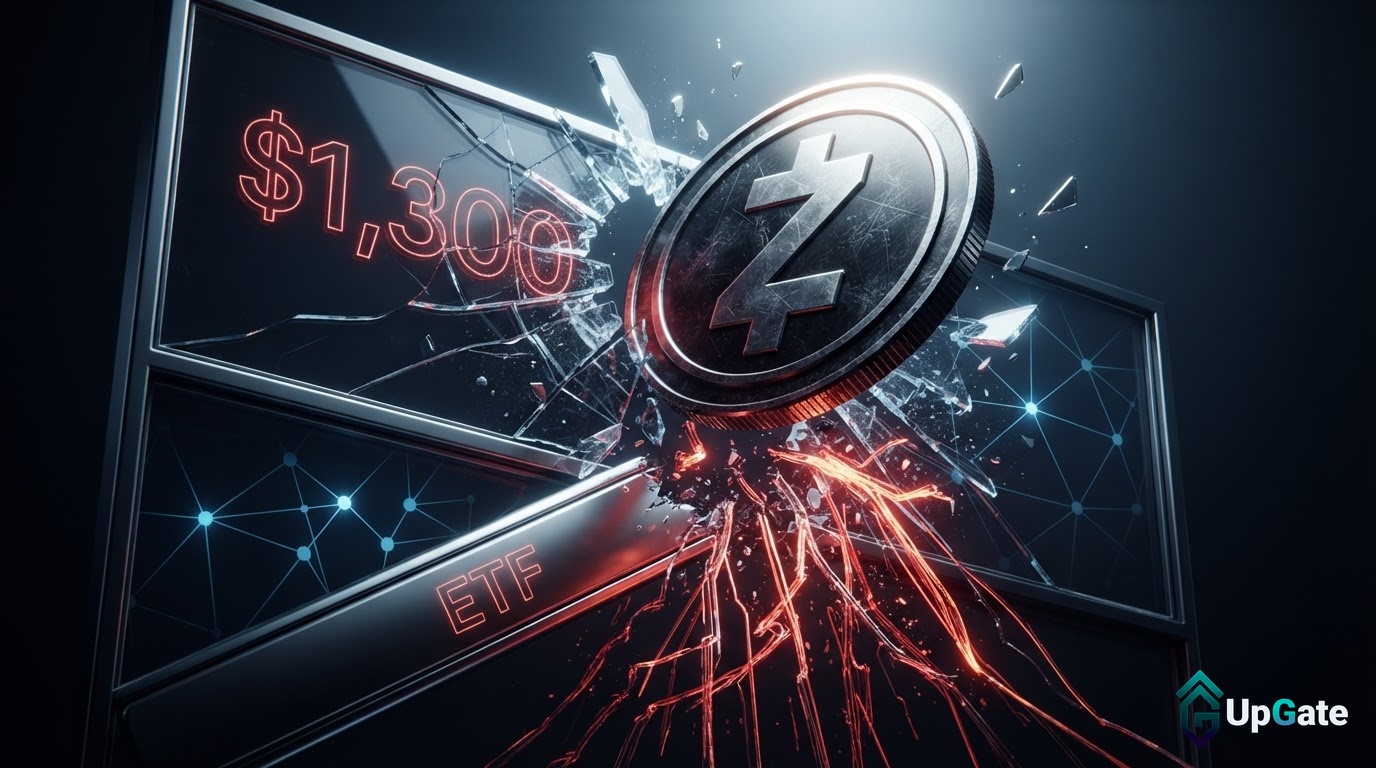
  • Zcash Price Surges Past $1,300 Amidst ETF Launch, Network Upgrade, and Short Liquidations

    Zcash Price Surges Past $1,300 Amidst ETF Launch, Network Upgrade, and Short Liquidations

    Zcash (ZEC) experienced a significant price surge on September 16, 2026, climbing above $1,300. The cryptocurrency gained approximately 10-12% within a single hour and 25% over the preceding 24-hour period. This rally occurred despite a generally cautious broader cryptocurrency market, which was anticipating a Federal Reserve interest rate decision. Prices above $1,200 had not been observed for Zcash since late 2016.

    The substantial price movement was attributed to a confluence of three key factors: the launch of Grayscale’s spot Zcash ETF (ZCSH), the successful community vote on Network Upgrade 7 (NU7) to reduce block generation time, and the liquidation of over $45 million in short positions.

    Grayscale’s Spot Zcash ETF Launch
    The debut of Grayscale’s spot Zcash ETF, ticker ZCSH, on August 25, 2026, marked a significant development. Within weeks of its launch, the ETF had accumulated over $463 million in assets, positioning it as one of the more consequential crypto ETF launches in recent memory. The approval of a spot ETF for a privacy-focused coin may also signal a degree of regulatory comfort with Zcash’s compliance posture, particularly given its optional privacy features that allow for both transparent and shielded transactions.

    Network Upgrade 7 (NU7) Approval
    Simultaneously, the Zcash governance community overwhelmingly supported Network Upgrade 7 (NU7). This upgrade is designed to reduce the block generation time from the current 75 seconds down to 25 seconds, while maintaining the existing halving schedule. The community vote saw approximately 2.4 million ZEC participating, with 99.9% in favor of the proposal. This successful upgrade is expected to improve user experience for everyday transactions and enhance Zcash’s viability as a medium of exchange.

    Market Mechanics and Short Liquidations
    The third major catalyst was activity in the derivatives market. During the rally, over $45 million in short positions were liquidated. This forced buying accelerated the upward price momentum as traders who had bet against ZEC were compelled to close their positions.

    Market Context and Uncertainties
    Zcash’s market capitalization approached $22 billion on September 16, 2026, placing it in a category that attracts attention from portfolio managers tracking large-cap digital assets. The surge occurred against a backdrop where traditional risk assets were experiencing pullbacks as investors prepared for a potential 25 basis point interest rate hike from the Federal Reserve.

    While the combination of institutional interest, network development, and market mechanics created a strong upward momentum, there are uncertainties to monitor. The long-term impact of the significant liquidation event on price stability remains to be seen. Additionally, the sustainability of the price surge will depend on the underlying demand beyond the short squeeze. The broader market’s reaction to the Federal Reserve’s decision also presents a potential headwind. The success of NU7 in enhancing Zcash’s utility as a medium of exchange will be a key factor in its future trajectory.

    Why This Matters

    The materials describe a narrow update: Zcash (ZEC) price increased by approximately 10-12% in one hour and 25% in 24 hours, reaching over $1,300 on September 16, 2026. The long-term impact of the $45 million liquidation event on ZEC’s price stability.