Tag: Positive

  • Cboe VIX Sees $6M Unusual Put Trade Before Fed Decision

    Cboe VIX Sees $6M Unusual Put Trade Before Fed Decision

    A $6 Million Bet on Calm: Massive VIX Options Trade Signals Confidence Ahead of Fed Decision

    A staggering $6 million was deployed in a single options trade on the Cboe VIX Index on Tuesday, a move that analysts suggest was far from random. The transaction, the largest of its kind on the VIX that day, involved the purchase of deep in-the-money put options. This strategy, even for seasoned institutional volatility desks, is noteworthy, particularly given its timing: just one day before the Federal Reserve’s FOMC rate decision on September 16, a meeting where futures markets are anticipating an 80-90% probability of a 25-basis-point interest rate hike.

    The VIX, widely recognized as Wall Street’s “fear gauge,” tracks the expected 30-day volatility of the S&P 500, derived from options pricing. A rising VIX signals market apprehension, while a declining VIX suggests traders are more at ease. Consequently, purchasing VIX puts is typically interpreted as a wager on a decrease in market fear.

    However, these were not standard put options. The “deep in-the-money” designation means their strike prices were set significantly above the VIX’s prevailing trading level. Such options possess substantial intrinsic value and function akin to a direct short position on the underlying index. They are also less susceptible to the erosion of value over time (time decay) and fluctuations in implied volatility compared to at-the-money or out-of-the-money options.

    In the sessions leading up to the FOMC meeting, the VIX had been trading within a narrow range of 14 to 18, hovering near multi-month lows. This compressed trading band indicated that the market had largely absorbed expectations of a rate hike. The buyer of the $6 million put options appears to be betting that the upcoming announcement will not introduce any unexpected elements that could send the VIX sharply higher.

    This significant trade was not an isolated incident. Data tracked by SpotGamma reveals that multiple substantial VIX options trades, ranging from $3 million to $12 million, were recorded in recent trading sessions. This elevated volume suggests that institutional desks are actively adjusting their positions in anticipation of risks associated with binary events.

    Interestingly, while many of the other large VIX trades involved call options—typically used as a hedge against a surge in volatility—the $6 million put purchase represents a move in the opposite direction. When significant capital is allocated to both VIX calls and puts, it often signifies a market that is hedged rather than exhibiting a clear directional bias. However, a single, outsized put trade of this magnitude shifts the narrative, pointing towards at least one major player anticipating a calm resolution to the event.

    The underlying logic is straightforward. Federal Reserve meetings are inherently binary events: the outcome either meets expectations or it deviates. When the market has already priced in a specific outcome with a high degree of confidence, the actual announcement typically serves to reduce uncertainty rather than amplify it. Implied volatility, which tends to rise in anticipation of such events, usually contracts once the event has passed. This phenomenon is known as “vol crush” among traders, and it creates a favorable environment for deep in-the-money VIX puts to become profitable.

    A 25-basis-point rate hike, if delivered as anticipated, would signal a continuation of the Fed’s tightening monetary policy. For equity markets, the reaction will likely depend less on the hike itself and more on the accompanying statement from the Fed and its future economic projections.

    The subdued VIX environment leading into the decision suggests that equity markets are positioned with a degree of comfort. The options market for the S&P 500, which underpins the VIX, is not exhibiting the kind of widespread protective put buying that typically accompanies genuine market fear. Against this backdrop, the $6 million put trade appears less like a contrarian gamble and more like a calculated play on the predictable mechanics of event-driven volatility.

    The true significance of Tuesday’s trading activity lies not just in the sheer size of the trade, but in the conviction embedded within its structure. Deep in-the-money options are costly to establish and require significant capital to maintain. Committing $6 million to such a position is a decision that would not be made lightly.

  • Michael Saylor: US Regulators May Use Existing Statutes for Digital Asset Rules, Potentially Aiding Bank Services

    Michael Saylor: US Regulators May Use Existing Statutes for Digital Asset Rules, Potentially Aiding Bank Services

    Michael Saylor, executive chairman of Strategy, anticipates that U.S. regulators may advance digital asset rules by utilizing existing statutes, a move he believes could potentially enable traditional banks to expand into Bitcoin custody and collateralized lending services.

    Saylor argues that federal agencies already possess sufficient authority under current law to establish necessary guardrails for the digital asset industry. This perspective suggests a pragmatic regulatory path, potentially accelerating the integration of digital assets within traditional financial systems. Supporting this view, the SEC issued guidance on December 17, 2025, concerning broker-dealer custody obligations for crypto asset securities, and the Office of the Comptroller of the Currency has previously endorsed the ability of nationally chartered banks to custody digital assets. These actions align with Saylor’s assertion that existing legal tools are adequate for creating workable frameworks.

    This anticipated regulatory clarity could foster increased institutional adoption. Pension funds, endowments, and insurance companies, which often have mandates requiring regulated banking institutions for asset custody, could benefit significantly once major banks offer Bitcoin custody at scale. Strategy, which holds hundreds of thousands of Bitcoin, currently custodies approximately 40% of its holdings through Coinbase Custody, with additional assets managed by Anchorage Digital Bank—both U.S.-regulated entities.

    Saylor also highlighted the potential benefits of Bitcoin-collateralized loans, contending that they allow holders to access liquidity without selling their positions. This strategy is tax-efficient, as it avoids triggering capital gains. For companies like Strategy, the ability to borrow against Bitcoin holdings at competitive bank rates could offer enhanced financial flexibility.

    While legislative efforts such as the CLARITY Act aim to provide comprehensive digital asset legislation, they have not yet passed Congress. The precise nature and timing of future digital asset rules from U.S. regulators remain uncertain. However, Saylor pointed to the ongoing expansion of digital asset custody and lending services by multiple banks throughout 2026 as evidence of market movement.

    Furthermore, Saylor views a clearer stablecoin framework, potentially influenced by legislation like the GENIUS Act, as a catalyst for expanding the on-ramps between traditional finance and digital assets, which he believes would incentivize banks to develop further crypto infrastructure.

    This development signals a potential shift towards greater integration between the digital asset industry and traditional finance, driven by regulatory pragmatism rather than solely new legislation. The extent to which traditional banks will ultimately expand into Bitcoin custody and collateralized lending remains a key uncertainty.

    Why This Matters

    Michael Saylor, executive chairman of Strategy, stated that US regulators are expected to develop digital asset regulations under current laws, rather than waiting for new legislation like the CLARITY Act. The exact nature and timing of the specific digital asset rules that US regulators may create are uncertain.

    Broader Context

    Michael Saylor is the executive chairman of Strategy, formerly known as MicroStrategy.

  • MEXC Security Report: Intercepted Funds Surge, Reserves Remain Strong Amidst Rising Industry Threats

    MEXC Security Report: Intercepted Funds Surge, Reserves Remain Strong Amidst Rising Industry Threats

    MEXC’s security report for July-August 2026 reveals a significant escalation in the interception of risk-related funds and sustained strength in asset reserve ratios, positioning the platform against a backdrop of increasing cryptocurrency industry-wide cyber threats. The report also details the expansion of its Futures Insurance Fund and provides context on the broader security landscape.

    Enhanced Fund Interception and Account Security
    During the July-August 2026 period, MEXC successfully intercepted approximately 38.66 million USDT in risk-related funds across 215 reports. This marks a substantial increase, with successfully intercepted cases up by approximately 2,971% and the value of intercepted funds by approximately 12,646% compared to the previous reporting period. Concurrently, MEXC identified and restricted 20,752 accounts linked to risk-related activities, an 118.03% rise from the prior period. The platform also facilitated the return of 602,225 USDT in misdirected assets, a 75.31% increase in such recoveries.

    Financial Stability: Reserves and Insurance Funds
    MEXC’s financial resilience is further underscored by its asset reserves and insurance fund. As of September 1, 2026, the Futures Insurance Fund balance reached 791,696,422 USDT, reflecting a 5.44% increase over the preceding period. This fund serves as a critical buffer against extreme market volatility by covering negative balances during liquidations, thereby mitigating the risk of auto-deleveraging.

    The report suggests that MEXC maintained reserve ratios exceeding 100% for its key assets: BTC at approximately 288%, ETH at 113%, USDT at 115%, and USDC at 114%. According to the proof of reserves disclosed for this period, users can verify their individual account balances via the Merkle Tree.

    To bolster user asset protection, MEXC’s Guardian Fund employs a dual-reserve strategy, utilizing USDT for immediate liquidity and BTC for long-term asset stability. The platform intends to expand this fund from its current $100 million to $500 million.

    Industry Security Landscape and Evolving Threats
    In parallel with MEXC’s internal security efforts, the broader cryptocurrency industry grappled with significant threats. The July-August 2026 period saw 184 reported security incidents, leading to approximately $535 million in losses. Phishing, fraud, endpoint, and supply-chain security incidents constituted roughly 48% of these total incidents. A notable trend highlighted is the increasing use of Artificial Intelligence (AI) by attackers to automate the creation of phishing content and malware, thereby enhancing attack efficiency.

    Commitment to Trust and Transparency
    MEXC CEO Vugar Usi emphasized that “trust is the true reserve currency of this industry” and stressed the importance of decisive action and verifiable proof in protecting user assets. He affirmed MEXC’s dedication to improving its capabilities in identifying and intercepting risk-related funds, fostering cross-platform cooperation, and aiding law enforcement in asset recovery. The bi-monthly security reports are presented as a cornerstone of this commitment to transparency and accountability.

    Founded in 2018, MEXC operates as a global multi-asset trading platform, offering access to a wide range of financial instruments across over 170 markets, with a focus on zero trading fees and deep liquidity.

    While MEXC has demonstrated enhanced fund interception capabilities and maintains robust asset reserves, certain uncertainties persist. These include the precise nature of all risk-related fund reports and the specific judicial freeze procedures involved. Further details on the breakdown of industry losses by incident type and the exact timeline for the Guardian Fund expansion were not provided in the report.

    Why This Matters

    The materials describe a narrow update: MEXC’s security report for July-August 2026 indicates the interception of approximately 38. The exact nature and origin of all 215 risk-related fund reports.

    Broader Context

    Source materials place the factual news in this context: MEXC is a pioneer in 0-fee digital asset trading.

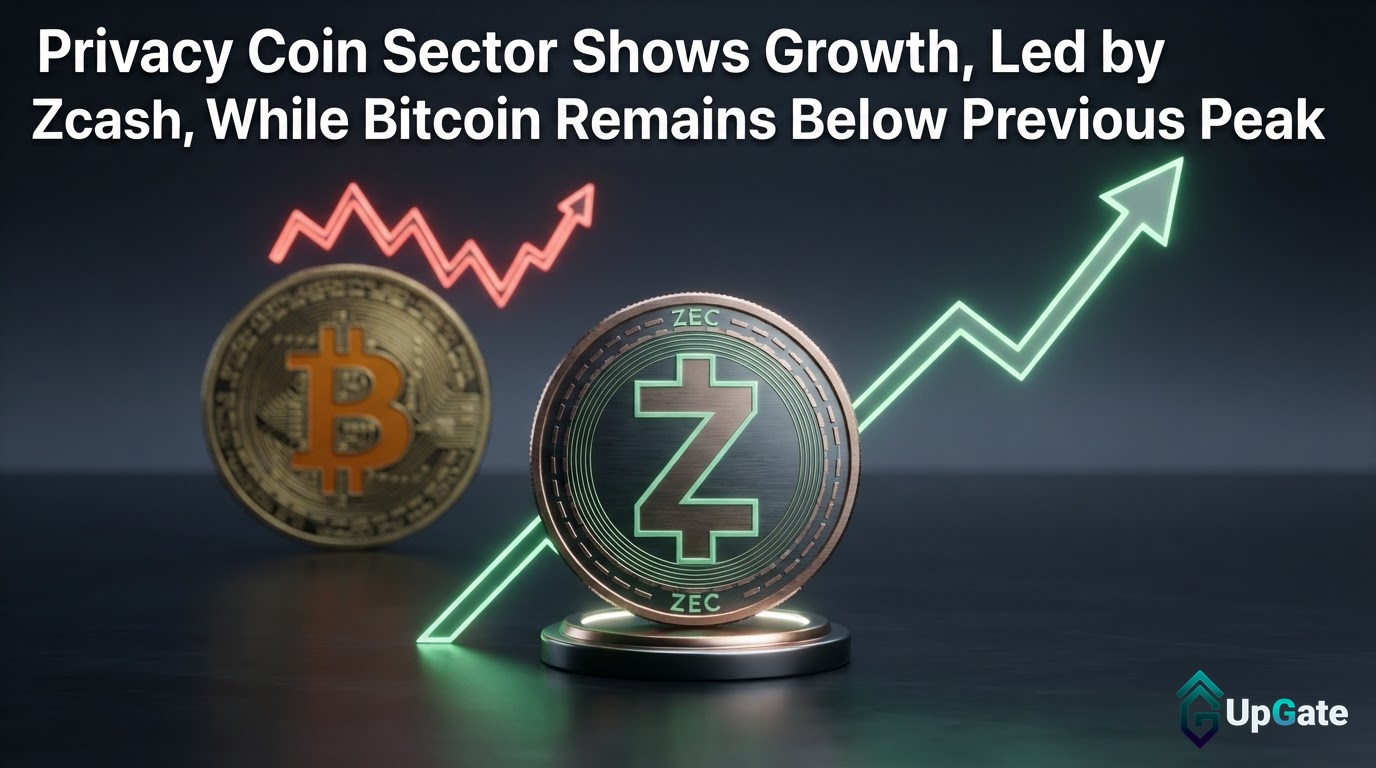
  • Privacy Coin Sector Shows Growth, Led by Zcash, While Bitcoin Remains Below Previous Peak

    Privacy Coin Sector Shows Growth, Led by Zcash, While Bitcoin Remains Below Previous Peak

    The privacy coin sector has seen a significant increase of 213% since Bitcoin’s peak in October 2025, with Zcash (ZEC) identified as a primary driver of this growth. In contrast, Bitcoin is trading below its previous all-time high.

    Privacy Sector Performance
    The privacy sector’s combined market capitalization has grown from $7.1 billion a year ago to $33.6 billion currently, according to Wise Crypto. Zcash alone accounts for approximately 62% of this total market cap. Over the past year, Zcash’s market capitalization has increased 25-fold, climbing from a ranking of #82 to a high of #7, and is currently positioned at #9.

    Grayscale’s Zcash ETF, trading under the ticker $ZCSH, surpassed $500 million in assets within two weeks of its launch. Monero (XMR), another significant privacy coin, has approximately doubled in value over the same period, despite facing delistings from several exchanges. Data from Glassnode indicates that the privacy sector is the only segment of the cryptocurrency market trading above its October 2025 peak levels, with other categories experiencing double-digit declines.

    Among the top 25 largest cryptocurrency assets, only four are currently trading above their October 2025 levels: ZEC, HYPE, XMR, and WBT. At the time of writing, Zcash was trading around $1,140, marking a 32% increase in the last two weeks and over 2,100% in the past year. However, this is still significantly below its 2016 all-time high of approximately $3,190.

    In comparison, Bitcoin was trading near $77,000, having experienced a slight decrease of just over 1% in the past 24 hours and approximately 34% over the past year. Bitcoin is currently about 39% below its all-time high from October 2025.

    Expert Perspectives and Uncertainties
    Investor Dan Tapiero commented that the performance of ZEC and HYPE indicates a broader diversification of activity within the crypto space beyond Bitcoin, Ethereum, and Solana. Egor Sidelska of Infinex argued that privacy is a developing area in crypto, suggesting ZEC has potential for future gains. However, some analysts, such as filbfilb, have expressed caution regarding the sustainability of the Zcash growth. His valuation models, based on transaction activity compared to Bitcoin at a similar issuance stage, suggest potential prices around $944, though convergence scenarios indicate higher fair value if Zcash continues to close the gap.

    The growth in the privacy coin sector, particularly driven by Zcash, presents a notable divergence from Bitcoin’s current performance. While Zcash has seen substantial gains, uncertainties remain regarding the long-term sustainability of this trend and its precise valuation based on underlying transaction activity. The impact of factors like exchange delistings on other privacy coins, such as Monero, also warrants observation.

    Why This Matters

    The privacy coin sector has increased by 213% since Bitcoin’s October 2025 peak. The long-term sustainability and trustworthiness of Zcash’s performance are subject to ongoing analysis.

    Broader Context

    Privacy coins have climbed 213% since Bitcoin’s October 2025 peak even as BTC itself remains well below that high, according to a breakdown posted today by analyst Wise Crypto.

  • XRP Ledger Batch V1.1 Amendment Nears Activation Following Security Rebuild

    XRP Ledger Batch V1.1 Amendment Nears Activation Following Security Rebuild

    The XRP Ledger’s Batch V1.1 amendment is one validator vote away from reaching the 80% threshold required for activation, marking a significant step after a security rebuild addressed a critical flaw in the original version.

    Security Rebuild Addresses Critical Flaw

    The Batch V1.1 amendment, also known as XLS-56, is designed to enable multiple transactions from different accounts to execute atomically within a single ledger close. If any transaction in a batch fails, the entire operation reverts, ensuring an all-or-nothing outcome. This feature, which does not require smart contracts, is intended for use cases such as atomic swaps, coordinated settlements, and potentially streamlining NFT minting and transfers.

    The original Batch V1.0 amendment contained a signature-validation bug that was discovered before its mainnet deployment. The flaw, identified in February, involved an early return in the checkBatchSign function. This could have allowed validation to return success without verifying all signers if a signer account did not yet exist on the ledger, potentially enabling unauthorized transactions on behalf of other accounts. Crucially, because the bug was found pre-mainnet, no funds were at risk.

    Rigorous Testing and Review Process

    In response to this critical flaw, a comprehensive security rebuild was undertaken for Batch V1.1. RippleX developer Mayukha Vadari reported that the amendment shipped with xrpld version 3.3.0 and is now up for validator voting. The rebuild process was extensive, incorporating a senior engineering review, adversarial testing, external security reviews, and AI-assisted analysis. This included review by four senior engineers, a Sherlock Batch Attackathon, a Halborn reassessment, a Common Prefix audit, Cantina AI scanning, and rigorous Devnet and testnet regression testing. The team also addressed additional bugs identified through newer AI red-teaming efforts, fixing issues related to MPT validation bypasses, node crashes, path size validation, signature verification, signer ordering, and transaction hashing.

    Validator Sentiment and Next Steps

    Validator sentiment is currently close to the activation threshold. The most recent snapshot shows 27 trusted validators have voted in favor of the amendment, with eight against, resulting in approximately 77% support. This places the amendment just one vote shy of the 80% required to initiate the 14-day activation countdown. FrancisBovineSwift described the current voting status as “nearly there.”

    This security rebuild for Batch V1.1 follows other recent scrutiny of XRPL amendments, including the withdrawal of the Permission Delegation amendment due to a high-severity bug found before mainnet deployment. The current Batch V1.1 amendment has undergone additional review in light of these past events.

    To enhance transparency in the amendment process, an XRPL testing dashboard was launched this month, tracking which transaction types, fields, and result codes have been exercised on Devnet, making amendment testing more visible to the community.

    While Batch V1.1 is nearing activation, the exact date remains dependent on the final validator votes. The specific details of all ‘other issues’ addressed during the rebuild beyond the primary signature-validation bug are not fully detailed in the provided information.

    Why This Matters

    The materials describe a narrow update: The XRP Ledger’s Batch V1. The exact date of activation is dependent on the final validator vote.

    Broader Context

    Source materials place the factual news in this context: The XRP Ledger’s Batch V1.1 amendment is one validator vote short of reaching the 80% threshold needed to begin its 14-day activation countdown, after a security rebuild that followed a critical flaw in the original version.

  • DOGE Surge: 240 Million Coins Moved in a Week, What’s Next?

    DOGE Surge: 240 Million Coins Moved in a Week, What’s Next?

    Whales Accumulate Dogecoin Amidst Price Dip, Analysts Eye Potential Rebound

    The original meme coin, Dogecoin (DOGE), has experienced a downturn in the past seven days, with its valuation dropping 9% and currently trading around $0.08. However, this price decline has presented an opportunity for large investors, often referred to as “whales,” to acquire DOGE at lower levels, potentially paving the way for a future recovery.

    Analysts suggest that Dogecoin may be at a critical juncture, with some anticipating a significant rally.

    Prominent X user Ali Martinez reported that substantial investors have purchased over 240 million DOGE in the last week. This accumulation is valued at nearly $20 million and brings the total holdings of these market participants to approximately 19 billion units, representing 12% of Dogecoin’s circulating supply.

    “Large holders continue buying the dip, suggesting confidence may be building ahead of the next potential rebound,” Martinez commented.

    The activity of these whales is not the sole indicator pointing towards a potential upward movement for DOGE. The asset’s Relative Strength Index (RSI) has fallen to an oversold level of 9. This technical indicator, which ranges from 0 to 100, typically signals a buying opportunity when below 30, while readings above 70 often suggest an impending correction.

    Furthermore, Dogecoin’s exchange netflow data reveals a trend of outflows significantly outpacing inflows in recent weeks. This suggests a shift by investors from centralized exchanges to self-custody solutions, thereby reducing immediate selling pressure on the market.

    Another X user, Trader Tardigrade, observed that DOGE has been trading within an ascending channel and has successfully bounced off the lower trendline support for the second time. The analyst has set an initial target of $0.093.

    Previously, Trader Tardigrade had identified a potential cup-and-handle formation, suggesting that a decisive breakout above the handle could propel the price to the psychologically significant $0.10 level and “restart momentum.”

    Cryptollica offered a bullish outlook, describing the current market conditions as the “silence before the storm.” The platform believes this is an opportune moment to buy DOGE, potentially the best in its 12-year history, and projects a price surge to a new all-time high exceeding $1.

  • Kyrgyzstan’s National Bank Partners with CertiK to Enhance Digital Asset Security

    Kyrgyzstan’s National Bank Partners with CertiK to Enhance Digital Asset Security

    The National Bank of the Kyrgyz Republic (NBKR) and CertiK have formalized a strategic partnership through a Memorandum of Understanding (MoU) aimed at bolstering digital asset security and regulatory oversight. The agreement, signed on September 15th, 2026, in Bishkek, Kyrgyzstan, establishes a framework for long-term cooperation in the evolving digital finance landscape.

    This collaboration will facilitate the exchange of expertise between the NBKR and CertiK in crucial areas including blockchain security, cybersecurity, Anti-Money Laundering/Combating the Financing of Terrorism (AML/CFT), and the monitoring of digital asset transactions. CertiK is slated to provide technical and strategic support, potentially including the deployment of its Supervision and Compliance solutions, to strengthen risk monitoring and regulatory oversight within Kyrgyzstan.

    As Kyrgyzstan’s central bank, the NBKR is actively advancing financial innovation, notably through its Digital Som central bank digital currency (CBDC) initiative. This partnership underscores the NBKR’s commitment to modernizing the country’s financial ecosystem while ensuring robust security and compliance measures are in place.

    CertiK, a prominent Web3 security services provider, brings extensive experience in safeguarding digital assets and advising regulatory bodies. Since its establishment in 2017, the firm has protected over $600 billion in digital assets across more than 150 countries and regions. CertiK has previously offered technical advisory support to regulators in the United States and has participated in regulatory consultations with the Monetary Authority of Singapore (MAS).

    The MoU outlines cooperation in areas such as security assessments, formal verification, operational resilience, digital asset custody, security standards, and licensing requirements. This partnership is anticipated to serve as a model for similar engagements with other highly regulated institutions, reflecting the growing importance of specialized technical security expertise in supporting regulated digital asset markets and infrastructure.

    Mr. Sanzhar Abdygaziev, representing the NBKR, emphasized the value of exchanging experience and expertise in blockchain and digital asset security, cybersecurity, AML/CFT, and transaction analysis. Ronghui Gu, from CertiK, expressed enthusiasm for bringing the firm’s expertise to the long-term cooperation with the NBKR, supporting the secure development of the country’s digital asset ecosystem. Jason Jiang also represents CertiK in discussions regarding this partnership.

    Why This Matters

    The materials describe a narrow update: NBKR and CertiK have entered into a strategic partnership via an MoU to enhance cooperation on digital asset security and oversight. The partnership is seen as a model for similar engagements with other highly regulated institutions.

    Broader Context

    Source materials place the announcement in this context: The National Bank of the Kyrgyz Republic (NBKR) is the country’s central bank and the primary authority responsible for maintaining price stability, safeguarding the stability of the banking and payment systems, and supporting the sustainable development of Kyrgyzstan’s financial sector. The NBKR regulates and supervises financial institutions, manages monetary policy and international reserves, and oversees the national payment infrastructure. It is also advancing financial innovation through its Digital Som central bank digital currency (CBDC) initiative, aimed at modernizing payments, expanding financial inclusion, and strengthening the resilience and efficiency of the country’s financial ecosystem.

  • Ethereum Holders Drain Exchanges at Record Speed

    Ethereum Holders Drain Exchanges at Record Speed

    Ethereum’s exchange supply has plummeted, with only 6.06 million ETH now held on trading platforms, a stark contrast to the 22.9 million recorded at the network’s peak in June 2020. This represents a 73% reduction in readily available supply, according to Santiment’s estimates.

    Reduced Liquidity Fuels Potential Price Swings

    The diminished amount of ETH readily accessible on exchanges signifies less supply available for immediate market sales and panic sell-offs. This trend is attributed to ETH being moved into staking, wrapped in exchange-traded funds (ETFs), utilized in treasury strategies, and held in long-term custody.

    Furthermore, validators are locking up the cryptocurrency to bolster network security. Analytics firm Santiment points out that significant demand surges are not a prerequisite for substantial price movements. As liquid supply contracts, even modest buying pressure can exert a more pronounced impact on price.

    Key Price Levels and Market Uncertainty

    Crypto analyst Crypto Patel has identified Ethereum at a “structural inflection point,” pinpointing the $2,567-$2,666 zone. A rejection from this range could see ETH fall to $2,150, $2,000, or even $1,800. Conversely, a confirmed close above $2,666 on a higher timeframe could pave the way for a climb towards $3,100 and $4,000.

    Meanwhile, Daan Crypto Trades noted that the asset has experienced significant volatility ahead of the CLARITY Act vote and Federal Open Market Committee (FOMC) meetings. Traders have been adjusting their positions in anticipation of the uncertainty, leading to heightened price swings that have impacted both bullish and bearish positions. The analyst expressed limited optimism regarding the upcoming vote, suggesting that a failure or withdrawal could lead to further downside and choppy trading leading up to the FOMC announcement. Post-FOMC, price action is expected to stabilize.

    BitMine’s Strategic Accumulation

    One notable entity, BitMine, has been consistently increasing its Ethereum holdings. The company now possesses 5,956,378 ETH after acquiring an additional 27,180 tokens in the past week.

    This accumulation brings BitMine’s stake to 4.9% of Ethereum’s total supply of 122 million ETH, inching closer to its “Alchemy of 5%” strategy target. The company has been purchasing ETH weekly since June 30, 2025, and has now reached 98% of its goal. A significant portion of its treasury is staked, with 5,067,309 ETH, approximately 85% of its holdings, locked within its MAVAN validator network.

    Tom Lee projects annualized staking revenue to reach $334 million, potentially rising to $392 million if the entire ETH treasury were staked. Bitmine’s total crypto, cash, and speculative holdings are valued at $15.8 billion.

    Ethereum ETFs See Strong Inflows

    In separate developments, Ethereum ETFs recorded nearly $197 million in net inflows last week. The final trading day saw $216.4 million flow into these funds, effectively counteracting earlier outflows. This positive momentum has extended into the current week, with Monday alone bringing in an additional $121 million in net inflows, pushing the monthly total towards $450 million.

  • XRP Surges on Potential Clarity Act Vote

    XRP Surges on Potential Clarity Act Vote

    XRP Surges to Three-Week High Ahead of Key Senate Vote

    The cryptocurrency market experienced a broad rally on Monday, a move that may have surprised many given the anticipation of an upcoming Federal Reserve interest rate hike. XRP, however, stood out, climbing from below $1.35 to $1.50, reaching a three-week peak.

    While the digital asset faced resistance at that level, it remains trading near $1.40 as the market braces for what could be a pivotal day for all crypto assets, including XRP.

    Senate Poised for Crucial Vote on Crypto Legislation

    The U.S. Senate is expected to vote shortly after 2 p.m. ET today on cloture for a motion to proceed with landmark crypto market-structure legislation. This vote is not a final passage but will indicate whether the bill has sufficient support to advance in the Senate, requiring 60 votes to move to formal debate. This means Republicans will need to secure support from several Democrats or independents, while also preventing defections within their own party.

    Recent developments have offered some encouragement. Senate Republicans released a revised version of the bill over the weekend, aiming to resolve disagreements concerning stablecoins, banking competition, and the crypto interests of public officials. However, Senate Democrats submitted a counterproposal late Monday, despite their Republican counterparts having described their version as “best and final.”

    CLARITY Act Could Redefine Regulatory Landscape for XRP

    The implications of this legislation are particularly significant for XRP. The digital asset already benefits from greater regulatory certainty compared to its status before or during Ripple’s protracted legal battle with the Securities and Exchange Commission (SEC). The proposed CLARITY Act, if passed, would establish a stable statutory framework, dividing oversight responsibilities between the SEC and the Commodity Futures Trading Commission (CFTC) and introducing clearer rules for digital-asset intermediaries.

    Analysts Bullish on XRP, Expecting Volatility

    Following a previous analysis that explored potential negative outcomes for XRP in the event of an unfavorable vote, this report shifts focus to the prevailing bullish sentiment among analysts. A common consensus among these experts is the likelihood of significant volatility.

    CasiTrades projects the next key upside target in the $1.74-$1.78 range, with a further ascent to $2.00 if upward momentum persists. EGRAG CRYPTO, a consistently bullish commentator on XRP, emphasized the importance of the asset holding its 100-day exponential moving average (EMA) around $1.38-$1.40, a level currently being retested. Maintaining this support would preserve the broader bullish structure, while a break below could trigger a substantial decline.

    Other analysts, including Mikybull Crypto and Bird, have also noted an improvement in XRP’s momentum leading up to the Senate vote. The immediate hurdle, however, is significant. A sustained breakout above the $1.50 level could pave the way for a move towards $1.60, with the $1.74-$1.78 range coming into view shortly thereafter. Naturally, $2.00 would then emerge as the next clear psychological target.

  • Token Burns Evolve: Revenue-Linked Models as a Speculative Thesis Beyond Scarcity

    Token Burns Evolve: Revenue-Linked Models as a Speculative Thesis Beyond Scarcity

    The cryptocurrency market is increasingly scrutinizing token burn mechanisms, shifting focus from the simple act of supply reduction to the economic engines that power these burns. While token burns have historically attracted traders with the promise of a shrinking supply, the underlying economic activity fueling these reductions is emerging as a more critical factor for investors seeking potential upside.

    Traditionally, token burns were often scheduled events or tied to fixed parameters. This approach, while visually appealing due to the reduction in total supply, does not inherently create value if the token lacks underlying demand or utility. As discussed in the article, scarcity alone does not magically create demand if nobody needs the asset. This highlights a common confusion between tokenomics, which controls supply, and economics, which determines whether an asset is actually desired.

    The article suggests that the most compelling burn narratives combine both tokenomics and economics. This is where revenue-linked burns emerge as a potentially more significant speculative thesis. In this model, revenue generated from the project’s business activities is used to purchase and subsequently burn tokens. This approach transforms a burn from a static event into a dynamic demand loop, potentially correlating token reduction with the project’s economic success.

    The Limitations of Traditional Burns and the Rise of Revenue-Linked Models

    For early-stage projects, this revenue-linked mechanism offers a tangible way for investors to track progress. Instead of solely focusing on a countdown timer for supply reduction, investors can monitor increasing revenue, open-market token purchases, and the subsequent burns. This provides a speculative thesis that can be tested against actual business performance, rather than relying on the burn as a form of financial magic.

    BNB Chain, for instance, has a long-running supply-reduction program. Its 36th quarterly burn in July 2026 removed over 1.6 million BNB, valued at approximately $932 million at the time. The goal of BNB’s Auto-Burn is to reduce its supply toward 100 million tokens. While these figures demonstrate the scale of traditional burns, the article posits that the source of the funds is becoming increasingly important.

    Wanted Network’s Revenue-Linked Model

    Wanted Network’s WNTD model is presented as an example of this revenue-linked approach. The platform’s Sponsor Campaign Economy is designed such that qualifying advertiser revenue is allocated through a 60/20/15/5 model. A portion of this revenue is designated for open-market purchases of WNTD, which are then burned. The article emphasizes the sequence: brands engage in creator campaigns, these campaigns generate revenue, a portion of that revenue facilitates WNTD purchases, and these purchased tokens are subsequently burned. If advertiser demand grows, the burn mechanism gains more fuel, creating a speculative thesis that buyers can test against business performance.

    Market Sophistication and Future Outlook

    The market is becoming more sophisticated, moving beyond the simple question of “How many tokens will be burned?” to “What is creating the money that buys or removes them?” A burn funded by real network fees, marketplace activity, or advertiser spending carries a different economic character than one scheduled primarily for headlines. For buyers seeking potential high-upside tokens, this distinction could be significant.

    However, the article also acknowledges inherent uncertainties. The success of any burn model, including revenue-linked ones, is not guaranteed and can be overwhelmed by factors such as liquidity, token unlocks, emissions, market conditions, and overall execution. While crypto may continue to embrace token burns for their visual and marketing appeal, the underlying economic drivers are increasingly shaping their perceived value and speculative potential.

    Why This Matters

    The materials describe a narrow update: The article explains that while token burns, which reduce supply, have historically attracted crypto traders, the source of the funds used for these burns is becoming a more critical factor. Whether the revenue-linked burn model will consistently create value if the underlying business remains small.

    Broader Context

    Source materials place the market analysis in this context: The article is sponsored content from a third party on CryptoPotato.