Tag: Positive

  • AI Dips, Oil Surges as Crypto Eyes Clarity Act

    AI Dips, Oil Surges as Crypto Eyes Clarity Act

    Bitcoin Price Prediction: AI Stocks Tumble as Oil Surges, Crypto Awaits Clarity Act Vote

    Bitcoin is showing bullish signs, trading at $77,700 and maintaining its strength while equity markets experience significant declines. Underlying volume data suggests this resilience is not by chance.

    AI Stocks Hit as Industry Leaders Urge Caution

    AI stocks faced a sharp downturn in pre-market trading on Monday following calls from Anthropic CEO Dario Amodei for the industry to temper development. Sam Altman and Elon Musk echoed these sentiments over the weekend. South Korea’s Kospi index fell 3%, SK Hynix dropped 6%, and the Nasdaq 100-tracking QQQ slid 1.5%. Cloud-focused companies like Nebius and CoreWeave saw declines of 5-6%.

    Global Markets Under Pressure from Dual Shocks

    Global stock markets are experiencing a broad slide, impacted by a weekend essay from Anthropic’s CEO warning against an AI “race to the bottom,” which is affecting AI stocks worldwide. Simultaneously, oil prices have jumped as Saudi Arabia’s East-West pipeline remains shut. Nasdaq futures are down 1.6%, while the VIX has risen 12.7%.

    Oil Prices Spike, Adding Inflationary Concerns

    Brent crude surged over 3% to $107 a barrel, intensifying inflationary pressures as traders prepare for the Senate’s initial procedural vote on the CLARITY Act tomorrow. Cryptocurrencies are currently decoupling from the tech sector’s AI-driven sell-off. This divergence, coupled with a compressed regulatory timeline, creates a particularly dynamic 48-hour window for the crypto market this quarter.

    Bitcoin Consolidates Amidst Key Support and Resistance Levels

    Bitcoin is consolidating within the $76,000 to $78,000 range. Analysts have identified $76,432 as a crucial support level. Should the CLARITY Act vote prove disappointing, further support can be found at $75,674 and $71,781.

    On the upside, resistance is clustered at $78,146 and $78,260, with a broader ceiling between $80,000 and $82,793. A positive outcome for the CLARITY Act procedural vote tomorrow could trigger a breakout above $79,730, potentially pushing Bitcoin towards $81,000.

    The base case scenario anticipates continued range-bound trading between $76,000 and $78,000 as the market awaits the Federal Reserve meeting on September 15-16. A bearish outlook would involve a stalled vote, coupled with rising oil prices and persistent inflation expectations, leading to Bitcoin testing the $75,674 support level.

    Decoupling Narrative Strengthens, but Growth Challenges Emerge

    Bitcoin’s ability to hold $77,700 while AI stocks decline is a genuinely bullish signal, reinforcing the narrative of crypto’s decoupling from tech market volatility. However, a significant challenge remains: at a market capitalization exceeding $1.5 trillion, doubling Bitcoin’s value from its current level presents a considerably greater hurdle than it did in 2020.

    Traders seeking substantial returns are increasingly shifting their focus to infrastructure projects built on the Bitcoin network itself, rather than solely relying on Bitcoin’s price movements.

    Bitcoin Hyper Aims to Enhance Developer Experience and Network Functionality

    Bitcoin Hyper is working to improve the developer experience through clearer documentation, familiar tooling, predictable APIs, and enhanced feedback mechanisms for builders. The project’s objective is to simplify network comprehension, facilitate integration with existing tools, and reduce the friction for new development.

    Bitcoin Hyper ($HYPER) is positioning itself as the first Bitcoin Layer 2 solution with SVM integration, aiming to achieve execution speeds that surpass Solana while leveraging Bitcoin’s base security for settlement. The presale has already raised $33.1 million, with the current token price at $0.0136862. Staking rewards are set to be live at launch.

    The project’s Decentralized Canonical Bridge is designed to address the core issues that have historically limited Bitcoin’s liquidity for smart contract applications, including slow transactions, high fees, and a lack of programmability. Investors are encouraged to research Bitcoin Hyper before the presale window closes.
  • MEXC Reports August Trading Activity Increase Across New Tokens and Tokenized Traditional Assets

    MEXC Reports August Trading Activity Increase Across New Tokens and Tokenized Traditional Assets

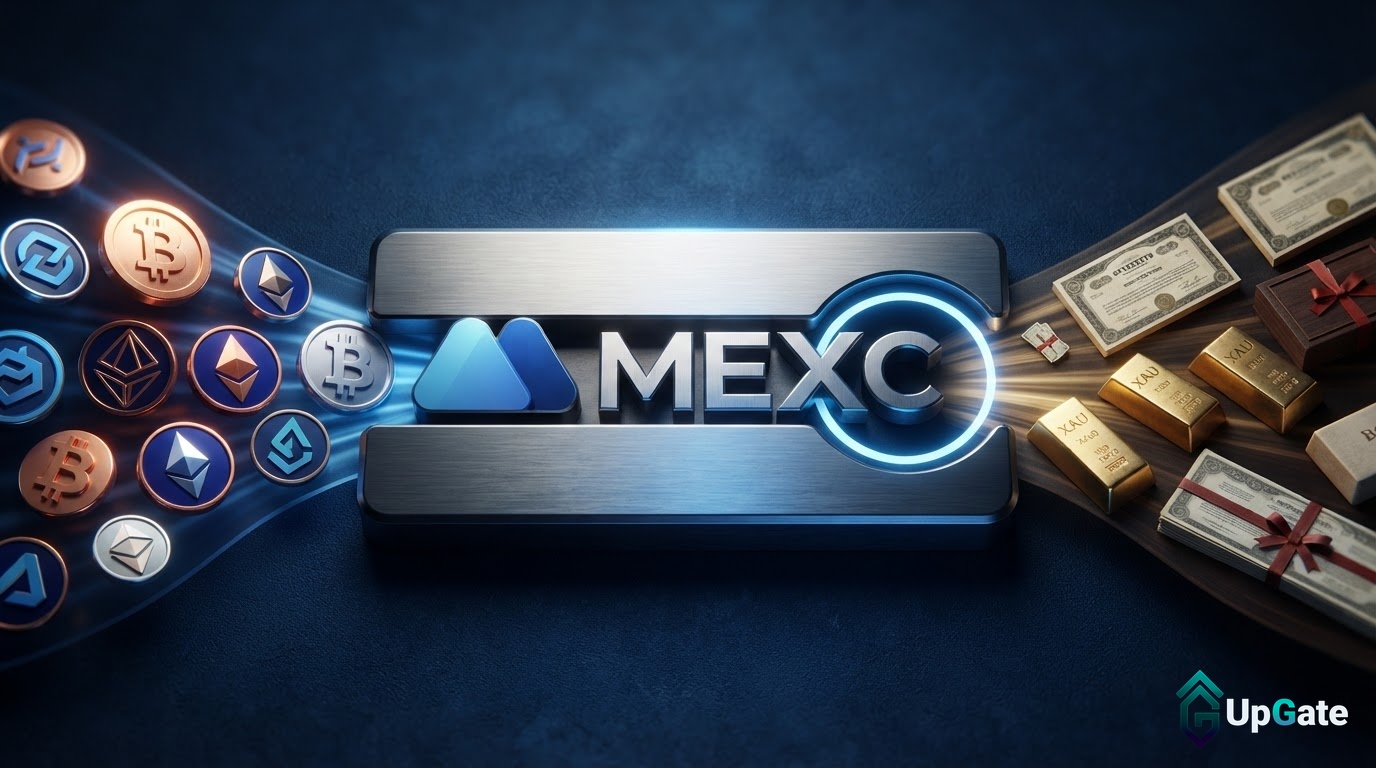
    MEXC’s August 2026 trading data indicates a notable increase in user engagement with both new cryptocurrency tokens and tokenized traditional finance (TradFi) assets. The exchange reported a 21% month-over-month increase in users trading new tokens and a 31% surge in trading volume for tokenized stocks. Overall TradFi Spot trading volume also saw a 13% increase, while precious metals futures trading volume climbed by 32%.

    The new token market on MEXC experienced significant activity in August. The top-performing new token achieved a peak gain of 14,143%. Among the top 10 tokens by peak gain, the average peak gain was 3,358%, a 145% increase from the previous month. Memecoins accounted for 55% of the total trading volume among these top 10 new tokens, while AI, RWA, DeFi, and cross-chain projects comprised the remaining 45% of this volume.

    In the tokenized traditional finance sector, trading volume for tokenized stocks rose by 31% month-over-month. The precious metals futures segment also saw a 32% increase in trading volume. This growth was primarily driven by Gold (XAU) and Silver (SILVER), with XAU volume increasing by 57% and SILVER by 39%. Conversely, XAUT volume declined by 10% during the same period.

    MEXC launched three flagship campaigns in August focused on TradFi, xStocks, and MOVE, each with a total prize pool of 1 million USDT. The ‘TradFi Million-Dollar Gala’ campaign attracted over 174,000 registrations and generated an average daily trading volume of 4.2 billion USDT, suggesting that platform-driven initiatives contributed to overall trading activity.

    Founded in 2018, MEXC operates as a global multi-asset trading platform, providing access to crypto, stocks, tokenized assets, and derivatives across more than 170 markets. The exchange is known for its 0-fee digital asset trading.

    Why This Matters

    The materials describe a narrow update: MEXC’s August trading data shows a 21% month-over-month increase in users trading new tokens and a 31% increase in tokenized stock trading volume. The growth in tokenized stock trading volume was the main driver of TradFi Spot growth.

    Broader Context

    Source materials place the factual news in this context: MEXC is a pioneer in 0-fee digital asset trading.

  • Binance Pay: Crypto Onramp and Onchain Payment Infrastructure

    Binance Pay: Crypto Onramp and Onchain Payment Infrastructure

    Binance Pay Unveils On-Chain Solutions to Enhance Business Payment Capabilities

    Binance Pay is broadening its business-focused payment offerings with a new suite of on-chain solutions tailored for wallets, trading platforms, decentralized applications (dApps), payment providers, merchants, and digital platforms.

    The new services are designed to enable wallets, dApps, Web3 platforms, and aggregators to convert users into funded customers without the need to develop their own standalone on-ramp experiences. Businesses can integrate Binance as an on-chain funding and payment route for wallet top-ups, account funding, deposits, and merchant payments.

    This expansion is particularly significant for payment platforms, fintech companies, trading platforms, and merchants aiming to incorporate Binance-powered on-chain payments into their customer journeys. Additionally, the solutions are engineered for API providers, developers, and AI platforms looking to build machine-to-machine and autonomous payment use cases.

    Key Features and Use Cases

    The new offerings include “On-ramp as a Service,” “Pay On-chain,” and “Agentic Payments (B402).”

    Primary Use Case:
    These solutions allow users to fund their wallets, top up accounts, make deposits, or pay merchants directly from their Binance account balances.

    Core Value:
    The primary value proposition is to convert non-crypto users into funded customers. Payments can be completed using any available Binance account balance. Furthermore, APIs and AI tools can be monetized autonomously and instantaneously on the BNB Chain.

    Settlement:
    Settlement options include direct transfers to receiving wallet addresses for “On-ramp as a Service” and “Pay On-chain,” and direct transfers to merchant wallets for “Agentic Payments.”

    Supported Assets:
    The platform supports over 400 cryptocurrencies and more than 100 fiat currencies. For “Agentic Payments,” specific stablecoins like USDT, USDC, U, and USD1 on the BSC network are supported.

    Businesses operating wallets, trading platforms, payment services, merchant platforms, dApps, API services, or AI platforms that are exploring cryptocurrency or on-chain payments are invited to explore these new capabilities. Interested parties can visit the Binance Pay Onchain page to submit an integration request, detailing their specific use case, target markets, and expected scale.

  • CLARITY Act Revised with Ethics, Enforcement Changes Ahead of Senate Vote

    CLARITY Act Revised with Ethics, Enforcement Changes Ahead of Senate Vote

    The CLARITY Act, a proposed cryptocurrency market structure bill, has undergone significant last-minute revisions as Senate Republicans seek to secure Democratic support for an upcoming procedural vote. The latest version, now 635 pages, includes an ethics framework, revised enforcement authority, and adjustments to the Blockchain Regulatory Certainty Act (BRCA).

    A key addition is an ethics framework, which has President Donald Trump’s voluntary agreement. This framework aims to restrict public officials, judges, and their spouses from issuing or sponsoring digital assets, requiring them to divest holdings or place them in a blind trust. This section incorporates elements of the Tillis-Gallego proposal and addresses Democratic concerns about the Department of Justice (DOJ) having sole enforcement authority over ethics provisions, particularly in light of potential conflicts involving President Trump and his family’s financial interests in the crypto sector.

    To satisfy Democratic objections, enforcement authority has been expanded to include state attorneys general alongside the DOJ. Senate Banking Digital Assets Subcommittee Chair Cynthia Lummis stated the bill is ready after a year of bipartisan negotiations.

    Revisions to the Blockchain Regulatory Certainty Act (BRCA) narrow its scope to primarily cover the Bank Secrecy Act and civil enforcement. Language extending protections to criminal proceedings, including cases under Section 1960, has been removed. However, amendments would still extend BRCA protections to miners and validators.

    The bill’s stablecoin yield section now features a “circuit breaker” mechanism, first proposed by Senator Tillis in July. This mechanism would empower federal regulators to intervene if stablecoins trigger significant withdrawals from community banks. Stricter limits on vertical integration have also been introduced, addressing potential conflicts of interest involving digital commodity exchanges, brokers, and dealers, including rules on affiliate trading.

    The updated text suggests that state consumer protection laws remain in effect and that developer protections will not override existing regulations for derivatives markets or prediction markets.

    Coinbase CEO Brian Armstrong voiced support for the CLARITY Act on September 10, indicating that the company’s primary concerns had been addressed. Armstrong claimed the bill has garnered support from law enforcement groups, banks, and other crypto companies.

    The CLARITY Act is scheduled for a procedural vote in the US Senate on Tuesday. Uncertainties remain regarding the extent of Democratic support and the ultimate impact of the revised provisions on the cryptocurrency market structure.

    Why This Matters

    The materials describe a narrow update: The CLARITY Act has been amended with a 635-page version that includes an ethics framework, revised enforcement authority for the DOJ and state attorneys general, changes to the Blockchain Regulatory Certainty Act (BRCA), a stablecoin yield ‘circuit breaker’ mechanism, and stricter limits on vertical integration. Whether Democrats will ultimately provide sufficient support for the CLARITY Act’s procedural vote.

    Broader Context

    Source materials place the factual news in this context: The CLARITY Act is a cryptocurrency market structure bill.

  • Web3 Gaming’s Pivot: Quality Gameplay Overtakes Tokenomics Amid Market Maturation

    Web3 Gaming’s Pivot: Quality Gameplay Overtakes Tokenomics Amid Market Maturation

    The Web3 gaming sector is undergoing a significant market correction, forcing a fundamental re-evaluation of its value proposition. The industry’s focus is shifting decisively from speculative tokenomics and economic incentives towards the intrinsic quality and fun factor of games, a move that industry observers suggest is crucial for long-term viability and broader adoption.

    The easy-money phase for Web3 gaming is over, with capital becoming increasingly selective. Projects that fail to deliver genuinely entertaining experiences are disappearing faster. This trend, while potentially painful, is seen by some as a necessary maturation for the sector. It contrasts with the earlier generation of play-to-earn games, which benefited from novelty, where the economic loop itself served as a primary attraction, allowing for simpler gameplay.

    However, this model had inherent limitations. Games overly sensitive to token prices or reliant on a constant influx of new users to sustain rewards proved fragile. The current, healthier approach prioritizes the game itself. Blockchain technology is increasingly being viewed as infrastructure that can enhance gameplay through optional features like clear ownership, portable assets, open marketplaces, or transparent rewards, rather than being the core identity of the product. This mirrors the success of mainstream software, where users engage with the experience, not the underlying database architecture.

    Market Correction and Maturation

    Industry snapshots from August 2026 indicate a market that remains active, with industry trackers counting over 2,300 gaming dapps and a multi-billion-dollar gaming-token market. However, traditional venture funding into the sector during the same period was notably scarce, according to another monthly report. This suggests that while Web3 gaming has not disappeared, the assumption that every project deserves to survive solely based on its blockchain integration has faded. This is a normal progression for a mature entertainment market, where, like traditional gaming, most projects do not achieve widespread success.

    The Evolving Role of Digital Ownership

    The value of digital ownership in games is not being dismissed. Games have long featured complex virtual economies with items like skins, collectibles, and land. The evolving question for Web3 is whether blockchain can enhance the value of these assets through clearer ownership, more open trading, or cross-ecosystem identity. The answer is likely to vary significantly across different game genres, from competitive shooters to persistent virtual worlds.

    Creator Economy Frontier

    Beyond in-game mechanics, a significant opportunity for blockchain integration lies in supporting the external creator economy that surrounds modern games. Streamers, video editors, modders, and communities generate substantial economic activity. However, this layer faces challenges such as fragmented payments, difficulty in coordinating campaigns, and opaque reward systems.

    Blockchain technology, with its ability to facilitate cross-border payments, coordinate incentives through tokens, and provide transparent on-chain systems, is well-positioned to address these issues without requiring players to engage with crypto before enjoying a game. Wanted Network is presented as a project focusing on this external creator economy. Its Missions system offers creators structured challenges with defined objectives and reward opportunities, allowing them to build reputation and earn WNTD-powered rewards.

    Wanted Network’s advertiser model is designed to connect campaign demand with WNTD usage, potentially creating market demand for the token and facilitating token burns. The success of this model, like any token economy, will ultimately depend on genuine activity, with creators valuing the opportunities and brands finding value in the output.

    Uncertainties and Future Outlook

    Several uncertainties remain regarding the future of Web3 gaming. The long-term success of models like Wanted Network hinges on real-world engagement. The extent to which blockchain-enhanced digital assets will gain value for players is still unfolding, and the optimal application of blockchain technology will likely differ across game types. Ultimately, the credibility of blockchain in gaming will grow as users focus on the experience rather than the technology itself. For games that can demonstrate their inherent fun and value independent of their token, blockchain has the potential to become a genuine advantage.

    Why This Matters

    The materials describe a narrow update: The Web3 gaming sector is experiencing a market correction where projects are increasingly judged on gameplay rather than solely on economic incentives like tokens and NFTs. The long-term success of Wanted Network’s model will depend on real activity from creators and brands.

    Broader Context

    Source materials place the market analysis in this context: Web3 gaming has spent years promising that blockchain would change what it means to own, earn, and trade inside games.

  • ETH Surges Past $2.5K, $3K Target in Sight

    ETH Surges Past $2.5K, $3K Target in Sight

    Ethereum is attempting to convert its post-rally consolidation into a continuation setup. The cryptocurrency remains compressed near the upper end of its trading range, and a sustained breakout could pave the way for another bullish leg. However, a recent Consumer Price Index-driven false breakout underscores the need for confirmation.

    Daily Timeframe Analysis

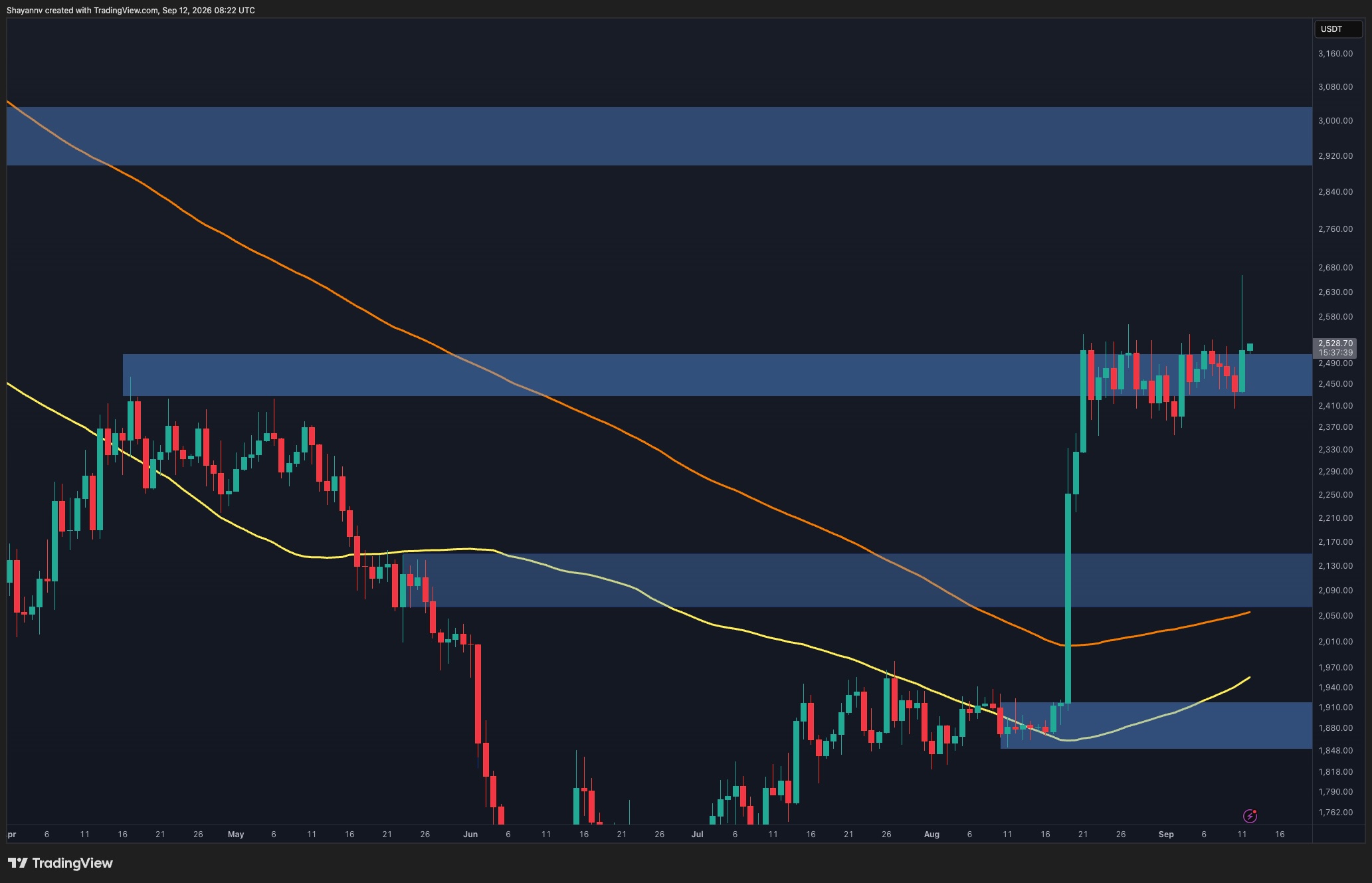
    On the daily chart, Ether (ETH) continues to hold the substantial gains achieved during its explosive August breakout. Crucially, the market has avoided a significant retracement despite repeated tests of the $2.43K-$2.52K area. This suggests that sellers have so far been unable to force prices back toward lower support zones.

    The current consolidation is occurring around the $2.45K-$2.52K resistance zone, with ETH trading near $2.52K. A convincing daily breakout and close above this region would bolster the bullish structure and could open the door to higher prices. In such a scenario, the next major resistance level visible on the chart is situated around the $2.92K-$3.03K zone.

    However, the market must first establish acceptance above the current resistance. Failure to do so would leave ETH vulnerable to further rotation within the existing range. The $2.05K-$2.14K region represents the next significant daily support area below, with moving averages also gradually trending upward beneath the price.

    Four-Hour Chart Insights

    The four-hour chart offers a clearer perspective on the immediate breakout attempt. ETH has spent several weeks trading within a range of roughly $2.35K to $2.56K, repeatedly encountering rejections at both ends without establishing a sustained directional move.

    The most recent CPI-driven volatility briefly pushed the price above the $2.56K range high, with a wick extending toward $2.66K. However, buyers were unable to sustain the breakout, and ETH quickly retreated back within its established structure. This false breakout is significant, as it demonstrates that simply trading above the range is insufficient. The market needs to hold above the $2.56K resistance level to confirm a genuine structural breakout.

    Nevertheless, ETH has recovered toward the upper boundary once more, rather than experiencing a sharp rejection. If buyers can secure acceptance above $2.56K, the consolidation could resolve into another bullish leg.

    Conversely, another rejection would keep the range intact and initially expose the $2.43K-$2.45K support zone. A more decisive breakdown below the range floor around $2.35K would weaken the continuation scenario and could shift attention toward the $2.22K-$2.27K support zone.

    Spot Taker CVD Analysis

    The 90-day Spot Taker CVD (Cumulative Volume Difference) tracks the cumulative difference between market buy and market sell volume. An increasing positive CVD indicates dominance by taker buyers, while a declining negative reading reflects stronger aggressive selling.

    The latest data reveals a notable shift toward positive readings, indicating that taker buyers have regained dominance after more neutral conditions were observed during July and early August. This transition has coincided with ETH’s recovery toward the $2.5K region and serves as a constructive signal for the current consolidation.

    If taker-buy dominance persists while ETH establishes itself above the range resistance, the combination would provide stronger confirmation that demand is supporting another bullish leg. A loss of this buy-side dominance, particularly alongside another failed breakout, would instead suggest that aggressive demand is not yet robust enough to sustain the upward move.

  • UniCredit Explores Crypto Custody, Seeks Tech Partner

    UniCredit Explores Crypto Custody, Seeks Tech Partner

    UniCredit Explores Digital Asset Expansion, Seeking Technology Partner

    UniCredit is reportedly exploring a significant expansion into digital assets, which would include offering cryptocurrency custody and brokerage services. The Italian banking giant has begun the process of selecting a technology provider to manage these assets and facilitate client transactions, according to sources familiar with the matter cited by Bloomberg.

    The discussions are in their nascent stages, and no definitive decisions have been made. Potential areas under consideration for the bank’s digital asset strategy encompass custody and brokerage, the development of tokenized investment products and fixed-income securities, and the implementation of stablecoin applications for its clientele. UniCredit has not yet disclosed the specific providers it is evaluating, the potential investment amount, or a timeline for selecting a partner.

    Any cryptocurrency services launched by UniCredit would operate under the European Union’s Markets in Crypto-Assets (MiCA) regulation, which became fully effective on July 1. MiCA mandates that crypto-asset service providers obtain a license and permits authorized firms to offer custody and trading services across the 30-country European Economic Area.

    The strategy of enlisting an external technology provider for digital asset custody is a path already adopted by other major financial institutions. Deutsche Bank, for instance, partnered with the Swiss firm Taurus for its digital asset custody and tokenization initiatives, following an extensive selection and due diligence process.

    UniCredit has not shied away from introducing crypto-related products to its clients. In July 2025, the bank launched a five-year, dollar-denominated certificate linked to BlackRock’s iShares Bitcoin Trust (IBIT). This product, available to professional clients, offers full capital protection at maturity, a cap of 85% on returns, and requires a minimum investment of $25,000. It marked the first offering of its kind in Italy.

    Further demonstrating its engagement with tokenization, UniCredit, in collaboration with state lender Cassa Depositi e Prestiti, structured Italy’s first tokenized minibond on a public blockchain in December 2025. This involved a €5 million issuance for E4 Computer Engineering, recorded on the Polygon network.

    Additionally, UniCredit is a member of Qivalis, an Amsterdam-based consortium comprising 37 European banks across 15 countries. This consortium plans to launch a MiCA-compliant euro stablecoin on the Ethereum blockchain in the latter half of 2026. The stablecoin would be backed one-to-one by euro deposits, pending approval from the Dutch central bank.

    Other prominent lenders have already begun offering cryptocurrency services to their customers. BBVA has introduced Bitcoin (BTC) trading and custody for its private banking clients in Switzerland. Similarly, Israel’s Bank Leumi has partnered with Galaxy to manage trading and custody services, with a planned launch in 2027 that will include Bitcoin, Ethereum (ETH), and Solana (SOL).

    UniCredit’s digital market expansion extends beyond cryptocurrencies. On September 8, the bank acquired a minority stake in VC Trade, a Frankfurt-based platform focused on digitizing bond and loan transactions. This platform operates within the debt markets, separate from the bank’s cryptocurrency initiatives, and has facilitated over €90 billion in transactions across more than 600 deals.

  • India’s Demat 2.0 Pilot Integrates Tokenized Bonds into Regulated Market

    India’s Demat 2.0 Pilot Integrates Tokenized Bonds into Regulated Market

    India has launched Demat 2.0, a pilot infrastructure for issuing, holding, trading, and settling corporate bonds as digital tokens. This initiative integrates directly into the nation’s existing regulated securities market and connects with the Reserve Bank of India’s (RBI) wholesale digital rupee via the Unified Market Interface (UMI) to enable atomic delivery-versus-payment.

    The Demat 2.0 system allows corporate bonds to be created natively on a distributed ledger, with ownership records managed by statutory depositories. This integration aims to streamline the bond issuance and trading process by enabling simultaneous transfer of securities and cash, thereby eliminating the settlement risk inherent in traditional, multi-day processes.

    Early transactions under the pilot have seen significant activity. On September 7, REC Limited issued the first tokenized bonds, raising ₹500 crore from 18 investors. Larsen & Toubro also issued tokenized bonds worth ₹500 crore. On September 9, IIFL raised ₹25 crore from a single investor. Collectively, these initial issuances total ₹1,025 crore (approximately $116 million).

    According to SEBI, issuers can now receive funds on the same day as bidding, a marked improvement over the traditional two-to-three-day settlement period. Secondary-market investors can also receive their proceeds immediately. Furthermore, the infrastructure supports smart contracts for automating coupon and redemption payments directly to investors’ central bank digital currency (CBDC) wallets.

    Crucially, tokenized bonds issued under Demat 2.0 remain legally identical to conventional bonds. Existing regulations concerning credit ratings, disclosures, debenture trustees, and investor protection continue to apply. The infrastructure is private and permissioned, with nodes operated by depositories and stock exchanges, ensuring it operates within the established financial system.

    The rollout of Demat 2.0 is planned in three stages. The current phase focuses on institutional corporate bond issuance. The second stage will introduce secondary-market trading and expand access to retail investors. The final stage may involve bringing additional regulated entities onto the network and exploring the tokenization of other financial instruments.

    While the pilot demonstrates a clear path for integrating distributed ledger technology into India’s financial markets, specific details regarding the timeline for the second and third stages, as well as the exact nature of additional entities and instruments to be included, remain to be clarified.

    Why This Matters

    The materials describe a narrow update: SEBI and RBI have introduced Demat 2. The exact date for the second and third stages of the Demat 2.0 rollout.

    Broader Context

    Source materials place the factual news in this context: Unlike many tokenization experiments built on standalone blockchain platforms, India’s Demat 2.0 model is being integrated directly into the nation’s existing regulated securities market.

  • Ethena’s USDe and sUSDe Stablecoins Launch on TRON Network

    Ethena’s USDe and sUSDe Stablecoins Launch on TRON Network

    Ethena Labs’ USDe and sUSDe stablecoins are now available on the TRON network, expanding the availability of Ethena’s digital dollar products to a platform that has recorded over 403 million user accounts as of September 2026. This integration provides TRON users with access to dollar-denominated assets and rewards-bearing products, while Ethena gains access to TRON’s substantial user base.

    Users can bridge USDe and sUSDe to the TRON network via Stargate Finance. Support across TRON’s core decentralized finance (DeFi) applications, including JustLend DAO and SUN.io, is expected to roll out over the coming weeks. USDe on TRON will remain connected to liquidity across Ethena’s other supported networks.

    The TRON blockchain, founded in September 2017 and launched in May 2018, hosts the largest circulating supply of USD Tether (USDT), exceeding $94 billion. As of September 2026, the network has recorded over 15 billion total transactions and a total value locked (TVL) of $28 billion.

    Ethena Labs views this integration as a step toward making its digital dollar products accessible to a wider audience. The company is backed by investors including Fidelity, Franklin Templeton, Dragonfly, Binance Labs, Bybit, and OKX. TRON DAO, a community-governed decentralized autonomous organization, focuses on accelerating internet decentralization through blockchain technology and decentralized applications.

    While immediate access to USDe and sUSDe on TRON is now available, broader adoption across wallets, exchanges, and payment applications is anticipated to follow. The full integration with TRON’s core DeFi applications is also planned for the near future, though specific timelines for these rollouts are subject to development.

    Why This Matters

    The materials describe a narrow update: USDe and sUSDe stablecoins are now available on the TRON network, allowing users to bridge these assets and access them across TRON’s DeFi applications, wallets, exchanges, and payment platforms. Broader adoption across wallets, exchanges, and payment applications to follow.

    Broader Context

    Source materials place the factual news in this context: Ethena Labs is the development team behind USDe and USDtb and a contributor to the Ethena protocol.

  • Grok AI: Bitcoin to Reach $200K by 2027

    Grok AI: Bitcoin to Reach $200K by 2027

    Bitcoin Poised for Potential Surge as 2026 Draws to a Close

    As Bitcoin heads into the final months of 2026, the cryptocurrency appears to be gathering momentum for a significant move, though a universally bullish sentiment has yet to take hold. Elon Musk’s AI, Grok, has projected that Bitcoin could reach $180,000 by the start of 2027.

    Following a notable gain of approximately 25% in August, Bitcoin is currently trading around the $76,900 mark. The $80,000 level is emerging as a critical psychological and technical resistance point.

    The prevailing thesis suggests a return to sustained risk-on market conditions in late 2026. This outlook is underpinned by improving macroeconomic liquidity, a resurgence of durable spot ETF inflows, increased institutional accumulation, and potential policy support, which could include expansions of strategic reserves or clearer regulatory frameworks. The broader “debasement trade,” driven by ongoing fiscal pressures, is also seen as a contributing factor.

    Historically, Bitcoin has experienced substantial growth from mid-cycle levels once a new bull phase commences. A move from the current approximate $77,000 level, through the previous all-time high near $126,000, and into the mid-to-high $100,000s would align with a full bull market scenario and Bitcoin’s established role as a market leader.

    Recent US Consumer Price Index (CPI) data revealed an inflation rate of 3.4%, meeting expectations. This release triggered a significant price increase for Bitcoin, accompanied by a notable drop in yields. However, questions remain about the sustainability of this rally, as inflation is not yet showing sufficient signs of cooling.

    Technical Outlook and Key Levels

    From a technical standpoint, Bitcoin appears to have largely recovered from its earlier weakness in 2026. The cryptocurrency has recently been trading above its 200-day moving average, and the 20-day exponential moving average (EMA) has crossed above the 200-day EMA, a development that could signal a bullish trend.

    The immediate challenge lies at the $80,000 resistance, followed by the $82,000 to $85,000 range. A sustained breach of this zone could pave the way for a move towards $90,000 and eventually six-figure territory.

    Conversely, a decline below $72,000 would significantly undermine the bullish outlook. A deeper drop towards $68,000 would raise concerns about whether the recent rally was merely a temporary bounce within a bear market.

    Grok AI’s Price Predictions

    Synthesizing these factors, Grok AI forecasts Bitcoin’s price to be between $140,000 and $180,000 on January 1, 2027.

    The AI’s bearish scenario projects a range of $65,000 to $80,000, contingent on deteriorating ETF flows and adverse macroeconomic conditions. The base case scenario anticipates a price of $115,000 to $130,000, reflecting continued institutional investment and a gradual strengthening of the cryptocurrency market.

    However, Grok AI suggests that if a full-fledged Bitcoin bull run materializes, the target could be dramatically elevated to $175,000 to $200,000. This scenario envisions a combination of accelerating ETF inflows, declining interest rates, widespread retail fear of missing out (FOMO), and a decisive breakout, potentially recreating the explosive final stages observed in previous crypto cycles.

    Grok AI’s central prediction stands at $115,000, with a bull-run target exceeding $200,000.

    Emerging Infrastructure Plays

    While Bitcoin is currently facing resistance at $80,000, Grok AI’s prediction of a potential surge to $200,000 by year-end highlights the significant upside potential. However, even at such levels, Bitcoin may not offer the same exponential returns as assets acquired before substantial liquidity arrives. This is where early-stage infrastructure projects aim to fill a crucial gap.

    Bitcoin Hyper ($HYPER) is positioning itself as the first Bitcoin Layer 2 solution with full Solana Virtual Machine (SVM) integration. The platform claims to offer smart contracts operating at Solana-like speeds while settling transactions on Bitcoin’s base layer.

    The project’s presale has reportedly raised $33 million to date, with tokens priced at $0.0136856 and staking rewards available for early participants. Its decentralized canonical bridge and low-latency execution layer are designed to address Bitcoin’s long-standing limitations: slow transaction times and a lack of programmability.