Tag: Positive

  • Analyst Sees Ethereum Breakout, Targets $15,000

    Analyst Sees Ethereum Breakout, Targets $15,000

    Ethereum (ETH) is currently retesting a significant multi-year resistance level, a point it has only reached twice before in 2021 and again around 2025. Trader Crypto Patel believes this confluence of events presents the “biggest breakout setup yet” for the cryptocurrency.

    Potential for Significant Gains

    In a chart shared on Friday, Patel outlined a potential trajectory for Ether, projecting targets of $5,000, then $10,000, and ultimately $15,000 should the current resistance line be decisively broken. This analysis comes as ETH was trading near $2,500, still less than half of its all-time high.

    Patel explained that ETH is testing this multi-year resistance zone for the third time, having previously found support in a long-term accumulation area. His chart illustrates a descending trendline from 2018 to 2021, characterized by three successive lower highs before ETH surged during that year’s rally. The same horizontal resistance level capped the price at its 2021 peak and again near 2025, with the current test marking the third interaction with this line.

    Below this resistance, a broad band identified by the analyst as the “Best Accumulation Zone” has historically absorbed major pullbacks. A rising trendline within this zone, which ETH is currently trading just above at approximately $2,460 according to the chart, further supports this area.

    The specific price targets indicated on Patel’s chart are more detailed than the $5K, $10K, $15K shorthand. The chart itself identifies $3,270 and $4,892 as the initial levels of interest, with $5,500 also flagged, before the path potentially opens towards $10,000 and then $15,000.

    Market Performance and Volume

    As of this report, spot ETH had seen minimal change over the preceding 24 hours. However, it was down approximately 1% for the week and roughly 44% below its price a year ago. Despite this, the cryptocurrency showed a notable gain of 31% over the past month, though this increase still left it 50% shy of its all-time high reached in August 2025.

    Trading volume experienced a significant surge, climbing by nearly 28% in the last 24 hours to approximately $16.3 billion. This uptick in activity suggests renewed interest around the price level that Patel is closely monitoring.

    Divergent Analyst Views

    Offering a contrasting perspective, analyst NoName posted on Thursday, suggesting that ETH had just completed a “Wave 3 impulsive move.” According to their analysis, “the next phase of the structure should be a Wave 4 correction.”

    NoName highlighted $2,324 as the initial support level to watch. They posited that a bounce towards the $2,784 to $2,966 range could occur if buyers successfully defend this level. Conversely, a failure to hold support could lead to a decline into the $2,112 to $2,222 zone. A daily close below $2,050 would invalidate this particular setup entirely.

    Other market observers have also been focusing on the $2,500 to $2,550 area. Some anticipate a move towards $3,000 following a strong weekly close above resistance, while others are forecasting an initial retreat towards $2,000.


  • Bitcoin Gains as Markets Await Fed Rate Decision After Inflation Data

    Bitcoin Gains as Markets Await Fed Rate Decision After Inflation Data

    Inflation Data Delivers Mixed Signals, Bitcoin Recovers Near $79,000

    U.S. inflation data released Friday presented a complex picture for markets, with the core monthly reading exceeding economists’ expectations, though most figures aligned with forecasts. Bitcoin experienced an initial dip following the news but has since rebounded, approaching the $79,000 mark as the broader market assesses the implications for the Federal Reserve’s upcoming interest rate decision next week.

    The Consumer Price Index (CPI) rose 3.4% year-over-year and 0.4% month-over-month, both figures matching consensus expectations, according to data from the Bureau of Labor Statistics. This annual rate is unchanged from July.

    Core CPI, which excludes volatile food and energy prices, offered a more nuanced view. The annual core rate eased to 2.4% from 2.5% in July, marking its lowest level since 2021. However, the monthly core reading came in at 0.3%, higher than the 0.2% anticipated by analysts, a detail that drew significant market attention.

    This report arrives just five days before the Federal Reserve’s September 15-16 meeting, the last major data point the committee, led by Chair Kevin Warsh, will consider before its vote. The CME FedWatch tool, which gauges probabilities derived from 30-day Fed funds futures, currently places the likelihood of a 25-basis-point rate hike at approximately 69%. Prediction markets show a slightly more cautious outlook, with Polymarket pricing the same outcome at 62% and Myriad, a platform operated by Decrypt’s parent company Dastan, at 61%.

    Three regional Fed presidents had previously dissented in favor of a rate hike at the July meeting, suggesting such a move would not be entirely unexpected. Furthermore, Warsh, in his inaugural keynote address at Jackson Hole, indicated that the Fed still has “work to do” to combat inflation.

    Crypto Market Shows Resilience Amidst Data Release

    The cryptocurrency market, despite an initial negative reaction to the inflation data, appears to have largely absorbed the report. Ethereum led the major cryptocurrencies higher, gaining 7.48% on the day to reclaim $2,611, while Solana climbed 4.53% to move back above $100.

    Zcash stood out among the top 10 cryptocurrencies, posting a 23.09% gain over the past week, complemented by a 4.71% daily increase. The total cryptocurrency market capitalization also rose, approaching $2.7 trillion.

    Market sentiment shifted significantly with the price action. The Crypto Fear & Greed Index, which had fallen to 56 following Thursday’s hotter-than-expected producer price report, surged back to 73, firmly within “greed” territory. The Altcoin Season Index, however, remains at 38, indicating that Bitcoin continues to dominate the ecosystem as traders exhibit a degree of caution regarding risk appetite.

    Institutional Inflows Remain Stagnant, Derivatives Activity Surges

    Spot Bitcoin Exchange-Traded Funds (ETFs) continued to show net outflows, totaling approximately $330.5 million on the day. This serves as a reminder that the current rally has not yet attracted substantial new institutional capital from the sidelines.

    Derivatives activity saw a notable increase in tandem with the market rally. Open interest across crypto futures rose by 1.52% to $429.99 billion, with 24-hour trading volume up 2.27% to $877.11 billion. The volatile trading session resulted in $897.09 million in liquidations, with $493.85 million affecting long positions and $403.24 million impacting short positions.

    Bitcoin Technicals Show Bullish Signals

    Bitcoin opened Friday’s trading session at $76,529 and briefly touched a daily low of $76,040 shortly after the CPI release, reflecting an initial hawkish market reaction. However, the market reversed course sharply thereafter.

    Bulls have since taken control, pushing BTC to a session high of $79,837. The cryptocurrency is currently trading near $79,007, representing a 3.24% gain for the day and approaching the psychologically significant $80,000 level.

    A significant structural shift observed on Bitcoin’s chart is the crossing of its 50-day exponential moving average (EMA) above its 200-day EMA. This “golden cross” is typically interpreted by traders as confirmation of a bullish medium-term trend, rather than a precursor to a reversal, which would be signaled by the opposite “death cross.”

    However, this technical event has just occurred and is not yet technically confirmed. The gap between the two averages remains narrow, suggesting that traders may wish to exercise patience before definitively declaring a sustained bullish trend.

    The Relative Strength Index (RSI) currently stands at 59.7, indicating bullish territory and well below the 70 level that would suggest an overbought condition. The Average Directional Index (ADX), which measures trend strength irrespective of direction, is in the 40s, comfortably above the 25 threshold that distinguishes a genuine trend from market noise. The DI+ line being above the DI- line further confirms that buyers are currently in control.

    Key support levels to monitor are situated below current prices. A Fibonacci retracement, drawn from the summer’s low of $68,858 to the late August high of $82,281, places Bitcoin’s “golden zone” – the retracement band that bulls need to defend – between $73,986 and $75,569.

    Above current levels, the late August high of $82,281 remains the critical resistance that needs to be breached for the rally to extend further before the Federal Reserve’s rate decision on Wednesday at 2 p.m. ET.

  • Crypto Surge Wipes Out $250M in Short Positions

    Crypto Surge Wipes Out $250M in Short Positions

    Bitcoin and Ethereum Surge, Liquidating Over $250 Million in Shorts

    The cryptocurrency market experienced a significant shift on Friday, with major digital assets staging a powerful rally. Shortly after the release of US Consumer Price Index (CPI) data, which initially triggered a downturn across markets, Bitcoin (BTC) surged dramatically, nearing the $80,000 mark.

    Ethereum (ETH) was a standout performer, posting an impressive 8% gain on the day and over 5% in the preceding hour. The second-largest cryptocurrency briefly surpassed $2,660, a level not seen since late January, before experiencing a minor pullback.

    The cryptocurrency landscape can transform with remarkable speed, often within the span of an hour. Less than two hours prior to the rally, market sentiment was decidedly bearish, with analysts closely watching the US CPI figures as a potential indicator for future Federal Reserve interest rate decisions.

    Both Bitcoin and the broader crypto market had been under pressure. Upon the release of the CPI data, which largely met expectations, Bitcoin saw a dip from above $77,000 to a weekly low of $76,000.

    However, the situation rapidly reversed. Bitcoin quickly recovered to its previous trading level before climbing to $78,000 and then approaching $79,000, pulling the rest of the market along with it. Ethereum, as noted, was among the primary beneficiaries of this upward momentum.

    These swift and substantial market movements resulted in a sharp increase in liquidations for leveraged short positions. Data from CoinGlass indicates that over the past hour alone, more than $250 million in short positions were liquidated, with Ethereum accounting for over half of that total.

  • Ripple Enhances Enterprise Finance with AI-Driven GSmart Expansion, Prioritizing Governance

    Ripple Enhances Enterprise Finance with AI-Driven GSmart Expansion, Prioritizing Governance

    Ripple is expanding its AI-driven GSmart tools within Ripple Treasury, aiming to bolster capabilities for enterprise finance teams in forecasting, liquidity, risk, reconciliation, and reporting. This strategic move emphasizes a “treasury-native AI” approach, designed to integrate seamlessly with existing treasury policies, data, and processes while crucially maintaining human control over financial decisions.

    GSmart differentiates itself by separating financial calculations from AI interpretation. Its “deterministic engines” manage the core financial computations, while AI components are tasked with analyzing policies, identifying patterns, and suggesting actions. This architecture ensures that while AI provides valuable insights and recommendations, the ultimate execution of any action remains subject to human approval. The system incorporates Knowledge Studio for policy and control management, and Analytics Studio for AI-based reporting through its “Ask GSmart” feature.

    “Every CFO is under pressure to embrace AI, but they’re equally responsible for ensuring every financial decision is explainable, governed and compliant,” stated Renaat Ver Eecke, SVP of Ripple Treasury. “Rather than asking customers to blindly trust an AI system, GSmart works within each organization’s own treasury policies to surface recommendations transparently, while ensuring humans remain in control of every decision. This isn’t simply AI-native treasury, but rather treasury-native AI.”

    This expansion occurs as the rapid adoption of AI agents in businesses appears to be outpacing the development of corresponding governance systems. Gartner projects that the average Fortune 500 company will be running over 150,000 AI agents within the next two years. However, a significant gap exists, with only 13 percent of organizations currently believing they possess adequate governance for these AI agents.

    In parallel, discussions are emerging about the intersection of AI agents and blockchain technology. Binance founder Changpeng Zhao has suggested that AI agents could significantly drive crypto adoption. He posits that autonomous software, seeking payment systems that operate without human intervention, will find blockchain networks more amenable than traditional finance systems due to their API-driven nature. Zhao anticipates agent-based trading and payments using cryptocurrency could emerge within months.

    While Ripple’s GSmart focuses on integrating AI into existing financial frameworks with a robust governance layer, uncertainties remain regarding the exact timeline for full integration and widespread adoption of its expanded features. The specific impact on enterprise finance teams’ efficiency and the broader adoption of similar AI governance models by other companies are also points of ongoing observation.

    Why This Matters

    The materials describe a narrow update: Ripple is integrating more AI-driven tools into its GSmart platform for enterprise finance teams, focusing on areas like forecasting, liquidity, risk, reconciliation, and reporting. The exact timeline for the full integration and widespread adoption of GSmart’s expanded features.

    Broader Context

    Source materials place the factual news in this context: Ripple is expanding GSmart across Ripple Treasury as the company adds more AI-driven tools for enterprise finance teams.

  • MEXC August Trading Data Reveals Sector-Specific Futures Surge and Growth in Tokenized Assets

    MEXC August Trading Data Reveals Sector-Specific Futures Surge and Growth in Tokenized Assets

    MEXC reported a significant 130% month-on-month increase in its stock, index, and ETF Futures trading volume for August. The platform also saw a 35% rise in available contracts, exceeding 400, alongside a 30% increase in Tokenized Stocks and ETF Spot trading volume. This data indicates a broadening investor interest across various asset classes.

    The trading activity in August highlighted a discernible shift from broad-market indices towards sector-specific exposure, particularly in the memory and semiconductor industries. This trend is evident in the substantial growth of futures contracts tracking these areas. According to MEXC, SKHYNIX (SK hynix) futures experienced a roughly 401% increase in trading volume, making it the top-performing individual stock future. Micron (MU) futures also saw a significant rise of approximately 267%.

    This focus on specific sectors extended to exchange-traded funds (ETFs). SOXL Stock Futures, which tracks a semiconductor ETF offering 3x daily long exposure, ranked first in trading volume with a surge of approximately 1,192%. Its share of total Stock Futures trading volume grew from under 4% in July to 20% in August. Concurrently, SOXS Stock Futures, tracking an inverse leveraged semiconductor ETF, recorded a 436% volume growth. In contrast, trading volume for SPX500 Stock Futures, which tracks the S&P 500 Index, declined by approximately 32%, suggesting a tactical shift by traders away from broad market exposure.

    The combined trading volume for Stock Futures tracking Korean companies, including SKHYNIX, increased by approximately 348%. These Korean stocks’ share of total Stock Futures trading volume rose from 14% in July to 27% in August. Conversely, SanDisk (SNDK) share of total Stock Futures trading volume decreased from 25% in July to 11% in August.

    In the spot market, MEXC’s Tokenized Stocks and ETFs experienced broad-based growth, with overall volume increasing by 30%. These assets now represent 73% of the platform’s total TradFi Spot trading volume, up from 63% in July. Circle (CRCL) led this segment with a 69% month-on-month volume increase. Nebius (NBIS) and NVIDIA (NVDA) also recorded notable gains, with trading volumes up 188% and 54% respectively. This widespread engagement across listings suggests general user interest rather than concentration in a few assets, with MEXC reporting that 99% of listings saw higher volumes.

    Further analysis of MEXC’s August trading activity indicates that Stock Futures trading during the 10 weekend days accounted for approximately 11% of the monthly volume. This highlights a demand for continuous market access, particularly for futures contracts that can be traded outside of underlying market hours.

    MEXC also reported that its 0-fee event in August attracted over 86,000 users and saved participants more than $1 million in trading fees. The platform stated its commitment to expanding equity-linked offerings and simplifying access for global users.

    While MEXC reported these increases, some details remain unspecified. For example, the exact number of available contracts is stated as ‘over 400’, and the specific ‘multiple U.S. and Korean memory stocks’ and ‘semiconductor ETFs’ beyond those explicitly mentioned are not detailed. The precise percentage of ‘nearly all existing listings’ that saw gains in tokenized assets also remains uncertain.

    Why This Matters

    The materials describe a narrow update: MEXC’s stock, index, and ETF Futures trading volume increased by 130% month-on-month in August. The exact number of available contracts beyond ‘over 400’.

    Broader Context

    Source materials place the factual news in this context: MEXC released its August TradFi trading data.

  • Senate Test Vote on CLARITY Act: Procedural Step Amidst Regulatory Uncertainties

    Senate Test Vote on CLARITY Act: Procedural Step Amidst Regulatory Uncertainties

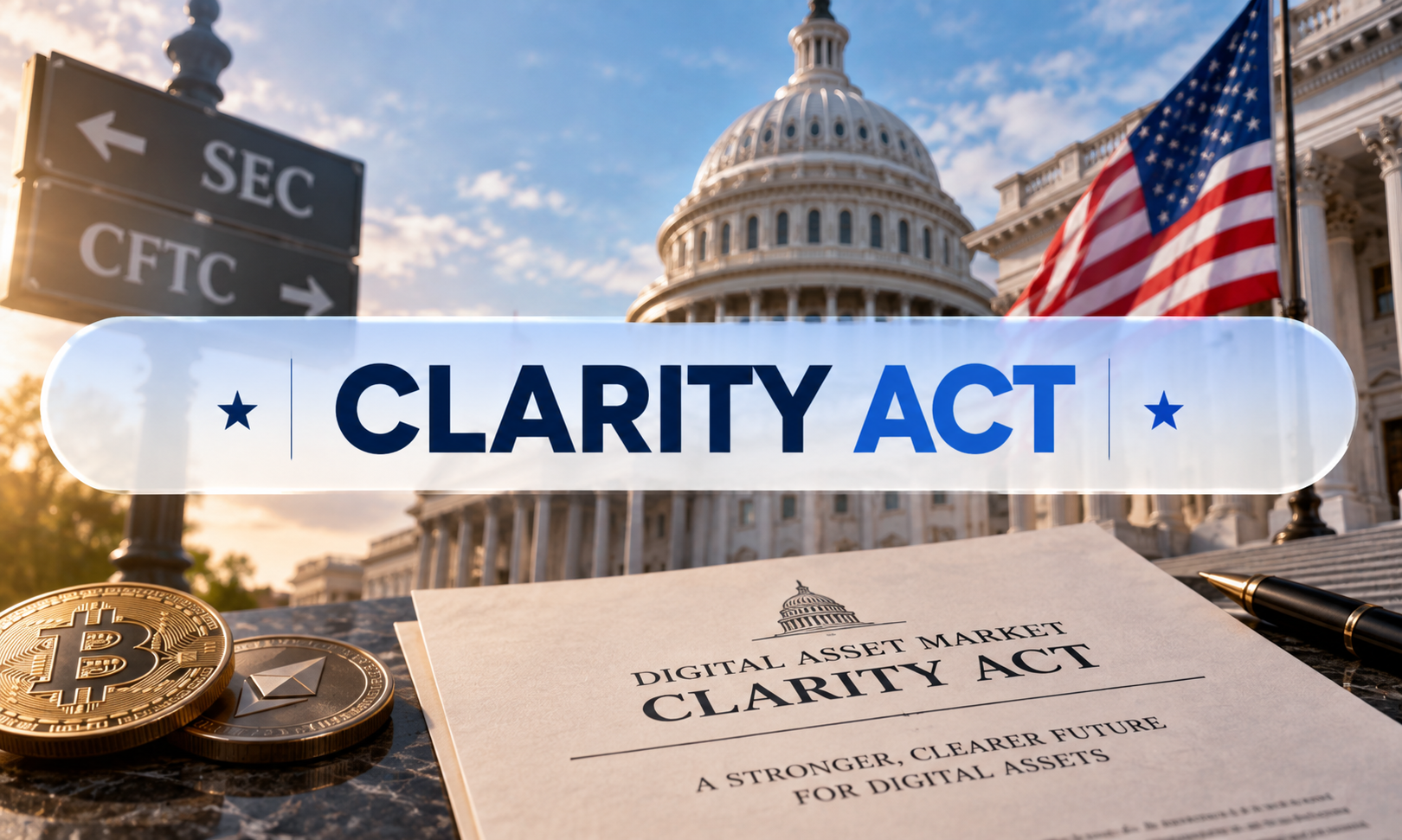
    The U.S. Senate is scheduled for a procedural test vote on September 15th regarding the Digital Asset Market CLARITY Act, a legislative proposal aimed at establishing a federal regulatory framework for the cryptocurrency market. This vote, which requires 60 senators to proceed with debate (cloture), represents a procedural step that could influence the momentum for federal digital asset regulation, according to the FactSheet.

    The CLARITY Act has navigated substantial legislative milestones, including passage in the House by a vote of 294-134 in July 2025 and advancement within the Senate Banking Committee with a 15-9 vote in May 2026. Its primary objective, as detailed in the FactSheet, is to address ambiguities surrounding regulatory authority between the Securities and Exchange Commission (SEC) and the Commodity Futures Trading Commission (CFTC). The proposed framework aims to maintain the SEC’s oversight of securities and specific fundraising transactions while concurrently broadening the CFTC’s jurisdiction over spot digital-commodity markets and related intermediaries.

    Key Provisions Under Consideration

    The legislation introduces several key provisions targeting distinct aspects of the digital asset ecosystem. Notably, it defines “ancillary assets” as network tokens whose value may be contingent on entrepreneurial or managerial efforts. These assets would be classified as commodities, necessitating specific disclosures, with obligations potentially concluding once relevant managerial efforts cease. This distinction seeks to separate the securities-law treatment of initial fundraising activities from the subsequent regulatory status of the token itself, addressing a long-standing uncertainty within the industry.

    Furthermore, the CLARITY Act addresses the evolving fields of decentralized finance (DeFi) and self-custody. Recent revisions focus on non-decentralized DeFi protocols—those that present as decentralized but where identifiable parties retain significant control. Such protocols may be subject to CFTC registration requirements for spot digital-commodity activities. The bill’s broader framework evaluates discretion, control, and censorship capabilities to determine a protocol’s decentralization status. Crucially, it also provides protections for software developers and network participants whose roles are confined to software development or transaction validation. Additionally, the act stipulates that federal agencies generally cannot prohibit individuals from utilizing self-hosted wallets.

    Federal Registration and Compliance

    The proposed legislation also outlines a defined federal registration and supervision regime for digital-commodity exchanges, brokers, and dealers. This initiative aims to replace the current fragmented system of state regulations, enforcement actions, and overlapping federal authorities with a cohesive national structure. In line with this, the latest Senate proposal mandates that cryptocurrency intermediaries comply with Bank Secrecy Act obligations. This integration includes anti-money-laundering programs, customer identification, suspicious activity reporting, and sanction compliance within the federal framework. The bill further incorporates additional disclosures and protections designed to mitigate insider abuse, fraud, and ensure proper handling of customer assets.

    Legislative Path and Future Uncertainties

    The CLARITY Act’s journey began with the House passing H.R. 3633 by a vote of 294-134 in July 2025. The Senate Banking Committee followed by advancing its version with a 15-9 vote in May 2026. Prior to the August recess, Senate Majority Leader John Thune filed for cloture, setting the September 15th test vote as the next significant procedural step. Reports indicate that Senate Republicans have introduced further revisions, asserting that the bill incorporates over 115 Democratic “wins,” such as new fraud measures and changes for DeFi platforms.

    Despite this legislative progress, considerable uncertainties persist. The outcome of the September 15th vote is not assured, and failing to secure the 60-vote threshold for cloture could substantially diminish the momentum behind this comprehensive regulatory effort. The CLARITY Act represents a critical step in defining the operational rules for the entire crypto market, extending beyond the mere classification of individual tokens. The result of this vote will offer insight into the immediate trajectory of federal digital asset regulation.

    Why This Matters

    The FactSheet indicates that the CLARITY Act, a comprehensive crypto market-structure framework, is set for a crucial Senate test vote on September 15th. A key uncertainty is whether the Senate will reach the 60 votes required for cloture on September 15th.

    Broader Context

    Source materials place the factual news in this context: The Digital Asset Market CLARITY Act is going to go through a very important Senate test on September 15th after more than a year of legislative work on the bill.

  • Coinbase CEO Brian Armstrong Endorses CLARITY Act Ahead of Senate Vote

    Coinbase CEO Brian Armstrong Endorses CLARITY Act Ahead of Senate Vote

    Coinbase CEO Brian Armstrong has publicly backed the CLARITY Act, urging a “yes” vote ahead of its September 15 Senate vote. Armstrong believes the legislation is key to establishing a clear regulatory framework for U.S. cryptocurrency markets, which he anticipates will attract institutional capital and facilitate the integration of tokenized assets.

    In an interview on CNBC’s “Squawk Box Asia” on September 10, Armstrong stated that Coinbase’s previous concerns about the bill have been resolved. He indicated that a broad spectrum of stakeholders, including law enforcement, banks, and representatives from both Republican and Democratic parties, now support the legislation. “All of those must-have issues that we raised our hands on last time have now been sorted,” Armstrong said, referencing input from extensive discussions.

    Armstrong highlighted the potential link between regulatory clarity and institutional adoption, citing the GENIUS Act as a precedent. He noted that over 150 large companies integrated stablecoins within three months of its passage. He suggested that the CLARITY Act could serve as a regulatory “checkbox” for institutional investors and help bring tokenized equities and perpetual contracts to the U.S.

    The CLARITY Act is scheduled for a procedural vote in the Senate on September 15. Senate Majority Leader John Thune filed cloture before the lawmakers’ recess, setting the date for this vote. The measure requires 60 votes to pass, necessitating support from at least seven Democrats or independents in addition to Republican backing.

    Armstrong characterized the political negotiations surrounding the bill as nearing a resolution, particularly concerning ethics provisions related to digital-asset holdings. He acknowledged that while the White House proposal includes “very strong” ethics provisions, Democrats have sought additional measures, such as divestiture, but expressed optimism that these discussions are close to resolution.

    Beyond regulatory matters, Armstrong commented on broader financial conditions, suggesting that excessive government spending could drive investors toward Bitcoin, drawing a parallel to gold. He also pointed to regulated stablecoins as significant buyers of U.S. government debt, potentially creating demand for Treasury bills and influencing interest rates.

    Regarding Bitcoin’s future, Armstrong reiterated his price target of $400,000 by 2030. He believes the cryptocurrency’s one-year downturn may have reached its bottom. With the next Bitcoin halving approximately a year and a half away, Armstrong noted that previous market run-ups have often preceded these events, leading him to predict that “the next year or two is going to be good for Bitcoin.”

    Armstrong also indicated that regulatory clarity for the crypto market is likely to emerge through actions by agencies such as the SEC and CFTC, even if the CLARITY Act does not pass. He framed the September 15 vote as a critical decision point, rather than the sole pathway to new rules, suggesting that regulatory clarity is inevitable through either congressional action or agency rulemaking.

    Why This Matters

    The materials describe a narrow update: Coinbase CEO Brian Armstrong has publicly endorsed the CLARITY Act, urging for a ‘yes’ vote on September 15. Whether the CLARITY Act will pass the Senate on September 15.

    Broader Context

    Source materials place the factual news in this context: Coinbase CEO Brian Armstrong has backed the CLARITY Act once again ahead of its September 15 Senate vote.

  • Trump’s $5,000 Payout: 3 AIs Predict Bitcoin’s Fate

    Trump’s $5,000 Payout: 3 AIs Predict Bitcoin’s Fate

    Trump Proposes $5,000 Payout to Adults, AI Chatbots Weigh In on Bitcoin Impact

    Washington D.C. – Former President Donald Trump has floated a proposal for a $5,000 “dividend” payment to every adult American citizen, contingent on Republicans retaining control of Congress following the midterm elections.

    The initiative, which would cost an estimated $1.2 trillion given the approximately 245 million Americans aged 18 and over, has ignited significant debate. Some users on social media platform X have speculated that a portion of these funds could flow into the cryptocurrency market, potentially triggering a substantial altcoin rally. The potential impact on Bitcoin (BTC) is also a key point of discussion, with three prominent AI-powered chatbots offering their analyses.

    ChatGPT’s Outlook: Initial Surge Followed by Uncertainty

    According to ChatGPT, a direct $5,000 payout to each adult American would likely lead to a strong initial surge in Bitcoin’s price. While OpenAI’s platform does not anticipate individuals investing the majority of the stimulus into the primary cryptocurrency, it suggests that even a small allocation could influence Bitcoin’s value.

    The chatbot also posited that the mere announcement of such a program could fuel considerable speculation. Traders might “front-run the payments” by purchasing Bitcoin, altcoins, technology stocks, and other risk assets before the funds are disbursed. “BTC could therefore rally well before the actual distribution,” ChatGPT predicted.

    However, ChatGPT warned that the real challenges might emerge after the initial excitement. If the program is financed through increased government borrowing and implemented during an economic downturn, it could lead to higher inflation and necessitate adjustments to the Federal Reserve’s monetary policy.

    “This creates two opposing forces for Bitcoin,” ChatGPT explained. “Inflation and currency debasement strengthen its ‘digital gold’ narrative, but higher yields and tighter monetary policy generally hurt speculative assets. Bitcoin might therefore surge initially, then experience a sharp correction if the bond market or Fed pushed back.”

    Perplexity: Mildly Bullish Short-Term, Long-Term Dependent on Economic Factors

    Perplexity characterized the proposal as “mildly bullish” for Bitcoin in the short term, but not a catalyst for a standalone bull market. Similar to ChatGPT, Perplexity indicated that the long-term ramifications would largely hinge on the Federal Reserve’s actions and the broader health of the U.S. economy.

    Gemini Compares to COVID-19 Stimulus, Predicts Larger Rally

    Google’s Gemini drew a parallel between Trump’s proposal and the stimulus packages distributed during the COVID-19 pandemic. In 2020-2021, Americans received multiple rounds of financial aid to help manage essential expenses amid widespread lockdowns and unemployment caused by the pandemic.

    Gemini noted that during that period, some recipients invested in Bitcoin, contributing to a subsequent bull run. The leading digital asset plummeted below $5,000 in March 2020, only to reach a new record high of nearly $70,000 approximately 18 months later.

    “A $5,000 payout per American would total $1.2 trillion – exceeding all three COVID checks combined,” Gemini projected. “If passed, it would likely trigger an even more substantial rally for BTC than the one from 2021.”

  • Solana Price Forecast: Bulls Defend $100 Mark

    Solana Price Forecast: Bulls Defend $100 Mark

    Solana Surges Toward $100 Amid Bullish Signals, But Some Analysts Urge Caution

    Solana’s native cryptocurrency, SOL, has experienced a significant rally, climbing nearly 33% over the past month. This upward momentum aligns with a broader market resurgence that began around August 19. The digital asset is currently trading just shy of the psychologically important $100 mark, with many market observers anticipating a new rally. However, a segment of analysts remains cautious, warning of a potential double-digit correction.

    Bullish Indicators Emerge

    Prominent voices in the crypto community are highlighting several bullish signals for SOL. X user Ash Crypto recently asserted that SOL is exhibiting “one of the most bullish setups in crypto right now.” This assessment is based on three key indicators that have recently shifted in favor of buyers. According to Ash Crypto, these include the first green monthly candle in 10 months, the monthly MACD (Moving Average Convergence Divergence) on the verge of a bullish crossover, and the monthly RSI (Relative Strength Index) breaking a two-year downtrend.

    Other analysts have also expressed optimism. The Black Bull described SOL as “a $500 token trading at $100,” suggesting significant undervaluation. Gerla believes the asset has moved past its manipulation phase and is poised for a substantial surge, potentially reaching $500 and then $1,000.

    Whale Activity and Institutional Interest

    The positive outlook is further bolstered by increased whale activity and strong institutional interest. Analytics platform Lookonchain reported that large investors, identified as HURDw, acquired nearly $30 million worth of SOL in the past three weeks. Separately, X user Ted noted that a whale purchased $9 million in Solana, suggesting that “smart money” is shifting its focus to altcoins.

    The performance of spot SOL Exchange-Traded Funds (ETFs) has also been largely positive, with recent green candles indicating growing demand from hedge funds, pension funds, and other conservative investors. Issuers of these products, including Bitwise, Fidelity, Grayscale, VanEck, and Franklin Templeton, are required to purchase Solana tokens to back these ETFs, which could contribute to further price appreciation.

    Oversold Territory and Divergent Views

    Adding to the bullish sentiment, SOL’s Relative Strength Index (RSI) has fallen below 30, a level typically indicating that an asset is oversold and may be due for a rebound. The RSI, which ranges from 0 to 100, is generally considered bearish when it climbs above 70.

    Despite these positive indicators, some X users remain bearish. BATMAN expressed concern that SOL appears to be weakening, noting that the Stochastic oscillator is forming a bearish divergence. Crypto with Haris ₿ disclosed an unrealized loss of over $180,000 on his current trades but has opted not to close his positions. He anticipates a significant correction for Bitcoin to $62,000 and a drop for SOL to $80.

  • Coinbase CEO: Bitcoin $400K by 2030 Remains Realistic

    Coinbase CEO: Bitcoin $400K by 2030 Remains Realistic

    Coinbase CEO Brian Armstrong reiterated his bullish outlook on Bitcoin, telling CNBC’s “Squawk Box Asia” on Thursday that he still anticipates the cryptocurrency will reach $400,000 by 2030. He described this target as “reasonable,” despite Bitcoin currently trading around $77,000.

    Bitcoin’s Cycle and Halving

    Armstrong pointed to Bitcoin’s frequently discussed four-year cycle, which typically involves a period of rapid ascent and euphoria, followed by a year-long downturn. “We’ve actually just come across the one-year mark for this down period,” he stated, adding his personal belief that “the bottom is in on Bitcoin in this most recent cycle” after its recent climb from approximately $60,000.

    He also noted a historical trend of “runups” preceding Bitcoin halving events, with the next scheduled in about 18 months. “I think the next year or two is going to be good for Bitcoin,” Armstrong predicted.

    Achieving $400,000 would represent a fivefold increase in just over three years. This downturn has already led Coinbase to cut 14% of its staff and miss second-quarter earnings as trading volumes declined.

    Regulatory Optimism in Washington

    Armstrong expressed greater confidence regarding the regulatory landscape in Washington. He anticipates the Clarity Act will receive a “yes vote” when the Senate votes on September 15, based on his conversations with stakeholders. He indicated that law enforcement groups, numerous banks, and crypto companies are supportive, and that objections previously raised by Coinbase have been addressed.

    A remaining point of contention involves ethics rules pertaining to the president’s family’s cryptocurrency ventures. Armstrong described a provision offered by the White House as “unprecedented” for a sitting president, while Democrats are pushing for divestiture. He characterized these ongoing discussions as “a little above our pay grade” but close to a resolution.

    Divergent Predictions and Existing Authority

    Users of the prediction market Myriad, owned by Decrypt’s parent company Dastan, do not share Armstrong’s optimism. They have assigned only a 17% probability to the Clarity Act being signed into law by 2026.

    However, Armstrong suggested that the outcome of the Clarity Act might not be critical. He cited statements from the SEC and CFTC indicating their readiness to issue rulemaking and innovation exemptions under their existing authorities. Regardless of the Clarity Act’s passage, he expects regulatory clarity within the next month.

    Precedent and Future Offerings

    Armstrong referenced last year’s Genius Act as a precedent, highlighting that over 150 major companies integrated stablecoins within three months of its passage. He believes the Clarity Act would similarly enable U.S. customers to access tokenized equities and perpetual futures.

    Coinbase has been proactively developing capabilities in these areas. In June, the company unveiled plans for tokenized stock trading with automatic dividends, which Armstrong contrasted with competitors offering “some form of derivative or IOU.” The exchange also secured approval in May to offer crypto perpetual futures, becoming the first U.S. exchange to do so. Executives have articulated an ambition for Coinbase to become the “everything exchange.”