Tag: Positive

  • XRP Ledger Upgrade Hinges on Single Vote

    XRP Ledger Upgrade Hinges on Single Vote

    XRP Poised for Major Upgrade Amidst Market Uncertainty

    XRP is currently trading at $1.40, demonstrating resilience against broader market downturns and bearish price forecasts. This performance is occurring as the network’s next significant upgrade is on the cusp of activation, requiring just one more validator vote to initiate a two-week countdown. Despite being overshadowed by a predominantly negative news cycle, this development warrants attention.

    Batch V1.1 Nears Activation

    The proposed Batch V1.1 amendment, designed to allow users to consolidate up to eight linked transactions into a single atomic operation, had garnered support from 27 out of 35 trusted validators as of Tuesday’s snapshot. This represents 77% of the total validators, falling just short of the 80% threshold mandated by the XRP Ledger for protocol changes.

    A Crucial Vote and Technical Scrutiny

    A single additional validator casting a “yes” vote would trigger a 14-day period of sustained support before the upgrade can be implemented on the mainnet. This upgrade follows a thorough technical review by RippleX, which addressed 11 identified issues, including a critical signature-reuse vulnerability previously flagged by security auditor Common Prefix.

    Dual Catalysts Converge

    The timing of this upgrade is particularly significant, as XRP’s price action is currently positioned between this network catalyst and a separate macroeconomic event: the CLARITY Act vote, both scheduled to occur within the same 48-hour window. Such a confluence of two substantial structural catalysts is a rare occurrence in the market.

    Technical Analysis and Price Outlook

    XRP’s recent pullback to $1.40 places it in the middle of a consolidation range that has persisted for weeks. Immediate support is observed between $1.35 and $1.38, with resistance clustering at $1.43–$1.45, followed by a key level at $1.50. A sustained close above $1.50 would signal a continuation towards the $1.55–$1.60 range. Conversely, a failure to maintain support at $1.35 could lead to a decline towards $1.30 and $1.27.

    Potential Scenarios

    The optimistic scenario involves the clean activation of Batch V1.1, the successful passage of the CLARITY Act vote, and XRP reclaiming the $1.50 mark on increased trading volume. The base case anticipates continued range-bound trading between $1.35 and $1.45 as traders await the outcomes of both catalysts. The bearish outlook suggests a return towards the $1.27–$1.21 range, potentially triggered by hawkish signals from the Federal Reserve on September 16th or a stalled validator vote.

    Network Fundamentals vs.

    Market Dynamics

    While network fundamentals are a separate consideration from price, transaction volume on the XRP Ledger has been steadily increasing. However, it remains unclear whether this growth reflects organic adoption or is driven by testing traffic related to the upcoming upgrade.

    Investor Conviction Tested

    A stable price environment with two major catalysts on the horizon presents a challenge to investor conviction. While XRP holders may be justified in maintaining their positions due to intact fundamental arguments, the asset’s substantial market capitalization of over $87 billion means that a validator vote alone is unlikely to cause an immediate doubling of holdings. This reality may prompt some capital to seek out earlier-stage projects with greater potential for rapid growth.

    Emerging Opportunities

    In contrast to the established XRP, Maxi Doge ($MAXI), an Ethereum-based meme token, is attracting attention. This project, built around leverage-trading culture rather than passive holding, has raised $4.8 million in its presale at a current price of $0.0002839 per token, offering a notable 65% APY through staking.

    Maxi Doge’s Value Proposition

    Key features of Maxi Doge include exclusive trading competitions for holders with leaderboard rewards and a Maxi Fund treasury allocated for liquidity and partnerships. The project’s marketing emphasizes a “1000x-leverage energy” and a stated ambition to surpass the original DOGE in market performance. Investors are advised to conduct thorough research on Maxi Doge before its presale concludes.

  • Commodity TradFi Perpetual Contracts: Trading Hours Update

    Commodity TradFi Perpetual Contracts: Trading Hours Update

    Binance to Shift Commodity Futures to 24/5 Trading

    Singapore – Binance, the global cryptocurrency exchange, announced today that it will transition its commodity-based Traditional Finance (TradFi) perpetual contracts to a 24/5 trading schedule, eliminating the current one-hour daily maintenance break. The change will take effect on September 15, 2026, at 21:00 UTC.

    Expanded Trading Hours for Commodity Contracts

    The new round-the-clock trading basis will encompass all existing commodity-based TradFi perpetual contracts listed on Binance Futures. This includes popular instruments such as XAUUSDT (Gold/Tether), XAGUSDT (Silver/Tether), XPTUSDT (Platinum/Tether), XPDUSDT (Palladium/Tether), COPPERUSDT (Copper/Tether), CLUSDT (Crude Oil/Tether), BZUSDT (Brent Crude Oil/Tether), and NATGASUSDT (Natural Gas/Tether). The updated schedule will also apply to any new commodity-based TradFi perpetual contracts that Binance Futures may introduce in the future.

    This announcement is issued as a formal notice under Binance Clearing Procedures. In instances where discrepancies may arise between this notice and any existing Futures Frequently Asked Questions (FAQs), users are advised to consult this notice for the most accurate and up-to-date information. Binance also reminds users that in the event of any discrepancies, the original English version of this notice should be considered the definitive source.

  • Google Gemini AI Projection for Chainlink (LINK) by 2027 Hinges on Bull Market Conditions

    Google Gemini AI Projection for Chainlink (LINK) by 2027 Hinges on Bull Market Conditions

    Google Gemini AI has projected a potential price target of $35 for Chainlink (LINK) by January 1, 2027, a forecast explicitly contingent on the return of full bull-market conditions. This projection implies a threefold increase from LINK’s current trading price, which is approximately $11-$12. The AI’s forecast is informed by Chainlink’s strengthening fundamental position as essential infrastructure for tokenized assets and cross-chain transactions, its ongoing integrations, and indicators of institutional demand.

    The $35 price target is not a certainty and is heavily dependent on the broader market environment. Achieving this target would imply a market capitalization for LINK of $25 to $30 billion, a figure considered plausible for an established crypto infrastructure project within a speculative expansionary sector, but only if robust bull-market conditions materialize. Significant uncertainties surround this projection, including the actual return of bull-market conditions between now and the end of 2026, and the exact circulating supply of LINK on January 1, 2027.

    Chainlink’s Fundamental Case and Recent Performance

    Chainlink’s fundamental position is noted to be strengthening. The network’s total value secured has recovered from approximately $43 billion in June to nearly $57 billion by the end of August. Its Cross-Chain Interoperability Protocol (CCIP) continues to gain integrations, and its oracle infrastructure is increasingly utilized across various financial and blockchain applications. Recent developments include partnerships with entities such as Coinbase/Base, Aave, and Robinhood Chain.

    Institutional Interest and Market Context

    Institutional interest in Chainlink is also noted. LINK spot Exchange Traded Fund (ETF) products have experienced sustained positive inflows, with cumulative inflows exceeding $145 million by late August. This institutional demand, combined with potential retail interest, could be a factor if the market enters a bullish phase.

    Technical Indicators and Potential Price Levels

    From a technical perspective, LINK has shown recent price movement, rallying over 50% in a recent seven-day period. The cryptocurrency has moved above a multi-month descending trendline and has established the $10-$11 zone as support, having previously traded in the $7-$8 range. Short-term analysis highlights $10.79–$11 as support, with a zone between $12.50–$13 identified as a potential notable move area. If LINK sustains a move above $12.50, it could lead to price levels around $15 and potentially $18.

    Further technical analysis suggests that after a reported move above $15, subsequent upside targets could reach $20.76, $27.88, and $30.86, with approximately $38 representing a noted resistance level. In a full bull market scenario, a progression towards $30+ is considered technically plausible, making the $35 target a possibility once LINK establishes a new all-time high.

    Navigating Uncertainties

    Significant uncertainties remain regarding the $35 price target. The primary uncertainty is the return of full bull-market conditions between now and the end of 2026. The exact circulating supply of LINK on January 1, 2027, will also affect its market capitalization at the projected price. Additionally, the timing and magnitude of potential upside targets beyond immediate levels are speculative. For traders observing the market, the current conditions may present opportunities. While Chainlink’s fundamental strength and technical indicators suggest potential for price movement, the $35 price target by 2027 remains a speculative outcome contingent on a confluence of market factors and continued development.

    Why This Matters

    The projection from Google Gemini AI for Chainlink (LINK) to potentially reach $35 by January 1, 2027, is explicitly contingent on the return of full bull-market conditions. The actual return of such conditions between now and the end of 2026 remains a key uncertainty.

  • Chip Stocks Decline Amid AI Slowdown Talk, Bitcoin Rises on Regulatory Hopes

    Chip Stocks Decline Amid AI Slowdown Talk, Bitcoin Rises on Regulatory Hopes

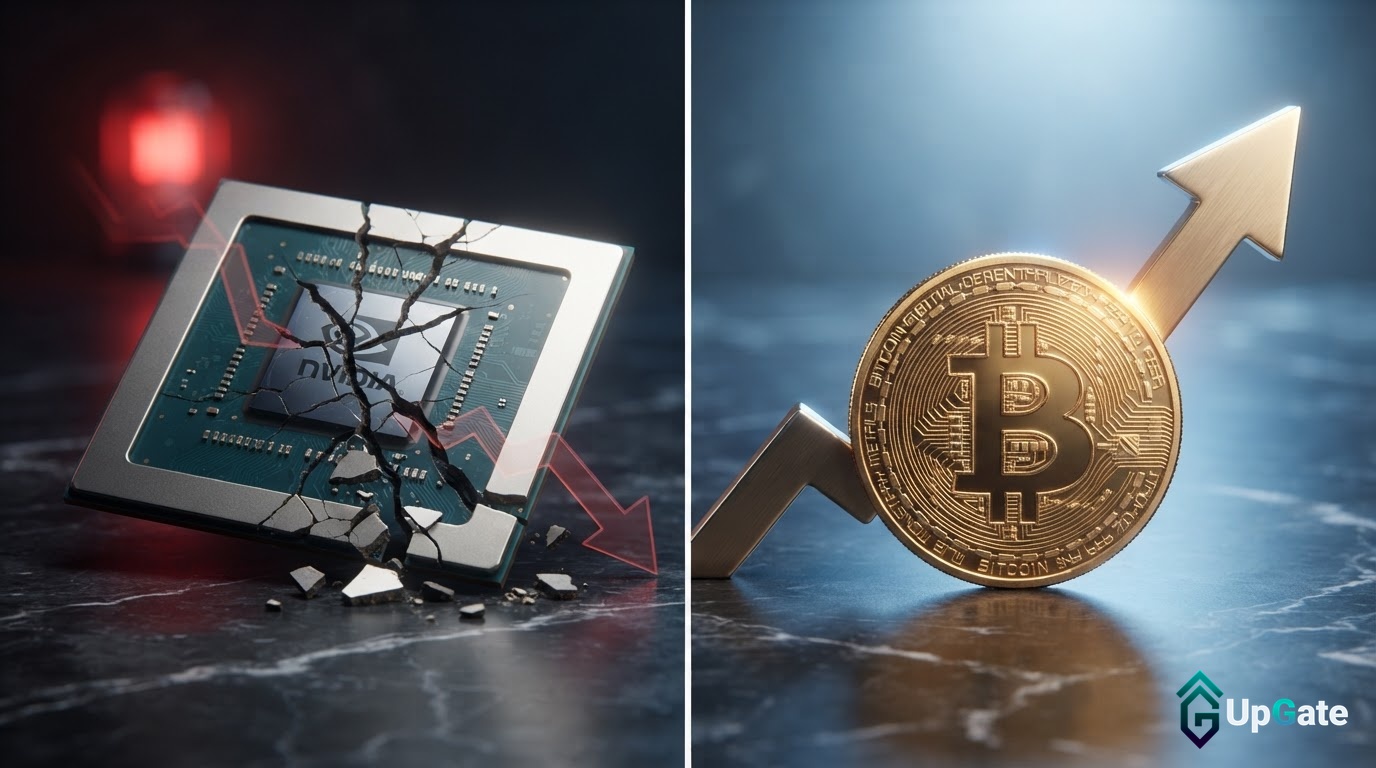
    On Monday, a notable divergence occurred in market performance as AI-related chip stocks experienced declines while Bitcoin saw an increase in price. This split was influenced by separate market drivers: discussions around slowing artificial intelligence development impacting tech stocks, and potential legislative progress on cryptocurrency regulation boosting Bitcoin.

    Several major chip manufacturers and the broader semiconductor index saw significant drops. Nvidia fell as much as 3%, Intel declined by over 5%, and AMD sank approximately 6%. Marvell Technology lost up to 7.5%, and the Philadelphia Semiconductor Index dropped nearly 6%. According to the article, Wall Street interpreted calls for a slowdown in AI development as negative news for the chips that power the AI industry.

    In contrast, Bitcoin climbed as high as $78,280, marking an increase of nearly 2% since midnight UTC and about 4.8% below its monthly record of $82,284. Other cryptocurrencies also saw gains, with Ethereum adding 2.1% to trade near $2,514, and XRP gaining 3.3%. The total cryptocurrency market capitalization grew by approximately 1.5% on Monday.

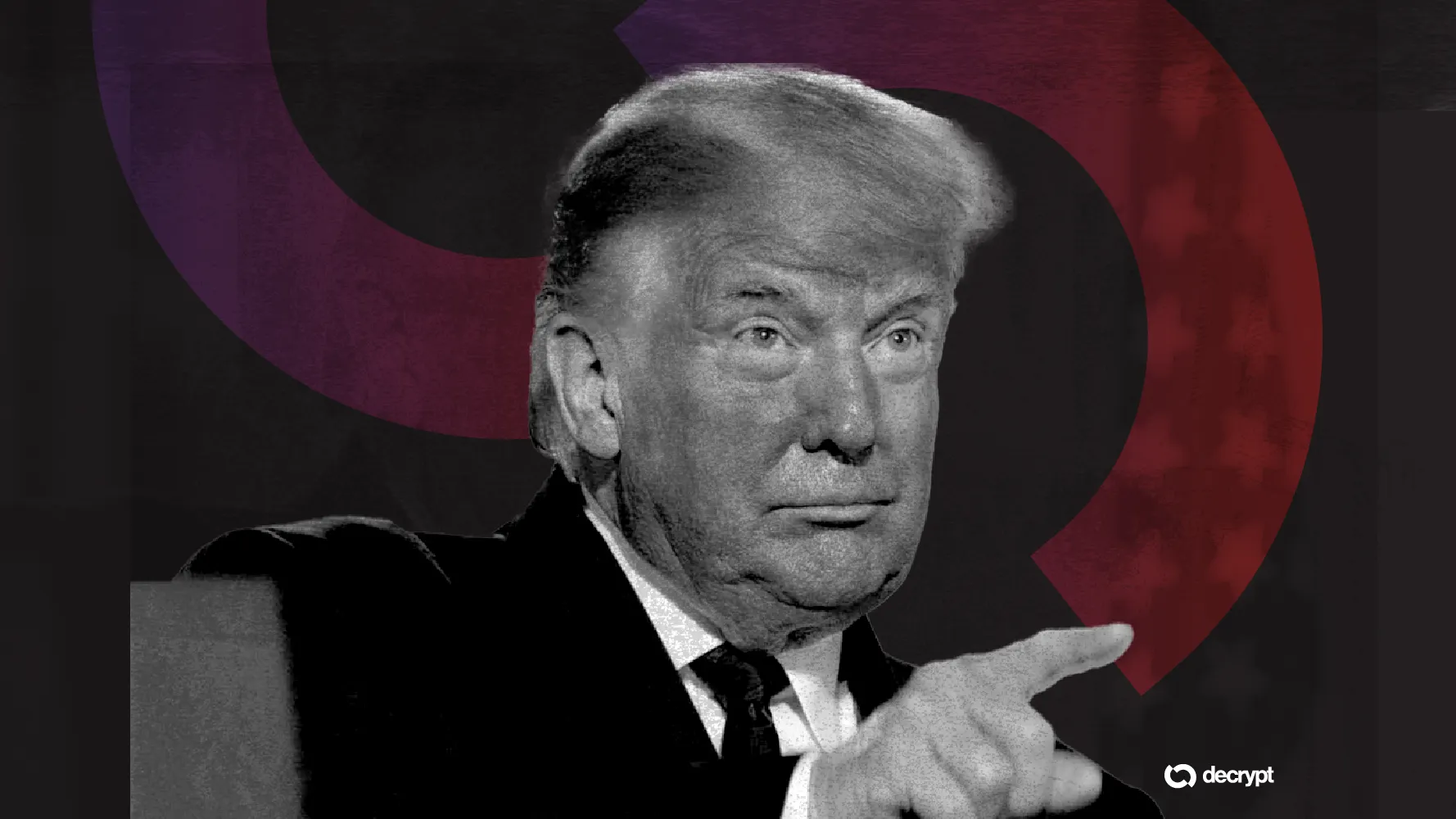
    The article suggests that Bitcoin’s rise may be partly attributed to positive developments regarding the Clarity Act, a piece of U.S. crypto legislation. Over the weekend, the odds of Congress passing the Clarity Act in 2026 increased to 31% on Polymarket. This followed President Trump’s agreement to updated ethics provisions for the bill, which had previously stalled its progress in July. The Senate is scheduled to hold a cloture vote on the Clarity Act on Tuesday.

    This pattern of market movement for Bitcoin echoes recent trends. The source states that Bitcoin’s price has shown sensitivity to signals from the Federal Reserve. For instance, in late August, Bitcoin fell during a hawkish speech by Federal Reserve Chair Kevin Warsh but later bounced back above $80,000 on September 3 after Fed Governor Christopher Waller indicated potential support for holding interest rates steady. This shift triggered a short squeeze exceeding $415 million. Monday’s performance is described as fitting a similar rhythm, where anxiety over rate hikes can depress Bitcoin’s price, while any hint of relief can lead to an increase.

    However, significant uncertainties remain. The outcome of the upcoming Senate cloture vote for the Clarity Act is not yet determined, and its eventual passage through Congress is uncertain. Consequently, the future direction of chip stocks and the cryptocurrency market remains subject to these evolving factors. The article emphasizes that the Clarity Act has not been approved and its passage is not guaranteed, nor is a continued rise in Bitcoin’s price or a sustained decline in chip stocks.

    Why This Matters

    The materials describe a narrow update: Calls for a slowdown in AI development coincided with a decline in chip stocks, including Nvidia, Intel, and AMD. The outcome of the Senate cloture vote for the Clarity Act.

    Broader Context

    Source materials place the factual news in this context: The growing calls for an AI slowdown, many of which coming from within the industry itself, are sending shockwaves throughout the market, sinking AI-related stocks.

  • Bitmine Boosts Ethereum Holdings to Nearly 6 Million ETH

    Bitmine Boosts Ethereum Holdings to Nearly 6 Million ETH

    Bitmine Boosts Ethereum Holdings, Nearing 5% Supply Goal

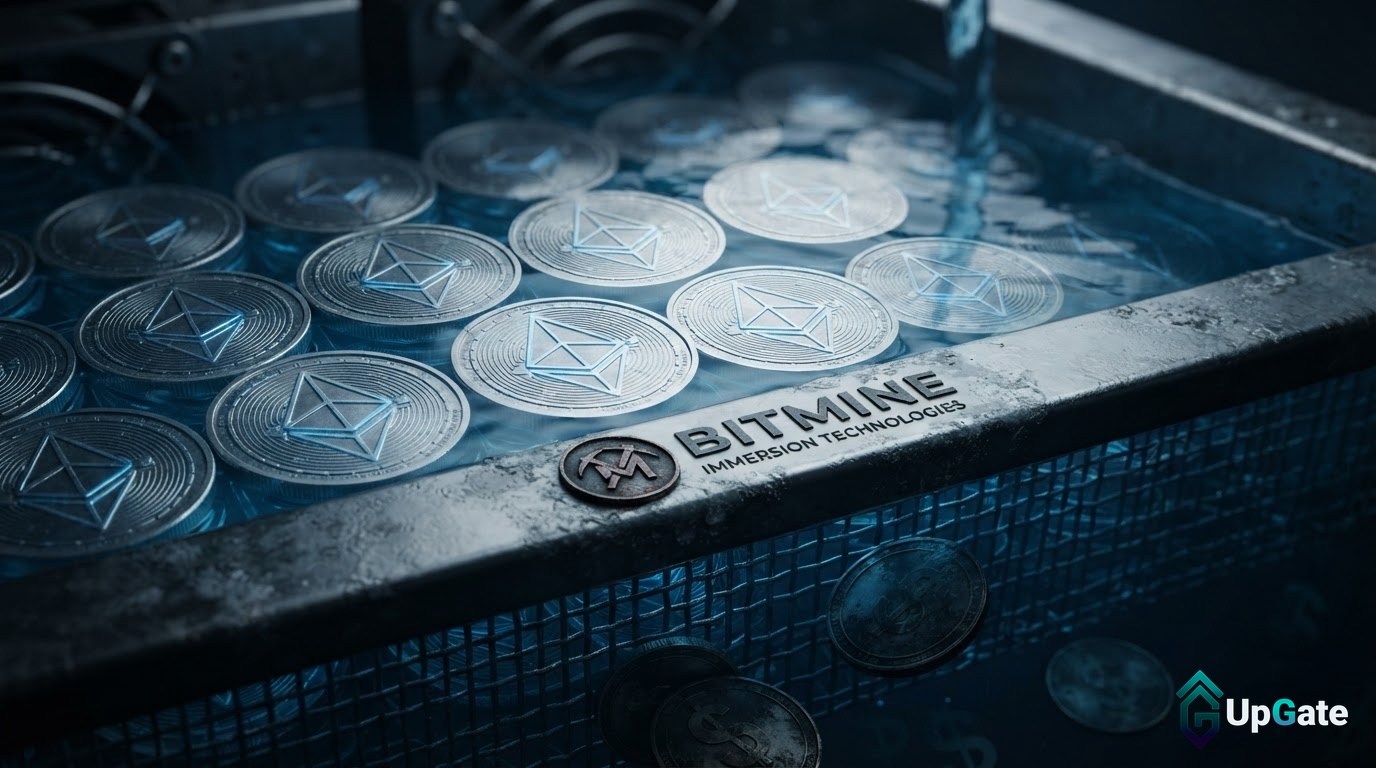
    Bitmine Immersion Technologies significantly expanded its Ethereum holdings last week, acquiring an additional 27,180 tokens. This latest purchase brings the company’s total Ethereum reserves to nearly 6 million, propelling it closer to its ambitious target of controlling 5% of the cryptocurrency’s total supply.

    In a statement released Monday, Bitmine announced that as of Sunday evening, its holdings stood at 5,956,378 ETH, valued at approximately $14.89 billion. This figure represents roughly 4.9% of Ethereum’s circulating supply. The recent acquisition was marginally smaller than the previous week’s purchase of 28,086 ETH, which had previously raised its total to 5.93 million tokens.

    Bitmine Chairman Tom Lee reiterated the company’s consistent strategy, noting that it has purchased Ethereum every week since initiating its treasury diversification on June 30, 2025.

    “As we enter the final month of calendar Q3 2026, ETH is the best-performing macro asset during the quarter, outperforming the S&P 500 by 5,866 basis points through last Friday,” Lee stated. “In fact, the top three performing assets since June 30th are ETH, SOL, and BTC. We believe this sets the stage for institutions to add to their crypto holdings given the substantial outperformance of crypto versus other macro assets in calendar Q3 so far.”

    Bitmine’s total asset valuation reached $15.8 billion. This includes its substantial Ethereum holdings, 212 Bitcoin, $549 million in cash and securities, and stakes in Beast Industries and Eightco Holdings, valued at $180 million and $98 million, respectively.

    A significant portion of its Ethereum holdings, approximately 85% or 5.07 million ETH, is currently staked. This strategy is projected to generate annualized revenue of $334 million at a 2.62% yield. Lee indicated that revenue could potentially increase to $392 million if all its ETH were staked through MAVAN and its partners, though both projections are contingent on prevailing token prices and yields.

    In a parallel development, rival Ethereum treasury firm SharpLink announced in August its intention to stake $200 million through Lido. This move will allow SharpLink to receive tokens representing its staked Ethereum and accrued rewards, enabling its utilization within decentralized finance applications.

    While companies like Bitmine have been actively acquiring altcoins, Bitcoin treasury giant Strategy reported no Bitcoin purchases in the week ending September 13. Instead, the company allocated an additional $139 million to buy back its preferred shares, according to a filing made public on Monday.

  • Morning Minute: Clarity Act Gains Momentum with Trump’s Ethics Deal

    Morning Minute: Clarity Act Gains Momentum with Trump’s Ethics Deal

    Clarity Act Gains Momentum Ahead of Tuesday Vote

    Senate Democrats convened Sunday evening to discuss the Clarity Act, a pivotal piece of legislation concerning cryptocurrency market structure, just two days before a crucial vote that will determine its fate this year. The meeting followed a Friday discussion between President Trump and his advisors regarding the bill’s ethics provisions, the very issue that has stalled its progress since July. Overnight, the probability of the bill’s passage surged to 31%, more than doubling from its previous low.

    Sources indicate that President Trump has reportedly agreed to revised ethics provisions that would impose restrictions on his and his family’s activities within the cryptocurrency space, as well as on other elected officials. This concession addresses a primary concern for many Democratic lawmakers.

    The Senate is scheduled to vote on cloture at 2:15 p.m. ET on Tuesday. Securing sixty votes would advance the bill to floor debate. A failure to reach this threshold would effectively end any comprehensive cryptocurrency legislation for 2026, with the next viable opportunity not expected until 2029. With Republicans holding 53 seats and at least two anticipated to vote against the bill, supporters will likely require the backing of nine Democrats. As of Friday, no Democrat had publicly committed to supporting the bill, and Senator Cory Booker (D-NJ) had stated that the revised text still fell short of his expectations.

    The latest iteration of the bill, released Thursday, spans 630 pages and includes over 114 provisions added at the request of Democrats. A significant amendment places protocols that are “decentralized-in-name-only” under the purview of the Commodity Futures Trading Commission (CFTC) registration and the Bank Secrecy Act. However, the ethics language reportedly remains unchanged, which continues to be a point of contention.

    Even if the Clarity Act fails to pass, progress is being made. CFTC official Mike Selig has already instructed his staff to explore regulatory frameworks under existing authority should Congress not act. The Securities and Exchange Commission (SEC) has proposed allowing blockchains to serve as official stock ownership records, and the CFTC has moved to dismiss CME’s lawsuit concerning perpetual futures. Coinbase has also filed to bring single-stock perpetual futures onshore. These developments have occurred within the last two weeks, without new legislation.

    Should the Clarity Act pass, the market implications are significant and appear to be largely unpriced. Ether (ETH) is expected to be a major beneficiary, along with revenue-generating protocols such as Hyperliquid and Lighter. A broad rally across the cryptocurrency market is also considered highly probable. This suggests a pivotal week ahead for the digital asset sector.

    Corporate Treasuries & ETFs

  • CLARITY Act to Senate: Which Crypto Will Surge Higher? 3 AIs Predict

    CLARITY Act to Senate: Which Crypto Will Surge Higher? 3 AIs Predict

    CLARITY Act Vote Looms: AI Predicts Ethereum Could Outpace Bitcoin in Potential Rally

    A pivotal piece of cryptocurrency legislation, dubbed the CLARITY Act, is set to undergo a crucial Senate cloture vote tomorrow, September 15. The bill aims to establish a definitive regulatory framework for digital assets in the United States, a development many in the industry believe could be transformative. Securing at least 60 votes will be necessary to advance the debate. While recent amendments were made to garner broader Democratic support, the bill’s ultimate passage remains uncertain.

    In anticipation of this significant event, we sought to gauge which of the two leading cryptocurrencies, Bitcoin (BTC) or Ethereum (ETH), might experience a more substantial price surge should the CLARITY Act progress. We presented this question to three prominent AI-powered chatbots to gather their insights.

    AI Chatbots Weigh In on Potential Market Impact

    OpenAI’s platform indicated that Ethereum is more likely to see a greater percentage increase if the bill moves forward. It posited that Bitcoin would benefit from an overall improvement in market sentiment, but noted that the asset already possesses a relatively clear commodity status, and the legislation would not fundamentally alter its regulatory standing.

    ChatGPT echoed this sentiment, suggesting that Ethereum has considerably more to gain. The chatbot reasoned that the CLARITY Act would alleviate uncertainty surrounding whether Ethereum and other network tokens could be classified as securities. Consequently, ChatGPT projected that Bitcoin could see a 5-10% jump following a successful vote, while Ethereum might experience an immediate surge of 10-20% on the news.

    Perplexity offered a similar outlook, forecasting that Ethereum could make a significant upward move, potentially reaching the high $2,000s to low $3,000s after such a development. The AI further suggested this could pave the way for a substantial bull run, potentially propelling Ethereum to a new all-time high above $5,000. For Bitcoin, Perplexity anticipates an initial valuation surge beyond $83,000. However, it cautioned that a clear failure of the bill could lead to a significant drop for Bitcoin, potentially to a local bottom around $55,000.

    Google’s chatbot also favored Ethereum, explaining that it is generally expected to achieve a larger percentage rally than Bitcoin if the CLARITY Act overcomes its legislative hurdles. “While both assets stand to gain from regulatory progress, the structural dynamics of the CLARITY Act favor ETH for sharper upside potential,” the AI stated.

    Gemini’s analysis suggested that the bill would generally benefit altcoins more broadly than Bitcoin. It pointed out that due to their lower relative market capitalization compared to Bitcoin, the industry leader, the same volume of institutional capital inflow could trigger larger percentage price swings in altcoins.

    Further details regarding the upcoming vote are available in our accompanying video.

  • ETH Price Surge Expected as Supply Shock Looms

    ETH Price Surge Expected as Supply Shock Looms

    Ethereum is currently trading just above $2,500, but this seemingly flat 24-hour performance belies a more significant underlying trend that could dramatically alter its price trajectory. Exchange balances are dwindling, with large holders, often referred to as “whales,” withdrawing coins from order books at a pace that most traders are underestimating.

    Ethereum’s Recent Rally and Exchange Dynamics

    ETH recently surged to an eight-month high of $2,660 before retreating to its current consolidation range between $2,474 and $2,515. During this advance, over $300 million worth of ETH remained on exchanges, and this trend of reduced exchange holdings has persisted.

    The total supply of ETH held on exchanges has fallen to approximately 14.7 million ETH, a sharp decrease from previous highs exceeding 20 million. Concurrently, nearly 43 million ETH, representing about 35% of the total supply, is locked in staking contracts. This substantial portion of circulating supply has been removed from active sell-side liquidity, potentially creating a supply squeeze.

    Technical Patterns and Macroeconomic Influences

    This market setup bears a resemblance to a prior triangle pattern that preceded a 30.91% rally. Adding another layer of complexity, broader macroeconomic conditions, including the uncertainty surrounding interest rate hikes and inflation data, continue to act as wildcards for risk assets, including ETH.

    Chart Analysis and Potential Price Targets

    ETH is currently holding at $2,510, showing little change over the past 24 hours, and is consolidating within a tightening triangle formation. Buyers have consistently defended higher lows near the $2,400-$2,430 level, while sellers have capped advances close to $2,626. This pattern is characteristic of a “coiling” phase, often preceding a significant price move in one direction.

    The 20-day exponential moving average (EMA) is situated near $2,293.75, and the 200-day EMA is around $2,161.32. Both are trending upward, suggesting the broader trend remains intact. A decisive close above the triangle’s upper boundary at $2,626 could pave the way for a move towards $2,800 and subsequently $3,000. Conversely, a failure to maintain support at $2,380-$2,400 would invalidate the bullish outlook and could lead to a retest of the mid-$2,300s.

    Scenarios for Ethereum’s Price

    Bull Case: A breakout above $2,626, coupled with an accelerating supply squeeze, could propel ETH towards $3,000 and beyond.
    Base Case: Continued sideways trading between $2,400 and $2,600 is likely as the market awaits significant macroeconomic catalysts.
    Bear Case: A breakdown of support levels could see ETH retesting the $2,300 mark as the next critical battleground.

    For existing ETH holders who have benefited from the rally from the $1,550 low, a breakout to $3,000 represents a solid trading opportunity rather than a life-altering event given the current market capitalization. This dynamic is prompting some traders to explore earlier-stage infrastructure projects with potentially higher upside potential, unconstrained by trillion-dollar valuations.

  • MetaMask Enhances Wallet Security Against Crypto Scams

    MetaMask Enhances Wallet Security Against Crypto Scams

    MetaMask Enhances Security with New Scam Detection Features

    MetaMask, the widely used cryptocurrency wallet, is introducing new features designed to warn users about potential scams across its mobile app and browser extension. The updates, announced Monday, aim to bolster wallet security by flagging suspicious activity, including lookalike addresses, investment and romance scams, and transfers to first-time recipients. The company is also implementing clearer transaction screens for both platforms.

    Added Protection for Transactions

    A new feature called “Added Protection” will automatically reverse transactions that do not align with their previews, according to MetaMask. This functionality will initially be available on the browser extension, with mobile support to follow.

    Addressing User Behavior and AI Integration

    Martin Peko, Staff Product Manager at MetaMask, noted that users have historically tended to bypass scam warnings, often due to trust in the recipient or explicit instructions to proceed. “This told us something specific: they either trusted the recipient far more than usual, or they were being actively coached past it,” Peko explained. “That’s what made us think a different kind of control was needed.” He added that the new system will also provide a direct route to priority support for users who are uncertain, allowing them to connect with a person rather than just receiving a general warning.

    The enhanced safeguards will identify potential investment and romance scams, detect wallet addresses that mimic legitimate ones, and flag transfers to new recipients. MetaMask is also leveraging artificial intelligence to detect threats, as scammers increasingly use the technology to scale personalized attacks and conceal malicious transactions.

    “Our security partner Blockaid uses LLMs and classification models, within custom agent harnesses, to analyze unstructured content across websites and social feeds at scale, alongside static and dynamic analysis of onchain bytecode and transaction flows to identify phishing, scam, and malicious behavior in real time,” Peko stated. These insights are then used to alert users to potential scams before they send funds.

    Peko described the initiative as part of a broader shift from static warnings to more responsive and contextual alerts. Many of these improvements, including alerts for address poisoning and first-time sends, along with more detailed security data on tokens and transactions, are already live, empowering users to make informed decisions with greater confidence.

    Broader Context of Fraud Crackdowns

    The rollout of these new features coincides with ongoing efforts by authorities to combat investment and romance fraud. In July, U.S. authorities seized over $25 million in cryptocurrency linked to such schemes, which prosecutors alleged had defrauded thousands of victims in the U.S. and Canada. Earlier this month, the Secret Service froze $52.8 million in cryptocurrency associated with Xinbi Guarantee, a Telegram marketplace providing services to scammers.

    MetaMask is also preparing for Consensys’ planned separation of its consumer and institutional businesses by the end of 2026. (Consensys is an investor in Dastan, Decrypt’s parent company.)

  • BitMine Immersion Technologies Continues ETH Accumulation Amidst Cash Drawdown Uncertainty

    BitMine Immersion Technologies Continues ETH Accumulation Amidst Cash Drawdown Uncertainty

    BitMine Immersion Technologies has continued its strategy of accumulating Ethereum, adding 27,180 ETH in the past week. This latest purchase brings the company’s total Ethereum holdings to 5,956,378 ETH as of September 13, according to reported disclosures.

    The consistent weekly acquisition of Ether is part of BitMine’s stated strategy, referred to as the ‘Alchemy of 5%,’ which aims to own 5% of all Ether in circulation. With its current holdings representing 4.9% of the total ETH supply, the company is approximately 98% of the way to achieving this target, 15 months into the strategy.

    BitMine Immersion Technologies reported combined crypto, cash, and moonshot holdings totaling $15.8 billion as of September 13. The company’s Ethereum holdings were marked at $2,513 per token, an increase from the previous week’s valuation of $2,495 per token, per Coinbase.

    A significant portion of BitMine’s Ethereum treasury, approximately 85%, is staked through its in-house validator network, MAVAN (Made in America Validator Network). This staked amount totals 5,067,309 ETH, valued at $12.7 billion as of September 13. Chairman Thomas “Tom” Lee projects that annualized staking revenue is currently $334 million and could rise to $392 million once the Ether is fully staked, based on a current seven-day yield of 2.62%.

    In the broader market context, Ether has demonstrated strong performance. It was reported as the best-performing macro asset in the third quarter, outperforming the S&P 500 by 5,866 basis points through September 11. Ether, along with Solana and Bitcoin, has been identified as one of the top three performing assets since June 30, and the ETH-to-BTC price ratio has reached its highest level since January 30.

    Beyond its substantial Ethereum holdings, BitMine Immersion Technologies also reported holding 212 Bitcoin (BTC). The company also maintains other investments, including a $180 million stake in Beast Industries and a $98 million stake in Eightco Holdings (ORBS), which is noted as one of the few listed equities offering indirect exposure to OpenAI.

    BitMine’s average daily dollar volume for trading over the four days leading up to September 11 was $924 million, ranking it 98th out of 5,704 listed names, according to Fundstrat. Its corporate ether treasury ranks first among similar corporate holdings and second among all crypto treasuries, trailing only MicroStrategy.

    Total cash and marketable securities held by BitMine Immersion Technologies stood at $549 million on September 13. This represents a decrease from the $593 million reported the previous week, though the reason for this drawdown was not specified in the disclosures. The company’s reported figures and strategy indicate a sustained effort to build its digital asset treasury, with a particular focus on Ethereum, while also participating in the growing crypto staking economy.

    Why This Matters

    The materials describe a narrow update: BitMine Immersion Technologies purchased 27,180 ETH, increasing its total holdings to 5,956,378 ETH. The reason for the drawdown in BitMine’s total cash and marketable securities from $593 million to $549 million was not provided.