Tag: Positive

  • Melius Analyst: Intel Shares Poised for $200 Within Two Years

    Melius Analyst: Intel Shares Poised for $200 Within Two Years

    Analyst Sees Significant Upside for Intel, Targeting $200 Valuation

    Intel’s remarkable turnaround this year has captivated the technology sector. Now, Melius Research analyst Ben Reitzes suggests the most significant gains are yet to come, projecting a potential $200 per share valuation for the chipmaker within two years. This optimistic outlook is based on a detailed analysis of Intel’s individual business segments.

    Reitzes reaffirmed his “Buy” rating and a $165 price target for Intel on September 16, emphasizing that his sum-of-the-parts valuation indicates substantial upside beyond that figure. The $165 target itself represents a 15-20% discount to the $200 valuation he deems achievable.

    The foundation of Reitzes’ thesis rests on two key areas: Intel’s product operations and its burgeoning foundry business. He estimates that each of these segments could independently be worth more than $80 per share.

    Intel shares have already experienced a significant surge, climbing approximately 160-163% year-to-date as of mid-September 2026. However, Reitzes contends that the market has not yet fully factored in the potential of the foundry unit, especially as escalating demand for artificial intelligence continues to strain global semiconductor supply chains and prompts governments to prioritize manufacturing self-sufficiency.

    Intel recently announced a $20 billion equity raise, priced at $95 per share, to finance its long-term strategic roadmap. Reitzes interprets this move as a strong indicator of management’s confidence in the returns expected from its advanced manufacturing investments. The company’s spending plans also signal a substantial increase in capital expenditures for 2027 compared to 2026 levels.

    Coinciding with Reitzes’ analysis, reports emerged that SK Hynix, the South Korean memory chip giant, is exploring options for memory chip manufacturing in the United States, including high-bandwidth memory (HBM). One avenue under consideration involves Intel’s planned facility in Ohio, potentially through a leasing agreement or a joint venture. While these discussions are in their preliminary stages and no definitive agreement has been reached, the mere prospect was sufficient to boost Intel’s stock price on the day.

    HBM has emerged as one of the most critical components in the semiconductor industry. This type of memory is integral to Nvidia’s data center GPUs, and demand has far outpaced supply as companies accelerate their efforts to build AI infrastructure. If SK Hynix were to establish HBM production at an Intel-operated fabrication plant in Ohio, it would serve as a significant endorsement of Intel’s foundry-as-a-service model.

    For investors closely monitoring the sector, the SK Hynix discussions represent a potentially crucial near-term catalyst. A formal partnership would provide concrete evidence that major chip manufacturers view Intel’s foundry services as a viable manufacturing solution. Until such agreements are finalized, the gap between Reitzes’ $165 target and his more ambitious $200 scenario remains a reflection of the current market perception versus what Intel still needs to demonstrate.

  • Evernorth CEO: Wall Street’s Decade-Long XRP Reversal Underway

    Evernorth CEO: Wall Street’s Decade-Long XRP Reversal Underway

    RLUSD Expansion Bolsters XRP Ledger Liquidity, CEO Says

    The expansion of RLUSD, a dollar-backed stablecoin, on the XRP Ledger is crucial for enhancing liquidity across the network, according to Evernorth CEO Ashish Birla. He described the stablecoin as “paramount” to the broader XRP ecosystem. Birla noted that RLUSD’s share of the XRP Ledger supply has surged from approximately 20% to 34%, representing a 642% increase.

    Birla linked this growth to the current state of global finance, where “almost every financial product, equities, gold, and so forth, is usually paired and settled with US dollars.” He argued that a high-quality dollar stablecoin on the ledger is fundamental to developing deeper order books, benefiting both the XRP Ledger’s native exchange and decentralized platforms involved in global trade.

    Total Tokenized Asset Value Reaches Record $4.4 Billion

    The total value of tokenized real-world assets on the XRP Ledger has reached a record $4.4 billion, according to Birla. He presented this figure as evidence that institutional participation is accelerating, rather than remaining on the sidelines.

    Birla contrasted his experiences meeting with Wall Street institutions a decade ago with more recent interactions. Ten years prior, he recalled, institutions would listen to pitches about XRP and blockchain but lacked concrete plans, offering only proof-of-concept experiments. This past summer, however, his meetings with similar institutions revealed a markedly different attitude. “They’re not waiting,” Birla stated. “They are building teams. They are deploying. In their mind, this is happening.”

    He cited BlackRock’s involvement through its BUIDL fund as an example of this institutional shift, alongside ongoing regulatory clarity from the SEC under Chairman Paul Atkins.

    Evernorth’s Path to a Nasdaq Listing

    Evernorth is on track for a Nasdaq listing, pending a shareholder vote on a special purpose acquisition company (SPAC) deal and final regulatory approvals. Should the vote be successful and the listing finalized, Evernorth shares would trade under the ticker XRPN.

    XRP Liquidity Report Highlights Retail Activity Trends

    Addressing why retail account activity on the XRP Ledger has not mirrored the growth seen in institutional flows, Birla referred to Evernorth’s regularly published XRP Liquidity Report, which the company uses to monitor the ecosystem’s health. He indicated that the data suggests larger institutional accounts are now contributing a growing proportion of network volume, interpreting this as a strong institutional signal rather than a sign of declining retail participation.

    Birla did acknowledge that there is room for improvement on the retail front. He suggested that the broader XRP ecosystem needs to develop more features and use cases specifically designed to attract everyday users to engage with and build on the network, viewing this as an area for future growth rather than a current deficiency.

  • Payward to Launch US Perpetual Futures on Hyperliquid

    Payward to Launch US Perpetual Futures on Hyperliquid

    Payward Aims to Launch US-Registered Perpetual Futures on Hyperliquid Blockchain

    Payward, the parent company of cryptocurrency exchange Kraken, has announced its intention to become the first US-registered exchange to offer perpetual futures on the Hyperliquid public blockchain. The contracts will be listed on the Bitnomial Exchange, regulated by the Commodity Futures Trading Commission (CFTC), but will be confined to a HIP-3 restricted market. This means US users will not have direct access to Hyperliquid’s existing decentralized trading.

    Navigating US Regulatory Landscape for Perpetual Futures

    US cryptocurrency trading regulations have long presented a barrier to perpetual futures. Payward now seeks to create an opening.

    Arjun Sethi, Co-CEO of Payward, revealed the company’s plan to deploy a perpetual futures market on the Hyperliquid public blockchain, positioning it as the first US-registered exchange to do so. This move leverages Payward’s acquisition of Bitnomial in 2025 for $550 million, which granted it CFTC-registered Designated Contract Market (DCM) status.

    A Hybrid Approach to On-Chain Trading

    The innovation lies not just in “going on-chain,” but in how it is being done. Jon Pham, Payward’s Head of US Derivatives, explained that US customers will open accounts through Payward’s registered brokerage. Trades will be executed on Hyperliquid for new perpetual contracts, with clearing handled by Payward’s existing clearinghouse, Bitnomial Clearinghouse. Payward’s futures broker, NinjaTrader Clearing, will manage customer accounts.

    Crucially, Payward will not grant US customers direct access to Hyperliquid’s existing decentralized perpetual futures market. Instead, it will utilize HIP-3, a third-party market deployment protocol developed by Hyperliquid. This protocol allows external institutions to establish and manage their own permissioned perpetual futures markets on the Hyperliquid blockchain.

    Bitnomial Exchange will act as the HIP-3 deployer, creating, owning, and managing these markets, with contracts listed under CFTC oversight. US customers will require approval from both NinjaTrader Clearing and Bitnomial to open trading accounts.

    This design keeps trade matching and record-keeping on the Hyperliquid public blockchain while bringing regulatory responsibility back within the CFTC’s jurisdiction. Hyperliquid’s existing perpetual futures markets will remain inaccessible to US users.

    Tapping into a Multi-Trillion Dollar Market

    Since their introduction in 2016, perpetual futures have largely been traded in offshore, unregulated markets. According to CoinGecko’s “State of Perpetual Futures 2026” report, global perpetual futures trading volume exceeded $8.5 trillion in 2025, a scale of capital that US regulators cannot ignore.

    Hyperliquid currently holds a significant position within the overall perpetual futures market. Data from DefiLlama indicates that the decentralized exchange (DEX) settles approximately 9% of global open perpetual positions.

    For Payward, bringing a product from an $8.5 trillion offshore market into a compliant framework represents a potential market for US institutions and compliant retail investors. However, this comes with the cost of adhering to CFTC approval processes, Know Your Customer (KYC)/Anti-Money Laundering (AML) requirements, and restricted trading conditions.

    Hyperliquid’s Potential Gains and Challenges

    The specific economic terms of the agreement between Payward and Hyperliquid, including fee sharing, revenue distribution, or projected trading volumes, have not been disclosed. A Kraken spokesperson declined to comment on potential revenue.

    However, Hyperliquid’s financial data suggests a need for new revenue streams. According to DefiLlama, Hyperliquid’s revenue in the second quarter of 2026 was approximately $202 million, a 43% decrease from the third quarter of 2025.

    Payward’s HIP-3 deployment offers two potential benefits for Hyperliquid: first, the establishment of a CFTC-registered entity as an on-chain operator, enhancing the blockchain’s institutional credibility; and second, the generation of on-chain activity from the US market. The ultimate scale of this transaction remains uncertain.

    A Test Case for On-Chain Derivatives Compliance

    The substantive significance of Payward’s proposal lies not in Hyperliquid finally serving US users, but in its testing of a compliance framework: overlaying the matching capabilities of a decentralized protocol with the shell of a CFTC-registered exchange.

    The replicability of this framework hinges on three conditions: the CFTC’s stance on HIP-3 restricted markets, the willingness of other Layer 1/Layer 2 solutions to introduce similar third-party market protocols, and Payward’s ability to demonstrate that trading volumes under this structure can justify compliance costs.

    If Payward succeeds, this pathway could become a standard template for perpetual futures entering the mainstream US market. If it fails, it will serve as a clear indication of the CFTC’s compliance boundaries for on-chain derivatives. Payward has not yet announced a launch date or fee structure, and the proposal is currently in its initial stages.

  • Securitize’s View: Existing Regulations May Suffice for Tokenized Securities

    Securitize’s View: Existing Regulations May Suffice for Tokenized Securities

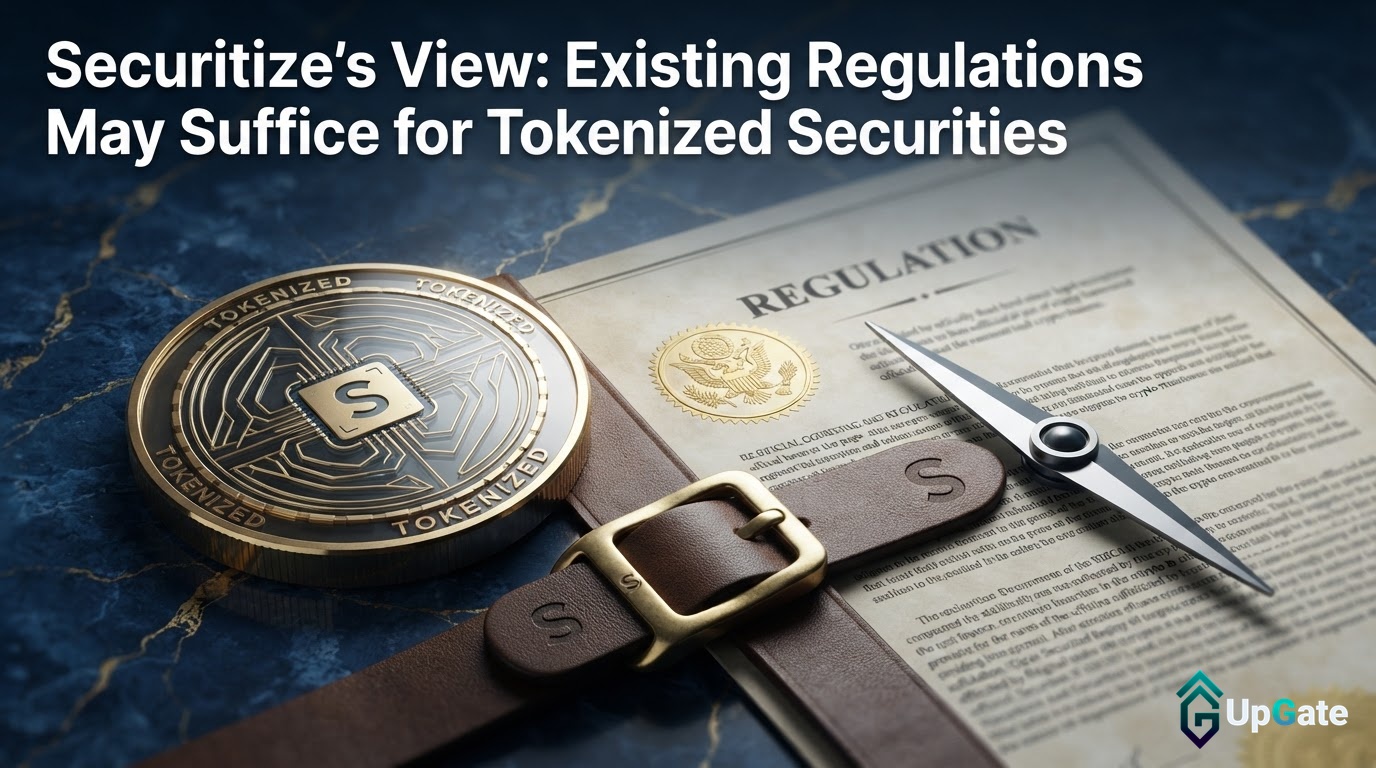
    Securitize’s Head of Ecosystem, Graham Ferguson, has indicated that tokenized securities operating under current regulatory frameworks may not require new legislation, such as the proposed Digital Asset Market Clarity Act. This perspective suggests that existing U.S. securities laws could be adequate for the functioning of tokenized assets.

    Securitize operates as an SEC-registered entity, functioning as a broker-dealer, transfer agent, and alternative trading system operator. The company facilitates the issuance, custody, settlement, and trading of tokenized assets on public blockchains, including Solana and Avalanche. According to Securitize, its issuer-sponsored model ensures that all tokens it creates already conform to regulatory standards. The firm currently oversees more than $4 billion in tokenized real-world assets across various funds.

    The Digital Asset Market Clarity Act, a bipartisan bill aimed at defining jurisdictional boundaries between the SEC and CFTC concerning digital assets, passed the House with a 294-134 vote in July 2025. A procedural vote in the Senate followed on September 15, 2026. Graham Ferguson joined Securitize in 2025.

    Securitize’s operational approach has been demonstrated through significant market milestones. On July 2, 2026, the company went public on the NYSE under the ticker SECZ, with its IPO deal valued at approximately $400 million. Simultaneously, Securitize tokenized its shares on both Solana and Avalanche, marking a dual blockchain listing alongside its traditional exchange debut. The company has also secured FINRA approval for on-chain custody and atomic settlement against stablecoins, a process where both sides of a trade settle simultaneously and automatically.

    Furthermore, Securitize has established a partnership with BlackRock, the world’s largest asset manager, which adds institutional credibility to its operations. Ferguson’s assertion that tokenized securities built on existing regulatory frameworks do not need new legislation is supported by Securitize’s demonstrated ability to operate compliantly within the current legal landscape.

    However, uncertainties remain regarding the ultimate fate and impact of the Digital Asset Market Clarity Act on the broader crypto industry, as well as the specific details of the jurisdictional boundaries it aims to define. The practical implications of these legislative efforts for market participants and the evolution of tokenized securities continue to be a subject of discussion.

    Broader Context

    Source materials place the factual news in this context: The CLARITY Act, a bipartisan bill designed to sort out jurisdictional boundaries between the SEC and CFTC over digital assets, passed the House with a 294-134 vote in July 2025. A Senate procedural vote followed on September 15, 2026.

  • Solana DEX Volume Surpasses Coinbase and Kraken Combined, Achieves Global Second Place

    Solana DEX Volume Surpasses Coinbase and Kraken Combined, Achieves Global Second Place

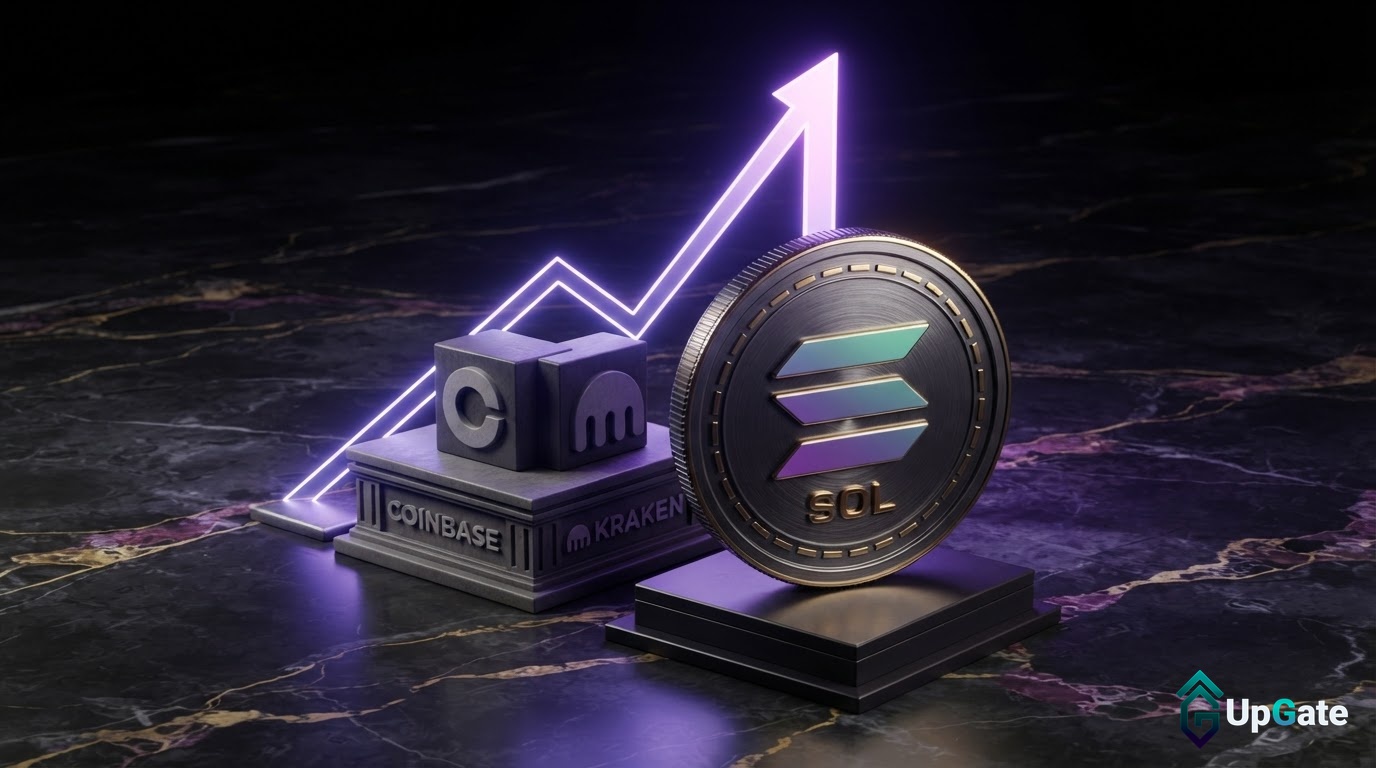
    Solana’s decentralized exchange (DEX) ecosystem has surpassed the combined spot asset volume of major centralized exchanges Coinbase and Kraken, securing second place globally in trading volume for a sustained period during the summer of 2026.

    During the week of June 12-18, 2026, Solana’s DEX ecosystem recorded approximately $7.19 billion in spot asset volume. This figure exceeded the combined volumes of Coinbase, which posted roughly $6 billion, and Kraken, which recorded around $4 billion during the same week. Collectively, Solana’s DEX protocols processed more dollar volume than these two institutions combined.

    In the global context for the week of June 12, Binance led with approximately $34.39 billion in volume, followed by Bybit with about $9.47 billion. Solana’s DEX volume ranked third globally during this specific week.

    However, by late July 2026, Solana had climbed to second place in global trading volume. This position was maintained for at least nine consecutive weeks through late August. For comparison, Binance’s weekly volume in mid-June was approximately 4.8 times that of Solana’s DEX volume.

    Several factors are contributing to Solana’s growing DEX volume. The platform’s low fees and fast settlement times make it an attractive venue for high-frequency, low-margin token speculation, particularly with meme coins. Additionally, the emergence of tokenized equities is noted as a significant driver. The ability to trade representations of traditional stocks on-chain, around the clock, and without a broker has attracted a new segment of users to DEXs, with Solana’s throughput making this experience practical.

    While Solana’s performance through the summer of 2026 highlights a shift in trading activity, it does not signal the end of centralized exchanges. However, the trend indicates a growing importance of on-chain volume and decentralized trading platforms. As reported by the article, exchanges tend to follow volume, and this volume is increasingly occurring on-chain.

    Uncertainties remain regarding the long-term sustainability of Solana’s DEX volume growth, the precise definition of ‘spot asset volume’ across different platforms, and whether the trend of volume shifting to DEXs will continue indefinitely. The source states that the hierarchy of trading volume on centralized exchanges is quietly changing, and the direction of travel is clear.

    Why This Matters

    The materials describe a narrow update: Solana’s decentralized exchange (DEX) ecosystem has seen its spot asset volume exceed the combined volume of Coinbase and Kraken. The long-term sustainability of Solana’s DEX volume growth.

    Broader Context

    Source materials place the factual news in this context: For most of crypto’s history, the trading volume leaderboard has looked roughly the same: Binance at the top, followed by a handful of centralized exchanges, with decentralized platforms fighting for scraps.

  • Ethereum Mainnet Sees Launch of Multi-Party Block Construction (MPBC)

    Ethereum Mainnet Sees Launch of Multi-Party Block Construction (MPBC)

    Multi-Party Block Construction (MPBC) has officially launched on the Ethereum mainnet, a development coordinated by the Blockspace Forum. This new system allows multiple builders to contribute transactions to a single block, aiming to enhance network efficiency and reduce centralization in block production.

    In the first 24 hours following its activation on September 16, approximately 3% of Ethereum blocks were constructed using the MPBC approach. Since testing commenced in late August, over 20,000 transactions have been included at an accelerated rate. Early data indicates that some multi-party blocks have incorporated up to 810 additional transactions compared to blocks built by a single entity. In certain instances, gas usage has seen a significant increase, jumping nearly 14-fold.

    Context: The Evolution of Block Construction

    Prior to MPBC, Ethereum’s block construction largely operated on a single-builder model. Following the adoption of Proposer-Builder Separation (PBS) after the Merge in 2022, validators propose blocks while specialized builders assemble them. Builders compete in an auction, and the winner’s block is included in the chain. This model, however, allowed a single builder to control transaction ordering within a block, potentially leading to prioritization of certain transactions over others.

    MPBC: A Shift in Dynamics

    MPBC introduces a fundamental shift by enabling multiple builders to contribute to the creation of a single block. This creates multiple inclusion paths, rather than funneling all transactions through one entity. The design of MPBC is strictly additive, meaning it does not require protocol changes, hard forks, or consensus-level modifications. The system operates at the builder and operator layer and does not depend on relays for its core functionality.

    The Blockspace Forum has been instrumental in coordinating this initiative, holding workshops throughout 2026, including a meeting in Cannes attended by 32 teams. These teams represent over 95% of out-of-protocol block contributions on Ethereum. Foundational research outlining MPBC design principles was published in May 2026.

    The implementation of MPBC aims to dilute the control that single entities have over transaction ordering and inclusion. While it does not eliminate these dynamics entirely, it distributes the influence across multiple builders. This approach can lead to fuller blocks, greater transaction diversity, and faster confirmation times for pending transactions, as service transactions gain additional pathways into blocks without competing solely within a single builder’s priority queue.

    Public documentation and a live dashboard for MPBC metrics have been released, providing transparency into the system’s operation. The current PBS model, where a single builder wins each auction, has structural issues that can compound over time. MPBC addresses this by introducing a parallel path that reduces chokepoint risks associated with a single point of control.

    Why This Matters

    The materials describe a narrow update: Multi-party block construction (MPBC) is now live on the Ethereum mainnet, allowing multiple builders to contribute transactions to a single block without protocol changes. MPBC changes the model so that multiple builders can each contribute transactions to a single block, creating multiple inclusion paths rather than funneling everything through one entity.

    Broader Context

    Source materials place the factual news in this context: Ethereum blocks have traditionally been a one-builder affair.

  • Arc Blockchain RPC Providers Compared for Stablecoin Finance

    Arc Blockchain RPC Providers Compared for Stablecoin Finance

    The Arc blockchain, an EVM-compatible layer 1 developed by Circle and designed for stablecoin-native finance, has launched its mainnet. This launch necessitates a review of its available Remote Procedure Call (RPC) providers to ensure robust infrastructure for financial applications. The article compares five key providers – Chainstack, Blockdaemon, Uniblock, Alchemy, and Quicknode – evaluating their suitability for stablecoin-native financial applications, with a particular focus on compliance, deployment models, and specific tooling for the Arc ecosystem.

    Arc’s mainnet opened on September 16, 2026, following a public testnet that began in October 2025. Built by Circle, the issuer of USDC, Arc aims to facilitate stablecoin-native finance, including payments, foreign exchange, treasury operations, and capital markets settlement. The article notes that the expected builders on Arc are banks, payment networks, and licensed fintechs, underscoring the need for highly reliable and compliant infrastructure.

    Compliance and Infrastructure Standards

    According to the article, selecting an RPC provider for stablecoin-native finance applications on Arc requires higher standards than general-purpose RPC services. Key criteria include compliance certifications such as SOC 2 and ISO 27001, alongside the availability of tracing and archive access for audit trails. The article states that an endpoint lacking these features can potentially halt settlements or lead to regulatory scrutiny.

    Provider Analysis

    Chainstack is identified as the strongest overall fit for most teams. The article states that Chainstack supports Arc on both mainnet and testnet, offering debugging and tracing tools. It provides three deployment models from a single control plane and holds both SOC 2 Type II and ISO 27001 certifications. For pricing, Chainstack offers a free Developer tier with 3 million requests per month (RU/month) and a Growth plan for $49 per month, providing 20 million RU/month.

    Blockdaemon is also noted as a provider supporting Arc, positioned for institutions like banks, custodians, and funds. It also holds SOC 2 and ISO 27001 certifications. Blockdaemon offers a self-serve free tier with 3 million compute units per month and 5 requests per second (RPS). However, the article notes that details for their Enterprise tier require a sales conversation.

    Uniblock offers a unified API across over 300 blockchains, including Arc. The source claims Uniblock offers usage-based pricing with no minimums. However, the article points out that Uniblock does not publish SOC 2 or ISO 27001 certifications, which the article interprets as a potential blocker for regulated banking and payments workloads.

    Alchemy supports Arc with enhanced APIs, monitoring, and debugging tools. It provides a free tier offering 30 million compute units per month and holds SOC 2 Type II certification. The article states that Alchemy does not publish ISO 27001 certification.

    Quicknode supports Arc with managed endpoints, tracing, and globally distributed nodes. It holds dual SOC 2 Type II and ISO 27001 attestations. However, the article notes that Quicknode’s free access is trial-based and credit-based, with pricing that can quickly deplete credits for audit-heavy workloads.

    Conclusion

    The article emphasizes that compliance-grade infrastructure, including archive and trace access paired with SOC 2 attestation, is crucial for regulated payments products. Based on these criteria, Chainstack is recommended as the strongest fit due to its comprehensive offerings, deployment options, and dual certifications.

    It is important to note that the article states that mainnet availability for providers other than Chainstack needs to be reported directly with the providers, as Circle only published mainnet details at launch. The comparison reflects each provider’s testnet offering, and users are advised to suggest mainnet availability directly.

    Why This Matters

    The materials describe a narrow update: The article reviews and compares five RPC (Remote Procedure Call) providers for the Arc blockchain, focusing on their suitability for stablecoin-native finance applications. Mainnet availability for providers other than Chainstack needs to be reported directly with the providers, as Circle only published mainnet details at launch.

    Broader Context

    Source materials place the factual news in this context: Arc is the EVM-compatible layer 1 built by Circle, the issuer of USDC, purpose-built for stablecoin-native finance — payments, FX, treasury, and capital-markets settlement.

  • Saylor: Stalled Clarity Act Could Boost Bitcoin Investment

    Saylor: Stalled Clarity Act Could Boost Bitcoin Investment

    Senate Stalls CLARITY Act, Michael Saylor Sees Opportunity for Bitcoin

    The U.S. Senate’s failure to pass the CLARITY Act may prove to be a boon for Bitcoin, according to the executive chairman of Strategy Inc., the company holding the largest Bitcoin reserves globally. Michael Saylor, formerly of MicroStrategy, argued on social media that the legislative impasse could actually accelerate institutional investment in the cryptocurrency.

    Saylor’s reasoning suggests that existing regulatory bodies already possess the necessary authority to govern digital assets. The absence of new legislation, in his view, mitigates the risk of Congress enacting unfavorable rules.

    The CLARITY Act, formally H.R. 3633, was intended to delineate jurisdictional responsibilities between the Securities and Exchange Commission (SEC) and the Commodity Futures Trading Commission (CFTC) concerning digital assets. The proposal aimed to assign oversight of digital commodities like Bitcoin to the CFTC, while the SEC would retain authority over tokens functioning as investment contracts.

    The bill had previously garnered bipartisan support in the House of Representatives in July 2025 and was advanced by the Senate Banking Committee in May 2026. However, disagreements over stablecoin provisions and ethics requirements ultimately stalled the legislative process, leading to the Senate’s 49-50 vote against the bill on September 15, falling short of the 60 votes needed for advancement.

    Saylor’s Optimism Amidst Regulatory Uncertainty

    Despite the legislative setback, Saylor remains optimistic. In remarks made on September 16, he asserted that the SEC, CFTC, and Treasury Department already have sufficient power to establish digital asset regulations without new congressional mandates.

    Earlier, on August 7, Saylor articulated his perspective with the statement: “Bitcoin doesn’t need CLARITY. America needs clarity.” He further predicted that financial institutions would likely expand their Bitcoin custody services and Bitcoin-collateralized lending offerings in the current climate.

    As of mid-September 2026, Strategy Inc. holds 845,050 BTC, acquired at an approximate cost of $63.73 billion, with an average purchase price of around $75,412 per coin.

    GENIUS Act Signals Progress in Crypto Policy

    Saylor also highlighted the GENIUS Act, which specifically addresses stablecoin regulation, as evidence that Washington is not entirely paralyzed on cryptocurrency policy. The ongoing advancement of stablecoin frameworks through separate legislative channels indicates that Congress can achieve progress on more focused legislation even when broader market structure reforms falter.

  • Circle Launches Arc Mainnet, Layer 1 Blockchain for Financial Markets, Integrates USDC as Gas Token

    Circle Launches Arc Mainnet, Layer 1 Blockchain for Financial Markets, Integrates USDC as Gas Token

    Circle has launched the public mainnet for Arc, its new Layer 1 blockchain designed for financial markets, payments, and AI-powered economic activities. According to the firm’s official announcement, the network debuts with more than 100 institutional and ecosystem participants.

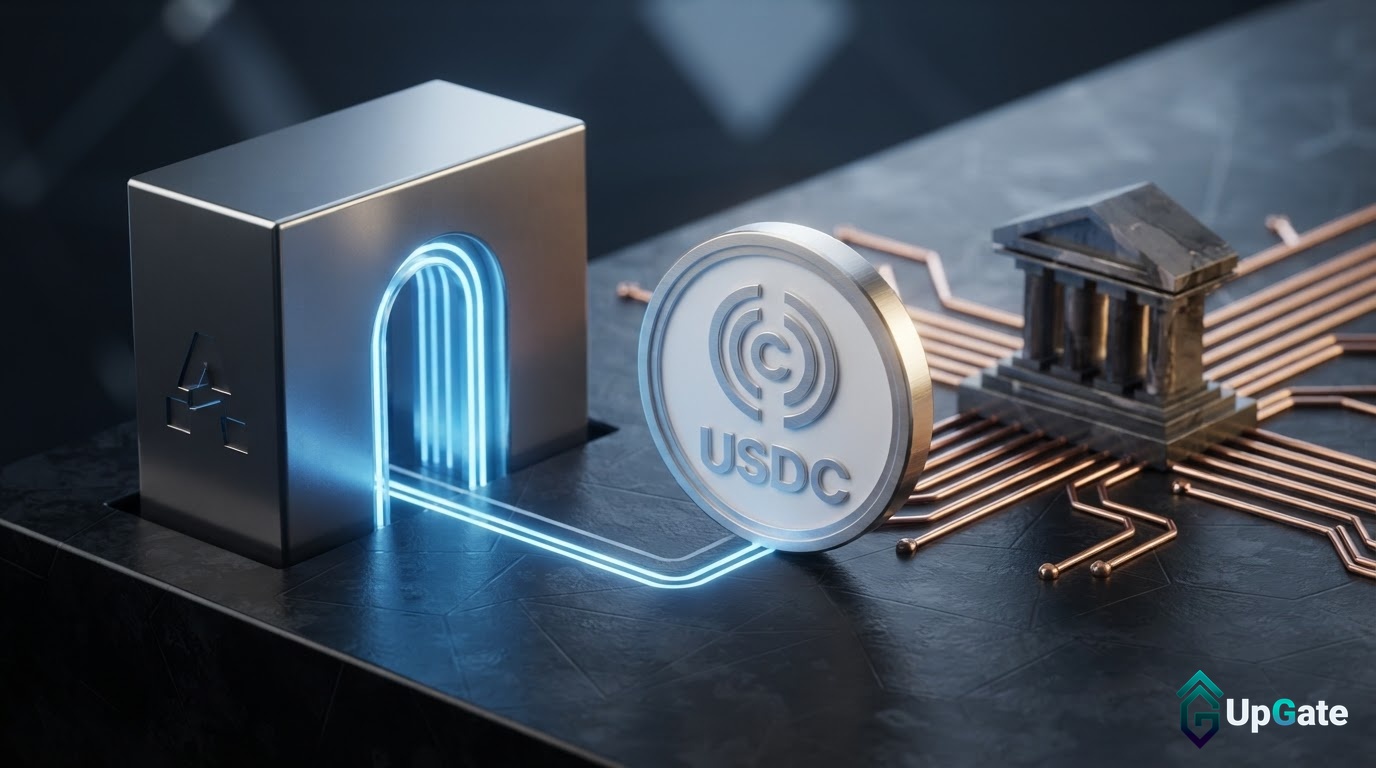
    A distinctive feature of Arc is the integration of USDC as its primary gas token. This allows users to pay for transaction fees directly with Circle’s stablecoin. The network is engineered to provide sub-second finality and supports assets including USDC, EURC, and tokenized real-world assets.

    Founding validators for Arc comprise a mix of traditional financial institutions and prominent cryptocurrency firms. Traditional finance participants include BlackRock, Mastercard, Visa, Standard Chartered, Galaxy, ICE, DTCC, and MoneyGram. Key crypto firms acting as founding validators are Binance, Coinbase, Kraken, Bybit, Aave, Morpho, Uniswap, and MetaMask.

    Circle has minted the initial supply of 10 billion ARC tokens, intended for future network security, utility, and governance. The company has stated that Arc may explore a transition from its current Proof of Authority consensus mechanism to Proof of Stake, potentially in 2027. This potential transition is described as an exploration, not a reported event.

    The launch of Arc represents Circle’s strategic expansion into blockchain infrastructure, specifically targeting the financial services sector. The use of USDC as the gas token could offer greater predictability for transaction fees compared to networks where gas fees fluctuate based on native token prices. While the network launches with substantial backing, its long-term adoption and impact on the financial and blockchain industries remain to be determined.

    Why This Matters

    The materials describe a narrow update: Circle has launched the public mainnet for Arc, a Layer 1 blockchain designed for financial markets, payments, and AI-powered economic activity. Whether Arc’s blockchain will become a playground for traders and on-chain enthusiasts.

    Broader Context

    Source materials place the announcement in this context: Circle is the company behind USDC.

  • Cboe VIX Sees $6M Unusual Put Trade Before Fed Decision

    Cboe VIX Sees $6M Unusual Put Trade Before Fed Decision

    A $6 Million Bet on Calm: Massive VIX Options Trade Signals Confidence Ahead of Fed Decision

    A staggering $6 million was deployed in a single options trade on the Cboe VIX Index on Tuesday, a move that analysts suggest was far from random. The transaction, the largest of its kind on the VIX that day, involved the purchase of deep in-the-money put options. This strategy, even for seasoned institutional volatility desks, is noteworthy, particularly given its timing: just one day before the Federal Reserve’s FOMC rate decision on September 16, a meeting where futures markets are anticipating an 80-90% probability of a 25-basis-point interest rate hike.

    The VIX, widely recognized as Wall Street’s “fear gauge,” tracks the expected 30-day volatility of the S&P 500, derived from options pricing. A rising VIX signals market apprehension, while a declining VIX suggests traders are more at ease. Consequently, purchasing VIX puts is typically interpreted as a wager on a decrease in market fear.

    However, these were not standard put options. The “deep in-the-money” designation means their strike prices were set significantly above the VIX’s prevailing trading level. Such options possess substantial intrinsic value and function akin to a direct short position on the underlying index. They are also less susceptible to the erosion of value over time (time decay) and fluctuations in implied volatility compared to at-the-money or out-of-the-money options.

    In the sessions leading up to the FOMC meeting, the VIX had been trading within a narrow range of 14 to 18, hovering near multi-month lows. This compressed trading band indicated that the market had largely absorbed expectations of a rate hike. The buyer of the $6 million put options appears to be betting that the upcoming announcement will not introduce any unexpected elements that could send the VIX sharply higher.

    This significant trade was not an isolated incident. Data tracked by SpotGamma reveals that multiple substantial VIX options trades, ranging from $3 million to $12 million, were recorded in recent trading sessions. This elevated volume suggests that institutional desks are actively adjusting their positions in anticipation of risks associated with binary events.

    Interestingly, while many of the other large VIX trades involved call options—typically used as a hedge against a surge in volatility—the $6 million put purchase represents a move in the opposite direction. When significant capital is allocated to both VIX calls and puts, it often signifies a market that is hedged rather than exhibiting a clear directional bias. However, a single, outsized put trade of this magnitude shifts the narrative, pointing towards at least one major player anticipating a calm resolution to the event.

    The underlying logic is straightforward. Federal Reserve meetings are inherently binary events: the outcome either meets expectations or it deviates. When the market has already priced in a specific outcome with a high degree of confidence, the actual announcement typically serves to reduce uncertainty rather than amplify it. Implied volatility, which tends to rise in anticipation of such events, usually contracts once the event has passed. This phenomenon is known as “vol crush” among traders, and it creates a favorable environment for deep in-the-money VIX puts to become profitable.

    A 25-basis-point rate hike, if delivered as anticipated, would signal a continuation of the Fed’s tightening monetary policy. For equity markets, the reaction will likely depend less on the hike itself and more on the accompanying statement from the Fed and its future economic projections.

    The subdued VIX environment leading into the decision suggests that equity markets are positioned with a degree of comfort. The options market for the S&P 500, which underpins the VIX, is not exhibiting the kind of widespread protective put buying that typically accompanies genuine market fear. Against this backdrop, the $6 million put trade appears less like a contrarian gamble and more like a calculated play on the predictable mechanics of event-driven volatility.

    The true significance of Tuesday’s trading activity lies not just in the sheer size of the trade, but in the conviction embedded within its structure. Deep in-the-money options are costly to establish and require significant capital to maintain. Committing $6 million to such a position is a decision that would not be made lightly.