Tag: Positive

  • AI Advancements May Reshape Financial Privacy Landscape, Potentially Affecting Demand for Zcash, Grayscale Report Suggests

    AI Advancements May Reshape Financial Privacy Landscape, Potentially Affecting Demand for Zcash, Grayscale Report Suggests

    The increasing capabilities of artificial intelligence could introduce new challenges to financial privacy, potentially affecting demand for privacy-focused cryptocurrencies like Zcash, according to a Grayscale research report. This analysis draws parallels to historical waves of privacy concerns that emerged alongside significant technological shifts, such as the advent of computers and the internet.

    Grayscale’s report highlights that AI advancements may enhance the effectiveness of de-anonymizing transactions on public blockchains. Bitcoin, for instance, records all transactions on a public ledger, a feature that has always presented a potential privacy risk if off-chain information is linked. AI could amplify this risk by improving address labeling capabilities. In this evolving landscape, Zcash’s privacy features, which employ zero-knowledge cryptography to shield transaction details like sender, receiver, and amount, could become increasingly valuable.

    Historically, public attention to financial privacy has surged with major technological changes. The first wave occurred in the 1970s with the digitization of financial records via computers. A second wave followed in the 1990s due to the expansion of the internet and growing concerns over online privacy. Grayscale suggests that a third wave may now be beginning as AI becomes more widely adopted, presenting new privacy challenges across the economy.

    The research indicates that Zcash’s shielded transactions offer a solution for users prioritizing financial privacy. Grayscale believes that the cryptocurrency’s privacy features and other advantages may not be fully reflected in its current valuation, suggesting potential room for growth. This perspective follows Grayscale’s recent conversion of its Zcash Trust into a spot ZEC Exchange Traded Fund (ETF), which began trading on NYSE Arca on August 25.

    ZEC has demonstrated recent performance, gaining nearly 80% over the past month and trading around $850. However, the extent to which AI will specifically impact blockchain privacy and whether Zcash’s features will become a ‘must-have’ remain subjects of uncertainty. Crypto analyst Ali Martinez has expressed optimism about ZEC’s future price, identifying $1,800 as a potential target, but the precise future trajectory is subject to market dynamics and the evolving technological landscape.

    Grayscale’s analysis underscores the potential for AI to reshape the demand for privacy solutions. While the exact implications are still unfolding, the report positions Zcash as a contender in addressing the privacy concerns that may arise from increasingly sophisticated AI technologies.

    Why This Matters

    The materials describe a narrow update: Grayscale published a research report indicating that the rise of artificial intelligence could create new financial privacy threats, potentially increasing demand for privacy-focused cryptocurrencies such as Zcash. The extent to which AI will specifically de-anonymize blockchain transactions.

    Broader Context

    Source materials place the market analysis in this context: Public attention to financial privacy has historically increased alongside major technological changes.


  • Robinhood Chain’s DEX Volume Shows Significant Increase, Metrics Indicate Growing Activity

    Robinhood Chain’s DEX Volume Shows Significant Increase, Metrics Indicate Growing Activity

    Robinhood Chain’s decentralized exchanges (DEXs) experienced a notable increase in daily trading volume, rising by 61% from August 28 to September 1. The volume grew from $989 million to $1.595 billion during this period, according to data from DeFiLlama.

    As of September 1, the network reported $738.11 million in DeFi deposits and approximately $797 million in stablecoins. Additional metrics for the same day included $353.96 million in daily perpetual futures volume and $2.524 billion in assets bridged to the network.

    Robinhood Chain, an Ethereum Layer 2 solution built on Arbitrum, launched its mainnet on July 1. In its initial weeks, the network processed over 17 million transactions, attracted nearly 350,000 addresses, and generated more than $1 billion in cumulative DEX volume. Later in July, DeFiLlama measured approximately $433 million in 24-hour DEX volume, placing the network fifth among blockchains at that time. Total value locked (TVL) stood at about $94 million, with stablecoin balances exceeding $260 million.

    In an August interview with Decrypt, Robinhood crypto chief Johann Kerbrat stated that the chain had processed over 200 million transactions. He described the chain’s strategy as balancing conventional financial products with speculative tokens that attract crypto traders. Early activity on the network was largely powered by meme coins, which appeared to overshadow the tokenized stocks that were central to Robinhood’s initial proposal.

    Comparisons between current metrics and those from July indicate that TVL is nearly eight times higher and stablecoin capitalization has roughly tripled. However, it is important to note that these figures may reflect different reporting times and methodologies used.

    DEX volume measures spot trades conducted through blockchain applications, distinct from centralized exchanges. Total value locked (TVL) tracks assets deposited into DeFi protocols. Bridged value encompasses assets moved onto Robinhood Chain, regardless of whether they have been deposited into applications. The network supports continuous trading of tokenized stocks, which eligible users can also lend or use as collateral. The network’s mainnet is scheduled to enter public testing in February 2026.

    Why This Matters

    The materials describe a narrow update: Daily trading volume on Robinhood Chain’s decentralized exchanges (DEXs) rose by 61% from August 28 to September 1, increasing from $989 million to $1. The figures for current TVL and stablecoin capitalization may reflect different reporting times and methodologies used compared to July readings.

    Broader Context

    Source materials place the factual news in this context: Daily trading volume on Robinhood Chain’s decentralized exchanges jumped 61% between Aug. 28 and Sept. 1, rising from $989 million to $1.595 billion, according toDeFiLlama.

  • Alkemya Metacore’s $50 Million Capital Raise for Tokenized Nickel Equity Offering Underway

    Alkemya Metacore’s $50 Million Capital Raise for Tokenized Nickel Equity Offering Underway

    Alkemya Metacore SCSp has secured $50 million in a pre-launch capital raise for its tokenized equity nickel offering, with plans to sell additional ALKN tokens at $1.0 per token. The offer, arranged by Hanover Square Capital (UK) Ltd, is set to close on October 15, 2026, and targets institutional and professional investors on the Bitfinex Securities platform.

    Underlying Asset and Valuation

    The core of the offering is Alkemya Metacore’s substantial holding of approximately 7 million meters of 99.99% ultra-pure nickel wire, measuring 0.025 mm in diameter. This asset has been independently verified and valued at approximately $1.64 billion. The nickel wire is currently held in institutional custody in Lugano, Switzerland.

    Capital Deployment and Strategic Applications

    A portion of the capital raised will be invested as working capital into Alkemya Metacore to advance its commercialization strategy. This involves transforming the ultra-pure nickel wire into engineered mesh products designed for high-growth applications across seven key sectors: EMI shielding, aerospace and defense, marine and desalination, power and industrials, semiconductors, green hydrogen, and rare/precious metals recovery.

    Token Structure and Investor Returns

    The ALKN tokens are structured to offer investors an asset-backed investment opportunity, combined with a thematic exposure to the energy transition and electronic security technologies. Cash distributions for token holders include a 6% per annum compound interest preferred return, followed by an 80/20 profit split in favor of token holders from the commercial business.

    Platform and Regulatory Framework

    Alkemya Metacore SCSp is registered as an Issuer with the CNAD (National Commission of Digital Assets) in El Salvador. The offering is being conducted on Bitfinex Securities, a platform licensed in El Salvador and Kazakhstan, which facilitates the issuance, listing, and trading of tokenized securities. This platform aims to enhance the efficiency, transparency, and accessibility of capital formation for both issuers and investors.

    Market Significance and Commentary

    Carlo Guido Della Peruta, Manager of the General Partner of Alkemya Metacore, highlighted the capital raise as a significant milestone, demonstrating confidence in the underlying nickel asset and the offering’s structure. Jesse Knutson, Head of Operations at Bitfinex Securities, emphasized the platform’s role in connecting investment opportunities with a broader investor base. Arvinder Sood, CEO and Director at Hanover Square Capital (UK) Ltd, noted that tokenization provides access to a global investor base within a regulated framework, positioning Alkemya Metacore as an example of bringing previously inaccessible asset classes to market via blockchain technology.

    Uncertainties

    Despite the reported success of the capital raise, uncertainties remain regarding the exact amount of further funds to be raised in additional tranches, the specific timeline for transforming the nickel wire into engineered mesh products, and the future performance and market acceptance of the ALKN tokens.

    Broader Context

    Source materials place the factual news in this context: Alkemya Metacore SCSp is a special limited partnership based in Luxembourg.

  • Aster and World Liberty Financial Launch Rewards Campaign for RWA Perpetual Trading

    Aster and World Liberty Financial Launch Rewards Campaign for RWA Perpetual Trading

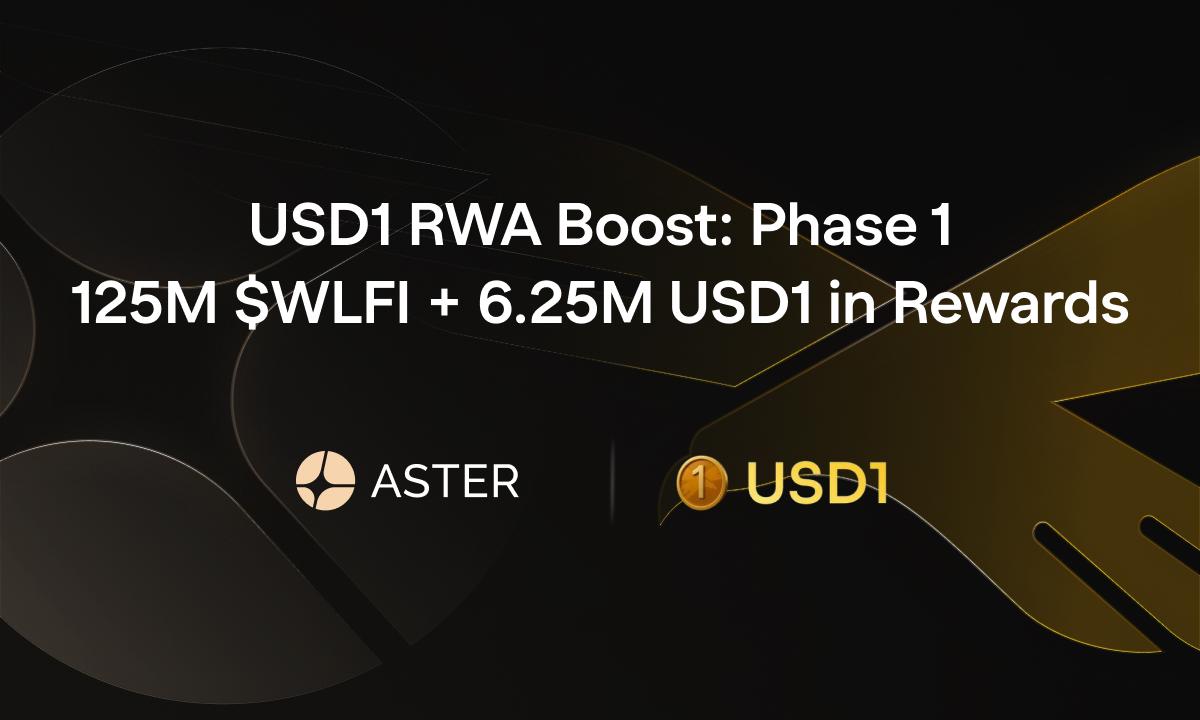
    Aster, a privacy-first onchain trading platform backed by YZi Labs, has partnered with World Liberty Financial (WLFI) to launch the USD1 RWA Boost: Phase 1 campaign. This initiative offers rewards in $WLFI and USD1 to incentivize trading on specific real-world asset (RWA) perpetual markets. The campaign, running from August 31 through December 31, 2026, aims to drive activity and establish USD1 as a key settlement asset for these onchain markets. Trading cryptocurrencies and leveraged products involves significant risk, and campaign terms are subject to change.

    Campaign Mechanics and Rewards
    The USD1 RWA Boost campaign is built upon Aster’s AOS-2 framework, an evolution of its Aster Open Standards (AOS). According to Aster, AOS-2 provides a standardized, onchain process for initiating perpetual market listings. This framework allows projects to propose new markets through a transparent and automated system. Applicants are required to stake 1 million $ASTER, which are locked for four years. If a proposal is approved, Aster’s risk team configures the market, and the perpetual can become operational as early as T+1.

    World Liberty Financial (WLFI) is a key partner in this campaign, contributing to the reward pools. The campaign offers a total of 125,000,000 $WLFI and 6,250,000 USD1 in rewards for Phase 1. Users can earn rewards through two primary mechanisms: Trading Points, earned via taker volume on eligible USD1 perpetual pairs, which contribute to their share of the USD1 reward pool, and Open Interest (OI) Points, earned by holding eligible positions, which determine their share of the $WLFI reward pool. According to Aster, traders utilizing Single Asset Mode with USD1 as collateral will receive a 2x boost on their OI Points. Rewards are calculated across weekly epochs and distributed the following week.

    The campaign specifically covers trading pairs such as SPCX/USD1, CL/USD1, XAU/USD1, SNDK/USD1, SKHYNIX/USD1, and MU/USD1.

    Aster’s Infrastructure and RWA Market Development
    Interpretations suggest that AOS-2 is transforming Aster into an infrastructure layer where third parties can launch their own perpetual markets. The initial USD1 RWA perpetual listings are seen as evidence that this model is already functioning. The campaign highlights the importance of the settlement asset, with USD1 serving as a unified instrument across various RWA markets like gold, energy, and equities. Aster aims to become a leading venue for bringing new asset markets onchain as more assets transition to the blockchain.

    Leonard, CEO at Aster, and Zach Witkoff, Co-Founder and CEO at World Liberty Financial, are associated with these entities. Aster Chain, the Layer 1 blockchain powering Aster, is designed to support decentralized finance applications. Aster also offers features like Hidden Orders to enhance user trading privacy.

    It is important to note that the exact list of eligible pairs, reward parameters, and campaign rules may be modified during its duration. This announcement is for informational purposes only and does not constitute investment or financial advice.

    Why This Matters

    The materials describe a narrow update: Aster, a privacy-first onchain trading platform, in partnership with World Liberty Financial (WLFI), has initiated a campaign offering rewards in $WLFI and USD1. The exact list of eligible pairs and campaign rules are subject to change during the campaign.

    Broader Context

    Source materials place the factual news in this context: Aster is a privacy-first onchain trading platform backed by YZi Labs.

  • Ripple and SettleMint Partner on Integrated Digital Asset Custody and Lifecycle Platform

    Ripple and SettleMint Partner on Integrated Digital Asset Custody and Lifecycle Platform

    Ripple and SettleMint have announced a strategic partnership to integrate Ripple Custody into SettleMint’s Digital Asset Lifecycle Platform (DALP). This collaboration aims to provide regulated financial institutions with a unified system for the custody, issuance, and management of tokenized assets throughout their lifecycle.

    The integrated offering has launched in Asia, with plans to expand to other markets based on institutional demand. The partnership targets banks, market infrastructure operators, and sovereign entities, consolidating functions such as compliance, settlement, and servicing with custody and issuance. This approach seeks to enable institutions to reduce reliance on separate vendors for each function.

    According to Fiona Murray, Managing Director, Asia Pacific at Ripple, financial institutions across Asia Pacific are actively engaging with digital assets and are seeking integrated solutions. “They are asking how to do more without stitching together separate solutions for custody, issuance and governance,” Murray stated.

    Market Context and Projections
    The joint announcement references a Boston Consulting Group (BCG) report from May 2026, titled “The Future of Digital Assets.” This report projects that tokenized real-world assets could reach $88 trillion by 2035, describing the shift toward digital assets as a fundamental restructuring of financial infrastructure. BCG also estimates that banks failing to adapt to this shift could see profits fall by as much as 30% over the same horizon.

    Ripple’s Custody Expansion
    Ripple’s custody services have been developed through a series of transactions and acquisitions, with the company having invested approximately $4 billion in cumulative M&A and corporate venture spending on crypto infrastructure. Recent additions to Ripple’s capabilities include partnerships with Securosys and Figment, an integration with compliance analytics firm Chainalysis, and the acquisition of wallet infrastructure provider Palisade, which enhanced its MPC-based key sharding and multi-chain support.

    SettleMint’s Platform Reach
    SettleMint, headquartered in Leuven, Belgium, with offices in the UAE, Singapore, and Japan, provides the lifecycle management component. The company states that its DALP is currently in production and pre-production deployments across North America, Europe, the Middle East, and Asia Pacific for banks, market operators, and governments.

    “Global capital markets are moving fully on-chain, and that shift only works when digital asset custody and lifecycle management operate as one system rather than two,” said Adam Popat, CEO of SettleMint.

    The partnership’s offering includes support for assets such as RLUSD, Ripple’s stablecoin, and XRP. In March, Ripple piloted RLUSD in Singapore’s central bank sandbox with supply chain finance firm Unloq. Additionally, Ripple’s XRP Ledger was utilized in a cross-border pilot with JPMorgan, Mastercard, and Ondo Finance, which reportedly settled tokenized US Treasuries in under five seconds.

    While the offering has commenced in Asia, the exact timeline for its extension to other markets remains an uncertainty. The full impact of banks failing to adapt to digital assets on their profits is also subject to estimation, as is the complete scope of SettleMint’s DALP deployments across all regions.

    Why This Matters

    This partnership addresses the growing need for integrated digital asset management solutions within the financial sector. As highlighted by Boston Consulting Group, the market for tokenized real-world assets is projected to reach $88 trillion by 2035, indicating a significant shift in financial infrastructure. Financial institutions that fail to adapt to this evolving landscape could face substantial profit reductions, underscoring the importance of solutions like the one offered by Ripple and SettleMint.

  • Analyst: Bull Market Confirmed as ETH Clears Key Monthly Resistance

    Analyst: Bull Market Confirmed as ETH Clears Key Monthly Resistance

    Ethereum’s monthly candle closed above a significant resistance level around $2,470 on August 31, prompting analyst Matthew Hyland to declare on X that the downtrend initiated in August 2025 has concluded.

    Hyland characterized the close as the first confirmation of a new bull market, drawing parallels between the current chart formation and patterns that preceded Ethereum’s rallies in 2016 and 2020. His analysis traces ETH’s trajectory from its 2025 peak in August of that year, through a consistent pattern of lower highs and lower lows that bottomed out between $1,500 and $1,600 in June and July of this year.

    “ETH confirms a Monthly Higher_High and ends its downtrend that started in August of 2025,” Hyland posted. “The Bears have been slayed. WELCOME TO THE #CRYPTO BULL MARKET!!”

    Other market observers have also focused on this price zone. Trader DonAlt noted that ETH faces “No real resistance till $4k,” while identifying support around $2,100 and cautioning that a drop below $2,000 could lead to a decline toward $1,000.

    Fellow analyst Daan Crypto Trades highlighted that ETH has spent the past 11 days trading within a narrow range, confined between its weekly 200-period moving average and a horizontal support level.

    Analyst Quantum Ascend pointed out that ETH’s monthly candle closed near its 50-month simple moving average, with the Relative Strength Index (RSI) still deeply oversold. This configuration, he noted, last appeared in the spring of 2025, just before the token experienced a 3.5x surge over five months. Based on this historical pattern, Quantum Ascend anticipates a new all-time high.

    At the time of this report, Ethereum, the second-largest cryptocurrency by market capitalization, was trading above $2,400. This represents an approximate 31% increase over the past month and a 30% rise in the last two weeks. However, it remains about 50% below its record high of over $4,900, which was set in August of the previous year.

    Ethereum’s price recovery is occurring concurrently with an uptick in network activity. Reports indicate that Ethereum is nearing one million active addresses, even as significant activity continues on Layer 2 scaling solutions.

    While this increased network engagement provides context for the price movement, active addresses alone are insufficient to definitively signal the start of a new long-term cycle for ETH. For instance, the Tron network boasts over 4 million active addresses, largely driven by payment and stablecoin transactions.

    The most critical test of Hyland’s bullish thesis, for now, is whether Ethereum can maintain its position above the $2,470 breakout level. A sustained move beyond this point would position the $4,000 region as the next significant target for traders. Conversely, a failure to hold above $2,000 would substantially undermine the current bullish structure.

  • C1 Fund Inc. Reports Ripple Labs as Largest Holding in Q2 2026 Disclosure

    C1 Fund Inc. Reports Ripple Labs as Largest Holding in Q2 2026 Disclosure

    C1 Fund Inc. (CFND), a fund listed on the New York Stock Exchange, has disclosed its holdings for the second quarter of 2026, identifying Ripple Labs as its largest position, accounting for 17.5% of its net assets. This disclosure places Ripple Labs ahead of Payward, the parent company of Kraken, which represents the fund’s second-largest holding at 16.9% of net assets.

    According to C1 Fund Inc.’s disclosures, the fund’s net asset value (NAV) per share was $6.49 during Q2 2026. The fund also expanded its portfolio by adding Polymarket, bringing the total number of private digital companies held by C1 Fund Inc. to eleven. Prior to this quarter, the fund held seven such companies, with a total deployment across these eleven private digital companies amounting to $33.07 million.

    The fund’s performance metrics indicate that its stake in Ripple generated a 150% return over a four-month period. The report partly attributes this return to Ripple’s own share repurchase program. This investment strategy, focusing on private digital companies, suggests a continued institutional appetite for the underlying infrastructure of the crypto sector.

    In the broader market context, XRP, the digital asset associated with Ripple Labs, was trading at $1.36, down 1.80% on the day. Technical indicators show the Relative Strength Index (RSI) near 61 on daily charts, with the Moving Average Convergence Divergence (MACD) indicating a buy signal. Traders are reportedly watching the $1.34-$1.35 level as a key support zone, with potential resistance identified between $1.42-$1.43. Some analysts suggest potential price targets of $2 for XRP in September, though a risk scenario could see the price slide towards $1.25. A scheduled Ripple escrow release this week is also noted as a factor to track, separate from the fund’s investment activities.

    Separately, the report mentions Bitcoin Hyper, a project aiming to build a Bitcoin Layer 2 solution with native SVM integration, promising faster smart contract execution and bridging to Bitcoin’s base-layer security. The presale for Bitcoin Hyper has raised $33 million so far, with tokens currently priced at $0.0136855 USD each. Early participants are reportedly offered 35% staking rewards.

    Why This Matters

    The C1 Fund Inc. disclosure highlights institutional interest in private digital asset companies, with Ripple Labs being the most significant position. This suggests a continued institutional focus on the underlying infrastructure of the crypto space. The exact timing and impact of the scheduled Ripple escrow release remain factors to track.

  • XRP Faces September Volatility Amid Key Regulatory and Corporate Events

    XRP Faces September Volatility Amid Key Regulatory and Corporate Events

    XRP experienced a notable surge in August, climbing approximately 30% and recovering from a dip below $1.00 to reach a multi-month high of $1.70 before settling just under $1.40 by the end of the month. As XRP enters September, the cryptocurrency is anticipated to face a period of heightened volatility due to several significant upcoming events.

    Why This Matters

    The materials describe a narrow update: XRP saw a 30% surge in August, recovering from a dip below $1. The exact impact of the FOMC meeting on financial markets.

    Broader Context

    Source materials place the factual news in this context: XRP experienced a 30% surge in August after a modest gain in July.

    Key September Catalysts

    Key catalysts for this expected volatility include an upcoming Federal Open Market Committee (FOMC) meeting, a vote on the CLARITY Act by the U.S. Senate, and a shareholder vote by Evernorth, an XRP treasury company, on its potential public offering on Nasdaq under the ticker XRPN. The FOMC meeting is scheduled to occur in approximately two weeks from the article’s publication date. The U.S. Senate is set to return on September 14, with a vote on the CLARITY Act planned for the following day. Evernorth’s shareholders will also convene to decide on the company’s transition to a public entity, a move that could see it listed on Nasdaq as XRPN. Evernorth currently holds a substantial portfolio of nearly 475 million tokens.

    Context and Analyst Outlook

    Historically, September has shown positive performance for XRP in previous years, with a 46.2% increase recorded in September 2022. However, the current outlook is shaped by specific, near-term events rather than solely historical trends. The CLARITY Act, in particular, is viewed by some as a piece of legislation that could influence a broad range of altcoins, with its passage potentially setting a course for market developments by the end of the year.

    While XRP has shown resilience, with analysts suggesting it may have exited its bear phase and is positioned for gains, significant uncertainties remain. The precise impact of the FOMC meeting on broader financial markets, the outcome of the CLARITY Act vote and its specific effects on altcoins, and the decision regarding Evernorth’s public offering are all subject to speculation. Analysts suggest that while XRP has demonstrated strength, the upcoming events introduce a level of unpredictability.

    The risk level associated with this news is considered medium, reflecting the potential for market fluctuations driven by these upcoming regulatory and corporate decisions. Investors and market participants are advised to monitor these developments closely as September unfolds.

  • Binance Unveils Stock Options Trading

    Binance Unveils Stock Options Trading

    Binance Introduces Stock Options, Bridging Traditional and Crypto Markets

    Binance is expanding its financial product offerings by launching Stock Options, a new service designed to integrate traditional market instruments with its crypto-native trading platform. The newly available Stock Options provide physically-settled contracts on U.S.-listed stocks and Exchange Traded Funds (ETFs), empowering users with the right to buy (Call) or sell (Put) underlying shares at a predetermined strike price by a specific expiration date.

    As a component of Binance’s expanding suite of TradFi (Traditional Finance) products, Stock Options offer traders a novel avenue to express directional market views, hedge existing equity positions, and manage portfolio risk, all accessible through a single Binance account. The product allows users to capitalize on bullish or bearish sentiments for U.S. stocks and ETFs with a clearly defined risk profile: the maximum loss for option buyers is capped at the premium paid for the contract.

    Key Features of Binance Stock Options:

    • Product Type: Physically-settled options contracts on U.S.-listed stocks and ETFs.
    • Settlement: Involves the physical delivery of the underlying shares, with custody managed by Alpaca on behalf of Binance users.
    • Offered Through: Nest Trading Limited (NTL) serves as the Introducing Broker, in partnership with Alpaca Securities LLC, which acts as the U.S. Clearing Broker.
    • Direction: The product is designed for long-only positions, allowing users to buy Call or Put options. It does not permit the writing or shorting of options.
    • Maximum Loss: For option buyers, the maximum loss is limited to the premium paid for the option.
    • Order Type: Only limit orders are accepted.
    • Funding: Trading requires a Funding Account, and can also utilize Spot Account and/or Flexible Earn balances.
    • Trading Hours: Standard trading hours for most U.S. stock options are from 9:30 AM to 4:00 PM Eastern Time (ET). Certain ETF and ETN options may have extended trading hours, closing at 4:15 PM ET.

    For comprehensive details on Stock Options, including contract specifications, pricing, valuation, expiration, settlement, position limits, and risk management strategies, users are encouraged to consult the Frequently Asked Questions (FAQ) section.

    Navigating Stock Options Trading:

    1. Access Options: Navigate to the Stock kline page and select the “Options” tab, located between the “Overview” and “Financials” sections.
    2. Select Contract Details: Choose the desired expiration date and strike price from the available options chain.
    3. Monitor Positions: Track open positions on the Stock Trading Page or within the Funding Account. Detailed information, including Profit and Loss (PnL) and Greeks, is available in the Position Details.

    The FAQ provides complete guidance for users looking to begin trading Stock Options.

    Trading activities for Stock Options align with U.S. options market hours, which may differ based on the specific product and exchange.

    • U.S. Stock Options: Regular trading hours are 9:30 AM to 4:00 PM ET.
    • Certain ETF and ETN Options: Some ETF and ETN options are subject to late-close exceptions and may trade until 4:15 PM ET.

    During Non-Trading Hours:

    • New orders cannot be placed.
    • Existing open orders remain active on the order book.
    • Users have the ability to cancel open orders.
    • Order matching will only occur when the market reopens.

    Trading may also be impacted by U.S. market holidays, early closures, trading halts, or other exchange-specific events. Users should refer to the trading interface for the current market status applicable to each option.

    Stock Options are financial contracts that grant the holder the right, but not the obligation, to buy or sell an underlying security at a specified price on or before a set expiration date. This right is acquired by paying a premium. It is important to note that Stock Options do not confer ownership of the underlying securities. Options can be exercised at any time prior to the cut-off time on the relevant expiration date. Users are solely responsible for monitoring their open Stock Option positions and deciding whether to exercise them. To exercise a Stock Option, an exercise instruction must be submitted through the Binance Platform. Failure to submit an exercise instruction before the cut-off time will result in the auto-liquidation of the position, where it will be sold on a best-efforts basis before the close of trading. It is possible for a Stock Option to expire worthless, resulting in the loss of the entire premium paid. Even if a Stock Option is in-the-money at expiration, it will not be automatically exercised unless an explicit exercise instruction has been submitted by the user.

  • Bitwise XRP ETF Reaches $500M AUM Milestone Amidst Investor Demand and Price Volatility

    Bitwise XRP ETF Reaches $500M AUM Milestone Amidst Investor Demand and Price Volatility

    The Bitwise XRP ETF has surpassed $500 million in assets under management (AUM) just nine months after its launch, signaling sustained investor interest in XRP-focused investment products. The fund’s net assets were reported at $502.7 million on the preceding Friday and $507.23 million after Monday’s market close.

    This milestone underscores a broader trend of robust demand for XRP ETFs. In the past week, US XRP funds collectively attracted $110.49 million in inflows, contributing to a record $1.66 billion in cumulative net inflows by Friday. The Bitwise fund is a significant driver of this trend, boasting over $600 million in cumulative net inflows.

    The XRP ETF market is increasingly competitive. Canary Capital’s XRP ETF (XRPC) has accumulated $483 million in cumulative net inflows, while Franklin Templeton’s XRPZ holds $462.86 million.

    Despite strong fund inflows, the underlying asset, XRP, has experienced price depreciation. Over a six-month period, the trust recorded a net decrease from operations of $176.6 million, primarily attributed to XRP’s price decline from $1.82 on December 31, 2025, to $1.04 on June 30, 2026. The XRP token itself saw price swings, trading around $1.00 on August 19 before rising to $1.70 by August 22, closing at $1.40 on Friday and $1.38 on Monday.

    Bitwise expressed gratitude for the opportunity to expand mainstream access to XRP. The Bitwise XRP ETF, which was the firm’s 49th investment product at launch, charges a 0.34% sponsor fee. This fee is waived on the first $500 million of trust assets through December 19, 2025.

    Early performance data indicated significant initial demand, with the fund recording $25.9 million in trading volume on its first day. Canary Capital’s XRPC debuted with nearly $60 million. By December 1, cumulative inflows for Bitwise’s new funds had reached $756 million. The trust’s net assets grew from $241.4 million at the end of December to $299.1 million by June 30. In the first half of the year, investors added approximately 181.5 million XRP, valued at $269.9 million, through share creations. During the June quarter alone, investors added about 105.3 million XRP worth $137.9 million.

    The Bitwise XRP ETF’s rapid ascent to over $500 million in AUM, coupled with substantial inflows across the XRP ETF market, highlights persistent investor interest in the asset class, even as the price of XRP itself has faced downward pressure.

    Why This Matters

    The materials describe a narrow update: The Bitwise XRP ETF reached over $500 million in assets under management (AUM) approximately nine months after its inception. The exact date of the ETF’s launch is not explicitly stated, only that it was nine months prior to the $500 million AUM milestone.

    Broader Context

    Source materials place the factual news in this context: The article is from CryptoPotato.