Tag: Positive

  • Liminal Launches Liminal Prime Suite for Institutional OTC and Stablecoin Liquidity

    Liminal Launches Liminal Prime Suite for Institutional OTC and Stablecoin Liquidity

    Liminal announced on September 2nd, 2026, the launch of Liminal Prime, a new enterprise software suite aimed at institutional clients seeking principal OTC dealing and stablecoin liquidity connectivity. This launch expands Liminal’s existing infrastructure, which includes institutional digital asset wallet and key-management solutions.

    Liminal Prime comprises three distinct products: White-Glove OTC, Electronic OTC (eOTC), and Bridge. These are designed to provide trading and liquidity access while integrating with established institutional governance and compliance frameworks. According to Liminal, the suite addresses a client-identified gap for trading and liquidity infrastructure that operates within existing compliance structures.

    Product Details:

    • White-Glove OTC: Intended for high-value, complex, and time-sensitive block trades, facilitated by a dedicated dealing desk.
    • Electronic OTC (eOTC): Offers both GUI and API-driven access to streaming and firm quotes for high-frequency digital asset transaction flows.
    • Bridge: A technology platform enabling institutions to request quotes from and trade directly with liquidity providers they have onboarded.

    Liminal stated that each product functions as an independent module, allowing for separate licensing and deployment, providing flexibility based on operational and regulatory needs. These products were developed through direct engagement with Liminal’s client base, including licensed exchanges, payment companies, financial institutions, and digital asset businesses.

    Liminal’s existing infrastructure has processed over US$100 billion in on-chain transactions across more than 20 blockchain networks for institutions in over 12 countries. Liminal Prime is positioned to support the next phase of institutional adoption, focusing on trading, liquidity access, and operational efficiency.

    Regulatory Considerations:

    Liminal noted that White-Glove OTC and eOTC are restricted and unavailable in the UAE, India, Singapore, and Taiwan. The availability of the Bridge product is subject to local regulatory requirements, though specific details were not provided. Liminal emphasizes that users are solely responsible for ensuring compliance with all local regulations before accessing its services.

    Liminal clarified its role in these offerings. For White-Glove OTC and eOTC, Liminal acts as the principal counterparty for its own account on every trade. For the Bridge product, Liminal is not the counterparty, does not operate an exchange or brokerage, and takes no custody of assets; its role is limited to routing quote requests and supporting communication between the institution and its chosen liquidity provider, with the trade and settlement occurring directly between those parties off-platform.

    Across all three products, Liminal Prime offers configurable reporting, audit-ready workflows, and integration with Liminal’s existing wallet and key-management infrastructure. The products support multiple blockchain networks and major digital asset pairs, designed to provide the transparency, governance, and operational controls required by institutions.

    Liminal Prime represents the initial phase of a broader infrastructure strategy, with the company planning to continue developing its product offerings as institutional participation in digital asset markets grows. The company’s objective is to serve as a trusted infrastructure partner for licensed institutions throughout their digital asset operations.

    Why This Matters

    The materials describe a narrow update: Liminal has launched Liminal Prime, an enterprise software suite offering principal OTC dealing and LP connectivity for institutional clients. The availability of Bridge is subject to local regulatory requirements.

    Broader Context

    Source materials place the announcement in this context: Liminal is a provider of institutional digital asset wallet and key-management infrastructure.
  • Bitcoin: Your Escape From Government Wealth Control

    Bitcoin: Your Escape From Government Wealth Control

    Europe’s Push for Economic Independence and the Role of Household Savings

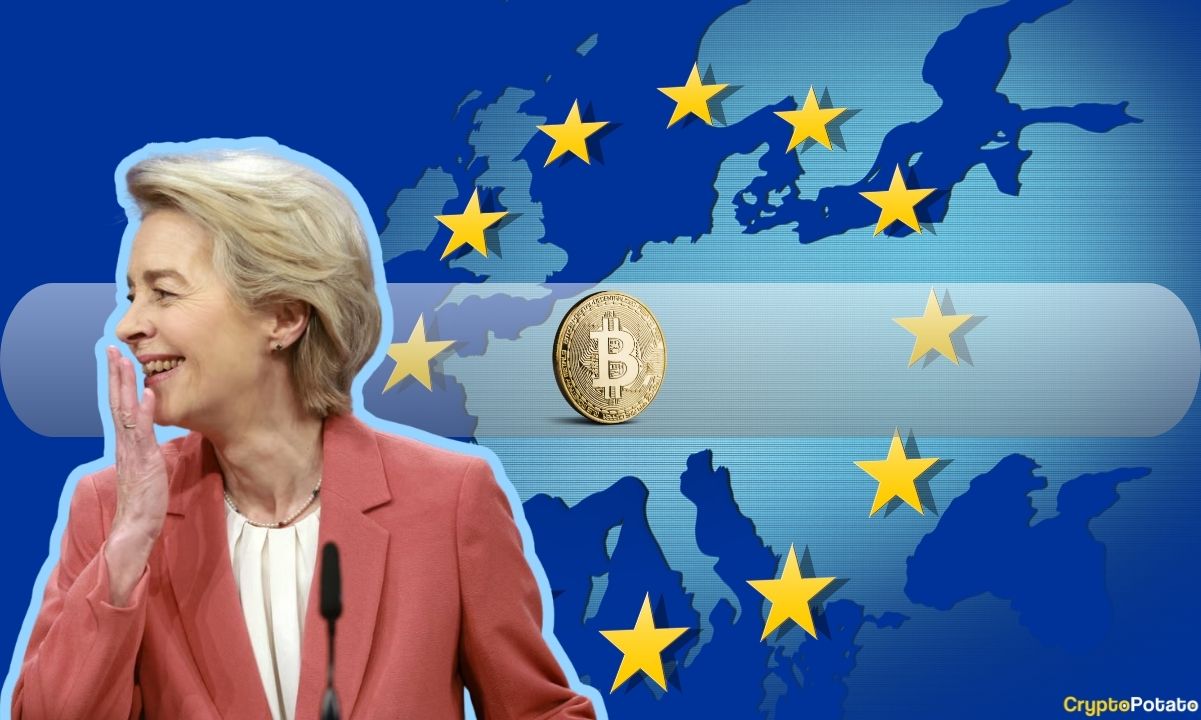
    European Commission President Ursula von der Leyen delivered a significant address at the annual “La Rencontre des Entrepreneurs de France 2026” conference on August 26th, a speech that has rapidly circulated across crypto-focused social media. Her core message underscored a changing global landscape, urging Europe to bolster its independence, industrial capacity, and strategic capital allocation.

    Von der Leyen posited that many foundational assumptions of the European Union’s economic model are no longer valid. She emphasized the need for the continent to become a proactive entity that “produces, invests and protects.” The era of unquestioned access to China, unfettered global trade, American strategic protection, cheap imported energy, and Western technological supremacy, she argued, is over.

    While acknowledging the validity of some of her points from a European perspective – particularly the challenges faced by companies due to high energy costs, regulatory hurdles, and intensifying competition from China – one particular aspect of her speech raises significant concern.

    The European Union currently holds approximately 10 trillion euros in household savings within bank accounts, with a substantial portion of Europe’s overall savings invested beyond the continent. Von der Leyen suggested that these savings need to be mobilized to support European businesses.

    Although the stated intention may be to stimulate economic growth, the language employed reveals a potentially troubling perspective on the relationship between private wealth and governmental objectives.

    The EU Commission President stated that households have €10 trillion sitting “idle” that could be “put to work” to invigorate the economy. This assertion, as reported, has drawn sharp reactions.

    From a policymaker’s viewpoint, household savings appear to be increasingly viewed not merely as personal assets, but as a potential economic catalyst that could be guided, incentivized, or regulated to achieve specific goals.

    This perspective is particularly noteworthy given Europe’s historically high taxation rates. Data indicates that four of the top five countries globally with the highest income tax rates are members of the European Union.

    A significant portion of economic output is already channeled to the state, yet this appears insufficient to meet the Union’s political and industrial ambitions.

    This raises a fundamental question: who should determine the purpose of an individual’s savings?

    After earning money, paying income taxes, and then incurring consumption taxes like VAT when spending, the notion that personal savings should be directed towards government-defined priorities, which may or may not align with individual interests, is a point of contention.

    This is precisely where Bitcoin emerges as a compelling alternative. Despite its inherent complexities, Bitcoin embodies a fundamentally different philosophy.

    As an asset without a central issuer, its total supply cannot be manipulated by institutions like the European Central Bank. Governments cannot arbitrarily increase Bitcoin’s supply to finance industrial expansion, nor can they dictate its issuance schedule.

    The finite supply of 21 million Bitcoin ensures a predictable scarcity. Furthermore, individuals can hold Bitcoin directly, without intermediaries, and if private keys are secured, the asset is theoretically resistant to confiscation and external control.

    This distinction is crucial and gains increasing relevance in the current geopolitical and economic climate.

    It is important to clarify that this analysis does not suggest an immediate intent by European politicians to seize private savings. However, as an EU citizen who has lived in the region for their entire life, the possibility cannot be entirely dismissed, especially in light of contemporary political trends.

    The author recalls attending a Bitcoin conference in Amsterdam where attendees were asked, “Why do you Bitcoin?” This, the author concludes, is their answer.

  • SEC Proposes Landmark Transfer Agent Rules Amid Tokenization Boom

    SEC Proposes Landmark Transfer Agent Rules Amid Tokenization Boom

    SEC Proposes Sweeping Overhaul of Transfer Agent Rules, Embracing Blockchain

    The Securities and Exchange Commission (SEC) has unveiled its first significant update to transfer agent regulations since the early 1980s, proposing a comprehensive rewrite that extensively addresses blockchain recordkeeping and tokenized securities. The 421-page release, published Tuesday, signals a major shift in how the agency views the management of ownership records for financial instruments.

    Transfer agents are responsible for maintaining the official registry of security ownership, overseeing the issuance, cancellation, and transfer of securities. The current framework for these rules was largely established in the late 1970s and early 1980s.

    The SEC’s release acknowledges a growing trend of market participants seeking to integrate blockchain-native, or “onchain,” transfer agents into the U.S. market. Firms are actively developing models for blockchain-based recordkeeping, tokenized fund administration, and cross-chain interoperability. These innovations would necessitate transfer agents maintaining securityholder records on distributed ledgers and operating processes driven by smart contracts.

    Proposed amendments to Form TA-2 would require transfer agents to disclose the number of issues where their master securityholder file resides on a distributed ledger. Furthermore, tokenized issues would need to be categorized as either issuer-sponsored or third-party-sponsored. The SEC highlighted this distinction in a January 2026 staff statement, linking it to varying investor risks. Tokenization agents and distributed ledger platforms are now included alongside traditional service providers like banks and printers on a checklist.

    The commission is soliciting feedback on how to handle records stored solely on ledgers not exclusively controlled by the agent. It also seeks input on whether current rules permit agents to link a wallet address and quantity held to offchain records of a holder’s name and address, thereby enabling an onchain transfer to simultaneously update the master file.

    Commissioner Hester Peirce noted that the proposal has been in development for over a decade and encouraged comments on its implications for tokenization. The SEC last reviewed these rules in a 2015 concept release.

    Commissioner Mark T. Uyeda commented that the lack of rulemaking for over a decade led the Commission to adopt a “regulation-by-enforcement approach,” which he described as a fragmented strategy that offered neither clarity nor predictability. He added that distributed ledger technology and tokenization, which were nascent in 2015, are now fundamentally reshaping the core functions of transfer agents.

    SEC Chairman Paul S. Atkins stated that the updated rules would reflect the industry’s adoption of “electronic communications and blockchain technology.” The proposal also aims to eliminate an existing exemption rule, establish a uniform retention period for most records, and redefine the safeguarding rule as a risk-management requirement encompassing cybersecurity and business continuity.

    In a separate announcement, the SEC revealed the agenda for a September 17 roundtable discussion on 24-hour trading. The event will feature panelists from Robinhood, Nasdaq, DTCC, and overnight trading venues Blue Ocean and 24X. Public comments on the transfer agent proposal are due 60 days after its publication in the Federal Register.

  • OpenPayd Secures 43 US State Licenses, Integrates MSB USA Inc. to Bolster North American Operations

    OpenPayd Secures 43 US State Licenses, Integrates MSB USA Inc. to Bolster North American Operations

    OpenPayd has significantly expanded its regulatory presence in the United States by integrating MSB USA Inc. into its group and securing 43 state money transmitter licenses (MTLs). This strategic move aims to bolster its position in the US market and establish a more comprehensive regulatory foundation for its North American operations.

    The integration of MSB USA Inc., a US-based, state-licensed money services business, was finalized after obtaining the necessary regulatory approvals. This expansion enhances OpenPayd’s geographic reach, enabling it to better serve global clients already operating in the US or planning market entry.

    Financial Performance and Market Ambitions

    As of July 31, 2026, OpenPayd reported strong financial performance, with its annual recurring revenue (ARR) exceeding $96 million and its annualized transaction volume surpassing $300 billion. The company stated that it remains profitable and has not sought external capital. Currently, OpenPayd serves over 1,200 clients worldwide, including prominent financial and crypto firms such as Kraken, eToro, OKX, and B2C2.

    Further underscoring its growth and market ambitions, OpenPayd is preparing to enter the US public markets through a previously announced business combination with Titan Acquisition Corp. The companies anticipate this combination will result in OpenPayd becoming a publicly listed company on the Nasdaq under the ticker symbol “OP.” The transaction is expected to value OpenPayd at an equity value of up to $1.145 billion on a pro forma basis. The closing of this business combination is anticipated in the fourth quarter of this year, subject to customary closing conditions, including shareholder approval from Titan Acquisition Corp.

    Global Regulatory Footprint

    This US expansion follows OpenPayd’s recent authorization under the European Union’s Markets in Crypto-Assets (MiCA) framework, granted by the Malta Financial Services Authority. This dual regulatory footing across fiat and digital assets in both the US, UK, and Europe positions OpenPayd as a provider of regulated financial infrastructure on both sides of the Atlantic.

    OpenPayd Founder, Dr. Ozan Ozerk, commented on the significance of infrastructure in finance, stating, “Every era of finance has been defined by its infrastructure: correspondent banking wired together the twentieth-century economy; programmable money will power the twenty-first. The U.S. is at the forefront of this evolution, and with regulated foundations now spanning the U.S., U.K. and Europe – across both fiat and digital assets – OpenPayd has something few providers can claim: regulated infrastructure spanning both fiat and digital assets, on both sides of the Atlantic.”

    While the business combination with Titan Acquisition Corp. is progressing, certain customary closing conditions, including shareholder approval, are still pending.

    Broader Context

    Source materials place the factual news in this context: OpenPayd has announced expanded its regulatory presence in the United States after completing the integration of MSB USA Inc. into its group.

  • XRP ETFs Attract $170M from Institutions

    XRP ETFs Attract $170M from Institutions

    XRP ETFs Attract Significant Institutional Inflows Amidst Price Dip

    Despite a nearly 3% drop in Ripple’s XRP price, institutional investors are reportedly increasing their holdings, a trend that has quietly emerged as a significant narrative in the cryptocurrency market this quarter. The performance of spot XRP Exchange Traded Funds (ETFs) warrants a closer look before interpreting the current price dip as a sign of fundamental weakness.

    ETF Holdings and Inflows Surpass Expectations

    As of mid-August, seven U.S. spot XRP ETFs collectively hold 994.74 million XRP, supported by cumulative net inflows approaching $1.51 billion. Recent weekly data indicates that the XRP ETF complex experienced its strongest week since May, attracting $39.78 million in net inflows, with one trading session alone accounting for $18.38 million.

    On September 1st, spot ETF flows showed a clear rotation signal: XRP, Ethereum (ETH), and Solana (SOL) ETFs all posted inflows, while Bitcoin (BTC) funds experienced net outflows of $236.46 million. This occurred despite a broader market downturn of 4% on the same day.

    Institutional Accumulation Pattern Evident

    Further underscoring this trend, Q2 filings revealed that one institutional holder reportedly manages $86.5 million spread across five separate XRP funds. ETF inflow tracking suggests this is not an isolated incident but rather a consistent pattern of accumulation.

    Price Action Disconnect Puzzles Observers

    The key question now is whether XRP’s price action can keep pace with this burgeoning institutional narrative. Currently, it is not, and this disconnect represents the most compelling aspect of the current market dynamic.

    XRP’s 7-day performance stands at -7%, a more pronounced drawdown than its daily figures. Despite this, Ripple’s 24-hour trading volume, hovering near $2.56 billion, indicates that liquidity has not diminished; rather, the short-term direction has shifted bearishly. The price is currently testing the $1.33 support zone, with a further floor identified near $1.295. A more critical level to watch, should selling pressure intensify, lies between $1.23 and $1.25.

    While longer-term price targets for XRP remain optimistic, the current week is characterized as a test of support rather than a setup for a breakout.

    Retail vs.

    Institutional Dynamics

    A 7% weekly drawdown on a token that has attracted $1.51 billion in ETF inflows presents a peculiar market scenario. While institutions are actively buying, retail investors appear to be experiencing losses.

    This divergence often prompts traders to seek out earlier-stage investment opportunities where entry price remains a more significant factor. With an $85 billion market capitalization, XRP’s potential for upside is present but incremental. Achieving substantial capital multiplication at this scale typically requires a level of patience that many retail traders may not possess.

    Emerging Opportunities in Early-Stage Projects

    Projects like LiquidChain ($LIQUID), a Layer 3 infrastructure initiative, are positioning themselves to capitalize on this demand for earlier-stage plays. LiquidChain aims to consolidate liquidity from Bitcoin, Ethereum, and Solana into a single execution environment, enabling developers to deploy applications across all three ecosystems simultaneously, thereby avoiding fragmentation across bridges.

    The project’s presale has already raised $960,000 at a current price of $0.014951. Its core offerings include a Unified Liquidity Layer, single-step execution, and verifiable settlement. Investors interested in cross-chain infrastructure solutions may wish to research LiquidChain further.

  • Robinhood Chain Sees Growth in Network Activity and Token Market Capitalization

    Robinhood Chain Sees Growth in Network Activity and Token Market Capitalization

    The Robinhood Chain network has experienced a notable increase in its total value locked (TVL) and trading volume over the past month, attracting significant investor interest and the emergence of several prominent cryptocurrencies. According to data from DeFiLlama, the network’s TVL expanded by 93% in the past 30 days. The volume aggregated through Robinhood Chain’s automated market makers has reached $1.3 billion, as reported by CryptoPotato.

    Leading Token Performance

    Among the tokens gaining traction on the chain is PONS, the native cryptocurrency of the Pons (dot) family platform. Launched less than two months ago, PONS has achieved a market capitalization of approximately $285 million at the time of this writing. Its price action has shown volatility in recent days, particularly after Hyperliquid announced support for perpetual futures trading for PONS. The token experienced a price fluctuation, reaching a high near $0.5 before settling around $0.4. Market observers have identified PONS as a key infrastructure play on Robinhood Chain, with some associating it with Pump.fun, a platform known for its role in Solana’s meme coin activity. However, some market observers have expressed caution, noting that the expansion of similar solutions to Robinhood Chain could potentially create pressure on PONS.

    Another significant token on the network is CASHCAT, a meme coin that has garnered substantial attention. CASHCAT currently holds a market capitalization of $280 million and has seen a 40% increase in its market capitalization over the past week. Its performance is indicative of the speculative interest present on the Robinhood Chain, drawing parallels to past meme coin cycles involving tokens like DOGE, SHIB, and WIF.

    Emerging Concepts and Uncertainties

    In addition to these, the Robinhood Chain has seen the introduction of unique token concepts. One notable example is a token paired directly against tokenized Nvidia stock (NVDA), rather than against the US dollar. This approach, where a token trades directly against a significant stock in the AI sector, represents an interesting development on the network. The virality of meme coins, combined with trading activity, has contributed to the rapid growth in interest and value for some tokens on the chain.

    While the Robinhood Chain demonstrates expanding network activity and the emergence of high-value tokens, uncertainties remain regarding the long-term sustainability of PONS’s market position amidst potential competition. The exact period for significant gains of certain tokens beyond the past week is also difficult to ascertain due to the nature of their rapid ascent. Furthermore, the long-term impact of AI-themed tokens and their novel pairing mechanisms on the chain is yet to be determined. It is important to note that this information is strictly for informational purposes and should not be taken as financial advice or recommendation.

    Why This Matters

    The materials describe a narrow update: The Robinhood Chain network has seen a significant increase in total value locked (TVL) and trading volume, attracting a flood of new tokens and investor interest. The long-term sustainability of PONS’s market position given potential competition.

    Broader Context

    Source materials place the factual news in this context: Robinhood Chain has been booming in popularity throughout the past month, becoming the talk of town in crypto Twitter, or more like crypto X.

  • Robinhood Chain DEX Volume Surges Past $1.3 Billion, Impacting Uniswap (UNI) Price

    Robinhood Chain DEX Volume Surges Past $1.3 Billion, Impacting Uniswap (UNI) Price

    Robinhood Chain’s decentralized exchange (DEX) volume has surged to a new daily record exceeding $1.3 billion, a development that has coincided with a notable price movement for Uniswap’s native token, UNI. In the last 24 hours, UNI’s price increased by 16.5%, reaching approximately $6.31, according to CoinGecko.

    The increase in UNI’s price is linked to trading activity on Robinhood Chain, where Uniswap serves as the primary automated market maker and collects fees from the network’s trading volume. UNI’s trading volume also saw a significant increase, rising by 95% to $1.17 billion over the same 24-hour period.

    Robinhood Chain has experienced rapid growth since its launch on July 1. On August 30, its daily DEX volume was reported at $875 million. By the current reporting period, this figure has surpassed $1.3 billion, marking a nearly 50% increase in three days. This growth has positioned Robinhood Chain to generate more in daily chain fees than established networks such as Solana, Base, and Ethereum, according to data from Arkham. The chain is currently processing $1.49 billion in DEX volume and 5.52 million daily transactions.

    This performance is partly attributed to a novel trading pattern involving meme coins and tokenized stocks. For instance, Artificial Inu, a meme coin with a market capitalization of $184 million, is trading against a tokenized version of Nvidia stock, rather than traditional stablecoins or the network’s native asset.

    Uniswap’s presence on Robinhood Chain extends beyond its role as an AMM. In August, the protocol launched Pools.trade, a token launchpad on the network. This platform allows users to create tokens through either a four-hour Crowd Launch or an Instant Launch before liquidity is added to Uniswap v4 pools. The introduction of Pools.trade has reportedly drawn traders away from rival launchpad token PONS, which experienced a nearly 14% decrease in price over 24 hours and an almost 48% drop over the following week.

    Despite its integral role and product launches, Uniswap’s direct fee capture on Robinhood Chain trails other applications. GMGN generated $1.11 million in application fees, and Pons brought in $930,000, while Uniswap collected $307,000 in application fees, according to Arkham’s data.

    In broader ecosystem metrics, Robinhood Chain’s total value locked (TVL) has climbed to $740 million, a 23% increase over the past week.

    Contextually, UNI’s recent gains follow a period of significant fluctuation. The token is up nearly 46% for the week and over 51% for the month. However, it remains down approximately 35% for the year and about 86% below its all-time high of $44.92, set in May 2021. Over the last 24 hours, UNI has also seen gains of about 12% against Bitcoin and nearly 13% against Ethereum, according to CoinGecko.

    Uncertainties remain regarding the long-term sustainability of Robinhood Chain’s high DEX volume and fee generation, the full impact of Pools.trade on the token launchpad market, and whether UNI can maintain its current price momentum. The current metric does not suggest future price direction.

    Why This Matters

    The rapid growth of Robinhood Chain’s decentralized exchange volume and its impact on Uniswap’s token price and ecosystem is a notable development in the crypto space, driving UNI’s performance and presenting new competitive dynamics for established blockchain networks.

    Broader Context

    Uniswap is the network’s primary automated market maker and collects fees on that volume. Robinhood Chain is now generating more in chain fees than Solana, Base or Ethereum, pointing to $1.49 billion in DEX volume and 5.52 million daily transactions as the drivers, along with a new trading pattern that pairs meme coins directly against tokenized stocks. The platform launched Pools.trade, a token launchpad, on the network early that month, letting users create tokens through either a four-hour Crowd Launch or an Instant Launch before liquidity gets locked into Uniswap v4 pools. Robinhood’s total value locked (TVL) has climbed to $740 million, up 23% on the week, on a network that only launched on July 1.

  • XRP ETF Inflows Driven by Investment Advisers, Uncertainty Remains on Price Impact

    XRP ETF Inflows Driven by Investment Advisers, Uncertainty Remains on Price Impact

    Spot XRP Exchange Traded Funds (ETFs) have accumulated over $1.6 billion in net inflows, with investment advisers identified as the primary buyers according to an analysis of second-quarter 13F filings. This sustained demand suggests a potential buy-and-hold strategy, contrasting with speculative trading.

    The ETFs have experienced nine consecutive days of positive flows, extending through September 1. An eleven-day run of positive flows accounted for over $740 million, with a single-day haul on August 28 reaching $26.2 million. This consistent accumulation indicates a steady institutional bid.

    An examination of second-quarter 13F filings reveals that investment advisers, rather than hedge funds or brokerages, are the main drivers of this demand. Goldman Sachs held the largest single position among these advisers, with an $87.4 million holding in XRP ETFs. This pattern suggests a portfolio allocation approach rather than short-term trading.

    XRP is currently priced at $1.34. Analysts have flagged a key near-term support band between $1.35 and $1.38. A reported break above $1.55 would be required to test the next level of resistance. Potential resistance levels are cited at $1.68 and $1.86, with a breakout above descending resistance potentially pushing XRP price toward $1.68–$1.70. More ambitious price targets for XRP cite $2.19. The base case scenario anticipates XRP trading within the $1.35–$1.55 range.

    On September 1, 1 billion XRP escrow was released to the market. This event occurs as the ETFs continue to see strong inflows.

    In related developments, the LiquidChain ($LIQUID) project, a Layer 3 infrastructure initiative, aims to unify liquidity across Bitcoin, Ethereum, and Solana. Its presale is priced at $0.014951 per token, and it has raised $960K to date.

    Despite the strong ETF inflows, uncertainties remain regarding whether the institutional demand will be sufficient to push XRP through overhead resistance or merely cushion a token currently trading within a range. The resilience of XRP ETF flows, even with comparatively muted price action, is noted as particularly impressive. A break below the $1.35 support level could invalidate the current setup and open the door to retesting lower demand zones.

    Broader Context

    Source materials place the factual news in this context: XRP is experiencing turbulence along with the whole market, but the price action is masking one of the more telling institutional news stories of the quarter.

    Why This Matters

    The sustained inflow of capital into XRP ETFs, driven by investment advisers, highlights a significant trend in institutional investment. This demand, suggesting a buy-and-hold strategy, could provide price support for XRP. However, the ultimate impact on price remains uncertain, contingent on XRP’s ability to overcome key resistance levels, as analysts have flagged.

  • Major Financial Institutions Report Significant Holdings in XRP ETFs Amidst Market Volatility

    Major Financial Institutions Report Significant Holdings in XRP ETFs Amidst Market Volatility

    Second-quarter 13F filings reveal that major financial institutions, including Goldman Sachs, Jane Street Group, and Millennium Management, have emerged as significant holders of spot XRP Exchange Traded Funds (ETFs). The total reported exposure across these identified holders reached $183.5 million, representing approximately 176.4 million XRP.

    According to Bloomberg Intelligence data shared by James Seyffart, Goldman Sachs reported holdings of $87.4 million in spot XRP ETFs, equivalent to 84 million XRP. Jane Street Group held just under 16 million XRP, valued at $16.6 million, while Millennium Management reported approximately $16.2 million in XRP ETFs, comprising 15.5 million XRP. Other notable institutional exposures include $14.4 million from Intesa Sanpaolo and $8.1 million from Marex UK Holdings.

    Bloomberg’s compilation further categorizes these holdings. Investment advisors represent the largest segment with $120.9 million in exposure, followed by hedge fund managers ($25.1 million), brokerages ($17.9 million), and banks ($14.8 million). Some institutions adjusted their positions during the quarter; Citadel Advisors saw a reduction of $645,000 in its XRP ETF exposure, and SIG Holdings reported a decrease of approximately $4.6 million.

    This growing institutional interest in XRP ETFs is occurring alongside a notable increase in fund inflows. The week ending August 28 saw spot XRP ETFs attract $110.5 million, the strongest five-day inflow since the first week of December 2025, when over $230 million was recorded. Data from SoSoValue shows an additional $5.6 million entered XRP ETFs on August 31, bringing cumulative net inflows to approximately $1.67 billion. Total net assets for these ETFs currently stand at around $1.45 billion.

    In contrast to the increasing institutional investment via ETFs, the XRP token itself has experienced price fluctuations. At the time of reporting, XRP was trading near $1.40, following a multi-month high of $1.70 reached last week. Despite a nearly 9% price dip over the past seven days, XRP remains up 28% from a month ago and nearly 40% from two weeks prior. However, its current value is roughly half of that recorded a year ago and approximately 62% below its all-time high of $3.65, set in July 2025.

    Analysts are closely monitoring key price levels for XRP. Traders are watching the $1.35 to $1.38 support zone, with a potential for further downside if this level breaks. Analyst Ali Martinez has identified $1.60 as a significant resistance level should XRP attempt a recovery. The 13F filings are mandatory for institutional investment managers overseeing more than $100 million in certain securities, offering a snapshot of their holdings in publicly traded assets like XRP ETFs.

    Why This Matters

    The materials describe a narrow update: Second-quarter 13F filings revealed that Goldman Sachs, Jane Street Group, and Millennium Management were the largest reported holders of spot XRP ETFs. The exact total exposure of Citadel Advisors is not fully detailed, only the reduction.

    Broader Context

    Source materials place the factual news in this context: The article is based on Bloomberg Intelligence data shared by James Seyffart on August 31, and SoSoValue data.

  • OpenClaw 2.0 Released: Major Update Enhances Open-Source Agent Framework

    OpenClaw 2.0 Released: Major Update Enhances Open-Source Agent Framework

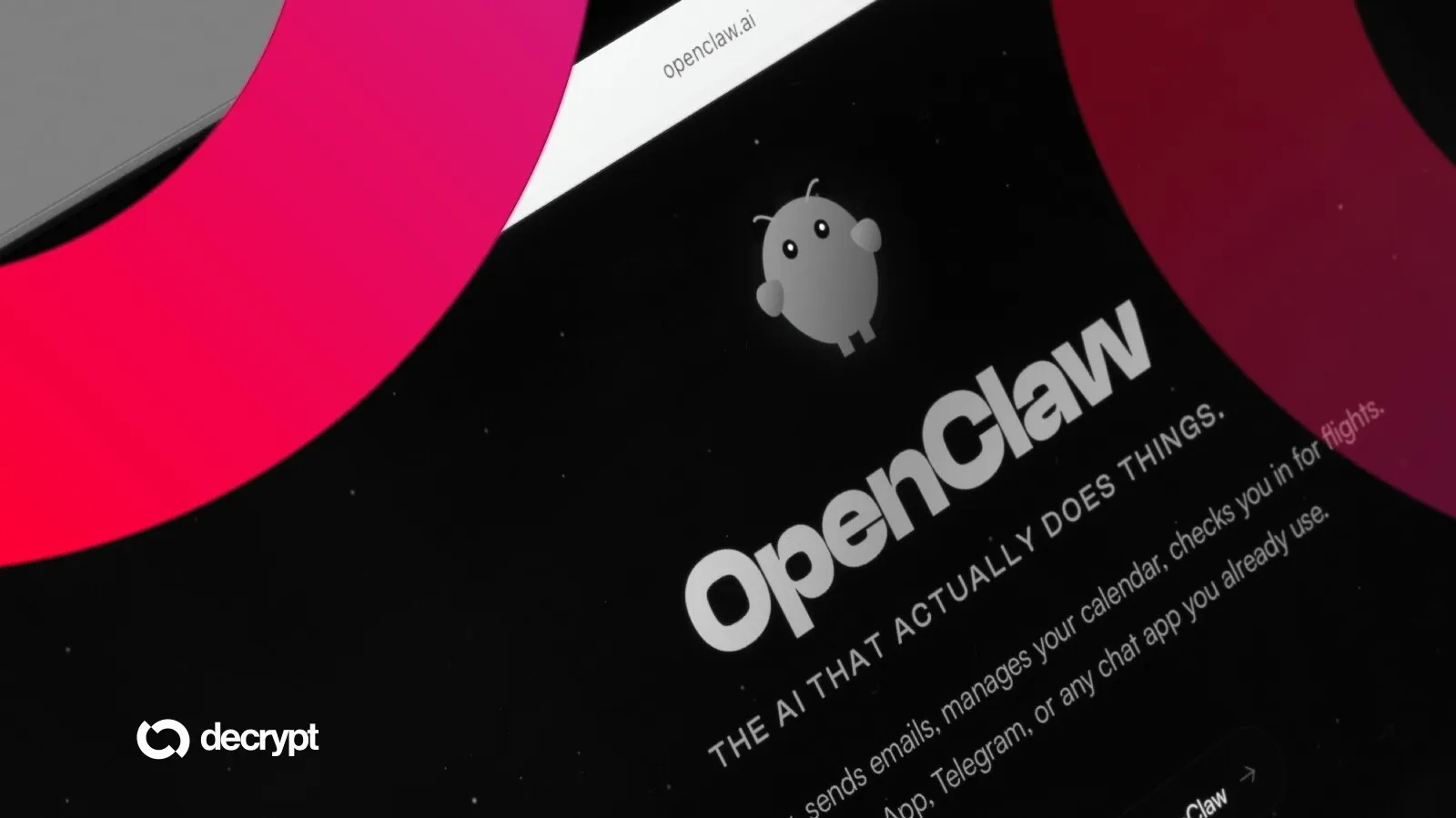
    OpenClaw has launched version 2.0 of its open-source agent framework, introducing a significant overhaul with substantial improvements to installation, user interface, memory management, and security features. The release, which occurred over the weekend, involved a large number of contributors and pull requests, marking a considerable evolution for the self-hosted framework that transforms large language models (LLMs) into persistent agents.

    The update, described by the team as an “accidental” result of scope creep, saw initial small fixes evolve into a comprehensive overhaul. According to the announcement post, efforts to simplify onboarding and rebuild the browser app touched upon core components including memory, models, plugins, messaging, and security. This extensive development involved 933 contributors, with 569 being first-time contributors, and generated over 16,000 pull requests.

    Key Features and Improvements

    OpenClaw 2.0 features a rebuilt Control UI centered around chat, aiming to align its visual presentation with popular interfaces like ChatGPT, Claude, and Gemini. This redesign integrates tools such as Files, Git diffs, pull-request status, a browser panel, and a terminal directly within the conversation interface, moving away from a separate overview dashboard. The team claims that a simulated latency test showed a reduction in initial JavaScript requests from 140 to 45 and a decrease in startup time from 1.6 seconds to 575 milliseconds.

    Collaboration is enhanced with the introduction of shared cloud sessions, allowing colleagues to seamlessly join and contribute to agent tasks without losing context. The framework also adds several security features, including request-specific approvals, command permissions, Docker and Podman sandboxing, role-enforced execution, and a team-scoped Secret Store. However, these advanced security features, such as sandboxing and approvals, are off by default, requiring manual activation by users. For full tenant isolation, separate Gateway instances, referred to as ‘cells,’ need to be deployed.

    Project Evolution and Context

    OpenClaw, originally built by Peter Steinberger (who joined OpenAI in February), is now managed by the OpenClaw Foundation, a nonprofit entity with partners including Microsoft, GitHub, Nvidia, Atlassian, and Tencent. Prior to this major release, OpenClaw had shipped 106 releases in the 230 days leading up to version 2.0, indicating a rapid development pace.

    Competitive Landscape

    The release of OpenClaw 2.0 positions it within a competitive landscape that includes projects like Nous Research’s Hermes Agent, first tagged in March. Hermes Agent has focused on procedural memory for automatic skill generation and security defaults that assume multiple users. OpenClaw 2.0’s new sandboxing features narrow the gap with Hermes Agent, though the latter may retain an advantage in its default security posture and self-improvement capabilities, as hardening in OpenClaw 2.0 still requires user configuration.

    OpenClaw remains free and MIT-licensed. The update requires existing users to back up their sessions before upgrading due to a change in SQLite storage. New users are guided through onboarding processes across multiple platforms and can import data from other tools.

    Why This Matters

    The release of OpenClaw 2.0 signifies a major step forward in the development of self-hosted LLM agents, impacting developers and organizations seeking advanced automation and collaboration tools. The project’s evolution into a nonprofit foundation with corporate partners also highlights a shift in the governance and support structure for open-source AI frameworks.

    Broader Context

    OpenClaw is a self-hosted, open-source framework that turns an LLM into an agent that persists after closing a tab. It can interact via various messaging platforms and access local resources with permission. The project’s rapid development and the introduction of significant new features in version 2.0 underscore its growing importance in the AI agent ecosystem.