Tag: Positive

  • Trump Eyes US Crypto Leadership: Key Takeaways from White House Meeting

    Trump Eyes US Crypto Leadership: Key Takeaways from White House Meeting

    White House Signals Stronger Stance on Digital Assets, Trump Urges Congressional Action

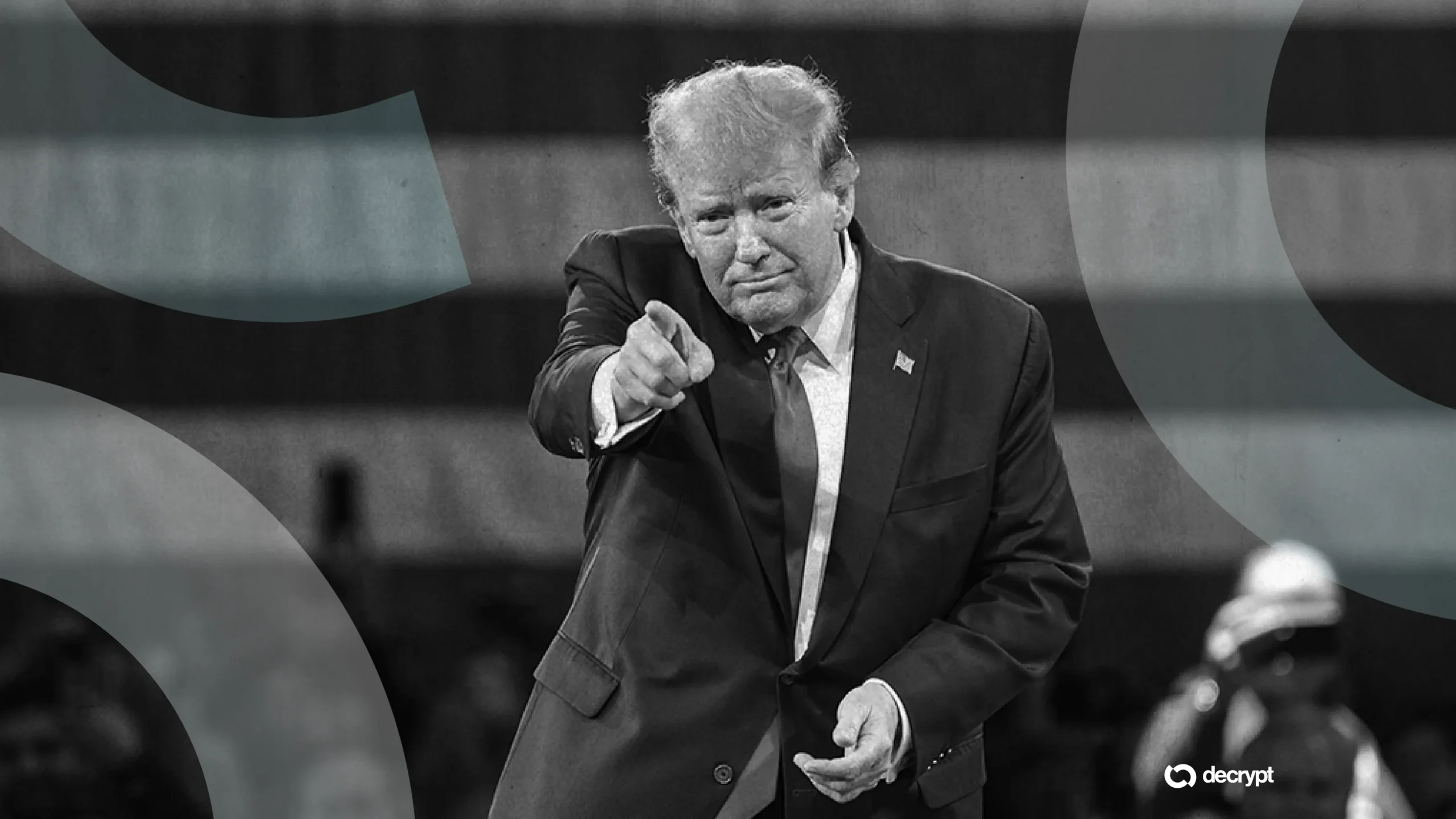
    President Donald Trump convened with leaders from major cryptocurrency firms, including Coinbase, Ripple, and Gemini, at the White House on Wednesday, signaling a concerted effort by the administration to bolster its position within the digital asset sector.

    The discussions centered on the proposed Digital Asset Market Clarity Act, Bitcoin, and strategies to encourage greater cryptocurrency activity within the United States.

    President Trump urged Congress to pass a “fair version” of the CLARITY Act, asserting that its enactment would be crucial for maintaining U.S. leadership, particularly in relation to China. The bill, which cleared the House of Representatives in July 2025, has faced legislative inertia in the Senate. Key sticking points include provisions related to tokenized equities, stablecoin rewards, and potential conflicts of interest involving the Trump family and the cryptocurrency industry.

    Brian Armstrong, CEO of Coinbase, expressed his belief that the legislation would establish a “durable” U.S. crypto policy capable of enduring for decades. Armstrong anticipates the bill securing “more than 60 votes” when the Senate considers a cloture motion on September 15. President Trump echoed this optimism, describing the bill as “very bipartisan” with significant Democratic support.

    During the meeting, President Trump also indicated that the U.S. has explored plans to acquire “sizable” quantities of Bitcoin and other cryptocurrencies. He further stated, “We’re going to ensure America remains the undisputed leader, not only in Bitcoin and crypto, but also in technologies like prediction markets and artificial intelligence.”

    The trading platform Hyperliquid was also a subject of discussion. President Trump noted that Commodity Futures Trading Commission Chair Michael Selig is working to integrate the perpetuals-focused platform into the U.S. in a “fully compliant and legal fashion.” Following these remarks, the price of HYPE surged by over 20%, reaching $71.

    The cryptocurrency market responded positively to the White House meeting and the latest regulatory signals. Bitcoin saw a 7% increase, touching $70,000, while Ethereum experienced a more substantial gain of nearly 18%, climbing to $2,327. XRP also trended upward, reaching $1.14.

    However, the industry’s primary concern remains in Washington. While President Trump can advocate for legislative progress, the CLARITY Act must still navigate significant political obstacles in the Senate. For instance, Democratic Senator Ruben Gallego has advised lawmakers against rushing the process, urging a more deliberate approach to a Senate vote. Speaking at the SALT Wyoming Blockchain Symposium on Wednesday, Gallego highlighted ongoing disagreements between Democrats and Republicans concerning ethics and stablecoin yields.

    “Don’t go for a fast vote. A fast vote gets you a fast result, but I’m not sure it’s the result you want,” Gallego stated.

    Notably, Senate Democrats have sought to include provisions that would prohibit public officials, including the president, from trading digital currencies. Senator Gallego indicated that efforts to convey these ethical considerations to the White House have yielded minimal progress.

  • HYPE Surges Past $70 on Trump’s CFTC Push for Hyperliquid’s US Debut

    HYPE Surges Past $70 on Trump’s CFTC Push for Hyperliquid’s US Debut

    Crypto Market Surges, HYPE Token Hits Multi-Month High on Trump’s CFTC Push

    The cryptocurrency market experienced a significant revival over the past several hours, with nearly all digital assets climbing to new multi-month peaks. Among the top performers was Hypeliquid’s native token, HYPE, which surged by nearly 10% to touch $71 minutes ago. The token narrowly missed its all-time high of $76, set in June 2026, before settling just below $70.

    The substantial price increase appears to be driven by reports indicating that U.S. President Donald Trump has urged the Commodity Futures Trading Commission (CFTC) to facilitate Hyperliquid’s entry into the United States.

    During a White House crypto summit today, President Trump remarked, “I understand that Mike (Selig) is also working to bring Hyperliquid into the United States in a fully compliant and legal fashion.”

    Broader Market Resurgence Fuels HYPE’s Rally

    The broader cryptocurrency market’s resurgence also played a significant role in HYPE’s impressive rally. Bitcoin, for instance, soared past $69,000 for the first time since June, while Ethereum climbed to $2,100. XRP also saw a notable increase, trading well above $1.05.

    This unexpected market upturn, following a period of sluggishness, led to liquidations exceeding $1 billion for over-leveraged traders.

    A primary catalyst for Wednesday’s spectacular market run is believed to be the U.S. Treasury’s announcement of increased liquidity-support buybacks for government bonds, which has had a ripple effect across the broader financial market.

  • Market Liquidity and Short-Covering Dynamics Drive Crypto Stock Rally Amidst Uncertainty

    Market Liquidity and Short-Covering Dynamics Drive Crypto Stock Rally Amidst Uncertainty

    Crypto-related stocks experienced a significant one-day rally on Wednesday, with companies like Strategy (MSTR) and Coinbase (COIN) seeing substantial price increases. This surge appears to be driven by a combination of increased market liquidity and dynamics related to short-selling, rather than solely by intrinsic cryptocurrency performance.

    The U.S. Treasury announced it would at least double the size of its long-bond buyback program starting in September. This liquidity-easing measure broadly lifted risk assets, contributing to a more than 5% increase in the total crypto market during the current trading session. This broader market movement provided a tailwind for crypto-related equities.

    Stock Performance and Short Squeeze

    Strategy (MSTR) climbed 11.95% to $103.58, while Coinbase (COIN) rose 9.05% to $159.47. Circle (CRCL) added 9.44% to $78.50, and BitMine (BMNR) saw a gain of 9.68% to $20.05. These gains coincided with Bitcoin’s price rising toward $70,000, a move that triggered a short squeeze liquidating over a billion dollars in bearish crypto bets within a single hour.

    Both Strategy and Coinbase have been among the most shorted large-cap stocks on Wall Street, with Coinbase currently ranking as the fifth most shorted stock in the financial sector. The current rally appears to be forcing equity short sellers betting against these names to cover their positions into a rising market, further amplifying the price increases. Analysts are split on whether this move represents a genuine market turn or a temporary short-covering pop within a longer downtrend.

    Company Holdings and Market Context

    Strategy holds 840,447 BTC and $4.8 billion in cash as of its most recent weekly filing, making its share price function as a leveraged bet on the cryptocurrency it holds. Similarly, BitMine stockpiles 5.82 million ETH tokens, valued at approximately $11.4 billion, positioning it as a close proxy for Ethereum on the Nasdaq. Despite Wednesday’s gains, Strategy, Coinbase, and BitMine remain significantly down for the year.

    The market is also anticipating potential volatility from a White House meeting concerning market-structure rules involving President Trump, SEC, and CFTC leadership, as well as the Federal Reserve’s July meeting minutes, both due later Wednesday. Uncertainty remains regarding whether Bitcoin can sustain its upward momentum and hold the $70,284 resistance zone.

    Why This Matters

    The materials describe a narrow update: Several crypto-related stocks, including Strategy (MSTR) and Coinbase (COIN), saw significant price jumps, correlating with a rise in Bitcoin’s price and broader market liquidity-easing measures. Whether the current move marks a genuine turn or another short-covering pop inside a longer downtrend.

  • Trump Meets Crypto Executives, Urges Congress to Pass Clarity Act Amid Regulatory Shifts

    Trump Meets Crypto Executives, Urges Congress to Pass Clarity Act Amid Regulatory Shifts

    President Donald Trump convened with cryptocurrency and finance executives at the White House on Wednesday, urging Congress to pass a “fair version” of the Clarity Act. This proposed legislation aims to establish federal rules for digital assets and clarify the regulatory authority between the Securities and Exchange Commission (SEC) and the Commodity Futures Trading Commission (CFTC).

    The meeting, held just before the inaugural session of the CFTC’s Innovation Advisory Committee, included prominent industry leaders such as the CEOs of Coinbase, Ripple, Robinhood, Nasdaq, Intercontinental Exchange, and Blockchain.com, alongside co-founders of Gemini and Chainlink, and the founder of a16z crypto. CFTC Chair Michael Selig, SEC Chair Paul Atkins, and White House crypto advisor Patrick Witt were also present.

    Trump characterized the Clarity Act as “powerful structure legislation” crucial for maintaining U.S. leadership over China and fostering innovation. He indicated that market structure legislation is the next priority for his administration’s digital asset agenda, with the bill anticipated to return to the Senate floor in September. However, its passage hinges on securing approximately six Democratic votes to meet the 60-vote threshold.

    During the discussions, Trump voiced criticism of the Biden administration’s approach to crypto regulation, alleging that it employs enforcement tactics to push businesses overseas. He referenced his administration’s past policies, such as a strategic Bitcoin reserve and a ban on a U.S. central bank digital currency, as examples of proactive measures. Trump also noted that Michael Selig is actively working to facilitate the compliant and legal integration of Hyperliquid into the United States.

    In parallel, the SEC on Tuesday proposed new rules that could potentially ease the process for crypto companies to issue tokens and raise capital by exempting certain token offerings from securities regulations. Notably, executives from prediction market platforms Kalshi and Polymarket were reportedly not invited to the White House meeting, suggesting a focused discussion on specific industry segments.

    Despite the concerted push for legislative clarity, significant uncertainties persist regarding the Clarity Act’s eventual passage and the precise nature of any “fair version” that might be enacted. The ultimate impact and adoption of the SEC’s proposed rules also remain undetermined, leaving the future direction of digital asset regulation in the U.S. subject to ongoing developments.

    Why This Matters

    The materials describe a narrow update: President Trump hosted a meeting with cryptocurrency and finance executives at the White House. Whether Congress will pass a “fair version” of the Clarity Act.

    Broader Context

    Source materials place the factual news in this context: The Clarity Act is expected to return to the Senate floor in September after lawmakers left for their August recess without holding a procedural vote.

  • Jeonbuk Bank-Ripple Partnership and On-Chain Signals Inform XRP Analysis Amidst AI Price Prediction

    Jeonbuk Bank-Ripple Partnership and On-Chain Signals Inform XRP Analysis Amidst AI Price Prediction

    The recent partnership between Jeonbuk Bank and Ripple Payments offers a concrete development in cross-border settlements, prompting analysis of its potential impact on XRP’s utility, alongside an AI’s price forecast that highlights both opportunity and uncertainty. Grok AI has predicted that XRP could reach between $1.80 and $2.60 by the end of 2026, with a base case of $2.10, citing this new banking integration as a key driver.

    Why This Matters

    The materials describe a narrow update: Grok AI has predicted that XRP could reach between $1. The primary invalidation risk for Grok’s prediction is the prolonged failure of lending-protocol amendments.

    Partnership Details and AI’s Rationale

    Jeonbuk Bank, the first Korean regional bank to utilize Ripple Payments, is now handling 24/7 near-real-time cross-border settlements. According to Grok AI, this partnership is expected to drive measurable volume demand for XRP as a bridge asset. Further supporting the potential for increased network activity, on-chain signals indicate a significant rise in demand. Transactions exceeding $1 million on the XRP Ledger have spiked by 280%, and whale addresses have accumulated hundreds of millions of XRP. Grok AI interprets this activity as network demand not yet fully reflected in XRP’s current price.

    XRPL Developments and Market Context

    Developments on the XRP Ledger (XRPL) itself are also progressing. XRPL v3.3.0 amendments are currently in validator voting. These proposed upgrades include Confidential Transfers for Multi-Purpose Tokens using zero-knowledge proofs, Atomic Batch transactions, and sponsored fees. The article states these amendments aim to lower institutional barriers to on-ledger Real World Asset (RWA) activity and privacy-compliant transfers.

    In terms of current market conditions, XRP has experienced significant price volatility. The digital asset traded above $2.00 in February before a sharp decline, moving from approximately $1.90 to $1.15 within weeks. During the spring, XRP maintained a price range between $1.30 and $1.55 until May. June saw the price fall below $1.20, followed by a failed bounce attempt toward $1.20 in July. August has been characterized by a steady slide, with the price recently closing at $1.0018, down 0.04% on the session. The daily range for that session was between $0.9881 and $1.0057. Technical indicators, such as the Relative Strength Index (RSI), read 37.48, with its signal line just below at 37.00. While this convergence hints that the decline may be losing steam, momentum is described as weak.

    Risks and Broader Implications

    However, uncertainty remains regarding the realization of these price predictions. Grok AI identifies the primary invalidation risk as the prolonged failure of lending-protocol amendments. Additionally, muted actual payment volumes from new bank integrations could similarly hinder XRP’s price appreciation. Either of these scenarios could lead to XRP remaining range-bound or retesting support levels between $0.70 and $0.85, with Grok flagging $0.85 as a key support zone. Confirmation of a trend reversal would likely require increased payment volume from new bank integrations.

    Ripple’s strategy of integrating with banks is seen as a driver for institutional crypto adoption, focusing on infrastructure that facilitates capital movement. In a related development, LiquidChain is working to address interoperability challenges across different blockchain ecosystems like Bitcoin, Ethereum, and Solana. LiquidChain aims to create a single execution layer to unify these networks, potentially simplifying cross-chain operations. The project’s presale is currently priced at $0.01454, having raised over $950,000.

    In conclusion, while Grok AI has presented a price prediction for XRP based on the Jeonbuk Bank partnership and on-chain activity, significant uncertainties and risks persist. The realization of higher price targets hinges on the success of XRPL amendments and the actual payment volumes generated by new banking integrations. Investors are advised to consider these factors and focus on evidence-based analysis rather than speculation.

  • Coinbase Base App Integrates Leveraged Perpetual Futures, Signaling Strategic Pivot

    Coinbase Base App Integrates Leveraged Perpetual Futures, Signaling Strategic Pivot

    Coinbase has integrated leveraged crypto derivatives trading into its Base App, allowing eligible users to trade perpetual futures with up to 50x leverage. This move, powered by Hyperliquid, marks a significant strategic recalibration for the Base App, shifting its focus towards core trading functionalities.

    The integration provides access to over 290 perpetual futures markets, including those for Bitcoin and Ethereum, as well as markets for stocks and commodities. Perpetual futures are derivatives that allow traders to bet on the price movement of an asset without owning it, and unlike traditional futures, they do not expire. Leverage enables traders to control larger positions with less capital, amplifying both potential gains and losses. According to Coinbase, this product is not available in restricted jurisdictions such as the U.S., UK, and Canada.

    This development signifies a pivot for the Base App, which was initially positioned as an “everything app” combining crypto trading with social features, messaging, AI tools, and creator monetization. However, this broader strategy has seen a shift. Base creator Jesse Pollak stepped back from leading the app in July, acknowledging that the push into social and creator coins had not driven the expected adoption. Instead, prediction markets, perpetuals, and stablecoins have emerged as stronger drivers of user engagement, leading Base to refocus on trading, payments, and AI agents.

    Coinbase Head of Engineering Chintan Turakhia told Decrypt that perpetual futures are a highly requested feature, stating, “Perps are where the volume is—roughly 75% of all crypto trading today is perps, not spot.” He added, “Our most active users have been telling us clearly that leverage is what would get them to stay; perps are the single most requested feature from our power users.” The integration aims to provide these advanced trading tools without requiring users to give up self-custody.

    Hyperliquid, described by Turakhia as “one of the highest-performance onchain perps protocols,” handles the execution of these trades. This integration allows users to access Hyperliquid’s liquidity and speed directly within the Base App. “This integration lets our users tap into its deep liquidity and speed without ever leaving their existing wallet,” Turakhia explained.

    The introduction of leveraged perpetual futures also brings inherent risks. While the exact thresholds for position liquidation are not specified, it is understood that positions can be liquidated if losses exceed certain levels. The product’s availability is also limited in specific regions, with the U.S., UK, and Canada explicitly mentioned as restricted.

    This strategic shift underscores a broader trend where platforms are refocusing on core utility and user-driven demand. The Base App’s move towards offering sophisticated trading instruments like leveraged perpetual futures, powered by specialized protocols like Hyperliquid, reflects a response to market dynamics and user preferences, prioritizing trading functionalities over a more generalized application approach.

    Why This Matters

    The materials describe a narrow update: Coinbase has enabled eligible users to trade perpetual futures with up to 50x leverage within the Base App. The exact thresholds for position liquidation are not specified.

    Broader Context

    Source materials place the factual news in this context: Coinbase announced Wednesday that it is bringing leveraged crypto derivatives to the Base App, allowing eligible users to trade perpetual futures with leverage of up to 50x through Hyperliquid.

  • SEC Clarifies Crypto Rules

    SEC Clarifies Crypto Rules

    SEC Proposes First Formal Crypto Rules for Token Fundraising

    For the past decade, the Securities and Exchange Commission (SEC) has navigated cryptocurrency fundraising through litigation, pursuing token issuers on a case-by-case basis without establishing clear, published rules. This approach is now set to change.

    Yesterday, the SEC unveiled “Regulation Crypto Assets,” its inaugural formal rulemaking for the cryptocurrency sector. This new framework outlines two distinct pathways for selling tokens without requiring full registration with the SEC.

    The smaller option permits a one-time fundraising effort of up to $5 million over a four-year period. A more substantial path allows for up to $75 million in capital to be raised within any 12-month span. This latter ceiling is comparable to the framework established by Reg A+ Tier 2, a “mini-IPO” structure created by Congress through the JOBS Act. Both pathways mandate narrative disclosures based on core principles, resembling a whitepaper more than a formal registration statement. The $75 million tier further necessitates financial statements and ongoing reporting. The proposed rules would also supersede state-level registration requirements for exempt offerings and certain secondary market transactions.

    A significant addition is a crucial safe harbor provision. Under the proposal, a token would no longer be considered an investment contract once the issuer has fulfilled or permanently ceased all essential managerial efforts it committed to. Chairman Paul Atkins has directly linked this framework to the Token Safe Harbor initially proposed by Commissioner Hester Peirce in February 2020, a measure the industry has been advocating for ever since.

    This represents a notable departure from the SEC’s past practices. The initial wave of Initial Coin Offerings (ICOs) in 2017 faltered as the SEC classified token sales as unregistered securities offerings, leading to a series of lawsuits. Since then, projects have largely structured themselves around this ruling. This has resulted in the proliferation of offshore entities like Cayman and Swiss foundations, sales restricted to non-U.S. buyers, accredited investor-only rounds under Reg D, and the design of airdrops and points programs to circumvent classification as sales. These complex structures emerged due to the absence of a clear, onshore legal avenue.

    The proposed rules now offer explicit guidelines for token sales within the United States. If these proposals are adopted, a resurgence of ICO activity is anticipated.

    Corporate Treasuries & ETFs

  • Swapiz Launches Telegram Bot for Crypto Swaps, Highlighting Convenience and Broad Coin Support

    Swapiz Launches Telegram Bot for Crypto Swaps, Highlighting Convenience and Broad Coin Support

    Swapiz has launched a new Telegram bot that enables users to conduct crypto-to-crypto swaps directly within the messaging application. The bot supports over 50 cryptocurrencies and operates without requiring Know Your Customer (KYC) verification, according to company disclosures.

    The Swapiz Telegram Swap Bot allows users to perform exchanges without needing to navigate away from the Telegram interface. This integration aims to streamline the process for users, particularly those new to cryptocurrency, by offering a more accessible entry point for trading digital assets. The bot utilizes non-custodial swap technology and secure data encryption to protect transactions.

    Users initiate a swap by first creating a Swapiz wallet within the bot. After depositing cryptocurrency, they can select the “Exchange” option, choose the desired trading pair, and enter the amount. The bot then presents the exchange details for confirmation. Once approved, Swapiz processes the swap using the funds already in the user’s wallet, crediting the newly swapped cryptocurrency.

    Michael Rodriguez, Chief Technology Officer at Swapiz, stated, “We made the Swapiz Telegram Swap Bot with the Telegram crypto user in mind. This is the convenience economy. People are looking for the easiest and quickest way to complete their crypto swaps. The Swapiz Telegram Swap Bot makes this possible.” He added that the company refuses to compromise on speed.

    Currently, swap processing times range between 2 to 15 minutes. Swapiz anticipates reducing this to under two minutes within the next few months. “This is the direction the entire industry is headed. Latency will no longer be tolerated, particularly in cross-chain and payment-focused applications. We want to be at the forefront of this transformation,” Rodriguez commented.

    Telegram, with over 1 billion monthly active users, has increasingly become a significant platform for crypto-related services. Swapiz is the latest entity to leverage this trend, joining other platforms that offer crypto swap capabilities through the messaging app. The accessibility of Telegram and its numerous crypto communities make it an attractive channel for such services.

    Swapiz is described as a privacy-first, non-custodial Telegram tool. Users are not required to create an account, provide an email, or complete KYC verification to utilize the swap functionality. Support is reportedly available around the clock via Telegram.

    While Swapiz expects to significantly improve swap processing times in the coming months, the exact timeline for this reduction remains an uncertainty. The company’s focus on speed and user convenience aligns with broader industry trends towards faster transaction capabilities, especially for cross-chain and payment applications.

    Why This Matters

    The materials describe a narrow update: Swapiz has launched a Telegram bot that enables users to perform crypto-to-crypto swaps directly within the Telegram app. The exact date of the expected improvement in swap processing time to under two minutes.

    Broader Context

    Source materials place the announcement in this context: Swapiz Telegram Swap Bot announces its public launch.

  • Cypherpunk Launches World’s Largest Zcash Mining Fleet

    Cypherpunk Launches World’s Largest Zcash Mining Fleet

    Cypherpunk Launches Major Zcash Mining Operation, Bolstering Treasury Strategy

    Cypherpunk Technologies, a privacy-focused firm backed by Winklevoss Capital, has launched what it claims is the world’s largest Zcash mining operation. This move signifies an expansion beyond merely accumulating the privacy coin to actively producing it, further solidifying its strategy to build a substantial treasury around Zcash.

    The Nasdaq-listed company announced Monday the debut of Cypherpunk Mining, a venture established through a $33.33 million equity-based agreement with Winklevoss Capital. The deal facilitated the acquisition of the latest-generation Z15 Pro mining machines and their associated hosting agreements.

    The U.S.-based mining fleet is now operational, contributing approximately 4.2 GSol/s of Equihash hashrate to the Zcash network. The company estimates this represents roughly 18% of the total network hashrate. The acquisition was financed not with cash, but through a pre-funded warrant for approximately 43.3 million Cypherpunk shares, priced at $0.77 per share.

    Cameron and Tyler Winklevoss, co-founders of Winklevoss Capital, stated that this acquisition provides public market investors with a rare avenue to gain exposure to Zcash mining, an opportunity that has historically been difficult to access. Will McEvoy, Chief Investment Officer at Cypherpunk, framed the mining initiative as a crucial next step in the company’s privacy-centric strategy. He explained that the Zcash (ZEC) produced by the mining operation will fund further growth, enable additional coin acquisitions, and support investments in new privacy technologies.

    “Zcash hashrate has been concentrated in a small number of miners, pools, and ASIC makers—almost all of it outside the United States,” Cameron Winklevoss posted on X (formerly Twitter) following the announcement. “Cypherpunk is changing that. Our fleet is deployed across U.S. facilities, owned outright, and zero debt and power costs locked in low.”

    This mining expansion directly supports Cypherpunk’s treasury ambitions. The company is already the largest corporate holder of ZEC, possessing approximately 323,394 coins, which equates to roughly 1.92% of the circulating supply. The firm’s ultimate goal is to control 5% of the ZEC supply.

    With approximately 43,800 ZEC minted for miners each month, Cypherpunk stated that its mining operations will accelerate its treasury accumulation goals, with production costs anticipated to be below the prevailing market price. The company has also bolstered its mining division by bringing on industry veteran Kevin Zhang, formerly of Foundry, as its head of mining.

    The launch of Cypherpunk Mining follows a period of significant volatility for the company’s Zcash-focused strategy. The Cypherpunk treasury vehicle, launched with Winklevoss backing, initially benefited from a sharp ZEC rally in late 2025, during which the coin’s value increased even as Bitcoin experienced a decline. Zcash creator Zooko Wilcox joined the initiative towards the end of last year.

    However, the venture has not been without its challenges. The company’s stock price experienced a significant decline of nearly 40% at one point, attributed to a Zcash privacy bug. This event underscored the extent to which the firm’s financial performance is closely tied to a single, thinly traded asset. Zcash is currently trading just above $500, representing a roughly 7% increase over the past seven days, but a decline of approximately 28% from its peak near $700 last year.

    Cypherpunk acknowledged that its share price is likely to remain highly correlated with ZEC’s performance, a risk that carries potential for both upside and downside.

  • SEC Proposes Crypto Fundraising Exemptions and Conditional Safe Harbor, Acknowledging Limitations

    SEC Proposes Crypto Fundraising Exemptions and Conditional Safe Harbor, Acknowledging Limitations

    The U.S. Securities and Exchange Commission (SEC) has proposed a new framework, Regulation Crypto Assets, aimed at modernizing federal securities regulations for digital assets. The proposal introduces two exemptions for crypto asset offerings and a conditional safe harbor intended to delink crypto assets from investment contracts, with the SEC acknowledging that these pathways are not universally applicable.

    Why This Matters

    The SEC has proposed Regulation Crypto Assets, which includes two exemptions from registration under the Securities Act of 1933 for crypto asset offerings and a conditional safe harbor that could delink a crypto asset from an investment contract. The safe harbor conditions must be satisfied for a crypto asset to be deemed not to be subject to an investment contract.

    Broader Context

    This proposal follows a March 2026 interpretation from the SEC and the Commodity Futures Trading Commission (CFTC) that addressed how federal securities laws apply to certain crypto assets and transactions. The SEC has presented these proposed rules and the earlier interpretation as part of a tailored securities offering regime for crypto assets.

    Fundraising Pathways: New Exemptions Proposed

    The proposed Regulation Crypto Assets includes two exemptions from registration requirements under the Securities Act of 1933. A startup exemption would permit offerings of up to $5 million over a four-year period, while a broader fundraising exemption would allow for offerings of up to $75 million within each 12-month period. Both exemptions require principles-based narrative disclosures from issuers. Issuers operating under these exemptions would remain subject to antifraud and antimanipulation provisions. Additionally, state securities-law registration and qualification requirements would be preempted for offers and sales of securities issued under these proposed exemptions, as well as for certain secondary-market transactions.

    Conditional Safe Harbor for Investment Contracts

    Alongside the fundraising exemptions, the SEC has proposed a conditional safe harbor related to the definition of an investment contract. If the safe harbor’s conditions are met, a crypto asset could be deemed not to be subject to an investment contract for the purposes of the Securities Act of 1933 and the Securities Exchange Act of 1934. Commissioner Hester M. Peirce explained that this safe harbor could allow an issuer of an investment contract to delink a crypto asset from that contract. The primary condition is that the issuer has completed or permanently ceased all essential managerial efforts that it represented or promised to undertake in relation to the investment contract.

    Context and Remaining Uncertainties

    SEC Chairman Paul S. Atkins stated that the proposal aims to provide crypto-asset entrepreneurs and market participants with pathways to raise capital under federal securities laws while broader legislative efforts continue. However, the SEC acknowledges that the proposed framework is not a universal solution. The exemptions are limited by their respective offering caps and disclosure conditions, and the safe harbor is conditional. Commissioner Peirce noted that the exemptions and safe harbor “will not fit every model” and invited public feedback. The proposal is subject to public comment for 60 days after publication in the Federal Register. Areas for further feedback include facilitating a role akin to equity for crypto assets, allowing token holders to share in the growth and value of the enterprise building a crypto network, though this is not a feature established by the current proposal.

    The SEC stated that Regulation Crypto Assets comes as Congress works to establish a lasting regulatory framework for digital assets.