Tag: Positive

  • CT3 readies ecosystem for CT3GB economy launch

    CT3 readies ecosystem for CT3GB economy launch

    CT3 Gears Up for CT3GB Token Listing with Ecosystem Overhaul

    London, UK – August 10th, 2026 – CT3 has initiated comprehensive preparations for the forthcoming listing of its CT3GB token. The company is actively scaling its data storage infrastructure, building financial and operational reserves, and developing its own tokenized economy where CT3GB will serve as the platform’s primary settlement asset. Concurrently, CT3 is transitioning to a new data storage architecture underpinned by specialized smart contracts and plans to conduct an independent audit of its core smart contract infrastructure prior to the listing.

    In recent months, CT3 has significantly enhanced its platform’s capabilities. A pivotal development was the implementation of automatic backup technology, which led to a substantial increase in demand for its data storage services. This surge in data volume validated the platform’s capacity for continuous data storage and signaled readiness for the next phase of ecosystem development.

    CT3 emphasizes that further scaling is intrinsically linked to the platform’s economic model. Consequently, preparations for the CT3GB listing have commenced ahead of its public market debut.

    Transition to an In-House Settlement System

    Currently, most internal CT3 operations leverage the Polygon infrastructure. Following the launch of CT3GB, the company intends to migrate all major financial processes within the platform to its proprietary token.

    CT3GB will be utilized for various functions, including payment for data storage services, settlements with infrastructure providers, reward distribution, internal transactions among network participants, and other operations essential to the CT3 Cloud ecosystem. This positions the token not just as a payment method, but as a foundational element of the platform’s economy, facilitating value exchange between users, storage infrastructure, and CT3 services.

    Preparing the Economy Before the Listing

    CT3 asserts that the long-term viability of a tokenized economy hinges on the infrastructure’s readiness to operate post-listing, rather than the listing event itself. To this end, the company has begun expanding its data storage network, increasing available computing power, and establishing reserves to ensure continued scaling without performance degradation.

    The Storage Contracts program is a key component of this strategy, viewed not as a standalone product development phase but as a mechanism for building financial and infrastructure reserves. This approach allows for gradual network capacity expansion while maintaining high commercial utilization and creating the necessary resource buffer for sustained ecosystem growth after the listing.

    A New Network Architecture

    In parallel, CT3 is modernizing its technology platform. A significant focus is the segmentation of storage infrastructure into distinct, specialized smart contracts. Rather than a monolithic architecture, different ecosystem products are being assigned their own contracts, each with independent capacity limits and resource accounting. CT3 anticipates this model will enable more efficient platform scaling, enhance transparency in infrastructure usage, and provide greater flexibility for developing new services without impacting existing ones.

    Independent Audit Before the CT3GB Launch

    An independent audit of the smart contracts is another mandatory step in the preparation process. Before CT3GB becomes available on the public market, CT3 plans to complete a thorough review of the smart contract infrastructure supporting the token and the platform’s core services. The audit will scrutinize contract security, the accuracy of their business logic, and adherence to industry standards. CT3 views this audit as crucial for the public launch of the project’s economy and a vital factor in building trust among users, partners, and cryptocurrency exchanges.

    The Next Stage of CT3’s Development

    The preparations for the CT3GB listing are integral to CT3’s long-term strategy of establishing a fully autonomous data storage infrastructure with its own robust economic model. Upon completion of these preparations, CT3GB will become the platform’s primary settlement asset, powering all internal ecosystem operations. The token’s value will be influenced not only by market demand but also by its practical utility within the daily operations of CT3 Cloud services. Infrastructure expansion, reserve accumulation, the implementation of a new storage architecture, and the upcoming independent audit collectively form a unified strategy to ensure CT3GB launches into an ecosystem primed for continued scaling and growth.

    About CT3
    CT3 is a technology firm developing next-generation decentralized data storage infrastructure. Its ecosystem integrates a distributed storage network, NFT-based access keys, automatic backup technologies, and a scalable smart contract architecture. CT3’s solutions cater to both individual users and the corporate sector, offering secure long-term data storage, backup, and digital information protection.


  • Solana Eyes $100 as Bullish Signals Emerge

    Solana Eyes $100 as Bullish Signals Emerge

    Solana’s price has surged over 6% in the past week, mirroring a broader recovery in the cryptocurrency market, and is currently trading above $76. With a confluence of bullish indicators emerging, one analyst suggests that Solana could reach levels not seen since February 2026 if current market conditions solidify into a breakout.

    Bullish Signals Emerge

    According to analyst Ali Martinez, Solana is exhibiting a pattern within a parallel channel, with $78 identified as a critical resistance level. A decisive move above the mid-range of this channel could propel SOL towards the upper boundary, potentially reaching $100.

    Further bolstering this outlook, the TD Sequential indicator on Solana’s daily chart has generated a buy signal, typically signaling an impending upward trend or the commencement of a new bullish cycle. The resistance trendline at $78.7, situated near the channel’s mid-range, is considered a key point for confirming this potential breakout.

    Adding to the positive sentiment, the Moving Average Convergence Divergence (MACD) has formed a “golden cross,” another indicator suggesting an imminent upside breakout for SOL. If these signals are validated, Martinez anticipates that Solana could indeed ascend to the $100 mark.

    Previous Analysis and Future Targets

    Trader Pepesso had previously highlighted Solana as having one of the most promising technical setups in the crypto space. At that time, he pointed to the $45-$60 range as a crucial area, noting its role in initiating the asset’s bull run from 2023 to 2024. A return to this zone, provided $45 holds on a retest, would align with an accumulation thesis. A definitive break below $45, however, would invalidate this scenario.

    On the upside, Pepesso identified $100 as the first significant confirmation level. Surpassing this threshold could bring the $150-$200 range into focus, followed by a potential advance towards previous cycle highs.

    Network Activity and Real-World Adoption

    Beyond price action, Solana’s blockchain has experienced a robust week of development and adoption. BlackRock expanded its presence on the network with the introduction of BRSRV, a money market fund designed to support stablecoin reserves.

    Western Union’s launch of Stablecard also represents a significant real-world use case for the blockchain. This digital wallet and Visa-backed credit card utilizes USDPT, a stablecoin pegged to the U.S. dollar and issued by Anchorage Digital Bank on Solana.

    Furthermore, Take-Two Interactive has introduced tokenized TTWO shares on the network via Backpack Securities, with each token fully backed by the underlying stock.

    In a notable achievement, Solana processed a record 1.01 billion non-vote transactions within a single week. The volume of tokenized equities on the network reached approximately $1.45 billion in July, securing an impressive 82% share of the global market for this segment.

  • Altman: XRP’s True Test Lies Ahead

    Altman: XRP’s True Test Lies Ahead

    XRP Price Outlook Brightens Post-SEC Lawsuit, AI Predicts Significant Gains

    The long-standing lawsuit that cast a shadow over XRP for years has concluded, fundamentally altering the cryptocurrency’s financial outlook. Artificial intelligence models, including ChatGPT, are now forecasting a substantial price surge for XRP. Predictions suggest a potential climb from the current $1.02 level to between $4 and $6 by the close of 2026. In a scenario of robust market optimism, the price could even reach $7 to $8.

    Legal Clarity Fuels Stronger Thesis

    The resolution of the Securities and Exchange Commission (SEC) litigation has effectively removed the most significant legal impediment for XRP. ChatGPT posits that this development strengthens the investment thesis for XRP more than in any previous market cycle.

    Institutional Demand and Regulated Liquidity Expand

    The introduction of U.S. spot XRP Exchange-Traded Funds (ETFs) has opened direct channels for institutional investment. Furthermore, the availability of CME XRP futures and options provides regulated liquidity and essential hedging infrastructure, bolstering market stability and accessibility for larger players.

    On-Chain Activity and Developer Ecosystem Growth

    Simultaneously, broader adoption of ledger technology is expanding. Developments such as RLUSD settlement, the tokenization of assets, and the growth of institutional decentralized finance (DeFi) are collectively driving increased on-chain activity for XRP. The platform’s native lending capabilities and Ethereum Virtual Machine (EVM) compatibility are also enhancing its appeal to developers, enabling a wider range of applications and innovations. Ripple’s strategic acquisitions in prime brokerage, treasury services, and payments infrastructure further solidify its institutional presence.

    Potential for Further Regulatory Catalysts

    Additional clarity on U.S. regulatory frameworks could emerge before the end of the year. ChatGPT identifies this as another significant potential catalyst that remains on the horizon.

    Bearish Case Scenarios

    The bearish outlook for XRP hinges on several factors. Continued weakness across the broader cryptocurrency market represents the primary concern. A second risk involves disappointing demand for the newly launched ETFs. The third and most structural challenge is the substantial supply of XRP still held by Ripple. Under these conditions, XRP could remain within the $0.70 to $1.20 range.

    Chart Performance Trails Positive Developments

    Despite the recent positive news, XRP’s price chart has not yet reflected these improvements. The cryptocurrency reached a peak above $3.60 last July and has since experienced a decline through multiple support levels. October saw a sharp drop towards $2.60, followed by a break below $1.80 in February, pushing the price near $1.15. A range between $1.30 and $1.55 established in the spring appeared to offer a floor, but this was broken in June, sending XRP below $1.20. July and August have been characterized by a gradual decline, with the price currently at its lowest point on record.

    Current Trading Levels and Technical Indicators

    XRP closed at $1.02823, marking a 0.09% decrease of $0.00094 on the day. The trading session ranged between $1.02713 and $1.04020. Immediate support is identified at the psychological level of $1.00, with resistance anticipated at $1.10, followed by $1.20 and $1.40.

    The Relative Strength Index (RSI) stands at 38.25, with its signal line at 41.62. The oscillator’s position, trailing by over three points, indicates that sellers currently maintain control. While the RSI is approaching oversold territory, it has not yet triggered a definitive signal. Momentum indicators point downwards, showing no immediate signs of reversal.

    ChatGPT’s bearish price range begins at $1.20, a level XRP is currently trading below. Holding the $1.00 mark is therefore the critical first step before any upward price movements become significant.

  • Buterin: Ethereum Bets Future on Quantum Security, AI

    Buterin: Ethereum Bets Future on Quantum Security, AI

    Ethereum Co-Founder Vitalik Buterin Identifies Shifting Priorities: Quantum Resistance, Privacy, and AI-Driven Security Now Paramount

    Ethereum co-founder Vitalik Buterin has revealed that quantum resistance, enhanced privacy, and AI-assisted security have emerged as significantly greater priorities for the network since the publication of his 2023 roadmap.

    In a post on X on Monday, Buterin shared an updated comparison of his 2023 roadmap against Ethereum’s current “Strawmap,” a working outline of the network’s long-term technical objectives.

    “What’s most striking, however, is that some completely new things are in the strawmap that are not in this diagram, because they were not in the 2023 roadmap at all,” Buterin wrote. “These reflect changing priorities.”

    Among these evolving priorities are robust privacy features and scaling solutions designed with a post-quantum computing future in mind. Additionally, there is a concerted effort to “lean-ify the spec,” which translates to simplifying Ethereum’s technical specifications.

    “A common theme in scaling, found in both state types and zk-SNARKs (both new ideas), is that instead of trying to maximally scale all Ethereum activity,” Buterin explained. “We try to create specialized mechanisms that have more restrictive properties that make them more scaling-friendly, while supporting the heaviest loads incurred by users and applications today (e.g., token transfers, swaps) and tomorrow (e.g., privacy protocols).”

    Buterin also highlighted that advancements in artificial intelligence are making it increasingly feasible to integrate AI more extensively into Ethereum’s infrastructure.

    He stated that Ethereum is increasingly leveraging STARKs, a cryptographic technology used for verifying computations, and AI-assisted verification to ensure the protocol functions as intended.

    “This can only be safe with formal verification, which is itself only feasible with modern AI tools,” he wrote.

    Buterin’s remarks come as Ethereum intensifies its preparations for “Q-Day” and the potential threat posed by quantum computers.

    In January, Buterin urged developers to adopt quantum-resistant cryptography before the threat becomes imminent, and the Ethereum Foundation established a dedicated post-quantum team. In February, Buterin detailed a phased plan to replace four cryptographic components of Ethereum’s architecture that are considered potentially vulnerable.

    Earlier in July, Buterin placed quantum safety and user privacy at the core of his proposed “Lean Ethereum” overhaul, which advocates for replacing quantum-vulnerable cryptography with quantum-safe alternatives.

    “Ethereum will be quantum-safe. Ethereum will put users’ privacy first. Ethereum will be secure,” Buterin asserted. “Ethereum will be censorship-resistant. Ethereum will be highly performant and scalable while satisfying the above. And Ethereum will be Lean.”

  • Analyst Foresees Major Market Shifts Amidst Trader Boredom

    Analyst Foresees Major Market Shifts Amidst Trader Boredom

    Bitcoin Poised for Major Moves Ahead of Expected Q4 Lows, Analyst Suggests

    The cryptocurrency market is experiencing an unusually quiet period, leaving many participants feeling bored, but one analyst believes this lull is a precursor to significant price action. Crypto analyst Sykodelic predicts that Bitcoin is building momentum for explosive moves well before the fourth quarter, a timeframe many traders are anticipating for a market bottom.

    Sykodelic has already initiated a short position following a weak weekly close, anticipating a swift decline to clear accumulated liquidity before a subsequent upward reversal. The analyst described the current environment as one where “the lack of volatility and compression we are seeing here only ever finishes in one way. MASSIVE moves.” While acknowledging that the prolonged quiet has left “everyone bored out of their minds” in anticipation of Q4 lows, Sykodelic asserted, “We are gonna move way before that. It’s gonna be soon.”

    The trigger for Sykodelic’s short position came with the breach of the $65,300 level and a subsequent weak weekly close for Bitcoin. “My short is filled,” the analyst stated. “After waiting weeks for a clear trigger, we now have one.” The expectation is for a drop to $60,500, which would represent the final downward movement before a substantial advance.

    Sykodelic has long identified the February low, near $60,000, as a significant macro bottom and believes the market is nearing a broader upward trend. The current short position, according to the analyst, is designed to facilitate a sharp liquidation event that will clear out liquidity accumulated below the market for weeks. This, in turn, is expected to create a bear-trap scenario, where late sellers turn bearish and predict new lows, only for a rapid reversal to squeeze them and propel the price above $67,000, potentially towards the mid-$70,000s.

    “Whenever we have been sideways like this for a long time, a massive amount of liquidity builds up either side,” Sykodelic wrote. “It is always so much better if the liquidity below is swiped before actually moving higher.”

    This perspective loosely aligns with an independent analysis from Crypto Patel, who noted the fund market premium index holding steady around 0.14. “For now, the signal is quietly bullish,” Patel commented, adding that institutional selling pressure has not yet materialized in the data, despite the low premium.

    Bitcoin has offered limited trading opportunities recently. The cryptocurrency dipped to $62,200 early last week before buyers pushed it back to $65,000. However, this upward momentum faltered when the CLARITY Act faced another delay in the Senate. A weaker-than-expected jobs report on Friday provided a brief boost to $65,400 before the price settled back down. At the time of writing, Bitcoin was trading near $65,000, showing a modest gain of approximately 0.8% for the day, but remaining down nearly 45% over the past year.

    Despite the recent quiet, some analysts are expressing increased optimism. Figures such as Ali Martinez, Michaël van de Poppe, and Merlijn The Trader have all pointed to signs of a completed correction. Their analyses cite various indicators, including a rare monthly TD Sequential buy signal and what they interpret as a classic breakdown and reclaim pattern.

  • Synthetika Launches Tokenization Hub for Regulated Onchain Investments

    Synthetika Launches Tokenization Hub for Regulated Onchain Investments

    Deposits Open for hBTC, Hilbert Group’s BTC Basis+ Strategy Vault Token

    Road Town, British Virgin Islands – August 10th, 2026 – Syntetika, a platform designed to bring regulated investment strategies onto the blockchain, announced today that deposits are now open for its inaugural strategy: BTC Basis+, managed by the publicly traded Hilbert Group.

    Syntetika aims to provide direct wallet access to investment strategies operating within regulated funds. Each fund maintains independent custody, and its net asset value (NAV) is verified by an independent third party at the close of each investment cycle. This verified NAV then dictates the price at which vault tokens are issued and redeemed.

    The BTC Basis+ strategy is a Bitcoin basis strategy that maintains Bitcoin exposure while capitalizing on the funding spread between spot and futures markets. Its returns are denominated in Bitcoin. Investors can deposit cbBTC into the strategy via the Syntetika platform in a permissionless manner. These deposits are processed in a queue and subscribed to the fund during the next cycle, at which point hBTC tokens are minted at the attested NAV. Redemptions follow the same cycle.

    Syntetika is launching with key partners: Tulipa Capital for strategy curation, Ember Protocol for vault infrastructure, and Yield Network as its Liquidity Syndication Partner. The platform will operate on the Base network. Furthermore, the reserves backing its tokens will be publicly verifiable through Chainlink Proof of Reserve.

    “Today, Syntetika opens its doors with BTC Basis+,” stated Jorge Cuartero, CEO of Syntetika. “What we are truly launching is the underlying platform: infrastructure built to accommodate a growing array of regulated strategies onchain. This marks the first day of our roadmap.”

    The BTC Basis+ strategy is currently open for deposits at syntetika.io.

    About Syntetika

    Syntetika functions as a tokenization hub for regulated investment strategies. Each strategy is housed within a regulated fund that features independent custody and third-party NAV attestation. Access to these strategies is provided onchain through a vault token, which is issued and redeemed at the verified NAV.

  • Bitcoin ETFs See $854M Inflow as Rate-Hike Fears Subside

    Bitcoin ETFs See $854M Inflow as Rate-Hike Fears Subside

    U.

    S. Bitcoin ETFs See Strong Inflows as Investors Eye Macro Shifts

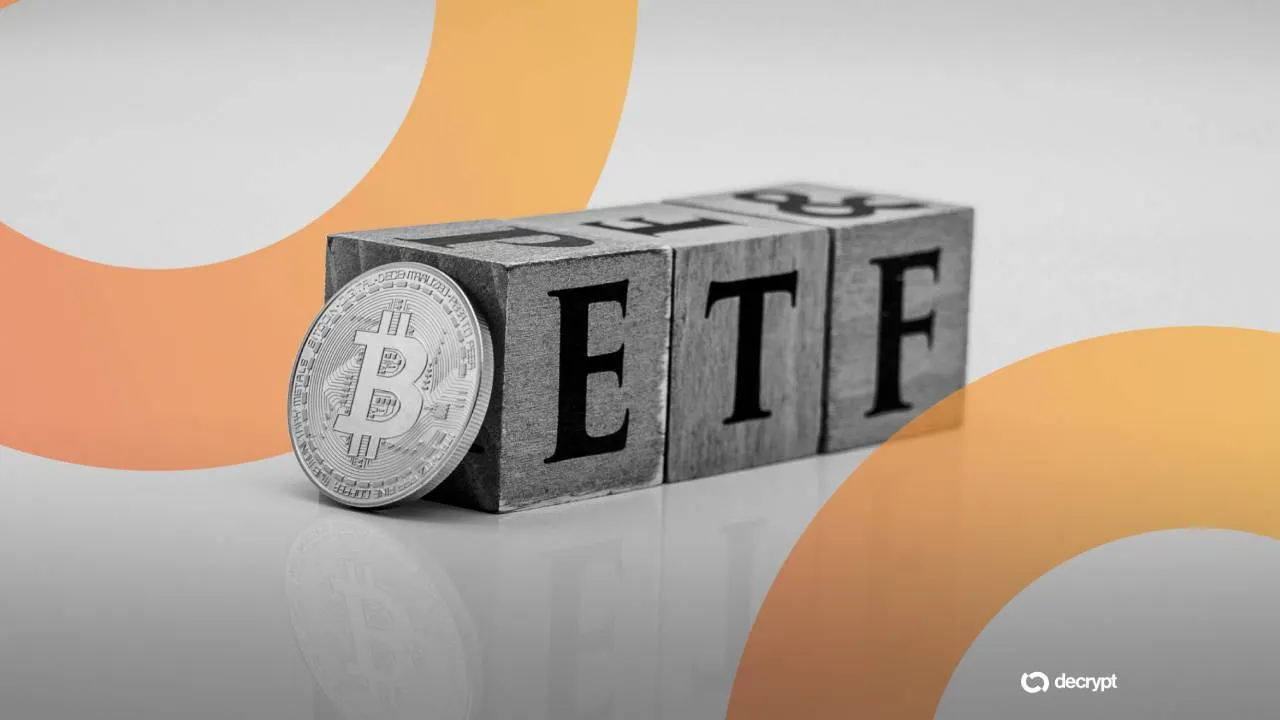
    U.S. spot Bitcoin exchange-traded funds (ETFs) experienced a significant surge in inflows last week, accumulating $853.5 million across five consecutive sessions. This marks a notable rebound from the $61.5 million net outflow recorded the previous week, bringing the cumulative net inflows since their launch to $52.18 billion, according to data from SoSoValue.

    BlackRock Leads the Charge

    BlackRock’s iShares Bitcoin Trust (IBIT) was the primary driver of this influx, accounting for approximately $690 million, or about 80% of the week’s total inflows, as reported by Stephen Wundke, strategy and revenue director at Algoz Technologies. On Friday alone, IBIT attracted $86.7 million, while Fidelity’s FBTC saw $41 million. Conversely, Invesco’s BTCO experienced an outflow of $19.4 million, and VanEck’s HODL shed $10.6 million.

    The momentum, however, showed signs of easing as the weekend approached, with daily inflows declining from $128.7 million on Thursday to $98.9 million on Friday. By the end of the week, the funds held a total of $79.5 billion in assets, representing approximately 6.1% of Bitcoin’s overall market capitalization.

    Macroeconomic Factors Influence Investor Sentiment

    Tim Sun, a senior researcher at HashKey, suggested that the recent inflows indicate a renewed interest in Bitcoin from institutional investors, following a brief pullback in the artificial intelligence sector. He posited that these flows likely comprise a combination of portfolio rebalancing and basis trading strategies.

    Sun highlighted weakening U.S. employment data and declining expectations for interest rate hikes as more significant catalysts. Official figures revealed that employers cut 23,000 jobs in July, contrary to forecasts of a 95,000 gain. This data coincided with Bitcoin’s technical indicator, the “death cross,” where its 50-day moving average remained below its 200-day moving average. Furthermore, the odds of a September rate hike, as tracked by CME FedWatch, fell to 40% from 55% on Friday, though they rose to 46% by Monday.

    The softening of AI-related equities has reportedly reduced the pull on global risk capital, prompting a shift towards less crowded assets, according to Sun. He identified the $60,000 to $61,000 range as a key support level that the market has repeatedly tested.

    However, Sun cautioned against interpreting the week’s performance as a definitive trend reversal. He noted that the inflows are “not enough to support a trend reversal,” emphasizing that interest rate hike possibilities have not disappeared and long-dated Treasury yields remain elevated.

    Analysts Offer Divergent Outlooks

    CoinShares presented a more optimistic view. James Butterfill, head of research at CoinShares, stated in a Friday update that their “view remains that the cycle lows are probably now behind us,” while acknowledging that “this does not imply an immediate return to strong upside.” He anticipates Bitcoin to trade within a range for the next two to three months, potentially reaching $80,000. As of Monday morning, Bitcoin was trading around $65,100, up 0.4% for the day, according to CoinGecko data.

    Butterfill pointed to three consecutive weeks of accumulation by large holders, or “whales,” following approximately $40 billion in whale selling since October 2025. He also cited $1.05 billion in inflows into digital asset investment products globally last week, a broader metric than U.S. Bitcoin ETFs alone, marking the fifth consecutive week of positive inflows. This pattern, he wrote, “increasingly resembles capitulation followed by early re-accumulation.” A sustained move towards $100,000, he added, would necessitate “a clearer deterioration in employment data and a more meaningful reduction in rate expectations.”

    Meanwhile, Bloomberg ETF analyst Eric Balchunas proposed a different perspective. He noted on Twitter that IBIT, FBTC, and several other Bitcoin ETFs have seen daily inflows since the Coldcard exploit, which led to Bitcoin being drained from air-gapped wallets. Balchunas suggested it is “hard not to see causation in the correlation,” calling it the third-best week since October and deeming it “ironic, but somehow on brand” if a cold storage theft marked the beginning of a new rally.

    Decrypt reported earlier this month that exchange deposits consisting of transfers under 10 BTC reached 7,300 BTC on July 31, the highest figure since February. CryptoQuant indicated that holders appeared to be moving coins for safety, though they cautioned that the connection was not definitive.

    Wundke described the past week as the funds’ strongest since April, suggesting that investors are viewing current prices as a “bottom buying” opportunity. He anticipates little significant market movement before mid-September, when the Clarity Act is expected to have another legislative window and the Federal Reserve is scheduled to hold its next meeting. He expressed doubt that Republicans could secure sufficient votes for the bill’s passage in time. Traders appear marginally less pessimistic, with Polymarket users pricing the bill’s chances of becoming law this year at 21% on Monday, up from the 14% cited by Butterfill on August 6.

    Both analysts also looked to the Middle East for potential catalysts. Wundke suggested that “any realistic Iran peace deal would dampen inflation fears and very much temper the mood for rate rises,” calling it a more likely catalyst for a market he described as oversold. For the present, he added, the market “mostly feels like ‘Groundhog Day,’” with holiday-induced malaise contributing to thin trading volumes.

  • Ripple (XRP) Poised for Bull Run on Two Key Factors

    Ripple (XRP) Poised for Bull Run on Two Key Factors

    Ripple’s cross-border token, XRP, has seen a 3% decline over the past week and a 7% drop on a monthly basis, currently trading around $1.03 according to CoinGecko.

    Potential Catalysts for a Rally

    Despite the recent downturn, prominent analyst Ali Martinez has identified two key factors that could fuel a potential upcoming rally for XRP.

    Martinez points to the Tom DeMark Sequential indicator, which has generated a buy signal on XRP’s monthly chart. He suggests this could signal a significant shift from bearish to bullish momentum. Historically, this indicator has preceded major reversals for XRP, including substantial price surges in April 2020 (1,074%) and August 2022 (973%). Conversely, it also preceded a 57% nosedive in April 2025 after flashing a sell signal.

    The second catalyst highlighted by Martinez is a notable buying spree among large investors, often referred to as “whales.” He revealed that these major players have acquired over 380 million XRP, valued at nearly $400 million, in the last seven days. This has increased their total holdings to approximately 8.2 billion tokens, representing 13.1% of the asset’s circulating supply. This accumulation is seen as an encouraging sign, potentially indicating preparations for further price appreciation. Such activity could also invigorate broader community enthusiasm and attract smaller investors, injecting fresh capital that may support the price.

    Key Resistance and Price Targets

    Martinez also emphasized the critical resistance level at $1.06, where a significant volume of nearly 3 billion XRP has been transacted. He believes a monthly close above this zone could pave the way for XRP to reach $1.35 and potentially surge to $1.64. This is not the first time Martinez has focused on this price point; earlier this month, he warned that a drop below it could lead to a substantial collapse to as low as $0.62.

    Market Reactions and Technical Indicators

    Late last week, XRP dipped to around $1.02 following news that the CLARITY Act, a proposed crypto regulatory framework in the U.S., would be delayed until September. On X, user Dark Defender observed that this decline pushed XRP’s Relative Strength Index (RSI) into an extremely oversold territory, anticipating a significant revival once the price climbs above $1.05.

    Another analyst, Gerla, also commented on the RSI, noting a bullish divergence. Gerla predicted that a reclaim of the $1.08 level could trigger a “serious reversal” for XRP.

    Meanwhile, X user ChartNerd presented a more optimistic outlook, identifying a multi-year cup-and-handle pattern. This pattern, they suggest, could precede a rally to as high as $27. While this target appears ambitious at present, the future trajectory of the cryptocurrency market remains uncertain.

  • TradFi Perpetual Contracts: Parameter Updates

    TradFi Perpetual Contracts: Parameter Updates

    Bybit Enhances TradFi Perpetual Contracts with Parameter Upgrades

    Bybit is set to introduce a series of parameter upgrades for its TradFi Perpetual Contracts, aiming to bolster trading flexibility and capacity for its users. The enhancements will be rolled out in distinct phases.

    Open Interest Position Limit Adjustment

    Effective August 12, 2026, at 07:30 UTC, the Open Interest (OI) position limit ratio for all TradFi contracts will be raised from 20% to 30%.

    Maximum Leverage Increase

    Beginning August 13, 2026, at 07:30 UTC, several TradFi contracts will see their maximum leverage increase from 20x to 25x.

    Position Value Tier Expansion for 50x Leverage Contracts

    Also effective August 13, 2026, at 07:35 UTC, Bybit will significantly expand the maximum position value at higher leverage tiers for specific contracts that currently offer 50x leverage.

    Limit Order Maximum Size Increase

    Starting August 14, 2026, at 07:30 UTC, the maximum size for a single limit order, encompassing both opening and closing positions, will be increased across all TradFi contracts.

  • Standard Chartered: Tokenization to Propel Chainlink to $200 by 2030

    Standard Chartered: Tokenization to Propel Chainlink to $200 by 2030

    Standard Chartered Initiates Coverage of Chainlink with $200 Price Target by 2030

    Standard Chartered has launched coverage of Chainlink, setting a price target of $200 by the end of 2030. This projection suggests a potential 25-fold increase from its current price of approximately $8, anticipating it to outperform both Bitcoin and Ethereum over the same period.

    Geoff Kendrick, the bank’s global head of digital assets research, outlined a phased approach to this target in a note released Monday. He forecasts a price of $13 by the end of this year, followed by $41, $82, and $133, before ultimately reaching the $200 mark. The same report also projects Bitcoin to reach $500,000 and Ethereum $40,000 by the close of 2030.

    Kendrick anticipates a significant surge in the value of tokenized assets on-chain, estimating a roughly 12-fold increase to $4 trillion by the end of 2028, up from the current $340 billion. Furthermore, assets deployed in decentralized finance (DeFi) are expected to grow 37-fold to $2.7 trillion by 2030. Given that Chainlink earns fees for data delivery and asset transfers between blockchains, the bank forecasts its fee revenue to increase approximately 25 times during this timeframe, with the assumption that the token’s price will mirror this fee growth.

    Chainlink’s established market position is presented as another key factor supporting this outlook. The research note indicates that the total value secured by Chainlink’s oracle network exceeds $110 billion, covering approximately 70% of oracle-dependent value within the global DeFi ecosystem and over 80% on the Ethereum network. Notably, Aave V3 alone accounts for 44% of this secured value.

    Kendrick identified several institutions utilizing Chainlink’s services, including Swift, DTCC, Euroclear, JP Morgan, Mastercard, UBS, Fidelity, and S&P Global. He expects off-chain clients to represent an increasing portion of Chainlink’s fee revenue. The report highlights that tokenized funds and bonds require net asset values, rates, and reserve attestations, making them more data-intensive than crypto-native assets.

    In terms of interoperability, Chainlink is noted to still lag behind LayerZero. The report states that over $7 billion in token value has migrated from legacy bridges to Chainlink’s Cross-Chain Interoperability Protocol (CCIP) since a $292 million exploit in April. Quarterly CCIP volume reached $4.9 billion in the second quarter, marking a 353% year-on-year increase. Decrypt reported in May that KelpDAO had attributed the exploit to LayerZero and intended to rebuild on Chainlink, a characterization that LayerZero disputes.

    This latest note follows a series of DeFi initiations from Kendrick, all based on the same 37-fold growth forecast. In June, he set price targets of $100 for Uniswap and $3,500 for Aave, followed by a $60 target for Morpho in July. Uniswap’s UNI token saw a double-digit jump after its coverage was initiated. Chainlink’s response has been more subdued, with its LINK token currently trading at $8.25, down 0.8% on the day, according to CoinGecko data.

    The report also flagged potential risks, including slower-than-anticipated scaling of institutional tokenization, pilot programs failing to transition into recurring production workflows, increased competition from specialist providers, and technical failures that could erode confidence.