Tag: Project Updates

  • BNB Chain Executes 36th Quarterly Token Burn, Reinforcing Supply Reduction Strategy

    BNB Chain Executes 36th Quarterly Token Burn, Reinforcing Supply Reduction Strategy

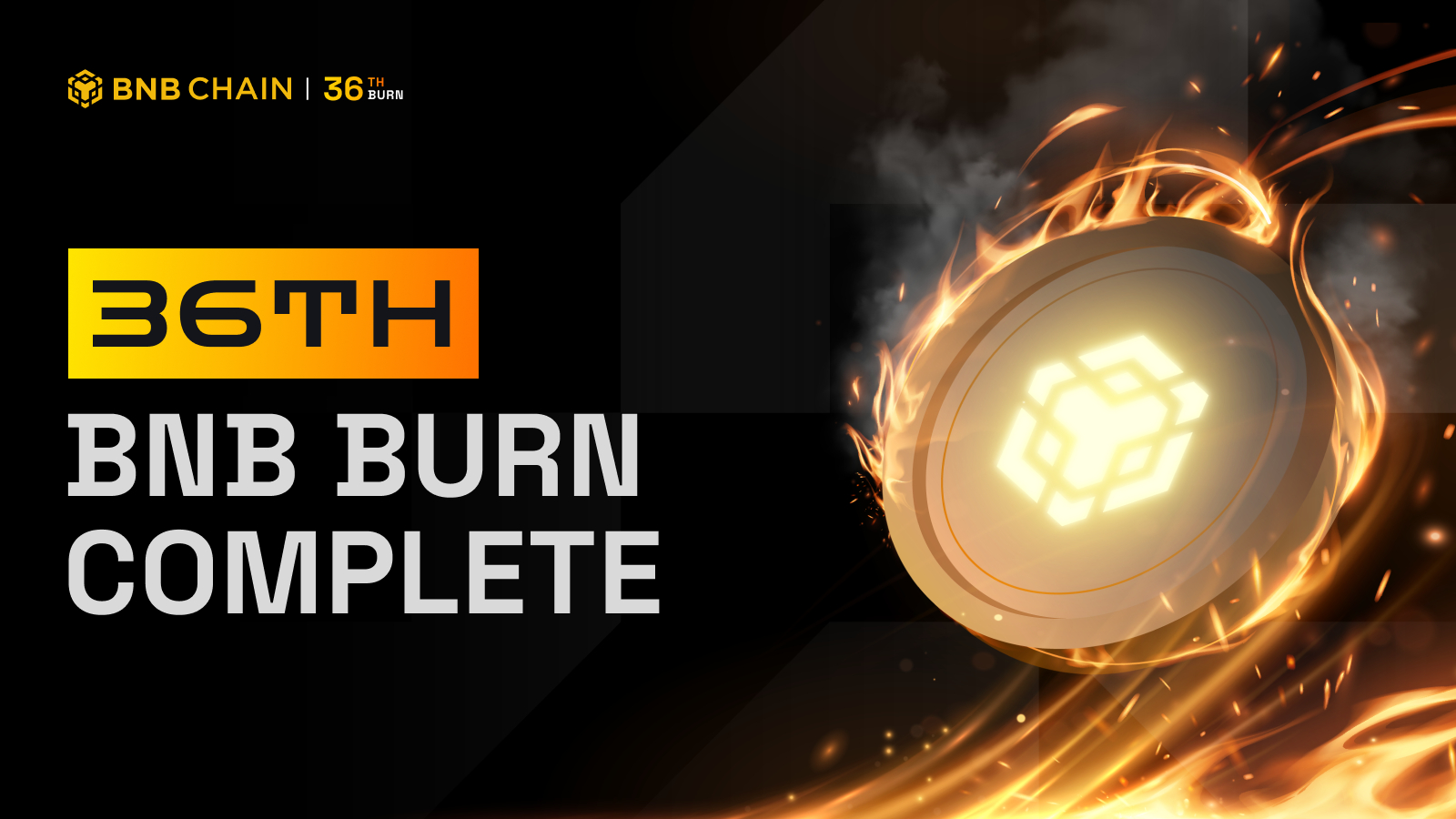
    BNB Chain has completed its 36th quarterly BNB token burn on July 15th, 2026, marking the third such event in 2026. This consistent execution by the BNB Chain Foundation underscores a long-term strategy to systematically reduce the total supply of BNB tokens.

    The burn is a fundamental aspect of BNB Chain’s ecosystem management, aiming to decrease the total supply to a cap of 100,000,000 BNB. This reduction is facilitated by two primary mechanisms: the Auto-Burn system and a real-time burning process.

    Why This Matters

    The materials describe a narrow update: The BNB Chain Foundation conducted its 36th quarterly burn of BNB tokens, removing them from circulation. The burn amount is adjusted based on BNB’s price and the number of blocks generated on BSC during a quarter, ensuring transparency and predictability.

    Broader Context

    Source materials place the announcement in this context: BNB is the native coin of the BNB Chain ecosystem, essential for powering its multifaceted Web3 environment.

    Auto-Burn Mechanism

    The Auto-Burn system dynamically adjusts the quantity of BNB tokens burned each quarter. The amount is determined by the prevailing price of BNB and the number of blocks generated on the BNB Smart Chain (BSC) during the quarter. This process is designed to be transparent and predictable, operating independently of the Binance centralized exchange. Although BSC’s block production frequency has increased due to upgrades such as Lorentz, Maxwell, and Fermi, the parameters of the Auto-Burn formula have been adjusted to maintain the original intent and spirit of the mechanism.

    Real-Time Burning (BEP95)

    Complementing the quarterly burn, BNB Chain employs a real-time burning mechanism, BEP95. This system burns a portion of the gas fees collected from each block, with validators determining the specific ratio. Since BEP95’s introduction, approximately 291,000 BNB tokens have been removed from circulation through this continuous process.

    BNB’s Role and Ecosystem

    BNB serves as the native cryptocurrency for the BNB Chain ecosystem, integral to its operations. It facilitates transactions across BNB Smart Chain (BSC), the opBNB Layer 2 solutions, and the BNB Greenfield blockchain. Furthermore, BNB functions as a governance token, enabling holders to participate in the decentralized on-chain governance of BNB Chain. BNB transitioned from the Ethereum Network to BNB Chain after its mainnet launch on April 18, 2019.

    BNB Chain is recognized as one of the world’s largest and most active blockchain ecosystems, characterized by high throughput, low transaction costs, and full Ethereum Virtual Machine (EVM) compatibility. These attributes support a wide array of applications spanning finance, gaming, and the broader Web3 economy.

    The ongoing execution of these token burns highlights BNB Chain’s commitment to supply management and ecosystem sustainability. All burned BNB tokens are sent to the permanent address: 0x000000000000000000000000000000000000dEaD.

  • CT3 Enhances Decentralized Storage with New Dedicated Contracts Model

    CT3 Enhances Decentralized Storage with New Dedicated Contracts Model

    CT3 has transitioned its decentralized storage infrastructure to a dedicated Storage Contracts model, a strategic move designed to support platform growth, enhance infrastructure scalability, and expand storage capacity. This architectural shift addresses limitations of the previous single-contract system and establishes a more robust framework for future development.

    The new Storage Contracts model replaces the prior approach of processing all uploads through a single main collection and smart contract. This older method presented challenges in scaling flexibility and managing storage capacity as network activity expanded. The transition, effective July 15th, 2026, introduces a system where new uploads are distributed across multiple dedicated Storage Contracts.

    Each Storage Contract is linked to a fixed amount of storage capacity and operates as an independent segment of the infrastructure. This segmentation facilitates better workload distribution, improves transparency in resource utilization, and enables more effective capacity management. The model distributes workloads across these multiple smart contracts, enhancing overall platform resilience and scalability. Individual areas of the platform can now scale independently without requiring a complete system rebuild.

    CT3’s decentralized storage infrastructure integrates independent nodes, the ct-3.cloud interface, NFT access keys, and blockchain verification. Users upload files via ct-3.cloud, with data distributed across network nodes. An NFT key is generated for each stored object, confirming access rights and containing relevant storage metadata. The platform sources storage capacity from node operators and offers it to ct-3.cloud customers at market prices.

    A key feature of the new model is the opportunity for participants to finance the deployment of new Storage Contracts and the addition of storage capacity. These participants contribute to the expansion of CT3’s infrastructure, with profits generated from the allocated capacity shared between the financing participant and CT3. The financial performance of each contract depends on its utilization rate and the prevailing market price for storage services; higher utilization leads to greater potential returns.

    Transparency and verification are central to the Storage Contracts model. The operation of each contract is verifiable on the blockchain. Files stored within a contract’s capacity are represented by NFT keys containing storage-related metadata. Investors can verify issued NFTs, collection activity, and the actual use of financed capacity through the smart contract address, allowing for independent confirmation of storage utilization and contract performance.

    For existing ct-3.cloud users, the transition is seamless, requiring no additional action. The platform has seen significant adoption, with over 180,000 unique users and more than 500,000 uploads completed.

    The Storage Contracts model enables CT3 to add new resources in a structured manner and allocate them to specific use areas, addressing situations where demand growth may outpace the addition of new capacity from node operators. This strategic evolution is designed to support the continued growth of the CT3 ecosystem and its decentralized storage offerings.

    Why This Matters

    The materials describe a narrow update: CT3 has moved from a single main collection and smart contract for uploads to a new model using dedicated Storage Contracts. The new architecture aims to address the limitations of the previous single-contract model in handling increased demand and diverse data categories.

    Broader Context

    Source materials place the announcement in this context: CT3 today announced the transition of its decentralized storage infrastructure to a dedicated Storage Contracts model designed to support continued platform growth, improve infrastructure scalability, and expand storage capacity as demand increases.

  • Bybit to Support Flare Network Upgrade

    Bybit to Support Flare Network Upgrade

    Bybit to Support Flare Network Upgrade

    Cryptocurrency exchange Bybit has announced its support for the upcoming Flare (FLR) network upgrade, version v1.14.0. The upgrade is scheduled to occur on July 14, 2026, at 12:00 PM UTC.

    In preparation for the network enhancement, Bybit will temporarily suspend deposits and withdrawals for Flare (FLR) starting at 11:30 AM UTC on July 14, 2026. The exchange has assured users that other trading activities will remain unaffected during this period.

    Bybit also stated that no further announcements will be made regarding the resumption of deposit and withdrawal services. Users seeking to be notified when these services are back online are advised to visit the Deposit or Withdrawal page and activate the “Set Alert” feature.

    Further details about the Flare network upgrade can be found in the official release notes.

  • Pi Network Token Distribution: High Concentration Amidst Price Volatility and Development

    Pi Network Token Distribution: High Concentration Amidst Price Volatility and Development

    An analysis of Pi Network’s PI token distribution reveals a significant concentration of tokens among a small number of holders, while the majority hold very few. This disparity, coupled with a recent sharp decline in the token’s price, raises questions about its ecosystem utility and market value.

    Token Distribution Breakdown
    According to data reported by BSCN, a mere 21 accounts hold over 10 million PI tokens each. Further breakdown shows that 9,961 users possess between 1 million and 10 million PI, while 766 accounts hold between 100,000 and 1 million PI. A larger segment, comprising 353,340 wallets, holds between 1,000 and 10,000 PI, and 1,503,374 accounts have between 100 and 1,000 PI.

    In stark contrast, approximately 80% of all Pi Network users, estimated at over 14.5 million individuals, hold fewer than 10 PI coins. The exact method by which large token holders acquired their PI remains uncertain, with some claiming they could not have mined such an enormous amount and arguing they had bought them on exchanges, while others noted that the overwhelming majority of Pioneers hold extremely small balances, making it difficult for them to contribute to the ecosystem via staking or other utility-driven features.

    Price Performance and Recent Trends
    The PI token has recently experienced a significant price drop, reaching a new all-time low of around $0.09. This represents a 20% plunge over the past month and a 97% collapse from its all-time high of $3 witnessed at the start of 2025. This price decline has occurred despite recent updates and feature releases by the Pi Network Core Team.

    Recent developments include the launch of SoloHost, Pi Sign-in, and PiVerify on Pi2Day (June 28), aimed at expanding the ecosystem. Additionally, the Pi App Studio released two updates to assist creators in developing applications, including backend support and an AI-assisted planning phase.

    Implications and Uncertainties
    However, the token’s distribution raises concerns. The overwhelming majority of Pioneers hold extremely small balances, making it difficult for them to contribute to the ecosystem via staking or other utility-driven features. The exact method by which large token holders acquired their PI remains uncertain.

    Further adding to market uncertainty, over 127.5 million PI tokens are scheduled for release in the next 30 days. This upcoming unlock, combined with the rising number of tokens held on crypto exchanges, suggests the price could experience a further short-term pullback, according to some analyses. The metric does not suggest price direction.

    The Pi Network continues to introduce new features and updates, aiming to grow its ecosystem. However, the current token distribution, with a significant concentration in a few hands and minimal holdings for the majority, presents a notable challenge for widespread ecosystem participation and utility. The recent price performance underscores the volatility and uncertainties surrounding the PI token.

    Why This Matters

    The materials describe a narrow update: An analysis of Pi Network’s PI token distribution shows that only 21 accounts hold over 10 million PI. Whether whales acquired their large token holdings through mining or purchasing on exchanges.

    Broader Context

    Source materials place the factual news in this context: The controversial cryptocurrency project continues to draw attention across the industry after releasing key features and unveiling big upgrades.

  • TrueDAO Secures $10 Million for AI-Powered Decentralized Financial Infrastructure Development

    TrueDAO Secures $10 Million for AI-Powered Decentralized Financial Infrastructure Development

    TrueDAO has announced the completion of a $10 million strategic funding round, led by Brevan Howard Digital with participation from Zee Prime Capital and Jump Capital. This funding is designated for advancing the company’s AI-powered decentralized financial infrastructure.

    According to TrueDAO, the capital infusion will primarily support core AI protocol development, enhance AI-driven risk control mechanisms, fund security audits, bolster global compliance efforts, and expand ecosystem partnerships. The company’s objective is to construct a decentralized financial infrastructure that integrates smart contracts, on-chain reserves, dynamic adjustment mechanisms, and community governance. This infrastructure is designed to be modular, offering services such as liquidity management, reserve management, risk alerts, yield distribution, and governance support to a wide array of blockchain projects.

    The initiative aims to address persistent challenges in the traditional crypto industry, including yield sustainability, risk response, reserve transparency, and governance efficiency. Specific areas of focus for the funding include refining smart contracts and protocol modules, developing AI-driven risk monitoring and stress-testing systems, implementing independent security audits and bug bounty programs, advancing legal and compliance assessments across various jurisdictions, and releasing comprehensive developer documentation while expanding ecosystem partnerships.

    SoLee, Head of Marketing at TrueDAO, stated that while the $10 million funding is a significant milestone, “capital accelerates development, it cannot replace security, transparent governance, and genuine value creation.” TrueDAO remains committed to building an on-chain financial infrastructure that is auditable, verifiable, and governable.

    Looking ahead, TrueDAO plans to advance its testnet launch, security audits, developer tools, and ecosystem integration initiatives. The company intends to disclose protocol operations and reserve data in phases. However, specific launch dates, token arrangements, and incentive mechanisms are subject to official announcements and applicable laws.

    Why This Matters

    The materials describe a narrow update: TrueDAO announced it has completed a $10 million strategic funding round led by Brevan Howard Digital, with participation from Zee Prime Capital and Jump Capital. Specific launch dates, token arrangements, and incentive mechanisms are subject to official announcements and applicable laws.

    Broader Context

    Source materials place the announcement in this context: TrueDAO is an AI-driven decentralized autonomous financial infrastructure project.

  • Charles Hoskinson Denies Cardano Retirement Rumors

    Charles Hoskinson Denies Cardano Retirement Rumors

    Charles Hoskinson has directly refuted rumors suggesting his retirement from Cardano, labeling the claims as “categorically untrue” and “a complete fabrication.” The widespread speculation appears to have originated from decontextualized video clips and social media posts that circulated widely.

    Hoskinson clarified that the rumors were fueled by statements taken out of context. One such instance involved a New Year 2026 stream where he mentioned having “outgrown X” (referring to the social media platform), a comment that was later shared without the full context of the session. Additionally, a post on X stating, “I’m taking a break. TTYL,” was screenshotted and disseminated without the accompanying video, contributing to the narrative of his departure.

    The denial comes against a backdrop of significant structural changes and ongoing discussions within Cardano’s governance framework. In a reform video, Hoskinson had previously criticized elements of the Cardano Foundation’s governance structure, calling them the “biggest mistake of his career.” These statements, also subject to decontextualization, have added layers to the perception of his involvement.

    It is important to note that Hoskinson’s executive control over Cardano is limited. He holds no governance keys, cannot initiate hard forks or protocol parameter changes, and has no access to the Cardano treasury or ownership of the Cardano trademark. Key governance powers were transferred to ADA holders via DReps following the Plomin hard fork in January 2025.

    Further contributing to the complex ecosystem dynamics, EMURGO has exited Cardano’s Pentad governance body. Separately, investor Justin Bons has publicly called for Hoskinson’s removal. An active funding standoff also exists between DReps and Input Output’s research budget, with Hoskinson warning that the ecosystem could lose scientists if research funding falters.

    These underlying factors, including the governance shifts and funding disputes, may have contributed to the plausibility of retirement rumors among some observers. However, Hoskinson’s explicit denial addresses the core speculation directly. The incident underscores the challenges in communication within complex decentralized ecosystems and the potential for decontextualized information to create significant noise.

    While Hoskinson has denied the retirement rumors, uncertainties remain regarding the specifics of a proposed governance overhaul and the resolution of the funding standoff between DReps and Input Output’s research budget. The exact timing of past statements, such as the “I’m taking a break. TTYL” post, also remains unspecified.

    Why This Matters

    The materials describe a narrow update: Charles Hoskinson issued a direct denial of rumors suggesting his retirement from Cardano, stating the claims were untrue and fabricated. The specific content of the ‘reform video’ beyond Hoskinson’s criticism of governance.

    Broader Context

    Source materials place the factual news in this context: Cardano News.

  • Pi Network July Upgrade: Key Details for Pioneers

    Pi Network July Upgrade: Key Details for Pioneers

    Pi Network Rolls Out Major July Upgrades, But Token Price Continues to Plummet

    Pi Network’s development team unveiled significant updates yesterday, detailing their functionality and user benefits on the social media platform X. However, the cryptocurrency’s underlying asset has continued its downward trend, reaching new lows with no immediate end in sight.

    CryptoPotato previously reported on two key enhancements: an AI-assisted App Planning Phase, empowering developers to build products from initial concepts, and an improved backend support system. In a subsequent announcement, the Pi Network team elaborated on the latter upgrade, highlighting its core features and how “Pioneers” can leverage them.

    “Backend capabilities begin with persistent storage for newly created App Studio applications, allowing apps to save and retrieve user-specific data across sessions,” the team stated. This means developers can now create applications on the Pi App Studio that retain user experiences even after users close and reopen them. For instance, games can remember high scores, productivity apps can re-display to-do lists, and note-taking applications can automatically preserve user notes.

    Previously, these applications were largely confined to frontend-only, single-session experiences, meaning app data such as preferences or progress would be lost upon exiting. The team emphasized that the introduction of persistent storage is a “significant App Studio platform milestone because it expands what AI-created apps can practically do on Pi Network.” This foundational capability is expected to enable a wider range of practical applications.

    Despite the team’s consistent release of protocol updates, Pi Network’s native token has failed to experience a notable recovery. Instead, its price has largely trended downwards.

    The token hit an all-time low of under $0.115 at the end of June during a broader market correction. It saw a modest rebound to between $0.12 and $0.13 for approximately a week before declining sharply again at the start of the current business week. Yesterday, it plunged to $0.1033, marking a new record low, with further downward pressure observed several hours ago.

    According to CoinGecko data, the latest low stands at $0.1002. Although the token has seen a slight rebound of 1.5% since then, PI remains at risk of falling below the $0.10 mark in the immediate future, influenced by overall market sentiment and a perceived lack of confidence in the token.

  • XRPL v3.2.0 Upgrade: High Validator Adoption, Slower Node Uptake

    XRPL v3.2.0 Upgrade: High Validator Adoption, Slower Node Uptake

    Ripple released a new software update, v3.2.0, for the XRP Ledger (XRPL) over three weeks ago. While a substantial portion of the Unique Node List (UNL) validators have adopted the new version, the overall adoption rate among general validator nodes remains notably lower.

    Data from XRPScan indicates that as of the reporting date, only 43% of XRPL nodes, equating to 357 out of 828 total nodes, have upgraded to v3.2.0. In contrast, 51% of nodes, or 426 out of 828, are still running on the previous version, v3.1.3. This disparity highlights a gap in the network’s immediate uptake of the latest software.

    Network Activation Amidst Adoption Gap

    Despite the lower adoption among general nodes, the XRPL network considers upgrades activated once a sufficient percentage of UNL validators have upgraded. Currently, 89% of the UNL validators are running on the new v3.2.0 software. The XRPL protocol requires 80% of the UNL to activate network upgrades, a threshold that has been met. Specifically, 31 out of 35 UNL validators have cleared the necessary threshold for v3.2.0 activation.

    The v3.2.0 upgrade introduces several changes, including the rebranding of the core server software from ‘rippled’ to ‘xrpld’. It also aims to reduce operating costs and memory usage by an estimated 30% to 40%, which could optimize institutional usage and improve network efficiency.

    Amendment Voting Faces Deficit

    However, an aspect of the v3.2.0 rollout is the ongoing voting process for an amendment titled ‘fixCleanup320′. This amendment is intended to deploy fixes for various components, including single-asset vaults, lending protocols, multi-purpose tokens, permissioned domains, and permissioned decentralized exchanges. To be approved, the amendment requires 28 out of the 35 UNL votes. As of the reporting date, only 17 UNL votes have been received for fixCleanup320, representing approximately 48.57% of the trusted validators having voted so far. This indicates a deficit in the votes needed for the amendment’s approval.

    The timeline for the remaining nodes to upgrade to v3.2.0 remains uncertain. Similarly, the outcome of the vote for the fixCleanup320 amendment is yet to be determined. The exact release date of the v3.2.0 upgrade is also not precisely specified, beyond being over three weeks ago.

    While the network technically considers the v3.2.0 upgrade active due to high UNL validator adoption, the slow uptake by general nodes and the current voting deficit for the fixCleanup320 amendment present ongoing points of observation for the XRPL network’s progression and security.

    Why This Matters

    The materials describe an update: Ripple released software update v3. The timeline for the remaining nodes to upgrade to v3.2.0.

    Broader Context

    Source materials place the factual news in this context: The latest infrastructure upgrade introduces several new features to the XRPL.

  • Bybit to Support Berachain v1.4.1 Upgrade

    Bybit to Support Berachain v1.4.1 Upgrade

    Bybit to Support Berachain Network Upgrade

    Cryptocurrency exchange Bybit has announced its support for the upcoming Berachain (BERA) v1.4.1 network upgrade. The upgrade is scheduled to occur on July 8, 2026, at 4:00 PM UTC.

    In preparation for the upgrade, Bybit will temporarily suspend Berachain (BERA) deposits and withdrawals starting at 3:30 PM UTC on July 8, 2026. Trading activities on the platform will remain unaffected during this period.

    Bybit has stated that there will be no separate announcements regarding the resumption of deposit and withdrawal services. Users wishing to be notified when these services are back online are advised to visit the Deposit or Withdrawal page and activate the “Set Alert” function.

    Further details regarding the network upgrade can be found in the official release notes.

  • Bybit to Support Cosmos ATOM v27.5.0 Upgrade

    Bybit to Support Cosmos ATOM v27.5.0 Upgrade

    Bybit to Support Cosmos Network Upgrade, ATOM Deposits and Withdrawals to be Temporarily Halted

    Cryptocurrency exchange Bybit has announced its support for the upcoming Cosmos (ATOM) v27.5.0 network upgrade. The upgrade is scheduled to occur on July 8, 2026, at approximately 02:40 PM UTC, or at block height 31,938,700.

    To facilitate a seamless transition, Bybit will temporarily suspend Cosmos (ATOM) deposits and withdrawals starting from July 8, 2026, at 02:00 PM UTC.

    Trading activities for ATOM will remain unaffected during this period.

    Bybit has stated that there will be no further announcements regarding the resumption of deposit and withdrawal services. Users wishing to be notified when these services are back online are advised to visit the Deposit or Withdrawal page and activate the “Set Alert” function.

    Further details concerning the network upgrade can be found in the official release notes.