Tag: Project Updates

  • Bybit to Support Stacks v4.0.1 Upgrade

    Bybit to Support Stacks v4.0.1 Upgrade

    Bybit to Support Stacks Network Upgrade

    Cryptocurrency exchange Bybit has announced its support for the upcoming Stacks (STX) v4.0.1 network upgrade. The upgrade is scheduled to occur on July 29, 2026, at approximately 03:00 AM UTC, coinciding with Bitcoin block height 960,230.

    To facilitate a seamless transition, Bybit will temporarily suspend Stacks (STX) deposits and withdrawals starting at 02:30 AM UTC on July 29, 2026. Trading activities on the platform will remain unaffected during this period.

    Bybit has stated that there will be no further announcements regarding the resumption of deposit and withdrawal services. Users seeking to be notified when these services are back online are advised to visit the Deposit or Withdrawal page and activate the “Set Alert” function.

    Further details about the Stacks network upgrade can be found in the official release notes.

  • Bybit Supports Injective Network Upgrade

    Bybit Supports Injective Network Upgrade

    Bybit to Support Injective Network Upgrade, Deposit and Withdrawal Services to be Temporarily Halted

    Bybit has announced its support for the upcoming Injective (INJ) v1.20.3 network upgrade. The upgrade is scheduled to occur on July 29, 2026, at approximately 11:30 AM UTC, or at block height 176,273,000.

    To facilitate a seamless transition, Bybit will temporarily suspend deposit and withdrawal services for Injective (INJ) starting at 11:00 AM UTC on July 29, 2026. Trading activities, however, will remain unaffected during this period.

    The exchange has stated that there will be no further announcements regarding the resumption of deposit and withdrawal services. Users wishing to be notified when these services are back online are advised to visit the Deposit or Withdrawal page and activate the “Set Alert” function.

    Further details regarding the Injective network upgrade can be found in the official release notes.

  • Portfolio Margin Collateral Ratio and USDⓈ-M Perpetual Leverage Tiers Update

    Portfolio Margin Collateral Ratio and USDⓈ-M Perpetual Leverage Tiers Update

    Binance to Adjust Portfolio Margin and Futures Leverage Parameters

    Binance announced upcoming adjustments to its Portfolio Margin Pro and USDⓈ-M Perpetual Contracts, set to take effect on July 31, 2026. The changes aim to refine collateral ratios and leverage tiers for various assets.

    Portfolio Margin Updates

    Effective July 31, 2026, at 06:00 (UTC), Binance will update the collateral ratio and tiered collateral ratio for specific assets under Portfolio Margin and Portfolio Margin Pro. These updates are expected to be completed within approximately 30 minutes.

    The following assets under Portfolio Margin will see adjusted collateral ratios:

    • STX: Collateral Ratio changes from 30% to 10%.
    • SANTOS: Collateral Ratio changes from 30% to 10%.
    • EURI: Collateral Ratio changes from 20% to 30%.

    For Portfolio Margin Pro, the following tiered collateral ratios will be adjusted:

    STX

    | Tier | Floor (USD) | Cap (USD) | Collateral Ratio (Before) | Tier | Floor (USD) | Cap (USD) | Collateral Ratio (After) |
    | :— | :———- | :———- | :———————— | :— | :———- | :———- | :———————– |
    | 9 | 0 | 100,000 | 100% | 10 | 0 | 50,000 | 100% |
    | | 100,000 | 250,000 | 80% | | 50,000 | 100,000 | 80% |
    | | 250,000 | 500,000 | 50% | | 100,000 | 200,000 | 50% |
    | | 500,000 | 99,999,999,999 | 10% | | 200,000 | 400,000 | 20% |
    | | | | | | 400,000 | 99,999,999,999 | 10% |

    WBTC

    | Tier | Floor (USD) | Cap (USD) | Collateral Ratio (Before) | Tier | Floor (USD) | Cap (USD) | Collateral Ratio (After) |
    | :— | :———- | :———- | :———————— | :— | :———- | :———- | :———————– |
    | 10 | 0 | 50,000 | 100% | 8 | 0 | 200,000 | 100% |
    | | 50,000 | 100,000 | 80% | | 200,000 | 400,000 | 80% |
    | | 100,000 | 200,000 | 50% | | 400,000 | 800,000 | 70% |
    | | 200,000 | 400,000 | 20% | | 800,000 | 1,000,000 | 40% |
    | | 400,000 | 99,999,999,999 | 10% | | 1,000,000 | 99,999,999,999 | 20% |

    SXT, RUNE, IMX, COMP, BERA, SKL, ENJ, BIO

    | Tier | Floor (USD) | Cap (USD) | Collateral Ratio (Before) | Tier | Floor (USD) | Cap (USD) | Collateral Ratio (After) |
    | :— | :———- | :———- | :———————— | :— | :———- | :———- | :———————– |
    | 10 | 0 | 50,000 | 100% | 9 | 0 | 100,000 | 100% |
    | | 50,000 | 100,000 | 80% | | 100,000 | 250,000 | 80% |
    | | 100,000 | 200,000 | 50% | | 200,000 | 400,000 | 20% |
    | | 200,000 | 400,000 | 20% | | 400,000 | 99,999,999,999 | 10% |
    | | 400,000 | 99,999,999,999 | 10% | | | | N/A |

    Binance Futures Leverage and Margin Tier Adjustments

    In addition to Portfolio Margin changes, Binance Futures will update the leverage and margin tiers for several USDⓈ-M Perpetual Contracts. These updates are scheduled for July 31, 2026, at 06:30 (UTC) and are expected to be completed within approximately one hour.

    Important Note: Existing positions opened before these updates will be affected. Futures running grid strategies may expire due to these changes, and users are advised to adjust their positions accordingly.

    STXUSDT (USDⓈ-M Perpetual Contract)

    | Leverage Before Change | Position Before Change (Notional Value in USDT) | Maintenance Margin Rate Before Change | Leverage After Change | Position After Change (Notional Value in USDT) | Maintenance Margin Rate After Change |
    | :——————— | :———————————————- | :———————————- | :——————– | :——————————————— | :———————————– |
    | 51 – 75x | 0 < Position ≤ 5,000 | 1.00% | 51 – 75x | 0 < Position ≤ 5,000 | 1.00% |
    | 26 – 50x | 5,000 < Position ≤ 10,000 | 1.50% | 26 – 50x | 5,000 < Position ≤ 10,000 | 1.50% |
    | 21 – 25x | 10,000 < Position ≤ 50,000 | 2.00% | 21 – 25x | 10,000 < Position ≤ 25,000 | 2.00% |
    | 16 – 20x | 50,000 < Position ≤ 100,000 | 2.50% | 11 – 20x | 25,000 < Position ≤ 50,000 | 2.50% |
    | 11 – 15x | 100,000 < Position ≤ 175,000 | 3.33% | NA | | |
    | 6 – 10x | 175,000 < Position ≤ 250,000 | 5.00% | 6 – 10x | 50,000 < Position ≤ 125,000 | 5.00% |
    | 5x | 250,000 < Position ≤ 750,000 | 10.00% | 5x | 125,000 < Position ≤ 250,000 | 10.00% |
    | 4x | 750,000 < Position ≤ 1,500,000 | 12.50% | 4x | 250,000 < Position ≤ 500,000 | 12.50% |
    | 3x | 1,500,000 < Position ≤ 4,500,000 | 16.67% | 3x | 500,000 < Position ≤ 1,000,000 | 16.67% |
    | 2x | 4,500,000 < Position ≤ 7,500,000 | 25.00% | 2x | 1,000,000 < Position ≤ 7,500,000 | 25.00% |
    | 1x | 7,500,000 < Position ≤ 12,000,000 | 50.00% | 1x | 7,500,000 < Position ≤ 12,500,000 | 50.00% |

    CHRUSDT, IDOLUSDT, HIVEUSDT, STEEMUSDT, CTKUSDT, and WAXPUSDT (USDⓈ-M Perpetual Contracts)

    | Leverage Before Change | Position Before Change (Notional Value in USDT) | Maintenance Margin Rate Before Change | Leverage After Change | Position After Change (Notional Value in USDT) | Maintenance Margin Rate After Change |
    | :——————— | :———————————————- | :———————————- | :——————– | :——————————————— | :———————————– |
    | 21 – 50x | 0 < Position ≤ 5,000 | 1.50% | 21 – 25x | 0 < Position ≤ 5,000 | 2.00% |
    | 11 – 20x | 5,000 < Position ≤ 10,000 | 2.50% | 11 – 20x | 5,000 < Position ≤ 10,000 | 2.50% |
    | 6 – 10x | 10,000 < Position ≤ 20,000 | 5.00% | 6 – 10x | 10,000 < Position ≤ 20,000 | 5.00% |
    | 5x | 20,000 < Position ≤ 50,000 | 10.00% | 5x | 20,000 < Position ≤ 50,000 | 10.00% |
    | 4x | 50,000 < Position ≤ 250,000 | 12.50% | 4x | 50,000 < Position ≤ 100,000 | 12.50% |
    | 3x | 250,000 < Position ≤ 500,000 | 16.67% | 3x | 100,000 < Position ≤ 250,000 | 16.67% |
    | 2x | 500,000 < Position ≤ 7,500,000 | 25.00% | 2x | 250,000 < Position ≤ 2,500,000 | 25.00% |
    | 1x | 7,500,000 < Position ≤ 12,500,000 | 50.00% | 1x | 2,500,000 < Position ≤ 5,000,000 | 50.00% |

    ICXUSDT, CETUSUSDT, BREVUSDT, METISUSDT, CTSIUSDT, ILVUSDT, and COTIUSDT (USDⓈ-M Perpetual Contracts)

    | Leverage Before Change | Position Before Change (Notional Value in USDT) | Maintenance Margin Rate Before Change | Leverage After Change | Position After Change (Notional Value in USDT) | Maintenance Margin Rate After Change |
    | :——————— | :———————————————- | :———————————- | :——————– | :——————————————— | :———————————– |
    | 26 – 50x | 0 < Position ≤ 5,000 | 1.50% | 21 – 50x | 0 < Position ≤ 5,000 | 1.50% |
    | 21 – 25x | 5,000 < Position ≤ 10,000 | 2.00% | NA | | |
    | 11 – 20x | 10,000 < Position ≤ 25,000 | 2.50% | 11 – 20x | 5,000 < Position ≤ 10,000 | 2.50% |
    | 6 – 10x | 25,000 < Position ≤ 62,500 | 5.00% | 6 – 10x | 10,000 < Position ≤ 20,000 | 5.00% |
    | 5x | 62,500 < Position ≤ 125,000 | 10.00% | 5x | 20,000 < Position ≤ 50,000 | 10.00% |
    | 4x | 125,000 < Position ≤ 250,000 | 12.50% | 4x | 50,000 < Position ≤ 250,000 | 12.50% |
    | 3x | 250,000 < Position ≤ 500,000 | 16.67% | 3x | 250,000 < Position ≤ 500,000 | 16.67% |
    | 2x | 500,000 < Position ≤ 7,500,000 | 25.00% | 2x | 500,000 < Position ≤ 7,500,000 | 25.00% |
    | 1x | 7,500,000 < Position ≤ 12,500,000 | 50.00% | 1x | 7,500,000 < Position ≤ 12,500,000 | 50.00% |

    MOVEUSDT (USDⓈ-M Perpetual Contract)

    | Leverage Before Change | Position Before Change (Notional Value in USDT) | Maintenance Margin Rate Before Change | Leverage After Change | Position After Change (Notional Value in USDT) | Maintenance Margin Rate After Change |
    | :——————— | :———————————————- | :———————————- | :——————– | :——————————————— | :———————————– |
    | 21 – 50x | 0 < Position ≤ 5,000 | 1.50% | 21 – 25x | 0 < Position ≤ 5,000 | 2.00% |
    | 11 – 20x | 5,000 < Position ≤ 10,000 | 2.50% | 11 – 20x | 5,000 < Position ≤ 10,000 | 2.50% |
    | 6 – 10x | 10,000 < Position ≤ 20,000 | 5.00% | 6 – 10x | 10,000 < Position ≤ 20,000 | 5.00% |
    | 5x | 20,000 < Position ≤ 50,000 | 10.00% | 5x | 20,000 < Position ≤ 50,000 | 10.00% |
    | 4x | 50,000 < Position ≤ 250,000 | 12.50% | 4x | 50,000 < Position ≤ 100,000 | 12.50% |
    | 3x | 250,000 < Position ≤ 500,000 | 16.67% | 3x | 100,000 < Position ≤ 250,000 | 16.67% |
    | 2x | 500,000 < Position ≤ 7,500,000 | 25.00% | 2x | 250,000 < Position ≤ 2,500,000 | 25.00% |
    | 1x | 7,500,000 < Position ≤ 12,500,000 | 50.00% | 1x | 2,500,000 < Position ≤ 5,000,000 | 50.00% |

    STORJUSDT (USDⓈ-M Perpetual Contract)

    | Leverage Before Change | Position Before Change (Notional Value in USDT) | Maintenance Margin Rate Before Change | Leverage After Change | Position After Change (Notional Value in USDT) | Maintenance Margin Rate After Change |
    | :——————— | :———————————————- | :———————————- | :——————– | :——————————————— | :———————————– |
    | 26 – 50x | 0 < Position ≤ 5,000 | 1.50% | NA | | |
    | 21 – 25x | 5,000 < Position ≤ 10,000 | 2.00% | 21 – 25x | 0 < Position ≤ 5,000 | 2.00% |
    | 11 – 20x | 10,000 < Position ≤ 25,000 | 2.50% | 11 – 20x | 5,000 < Position ≤ 10,000 | 2.50% |
    | 6 – 10x | 25,000 < Position ≤ 62,500 | 5.00% | 6 – 10x | 10,000 < Position ≤ 20,000 | 5.00% |
    | 5x | 62,500 < Position ≤ 125,000 | 10.00% | 5x | 20,000 < Position ≤ 50,000 | 10.00% |
    | 4x | 125,000 < Position ≤ 250,000 | 12.50% | 4x | 50,000 < Position ≤ 100,000 | 12.50% |
    | 3x | 250,000 < Position ≤ 500,000 | 16.67% | 3x | 100,000 < Position ≤ 250,000 | 16.67% |
    | 2x | 500,000 < Position ≤ 7,500,000 | 25.00% | 2x | 250,000 < Position ≤ 2,500,000 | 25.00% |
    | 1x | 7,500,000 < Position ≤ 12,500,000 | 50.00% | 1x | 2,500,000 < Position ≤ 5,000,000 | 50.00% |

    BOTUSDT, WENUSDT, SHAZUSDT, and PENGUSDT (USDⓈ-M Perpetual Contracts)

    | Leverage Before Change | Position Before Change (Notional Value in USDT) | Maintenance Margin Rate Before Change | Leverage After Change | Position After Change (Notional Value in USDT) | Maintenance Margin Rate After Change |
    | :——————— | :———————————————- | :———————————- | :——————– | :——————————————— | :———————————– |
    | 21 – 25x | 0 < Position ≤ 250,000 | 2.00% | NA | | |
    | 16 – 20x | 250,000 < Position ≤ 1,000,000 | 2.50% | 11 – 20x | 0 < Position ≤ 200,000 | 2.50% |
    | 11 – 15x | 1,000,000 < Position ≤ 2,000,000 | 3.33% | NA | | |
    | 6 – 10x | 2,000,000 < Position ≤ 5,000,000 | 5.00% | 6 – 10x | 200,000 < Position ≤ 400,000 | 5.00% |
    | 5x | 5,000,000 < Position ≤ 8,000,000 | 10.00% | 5x | 400,000 < Position ≤ 1,000,000 | 10.00% |
    | 4x | 8,000,000 < Position ≤ 15,000,000 | 12.50% | 4x | 1,000,000 < Position ≤ 1,500,000 | 12.50% |
    | 3x | 15,000,000 < Position ≤ 25,000,000 | 16.67% | 3x | 1,500,000 < Position ≤ 5,000,000 | 16.67% |
    | 2x | 25,000,000 < Position ≤ 50,000,000 | 25.00% | 2x | 5,000,000 < Position ≤ 7,500,000 | 25.00% |
    | 1x | 50,000,000 < Position ≤ 200,000,000 | 50.00% | 1x | 7,500,000 < Position ≤ 12,500,000 | 50.00% |

    Users are advised to monitor their Unified Maintenance Margin Ratio (uniMMR) closely, as changes in collateral ratios can impact it and potentially lead to liquidation or losses.
  • NOWPayments and BlockSec Release Checklist to Bolster Crypto Payment Security

    NOWPayments and BlockSec Release Checklist to Bolster Crypto Payment Security

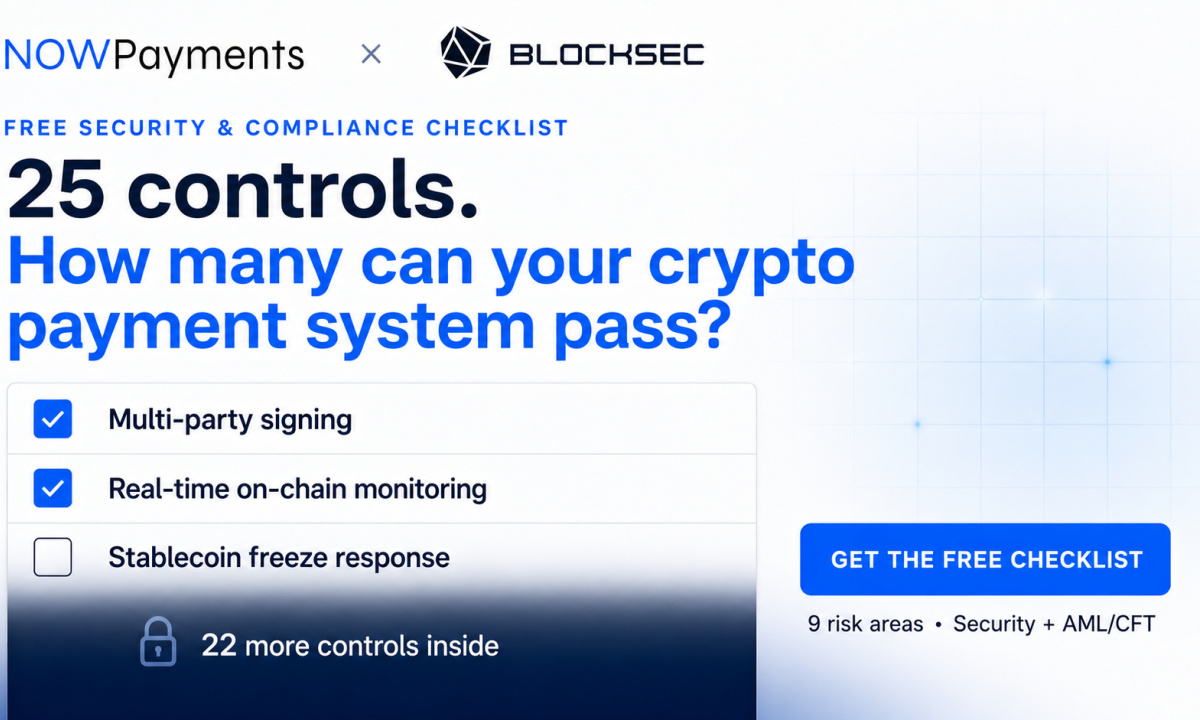
    NOWPayments and BlockSec have jointly released a free checklist designed to enhance the security and technical compliance of cryptocurrency payment systems. Published on July 27th, 2026, the resource offers businesses a structured framework for identifying and addressing potential control gaps.

    The release addresses the growing need for robust security in the cryptocurrency payment landscape. As digital transactions become more prevalent, businesses face risks from inadequate security measures, such as weak key management or insufficient compliance checks. This checklist aims to mitigate these concerns.

    Featuring 25 controls across nine security and technical compliance categories, the checklist empowers businesses to pinpoint control deficiencies, assign ownership, and develop actionable improvement steps. According to NOWPayments and BlockSec, the tool translates broad security principles into specific, implementable checks for security, operations, compliance, and product teams.

    This educational resource is targeted at merchants, marketplaces, gaming operators, SaaS companies, and Web3 platforms. It can be used during the initial setup of crypto payments, for regular system reviews, or as part of vendor assessments, aiming to standardize security reviews.

    NOWPayments is a global crypto payment gateway supporting over 350 cryptocurrencies and more than 30 stablecoins. BlockSec specializes in blockchain security and compliance. Their collaboration seeks to provide practical guidance for strengthening crypto payment infrastructure. The checklist is explicitly an educational tool, not a certification or legal advice.

    By providing a consolidated record of controls, evidence, ownership, and next steps, the checklist fosters cross-departmental understanding. This approach is intended to support the secure growth of crypto operations without introducing undue complexity. The guide is particularly beneficial for companies already accepting crypto, preparing to launch, or reassessing their payment systems.

    Complementing its security focus, NOWPayments also offers payout services, including zero-fee payouts to ChangeNOW Pro wallets, which can reduce operational costs and manual effort.

    Why This Matters

    The materials describe a narrow update: NOWPayments and BlockSec have published a free checklist containing 25 controls across nine security and technical compliance categories for crypto payment systems. The checklist turns broad security principles into checks that security, operations, compliance, and product teams can work through together.

    Broader Context

    Source materials place the announcement in this context: Crypto payments are easy to turn on. What’s hard is keeping the whole payment flow safe from key compromise, suspicious transactions, account takeover, or a stablecoin freeze.

  • XRP Price Update: July 27

    XRP Price Update: July 27

    Ripple and the broader XRP ecosystem have experienced a flurry of significant developments in recent days, signaling a period of expansion and strategic growth. These advancements include the launch of a new institutional platform for its RLUSD stablecoin, a strategic investment in payments infrastructure, fresh incentives from Binance, a surge in AI-agent activity on the XRP Ledger, and sustained interest in spot XRP Exchange Traded Funds (ETFs).

    Ripple Mint Platform Launched for Institutional Clients

    On July 23rd, Ripple unveiled Ripple Mint, a new platform designed to provide institutional clients with a unified interface for minting, redeeming, bridging, and managing its Ripple USD (RLUSD) stablecoin. Businesses can now leverage a standard interface or integrate their internal systems via APIs and webhook notifications. This launch is specifically aimed at companies requiring automated stablecoin access for their payment, treasury management, and trading operations.

    Strategic Investment in Notabene

    In parallel, Ripple announced a strategic investment in Notabene, a prominent provider of compliance infrastructure. The two companies intend to integrate RLUSD into Notabene Flow, a business-to-business stablecoin payments platform. Notabene’s extensive network connects over 2,300 institutions across more than 100 jurisdictions, processing approximately $2 trillion in annualized transaction volume. This collaboration is expected to broaden RLUSD’s reach among regulated payment providers and financial institutions.

    AI Agent Activity Surges on XRP Ledger

    The XRP Ledger (XRPL) has seen a remarkable increase in activity driven by AI agents, surpassing 1.4 million transactions initiated by these agents as of July 22nd. Data from the XRPL AI Hub indicated over 1.4 million agent-driven transactions and the participation of 129 merchants at the time of the report. This milestone follows Ripple’s June launch of an AI starter kit, which aims to empower developers in building automated payment applications on the XRPL. The growing numbers suggest active testing of the network for machine-to-machine payments and other automated transaction types.

    Binance Introduces New RLUSD Incentives

    Binance has rolled out new incentives for RLUSD users, highlighting a variable return rate of up to 22.25% for eligible holdings. Customers utilizing Binance Earn and Margin products for RLUSD can also earn weekly rewards in XRP. It is important to note that the return rate is variable and subject to change based on prevailing market conditions and user engagement.

    XRP Price Action and Key Levels

    Following a recent recovery that saw XRP approach $1.16 earlier in the week, the cryptocurrency is currently trading around $1.10, indicating that a significant portion of those gains have been relinquished. XRP remains within a broad descending channel, suggesting a prevailing negative trend. A reversal would necessitate a decisive break above key resistance levels.

    Traders are closely monitoring $1.18 as the initial resistance point. A failure to break through this level could prolong the existing downtrend. Conversely, buyers have demonstrated strength by defending the $1.02 – $1.04 demand zone, which must hold to prevent a decline below $1. The most significant short-term resistance is positioned at $1.28.

  • Pi Network Ecosystem Updates Continue Amidst PI Token Price Decline and Development Uncertainties

    Pi Network Ecosystem Updates Continue Amidst PI Token Price Decline and Development Uncertainties

    The Pi Network ecosystem has seen several new developments and updates over the past month, including the release of new developer tools, a redesigned Pi Browser, and the distribution of a Testnet token. However, these advancements have occurred concurrently with a substantial decline in the native PI token’s market value, which has reached new all-time lows.

    Ecosystem Development Highlights

    The Pi Network Core Team marked Pi2Day (June 28) by unveiling several new tools for the Pi App Studio: PiVerify, Pi Sign-In, and SoloHost. According to the Core Team, these tools are designed to enhance the developer experience and make it easier for users to access applications within the Pi ecosystem. Further improvements to the Pi App Studio include expanded support for persistent storage and an enhanced backend infrastructure, enabling the development of more sophisticated and reliable applications.

    In addition to developer-focused updates, the Pi Browser has received a redesigned interface and improved navigation. The team stated that this redesign aims to enhance the overall user experience, making it easier for users to discover ecosystem applications and providing developers with better visibility for their projects.

    Furthermore, the Core Team recently completed the distribution of Slice, a Testnet token, to nearly 480,000 participants. The team emphasized that Slice is intended for testing purposes to help developers and the community prepare for future Mainnet token launches.

    Mainnet Migration Uncertainty and Token Performance

    A protocol update, v25, was slated for Mainnet migration with a deadline of July 22 for eligible validators to upgrade. However, the deadline has passed without official confirmation from the team regarding the successful deployment of the migration. It is unclear if the migration was completed, and uncertainty remains regarding the status of this development milestone.

    Despite these ongoing developments within the Pi Network ecosystem, the native PI token has experienced a significant downturn in its market performance. Over the past few weeks, the PI token broke below the $0.10 support level. On July 14, the token reached an all-time low of just over $0.07. While it has recently been fighting to stay above $0.08, the PI token is down by over 97% since its all-time high of $2.99, which was recorded in February. The article reports that the PI token’s price decline is noted, but the exact causes for this decline beyond general market trends remain unclear. Uncertainty also surrounds reported instances of failed PI token unlock attempts, which may be linked to phishing scams targeting wallet passphrases.

    Why This Matters

    The Pi Network Core Team introduced new tools (PiVerify, Pi Sign-In, SoloHost) to the Pi App Studio, expanded its persistent storage capabilities, set and missed a deadline for a Mainnet migration requirement (v25), rolled out a redesigned Pi Browser, and distributed a Testnet token called Slice to participants for Pi Launchpad testing. Uncertainty remains regarding whether the Mainnet migration for protocol update v25 was successfully deployed after the July 22 deadline.

    Broader Context

    Although it wasn’t the busiest and most eventful month in its history, the past 30 days have still shown some new developments, features, and updates around the broader Pi Network ecosystem.

  • Binance Updates RLUSD APR and XRP Rewards Amidst Market Integration

    Binance Updates RLUSD APR and XRP Rewards Amidst Market Integration

    Binance has provided updated details regarding the Annual Percentage Rate (APR) for its RLUSD stablecoin, noting that the rate has been variable in the past week and reached a high of 22.25%. Users holding and trading RLUSD are eligible to earn weekly XRP rewards, and the stablecoin has been added to Binance’s Margin/Earn program.

    RLUSD, launched at the end of 2024, has achieved a market capitalization of nearly $1.6 billion, positioning it as the 9th largest stablecoin by market capitalization as of press time. The stablecoin was initially available on the Ethereum network but expanded its support to Ripple’s XRP Ledger less than a month after its launch. Earlier this year, RLUSD was included in Mastercard’s stablecoin initiative, alongside other major stablecoins such as USDC, PYUSD, USDP, and SoFiUSD. More recently, Ripple introduced Ripple Mint, a platform designed to improve institutional access for minting, redemption, and management of RLUSD.

    Binance first listed RLUSD at the start of the year, which included a promotional period of zero trading fees for certain trading pairs, some of which were against XRP. The exchange has continued to integrate RLUSD into its offerings, including adding it to its Earn program to allow holders to earn rewards. The latest update from Binance clarifies the specific rewards available, noting the variable APR and the weekly XRP rewards for users engaging with the stablecoin on the platform’s Margin/Earn program.

    Binance explained that users holding and trading the stablecoin can continue to earn weekly XRP rewards, and the asset has been added to the exchange’s Margin/Earn program. The post detailing these updates, titled “Major Binance Update for Ripple (XRP) Investors: Details,” appeared first on CryptoPotato.

    Why This Matters

    The materials describe a narrow update: Binance has provided updated details on the Annual Percentage Rate (APR) for its RLUSD stablecoin, stating it has been variable in the past week but reached an impressive figure of 22. The specific legal issues concerning the company behind RLUSD that were resolved.

    Broader Context

    Source materials place the factual news in this context: The world’s largest cryptocurrency exchange continues to update its product line, introducing new ways to keep users on the platform as investor interest has shifted elsewhere.

    Context

    The materials describe an update to Binance’s offerings for its RLUSD stablecoin. The world’s largest cryptocurrency exchange continues to update its product line, introducing new ways to keep users on the platform. The specific legal issues concerning the company behind RLUSD that were resolved are not detailed in the provided information.

  • Pi Network Announces Major Token Distribution: Key Details for Pioneers

    Pi Network Announces Major Token Distribution: Key Details for Pioneers

    Pi Network Completes Second Testnet Token Distribution

    Pi Network’s development team announced today the successful distribution of its second testnet token, dubbed Slice, via the Pi Launchpad. The announcement also detailed how users, referred to as Pioneers, can engage with and explore the token’s functionalities.

    The initiative involving testnet tokens commenced on PiDay, March 14, with nearly 480,000 users participating in the Launchpad testing. According to the team, this engagement yielded “valuable feedback on the Launchpad mechanism,” which has since been integrated to streamline the participation process, update mechanics, and enhance the overall user experience.

    Building on this initial progress, Pi Network introduced a second testnet token, Slice, in June. Testing for Slice began on June 12 and concluded on June 28, coinciding with Pi2Day. While nearly a month has passed since the testing period, the team remained silent on Slice-related developments until this morning.

    In a recent post on X, the team confirmed the successful distribution of the testnet token and encouraged users to explore the “post-launch experience and see how liquidity pools work through the new price tracking feature.” The Launchpad application within the Pi Browser now provides users with individual allocation details, launch and effective token prices, access to the SLICE liquidity pool, and a chart illustrating price fluctuations against test-Pi, another testnet token.

    The project’s official native token, PI, has experienced significant volatility recently, predominantly trending downwards. It reached a new all-time low of $0.07 a few weeks ago after failing to maintain the $0.10 support level. Following several unsuccessful attempts to break through this resistance, the token saw a 20% daily surge last Sunday, challenging the $0.10 mark from below. However, the resistance proved too strong, halting the upward momentum. A further significant decline occurred yesterday, with PI plummeting over 10% to $0.082, following indicators that suggested an impending rejection.

    Concurrently, some users have reported unusual activity within their Pi Wallets, including discrepancies in token balances and numerous failed transactions to unidentified addresses.

  • Hoskinson: Cardano’s Slow Pace Proves Effective

    Hoskinson: Cardano’s Slow Pace Proves Effective

    Cardano’s Development Strategy Mirrors AI Pioneer’s Rise, Says Hoskinson

    Charles Hoskinson, the founder of Cardano, has drawn a parallel between the blockchain’s development trajectory and that of artificial intelligence firm Anthropic, suggesting that a disciplined, security-focused approach is proving more effective than rapid market entry.

    In a recent interview, Hoskinson highlighted Anthropic’s success in the AI landscape, noting that despite entering the market later than established players like Google and OpenAI, the company has emerged as a leader. He attributed this to Anthropic’s adoption of a disciplined development philosophy from its inception, prioritizing robust practices over sheer speed. Hoskinson believes Cardano is now experiencing a similar shift in perception, as developers and investors increasingly value security and governance over “speed to market.”

    “Google initially had the big lead and then OpenAI had the big lead and then somehow this Anthropic thing came out and they were able to leapfrog everybody,” Hoskinson stated in an interview with CoinDesk. “They hadn’t fundamentally changed, they just had the right mindset.”

    He posited that this principle could ultimately benefit Cardano. “People are starting to wake up, especially in the age of AI hacking, where everything is getting broken, where speed to market is not the most desirable way,” he added.

    Exploits Underscore Risks of Prioritizing Innovation Over Resilience

    Hoskinson specifically cited the recent Kelp DAO exploit and its ripple effects on Aave as examples of the risks associated with prioritizing innovation over resilience. In April, Kelp DAO suffered a significant exploit resulting in the loss of $292 million after attackers exploited a misconfigured LayerZero bridge to forge cross-chain messages and withdraw unbacked rsETH.

    While Aave’s smart contracts remained uncompromised, the attacker used the fraudulent rsETH as collateral to borrow real assets. This left the lending protocol with substantial exposure to bad debt and triggered billions of dollars in total value locked (TVL) outflows before recovery measures were implemented.

    For Hoskinson, this incident demonstrated how vulnerabilities in one protocol can rapidly propagate through the broader decentralized finance (DeFi) ecosystem, leading to massive outflows and reputational damage. “The recent AAVE thing and Kelp thing shows you how quickly you can lose your TVL (total value locked) and how quickly you can lose your customer base,” he explained. “So, it works until it doesn’t, and when it doesn’t, it’s catastrophic for the ecosystem.”

    He argued that lasting stability requires more than technically sound code. “People want stability and it only comes from having a clear governance system, a clear software development system, and really good ideas on how to develop a roadmap in a sustainable way,” Hoskinson asserted.

    Addressing Criticisms and Future Outlook

    Hoskinson’s comments come amid ongoing criticism from segments of the crypto community regarding Cardano’s perceived prioritization of academic research, a key differentiator, at the expense of ecosystem growth.

    Cardano remains a significant protocol by market capitalization, currently valued at $6.2 billion and ranking as the 20th largest project. However, this is a considerable decline from its previous standing and aspirations. ADA has been one of the worst performers over the past year, down 80% in the last 365 days. In contrast, Ethereum, a platform Hoskinson frequently compares Cardano to, has seen a 48% decline, while Bitcoin, the industry benchmark, is down 44%.

    Hoskinson acknowledged that the decision-making process has not been without its flaws. “It took us a long time to get here. A lot of mistakes were made, and I own the lion’s share of them as the leader,” he admitted.

    Despite past challenges, he expressed confidence in Cardano’s current positioning. “Ultimately, I’m very happy with where we sit, and I think we will grow very strongly over the next 12 to 24 months,” Hoskinson stated.

    The broader argument reflects an ongoing industry debate about whether future crypto adoption will be driven by protocols that prioritize rapid development or those that focus on security, governance, and long-term sustainability. The question remains whether these approaches are mutually exclusive.

  • DCENT S vs. Tangem: Comparing Card-Shaped Hardware Wallets and Their Backup Strategies

    DCENT S vs. Tangem: Comparing Card-Shaped Hardware Wallets and Their Backup Strategies

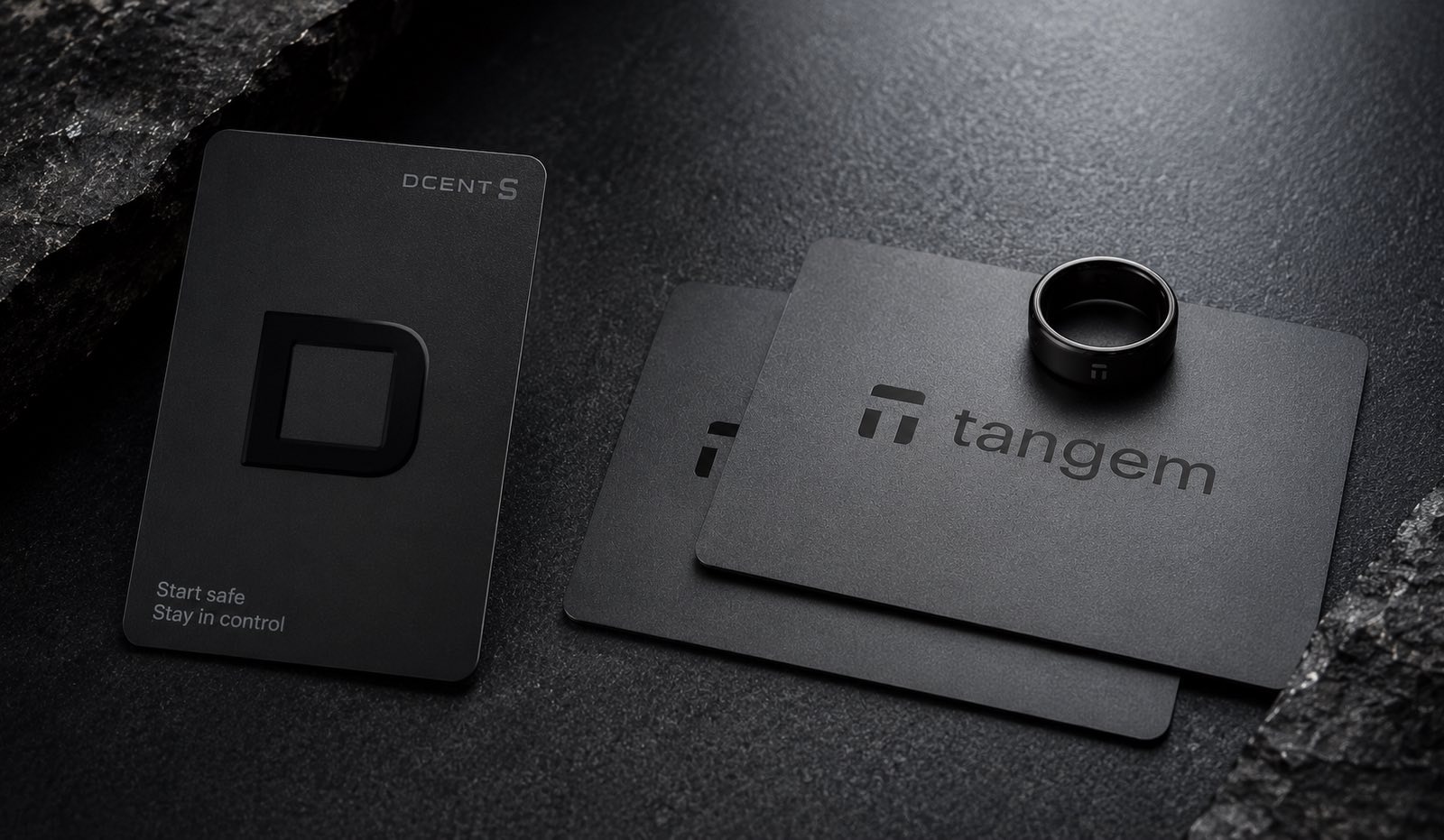
    The hardware wallet market is seeing a shift towards innovative form factors, with card-shaped devices like the DCENT S and Tangem emerging as key players. While both wallets share a convenient credit-card size and utilize NFC technology for secure transaction signing, their approaches to backup and recovery present a critical distinction for users, according to the article.

    Shared Foundations: Design and Security

    Both DCENT S and Tangem wallets are designed to be battery-free and powered by NFC during transaction signing. They employ EAL6+ certified secure elements, a robust security standard also used in government IDs and payment cards. This ensures that private keys are generated on-device within the secure chip and never leave it, significantly reducing the attack surface. A notable trade-off for this compact form factor is the absence of a display on either wallet, requiring users to rely on their paired mobile application to verify transaction details before signing.

    The Crucial Difference: Backup and Recovery

    The primary divergence lies in how these wallets handle backup and recovery. The DCENT S features a dedicated ‘R3covery Card.’ This card is exclusively for restoring wallet access if the main DCENT S card is lost and cannot sign transactions itself. The backup data is stored securely on another chip, eliminating the need for users to write down recovery phrases. The article notes that while this design prevents direct fund theft from a stolen recovery card alone, it is recommended to store the primary and recovery cards in separate physical locations.

    Tangem takes a different approach by selling wallets in sets of two or three identical cards. The private key is copied to all cards in the set during setup, meaning any card can function as the primary wallet and sign transactions. This provides immediate redundancy; if one card is lost, another from the set can be used. However, the article points out that this convenience comes with a security consideration: if a backup card is compromised along with the user’s PIN, access to funds is at risk. This highlights a trade-off between DCENT S’s segregated, recovery-focused backup and Tangem’s multi-card accessibility.

    Features and Usability

    In terms of supported assets, DCENT S supports over 100 blockchain networks and more than 4,900 tokens, with a strong emphasis on full XRP Ledger (XRPL) functionality. Tangem supports over 90 blockchain networks and more than 14,000 tokens, covering major cryptocurrencies like Bitcoin, Ethereum, and XRP. The article suggests that the difference in token counts is largely due to counting methodologies rather than significant functional disparities for most users.

    Usability is streamlined for both, requiring an NFC-enabled smartphone. Setup is quick, with Tangem estimating two minutes and DCENT S estimating three. Daily use involves tapping the wallet against the phone to sign transactions, a process described as seamless and akin to contactless payments. Both come with companion mobile apps for Android and iOS for asset management and transaction handling. Tangem’s app is noted for its more mature feature set, including built-in swapping and staking, while DCENT’s app covers essential functions effectively.

    Durability and Value

    DCENT S offers IP69 dust and water resistance, while Tangem provides IP69K resistance and additional advertised protection against X-rays and electromagnetic pulses. Both have similar operating temperature ranges. Tangem provides a 25-year warranty, whereas DCENT S offers a limited lifetime warranty.

    Conclusion: Which Wallet for You?

    The article suggests that while both wallets advance accessible self-custody, the DCENT S may appeal more to security-conscious users due to its segregated backup system and robust XRP Ledger support. The author leans towards the DCENT S, citing its thoughtful security design and IOTRUST’s longer experience in hardware wallet engineering since 2017. Tangem, conversely, offers immediate convenience through its multi-card redundancy. The choice ultimately depends on individual user priorities regarding security versus immediate backup availability.

    Why This Matters

    The materials describe a narrow update: The article compares two card-shaped hardware cryptocurrency wallets, DCENT S and Tangem, detailing their features, strengths, and weaknesses across various categories including design, security, backup and recovery, supported cryptocurrencies, daily usability, mobile apps, and overall value. The exact launch date of DCENT S is stated as July 2026, which is in the future.

    Broader Context

    Source materials place the factual news in this context: The hardware wallet market has seen a quiet revolution over the past few years.