Cardano’s Development Strategy Mirrors AI Pioneer’s Rise, Says Hoskinson
Charles Hoskinson, the founder of Cardano, has drawn a parallel between the blockchain’s development trajectory and that of artificial intelligence firm Anthropic, suggesting that a disciplined, security-focused approach is proving more effective than rapid market entry.
In a recent interview, Hoskinson highlighted Anthropic’s success in the AI landscape, noting that despite entering the market later than established players like Google and OpenAI, the company has emerged as a leader. He attributed this to Anthropic’s adoption of a disciplined development philosophy from its inception, prioritizing robust practices over sheer speed. Hoskinson believes Cardano is now experiencing a similar shift in perception, as developers and investors increasingly value security and governance over “speed to market.”
“Google initially had the big lead and then OpenAI had the big lead and then somehow this Anthropic thing came out and they were able to leapfrog everybody,” Hoskinson stated in an interview with CoinDesk. “They hadn’t fundamentally changed, they just had the right mindset.”
He posited that this principle could ultimately benefit Cardano. “People are starting to wake up, especially in the age of AI hacking, where everything is getting broken, where speed to market is not the most desirable way,” he added.
Exploits Underscore Risks of Prioritizing Innovation Over Resilience
Hoskinson specifically cited the recent Kelp DAO exploit and its ripple effects on Aave as examples of the risks associated with prioritizing innovation over resilience. In April, Kelp DAO suffered a significant exploit resulting in the loss of $292 million after attackers exploited a misconfigured LayerZero bridge to forge cross-chain messages and withdraw unbacked rsETH.
While Aave’s smart contracts remained uncompromised, the attacker used the fraudulent rsETH as collateral to borrow real assets. This left the lending protocol with substantial exposure to bad debt and triggered billions of dollars in total value locked (TVL) outflows before recovery measures were implemented.
For Hoskinson, this incident demonstrated how vulnerabilities in one protocol can rapidly propagate through the broader decentralized finance (DeFi) ecosystem, leading to massive outflows and reputational damage. “The recent AAVE thing and Kelp thing shows you how quickly you can lose your TVL (total value locked) and how quickly you can lose your customer base,” he explained. “So, it works until it doesn’t, and when it doesn’t, it’s catastrophic for the ecosystem.”
He argued that lasting stability requires more than technically sound code. “People want stability and it only comes from having a clear governance system, a clear software development system, and really good ideas on how to develop a roadmap in a sustainable way,” Hoskinson asserted.
Addressing Criticisms and Future Outlook
Hoskinson’s comments come amid ongoing criticism from segments of the crypto community regarding Cardano’s perceived prioritization of academic research, a key differentiator, at the expense of ecosystem growth.
Cardano remains a significant protocol by market capitalization, currently valued at $6.2 billion and ranking as the 20th largest project. However, this is a considerable decline from its previous standing and aspirations. ADA has been one of the worst performers over the past year, down 80% in the last 365 days. In contrast, Ethereum, a platform Hoskinson frequently compares Cardano to, has seen a 48% decline, while Bitcoin, the industry benchmark, is down 44%.
Hoskinson acknowledged that the decision-making process has not been without its flaws. “It took us a long time to get here. A lot of mistakes were made, and I own the lion’s share of them as the leader,” he admitted.
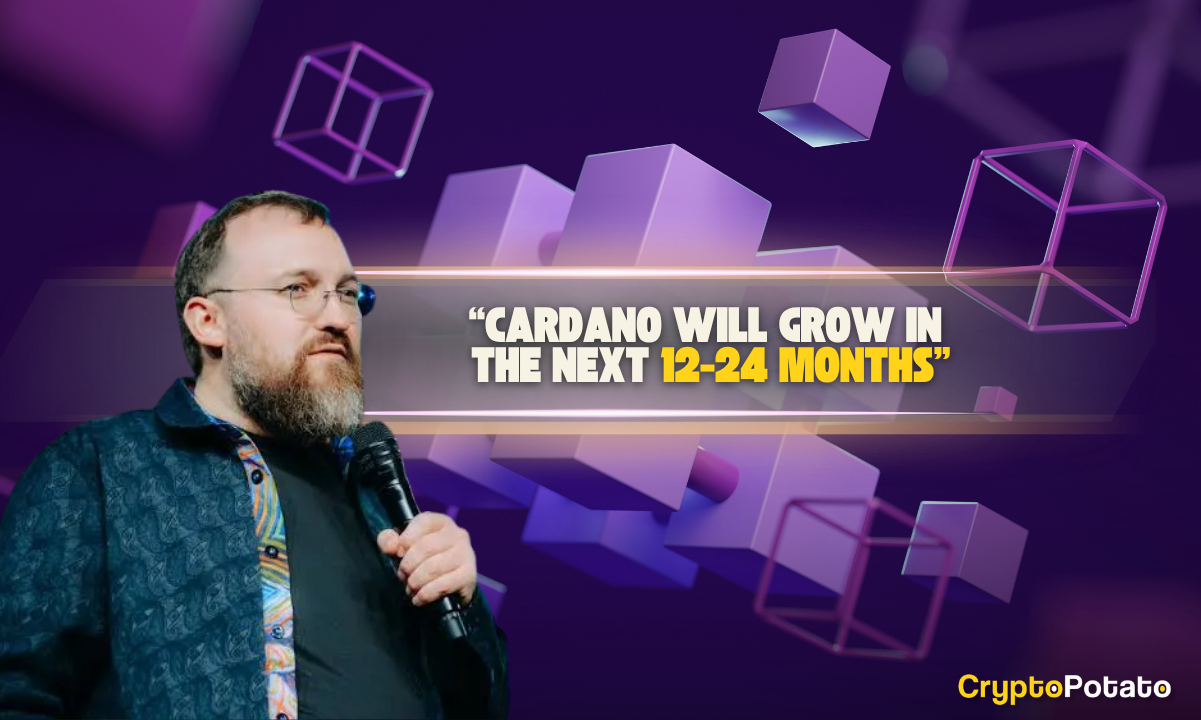
Despite past challenges, he expressed confidence in Cardano’s current positioning. “Ultimately, I’m very happy with where we sit, and I think we will grow very strongly over the next 12 to 24 months,” Hoskinson stated.
The broader argument reflects an ongoing industry debate about whether future crypto adoption will be driven by protocols that prioritize rapid development or those that focus on security, governance, and long-term sustainability. The question remains whether these approaches are mutually exclusive.
Leave a Reply