Tag: Project Updates

  • Pi Network Announces Two Major Updates Amidst PI Token Price Plunge

    Pi Network Announces Two Major Updates Amidst PI Token Price Plunge

    Pi Network Enhances App Studio Amidst Token’s Continued Decline

    The core development team behind the Pi Network has rolled out a new suite of updates aimed at improving the user experience within the Pi App Studio. However, these enhancements appear to have done little to bolster the project’s native token, PI, which has once again plummeted to a fresh all-time low, less than ten days after its previous record low.

    Since launching the Pi App Studio last year, the team has prioritized enhancing the overall developer and user experience, notably by integrating artificial intelligence features. In a recent blog post, the team detailed two significant updates: one focusing on AI functionalities and the other on backend support.

    The backend support update is designed to enable persistent user experiences for applications developed through the Pi App Studio. This allows developers to “save and retrieve user-specific data across sessions,” facilitating “experiences that continue even after users leave and return,” according to the team.

    The second major improvement centers on expanding AI capabilities with an AI-assisted App Planning Phase. This feature aims to help developers refine their initial app ideas into more comprehensive concepts in a “more interactive and dynamic way.”

    These latest Pi App Studio updates follow previous significant announcements from the team, including the unveiling of SoloHost, Pi Sign-in, and PiVerify during Pi2Day on June 28.

    Despite the ongoing efforts to introduce new features and improvements, the project’s native token has struggled to find stable footing. PI has experienced numerous all-time lows throughout the current bear market cycle over the past year, with the most recent dip occurring just hours ago.

    After hovering around the $0.11 support level for several days, a broader market retreat has driven PI’s price sharply downward. The token has fallen by over 7% in the past 24 hours, significantly underperforming the general market’s 1-2% decline. According to CoinGecko data, PI has charted a new low of $0.1033. While its weekly loss stands at 10%, the long-term outlook is considerably more stark, with the token down 96.5% from its all-time high recorded in February 2025.

  • Trust Wallet CEO: Self-Custody Proved Its Worth, Now It Must Deliver

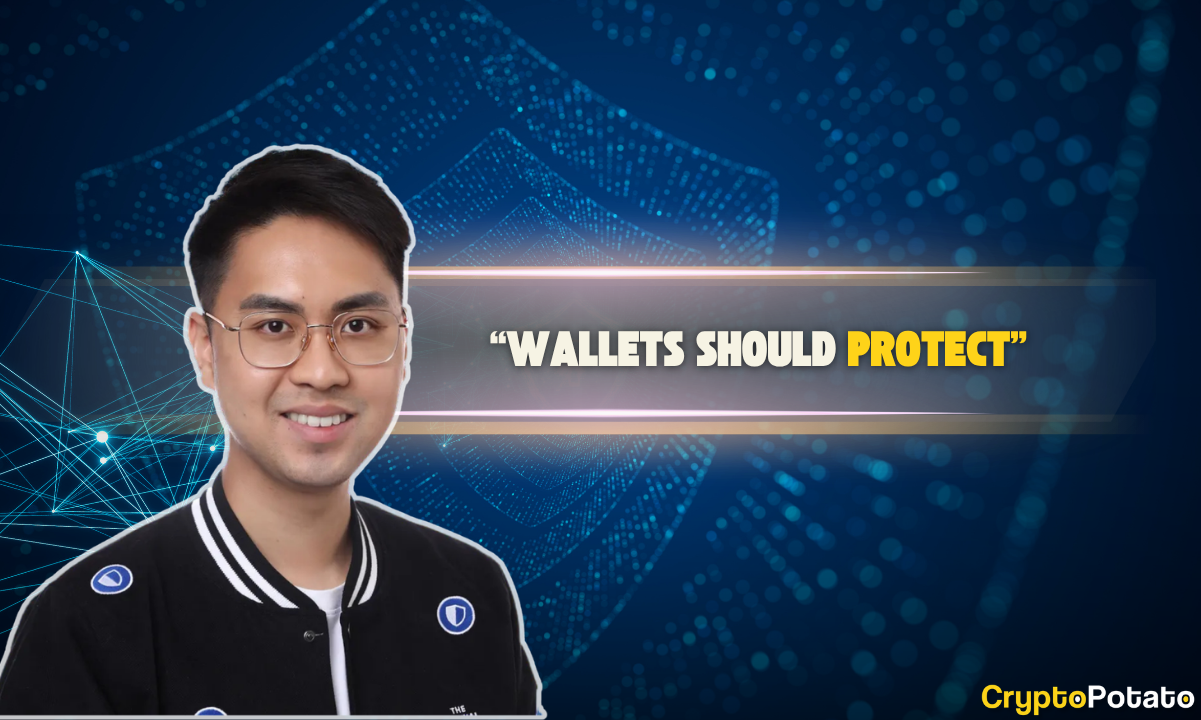
    Trust Wallet CEO: Self-Custody Proved Its Worth, Now It Must Deliver

    Self-Custody Has Won the Argument, Now It Has to Work: Trust Wallet CEO

    For years, the cryptocurrency space has asked users to accept complexity in exchange for ownership. But as self-custody moves closer to the mainstream, Trust Wallet’s new CEO, Felix Fan, argues that the real challenge is no longer proving why people should control their assets – it’s making that control feel effortless.

    In an interview, Fan discusses the product lessons shaping his leadership, why wallets must take more responsibility for user protection, and how payments, trading, stablecoins, AI agents, and clearer regulation are pushing crypto into a more mature phase.

    His message is clear: self-custody may have won the philosophical argument, but the user experience has some catching up to do.

    Navigating a Mainstream, Complex Landscape

    Fan stepped into his new role at Trust Wallet at a moment when self-custody is becoming both more mainstream and more complex. He believes his own journey, marked by expertise in product development and experience as a serial entrepreneur, has prepared him for leading a product used by hundreds of millions.

    “My expertise lies in product, complemented by my experience as a serial entrepreneur,” Fan stated. “Before Trust Wallet, I spent years thinking about how to make complex financial tools feel simple to people who don’t have time or patience to become experts.”

    Leading at this scale is different. Trust Wallet already has millions of users. “The job isn’t only to convince people that self-custody is the future,” Fan explained. “It’s to make that future feel obvious in the product experience every day. That means listening, moving fast, and being ruthlessly honest about where we fall short so we can fix it quickly.”

    He emphasized that the best products don’t need extensive explanation. “If a user has to read a guide to understand what just happened, we haven’t finished building yet,” he said.

    Product-Centric Leadership in Crypto

    Fan’s background as a product leader shapes his approach, especially in a sector where user trust, security, and speed of execution are paramount.

    “Product thinking means you start with the user problem, not the solution,” Fan noted. “That sounds obvious, but it’s genuinely rare in crypto, where the default is to lead with technology and hope users catch up.”

    He views security, trust, and execution speed not as competing priorities but as a “product sequencing problem.” He elaborated, “Security can’t be a tax on speed — if it slows users down in a way that’s perceptible, we lose them to worse choices. So the answer is to engineer security that protects users before they know they need protection.”

    Fan highlighted Trust Wallet’s Security Scanner, which has prevented $458 million in losses from malicious contracts. “Users didn’t have to become security experts for that to happen. The product did the work. That’s what good product leadership looks like in this sector.”

    The Infrastructure’s Coming of Age

    Crypto has undergone numerous identity shifts, from speculation and DeFi to NFTs, institutional adoption, stablecoins, AI agents, and tokenized real-world assets (RWAs). Fan defines the current phase as “the infrastructure coming of age.”

    “For years, crypto had the vision, but the experience was too rough for most people to stay,” he said. “The phases you describe, ‘speculation, DeFi, NFTs,’ each added something real, but also came with so much friction that only the committed stayed.”

    What’s different now, according to Fan, is that “the rails are catching up with the ideas.” He pointed to deep onchain liquidity, the real-world utility of stablecoins, increased accessibility of tokenized RWAs, and the emerging interaction between AI and onchain systems.

    “We’re at the point where the question isn’t ‘Can crypto do this?’, it’s ‘Can we make it simple enough that the next hundred million people don’t need to already believe in it to try it?’”

    Making Self-Custody Intuitive

    While the principle of self-custody is gaining traction, it can still feel intimidating to mainstream users. Fan outlined three key areas that need to change for it to become as intuitive as mobile banking, without compromising ownership.

    First, the language needs to evolve. Terms like “private keys,” “seed phrases,” and “non-custodial” are insider jargon. “We have to build products that protect users deeply without requiring them to understand the underlying mechanics,” Fan stated, drawing a parallel to mobile banking where users feel safe without understanding the authentication stack.

    Second, recovery mechanisms must feel secure. “The thing that stops most people from trying self-custody isn’t the setup — it’s the fear of losing access permanently,” he explained. Developing recovery options designed for everyday users, not just cryptographers, is a critical industry challenge.

    Third, the surrounding user experience must align with existing digital tools. “If trading onchain is harder than using an app they already have, we lose,” Fan said, acknowledging that while the gap is closing, work remains.

    “The principle of self-custody is already winning the argument,” he concluded. “The product experience is what has to catch up.”

    Near-Term Use Cases: Payments and Trading

    Trust Wallet operates at the intersection of wallets, DeFi, payments, stablecoins, and AI. For the near term, Fan sees payments and trading as the biggest use cases for crypto.

    “Trading because onchain liquidity has matured,” he explained. Integrations with platforms like Hyperliquid for perpetuals, prediction markets, and tokenized stocks through bStocks allow users to perform complex financial activities within a self-custodial wallet that previously required traditional brokerage accounts or centralized exchanges.

    While AI agents are a significant focus for the medium term, Fan believes “we’re at the early-infrastructure stage there.” The ability to automate strategies within user-defined rules while maintaining control of private keys on a device could revolutionize the financial landscape. However, in the immediate future, “payments and trading are where the real use is happening.”

    Wallets’ Responsibility in User Protection

    Security remains a major hurdle for crypto adoption. Fan believes wallets should take significant responsibility for user protection, pushing back against the notion that this conflicts with user sovereignty.

    “The false version of user sovereignty is: ‘we give you total freedom and total exposure.’ That’s not empowering; that’s abandonment,” Fan asserted. “Real sovereignty means users have full control over their assets and real protection against threats they can’t always see.”

    He reiterated the impact of Trust Wallet’s Security Scanner, which has flagged over $458 million directed at malicious contracts and alerted users to more than $191 million in suspicious transactions in 2025 alone. The recent addition of Address Poisoning Protection, which detects and alerts users to lookalike scam addresses in real-time, further exemplifies this commitment.

    “Users don’t have to understand address poisoning or malicious smart contracts to be protected from them. That’s what we should expect from a wallet,” Fan stated.

    He defined the line between user sovereignty and platform safeguards: “we warn, we protect, we give users the information to make a decision — but we don’t make decisions for them.” If a user chooses to interact with a flagged risky element, Trust Wallet will clearly inform them and respect their decision. “Sovereignty with information is the goal. Sovereignty without information isn’t freedom, it’s exposure.”

    Navigating Regulation and Decentralization

    As regulatory landscapes become clearer in some markets and remain fragmented in others, wallet companies like Trust Wallet must balance decentralization, compliance, and user access across jurisdictions.

    “Regulatory clarity is genuinely good for this industry,” Fan said. “Uncertainty can create more problems than it solves; for users, for builders, and for the long-term credibility of crypto.”

    He clarified Trust Wallet’s position: “We’re a self-custodial software interface. We don’t hold customer funds, we don’t operate markets, we don’t match orders, and we’re not anyone’s counterparty. That’s a different regulatory conversation than the one centralized exchanges are having.”

    Trust Wallet’s approach involves constructive engagement, transparency about its product, and ensuring users have access to the best available services. “When regulation creates real clarity, it helps us by setting clear expectations for the industry,” Fan noted.

    He cautioned against regulation becoming a barrier to access. “The populations who benefit most from self-custody — people without access to traditional banking, people in economies with currency instability — are often the least served by fragmented regulatory environments. Good regulation should protect users, not exclude them.”
  • Coinbase AI Predicts Norway Victory Over Brazil Pre-Match

    Coinbase AI Predicts Norway Victory Over Brazil Pre-Match

    Coinbase Investigates AI Prediction Market Glitch After Erroneous World Cup Alert

    Coinbase CEO Brian Armstrong has confirmed the cryptocurrency exchange is investigating an artificial intelligence-generated prediction market alert that mistakenly informed users of a “breaking news” event: a supposed 3-2 victory for Norway over Brazil in the FIFA World Cup, prior to the match’s scheduled kickoff at MetLife Stadium.

    The premature notification also claimed Manchester City forward Erling Haaland had scored twice to secure a quarterfinal berth for Norway.

    Intriguingly, Coinbase’s own prediction market page indicated the match had been postponed due to adverse weather conditions. However, the situation became even more peculiar as Norway did, in fact, go on to defeat Brazil when the game was eventually played, albeit with a different scoreline, and Haaland did score two goals.

    The discrepancy was first highlighted by Jay Drain Jr., managing partner at Relay Digital, who posted on X (formerly Twitter) that Coinbase’s AI was “hallucinating results for a World Cup game that hasn’t even been played yet.” He criticized the notification sent to millions of users as “factually incorrect” and labeled it “dangerous and irresponsible.”

    Coinbase Chief Executive Brian Armstrong later responded to the post, stating the company had initiated a review of the incident. Max Branzburg, the firm’s head of consumer and business products, provided an update, announcing that the team had “fixed the incorrect story” and implemented updates to prevent similar errors in the future.

    “It’s awesome to see the power of AI-enabled 24/7 insights for trading, but obviously still need to tune it to address these types of issues,” Branzburg commented. He added, “And hey, it turns out Norway did win and Haaland did score 2 goals, so maybe the AI knew something we didn’t!”

    As previously reported, the FIFA World Cup has significantly boosted trading volumes on leading prediction markets. Volumes surged from approximately $65 million in early June to a peak of $5.6 billion by the end of the month, with Kalshi capturing a substantial portion of this activity.

    Amidst this surge in capital, a number of traders have experienced significant losses. One Polymarket user, identified by blockchain analytics platform Lookonchain on June 6, reportedly lost $11.63 million over a 10-day betting spree on World Cup markets.

    According to Polymarket records, the user, operating under the pseudonym “Coldsway,” placed bets across 15 soccer markets, with a total trading volume of $48.19 million. Of these, only four positions resulted in wins, while 11 closed with complete losses, resulting in a win rate of 26.7%.

    Coldsway’s largest winning position yielded $1.12 million from a $689,318 bet on a draw between Australia and Egypt. They also profited $962,940 from a $1.48 million wager predicting Egypt would not win their July 3 fixture.

    However, these profits were overshadowed by several substantial losing bets. The single largest loss amounted to $4.95 million, stemming from Morocco’s 3-0 victory over Canada on July 4. Another significant loss of $3.10 million occurred on a prediction that Canada would not defeat South Africa on June 28.

  • Bybit Lists Siacoin (SC) v2.14.1 Upgrade

    Bybit Lists Siacoin (SC) v2.14.1 Upgrade

    Bybit to Support Siacoin Network Upgrade, Trading Uninterrupted

    Cryptocurrency exchange Bybit has announced its support for the upcoming Siacoin (SC) v2.14.1 network upgrade. The upgrade is scheduled to occur on July 7, 2026, at approximately 08:00 AM UTC, or upon reaching block height 583,000.

    Service Suspensions

    To facilitate a seamless transition, Bybit will temporarily suspend Siacoin (SC) deposits and withdrawals. This suspension will commence on July 7, 2026, at 07:00 AM UTC.

    Trading Continues

    The exchange has clarified that all other trading activities involving Siacoin will remain unaffected by the network upgrade.

    Resumption Notifications

    Bybit will not issue further announcements regarding the resumption of deposit and withdrawal services. Users wishing to be notified when these services are back online are advised to visit the Deposit or Withdrawal page and activate the “Set Alert” function.

    Further details on the Siacoin network upgrade can be found in the official release notes.

  • Cardano Surges 40% as ADA Recovers from FUD

    Cardano Surges 40% as ADA Recovers from FUD

    Cardano’s founder and a central figure in the project’s development ignited controversy in June, triggering a wave of fear, uncertainty, and doubt (FUD) that sent the native token’s price into a sharp decline.

    However, over the past week, ADA has broken away from the trend of larger-cap altcoins, staging a significant 40% surge from its multi-year low.

    The turbulence began a month ago when Charles Hoskinson announced he would be taking a break from Cardano, cautioning that several projects built on the Layer-1 blockchain could face imminent failure. The immediate impact on ADA was severe, with the token plummeting from over $0.20 to below $0.19, then $0.16, and ultimately falling below $0.14 by the end of June, marking its lowest point since 2020.

    While the broader bearish sentiment in the cryptocurrency market contributed to ADA’s collapse, its subsequent revival has been notable. In contrast to most larger-cap cryptocurrencies, which have seen gains of 5-10% in the past week to ten days, Cardano’s token has experienced a considerably more robust recovery.

    The asset has climbed more than 40% since its recent low, reaching $0.20 earlier today for the first time in a month. Analysts at Santiment Intelligence observed this divergence, suggesting that ADA has decoupled from other altcoins following “peak FUD [that] created rifts in [the] community last month.”

    Santiment further noted that the Cardano network is “showing signs of life again,” with nearly 15,000 non-empty ADA wallets added since the recent bottom.

    “Retail support has been one of ADA’s strongest traits even through ugly market stretches,” Santiment concluded. “After weeks of fear, this renewed holder growth suggests the crowd is gaining trust again after a short stretch of rapid market cap growth.”

    Another significant driver behind ADA’s impressive rebound is the anticipation surrounding the upcoming RealFi Phase 1 Testnet upgrade. Hoskinson has described it as the “largest” in the project’s history, with completion slated for July 6.

    Such upgrades typically generate excitement within the community and are often preceded by substantial price rallies for the underlying asset. However, the period following their completion can sometimes see a “buy-the-rumor, sell-the-news” event, leading to a price correction.

    For now, ADA remains among this week’s top performers, having gained 30% since last Sunday. Its market capitalization has returned to $7 billion, after recently dipping below $5 billion.

  • ChangeNOW’s Trading Engine: Powering Fast, Seamless Swaps

    ChangeNOW’s Trading Engine: Powering Fast, Seamless Swaps

    Open exchange, and a crypto swap, appears to be a remarkably straightforward process: select two tokens, send one, and receive the other. The non-custodial exchange claims this typically takes mere minutes, spanning over 110 blockchains, including Ethereum, Binance Smart Chain, and Solana.

    This swift and streamlined service, according to Chief Strategy Officer Pauline Shangett, is underpinned by a robust infrastructure supporting more than 70 fiat options and over 1,500 digital assets, with new additions occurring weekly.

    ChangeNOW functions as “a trading engine that a lot of people can access all at once,” Shangett explained. The platform acts as an intermediary between users and centralized or decentralized exchanges, executing trades on behalf of clients “without the client having to watch over things like the order book, transaction fees, and complicated interfaces.”

    This engine relies heavily on its own liquidity reserves. Shangett stated that ChangeNOW “mostly operates in our own liquidity when it comes to swaps,” pricing trades based on exchange order books from which it sources liquidity, market data feeds like CoinMarketCap, and an in-house “liquidity engine” comprising wallets holding balances for specific token pairs. Operating with its own reserves, she argued, means “network speed is not as much of a liability as it could be.”

    A recent benchmark by swap aggregator Swapzone, analyzing 150,000 transactions, found ChangeNOW’s median settlement time for a USDT-to-ETH swap to be under a minute, significantly faster than the industry median of approximately 45 minutes.

    Naturally, such comparisons depend on the specific token pairs and conditions tested, as ChangeNOW facilitates swaps across a wide array of tokens, including meme coins, AI coins, DeFi, GameFi, stablecoins, privacy coins, DePIN, and RWA.

    Fiat currency support is facilitated through “trusted partners” such as Transak, Simplex, Banxa, and Guardarian, enabling ChangeNOW users to purchase cryptocurrency using Visa, MasterCard, Google Pay, Apple Pay, FasterPay, SEPA, Pix, ACH, and Revolut.

    Expanding Beyond Swaps

    ChangeNOW has introduced a suite of new tools that broaden its offerings beyond simple token swaps. Private transfers route transactions in a way that conceals the sender’s wallet address and on-chain history from the recipient, while still maintaining AML monitoring in the background. Users can also generate a Permanent Exchange Address, a fixed, reusable deposit address that automatically converts any incoming cryptocurrency into a preselected payout coin, designed for recurring conversions.

    Additionally, a new crypto payment link allows users to create a shareable link to request or accept payments in Bitcoin, stablecoins, and over 100 other assets. A prediction markets hub aggregates popular markets across cryptocurrency, politics, finance, and pop culture, providing a centralized platform for tracking and comparison.

    Managing Volatility and Ensuring Stability

    Demand shocks are managed through geographical diversification. Shangett cited the 2021 Dogecoin frenzy, a Monero liquidity crunch, and the more recent TRUMP token launch as significant stress tests. The team’s global presence across time zones allows for proactive inventory positioning. “We get extra liquidity for that particular token for when American users wake up,” she said, noting that these surges are when ChangeNOW “sets our transaction records.”

    For thinly traded or volatile pairs, Shangett stated, “we actively manage liquidity to ensure stability.” This sometimes leads to the imposition of minimum or maximum trade sizes, though when minimal amounts are required, they are “incredibly low,” sometimes as little as $2. During periods of Ethereum network congestion, the solution is direct: “adjusting the network fee,” which ChangeNOW occasionally absorbs. In the event of chain halts, forks, or hacks, “we provide real-time alerts” that swaps on networks like BNB Chain or Solana may experience delays.

    Customer Support and Unreported Innovations

    The exchange is “proud” of its 4.6 rating on Trustpilot, based on over 13,000 reviews, as validation of its approach, complemented by 24/7 support for any issues.

    This support structure includes an “L0” community team on social channels, “L1” handling chat and email tickets, escalating to L2 and then to L3 engineers “on call pretty much 24/7,” Shangett said. Emergencies trigger an “all-hands, rapid-response protocol” that activates L3 and L4 engineers, though “most of them can be solved by either our compliance department or L2 engineers.”

    When asked about an unreported area of pride, Shangett highlighted the platform’s cross-DEX bridging capabilities, describing it as “a lot cheaper and a lot faster than a traditional decentralized cross-chain bridge.” She also emphasized the significance of its private transfers, which are utilized for both B2B and B2C transactions, as well as within the platform’s self-custody wallet, NOW Wallet.

    “We’ve always been huge privacy nuts,” she stated. “It allows people to send funds to basically anybody without doxing their initial wallet address, which might be critical for legal entities or high net worth individuals, or just people who care about their privacy a lot, and we’ve seen quite a lot of use of this feature since its release.”

    Simplicity remains a continuous pursuit, with ChangeNOW constantly refining its offerings, Shangett noted. Some of this streamlining occurs on the backend, as the exchange “upgrades our strong foundation to make it even better.” The focus is on incremental improvements, she added, aimed at making the platform “a little bit faster, a little bit more optimal, a little bit safer, and more secure.”

  • Cardano Surges 15% This Week

    Cardano Surges 15% This Week

    Cardano’s ADA Recovers From Historic Lows Amid Market Rebound and Upcoming Upgrade

    Last month, Cardano’s native token, ADA, experienced a significant downturn, falling below $0.14, a level not seen since late 2020. Its market capitalization also briefly dipped to approximately $5 billion, temporarily pushing the asset out of the top 20 cryptocurrencies by market value.

    However, the cryptocurrency has since staged an impressive comeback, halting its decline and showing signs of resurgence. Several factors appear to be contributing to this recovery.

    Market-Wide Rebound Boosts ADA

    As of this report, ADA is trading at nearly $0.17, marking a 17% increase over the past seven days. A primary driver for this upward momentum is the broader cryptocurrency market’s rebound, which has been bolstered by de-escalation news from the Middle East. Bitcoin (BTC) surged to $62,000, and Ethereum (ETH) climbed past $1,700, following reports that Iran and the United States are expected to hold direct talks in the third week of July, after the funeral of Supreme Leader Ali Khamenei.

    Cardano’s “RealFi” Upgrade Sparks Excitement

    Another significant catalyst for ADA’s recovery is the anticipation surrounding a Cardano upgrade scheduled for July 6. This upgrade introduces the RealFi Phase 1 Testnet, which has been described as “the first public step toward next-generation stablecoin infrastructure” for the project.

    An announcement regarding the Testnet stated, “Crypto’s clearest success story has scaled as money. But not as capital. Hundreds of billions of dollars sit idle in stablecoins: No utility. No impact on the real economy. We think that’s a problem worth solving – and the Testnet is where we start. During Phase 1, participants can explore the platform, use its core features, and share feedback that will directly shape the protocol. This is collaborative infrastructure-building in public, and we want you involved.”

    Cardano founder Charles Hoskinson commented on the upcoming initiative, labeling it “the largest upgrade” in the project’s history.

    Analyst Sentiment Mixed on Future Gains

    Several analysts have taken note of ADA’s revival, suggesting that the token may have further room for growth. X user Sssebi expressed optimism, stating the token “is on fire” and predicting a short-term rise to $0.20. Similarly, Nehal forecast a jump to $0.23, contingent on the price maintaining its position above $0.16.

    Despite the recent gains, ADA’s recovery should not be interpreted as a definitive start to a new bull run. The cryptocurrency market remains inherently volatile and susceptible to sharp pullbacks.

    Technical indicators also present a more cautious outlook. ADA’s Relative Strength Index (RSI), a momentum oscillator ranging from 0 to 100, has surpassed 70. This reading suggests that ADA is currently in overbought territory, potentially indicating that a correction could be on the horizon. Conversely, RSI values below 30 are typically viewed as buying opportunities.

  • Zcash Ironwood Upgrade Aims to Restore Confidence Post-ZEC Crash

    Zcash Ironwood Upgrade Aims to Restore Confidence Post-ZEC Crash

    Zcash Upgrade Nears Testnet Activation Amid Counterfeiting Vulnerability Concerns

    Zcash developers are advancing the network’s upcoming Ironwood upgrade, with a testnet launch anticipated soon. This critical update aims to bolster the privacy-focused cryptocurrency’s integrity by enabling users to verify its circulating supply, a feature urgently needed following the recent disclosure of a significant counterfeiting vulnerability.

    The Ironwood upgrade, first announced in June, proposes a new shielded pool and accounting system designed to allow for public verification of Zcash’s circulating supply while maintaining transaction privacy. This initiative is intended to address the uncertainty created by a critical vulnerability discovered in the Orchard shielded pool last month. The flaw, uncovered by security researcher Taylor Hornby, could have allowed for the undetected creation of unlimited counterfeit ZEC.

    The revelation of the vulnerability sent shockwaves through the market, causing Zcash’s price to plummet by more than half in just two days, falling from over $600 to a low of around $300. While ZEC has since recovered approximately half of those losses, trading recently at $457 according to CoinGecko data, the incident underscored the need for enhanced supply integrity mechanisms.

    Zcash co-founder Zooko Wilcox stated that Shielded Labs’ primary focus is security, particularly with a new project dubbed “Zero,” aimed at supporting enterprise users such as mining pools, exchanges, and wallets. “Our current focus within the Zero project is to help them prepare to safely make the transition to Ironwood,” Wilcox wrote.

    Although developers patched the Orchard vulnerability on June 1, Zcash’s inherent privacy features meant there was no cryptographic method to confirm if the flaw had been exploited. This lack of certainty prompted the proposal of the Ironwood upgrade to eliminate such ambiguities.

    Developers have reported substantial progress toward Ironwood’s activation. Sean Bowe, a Zcash developer, emphasized on X (formerly Twitter) on Thursday that “Ironwood’s prompt and safe activation on Zcash mainnet is extremely important to our users, in addition to the formal verification work we’re doing in parallel to provide reassurance that there aren’t any supply integrity concerns.” He added that “sufficient hash rate is signaling technical readiness for the mainnet upgrade.”

    Bowe acknowledged that some wallets might not be ready for the upgrade in time but stressed that this “does not justify delaying Ironwood, given there will be adequate alternatives and sufficient time on testnet for anyone who needs it.”

    Ecosystem Migration and Deployment Challenges

    Jason McGee of Shielded Labs outlined a dual focus for development: the Ironwood network upgrade (also referred to as NU6.3) and the migration of the Zcash ecosystem from its legacy Zcashd software to the new Z3 stack. The Z3 stack comprises the Zebra full node, the Zaino indexing service, and the Zallet wallet.

    McGee indicated that development is proceeding on schedule, with testnet activation of the new consensus rules “expected shortly.” The current objective is to complete both the Ironwood upgrade and the Z3 migration by late July. He credited the teams at Project Tachyon, Valar Group, ZODL, the Zcash Foundation, and Shielded Labs for their significant progress in recent weeks.

    Formal verification of the new circuit is also ongoing, with the aim of completing a proof of soundness before Ironwood’s activation.

    However, McGee highlighted that a larger challenge lies in preparing infrastructure providers for the transition to the Z3 software stack. Key components like Zallet and Zaino are still under development, leaving exchanges, mining pools, and wallet providers with a limited window to deploy and test the new systems before Ironwood goes live.

    “The consistent feedback we’ve received is that completing both the Ironwood upgrade and the migration to Z3 on the current timeline will be challenging,” McGee stated, noting that a recent questionnaire revealed a mixed response, with some partners indicating readiness and others requesting additional time.

    To mitigate deployment risks, several options are under consideration, including delaying Ironwood, conducting independent third-party security audits prior to deployment, or temporarily supporting Ironwood through Zcashd while partners finalize their migration.

    “Ultimately, we all share the same goal to activate Ironwood as quickly as possible while making sure our partners can safely migrate away from Zcashd,” McGee concluded. “We think the focus over the coming weeks should be on making that transition as smooth and secure as possible.”

  • XRP Ledger Lending Amendments Need 80% Validator Approval Amid Institutional Credit Layer Development

    XRP Ledger Lending Amendments Need 80% Validator Approval Amid Institutional Credit Layer Development

    Ripple has formally proposed two amendments to the XRP Ledger (XRPL), XLS-65 and XLS-66, aiming to embed fixed-term institutional credit infrastructure directly into the ledger. The validator voting process for these proposals is now active, following the release of Rippled v3.1.0 in late January 2026.

    This framework is designed for uncollateralized, underwritten lending specifically for regulated financial institutions, positioning the XRPL as a credit layer rather than solely a payments rail. The success of this structural shift hinges entirely on whether the amendments can achieve an 80% validator consensus threshold.

    Tokenization’s Limitations and XRPL’s Solution

    While tokenized assets are experiencing significant growth, they remain largely passive without lending capabilities. Real capital markets require credit, and XLS-66 aims to introduce native lending primitives to the XRPL, including pooled vaults, fixed-term loans, and on-chain tracking.

    The critical unknown remains the validator consensus. Current tracking indicates that XLS-65 has garnered approximately 8 “yes” votes, representing just 22.86% of the required support, while XLS-66 has secured around 7 votes, or 20%. Both figures fall considerably short of the sustained 80% support needed over two consecutive weeks for activation on the mainnet.

    How the Amendments Work

    The two amendments function as an interconnected system. XLS-65 introduces Single Asset Vaults, which are permissioned pools where liquidity providers can deposit a single token. These vaults can hold RLUSD, XRP, tokenized U.S. Treasuries, or other tokenized assets, with the vault structure itself holding these assets directly. A revision, XLS-65d, has simplified this model by removing two previously necessary transactions, thereby reducing overhead for both depositors and redemption processes.

    XLS-66 builds the XRPL lending protocol atop these vaults. It outlines the on-ledger mechanics for loan origination, interest accrual, amortized repayment, and default enforcement through specific transactions: LoanSet, LoanPay, and LoanDelete. Crucially, the underwriting and borrower credit assessment processes will remain off-chain.

    This setup allows institutional credit desks to manage risk evaluation while the XRPL handles execution and the loan lifecycle. This is distinct from overcollateralized lending models like Aave; instead, it focuses on fixed-term, underwritten credit extended to credentialed counterparties.

    The compliance architecture leverages XRPL’s existing permissioned domains, credential verification, clawback mechanisms, and freeze functionality. Vault operators can restrict participation to entities compliant with Know Your Customer (KYC) and Anti-Money Laundering (AML) regulations at the protocol level, differentiating it from open decentralized finance (DeFi) protocols.

    Market Context and Future Outlook

    XRP is currently trading near the $1.00 mark, a psychologically significant level that has attracted the attention of technical analysts observing a coiling triangle pattern characterized by progressively higher lows against flat resistance.

    The activation of XLS-65 and XLS-66 would solidify the XRPL’s position as a viable credit infrastructure layer. However, the demand signal that will truly influence price is institutional adoption. Price movements will ultimately depend on whether regulated entities begin deploying capital into RLUSD-funded vaults at scale.

    The amendments are currently available for testing on the devnet, allowing developers to integrate with the lending stack in anticipation of mainnet activation. In the near term, XRP’s market performance is likely to be more influenced by an acceleration of validator momentum towards the 80% threshold than by any single technical price level. While the framework itself is credible, its path to activation remains uncertain.

  • Robinhood Launches Blockchain Network

    Robinhood Launches Blockchain Network

    Robinhood Launches ‘AI-Native’ Ethereum Layer-2 with Tokenized Stocks

    Robinhood has officially launched the public mainnet of Robinhood Chain, an Ethereum layer-2 solution powered by Arbitrum. The company is positioning its new chain as “AI-native,” designed to facilitate direct trading by AI agents on-chain.

    The network has debuted with integrations from BitGo and Chainlink, alongside partnerships with Uniswap and Pleiades for market-making. Its core purpose is to bridge Robinhood’s established brokerage services with its cryptocurrency offerings.

    A key feature of Robinhood Chain is its “Stock Tokens,” which are on-chain representations of shares in companies such as Nvidia and Apple. These tokenized shares can be deposited into lending pools and utilized as collateral within decentralized finance (DeFi) applications. This innovation transforms traditional stock holdings into composable on-chain capital, a capability not available through conventional brokerages. Additionally, Robinhood has enabled perpetuals trading directly within its wallet via the decentralized perpetuals decentralized exchange (DEX) Lighter. Eligible U.S. users can also now access Robinhood Earn, allowing them to lend the USDG stablecoin and earn approximately 7% APY.

    Following the announcement, HOOD shares closed up more than 8% to $108.65, marking a nearly 20% increase for the month, though still below their peak values. Lighter’s LIT token saw a 15% surge to $2.14, reaching fresh local highs on the news of its integration.

    Venice AI Achieves $1 Billion Valuation as Voorhees Invests in Private AI

    Erik Voorhees’ privacy-focused artificial intelligence platform, Venice AI, has successfully raised $65 million in its first external funding round, achieving a $1 billion valuation and earning unicorn status just over two years after its inception. The funding round was spearheaded by crypto venture capital firm Dragonfly, with participation from Coinbase Ventures and North Island Ventures.

    Voorhees stated that this funding validates Venice’s objective to develop a private, uncensored alternative to mainstream AI services like ChatGPT. For those unfamiliar with the platform, Venice provides users access to over 200 open and closed AI models across text, image, video, and code generation, while ensuring no data is stored on its own servers. User prompts are encrypted client-side and routed through an external proxy.

    The platform has surpassed 3 million users and processes 1.7 million API calls daily. It is already profitable, generating approximately $70 million in annualized revenue, a notable achievement for an AI startup at this stage. The newly acquired capital will be allocated towards purchasing Graphics Processing Units (GPUs) and constructing its own data centers, aiming to reduce reliance on leased computing power and improve profit margins.

    The VVV token experienced a 10% increase on the day, reaching $13.50 and a fully diluted valuation (FDV) of $1 billion, mirroring the company’s valuation. The distinction between VVV token and company equity is a topic for future discussion.