Tag: Project Updates

  • Imperial Secures $1.5M Seed Funding for Solana Derivatives Platform

    Imperial Secures $1.5M Seed Funding for Solana Derivatives Platform

    Imperial, a Solana-based trading terminal for perpetual futures, has reportedly raised $1.5 million in a seed round to fuel platform expansion, according to a report from SolanaFloor.

    Funding Ambiguity Surrounds Reported Raise

    The funding landscape surrounding Imperial appears more opaque than a typical press release might suggest. Public statements from the project have emphasized backing from B&J Studios rather than external venture capital, and no investor list or deal documentation has emerged to corroborate the reported raise. This lack of transparency is significant, as figures ranging from $1.5 million to $2 million have been circulating. Without official documentation, the round remains a reported sum rather than a confirmed transaction.

    Imperial’s Trading and Routing Capabilities

    Imperial functions as both a trading terminal and an order router, directing trades to venues such as Phoenix, FlashTrade, GMTrade, and Jupiter Perps. Beyond order routing, the platform offers features tailored for active traders, including advanced order types, comprehensive profit and loss tracking, and a community points program designed to incentivize trading activity.

    Armada: A New Liquidity Frontier

    A more significant development is Armada, which Imperial describes as a PropAMM (Proprietary Automated Market Maker). This product is engineered to deliver low-cost liquidity while ensuring all transactions remain on the Solana blockchain. Armada is currently in the process of rolling out with taker fees set at 1 basis point, meaning traders pay 0.01% of the trade value. The decision to keep all operations on-chain is deliberate, contrasting with many trading products that move parts of their operations off-chain for speed. This on-chain approach preserves transparency, allowing for scrutiny of transaction flows.

    Leadership and Background

    Imperial is led by CEO Jordan Prince, a former employee of the trading firm Citadel, who also contributed to the Metaplex standard, a widely adopted framework for digital assets on Solana. The project’s CTO is Hunter Simmons, who previously worked on Teleport, a project that secured $15 million in funding.

    Strategic Fundraising Approach

    As of May 2026, Imperial’s primary backing comes from B&J Studios, with no confirmed external seed funding publicly disclosed. The project has previously indicated a strategic decision to postpone outside fundraising efforts. A confirmed $1.5 million round would represent a departure from this stance. If the raise is not officially confirmed, Imperial would continue to stand out as a Solana perpetuals project growing without a prominent funding announcement.

    Modest Raise and Competitive Pressures

    Regardless of confirmation, the reported $1.5 million figure is modest by cryptocurrency industry standards, a fraction of the $15 million raised by Simmons’ previous project, Teleport. Armada’s 1 basis point taker fee introduces competitive pressure. A low-fee liquidity source integrated within a routing product could potentially divert trading volume to Imperial’s own pool, provided its execution capabilities are robust.

    Execution Risks and Structural Considerations

    The primary risk lies in execution. Low fees are only effective if liquidity is sufficient to fill orders without significant slippage, which is the difference between the expected and actual trading price. Furthermore, a structural question arises for the venues to which Imperial routes orders. A router that also operates its own liquidity pool has an inherent incentive to prioritize its own offerings. How Imperial navigates this potential conflict of interest will determine whether other venues perceive it as a collaborator or a rival.

    Key Factors to Monitor

    Several key developments warrant attention: whether the reported seed round is officially confirmed with named investors; the pace at which Armada completes its rollout; and whether the community points program fosters sustained trading volume rather than a temporary surge driven by speculative activity.

  • Changer+ Launches User-Friendly, Self-Custodial Stablecoin Wallet

    Changer+ Launches User-Friendly, Self-Custodial Stablecoin Wallet

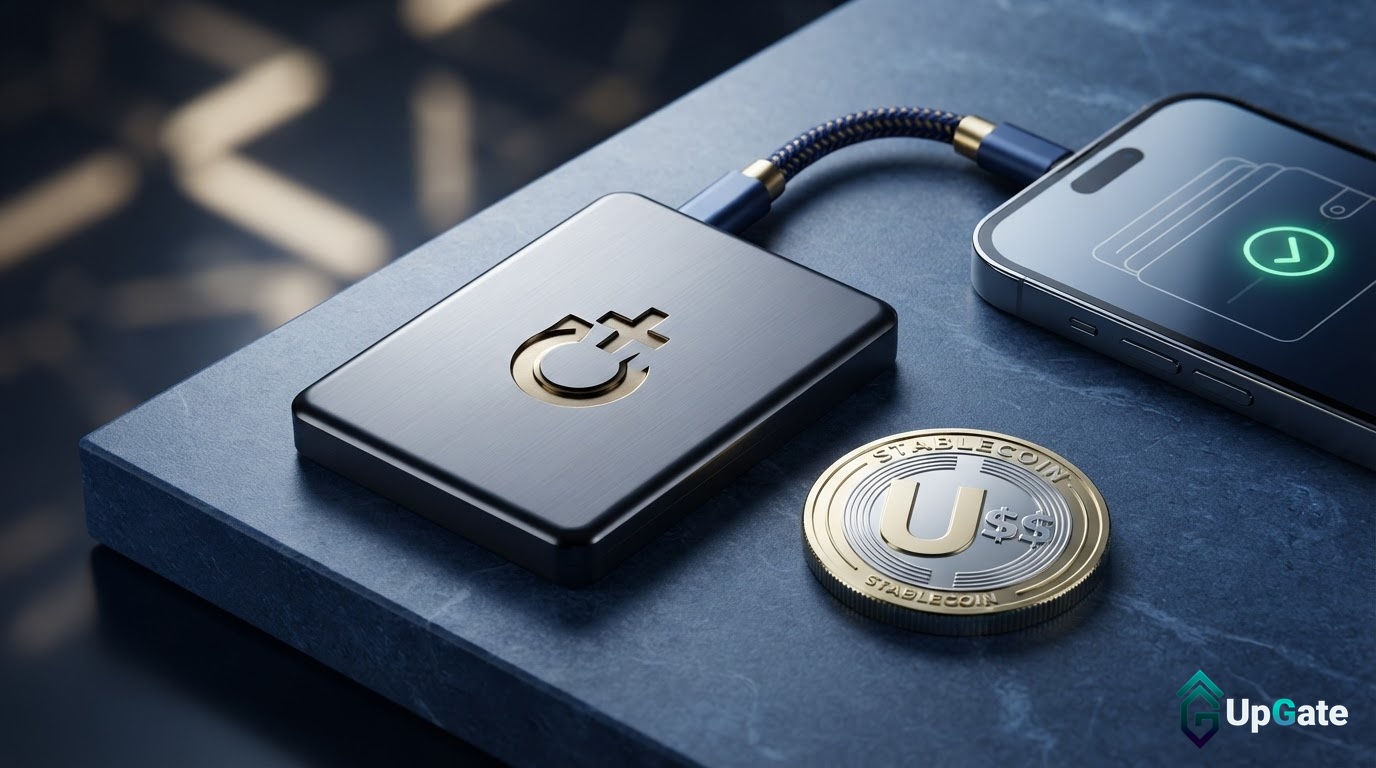
    Changer+ has introduced a self-custodial stablecoin wallet designed to simplify stablecoin management by abstracting away common blockchain complexities. The wallet aims to make holding, transferring, and using stablecoins more accessible, particularly as their adoption expands beyond cryptocurrency trading into everyday digital commerce and payments.

    This launch addresses the fragmented user experience often encountered when managing stablecoins across different networks and wallets. According to Changer+, users should not need to understand intricate blockchain mechanics, such as gas tokens or transaction processes, simply to utilize stablecoins. The company’s ambition is to provide a wallet where “stablecoins should just work.”

    Wallet Features and Support
    The new wallet supports major stablecoins, including USDT and USDC, across multiple blockchain networks such as Ethereum, TRON, BNB Chain, and Solana. A key feature is its ability to allow users to cover network transaction costs without requiring the native gas token for supported transactions. This abstraction aims to streamline the user experience, making it more akin to traditional digital payment systems.

    Changer+ emphasizes that convenience does not come at the expense of control. The wallet is self-custodial, meaning users retain ownership of their private keys and authorize their own transactions. This aligns with the Web3 principle of user ownership and control over digital assets.

    Security and Availability
    To ensure security and build trust, Changer+ has completed an independent security audit, vulnerability assessment, and penetration testing (VAPT) conducted by Echo Pulse. The wallet is available for download on both iOS and Android platforms.

    Launch Promotion
    To encourage adoption and allow users to experience the simplified functionality, Changer+ is offering a launch special. From October 6 to November 6, 2026, new users will receive three free transactions per device on Ethereum, Solana, and BNB Chain. This promotion aims to lower the barrier to entry for users to try out the wallet’s features.

    Company Background and Future Outlook
    Changer+ is a Singapore-incorporated entity and is backed by a private family office. The company states its focus is on long-term product building, emphasizing good engineering to reduce user-managed complexity while maintaining a clear and reliable experience. The wallet’s design prioritizes usability, self-custody, security, and practical utility, rather than relying on a project token or speculative rewards.

    While the wallet aims to simplify stablecoin management, some aspects remain to be detailed. Specifics regarding the exact number of stablecoins and networks planned for future support, as well as the full details of future practical use cases beyond initial mentions of eSIM data plans and a lifestyle ticket marketplace, are not yet fully elaborated. The precise terms and conditions of the launch special offer also require further clarification.

    Despite these uncertainties, the launch of Changer+’s wallet signals a potential step towards addressing the usability challenges that may hinder broader stablecoin adoption. The emphasis on self-custody alongside simplified management could appeal to a growing segment of users seeking both control and convenience in their digital asset interactions.

    Why This Matters

    The materials describe a narrow update: Changer+ has launched a new self-custodial stablecoin wallet that supports major stablecoins across multiple blockchain networks. The exact number of stablecoins and networks planned for future support.

    Broader Context

    Source materials place the announcement in this context: Changer+ is a Singapore-incorporated entity.

  • Polymarket Launches Protocol V2, New Markets Switch Nov 2

    Polymarket Launches Protocol V2, New Markets Switch Nov 2

    Polymarket Unveils Major Protocol Upgrade, Protocol V2, Set for November 2 Launch

    Polymarket, a decentralized prediction market platform, has announced the launch of Protocol V2, a significant overhaul of its core architecture. This new system is slated to power all new markets on the platform starting November 2. The upgrade marks a departure from the Gnosis Conditional Tokens Framework, which Polymarket has utilized since 2019.

    A Unified and Modular Architecture

    The rollout of Protocol V2 commenced on October 5, 2026, spearheaded by Polymarket’s development team and protocol head, Rajath Alex. The platform describes the new system as unified, modular, and thoroughly audited. A key change under V2 is that every outcome share will now reside within a single ERC-1155 positions token contract. The ERC-1155 standard allows a single smart contract to manage multiple distinct token types simultaneously, streamlining operations.

    pUSD as the Sole Collateral

    With the implementation of V2, pUSD will become the exclusive form of collateral accepted for backing positions on the Polymarket platform. This move aims to simplify accounting and settlement processes by concentrating all collateral into a single asset.

    Enhanced User Experience and Operational Efficiency

    The protocol also introduces market-specific exchanges, integrated with a router. This router acts as a front-end intermediary, directing orders to their appropriate destinations. Polymarket asserts that this enhancement will significantly improve both user experience and operational efficiency.

    Pluggable Oracles for Flexible Resolution

    Protocol V2 features an OracleAggregator that makes oracles pluggable, supporting a range of providers including UMA and Chainlink. This flexibility means Polymarket is no longer tied to a single method for determining market outcomes. Instead, it can now select the most suitable resolution source for each individual market, ensuring greater accuracy and adaptability.

    Phased Rollout and Testing

    A limited set of live test markets, known as canary markets, have been running from October 5 through October 30 to facilitate testing and gather feedback. All new markets will transition to V2 on November 2. Importantly, existing markets built on the Conditional Tokens Framework will remain unaffected, with no forced migration of open positions occurring mid-trade.

    Developer Upgrades and Data Access

    Developers will benefit from an upgraded Data API v2. This new API operates on an in-house on-chain indexer, enabling Polymarket to directly read and organize blockchain data rather than relying on external tools. The Data API v2 offers standardized data formats and cursor-based pagination, which Polymarket states will reduce friction for developers building dashboards, trading tools, and analytics on top of its data.

    Robust Security Measures

    Polymarket has prioritized security for Protocol V2, with six independent firms, including Certora, conducting audits. Furthermore, the platform is running a bug bounty program offering rewards of up to $5 million for the discovery of critical vulnerabilities.

    The key dates for this transition are October 30, marking the conclusion of the canary markets, and November 2, when Protocol V2 becomes the standard for all new market creations on Polymarket.

  • Ethereum Staking Exit Queue Hits Year High; MetaMask Pulls 17,000 Validators

    Ethereum Staking Exit Queue Hits Year High; MetaMask Pulls 17,000 Validators

    Ethereum Staking Exit Queue Hits New Highs, 851,000 ETH Stuck in Withdrawal Process

    The queue for withdrawing staked Ether (ETH) on the Ethereum network has surged fivefold in just three days, reaching its longest point since 2026. As of October 2nd, approximately 851,000 ETH, representing 2% of the total 43.6 million staked ETH, were caught in the withdrawal process. This surge is primarily attributed to a security incident involving MetaMask.

    Analysis of Validator Queue data reveals a dramatic increase from 166,000 ETH awaiting withdrawal on September 29th to 851,000 ETH by October 2nd. This figure significantly surpasses the 476,000 ETH seen in May of this year.

    By early Monday morning in Asia, around 786,000 ETH, valued at over $2 billion, remained in the queue, with an estimated waiting time of 14 days. Ethereum’s design intentionally limits the speed of validator entry and exit to approximately 57,600 ETH per day to mitigate security risks. Large-scale movements of funds, therefore, inevitably lead to a backlog.

    The primary driver of this withdrawal wave is MetaMask, a prominent cryptocurrency wallet provider that also operates as a validator for Lido, a leading liquid staking protocol. MetaMask disclosed a security incident on September 30th, prompting the immediate withdrawal of affected validators from its services.

    Ethereum security researcher Kaden estimates that this precautionary withdrawal involved approximately 17,000 validators, totaling around 523,000 ETH. MetaMask has not yet officially confirmed this figure.

    An update on October 1st offered some relief: MetaMask’s investigation found no evidence of compromise to wallets or customer funds. This suggests the withdrawal surge was largely a “better safe than sorry” defensive measure rather than a direct result of theft.

    Lido anticipates that the affected ETH will be gradually withdrawn, balances settled, and then re-staked. This entire process is expected to take up to 45 days, during which the affected validators will forfeit their earned rewards.

    Lido has explicitly stated that “stETH holders do not need to take any action.” stETH is a token issued by Lido representing users’ staked ETH. Lido projects that the last batch of affected MetaMask validators will cease staking on October 7th, after which their ETH will re-enter the queue to begin staking anew.

    Meanwhile, the queue for initiating new staking deposits has shown signs of cooling. On Monday, approximately 1.5 million ETH (about $4 billion) were waiting to be staked, with an estimated wait time of 25 days. This demand has noticeably slowed compared to early September, when 2 million ETH were waiting for 35 days.

    This slowdown in new staking demand may reflect a more cautious short-term market outlook for Ethereum or institutional capital awaiting clearer market signals.

    The current situation highlights a bottleneck in Ethereum’s staking withdrawal mechanism. While the daily limit of 57,600 ETH is designed to maintain network stability under normal conditions, it creates lengthy queues when large operators withdraw en masse. The 14-day wait for 786,000 ETH not only results in lost revenue for operators but could also lead to market volatility due to a significant amount of liquidity being temporarily “locked.”

    Proposals such as EIP-6110, which would allow builder bid rewards to be sent directly to validator withdrawal addresses, and future optimizations to the withdrawal mechanism, could potentially address these issues. However, if Ethereum aims to attract more institutional capital into staking, maintaining liquidity and fairness during large capital inflows and outflows will be a critical design challenge.

  • Tether’s Utexo to Launch USDT on Bitcoin Blockchain via RGB Protocol

    Tether’s Utexo to Launch USDT on Bitcoin Blockchain via RGB Protocol

    Tether’s infrastructure project, Utexo, is set to launch USDT on the Bitcoin blockchain this month, utilizing the RGB protocol. This initiative marks a significant return of USDT to the Bitcoin ecosystem, aiming to introduce enhanced privacy, direct exchange capabilities, and new lending functionalities.

    The launch will support private transfers, direct Bitcoin to USDT exchange, and Bitcoin-backed collateralized lending. A key feature of this implementation is that transaction data will not be recorded on the main Bitcoin chain, leveraging the RGB protocol’s client-side validation.

    USDT was initially launched on Bitcoin’s Omi protocol over a decade ago, in 2014. It later expanded to Ethereum and Tron, partly due to lower transaction fees. Now, with Utexo’s initiative, USDT is returning to the Bitcoin blockchain, albeit through a different technological framework.

    Utexo, founded in 2025 and having recently completed a $7.5 million seed round, has received commercial authorization from Tether to use the USDT trademark and issue tokens on Bitcoin. According to Tether CTO Paolo Ardoino, the company supports USDT’s return to the Bitcoin chain. Tether itself holds a substantial amount of Bitcoin, exceeding 55,000 BTC, positioning it as a significant player within the Bitcoin ecosystem.

    RGB Protocol: Privacy and Off-Chain Transactions

    The RGB protocol is central to this launch. It employs client-side validation, meaning transaction details are validated by the user’s client rather than being broadcast to the entire network. This approach anchors RGB assets to Bitcoin’s Unspent Transaction Outputs (UTXOs), providing proof of ownership without exposing transaction specifics on the main chain. This contrasts with the public visibility of USDT transactions on Ethereum and Tron.

    New Use Cases for Bitcoin DeFi

    Utexo plans to implement three primary use cases for USDT on Bitcoin: private transfers, direct BTC/USDT exchange, and Bitcoin-collateralized lending. These functionalities aim to address perceived limitations in Bitcoin’s decentralized finance (DeFi) landscape, such as insufficient on-chain capacity and a lack of stablecoin liquidity pools.

    Compliance and Future Integration

    While the RGB model offers enhanced privacy, it presents a technical difference from Ethereum’s USDT implementation: Tether cannot unilaterally freeze individual wallets. Utexo’s approach to compliance involves maintaining a UTXO blacklist, making specific UTXOs unredeemable rather than frozen. According to Utexo co-founder Viktor Ihnatiuk, this method aims to align with Bitcoin’s decentralized ethos while still enabling compliance measures.

    Looking ahead, Utexo plans to extend USDT support to the Lightning Network. This integration could enable near-zero fee, second-level transactions for stablecoins, which would be beneficial for cross-border and daily transactions within the Bitcoin ecosystem.

    This development is seen as providing Bitcoin DeFi with a native stablecoin infrastructure, moving beyond reliance on cross-chain bridges or other Layer 2 solutions. It also solidifies Tether’s role as an infrastructure provider within the Bitcoin ecosystem.

    Key uncertainties remain regarding the speed of adoption for RGB-USDT by exchanges and wallets, and whether its circulation volume will reach billions of dollars in the coming months. The success of this launch will likely depend on these adoption metrics and the practical implementation of its planned use cases.

    Why This Matters

    The materials describe a narrow update: Tether’s infrastructure project Utexo will launch USDT on the Bitcoin blockchain this month, utilizing the RGB protocol. The speed of exchange and wallet adoption for RGB-USDT.

    Broader Context

    Source materials place the factual news in this context: Tether’s infrastructure project Utexo is launching USDT on the Bitcoin chain this month.

  • Arbitrum Halts Stylus Activations Amid Security Emergency

    Arbitrum Halts Stylus Activations Amid Security Emergency

    Arbitrum Halts New Stylus Contract Deployments Amid Security Concerns

    Arbitrum has temporarily suspended a key developer feature, pausing all new activations of its Stylus contracts across Arbitrum One and Nova. The decision, enacted by the Arbitrum Security Council on October 2, 2026, at 11:30 EST, addresses vulnerabilities within the Stylus framework. Existing Stylus contracts remain unaffected and continue to function.

    Stylus Framework Under Scrutiny

    Stylus is designed to enable developers to write smart contracts in languages such as Rust and C++, while maintaining compatibility with the Ethereum Virtual Machine (EVM). These programs are compiled into WebAssembly (WASM), a compact, low-level code format. The current concern centers on hand-crafted WASM programs that have not been updated.

    Research indicates that these unpatched programs could be exploited as denial-of-service (DoS) vectors, potentially impacting the network’s liveness. While such issues do not pose a risk to user funds, they could lead to network slowdowns or complete halts. Previous patches to Arbitrum’s operating system (ArbOS) had already addressed some of these liveness concerns.

    The pause is intended as a preemptive measure, preventing unpatched WASM programs from being deployed before upcoming ArbOS updates.

    Enhanced Dispute Resolution System

    In addition to pausing Stylus activations, the emergency upgrade introduced a new safety mechanism to Arbitrum One’s dispute resolution system, known as BoLD. This mechanism, a “guard” on the BoLD one-step proof, is designed to protect against potential soundness issues. If the system were to accept contradictory proofs, this guard could delay unconfirmed withdrawals.

    BoLD is Arbitrum’s system for resolving disagreements about the state of the blockchain. A one-step proof represents the final stage of such a dispute, where a single contested computational step is directly verified. The newly added permissionless guard on Arbitrum One’s one-step proof mechanism aims to prevent the system from accepting conflicting proofs, allowing settlements to be paused in a timely manner if such a scenario arises. The practical implication is that unconfirmed withdrawals could face delays if this safeguard is triggered.

    It is important to note that the BoLD guard was specifically added to Arbitrum One, while the Stylus activation pause affects both Arbitrum One and Nova.

    Impact on Developers and Future Outlook

    For development teams with existing Stylus contracts already deployed, daily operations are largely unchanged. These active contracts will continue to function and can be renewed until their expiration. However, developers planning new Stylus deployments will have to wait for an unspecified timeline.

    The Arbitrum Foundation stated that it will collaborate with the ArbitrumDAO to determine when new Stylus activations can resume. The Foundation characterized the emergency upgrade as part of a broader series of proactive measures to safeguard the network’s security and integrity.

    The identified issues primarily affect network liveness rather than the security of user funds, and no user funds are currently at risk. The distinction is crucial: a network outage is an inconvenience, whereas a loss of user deposits constitutes a crisis.

    The implementation of the BoLD guard serves as a backstop against potential misbehavior within the proof system itself. The trade-off for this added security is the possibility of unconfirmed withdrawals being held in limbo if the guard is activated.

    The decision to utilize the Security Council for this emergency upgrade highlights the existence of special powers for critical situations where a full governance vote might leave a known vulnerability exposed. By returning the decision on when to re-enable Stylus activations to the ArbitrumDAO, the council appears to be acting as an initial responder rather than a permanent arbiter of Stylus’s future.

  • Hoskinson’s Midnight Surges 159% After Major Crash

    Hoskinson’s Midnight Surges 159% After Major Crash

    Midnight’s NIGHT Token Recovers Sharply Following Network Upgrade and Exploit

    The NIGHT token, associated with Charles Hoskinson’s Midnight project, has experienced a significant rebound, surging 159% through September and early October after a substantial crash. This recovery follows a major network upgrade that went live on October 2nd, enhancing the platform’s utility and developer engagement.

    Permissionless Smart Contracts Go Live

    The primary catalyst for NIGHT’s resurgence is the successful deployment of permissionless smart contract functionality on Midnight’s mainnet. This upgrade, implemented on October 2nd, empowers developers to deploy contracts freely and create them through code, removing a significant barrier to entry. The move is expected to foster the development of new applications on the network, potentially increasing demand for NIGHT, which is utilized for network fees and security.

    This upgrade represents a progression from Midnight’s Devnet to an open public testnet, providing developers with a more robust environment to test its data-protection features.

    Privacy Technology and Market Enthusiasm Drive Gains

    Beyond the technical upgrade, growing interest in Midnight’s privacy technology has also contributed to the token’s rally. The project leverages Zero-Knowledge (ZK) proofs, enabling the protection of private information within smart contracts. This capability positions Midnight for potential applications in sectors like finance and identity management, where both privacy and regulatory compliance are paramount.

    Further fueling enthusiasm, Cardano founder Charles Hoskinson recently suggested that Midnight could surpass Zcash in the realm of private smart contracts. He highlighted Midnight’s features, including selective disclosure, private agents, and a DeFi kernel, in conjunction with its use of ZK, Trusted Execution Environment (TEE), and Multi-Party Computation (MPC) technologies. Hoskinson indicated a target of 2027 for the project’s full delivery, rather than specifying price targets. These remarks have amplified attention on Midnight as NIGHT continues its upward trajectory.

    Technical Outlook for NIGHT Token

    The NIGHT token is currently testing the $0.0485 resistance level following its recent rally. Sustaining a price above $0.044 could enable the token to retest the $0.048 mark. A breakthrough above this level might extend the current momentum, while a fall below $0.044 could lead to a pullback towards $0.040.

    The central question remains whether the increased smart contract activity on Midnight’s network will be sufficient to sustain the strong recovery of the NIGHT token.

  • Stacks Crypto Surges 30% Overnight

    Stacks Crypto Surges 30% Overnight

    Stacks Crypto Surges as Founder Takes Helm, Bitcoin Staking Goes Live

    Stacks (STX) cryptocurrency is experiencing a significant rally, trading at $0.385 and marking a 19% increase over the past 24 hours, according to CoinGecko. This surge follows a decisive breakout that propelled the token above the $0.34 resistance level. The upward momentum has been consistent, with STX already posting a 50% gain in September.

    Leadership Transition and Growth Phase

    The project is set to enter a new growth phase with Stacks founder Muneeb Ali assuming the role of CEO of Stacks Labs on October 15. This leadership change coincides with reports that four institutions have collectively bonded approximately 250 BTC in the Genesis Bond program. Earlier reports indicated that the program had secured 230 BTC and 310,000 STX within its initial 14 days.

    Ali has also outlined strategic priorities for the project, including capital markets, privacy, and post-quantum Bitcoin, though specific implementation timelines for these initiatives have not yet been announced. While the leadership transition provides a near-term milestone, it does not guarantee an immediate increase in token demand.

    Market Dynamics and Technical Outlook

    Broader market conditions for Bitcoin (BTC) play a crucial role, as macro-driven movements in BTC can either amplify or overshadow ecosystem-specific catalysts. Current indicators, such as moderating inflation and Bitcoin’s price action, offer a backdrop against which STX’s performance will be measured. The immediate challenge for STX is to sustain its current breakout by defending the newly established support zone.

    At present, STX has reached $0.4006, trading within the $0.387–$0.40 range, with CoinGecko confirming a 19% daily gain. Market data from OKX and price analysis from Bybit corroborate these figures.

    From a technical perspective, the chart indicates that $0.34 has been overcome as resistance, with the $0.30–$0.35 area now serving as the primary support zone, according to Bybit. If STX maintains its position above $0.34–$0.35, the breakout is considered intact, with a potential extension towards $0.40–$0.45, though this remains an unconfirmed target.

    Should the price consolidate around $0.40, the base scenario suggests a retest of the former resistance level. A return below $0.34 would undermine the current bullish setup, and a deeper retreat into the $0.30–$0.35 range would place the breakout at risk. The key question for investors is whether the recent rapid price appreciation can translate into sustained demand.

    Fundamental Narrative and Future Prospects

    The proposed Bitcoin-staking mechanism for Stacks crypto provides a fundamental narrative for the current rally, but widespread adoption and successful execution are still necessary to fully align with the technical chart. A neutral next step involves observing how the price reacts around the $0.34–$0.35 level.

    The significant upward movement in STX validates market interest in Bitcoin-native yield and infrastructure solutions. However, after reaching the $0.40 mark, the immediate upside potential may appear less attractive compared to its position below $0.35. A failed retest of the breakout zone could quickly put early buyers under pressure.

    This dynamic underscores the appeal of early-stage projects for traders, though such entries also carry higher execution and liquidity risks. Historically, these types of risks have been associated with the potential for substantial, life-changing gains.

    Bitcoin Hyper Integrates Solana VM

    In related developments, Bitcoin Hyper (HYPER), a Bitcoin Layer 2 project, is integrating the Solana Virtual Machine (SVM). This integration aims to enhance fast smart contract execution and high-speed, low-cost transactions on the Bitcoin network. The project’s stated goal is to address Bitcoin’s limitations in transaction speed, fees, and programmability while preserving its core security and trust. The current presale price is $0.013687, with a total of $33,166,357.73 raised. Bitcoin Hyper also promotes live staking with a high APY and claims to offer a decentralized canonical bridge for BTC transfers. As with any ecosystem trade, Bitcoin market conditions and price scenarios remain relevant for further due diligence.

  • Base Network Activates Cobalt Hard Fork, Enhancing Transaction Flexibility and Upgrade Automation

    Base Network Activates Cobalt Hard Fork, Enhancing Transaction Flexibility and Upgrade Automation

    The Ethereum Layer 2 network Base has successfully activated its Cobalt hard fork on mainnet, introducing a suite of engineering improvements designed to enhance transaction flexibility, upgrade automation, and network security. The activation took place on September 30 at 18:00 UTC.

    This upgrade, preceded by a trial on the Sepolia test network, required node operators to update their software to Base v1.4.2 or newer. During the upgrade window, major exchanges, including Binance, temporarily halted transfers on the network to ensure a smooth transition. Initial reports indicate the activation was successful with no significant disruptions.

    Key Engineering Advancements

    The Cobalt hard fork introduces several significant technical advancements:

    • B20 Token Standard Updates: Enhancements to the native B20 token standard are expected to improve reliability and consistency for users interacting with tokens built on this standard.
    • Validity and Conditional Transactions: This new feature allows transactions to execute only if specific on-chain conditions are met at the time of inclusion. This adds conditional logic to transaction processing, preventing execution if conditions are not satisfied and enhancing operational predictability.
    • Dynamic On-Chain Upgrade Scheduling: A new framework enables future upgrades to be scheduled and executed with reduced operational friction, potentially leading to less downtime and fewer coordination challenges for node operators.
    • Accelerated TEE Signer Registration: The registration process for Trusted Execution Environment (TEE) signers has been accelerated by moving verification fully on-chain. This change tightens the network’s security model and speeds up the process by removing a dependency on off-chain verification steps.

    Developer Experience and Upgrade Strategy

    These changes are largely backward-compatible for developers and protocols, meaning application-level code should not require significant modifications. The new transaction types are additive, ensuring that existing transaction formats continue to function as before.

    The Cobalt hard fork is part of Base’s aggressive upgrade cadence in 2026. The network previously activated the Azul upgrade on June 25, followed by the Beryl upgrade. The Denim hard fork is currently targeted for October 2026. This strategy of implementing four hard forks in approximately four months reflects a deliberate approach to ship improvements incrementally rather than bundling them into larger, potentially riskier upgrades.

    The successful activation of the Cobalt hard fork represents a significant step in Base’s ongoing development, enhancing its capabilities as an Ethereum Layer 2 network and supporting its strategic goal of incremental, efficient network evolution.

    Why This Matters

    The materials describe a narrow update: The Cobalt hard fork was activated on the Base mainnet, introducing several engineering improvements including updates to the B20 token standard, validity and conditional transactions, dynamic on-chain upgrade scheduling, and accelerated Trusted Execution Environment (TEE) signer registration. The Cobalt upgrade aims to make the Base chain more flexible, more efficient, and easier to upgrade in the future.

    Broader Context

    Source materials place the factual news in this context: Base has been on an aggressive upgrade cadence in 2026. Azul activated on June 25, Beryl followed sometime after, and Cobalt landed at the end of September. Denim is expected next month. Four hard forks in roughly four months reflects a deliberate strategy to ship improvements incrementally rather than bundling everything into one risky mega-upgrade.

  • Stacks Labs Eyes Muneeb Ali for CEO Amid Bitcoin Staking Surge

    Stacks Labs Eyes Muneeb Ali for CEO Amid Bitcoin Staking Surge

    Muneeb Ali Assumes CEO Role at Stacks Labs to Drive Bitcoin DeFi Development

    Muneeb Ali, a co-founder of the Stacks protocol, is stepping into the role of CEO at Stacks Labs, the organization tasked with spearheading core protocol development and fostering ecosystem growth. This leadership transition comes as Stacks Labs prepares to launch ambitious new products aimed at enhancing Bitcoin’s utility in decentralized finance.

    Community Backs Staking Upgrades

    A significant indicator of internal ecosystem health was a community vote held in July 2026, which garnered approximately 99% support for staking upgrades within the Stacks ecosystem. Such near-unanimous backing is a rarity in cryptocurrency governance, often characterized by voter apathy and internal disagreements. This strong consensus suggests the Stacks community is aligned on a unified technical trajectory, mitigating the governance risks that can impede protocol advancements.

    Stacks Labs: A Lean Engine for Growth

    Stacks Labs was established in 2025 following community approval of SIP-031, a governance proposal that formally defined the organization’s responsibilities in overseeing protocol development, managing developer relations, and driving ecosystem expansion. With a global team of around 33 employees, Stacks Labs operates as a lean entity relative to its expansive objectives.

    sBTC and the Genesis Bond: Unlocking Bitcoin’s DeFi Potential

    Central to Stacks Labs’ ambitions is sBTC, a decentralized asset designed to be pegged to Bitcoin. This innovation allows Bitcoin holders to engage in decentralized finance (DeFi) activities without the need to entrust their assets to centralized custodians. The upcoming “genesis bond” is intended to showcase this capability, offering a product linked to self-custodial Bitcoin yield. Its launch is anticipated around key network events in 2026.

    The Stacks protocol itself has been in development since 2013, when Ali and his co-founders initially launched the project as Blockstack. The platform rebranded to Stacks in 2020 and utilizes a consensus mechanism known as Proof of Transfer (PoX). Instead of competing with Bitcoin’s security framework, PoX anchors Stacks transactions directly to the Bitcoin blockchain, effectively leveraging Bitcoin’s proof-of-work security to support a smart contract layer built atop it. Developers on Stacks utilize Clarity, a programming language designed for predictability and auditability, distinguishing it from languages like Ethereum’s Solidity.

    Ali, who holds a Ph.D. in Computer Science from Princeton University, has a track record of raising over $200 million across his various ventures. Before his current focus on Stacks Labs, he led Trust Machines, a company dedicated to building applications on the growing Bitcoin software stack.

    Prior to Ali’s appointment, Stacks Labs was led by Alex Miller, who was instrumental in establishing the organization and its initial operational framework after the SIP-031 approval.

    Gauging Market Appetite for Self-Custodial Yield

    The staking upgrade vote and the genesis bond announcement serve as two distinct signals for market observers. While the vote reflects internal ecosystem health and community alignment, the genesis bond represents a product-level test. Its launch will provide crucial data on whether both retail and institutional Bitcoin holders are receptive to self-custodial yield opportunities. The demand for this bond is expected to be a key indicator of sBTC’s potential for widespread adoption.

    With a lean team of 33 employees and an ambitious product roadmap for 2026, Stacks Labs is poised to enter a market where its Bitcoin DeFi offerings will inevitably be compared against emerging alternatives from other ecosystems.