Tag: Project Updates

  • Zcash Coinholders Approve Network Upgrade Parameters, Including Halvings; Vote Coincides with Price Surge

    Zcash Coinholders Approve Network Upgrade Parameters, Including Halvings; Vote Coincides with Price Surge

    Zcash coinholders have approved key network upgrade parameters, including retaining Bitcoin-style halvings and adopting faster 25-second block times, in a recent vote. The community also agreed to immediately deprecate the legacy Sprout pool and set a scope deadline of September 30 for the NU7 upgrade. The results, announced on Sunday following a 66% voter turnout, coincided with a notable price movement for Zcash (ZEC) on Thursday.

    Price Movement and Market Performance

    Following the vote outcomes, ZEC experienced gains, trading at $1,368 with a 10.9% increase on the day. This movement extends a trend, with ZEC up 168% over the past 30 days and over 2,500% in the last year. Zcash now stands as the ninth-largest cryptocurrency by market capitalization, valued at $22.9 billion, according to CoinGecko data.

    Network Sustainability Mechanism Decision

    A separate decision involved the network sustainability mechanism. Coinholders voted by 96.6% to begin recycling fees back to miners in February 2031. This timeline diverges from the preference of advisory panels, which advocated for implementation “as soon as possible.” Key entities, including Shielded Labs, Project Tachyon, ZODL, the Zcash Foundation, and Valar Group, have publicly aligned with the February 2031 date, characterizing it as the “most conservative interpretation of the results.” It remains an uncertainty whether the February 2031 start date will be revisited through another poll.

    Upgrade Details and Context

    The decision to maintain Bitcoin-style halvings, which inherently limit the supply of new coins, was supported by 98.9% of voters, contrasting with a smooth issuance model. The adoption of 25-second blocks represents a notable acceleration for the network’s transaction processing.

    This vote and subsequent price action are occurring within a broader context where the market is perceived to be “redefining the value of privacy,” according to Tim Sun, senior researcher at HashKey. He positions Zcash as “the leading front-runner in this wave of narratives.”

    Factors contributing to the increased attention on privacy coins include the recent launch of Grayscale’s Zcash Trust ETF, which has provided institutional investors with a new investment avenue. Roxana Nasoi, a core contributor at Logos, highlighted the strategic advantage of privacy, stating, “Privacy denies everyone else the knowledge that makes you a target.” The narrative for privacy coins is reportedly evolving from “pure anonymity to financial privacy and confidentiality,” potentially influenced by AI advancements that are making on-chain behavior analysis more accessible.

    Joe Andrews, chief executive of Aztec Labs, observed a growing global recognition of the need for “on-chain privacy.” He pointed to Zcash’s recent proactive measures, such as addressing a critical bug and implementing post-quantum upgrades in the July-activated Ironwood upgrade. This upgrade was a response to a four-year-old flaw that could have enabled counterfeit ZEC creation; disclosure of this flaw had previously been associated with a price decrease. The Ironwood upgrade was designed to contain any counterfeit coins and introduce quantum-resistant transaction records.

    The NU7 upgrade’s scope is now limited to features ready by the September 30 deadline, and the legacy Sprout pool will be deprecated immediately.

    Why This Matters

    Zcash coinholders voted in favor of keeping Bitcoin-style halvings, adopting faster 25-second blocks, deprecating the legacy Sprout pool, and setting a scope deadline of September 30 for the NU7 upgrade. The decision on the network sustainability mechanism start date is set for February 2031, though the possibility of revisiting this date through another poll remains an uncertainty.
  • NEAR Protocol Hits Historic Milestone as Price Soars 7.6% on Massive Airdrop

    NEAR Protocol Hits Historic Milestone as Price Soars 7.6% on Massive Airdrop

    NEAR Protocol Surges as Confidential Intents Reach $70 Million TVL Milestone

    NEAR, the native token of the NEAR Protocol blockchain, has seen a significant surge in value, climbing 7.59% to trade at $2.51. This upward momentum follows the successful achievement of the “Confidential Intents” milestone, which saw the network’s privacy-focused cross-chain pipeline reach $70 million in total value locked (TVL).

    Ecosystem Rewards Drive Token Performance

    NEAR Protocol incentivizes ecosystem growth by distributing NEAR tokens to eligible users when its TVL hits predetermined benchmarks. This latest airdrop, however, was specifically tied to the Confidential Intents initiative. The “Confidential Intents” Milestone Incentive Program was designed to automatically distribute 333,333 locked and non-transferable INT tokens once the confidential transactions pipeline surpassed a $70 million TVL.

    As of this report, NEAR Protocol has exceeded this target, with its TVL growing by an impressive 129.3% over the past 90 days to reach $70.79 million. The protocol has now invited users to claim their INT token airdrops via its official website.

    Eligibility and Token Redemption

    To qualify for the airdrop, eligible users were required to maintain a balance of over $100 and execute at least one confidential swap. The allocation amounts are tiered, with users who engaged in earlier activity, held higher balances, and completed more swaps receiving larger distributions.

    Notably, INT tokens will be redeemable for NEAR tokens at a 1:1 ratio once NEAR’s volume-weighted average price (VWAP) consistently remains at or above $3.33 for three consecutive days. These unlock conditions are intended to deter wash trading and short-term speculation, while simultaneously fostering growth in both network and token value.

    Broader Protocol Developments

    Beyond the TVL milestone, NEAR Protocol is also recognized as one of the first major layer-1 blockchains to achieve partial quantum-proofing, a significant advancement in blockchain security.

    Technical Analysis and Market Influences

    At its current trading price of $2.51, NEAR is positioned above the $2.44 Fibonacci support level. A sustained rise above this point could lead to a retest of the $2.65 resistance zone. Conversely, a breach of the support level might see the token retreat to $2.25, with a more substantial correction potentially pushing it down to $2.00.

    Further influencing future price action is the recent 25 basis point interest rate hike by the Federal Reserve, a development that could impact the broader cryptocurrency market.

  • Arc Blockchain RPC Providers Compared for Stablecoin Finance

    Arc Blockchain RPC Providers Compared for Stablecoin Finance

    The Arc blockchain, an EVM-compatible layer 1 developed by Circle and designed for stablecoin-native finance, has launched its mainnet. This launch necessitates a review of its available Remote Procedure Call (RPC) providers to ensure robust infrastructure for financial applications. The article compares five key providers – Chainstack, Blockdaemon, Uniblock, Alchemy, and Quicknode – evaluating their suitability for stablecoin-native financial applications, with a particular focus on compliance, deployment models, and specific tooling for the Arc ecosystem.

    Arc’s mainnet opened on September 16, 2026, following a public testnet that began in October 2025. Built by Circle, the issuer of USDC, Arc aims to facilitate stablecoin-native finance, including payments, foreign exchange, treasury operations, and capital markets settlement. The article notes that the expected builders on Arc are banks, payment networks, and licensed fintechs, underscoring the need for highly reliable and compliant infrastructure.

    Compliance and Infrastructure Standards

    According to the article, selecting an RPC provider for stablecoin-native finance applications on Arc requires higher standards than general-purpose RPC services. Key criteria include compliance certifications such as SOC 2 and ISO 27001, alongside the availability of tracing and archive access for audit trails. The article states that an endpoint lacking these features can potentially halt settlements or lead to regulatory scrutiny.

    Provider Analysis

    Chainstack is identified as the strongest overall fit for most teams. The article states that Chainstack supports Arc on both mainnet and testnet, offering debugging and tracing tools. It provides three deployment models from a single control plane and holds both SOC 2 Type II and ISO 27001 certifications. For pricing, Chainstack offers a free Developer tier with 3 million requests per month (RU/month) and a Growth plan for $49 per month, providing 20 million RU/month.

    Blockdaemon is also noted as a provider supporting Arc, positioned for institutions like banks, custodians, and funds. It also holds SOC 2 and ISO 27001 certifications. Blockdaemon offers a self-serve free tier with 3 million compute units per month and 5 requests per second (RPS). However, the article notes that details for their Enterprise tier require a sales conversation.

    Uniblock offers a unified API across over 300 blockchains, including Arc. The source claims Uniblock offers usage-based pricing with no minimums. However, the article points out that Uniblock does not publish SOC 2 or ISO 27001 certifications, which the article interprets as a potential blocker for regulated banking and payments workloads.

    Alchemy supports Arc with enhanced APIs, monitoring, and debugging tools. It provides a free tier offering 30 million compute units per month and holds SOC 2 Type II certification. The article states that Alchemy does not publish ISO 27001 certification.

    Quicknode supports Arc with managed endpoints, tracing, and globally distributed nodes. It holds dual SOC 2 Type II and ISO 27001 attestations. However, the article notes that Quicknode’s free access is trial-based and credit-based, with pricing that can quickly deplete credits for audit-heavy workloads.

    Conclusion

    The article emphasizes that compliance-grade infrastructure, including archive and trace access paired with SOC 2 attestation, is crucial for regulated payments products. Based on these criteria, Chainstack is recommended as the strongest fit due to its comprehensive offerings, deployment options, and dual certifications.

    It is important to note that the article states that mainnet availability for providers other than Chainstack needs to be reported directly with the providers, as Circle only published mainnet details at launch. The comparison reflects each provider’s testnet offering, and users are advised to suggest mainnet availability directly.

    Why This Matters

    The materials describe a narrow update: The article reviews and compares five RPC (Remote Procedure Call) providers for the Arc blockchain, focusing on their suitability for stablecoin-native finance applications. Mainnet availability for providers other than Chainstack needs to be reported directly with the providers, as Circle only published mainnet details at launch.

    Broader Context

    Source materials place the factual news in this context: Arc is the EVM-compatible layer 1 built by Circle, the issuer of USDC, purpose-built for stablecoin-native finance — payments, FX, treasury, and capital-markets settlement.

  • Circle Launches Arc Mainnet, Layer 1 Blockchain for Financial Markets, Integrates USDC as Gas Token

    Circle Launches Arc Mainnet, Layer 1 Blockchain for Financial Markets, Integrates USDC as Gas Token

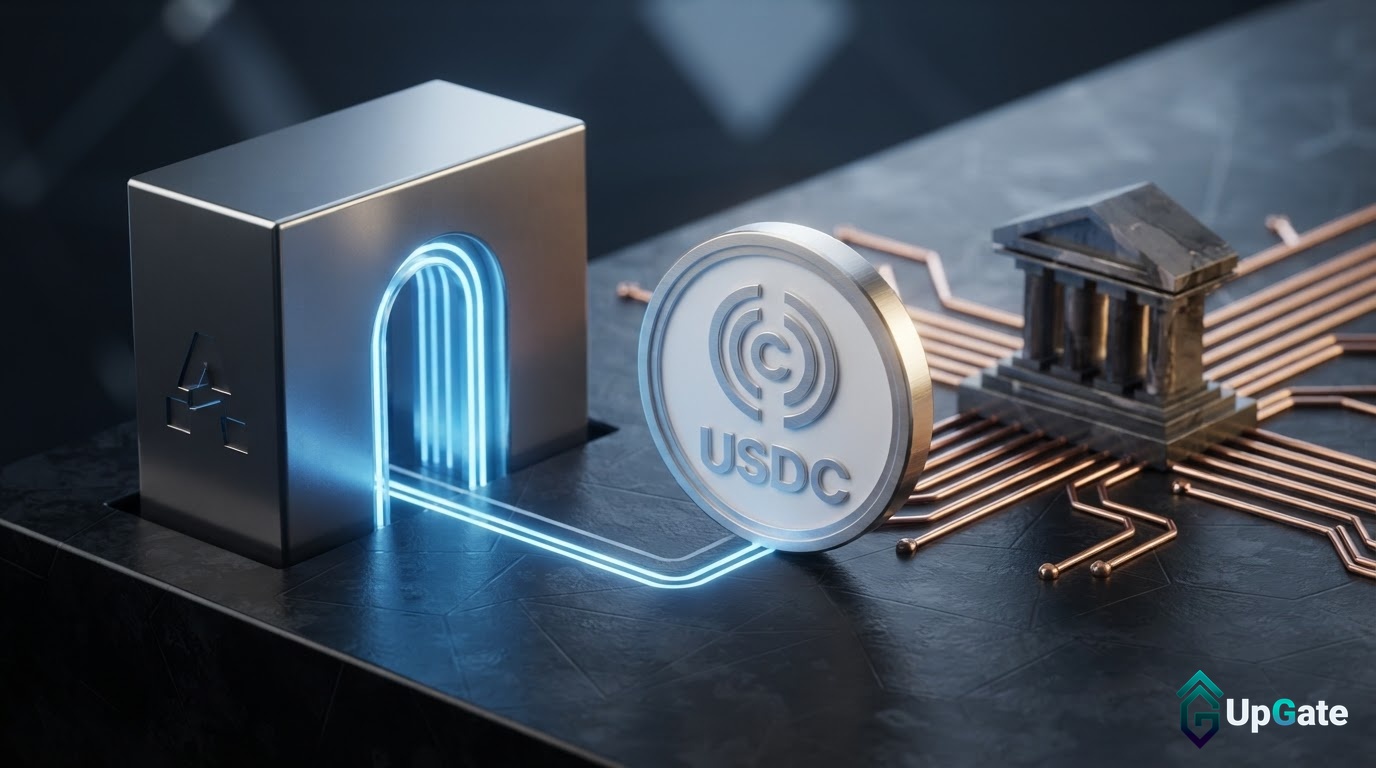
    Circle has launched the public mainnet for Arc, its new Layer 1 blockchain designed for financial markets, payments, and AI-powered economic activities. According to the firm’s official announcement, the network debuts with more than 100 institutional and ecosystem participants.

    A distinctive feature of Arc is the integration of USDC as its primary gas token. This allows users to pay for transaction fees directly with Circle’s stablecoin. The network is engineered to provide sub-second finality and supports assets including USDC, EURC, and tokenized real-world assets.

    Founding validators for Arc comprise a mix of traditional financial institutions and prominent cryptocurrency firms. Traditional finance participants include BlackRock, Mastercard, Visa, Standard Chartered, Galaxy, ICE, DTCC, and MoneyGram. Key crypto firms acting as founding validators are Binance, Coinbase, Kraken, Bybit, Aave, Morpho, Uniswap, and MetaMask.

    Circle has minted the initial supply of 10 billion ARC tokens, intended for future network security, utility, and governance. The company has stated that Arc may explore a transition from its current Proof of Authority consensus mechanism to Proof of Stake, potentially in 2027. This potential transition is described as an exploration, not a reported event.

    The launch of Arc represents Circle’s strategic expansion into blockchain infrastructure, specifically targeting the financial services sector. The use of USDC as the gas token could offer greater predictability for transaction fees compared to networks where gas fees fluctuate based on native token prices. While the network launches with substantial backing, its long-term adoption and impact on the financial and blockchain industries remain to be determined.

    Why This Matters

    The materials describe a narrow update: Circle has launched the public mainnet for Arc, a Layer 1 blockchain designed for financial markets, payments, and AI-powered economic activity. Whether Arc’s blockchain will become a playground for traders and on-chain enthusiasts.

    Broader Context

    Source materials place the announcement in this context: Circle is the company behind USDC.

  • Shiba Inu’s Shibarium Gets ‘Useful’ Update

    Shiba Inu’s Shibarium Gets ‘Useful’ Update

    Shibarium Update Fails to Spark Shiba Inu Rally Amidst Declining Metrics

    Shiba Inu, the popular meme coin, has largely maintained a low profile in recent weeks, refraining from major announcements. However, the development team has broken its silence with a new update concerning its layer-2 scaling solution, Shibarium. Despite this news, the SHIB token remains in negative territory on both daily and weekly charts, with several indicators suggesting a potential for further decline.

    Shiba Inu announced via its official X account that it has rolled out a “small but useful” update for Shibarium. The update involved refreshing its RPC listing in the Ethereum-lists/chains registry, with Chainlist now reflecting the revised connection details.

    The move garnered mixed reactions from the community. While some X users praised the update for enhancing access to the protocol, many others dismissed it as insignificant and even labeled the layer-2 scaling solution a scam.

    This frustration may be linked to Shibarium’s dwindling activity. Following a security exploit last year, daily transactions on the network have plummeted to the low thousands, and at times, even the hundreds. This sharp decline indicates weak user engagement and could be eroding investor confidence. Prior to the exploit, the network was processing millions of transactions daily.

    While Shiba Inu continues to hold its position as the second-largest meme coin, its valuation has seen a 6% drop over the past week. The token is currently trading at approximately $0.000005196, according to CoinGecko. Its market capitalization stands just above $3 billion, ranking it as the 33rd-largest cryptocurrency.

    Furthermore, SHIB’s token burning program suggests that bearish sentiment may persist. Data indicates a nearly 90% decrease in the burn rate over the last month, meaning a minimal number of tokens have been permanently removed from circulation. The primary objective of the burning mechanism is to reduce the overall supply of the meme coin, thereby potentially increasing its value through scarcity. However, the current lack of activity in this area presents a significant hurdle to achieving this goal.

    Shiba Inu’s seasonal performance also warrants attention. September has historically been a challenging month for the token, with its price closing the period in negative territory in three out of the last five instances. With approximately two weeks remaining in the month, it remains to be seen whether September’s performance will balance out or if bears will further solidify their advantage.

  • XRP Ledger Batch V1.1 Amendment Nears Activation Following Security Rebuild

    XRP Ledger Batch V1.1 Amendment Nears Activation Following Security Rebuild

    The XRP Ledger’s Batch V1.1 amendment is one validator vote away from reaching the 80% threshold required for activation, marking a significant step after a security rebuild addressed a critical flaw in the original version.

    Security Rebuild Addresses Critical Flaw

    The Batch V1.1 amendment, also known as XLS-56, is designed to enable multiple transactions from different accounts to execute atomically within a single ledger close. If any transaction in a batch fails, the entire operation reverts, ensuring an all-or-nothing outcome. This feature, which does not require smart contracts, is intended for use cases such as atomic swaps, coordinated settlements, and potentially streamlining NFT minting and transfers.

    The original Batch V1.0 amendment contained a signature-validation bug that was discovered before its mainnet deployment. The flaw, identified in February, involved an early return in the checkBatchSign function. This could have allowed validation to return success without verifying all signers if a signer account did not yet exist on the ledger, potentially enabling unauthorized transactions on behalf of other accounts. Crucially, because the bug was found pre-mainnet, no funds were at risk.

    Rigorous Testing and Review Process

    In response to this critical flaw, a comprehensive security rebuild was undertaken for Batch V1.1. RippleX developer Mayukha Vadari reported that the amendment shipped with xrpld version 3.3.0 and is now up for validator voting. The rebuild process was extensive, incorporating a senior engineering review, adversarial testing, external security reviews, and AI-assisted analysis. This included review by four senior engineers, a Sherlock Batch Attackathon, a Halborn reassessment, a Common Prefix audit, Cantina AI scanning, and rigorous Devnet and testnet regression testing. The team also addressed additional bugs identified through newer AI red-teaming efforts, fixing issues related to MPT validation bypasses, node crashes, path size validation, signature verification, signer ordering, and transaction hashing.

    Validator Sentiment and Next Steps

    Validator sentiment is currently close to the activation threshold. The most recent snapshot shows 27 trusted validators have voted in favor of the amendment, with eight against, resulting in approximately 77% support. This places the amendment just one vote shy of the 80% required to initiate the 14-day activation countdown. FrancisBovineSwift described the current voting status as “nearly there.”

    This security rebuild for Batch V1.1 follows other recent scrutiny of XRPL amendments, including the withdrawal of the Permission Delegation amendment due to a high-severity bug found before mainnet deployment. The current Batch V1.1 amendment has undergone additional review in light of these past events.

    To enhance transparency in the amendment process, an XRPL testing dashboard was launched this month, tracking which transaction types, fields, and result codes have been exercised on Devnet, making amendment testing more visible to the community.

    While Batch V1.1 is nearing activation, the exact date remains dependent on the final validator votes. The specific details of all ‘other issues’ addressed during the rebuild beyond the primary signature-validation bug are not fully detailed in the provided information.

    Why This Matters

    The materials describe a narrow update: The XRP Ledger’s Batch V1. The exact date of activation is dependent on the final validator vote.

    Broader Context

    Source materials place the factual news in this context: The XRP Ledger’s Batch V1.1 amendment is one validator vote short of reaching the 80% threshold needed to begin its 14-day activation countdown, after a security rebuild that followed a critical flaw in the original version.

  • XRP Ledger Upgrade Hinges on Single Vote

    XRP Ledger Upgrade Hinges on Single Vote

    XRP Poised for Major Upgrade Amidst Market Uncertainty

    XRP is currently trading at $1.40, demonstrating resilience against broader market downturns and bearish price forecasts. This performance is occurring as the network’s next significant upgrade is on the cusp of activation, requiring just one more validator vote to initiate a two-week countdown. Despite being overshadowed by a predominantly negative news cycle, this development warrants attention.

    Batch V1.1 Nears Activation

    The proposed Batch V1.1 amendment, designed to allow users to consolidate up to eight linked transactions into a single atomic operation, had garnered support from 27 out of 35 trusted validators as of Tuesday’s snapshot. This represents 77% of the total validators, falling just short of the 80% threshold mandated by the XRP Ledger for protocol changes.

    A Crucial Vote and Technical Scrutiny

    A single additional validator casting a “yes” vote would trigger a 14-day period of sustained support before the upgrade can be implemented on the mainnet. This upgrade follows a thorough technical review by RippleX, which addressed 11 identified issues, including a critical signature-reuse vulnerability previously flagged by security auditor Common Prefix.

    Dual Catalysts Converge

    The timing of this upgrade is particularly significant, as XRP’s price action is currently positioned between this network catalyst and a separate macroeconomic event: the CLARITY Act vote, both scheduled to occur within the same 48-hour window. Such a confluence of two substantial structural catalysts is a rare occurrence in the market.

    Technical Analysis and Price Outlook

    XRP’s recent pullback to $1.40 places it in the middle of a consolidation range that has persisted for weeks. Immediate support is observed between $1.35 and $1.38, with resistance clustering at $1.43–$1.45, followed by a key level at $1.50. A sustained close above $1.50 would signal a continuation towards the $1.55–$1.60 range. Conversely, a failure to maintain support at $1.35 could lead to a decline towards $1.30 and $1.27.

    Potential Scenarios

    The optimistic scenario involves the clean activation of Batch V1.1, the successful passage of the CLARITY Act vote, and XRP reclaiming the $1.50 mark on increased trading volume. The base case anticipates continued range-bound trading between $1.35 and $1.45 as traders await the outcomes of both catalysts. The bearish outlook suggests a return towards the $1.27–$1.21 range, potentially triggered by hawkish signals from the Federal Reserve on September 16th or a stalled validator vote.

    Network Fundamentals vs.

    Market Dynamics

    While network fundamentals are a separate consideration from price, transaction volume on the XRP Ledger has been steadily increasing. However, it remains unclear whether this growth reflects organic adoption or is driven by testing traffic related to the upcoming upgrade.

    Investor Conviction Tested

    A stable price environment with two major catalysts on the horizon presents a challenge to investor conviction. While XRP holders may be justified in maintaining their positions due to intact fundamental arguments, the asset’s substantial market capitalization of over $87 billion means that a validator vote alone is unlikely to cause an immediate doubling of holdings. This reality may prompt some capital to seek out earlier-stage projects with greater potential for rapid growth.

    Emerging Opportunities

    In contrast to the established XRP, Maxi Doge ($MAXI), an Ethereum-based meme token, is attracting attention. This project, built around leverage-trading culture rather than passive holding, has raised $4.8 million in its presale at a current price of $0.0002839 per token, offering a notable 65% APY through staking.

    Maxi Doge’s Value Proposition

    Key features of Maxi Doge include exclusive trading competitions for holders with leaderboard rewards and a Maxi Fund treasury allocated for liquidity and partnerships. The project’s marketing emphasizes a “1000x-leverage energy” and a stated ambition to surpass the original DOGE in market performance. Investors are advised to conduct thorough research on Maxi Doge before its presale concludes.

  • World Liberty Financial Launches Token-Lock Rewards to Drive Governance Participation

    World Liberty Financial Launches Token-Lock Rewards to Drive Governance Participation

    World Liberty Financial Proposes Token Lock-Up Rewards to Incentivize Governance Participation

    World Liberty Financial has introduced a new governance proposal for its community, aiming to reward holders of its native WLFI token who actively participate by locking their tokens and casting votes. The initiative, targeting an October 1 launch, fundamentally alters how the project intends for its token to be utilized, directly linking rewards to active engagement.

    The WLFI Governance Engagement Incentive Program

    The proposed program, dubbed the WLFI Governance Engagement Incentive Program, mandates a minimum 180-day lock-up period through a non-custodial, on-chain protocol. However, simply locking tokens will not suffice. To remain eligible for rewards, token holders must vote on at least one governance proposal every 90 days. World Liberty has committed to presenting at least one proposal per quarter, ensuring continuous opportunities for participation.

    Rewards will be distributed from a dynamic pool funded by various ecosystem sources, including fees generated by World Liberty Markets and Dolomite. This pool will be replenished bi-weekly as the project expands. Early participants who lock their tokens could potentially secure a larger share of the rewards, especially if fewer tokens are locked in the initial stages.

    To prevent any single entity from dominating voting outcomes, a 5% cap on voting power concentration has been implemented through the staking protocol. Crucially, all WLFI holders will retain their governance rights, regardless of whether they choose to lock their tokens.

    Community and Market Reaction

    The proposal has garnered dozens of responses on the project’s forum, with most offering brief endorsements. Similar sentiment has been observed on X, where trader Elja described the plan as “one of the more interesting developments for $WLFI holders,” viewing it as a mechanism to acknowledge commitment over passive ownership.

    This is not World Liberty’s first foray into linking governance with staking. In March, the project introduced a tiered Node and Super Node staking system designed to offer benefits such as OTC access and partnership perks for larger lock-ups. The current proposal, however, is more focused, centering specifically on voting rather than tiered benefits.

    The announcement comes at a challenging time for World Liberty, as the company continues to navigate a lawsuit filed by Justin Sun concerning frozen tokens and governance rights. A ruling against the company last month has kept the case active in court.

    The WLFI token has shown minimal reaction to the news. Data from CoinGecko indicates the token was trading just below $0.060 at the time of reporting, a 1.4% decrease over the preceding 24 hours. While this represents a 2% increase from its value a week prior, the token remains over 70% below its price from a year ago. It recently touched a new all-time low near $0.048 just four days ago, a significant decline from its September high of $0.33.

  • Bybit Lists Babylon (BABY1) v4.5.0 Network Upgrade

    Bybit Lists Babylon (BABY1) v4.5.0 Network Upgrade

    Bybit to Support Babylon Network Upgrade

    Cryptocurrency exchange Bybit has announced its support for the upcoming Babylon (BABY1) v4.5.0 network upgrade. The upgrade is scheduled to occur on September 14, 2026, at approximately 12:00 PM UTC, or at block height 4,511,100.

    In preparation for the upgrade, Bybit will temporarily suspend Babylon (BABY1) deposits and withdrawals beginning at 11:30 AM UTC on September 14, 2026.

    Trading activities on the platform will remain unaffected during this period.

    Bybit has stated that there will be no separate announcements regarding the resumption of deposit and withdrawal services. Users wishing to be notified when these services are back online are advised to visit the Deposit or Withdrawal page and select the “Set Alert” option.

    Further details about the network upgrade can be found in the official release notes.

  • Bybit to Support WAVES Network Upgrade

    Bybit to Support WAVES Network Upgrade

    Bybit to Support WAVES Network Upgrade

    Cryptocurrency exchange Bybit has announced its support for the upcoming WAVES (WAVES) network upgrade, version 1.6.4. The upgrade is scheduled to occur on September 13, 2026, at approximately 09:40 PM UTC, or at block height 5,400,000.

    To facilitate a seamless transition, Bybit will temporarily suspend WAVES deposits and withdrawals starting from September 13, 2026, at 09:00 PM UTC. Trading activities on the platform will remain unaffected during this period.

    The exchange noted that there will be no separate announcements regarding the resumption of WAVES deposit and withdrawal services. Users wishing to be notified when these services are back online are advised to visit the Deposit or Withdrawal page and activate the “Set Alert” function.

    Further details regarding the WAVES network upgrade can be found in the official release notes.